
Ingredients
Method
Method
- Preheat the oven to 425°F (220°C). Remove the fully thawed 12–14-pound (5.4–6.4 kg) turkey from its packaging. Remove the giblets and neck if included, then pat the turkey thoroughly dry with paper towels. Place the turkey breast-side up on a rack inside a 16 × 13-inch (41 × 33 cm) roasting pan. The skin should feel dry rather than slippery. Surface moisture can slow browning and prevent the skin from developing a crisp finish.
- Place 3/4 cup (170 g) unsalted butter in a small, light-colored saucepan over medium-low heat. Melt the butter, stirring occasionally. As it heats, it will foam and begin to crackle. Continue cooking until the small particles at the bottom of the saucepan turn golden brown and the butter develops a toasted, nutty aroma. Remove the saucepan from the heat immediately. Pour the browned butter into a heatproof bowl, including the golden particles. Let it cool until warm and slightly thickened but still spreadable. If it becomes too firm, gently warm it again.
- Add the following to the browned butter: 2 tablespoons (8 g) finely chopped rosemary 2 tablespoons (6 g) finely chopped thyme 1 tablespoon (3 g) finely chopped sage 4 finely minced garlic cloves (12 g) 2 teaspoons (12 g) fine sea salt 1 teaspoon (2 g) freshly ground black pepper Stir until the herbs and seasonings are evenly distributed. The mixture should be fragrant and thick enough to coat a spoon. If the butter is very hot, allow it to cool further before applying it to the turkey.
- Carefully slide your fingers between the turkey breast meat and the skin, starting near the neck end. Work slowly to loosen the skin without tearing it. Spread approximately half of the prepared brown butter herb mixture beneath the breast skin, distributing it as evenly as possible. Rub the remaining mixture over the outside of the turkey, including the breast, legs, and wings. The surface should have a thin, even coating rather than large clumps of herbs.
- Place 1 halved large lemon and 1 quartered medium yellow onion loosely inside the turkey cavity. Do not pack the cavity tightly. Leaving space allows heat to circulate more effectively. Tie the legs loosely with kitchen twine and tuck the wing tips beneath the bird. Pour 1 cup (240 ml) low-sodium chicken broth into the bottom of the roasting pan, keeping the liquid beneath the rack.
- Place the turkey in the preheated 425°F (220°C) oven. Roast for 30 minutes, until the skin begins turning golden, especially across the breast and upper legs. The herb butter may sizzle and the pan juices may begin to bubble. This is normal. If any exposed herbs darken rapidly, loosely cover those areas with aluminum foil.
- Reduce the oven temperature to 325°F (165°C). Continue roasting for approximately 2 hours 30 minutes to 3 hours, checking the turkey's internal temperature as it approaches doneness. Rotate the roasting pan if one side browns noticeably faster than the other. If the breast becomes deeply golden before the legs finish cooking, loosely tent the breast with foil. Avoid repeatedly opening the oven or basting the turkey, which can interrupt cooking and soften the skin.
- While the turkey roasts, combine the following in a 3-quart (2.8 L) saucepan: 12 ounces (340 g) fresh or frozen cranberries 1/2 cup (170 g) honey 1/2 cup (120 ml) apple cider vinegar 1/2 cup (120 ml) water 2 tablespoons (30 g) Dijon mustard 2 tablespoons (30 g) whole-grain mustard 1 teaspoon (2 g) yellow mustard seeds 1/4 teaspoon ground cinnamon 1/4 teaspoon crushed red pepper flakes 1/4 teaspoon (1.5 g) fine sea salt Stir thoroughly to distribute the honey and mustard. Place the saucepan over medium heat and bring the mixture to a gentle simmer.
- Reduce the heat to medium-low and simmer the cranberry mixture for 20–25 minutes, stirring occasionally. The cranberries will begin to pop and release their juices. As the mixture cooks, it should become glossy and noticeably thicker. Gently press some of the softened cranberries against the side of the saucepan, leaving others partially intact for texture. The finished mustarda should be thick enough to mound slightly on a spoon while remaining easy to spread. If it becomes too thick, remove it from the heat before it reduces further. Remember that it will continue thickening as it cools. Set aside until ready to serve.
- Begin checking the turkey with an instant-read thermometer before the estimated roasting time ends. Insert the thermometer into the thickest part of the breast and the innermost part of the thigh, without touching bone. The turkey is safely cooked when both locations reach at least 165°F (74°C). Check the wing area as well. If the breast reaches temperature before the thigh, loosely protect the breast with foil and continue roasting until the thigh also reaches the safe temperature. The skin should be golden brown, with darker toasted patches where the herb butter has caramelized.
- Transfer the turkey to a sturdy cutting board or serving platter. Loosely tent it with aluminum foil and let it rest for 30–40 minutes before carving. During this period, the meat will settle and the juices will redistribute. Avoid wrapping the turkey tightly, which traps steam and can soften the crisp skin.
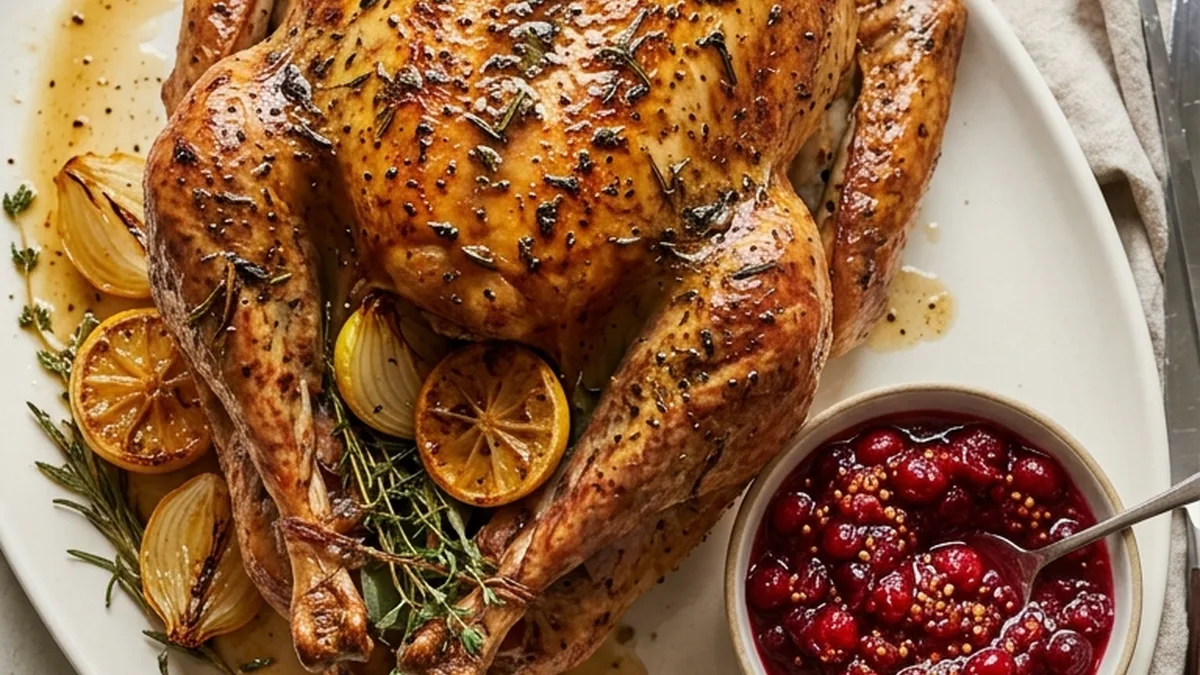
- Remove the kitchen twine and discard the lemon and onion from the cavity. Separate the legs and thighs, then remove the breast meat and slice it across the grain. Arrange the turkey on a warm serving platter and spoon a little cranberry mustarda alongside the slices. Serve the remaining mustarda separately so guests can add as much as they prefer. The finished dish should have golden, herb-speckled skin, tender turkey meat, and a glossy cranberry condiment with a pleasant balance of tartness, sweetness, and mustard heat.