Preheat the oven to 350°F (175°C) . Line a 9 x 13-inch (23 x 33 cm) metal baking pan with parchment paper, leaving an overhang on the long sides to help lift out the finished bars. In a medium mixing bowl, combine the all-purpose flour, granulated sugar, and fine salt for the crust. Pour in the melted, slightly cooled butter and stir with a spatula until the mixture forms a soft, crumbly dough. It should resemble damp sand and hold together when pressed between your fingers. If the mixture looks dry, continue folding and pressing it with the spatula to distribute the butter evenly.
Transfer the shortbread mixture to the prepared baking pan. Spread it evenly, then press it firmly into the bottom using your fingertips or the flat bottom of a measuring cup. Pay particular attention to the corners and edges, where loose crumbs can create weak spots. The crust should form an even, compact layer without large cracks or noticeably thick sections.
Place the pan on the center oven rack and bake at 350°F (175°C) for 18 minutes . The surface should look dry and set, with a faint golden color beginning to develop around the edges. The center may still look pale. That is normal because the crust will continue baking after the filling is added. Remove the pan from the oven and keep the oven at the same temperature while preparing the filling.
Place the butter for the filling in a heavy-bottomed, light-colored saucepan over medium heat. Allow it to melt completely, then continue cooking, swirling the pan frequently. The butter will foam and sizzle as its water evaporates. After the initial foaming, the milk solids at the bottom will begin turning golden brown. Continue cooking until the butter smells nutty and the solids are amber brown rather than dark or black. Browning generally takes about 5–7 minutes, depending on the saucepan and burner. Immediately pour the browned butter, including the browned milk solids, into a heatproof bowl to stop the cooking process. Let it cool for about 5 minutes while you prepare the remaining filling ingredients. It should still be fluid but no longer intensely hot. If the butter smells burned or contains blackened solids, start again. Burned butter can make the entire filling taste bitter.
In a large mixing bowl, whisk together the packed light brown sugar and light corn syrup. The mixture will be thick, sticky, and slightly grainy at first. Gradually pour in the warm browned butter, whisking until the mixture looks glossy and evenly combined. Scrape in all the browned milk solids because they contain much of the butter's toasted flavor.
Add the room-temperature eggs to the brown sugar mixture one at a time, whisking well after each addition. Stir in the vanilla extract and fine salt. Continue whisking until the filling is smooth, glossy, and thick but pourable. A few small bubbles are harmless, but avoid beating excessive air into the mixture. If the butter has separated slightly, whisk gently until the mixture becomes more uniform before continuing.
Add the roughly chopped pecans to the filling: Use a silicone spatula to fold them through the mixture until they are evenly coated. The filling should be densely packed with nuts, with enough syrup mixture to coat and surround the pecan pieces. Avoid crushing the nuts while stirring, since their texture provides an important contrast to the soft filling.
Pour the pecan filling over the warm, prebaked shortbread crust. Spread it gently with a spatula, making sure the pecans reach the corners and the filling forms an even layer. Do not press down firmly, which could damage the partially baked crust. The surface should look glossy, with pecan pieces distributed throughout rather than clustered in the center.
Return the pan to the center rack of the 350°F (175°C) oven. Bake for 25 minutes , then check the filling. The edges should be bubbling gently and beginning to look set. The center may still have some movement. Continue baking for approximately 7 more minutes , or until the center has thickened and moves with a gentle, cohesive wobble when the pan is nudged. The surface should look glossy but not watery, and the pecans should be lightly toasted. Avoid baking until the entire surface becomes rigid. The filling continues to firm as it cools. If the pecans are browning too quickly, loosely cover the pan with aluminum foil during the final part of baking.
Transfer the baking pan to a wire cooling rack. Allow the bars to cool undisturbed for 2 hours , or until the filling is fully set and the pan is no longer warm. During cooling, the filling will gradually become firmer and easier to cut. Do not attempt to lift or slice the bars while the filling is still hot. The syrup mixture needs time to stabilize.
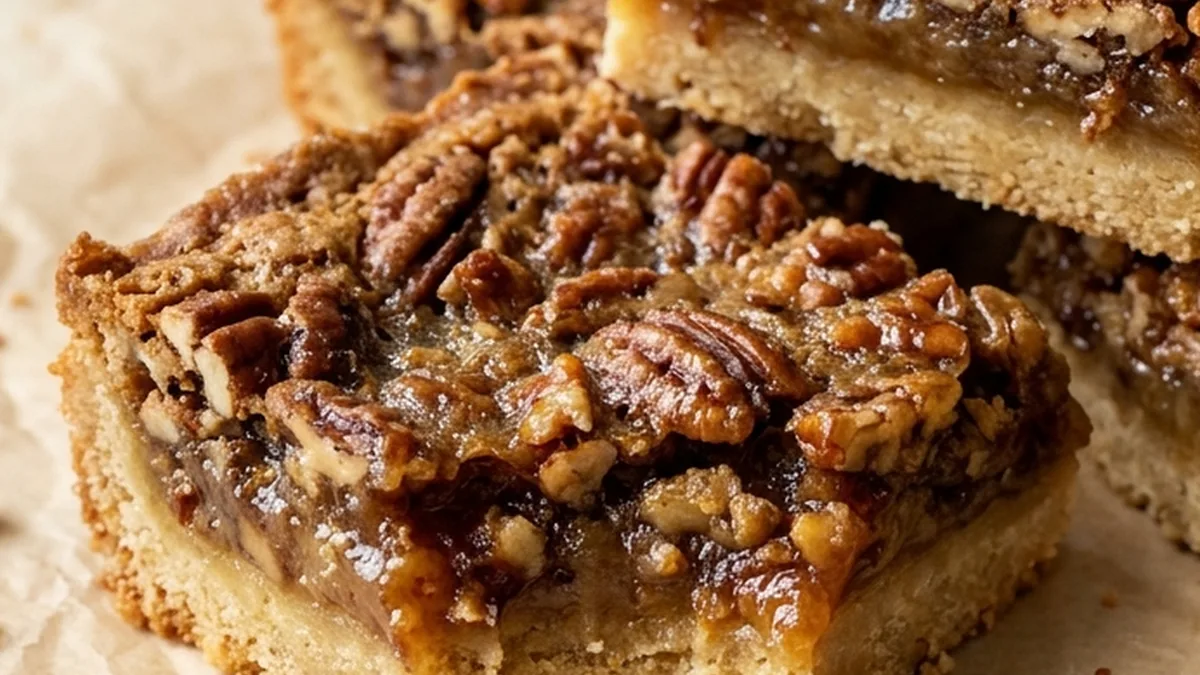
Use the parchment overhang to carefully lift the cooled slab from the baking pan. Place it on a cutting board and use a sharp knife to cut it into 24 bars . For cleaner edges, wipe the knife between cuts to remove sticky filling and pecan fragments. The finished bars should have a tender, buttery shortbread base and a chewy, caramel-like pecan layer that holds together when lifted. Serve at room temperature for the most balanced texture.