Place the 1 cup (120 g) dry vanilla cake mix in a microwave-safe bowl and spread it into an even layer. Microwave on high in 30-second intervals, stirring thoroughly between intervals, for approximately 2 minutes total. Check several spots with an instant-read thermometer, aiming for 165°F (74°C) throughout. The mixture should remain dry and powdery, without dark spots or a toasted smell. Food-safety note: Microwave heating can be uneven, and reaching this temperature does not guarantee that all harmful microorganisms have been eliminated. Commercially heat-treated, ready-to-eat cake mix is preferable when available.
Allow the heat-treated cake mix to cool completely to room temperature. Once cooled, pass it through a fine-mesh sieve to remove any lumps formed during heating. The mixture should be loose, fine, and free of hard clumps. Adding warm cake mix directly to the cream cheese mixture could soften the dip excessively.
Place the 8 ounces (226 g) softened cream cheese in a large mixing bowl. Beat with an electric hand mixer on medium speed until smooth and creamy, approximately 1 to 2 minutes. Scrape down the sides and bottom of the bowl with a silicone spatula. The cream cheese should look uniform, with no visible firm lumps. If it remains lumpy, continue mixing briefly before adding the other ingredients.
Add the 1/2 cup (60 g) sifted powdered sugar and 1 teaspoon (5 ml) pure vanilla extract to the cream cheese. Begin mixing on low speed to prevent the powdered sugar from scattering, then increase to medium speed. Beat until the mixture looks smooth, slightly fluffy, and evenly combined.
Add the cooled, sifted vanilla cake mix to the cream cheese mixture in two additions. Mix on low speed after each addition, stopping once the dry ingredients are incorporated. The mixture will become noticeably thicker and may resemble soft cake frosting. Scrape the bowl thoroughly to prevent pockets of dry cake mix from remaining. If the mixture looks crumbly or uneven, continue mixing briefly on low speed rather than increasing the mixer speed.
Add the 1 tablespoon (15 ml) whole milk and mix on low speed until incorporated. The mixture should become smoother and easier to stir while remaining thick enough to hold soft peaks. It should not be runny or pourable. The whipped topping added in the next step will make it lighter.
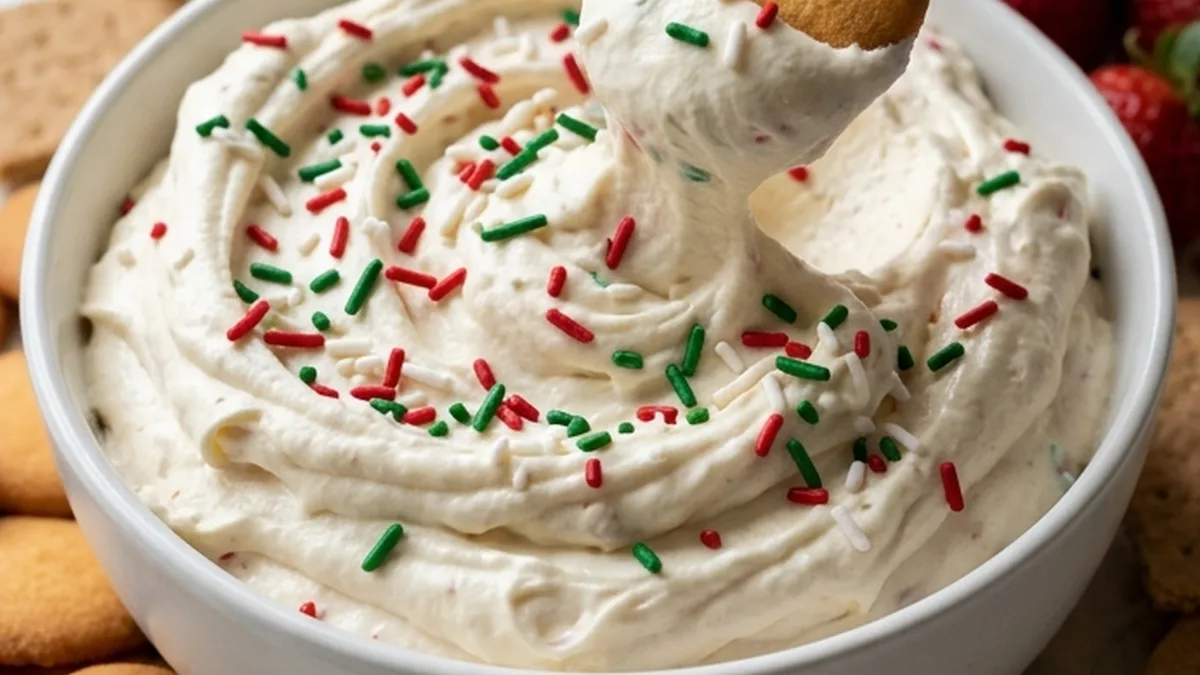
Add the 1 1/2 cups (approximately 105 g) thawed whipped topping. Using a silicone spatula, gently fold it into the cream cheese mixture. Scoop from the bottom of the bowl and turn the mixture over itself until the color and texture are uniform. Avoid vigorous stirring, which can deflate the whipped topping. The finished dip should look pale, fluffy, and creamy, with a soft frosting-like consistency.
Fold 3 tablespoons (approximately 30 g) of the red, green, and white jimmies sprinkles into the dip. Use gentle movements and stop as soon as the sprinkles are evenly distributed. Overmixing can cause the colors to bleed into the white base, particularly if the sprinkles have thin candy coatings. Reserve the remaining 1 tablespoon (approximately 10 g) for decorating.
Transfer the mixture to a serving bowl with approximately 4-cup capacity. Smooth the surface with a spatula, then cover tightly and refrigerate for 30 minutes. The dip should become slightly firmer while remaining soft enough to scoop with a cookie. If it feels too firm after a longer refrigeration period, allow it to soften briefly under refrigeration-safe serving conditions and stir gently before serving.
Remove the Christmas Cake Dip from the refrigerator and sprinkle the reserved 1 tablespoon (approximately 10 g) of Christmas jimmies over the surface. Arrange the optional 24 vanilla wafer cookies, 6 broken graham cracker sheets, and 12 prepared strawberries around the serving bowl or on a separate platter. Serve chilled. The dip should hold its shape in the bowl but yield easily when scooped with a cookie or piece of fruit.