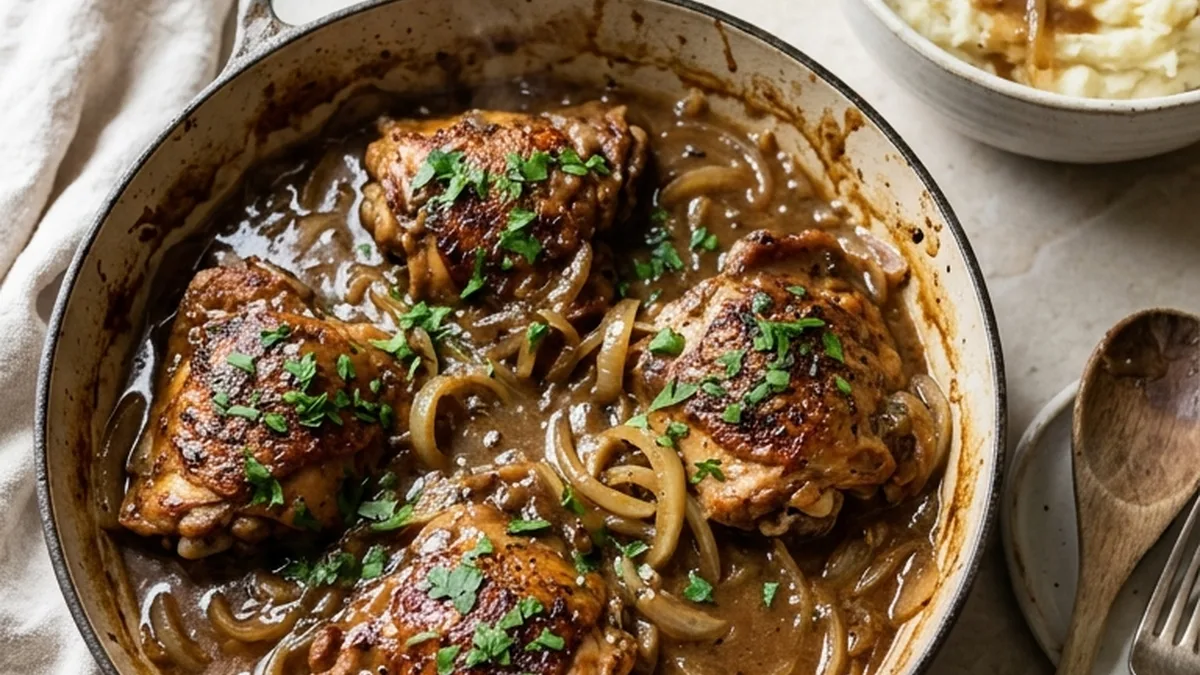
Ingredients
Method
Method
- Season the chicken: Pat the chicken thighs thoroughly dry. Season them with 1 teaspoon of the kosher salt, ½ teaspoon of the black pepper, garlic powder, onion powder, and smoked paprika. Rub the seasonings evenly over both sides.
- Lightly dredge the chicken: Place ¼ cup (30 g) of the flour in a shallow bowl. Coat each chicken thigh lightly with flour, then shake off the excess. Reserve the remaining ¼ cup (30 g) flour for the gravy.
- Brown the chicken: Heat the vegetable oil in a 12-inch (30 cm) heavy skillet over medium heat. When the oil is shimmering, add the chicken skin-side down without crowding. Brown for about 6 to 8 minutes on the first side, then turn and cook for another 4 to 5 minutes. The chicken should be deeply golden but does not need to be cooked through. Transfer it to a plate.
- Soften the onion: Carefully pour off excess fat, leaving about 2 tablespoons in the skillet along with the browned bits. Add the sliced onion and cook over medium-low heat for 7 to 9 minutes, stirring occasionally, until soft and lightly golden. Add the minced garlic and cook for about 30 seconds, just until fragrant.
- Make the gravy base: Sprinkle the reserved ¼ cup (30 g) flour over the onions. Cook for 1 to 2 minutes, stirring constantly. The flour should completely coat the onions and lose its raw, powdery appearance without becoming dark brown.
- Add the liquids gradually: Slowly whisk in the chicken broth, scraping the bottom of the skillet to loosen the browned bits. Whisk in the whole milk, dried thyme, Worcestershire sauce, remaining ½ teaspoon salt, and remaining ½ teaspoon black pepper. Bring the mixture to a gentle simmer. It should begin to thicken but remain loose enough to simmer around the chicken.
- Smother and simmer: Return the chicken thighs and any accumulated juices to the skillet, skin-side up. Spoon some gravy and onions around the chicken. Reduce the heat to low, cover, and simmer gently for 25 to 30 minutes. Avoid a hard boil, which can make the chicken tougher and cause the milk-based gravy to separate.
- Check for doneness: Insert an instant-read thermometer into the thickest part of a thigh without touching the bone. The chicken must reach at least 165°F (74°C) for food safety; thighs will often be especially tender when cooked somewhat beyond that minimum. If needed, cover and continue cooking, checking again after a few minutes.
- Adjust the gravy: If the gravy is thinner than desired, transfer the cooked chicken to a clean plate and simmer the gravy uncovered for 2 to 5 minutes. If it becomes too thick, whisk in a small splash of chicken broth or milk. Taste and adjust the seasoning as needed.
- Rest and serve: Return the chicken to the gravy if it was removed and let the skillet stand off the heat for 5 minutes. Spoon the onion gravy generously over each thigh and garnish with chopped parsley, if using.
Notes
Refrigerate leftover chicken and gravy within 2 hours of cooking. Store them together in a covered airtight container in the refrigerator for up to 3 to 4 days. Keeping the chicken covered with gravy helps protect it from drying out. For freezing, cool the chicken and gravy completely, transfer to a freezer-safe container, and freeze for up to 2 months for best quality. Dairy-thickened gravy can separate slightly after freezing, so thaw it overnight in the refrigerator and whisk the gravy gently while reheating.