Ingredients
Method
Method
- Set a clean, dry 9-inch (23 cm) round glass serving dish on a stable work surface. Make sure the dish is approximately 2 inches (5 cm) deep so there is enough room for the layers and spiderweb decoration without overflowing. A clear dish is particularly useful because the different colors remain visible from the sides.
- Stir the 16-ounce (454 g) can of refried beans until smooth and spreadable. Spoon the beans into the serving dish and spread them evenly across the bottom with a spatula. The layer should be relatively flat and compact, without large gaps or raised areas. If the beans are stiff, work them gently with the spatula until they soften enough to spread. Avoid pressing so hard that the beans become packed into a dense, difficult-to-scoop layer.
- In a medium bowl, combine 1 cup (240 g) of the sour cream with 1 tablespoon (about 8 g) of taco seasoning. Stir until the seasoning is evenly incorporated and the mixture has a uniform, lightly speckled appearance. Reserve the remaining 1/2 cup (120 g) of plain sour cream separately for the spiderweb. The seasoned mixture should be creamy and thick enough to spread without running.
- Spoon the seasoned sour cream over the refried beans in several small portions. Using the back of a spoon or a flexible spatula, gently spread it toward the edges. Keep the pressure light so the sour cream stays above the beans instead of mixing into them. A smooth, even surface makes the next layer easier to add.
- Spoon 1 1/2 cups (about 345 g) of prepared guacamole over the sour cream. Distribute it in small portions before smoothing it into an even layer. The guacamole should look thick and creamy, with no large pools of liquid. If the guacamole is particularly chunky, gently press down any large pieces to create a more level surface.
- Scatter 1 cup (about 180 g) of seeded, finely diced, drained Roma tomatoes evenly over the guacamole. Use the fine-mesh strainer to remove any remaining excess tomato liquid before adding them. The tomatoes should form a fresh, colorful layer without making the guacamole watery. Avoid pressing them into the guacamole; a loose, even distribution helps preserve the layered appearance.
- Sprinkle 1 cup (about 115 g) of shredded Mexican cheese blend evenly over the tomatoes. Work from the outer edge toward the center to cover the surface without disturbing the tomato layer. The cheese should form a consistent layer rather than collecting in thick piles.
- Distribute 1/2 cup (about 50 g) of thinly sliced green onions over the shredded cheese. Spread the slices evenly to add a crisp texture and a fresh, mild onion flavor throughout the dip. Keep the surface relatively level so the final olive layer can support the spiderweb decoration.
- Finely chop 1/2 cup (about 65 g) of the black olives. Sprinkle them evenly over the green onions, covering as much of the visible surface as possible. The olives should form a dark, textured background. Small gaps are fine, but a relatively continuous layer will make the white spiderweb more noticeable. Set aside the remaining 1/4 cup (about 35 g) of olives for the spider decoration.
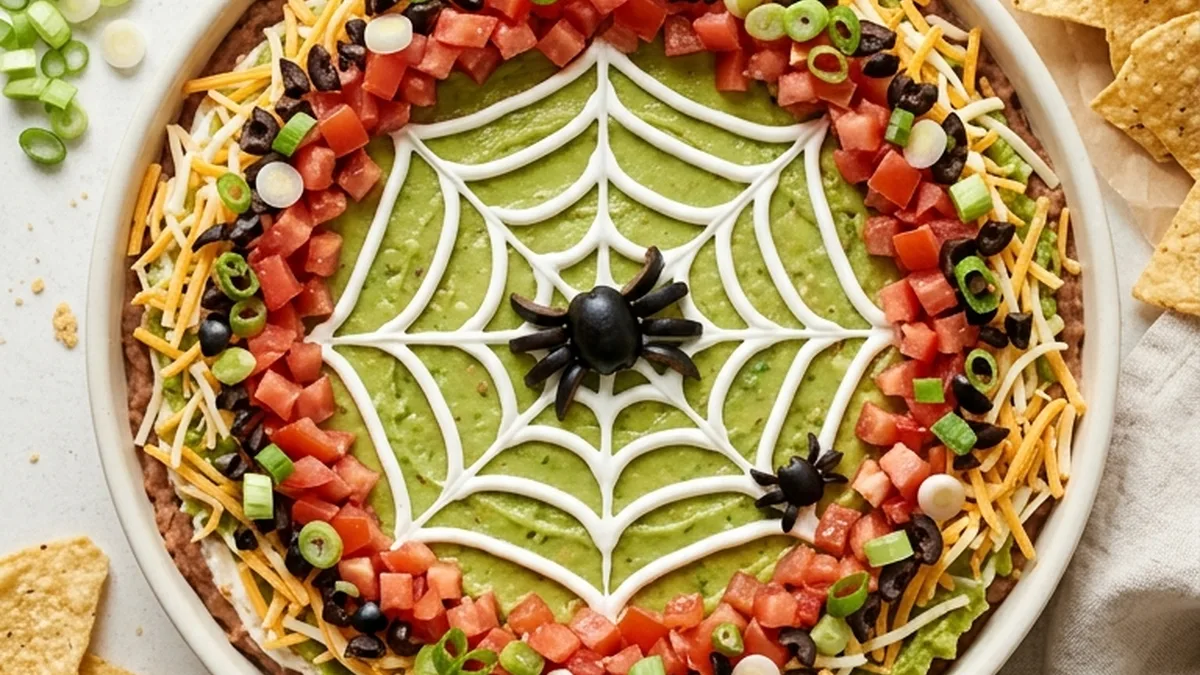
- Transfer the reserved 1/2 cup (120 g) of plain sour cream into a piping bag or a small resealable plastic bag. Snip a tiny opening in the corner. Starting near the center of the dip, pipe a small circle of sour cream. Continue outward, piping several larger concentric circles. Next, use a toothpick or wooden skewer to drag straight lines gently from the center toward the outer edge, passing through the sour cream circles. Wipe the toothpick between strokes to keep the lines defined. Visual cue: The finished decoration should resemble a white spiderweb spreading outward over the dark olive layer. If the sour cream lines appear too thick, make a smaller opening in the piping bag before continuing.
- Use some of the reserved 1/4 cup (about 35 g) of black olives to assemble a small spider on the web. Choose a whole olive or a rounded olive piece for the body. Place a smaller piece beside it for the head. Cut additional olive pieces into narrow strips to represent the legs. Arrange the strips around the body, gently pressing them into the surface so they remain in position. Use the remaining reserved olives as additional small decorations if desired. The spider should be recognizable without needing elaborate carving.
- Cover the dish carefully without pressing the covering against the spiderweb. Refrigerate for 30 minutes to help the layers settle and keep the dip cold. Before serving, check that the decoration remains intact and that no excess moisture has collected on the surface. Serve the dip chilled, allowing guests to scoop down through the layers to get a combination of beans, guacamole, seasoned sour cream, vegetables, cheese, and olives.