Ingredients
Method
Method
- Combine the warm milk, warm water, yeast, and granulated sugar in the bowl of a stand mixer. Stir gently and let the mixture stand for 5 to 10 minutes. It should become creamy and lightly foamy across the surface. If there is no activity, the yeast may be inactive or the liquid may have been too hot or too cool.
- Add the bread flour, salt, melted butter, vanilla, and lemon zest to the yeast mixture. Mix with the dough hook on low speed for about 2 minutes, until no loose flour remains. The dough will look rough and feel sticky.
- Increase the mixer to medium-low speed and knead for 6 to 8 minutes. The dough should become smooth, elastic, and slightly tacky. It may cling to the bottom of the bowl but should begin pulling away from the sides. Avoid adding extra flour simply because the dough feels soft.
- To mix without a stand mixer, stir the ingredients with a sturdy spoon until a rough dough forms. Turn it onto a lightly oiled surface and knead for 8 to 10 minutes, using a bench scraper if it sticks. The finished dough should stretch without tearing immediately.
- Lightly coat a large bowl with 1 tablespoon (15 ml) of the neutral oil. Place the dough in the bowl and turn it once to coat. Cover and let it rise in a warm, draft-free place for 60 to 75 minutes, until approximately doubled in size.
- Coat the bottom and sides of a 9 x 13-inch (23 x 33 cm) metal baking pan with the remaining 1 tablespoon (15 ml) oil.
- Transfer the risen dough to the prepared pan: Gently stretch it toward the corners with oiled fingertips. If it springs back strongly, let it rest for 10 minutes, then continue stretching. Avoid forcing or tearing the dough.
- Cover the pan loosely and let the dough rise for 35 to 45 minutes. It should look puffy, fill most of the pan, and slowly spring back when lightly touched.
- Near the end of the second rise, preheat the oven to 375°F (190°C). Position a rack in the center.
- Lightly oil your fingertips and press them straight down into the dough to create deep dimples across the surface. Press almost to the bottom of the pan without deflating the dough around each indentation.
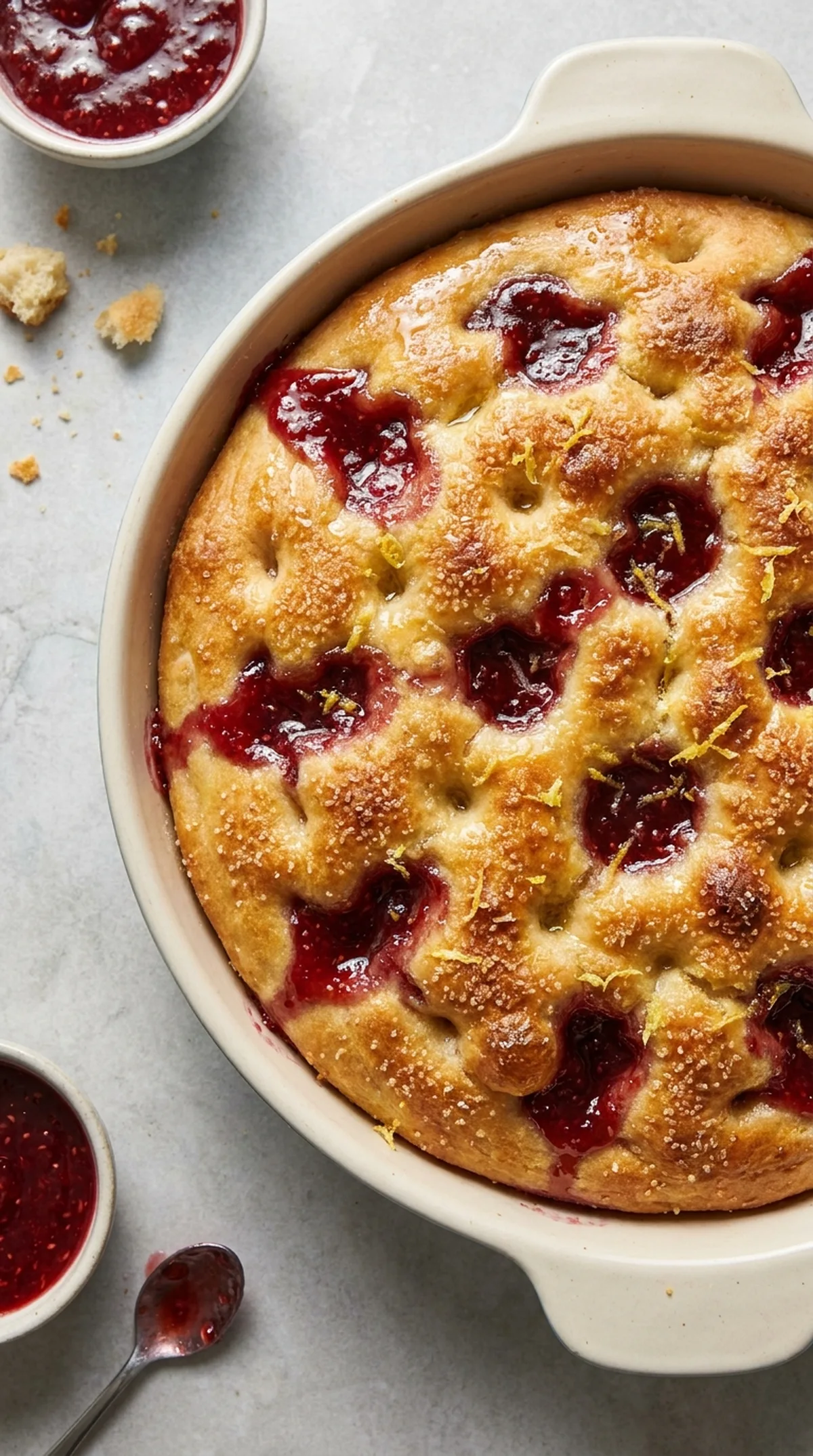
- Spoon small portions of the stirred raspberry jam into and around the dimples. Distribute it evenly rather than placing it in one thick layer. Gently swirl a few pockets with the tip of a spoon, taking care not to tear the dough.
- Sprinkle the turbinado sugar evenly over the dough and jam. Keep large piles of sugar away from the pan edges, where they may caramelize too quickly.
- Bake for 22 to 28 minutes. The exposed bread should be golden brown, the edges should pull slightly from the pan, and the jam should look glossy and bubbling. If checked with a thermometer in an area without jam, the bread should register about 190°F to 195°F (88°C to 91°C).
- Place the pan on a wire rack and let the focaccia cool for 15 minutes. The jam will be extremely hot immediately after baking and will thicken slightly as it cools.
- Run a thin spatula around the edges if necessary. Cut the focaccia into 12 pieces and serve warm or at room temperature.