Ingredients
Method
Method
- Cut the 12 ounces (340 g) of cooked lobster meat into bite-sized pieces, keeping the chunks large enough to remain distinct in the pasta. Pat them dry with paper towels to prevent excess moisture from thinning the sauce. Mince the 4 medium garlic cloves (12 g), finely grate the 1 teaspoon (2 g) lemon zest, squeeze the 2 tablespoons (30 ml) lemon juice, and chop the 2 tablespoons (8 g) parsley. Keep the ingredients ready beside the stove because the butter sauce cooks quickly.
- Fill a 6-quart (5.7 L) pot with approximately 4 quarts (3.8 L) water and bring it to a rolling boil over high heat. Add the 1 tablespoon (15 g) kosher salt and stir to dissolve. If using fine table salt, use the listed alternative measurement instead.
- Add the 12 ounces (340 g) dry linguine to the boiling water. Stir during the first minute to prevent the strands from sticking together. Cook according to the package directions, stopping when the pasta is just al dente. It should be tender on the outside with a slight firmness in the center. Before draining, reserve the 1/2 cup (120 ml) pasta cooking water listed for the sauce. Drain the linguine without rinsing it, allowing the surface starch to remain on the strands.
- While the pasta cooks, place a 12-inch (30 cm) skillet over medium-low heat. Add the first 4 tablespoons (57 g) unsalted butter. Allow it to melt gently without browning. Add the minced garlic and the optional 1/4 teaspoon (0.5 g) crushed red pepper flakes. Cook for approximately 1–2 minutes, stirring frequently, until the garlic smells fragrant and looks softened but remains pale. If it begins turning golden too quickly, reduce the heat immediately.
- Pour the first 1/4 cup (60 ml) reserved pasta cooking water into the skillet, stirring or swirling the pan to combine it with the melted butter. Let the mixture simmer gently for approximately 1 minute. It should look lightly cloudy and begin to come together rather than separating into distinct pools of water and fat. Keep the heat low enough to avoid a vigorous boil.
- Transfer the drained linguine directly into the skillet: Using tongs, toss the pasta through the garlic butter mixture for approximately 1–2 minutes. Lift and turn the strands repeatedly so the sauce distributes evenly. The pasta should begin to look glossy, with a thin coating of butter sauce clinging to each strand. If it looks dry or sticky, add a little of the remaining reserved pasta cooking water rather than increasing the heat.
- Reduce the heat to low and add the remaining 2 tablespoons (28 g) unsalted butter. Toss gently until the butter melts and the sauce becomes smooth and silky. Add more of the remaining reserved pasta cooking water as needed, using no more than the listed 1/4 cup (60 ml). The finished sauce should coat the pasta without collecting in a watery puddle at the bottom of the skillet. If the sauce appears oily, remove the skillet briefly from the heat and toss vigorously with a small amount of the reserved water until it comes together.
- Add the 12 ounces (340 g) cooked lobster meat to the skillet. Fold it into the pasta carefully with the tongs, avoiding vigorous stirring that could break the pieces apart. Warm over low heat for approximately 1–2 minutes, just until the lobster is heated through. For food safety, previously cooked refrigerated lobster being reheated should reach an internal temperature of 165°F (74°C). Avoid prolonged heating, which can make lobster meat firm and chewy.
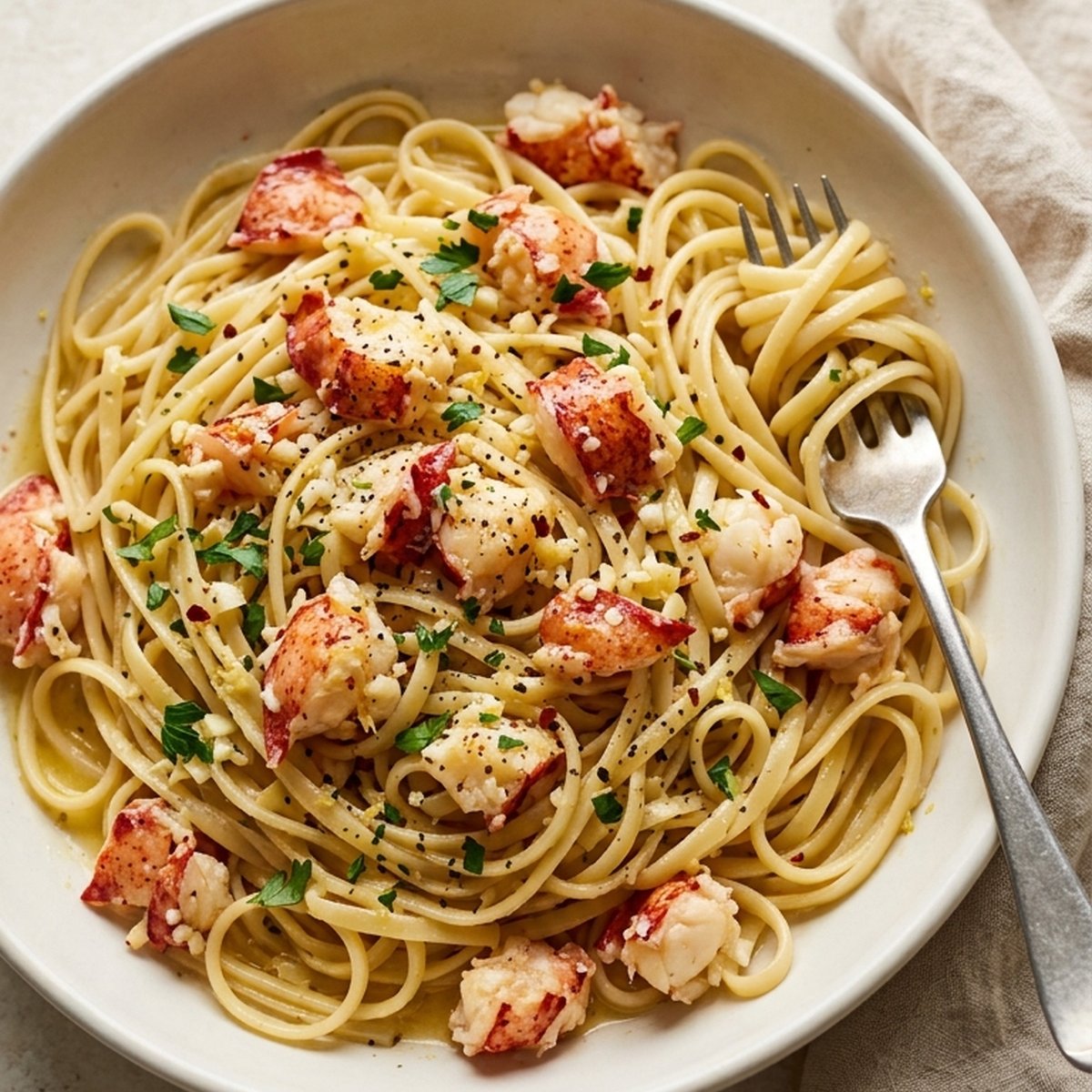
- Remove the skillet from the heat: Add the 2 tablespoons (30 ml) fresh lemon juice, 1 teaspoon (2 g) lemon zest, 1/4 teaspoon (0.5 g) freshly ground black pepper, and the first 1 tablespoon (4 g) chopped parsley. Toss gently until everything is evenly distributed. The finished pasta should look glossy and lightly coated, with visible pieces of lobster throughout. The lemon should provide a fresh, balanced finish without overwhelming the butter.
- Divide the Buttered Lobster Pasta among 3 serving bowls. Scatter the remaining 1 tablespoon (4 g) chopped parsley over the portions. Serve immediately while the sauce is warm and fluid. As the pasta cools, the butter naturally begins to thicken, so the texture is at its best shortly after preparation.