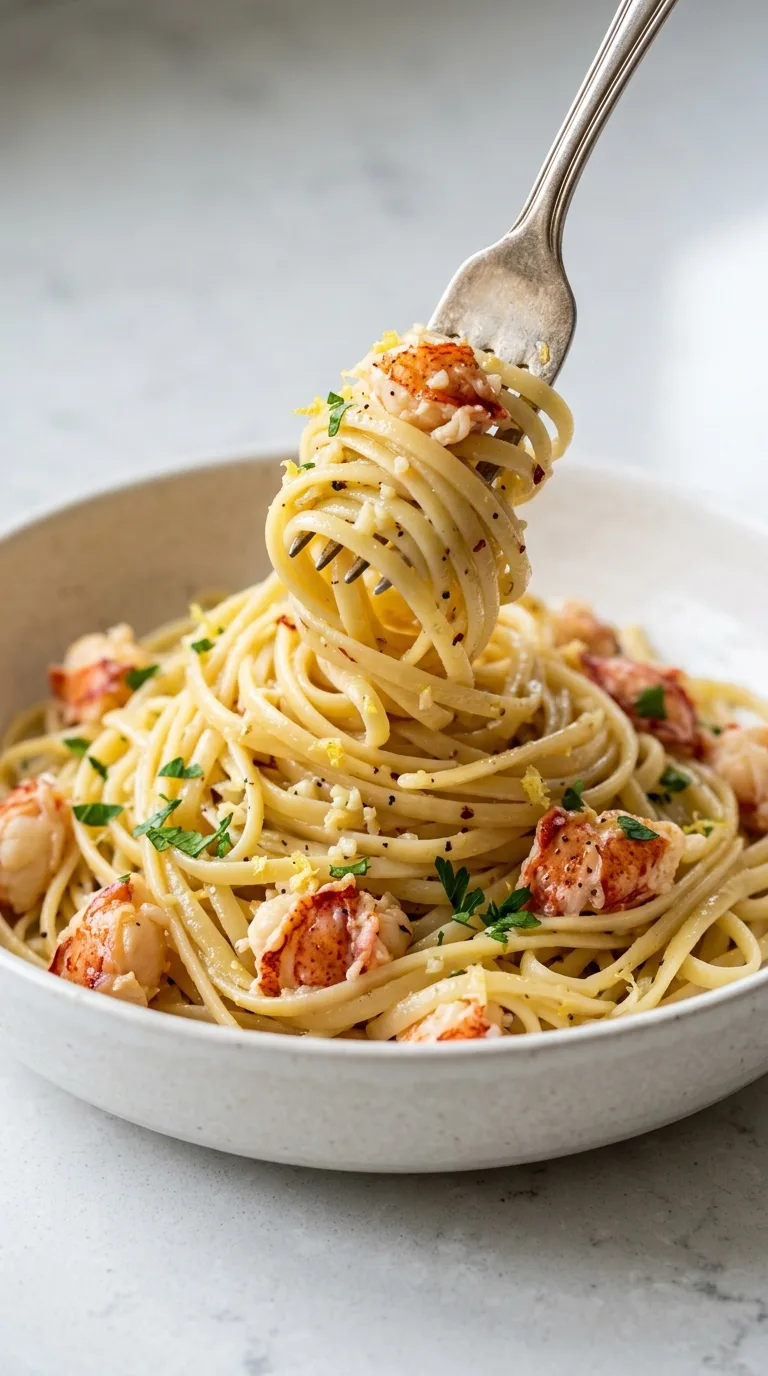
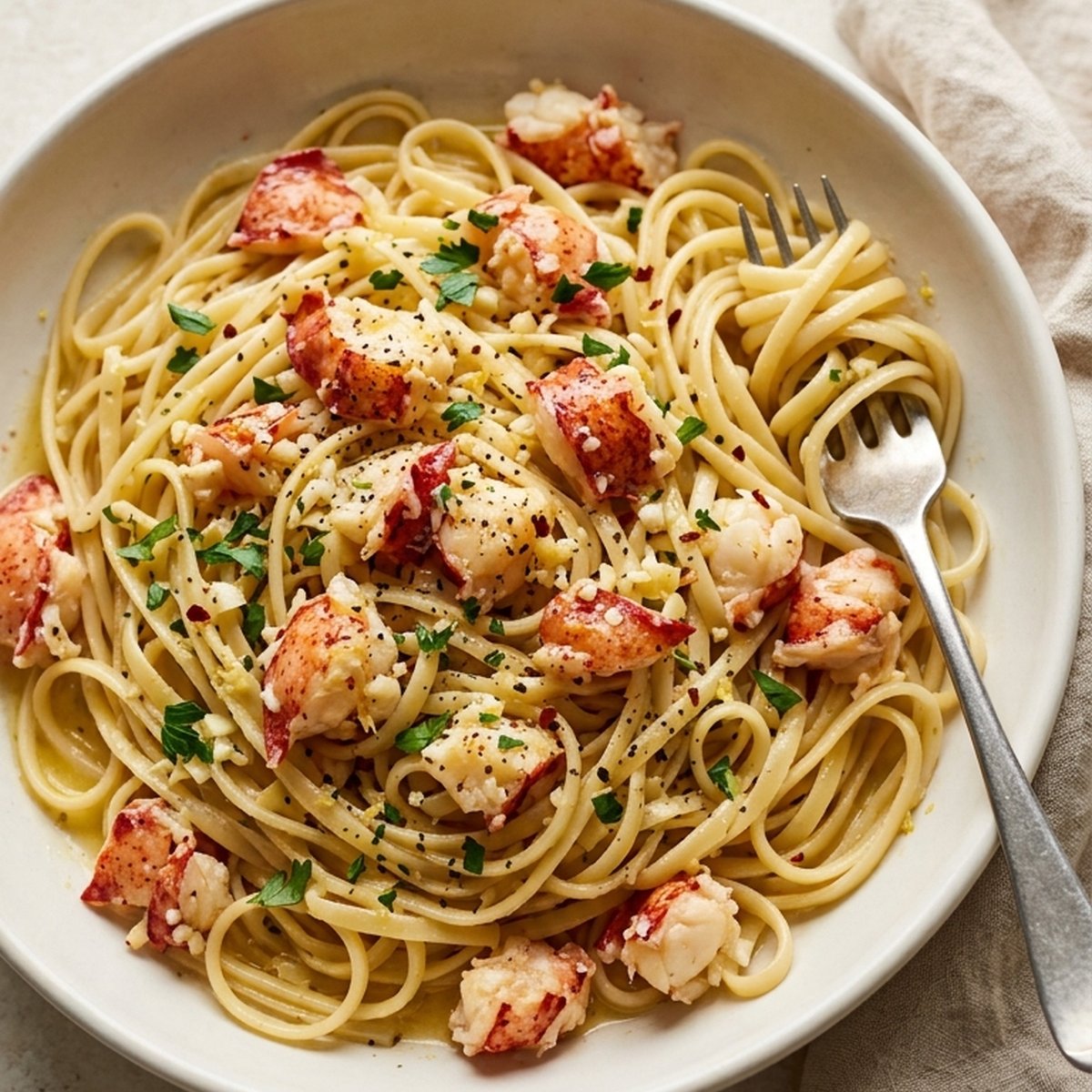
Buttered Lobster Pasta combines tender chunks of lobster with perfectly cooked linguine in a rich, glossy garlic butter sauce. Fresh lemon juice adds brightness, while a touch of lemon zest and parsley balances the buttery richness. The sauce lightly coats each strand of pasta without becoming heavy, allowing the sweet, delicate flavor of the lobster to remain the centerpiece.
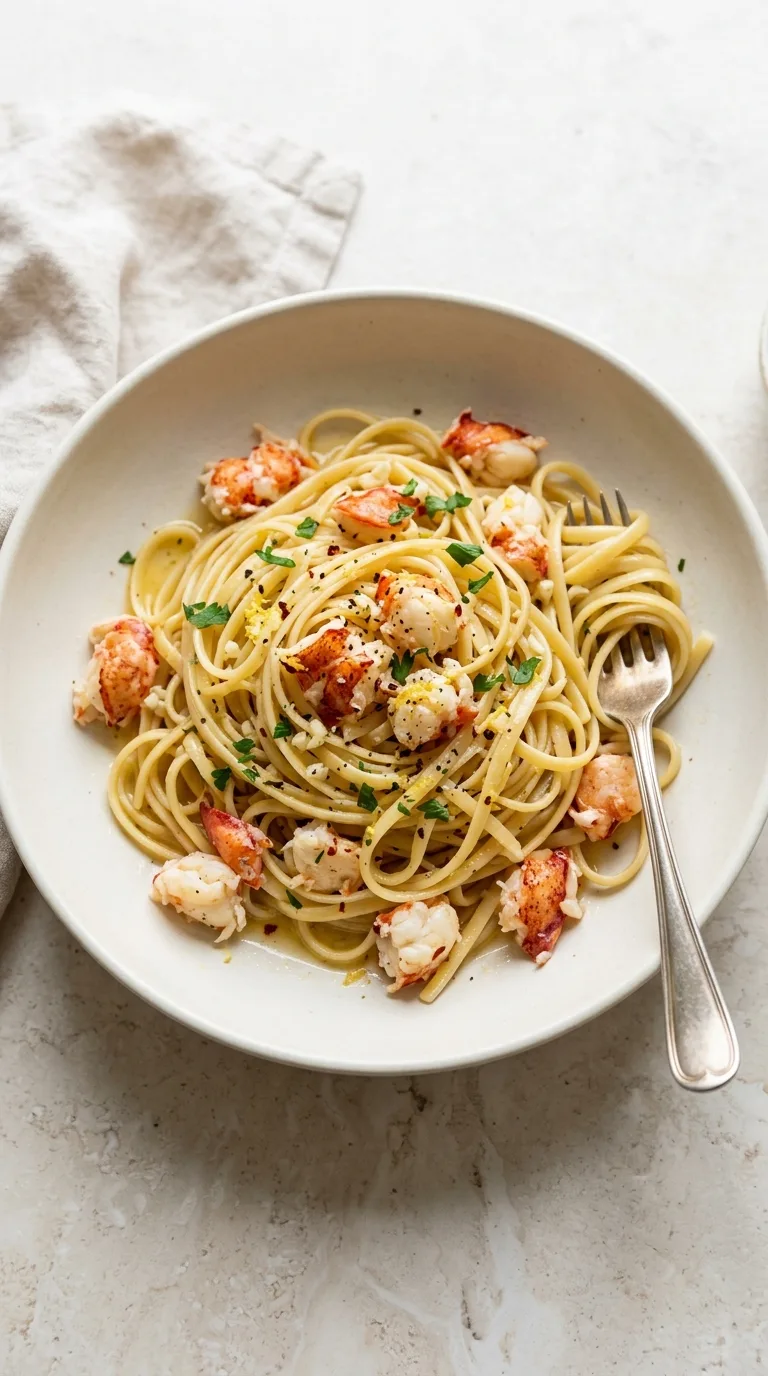
This version uses cooked lobster meat, making it a practical choice for a special dinner without the extra work of preparing whole lobsters. The sauce comes together in a skillet while the pasta cooks, and a little reserved pasta water helps create a smooth, silky finish. The key is to warm the lobster gently rather than cook it again, keeping the meat tender and juicy.
Why This Recipe Works
- Cooked lobster keeps preparation manageable. Starting with fully cooked lobster meat eliminates the need to boil or steam whole lobsters and reduces the risk of overcooking during the final assembly.
- Butter and pasta water create a silky sauce. Starchy pasta water helps the melted butter cling to the linguine, producing a glossy coating without heavy cream.
- Garlic adds depth without overpowering the seafood. Gently cooking minced garlic in butter releases its aroma while preserving the lobster's naturally sweet flavor.
- Lemon balances the richness. Fresh lemon juice provides acidity, while zest adds citrus fragrance without introducing additional liquid.
- Gentle heat protects the lobster's texture. Adding the cooked meat near the end warms it through without making it unnecessarily firm or rubbery.
Equipment Needed
- Large 6-quart (5.7 L) pot for boiling pasta
- Large 12-inch (30 cm) skillet with enough room to toss the linguine
- Colander for draining pasta
- Heatproof liquid measuring cup for reserving pasta water
- Microplane or fine grater for lemon zest
- Tongs for tossing and serving the pasta
Ingredients List
For the Pasta and Lobster
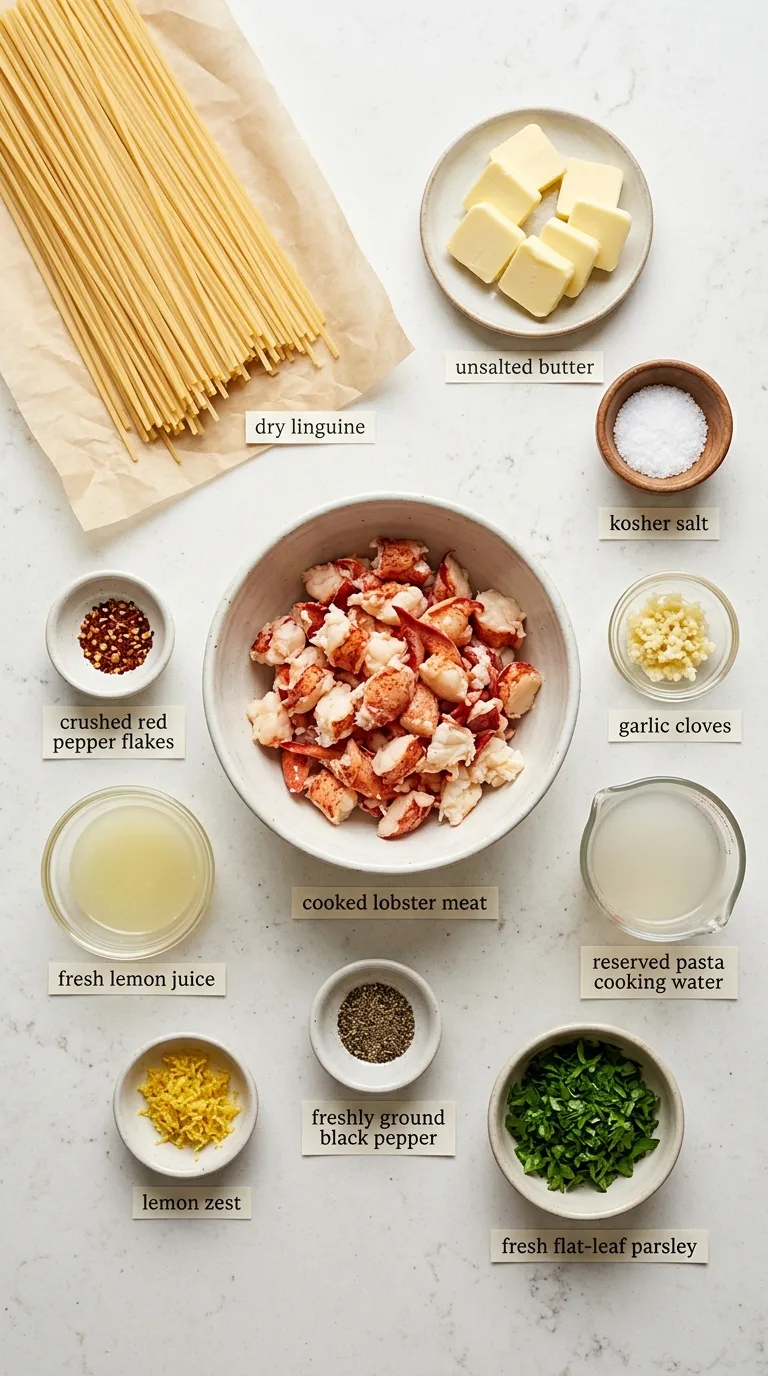
- 12 ounces (340 g) dry linguine — uncooked
- 12 ounces (340 g) cooked lobster meat — removed from the shell, cut into bite-sized pieces, and patted dry
- 1 tablespoon (15 g) kosher salt — for the pasta cooking water; use approximately 2 teaspoons (12 g) if using fine table salt instead
For the Garlic Butter Sauce
- 6 tablespoons (85 g) unsalted butter, divided — 4 tablespoons (57 g) for the sauce base and 2 tablespoons (28 g) for finishing
- 4 medium garlic cloves (12 g) — finely minced
- 1/4 teaspoon (0.5 g) crushed red pepper flakes — optional, for gentle heat
- 1/2 cup (120 ml) reserved pasta cooking water, divided — 1/4 cup (60 ml) for the initial sauce and up to 1/4 cup (60 ml) for adjusting consistency
- 2 tablespoons (30 ml) fresh lemon juice — freshly squeezed
- 1 teaspoon (2 g) finely grated lemon zest — from a thoroughly washed lemon
- 1/4 teaspoon (0.5 g) freshly ground black pepper — for seasoning
- 2 tablespoons (8 g) fresh flat-leaf parsley — finely chopped, divided; 1 tablespoon (4 g) for the sauce and 1 tablespoon (4 g) for garnish
Ingredient Notes and Substitutions
- Lobster Meat: Cooked lobster is the main ingredient, providing a naturally sweet seafood flavor and a tender, slightly firm texture. Claw, knuckle, and tail meat can all be used. A combination offers varied textures, but any fully cooked lobster meat works. Cooked shrimp can replace the lobster in an equal weight, although the finished dish will have a different seafood flavor and a firmer bite. Shrimp should also be warmed gently to prevent toughness.
- Linguine: Linguine has a broad, flat shape that holds the buttery sauce while remaining delicate enough to complement lobster. Spaghetti or fettuccine can replace linguine in an equal dry weight. Spaghetti produces a slightly lighter mouthfeel, while fettuccine creates a broader, more substantial bite. Cooking time should follow the package directions for the chosen pasta.
- Unsalted Butter: Butter provides the sauce's richness, smooth texture, and characteristic flavor. Unsalted butter also makes the seasoning easier to control. Salted butter can be used in the same quantity, but the finished sauce may taste saltier. Taste before making any additional seasoning adjustments. Olive oil is not a direct flavor substitute because it changes the characteristic buttery profile of the dish.
- Fresh Garlic: Fresh garlic contributes savory depth and a warm aroma. Because the sauce contains relatively few ingredients, its flavor is especially noticeable. Prepared minced garlic can work, although it may have a sharper or less fresh flavor. Garlic powder is less suitable because it does not provide the same aromatic quality when gently cooked in butter.
- Fresh Lemon Juice and Zest: Lemon juice cuts through the richness of the butter, while zest adds fragrant citrus oils. Together, they brighten the lobster without requiring a heavy sauce. Fresh lime juice can replace lemon juice in the same quantity, but the result will have a noticeably different citrus character. Bottled lemon juice may taste flatter, and there is no equally effective substitute for fresh zest in this preparation.
Step-by-Step Instructions
Step 1: Prepare the lobster and sauce ingredients
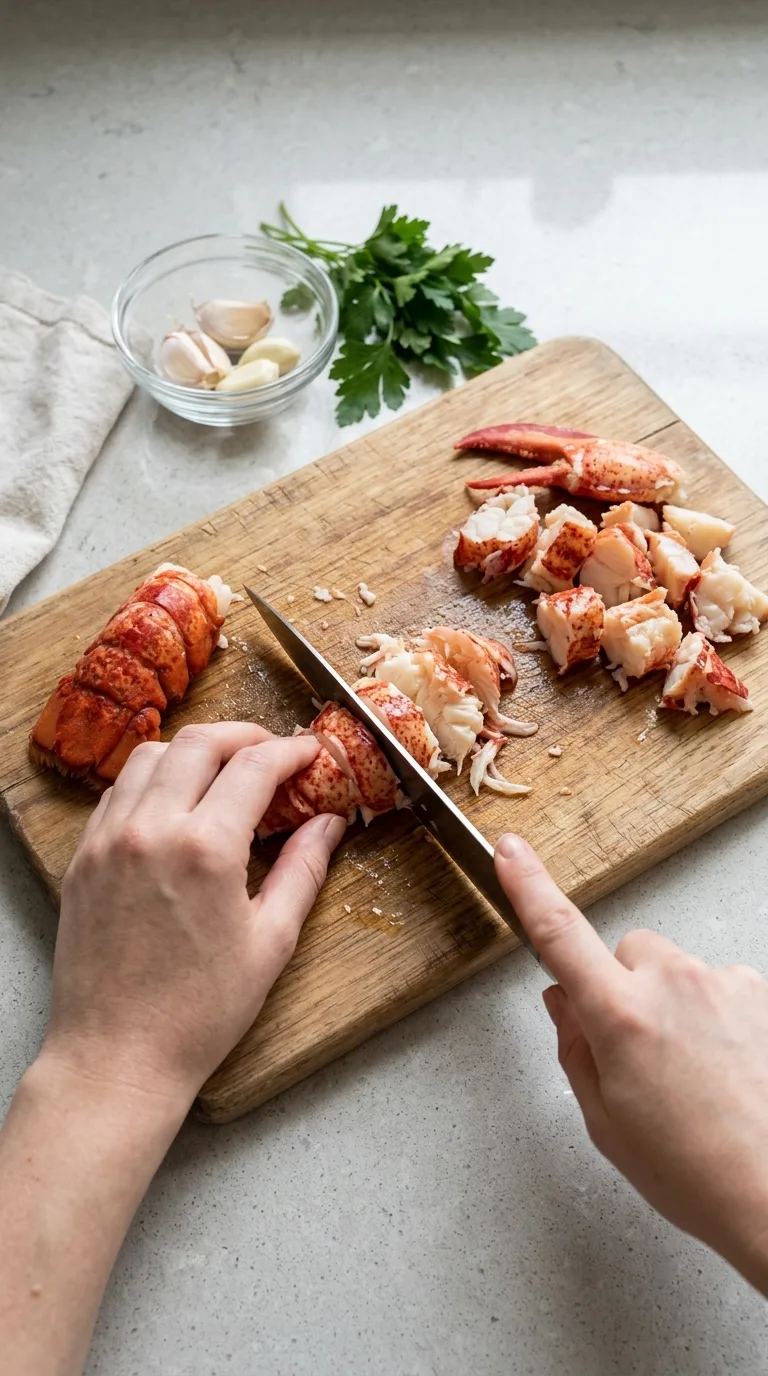
Cut the 12 ounces (340 g) of cooked lobster meat into bite-sized pieces, keeping the chunks large enough to remain distinct in the pasta. Pat them dry with paper towels to prevent excess moisture from thinning the sauce. Mince the 4 medium garlic cloves (12 g), finely grate the 1 teaspoon (2 g) lemon zest, squeeze the 2 tablespoons (30 ml) lemon juice, and chop the 2 tablespoons (8 g) parsley. Keep the ingredients ready beside the stove because the butter sauce cooks quickly.
Step 2: Bring the pasta water to a boil
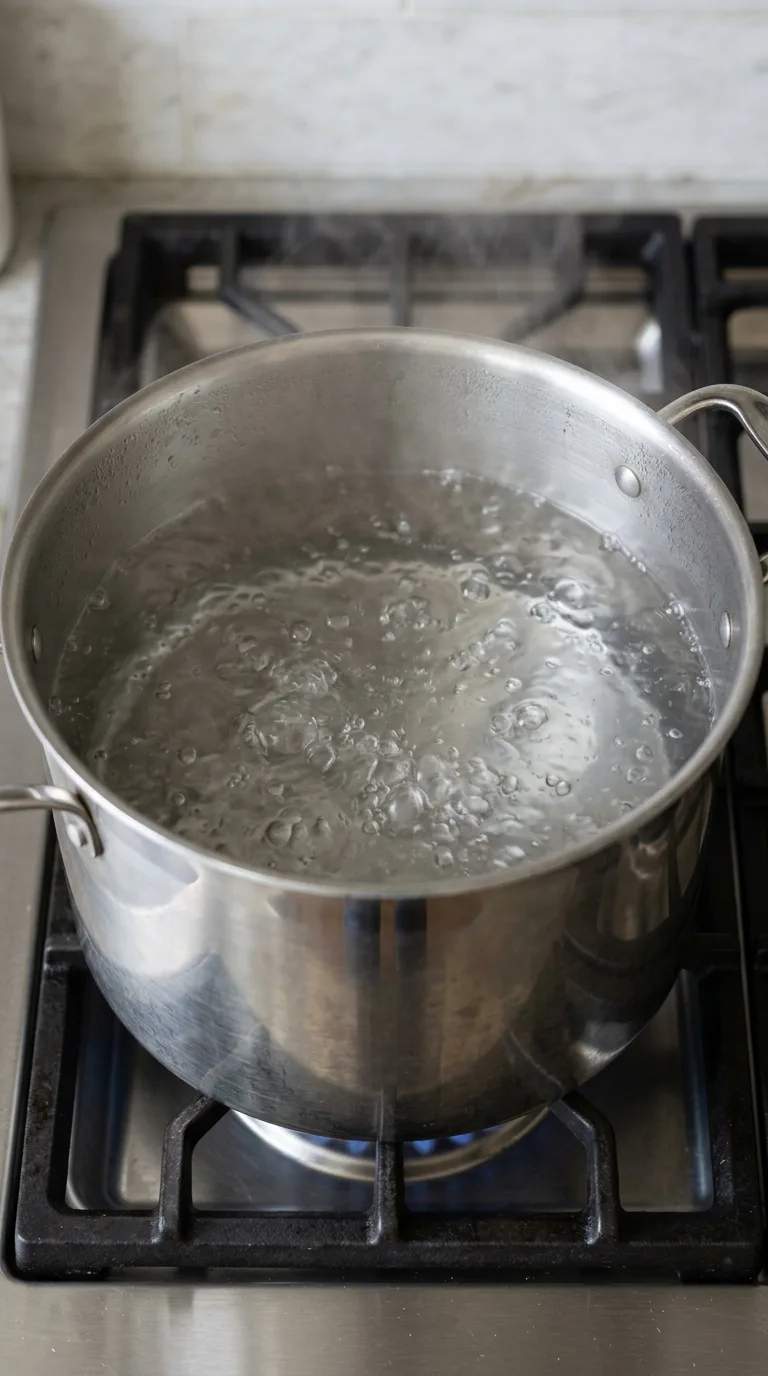
Fill a 6-quart (5.7 L) pot with approximately 4 quarts (3.8 L) water and bring it to a rolling boil over high heat. Add the 1 tablespoon (15 g) kosher salt and stir to dissolve. If using fine table salt, use the listed alternative measurement instead.
Step 3: Cook the linguine
Add the 12 ounces (340 g) dry linguine to the boiling water. Stir during the first minute to prevent the strands from sticking together. Cook according to the package directions, stopping when the pasta is just al dente. It should be tender on the outside with a slight firmness in the center. Before draining, reserve the 1/2 cup (120 ml) pasta cooking water listed for the sauce. Drain the linguine without rinsing it, allowing the surface starch to remain on the strands.
Step 4: Melt the butter and soften the garlic
While the pasta cooks, place a 12-inch (30 cm) skillet over medium-low heat. Add the first 4 tablespoons (57 g) unsalted butter. Allow it to melt gently without browning. Add the minced garlic and the optional 1/4 teaspoon (0.5 g) crushed red pepper flakes. Cook for approximately 1–2 minutes, stirring frequently, until the garlic smells fragrant and looks softened but remains pale. If it begins turning golden too quickly, reduce the heat immediately.
Step 5: Build the garlic butter sauce
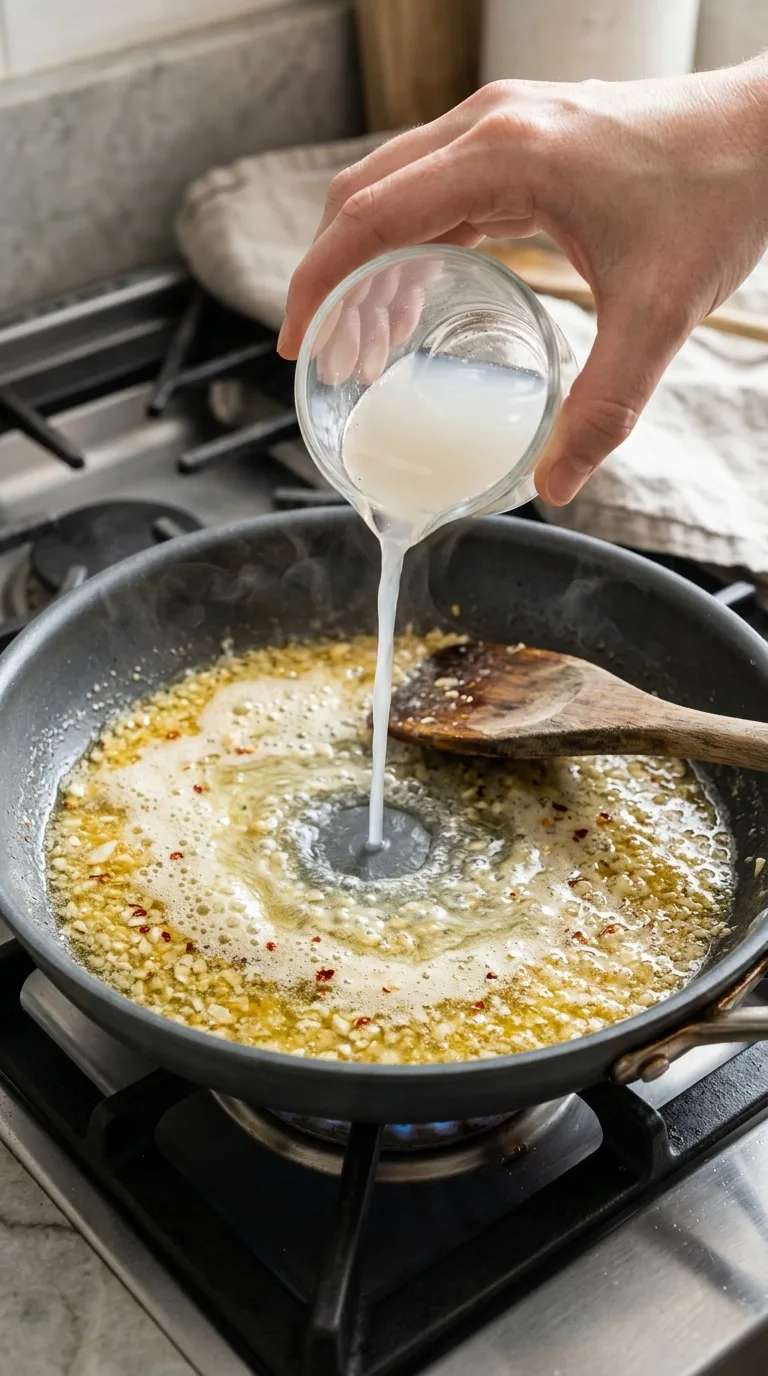
Pour the first 1/4 cup (60 ml) reserved pasta cooking water into the skillet, stirring or swirling the pan to combine it with the melted butter. Let the mixture simmer gently for approximately 1 minute. It should look lightly cloudy and begin to come together rather than separating into distinct pools of water and fat. Keep the heat low enough to avoid a vigorous boil.
Step 6: Add the linguine and coat it with sauce
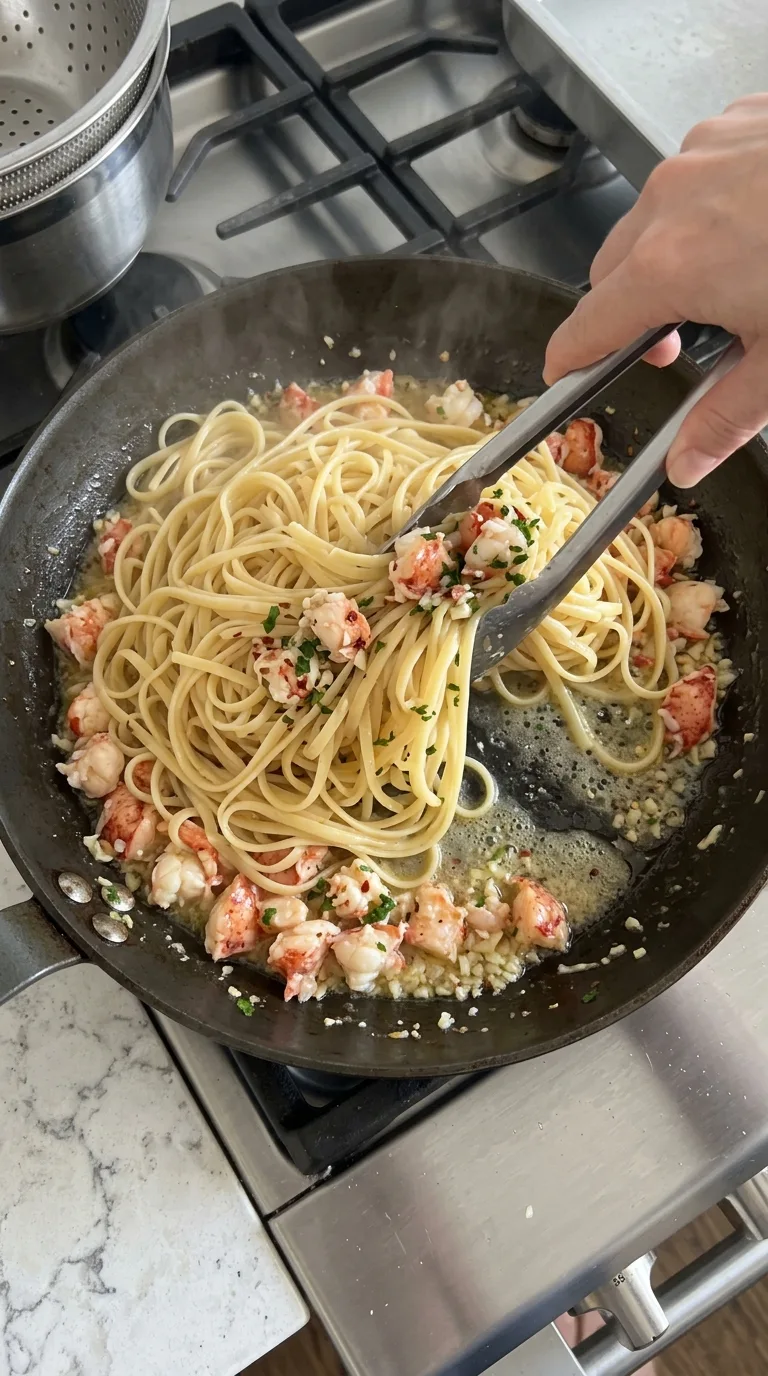
Transfer the drained linguine directly into the skillet. Using tongs, toss the pasta through the garlic butter mixture for approximately 1–2 minutes. Lift and turn the strands repeatedly so the sauce distributes evenly. The pasta should begin to look glossy, with a thin coating of butter sauce clinging to each strand. If it looks dry or sticky, add a little of the remaining reserved pasta cooking water rather than increasing the heat.
Step 7: Finish the butter emulsion
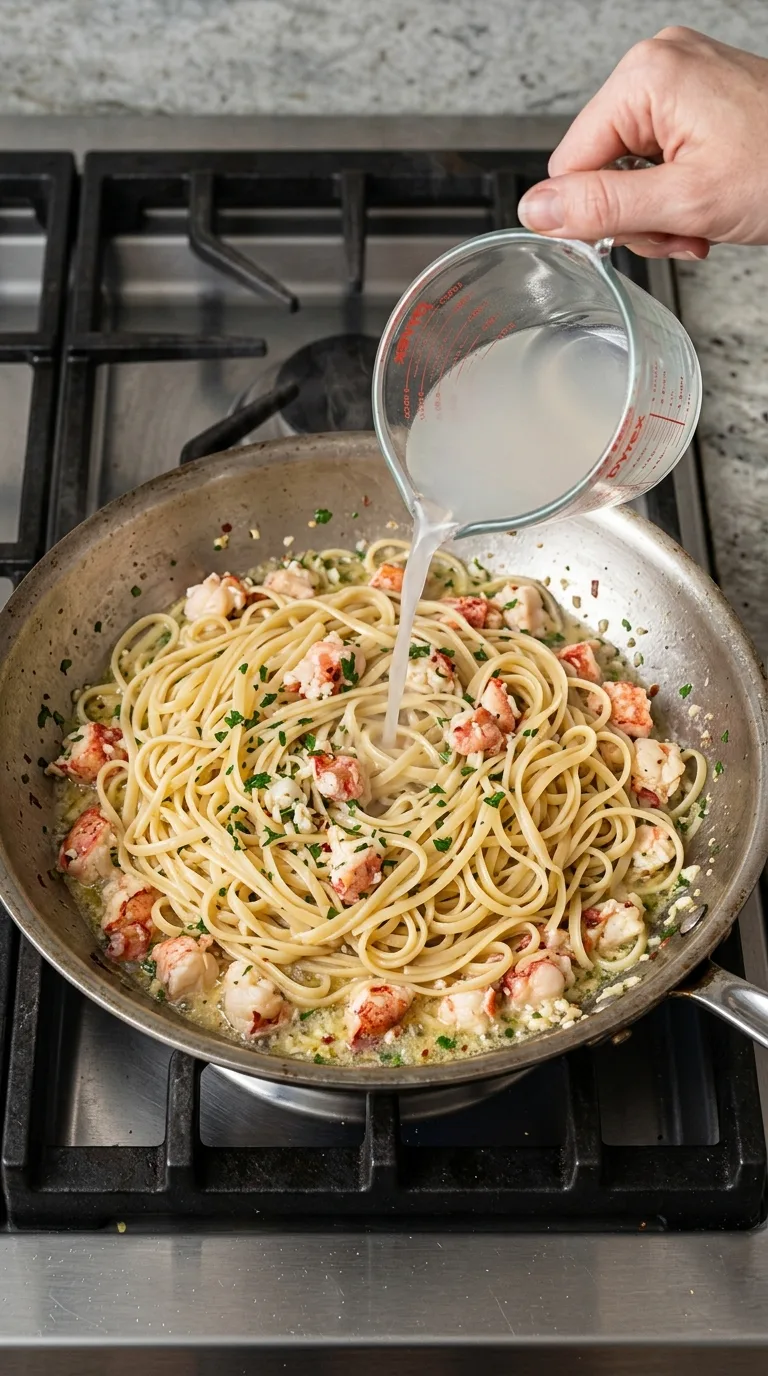
Reduce the heat to low and add the remaining 2 tablespoons (28 g) unsalted butter. Toss gently until the butter melts and the sauce becomes smooth and silky. Add more of the remaining reserved pasta cooking water as needed, using no more than the listed 1/4 cup (60 ml). The finished sauce should coat the pasta without collecting in a watery puddle at the bottom of the skillet. If the sauce appears oily, remove the skillet briefly from the heat and toss vigorously with a small amount of the reserved water until it comes together.
Step 8: Add the lobster and warm gently
Add the 12 ounces (340 g) cooked lobster meat to the skillet. Fold it into the pasta carefully with the tongs, avoiding vigorous stirring that could break the pieces apart. Warm over low heat for approximately 1–2 minutes, just until the lobster is heated through. For food safety, previously cooked refrigerated lobster being reheated should reach an internal temperature of 165°F (74°C). Avoid prolonged heating, which can make lobster meat firm and chewy.
Step 9: Add the lemon and final seasonings
Remove the skillet from the heat. Add the 2 tablespoons (30 ml) fresh lemon juice, 1 teaspoon (2 g) lemon zest, 1/4 teaspoon (0.5 g) freshly ground black pepper, and the first 1 tablespoon (4 g) chopped parsley. Toss gently until everything is evenly distributed. The finished pasta should look glossy and lightly coated, with visible pieces of lobster throughout. The lemon should provide a fresh, balanced finish without overwhelming the butter.
Step 10: Garnish and serve
Divide the Buttered Lobster Pasta among 3 serving bowls. Scatter the remaining 1 tablespoon (4 g) chopped parsley over the portions. Serve immediately while the sauce is warm and fluid. As the pasta cools, the butter naturally begins to thicken, so the texture is at its best shortly after preparation.
Storage, Freezing, and Make-Ahead Instructions
- Refrigeration: Buttered Lobster Pasta is best served immediately, but leftovers can be refrigerated. Transfer the pasta to a shallow, airtight container and refrigerate promptly, within 2 hours of cooking. Keep the refrigerator at 40°F (4°C) or below. For best quality, consume within 1–2 days. The pasta may absorb the sauce during storage, and the lobster can become firmer after reheating. If the cooked lobster was prepared before making the pasta, account for its previous refrigerated storage time rather than treating the finished dish as freshly cooked seafood.
- Freezing: Freezing the fully assembled pasta is not recommended for the best texture. Butter sauces can separate during freezing and thawing, while cooked linguine may become soft or grainy. Lobster meat can also lose some of its delicate texture. If preparing components ahead, freeze the cooked lobster separately in a freezer-safe, airtight container while it is still within its safe storage period. For best quality, use within 2–3 months. Thaw frozen lobster overnight in the refrigerator before preparing the pasta.
- Reheating: Reheat refrigerated leftovers gently in a covered skillet over low heat, adding a small splash of water to loosen the sauce if needed. Stir occasionally to distribute the heat without breaking up the lobster. Reheat leftovers to 165°F (74°C), checking the seafood and pasta in several places. Avoid repeated reheating, which can make the lobster tough and the pasta overly soft.
- Make-Ahead Preparation: The best make-ahead approach is to prepare the components separately. The cooked lobster can be portioned and refrigerated in an airtight container. The garlic can be minced, the parsley chopped, and the lemon prepared in advance. Keep the lobster refrigerated until needed. Cook the linguine and prepare the butter sauce shortly before serving. Avoid fully assembling the dish far in advance because the pasta continues absorbing moisture and the sauce loses its silky texture as it cools.
FAQ
Can I make Buttered Lobster Pasta with frozen lobster meat?
Yes. Frozen cooked lobster meat works well when thawed properly in the refrigerator. Drain any accumulated liquid and pat the meat dry before adding it to the sauce. Make sure the lobster is fully cooked, since this recipe's short warming stage is not intended to cook raw seafood.
Why is my butter sauce oily instead of creamy?
An oily appearance usually means the butter and water have separated. This can happen when the skillet becomes too hot or the pasta does not have enough starchy moisture. Remove the skillet from the heat, add a small amount of the reserved pasta cooking water, and toss until the sauce looks glossy and evenly distributed.
Can I use a different type of pasta?
Yes. Spaghetti and fettuccine are both suitable alternatives to linguine. Spaghetti creates a lighter, more delicate presentation, while fettuccine provides wider strands that carry more sauce. Cook the chosen pasta until al dente and preserve its starchy cooking water for the butter sauce.
How do I keep lobster from becoming rubbery?
Start with fully cooked lobster and avoid exposing it to high heat for an extended period. Add it near the end of the recipe and heat only as needed to reach a safe serving temperature. Large, gently handled pieces are also less likely to break apart during tossing.
Can I make this pasta ahead of time for a dinner party?
You can prepare the lobster, garlic, parsley, and lemon components ahead, but it is better to cook the pasta and finish the sauce close to serving time. The sauce is most appealing when freshly emulsified, and the lobster retains a better texture when it is not repeatedly heated.
Ingredients
Method
- Cut the 12 ounces (340 g) of cooked lobster meat into bite-sized pieces, keeping the chunks large enough to remain distinct in the pasta. Pat them dry with paper towels to prevent excess moisture from thinning the sauce. Mince the 4 medium garlic cloves (12 g), finely grate the 1 teaspoon (2 g) lemon zest, squeeze the 2 tablespoons (30 ml) lemon juice, and chop the 2 tablespoons (8 g) parsley. Keep the ingredients ready beside the stove because the butter sauce cooks quickly.
- Fill a 6-quart (5.7 L) pot with approximately 4 quarts (3.8 L) water and bring it to a rolling boil over high heat. Add the 1 tablespoon (15 g) kosher salt and stir to dissolve. If using fine table salt, use the listed alternative measurement instead.
- Add the 12 ounces (340 g) dry linguine to the boiling water. Stir during the first minute to prevent the strands from sticking together. Cook according to the package directions, stopping when the pasta is just al dente. It should be tender on the outside with a slight firmness in the center. Before draining, reserve the 1/2 cup (120 ml) pasta cooking water listed for the sauce. Drain the linguine without rinsing it, allowing the surface starch to remain on the strands.
- While the pasta cooks, place a 12-inch (30 cm) skillet over medium-low heat. Add the first 4 tablespoons (57 g) unsalted butter. Allow it to melt gently without browning. Add the minced garlic and the optional 1/4 teaspoon (0.5 g) crushed red pepper flakes. Cook for approximately 1–2 minutes, stirring frequently, until the garlic smells fragrant and looks softened but remains pale. If it begins turning golden too quickly, reduce the heat immediately.
- Pour the first 1/4 cup (60 ml) reserved pasta cooking water into the skillet, stirring or swirling the pan to combine it with the melted butter. Let the mixture simmer gently for approximately 1 minute. It should look lightly cloudy and begin to come together rather than separating into distinct pools of water and fat. Keep the heat low enough to avoid a vigorous boil.
- Transfer the drained linguine directly into the skillet: Using tongs, toss the pasta through the garlic butter mixture for approximately 1–2 minutes. Lift and turn the strands repeatedly so the sauce distributes evenly. The pasta should begin to look glossy, with a thin coating of butter sauce clinging to each strand. If it looks dry or sticky, add a little of the remaining reserved pasta cooking water rather than increasing the heat.
- Reduce the heat to low and add the remaining 2 tablespoons (28 g) unsalted butter. Toss gently until the butter melts and the sauce becomes smooth and silky. Add more of the remaining reserved pasta cooking water as needed, using no more than the listed 1/4 cup (60 ml). The finished sauce should coat the pasta without collecting in a watery puddle at the bottom of the skillet. If the sauce appears oily, remove the skillet briefly from the heat and toss vigorously with a small amount of the reserved water until it comes together.
- Add the 12 ounces (340 g) cooked lobster meat to the skillet. Fold it into the pasta carefully with the tongs, avoiding vigorous stirring that could break the pieces apart. Warm over low heat for approximately 1–2 minutes, just until the lobster is heated through. For food safety, previously cooked refrigerated lobster being reheated should reach an internal temperature of 165°F (74°C). Avoid prolonged heating, which can make lobster meat firm and chewy.
- Remove the skillet from the heat: Add the 2 tablespoons (30 ml) fresh lemon juice, 1 teaspoon (2 g) lemon zest, 1/4 teaspoon (0.5 g) freshly ground black pepper, and the first 1 tablespoon (4 g) chopped parsley. Toss gently until everything is evenly distributed. The finished pasta should look glossy and lightly coated, with visible pieces of lobster throughout. The lemon should provide a fresh, balanced finish without overwhelming the butter.
- Divide the Buttered Lobster Pasta among 3 serving bowls. Scatter the remaining 1 tablespoon (4 g) chopped parsley over the portions. Serve immediately while the sauce is warm and fluid. As the pasta cools, the butter naturally begins to thicken, so the texture is at its best shortly after preparation.