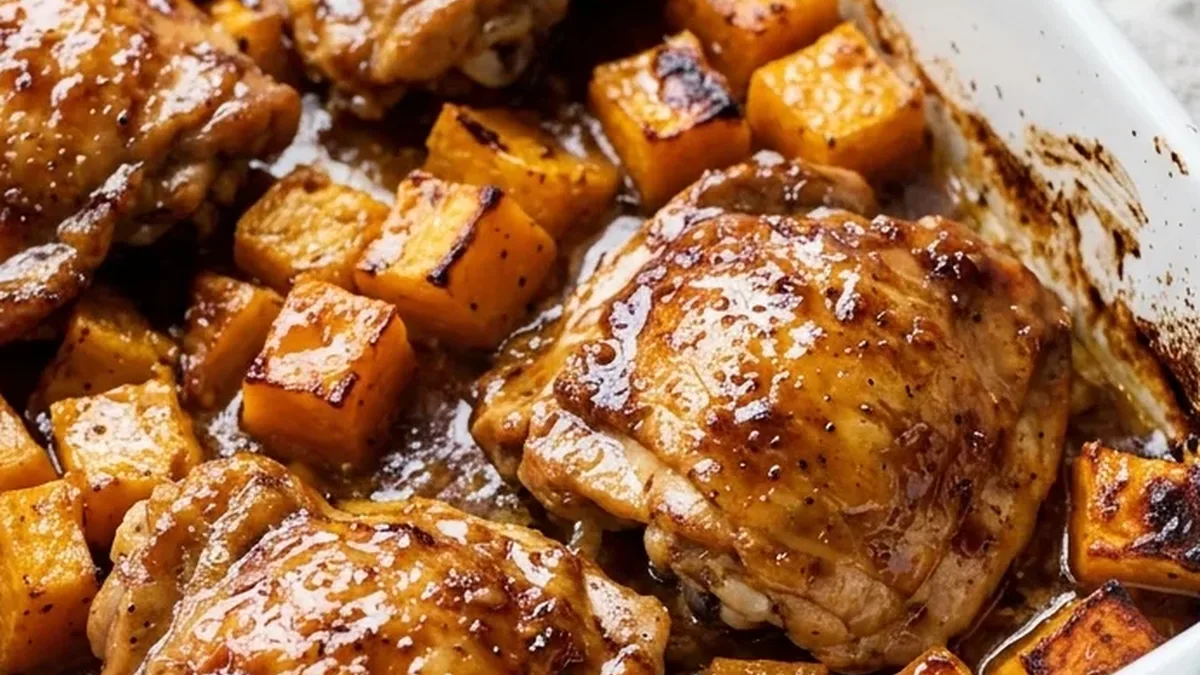
Maple Dijon Chicken With Butternut Squash pairs juicy roasted chicken thighs with tender squash and a tangy maple glaze. Apple cider vinegar cuts through the sweetness, while smoked paprika and garlic give the glaze a savory finish.
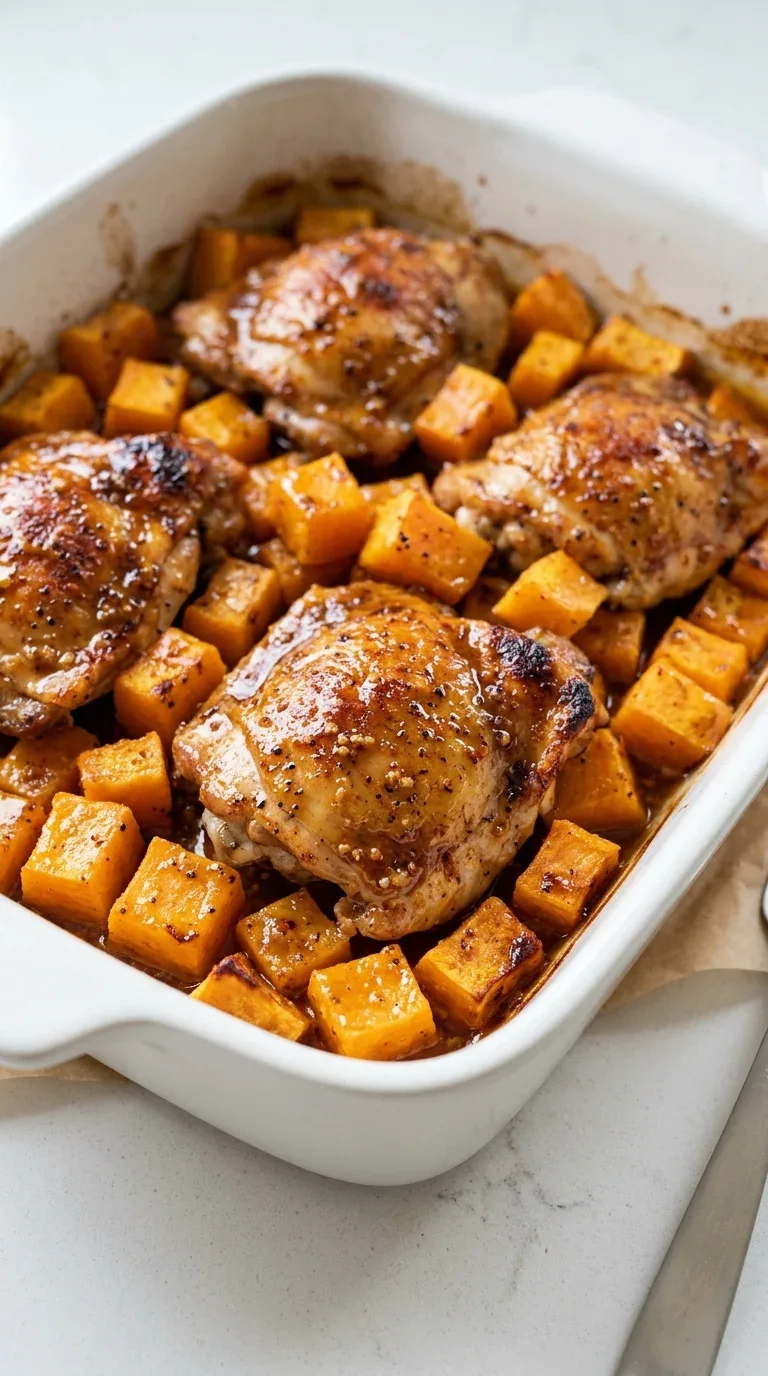
The squash gets a head start on the sheet pan so its edges can brown before the chicken goes in. A second coat of glaze goes on near the end of roasting, when it has just enough time to turn glossy and cling to the chicken.
What Makes This Recipe Work
The squash gets a head start: Roasting it on its own first gives the cubes time to soften and brown on the side touching the pan.
Boneless thighs fit the sheet-pan timing: Once the squash is partially tender, the chicken can cook alongside it while the squash finishes.
The glaze gets two coats: The first seasons the chicken as it roasts. The second goes on near the end so the maple syrup can turn glossy without spending the full roast in the oven.
Mustard and vinegar balance the maple: Dijon helps the glaze cling to the chicken, and cider vinegar gives it enough acidity to balance the sweet squash.
Tools for This Recipe
- 18 × 13-inch rimmed half-sheet pan
- Vegetable peeler, chef’s knife, and cutting board
- Two small bowls and a whisk
- Pastry brush and a spoon
- Thin spatula and tongs
- Instant-read thermometer
Key Ingredients
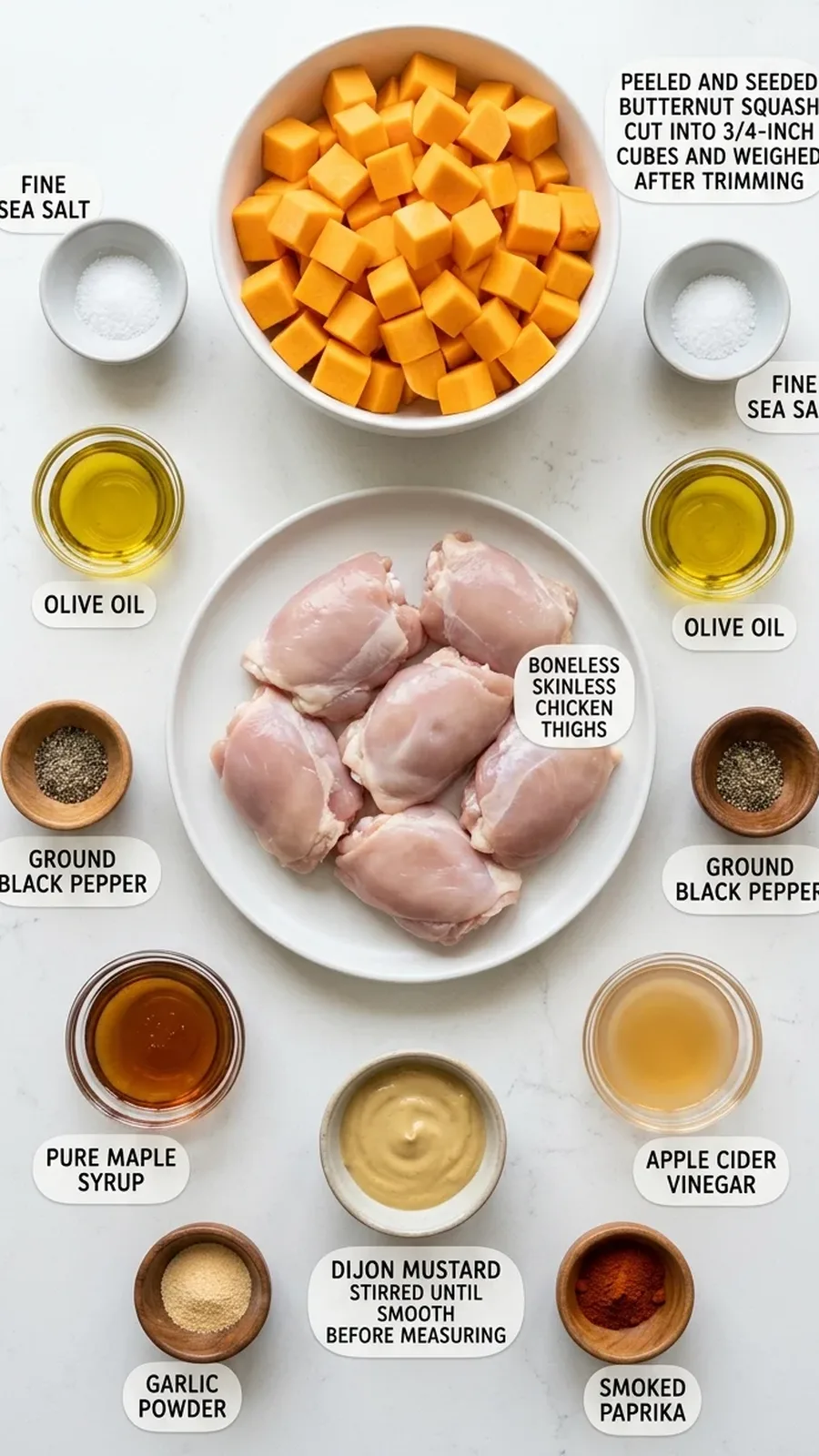
For the Squash
- 1 1/2 pounds (680 g) peeled and seeded butternut squash, cut into 3/4-inch (2 cm) cubes and weighed after trimming
- 1 1/2 tablespoons (22 mL) olive oil
- 1/2 teaspoon (3 g) fine sea salt
- 1/4 teaspoon (0.6 g) ground black pepper
For the Chicken and Glaze
- 2 pounds (907 g) boneless, skinless chicken thighs (6 thighs), trimmed of excess fat
- 2 tablespoons (30 mL) pure maple syrup
- 2 tablespoons (30 mL) Dijon mustard, stirred until smooth before measuring
- 1 tablespoon (15 mL) apple cider vinegar
- 1 tablespoon (15 mL) olive oil
- 1 teaspoon (3 g) garlic powder
- 1/2 teaspoon (1 g) smoked paprika
- 1/2 teaspoon (3 g) fine sea salt
- 1/4 teaspoon (0.6 g) ground black pepper
Ingredient Notes and Variations
Chicken thighs: Boneless, skinless thighs stay juicy as the glaze sets. Boneless, skinless chicken breasts can work, though their thickness affects the roasting time. Check them early with a thermometer.
Butternut squash: Its firm flesh holds its shape as it roasts. Use the same weight of plain, pre-cut fresh butternut squash and trim any oversized pieces so they cook evenly.
Pure maple syrup: It sweetens the glaze and helps it brown. Honey can replace it in the same amount, though the glaze will be slightly thicker and may darken faster.
Dijon mustard: Smooth Dijon adds tang and helps the glaze coat the thighs evenly. Whole-grain mustard works in the same amount and gives the glaze a coarser texture.
Apple cider vinegar: It brightens the glaze. White wine vinegar can replace it in the same amount for a sharper finish.
Step-by-Step Method
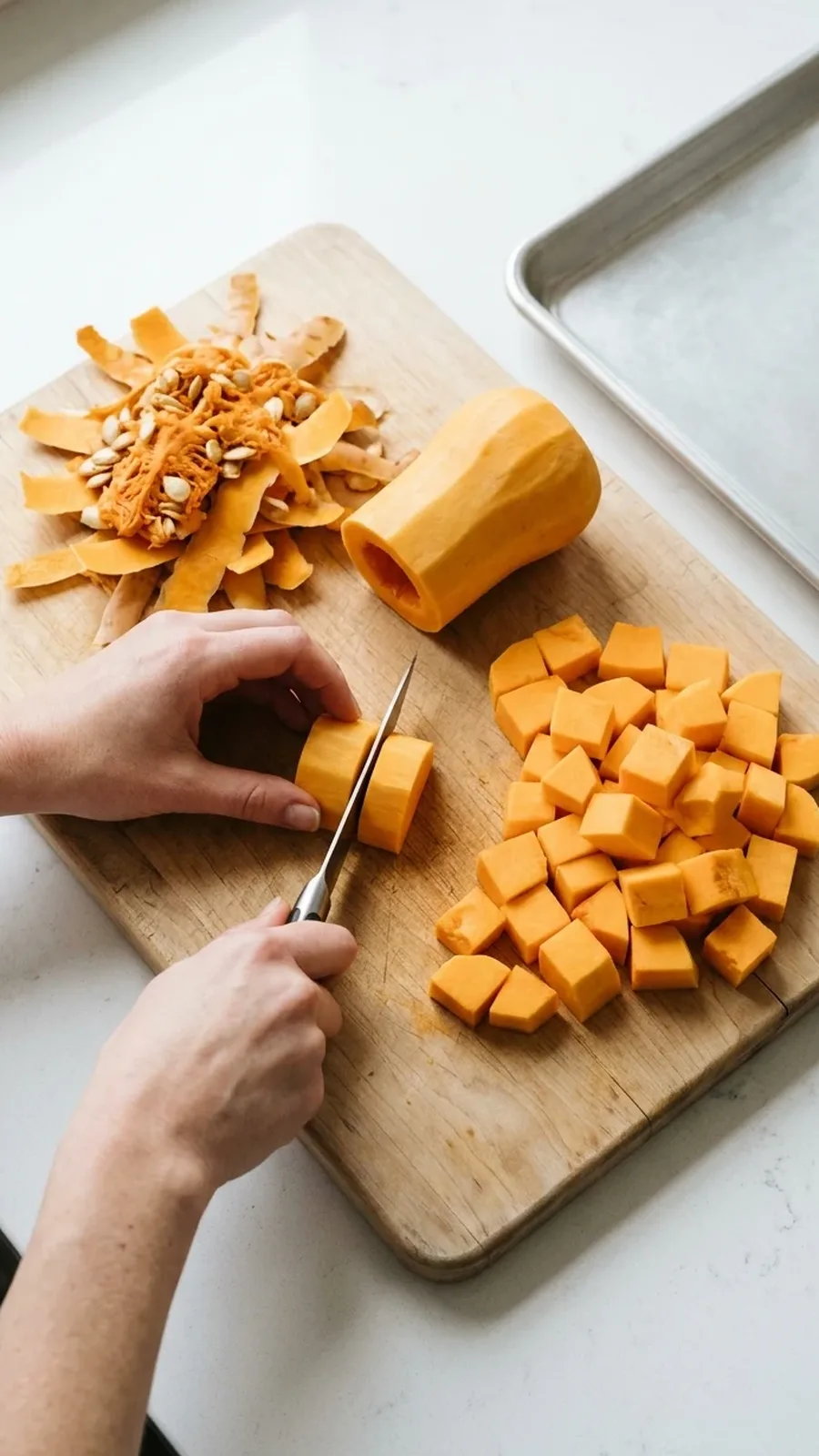
Step 1: Prep the squash and heat the oven. Peel and seed the butternut squash, then cut it into 3/4-inch (2 cm) cubes.
Set a rack in the center of the oven and preheat to 425°F (220°C).
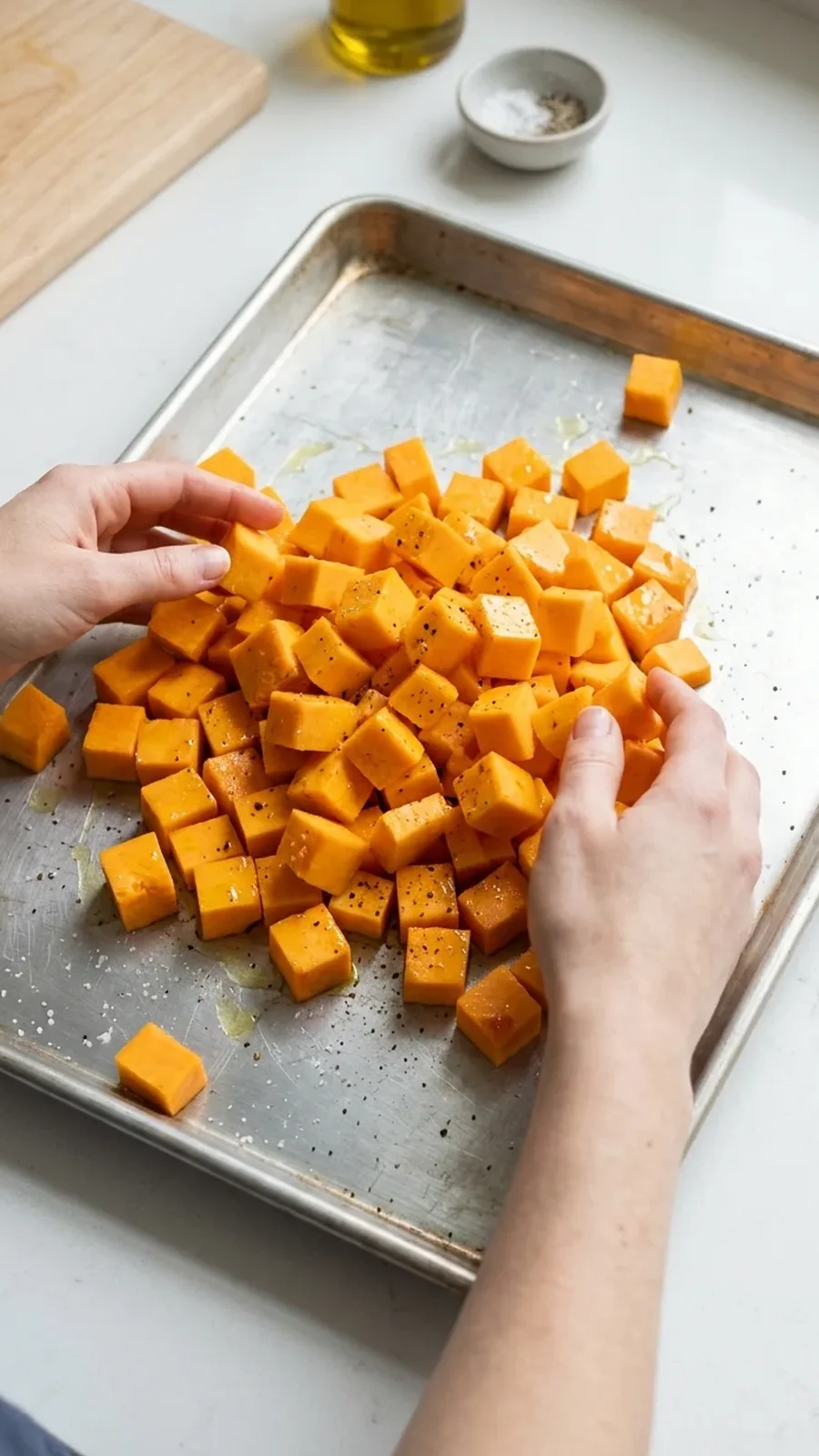
Step 2: Start roasting the squash. On an 18 × 13-inch rimmed half-sheet pan, toss the squash with 1 1/2 tablespoons olive oil, 1/2 teaspoon fine sea salt, and 1/4 teaspoon black pepper.
Spread the cubes in one layer and roast for 15 minutes. The undersides should be starting to brown, and the centers should still feel firm.
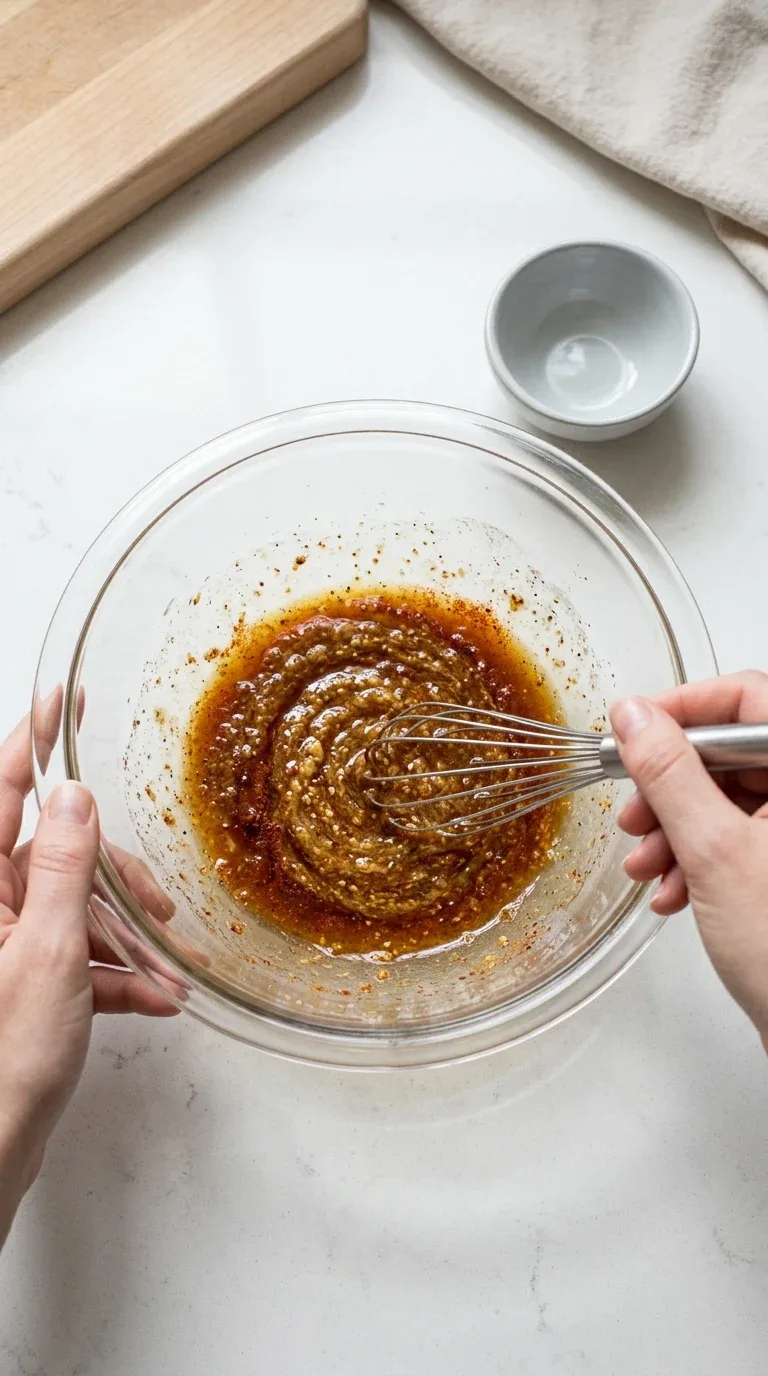
Step 3: Mix and divide the glaze. While the squash roasts, whisk the maple syrup, Dijon mustard, apple cider vinegar, 1 tablespoon olive oil, garlic powder, smoked paprika, 1/2 teaspoon fine sea salt, and 1/4 teaspoon black pepper until smooth.
Spoon half into a second bowl and set it aside for the final glaze.
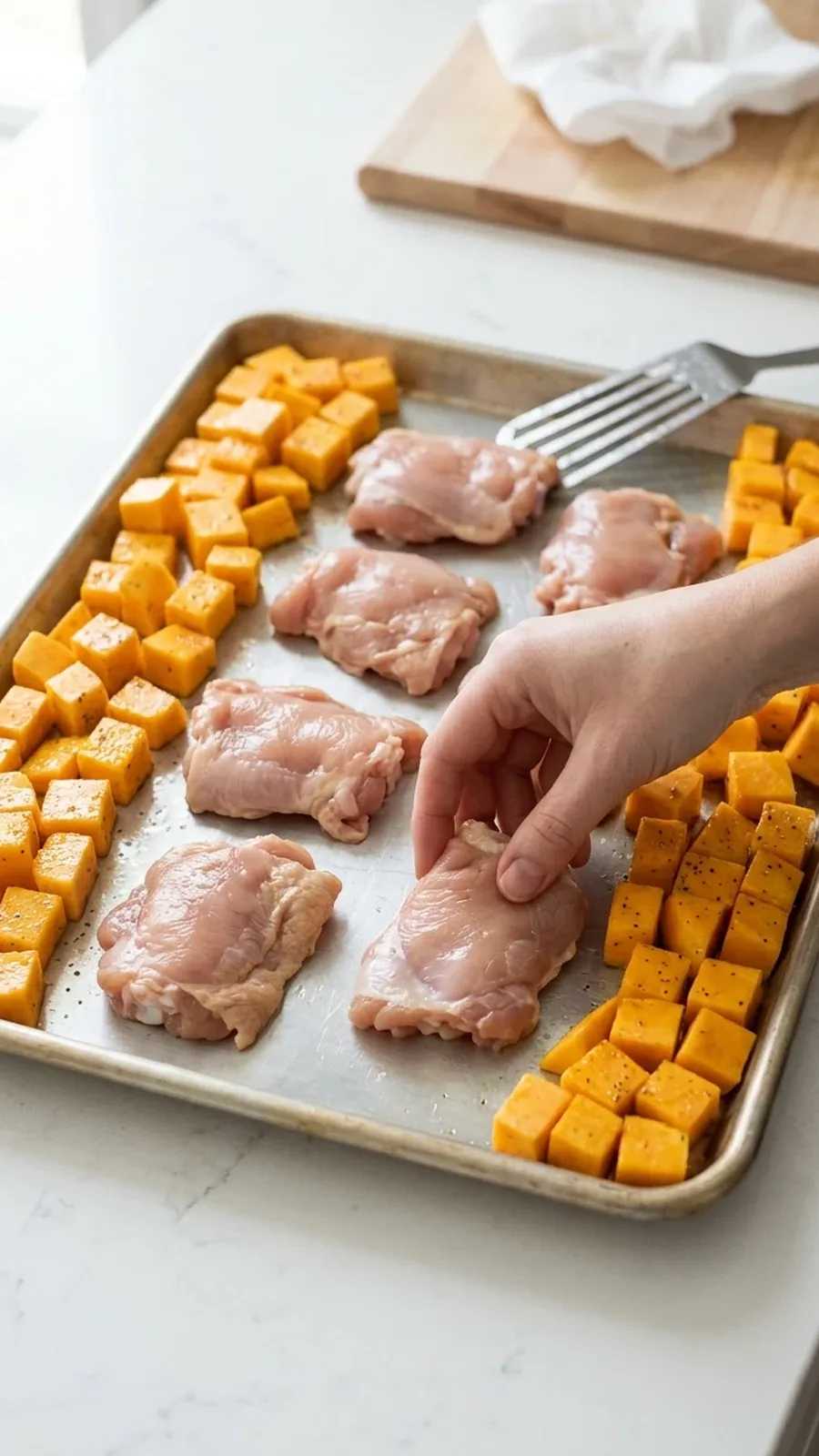
Step 4: Add the chicken. Flip the squash with a thin spatula and push it to the sides of the pan, keeping it in one layer.
Pat the 6 chicken thighs dry, unfold them, and space them apart in the center. Brush the tops with the first portion of glaze. Discard any glaze left in the bowl used for the raw chicken. Roast for 15 minutes.
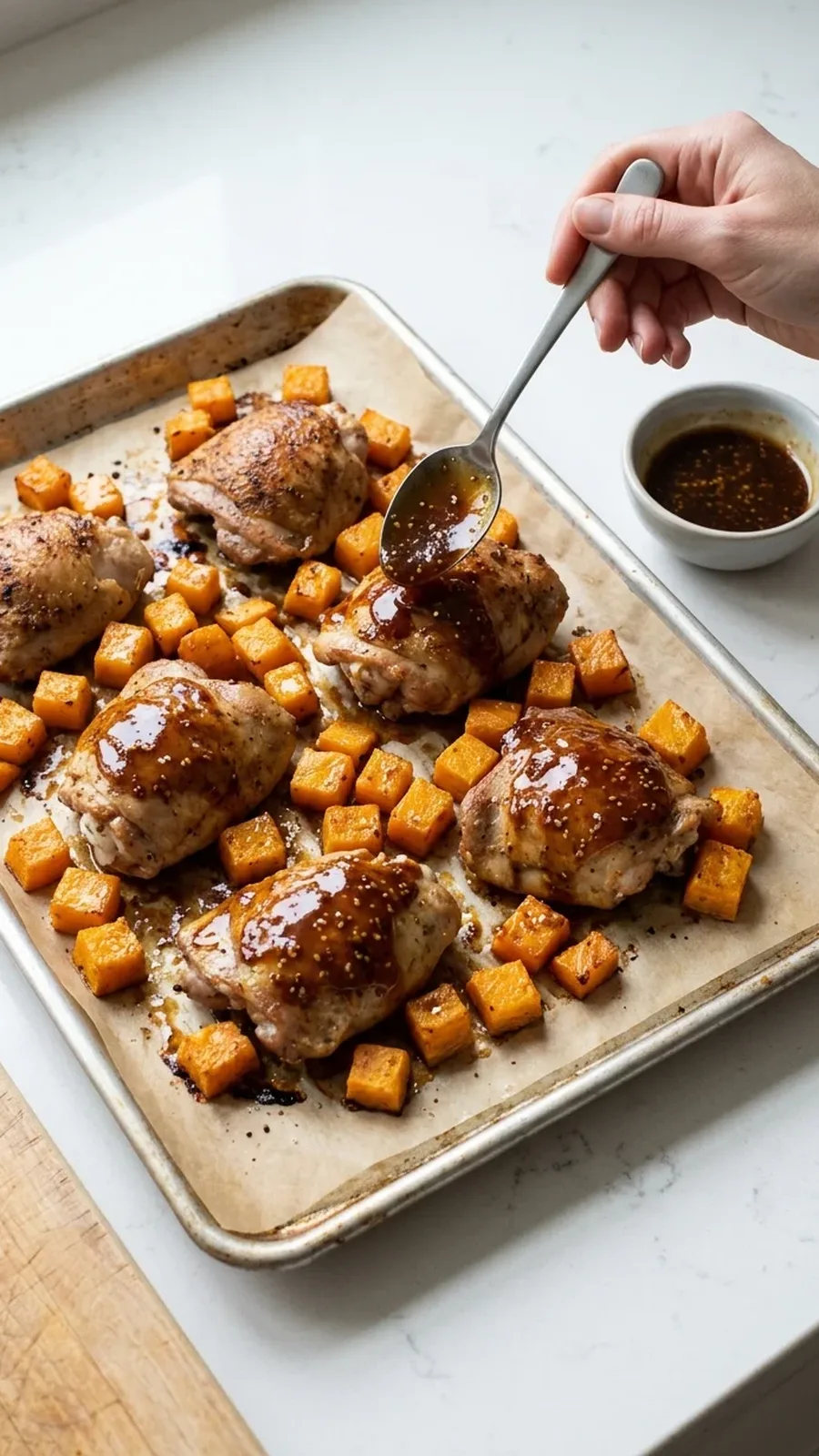
Step 5: Finish with the reserved glaze. Spoon the reserved glaze over the thighs.
Roast for 5 minutes, then check that each thigh has reached at least 165°F (74°C) at its thickest point and that a fork slides easily into the squash. If some thighs need longer, return those to the oven and transfer any finished thighs to a clean plate. Move the squash off the pan if it’s already tender.
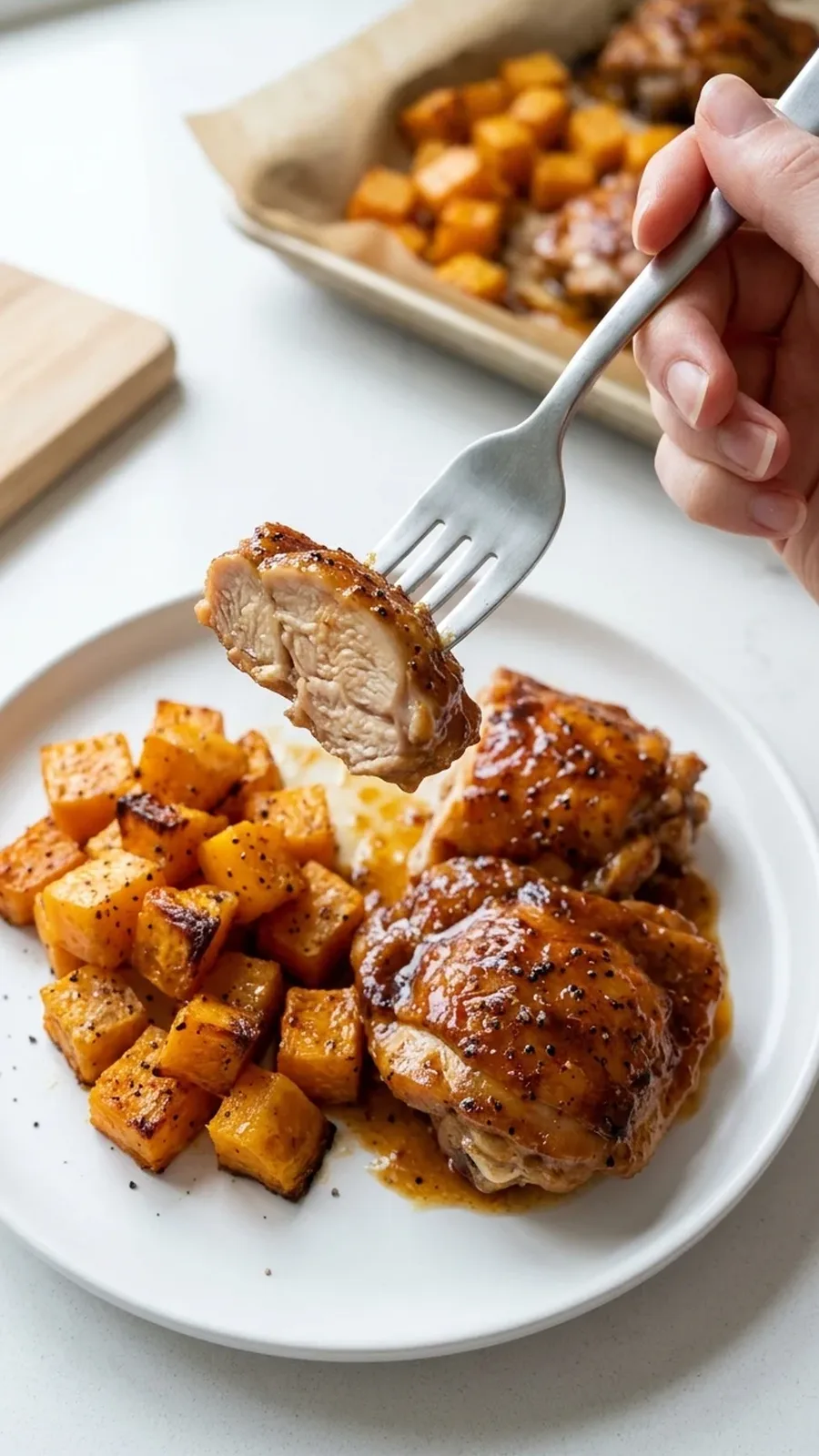
Step 6: Rest and serve. Transfer the chicken to a clean platter and let it rest for 5 minutes.
Divide the squash among 6 plates and serve each portion with 1 chicken thigh.
- Dry pre-cut squash before seasoning: If the cubes are damp from the package, blot them so they start browning sooner.
- Leave space between the chicken and squash. The thighs release juices as they roast. A little room helps keep the squash from sitting in the liquid and steaming.
- Open up folded thighs: Unfolding the meat makes its thickness more even and gives the glaze more surface to cover.
- Check the chicken from the side: Insert the thermometer sideways into the thickest part of each thigh so the tip stays in the meat and clear of the hot pan.
Make-Ahead and Storage Notes
Refrigerate: Transfer the chicken and squash to shallow airtight containers and refrigerate within 2 hours. Use within 3 days. Store them separately if you want to reheat the squash uncovered to crisp its edges.
Freeze and thaw: Freeze cooled portions in airtight freezer containers for up to 2 months for best quality. Thaw overnight in the refrigerator. The squash will be softer after thawing.
Reheat: Cover the chicken loosely in an oven-safe dish to limit moisture loss. Warm the squash uncovered on a separate baking sheet. Reheat both to 165°F (74°C).
Make ahead: Cube the squash and whisk the glaze up to 1 day in advance. Refrigerate them in separate airtight containers. Whisk the glaze again before dividing it for the two coats.
Recipe Questions
Can I use frozen butternut squash?
Fresh squash gives you more predictable browning. If you use frozen squash, roast it straight from frozen and wait until the surface moisture has evaporated and the undersides begin to color before adding the chicken. The squash may need a longer head start.
What if the chicken is done before the squash?
Transfer the chicken to a clean plate and let it rest while the squash continues roasting. Spread the squash into the space left by the chicken so the cubes have more room to brown.
Why did my squash turn out soft and pale?
Crowding and surface moisture are common causes. Blot damp cubes before seasoning and give them enough space to sit directly against the pan. If juices from the chicken collect around the squash, move the cubes to a dry area of the pan to finish roasting.
What goes well with maple Dijon chicken and butternut squash?
A crisp green salad or steamed green beans adds a fresh contrast to the sweet squash. Wild rice works well if you want a side that can soak up the maple Dijon pan juices.
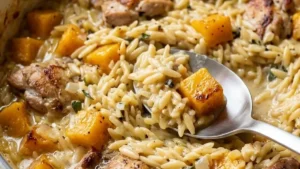
Pair this recipe with or save for later: Chicken and Butternut Squash Orzo, Butternut Squash Risotto, Cinnamon Pecan Roasted Butternut Squash, and Roasted Butternut Squash with Cranberries & Feta.
Ingredients
Method
- Set a rack in the center of the oven and preheat to 425°F (220°C).
- Spread the cubes in one layer and roast for 15 minutes. The undersides should be starting to brown, and the centers should still feel firm.
- Spoon half into a second bowl and set it aside for the final glaze.
- Pat the 6 chicken thighs dry, unfold them, and space them apart in the center. Brush the tops with the first portion of glaze. Discard any glaze left in the bowl used for the raw chicken. Roast for 15 minutes.
- Roast for 5 minutes, then check that each thigh has reached at least 165°F (74°C) at its thickest point and that a fork slides easily into the squash. If some thighs need longer, return those to the oven and transfer any finished thighs to a clean plate. Move the squash off the pan if it’s already tender.
- Divide the squash among 6 plates and serve each portion with 1 chicken thigh.