Cinnamon Pecan Roasted Butternut Squash is a warm, comforting side dish featuring tender cubes of butternut squash, toasted pecans, fragrant cinnamon, and a light maple glaze. Roasting brings out the squash's natural sweetness while creating golden, caramelized edges. The pecans add a buttery crunch that contrasts with the soft, creamy interior of the squash.
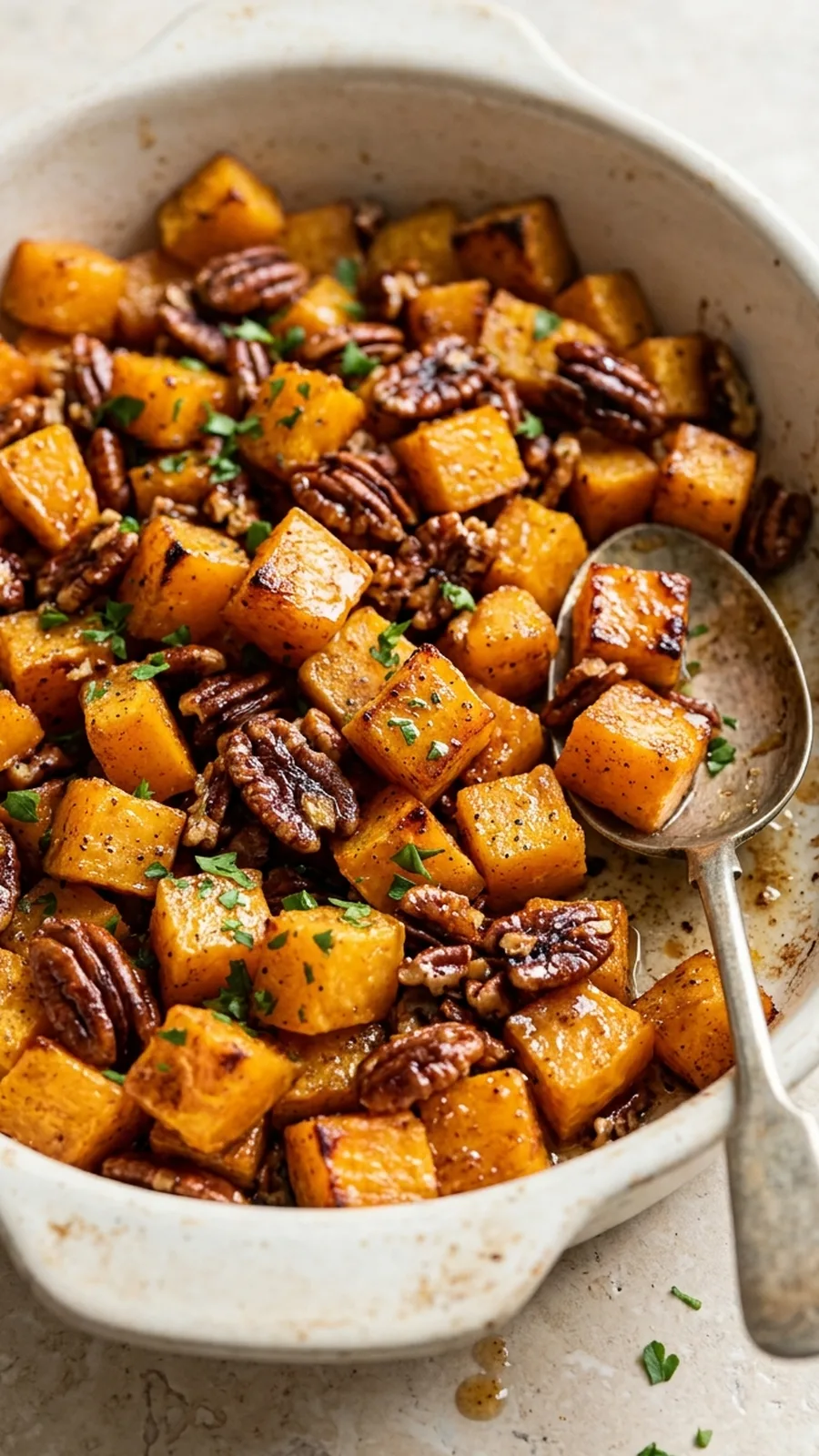
This oven-roasted recipe uses simple ingredients and a standard sheet pan, making it an easy addition to fall dinners, holiday gatherings, or Thanksgiving menus. The squash roasts first, allowing its edges to brown before the maple syrup and pecans are added near the end. This helps the nuts toast without burning and keeps the glaze from becoming overly dark.
Why This Recipe Works
- High-heat roasting develops natural sweetness. The squash caramelizes around the edges while becoming tender inside, creating more flavor than boiling or steaming.
- Maple syrup adds a light glaze. Adding it toward the end of roasting gives the squash a glossy coating without exposing the syrup to the oven's heat for the entire cooking time.
- Cinnamon complements the squash. Its warm, slightly sweet aroma enhances the squash's earthy flavor without overwhelming it.
- Pecans provide a contrasting texture. Adding them during the final roasting stage allows them to become fragrant and lightly toasted while maintaining their crunch.
- A single layer encourages browning. Giving the squash enough space on the baking sheet helps moisture evaporate instead of trapping steam between the pieces.
Equipment Needed
- Large rimmed baking sheet, approximately 18 × 13 inches (46 × 33 cm)
- Parchment paper, optional, for easier cleanup
- Sharp chef's knife
- Sturdy cutting board
- Vegetable peeler
- Large mixing bowl
- Measuring spoons and measuring cups
- Flexible spatula or large spoon
Ingredients List
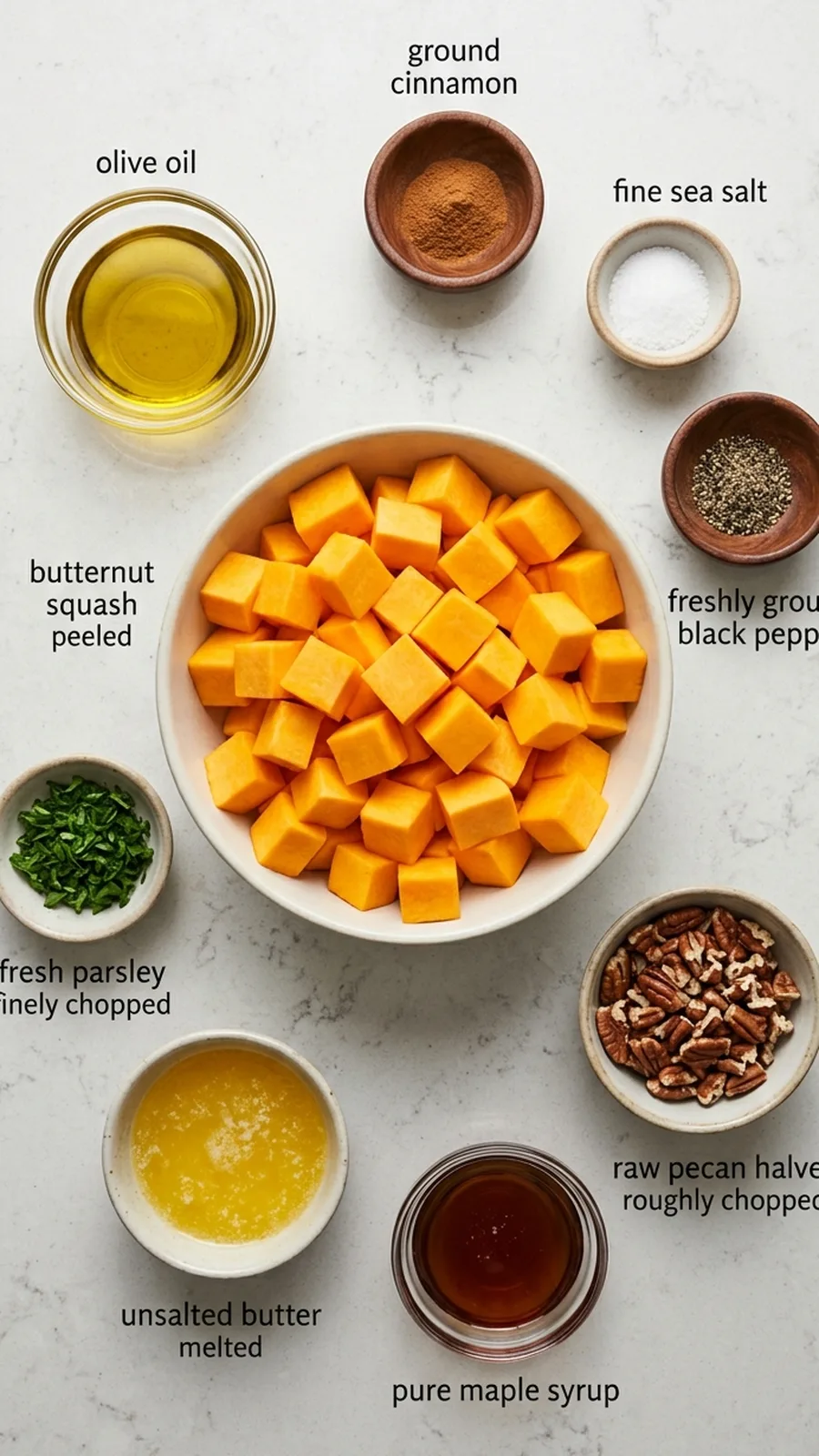
For the Roasted Butternut Squash
- 2 pounds (900 g) butternut squash, peeled, seeded, and cut into 1-inch (2.5 cm) cubes; weight measured after preparation
- 2 tablespoons (30 ml) olive oil
- 1 teaspoon (2.6 g) ground cinnamon
- 1/2 teaspoon (3 g) fine sea salt
- 1/4 teaspoon (0.5 g) freshly ground black pepper
For the Maple Pecan Finish
- 1/3 cup (35 g) raw pecan halves, roughly chopped
- 2 tablespoons (30 ml) pure maple syrup
- 1 tablespoon (14 g) unsalted butter, melted
Optional Garnish
- 1 tablespoon (4 g) fresh parsley, finely chopped, optional, for serving
Ingredient Notes and Substitutions
- Butternut Squash: Butternut squash is the foundation of this recipe. Its dense, naturally sweet flesh becomes tender and creamy when roasted, while the exterior develops golden-brown edges. Choose a squash that feels heavy for its size and has firm, unblemished skin. Pre-cut fresh butternut squash is a convenient alternative, provided the pieces are evenly sized. Substitution: Peeled honeynut squash or kabocha squash can work in the same prepared weight. Honeynut squash tends to taste sweeter, while kabocha has a slightly drier, starchier texture. Roasting time may vary depending on the density of the squash.
- Ground Cinnamon: Cinnamon gives the roasted squash its distinctive warm, aromatic flavor. It balances the earthy sweetness of the vegetable and complements the maple syrup. Substitution: Pumpkin pie spice can replace ground cinnamon in the same quantity. The flavor will be more complex because the blend typically contains additional spices such as ginger, nutmeg, or cloves.
- Pure Maple Syrup: Pure maple syrup creates a delicate glaze that coats the squash and helps the edges develop a deeper color during the final roasting stage. Substitution: Honey can replace maple syrup in the same quantity. Honey generally produces a more floral sweetness and can brown quickly, so watch the squash closely toward the end of roasting.
- Pecans: Pecans contribute a rich, buttery flavor and a crisp texture. Their slightly earthy taste balances the sweetness of the squash and maple glaze. Substitution: Chopped walnuts can replace pecans in the same quantity. Walnuts have a more pronounced, slightly bitter flavor and may toast a little differently.
- Olive Oil and Butter: Olive oil coats the squash during the initial roasting stage, helping its surface brown while preventing excessive dryness. Butter enriches the maple glaze and gives the finished dish a smoother, rounder flavor. Substitution: Avocado oil can replace olive oil in the same quantity. For a dairy-free version, replace the unsalted butter with the same amount of melted plant-based butter. The glaze may taste slightly different depending on the product.
Step-by-Step Instructions
Step 1: Prepare the Butternut Squash and Preheat the Oven
Preheat your oven to 425°F (220°C).
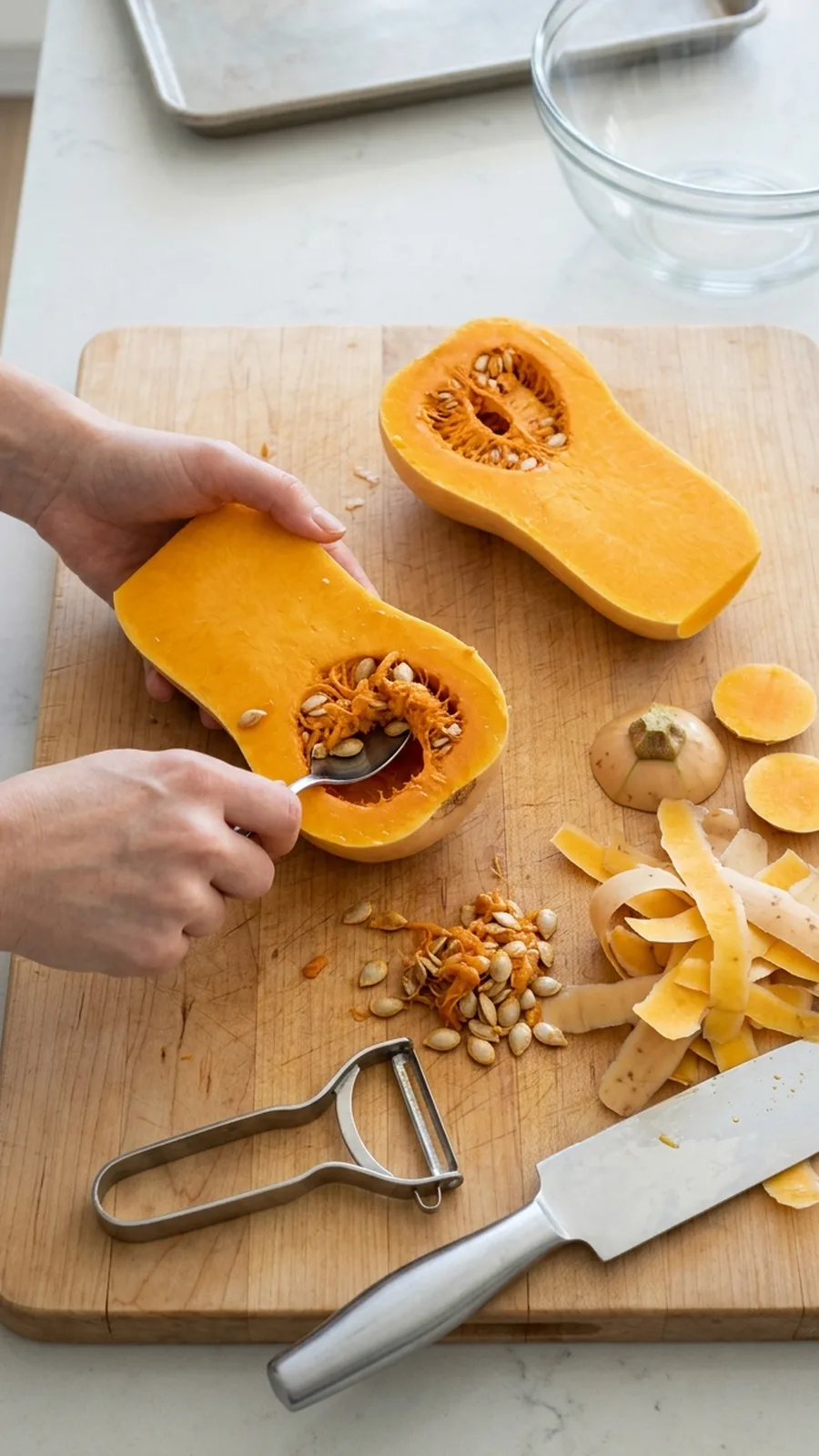
Peel the butternut squash with a sturdy vegetable peeler. Trim the ends, cut the squash in half lengthwise, and scoop out the seeds.
Cut the flesh into approximately 1-inch (2.5 cm) cubes, aiming for uniform pieces so they roast at the same rate.
Measure 2 pounds (900 g) of prepared squash. Pat the cubes dry with a clean kitchen towel or paper towels if they feel damp. Excess surface moisture can prevent proper caramelization.
Step 2: Season the Squash
Place the prepared squash cubes in a large mixing bowl.
Add:
- 2 tablespoons (30 ml) olive oil
- 1 teaspoon (2.6 g) ground cinnamon
- 1/2 teaspoon (3 g) fine sea salt
- 1/4 teaspoon (0.5 g) freshly ground black pepper
Toss thoroughly until the cubes are evenly coated.
The squash should have a light sheen from the oil, with the cinnamon distributed evenly across the surfaces. Avoid leaving dry pockets of seasoning at the bottom of the bowl.
Step 3: Arrange on the Baking Sheet
Line an 18 × 13-inch (46 × 33 cm) rimmed baking sheet with parchment paper, if desired.
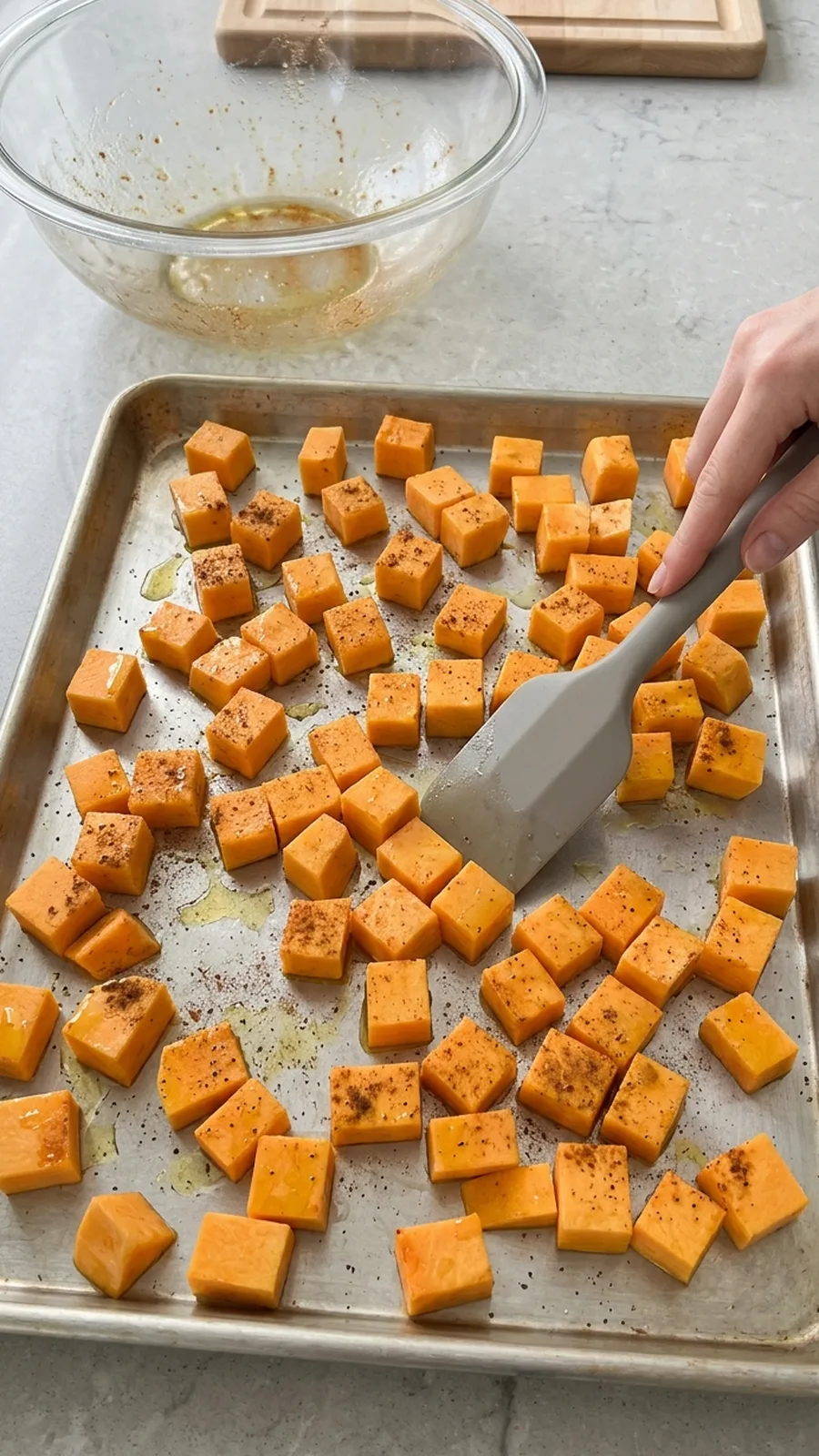
Spread the seasoned squash across the sheet in a single, even layer.
Leave a little space between the cubes whenever possible. Crowded pieces release moisture that can cause the squash to steam instead of roast.
If the squash appears tightly packed, use a second baking sheet to give the pieces more room.
Step 4: Roast Until the Edges Begin to Brown
Place the baking sheet on the middle oven rack.
Roast at 425°F (220°C) for 20 minutes.
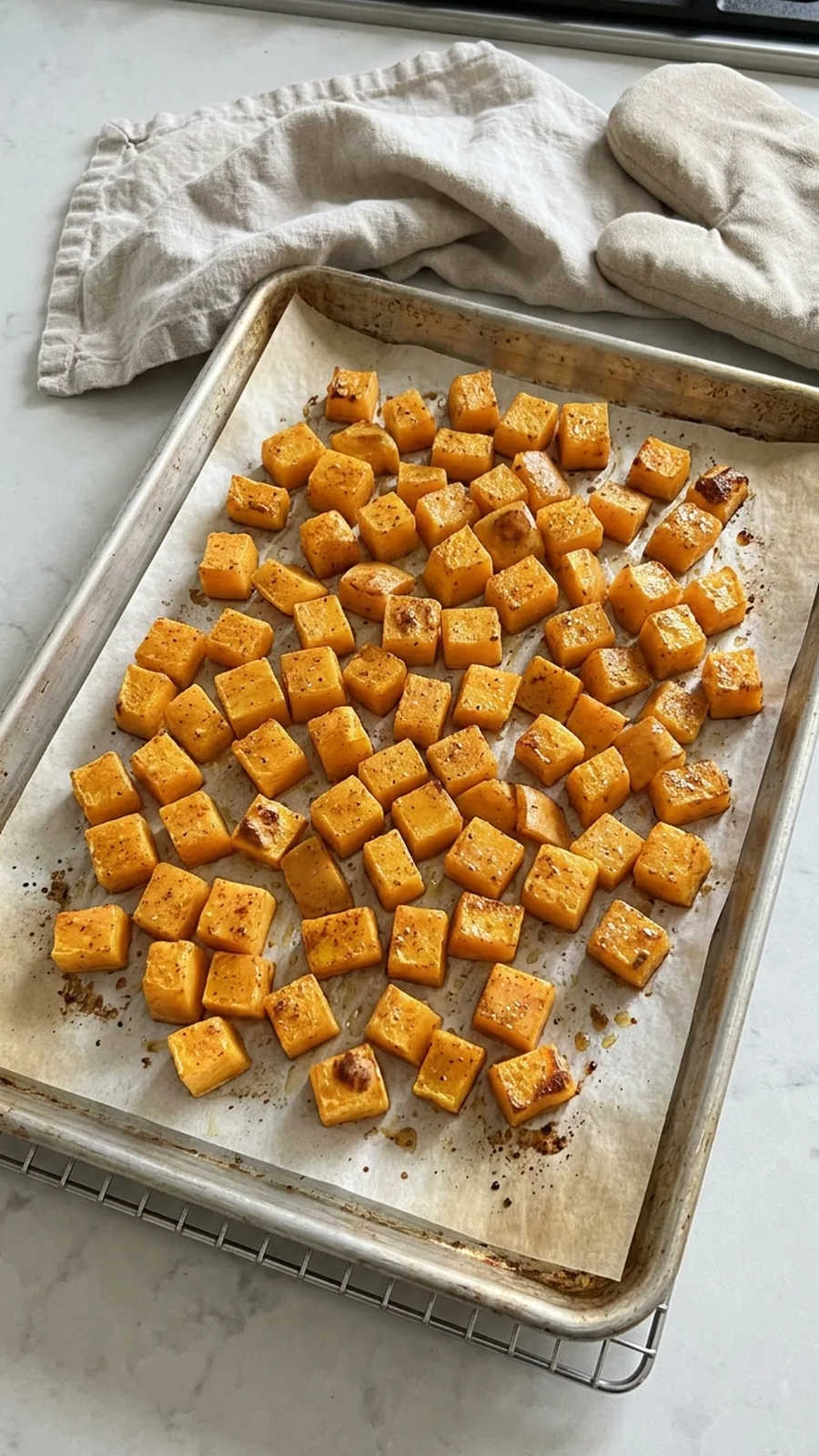
During this first roasting stage, the squash should begin to soften and develop lightly golden edges.
Some pieces may show deeper brown spots where they touch the baking sheet. This is normal and contributes to the roasted flavor.
The squash does not need to be completely tender yet.
Step 5: Prepare the Maple Pecan Mixture
While the squash roasts, roughly chop 1/3 cup (35 g) raw pecan halves.
In a small bowl, combine:
- 2 tablespoons (30 ml) pure maple syrup
- 1 tablespoon (14 g) unsalted butter, melted
Stir until the mixture looks smooth and glossy.
Keep the chopped pecans separate until the squash is ready for its final roasting stage.
Step 6: Coat the Squash with Maple Glaze
After the initial roasting period, carefully remove the baking sheet from the oven.
Turn the squash cubes with a spatula to expose different sides to the hot baking sheet.
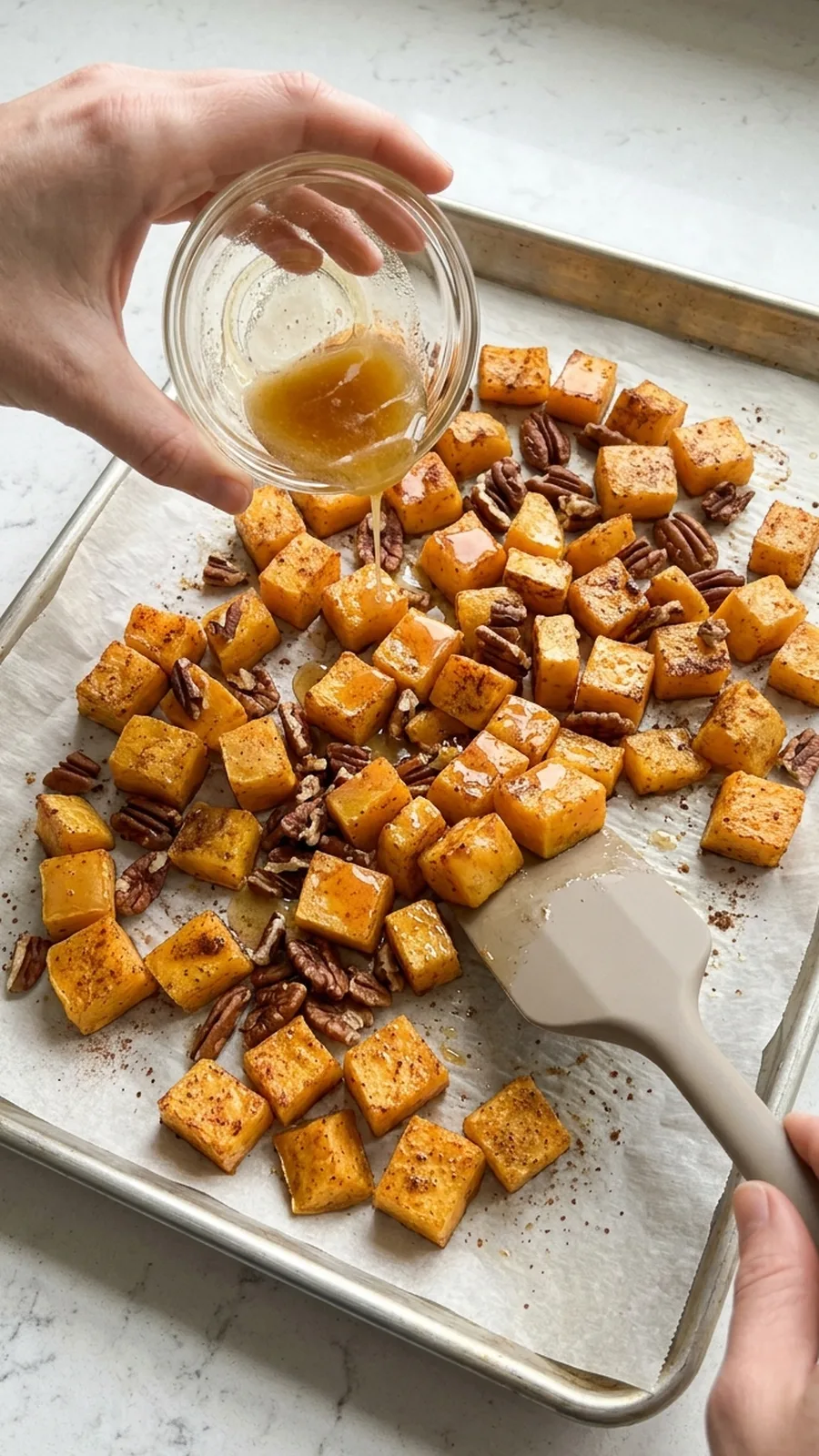
Drizzle the maple-butter mixture over the squash and toss gently to coat.
The cubes should look lightly glazed rather than sitting in a pool of syrup.
Spread the squash back into a single layer.
Step 7: Add the Pecans and Finish Roasting
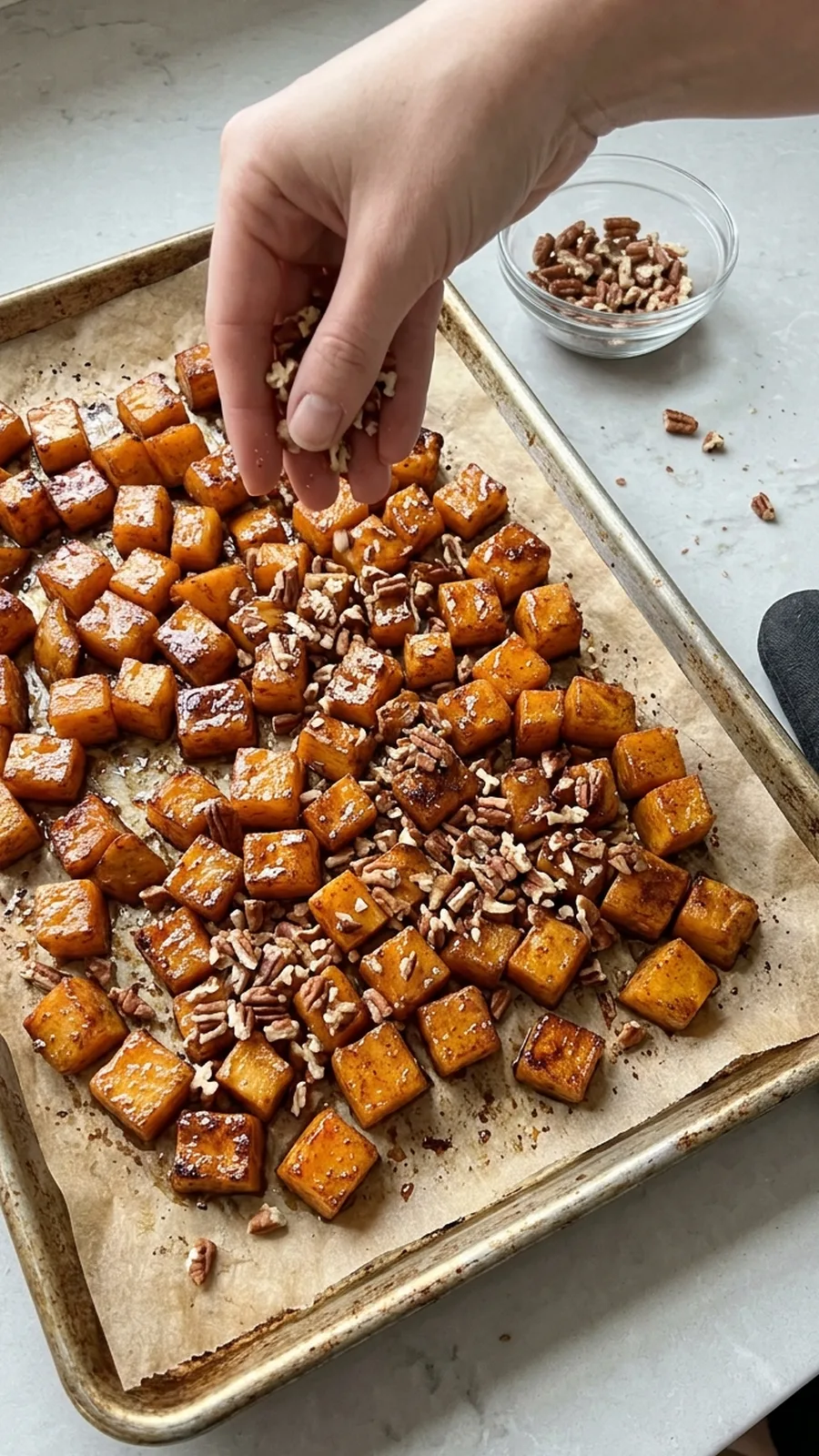
Scatter the chopped pecans evenly over the glazed squash.
Return the baking sheet to the oven and roast at 425°F (220°C) for another 15 minutes, checking during the final few minutes.
The finished squash should have:
- Tender centers that yield easily when pierced with a fork
- Golden-brown, lightly caramelized edges
- A thin, glossy maple coating
- Fragrant pecans with a lightly toasted appearance
If the pecans begin darkening too quickly, gently move them toward the center of the baking sheet or remove any pieces that are already toasted.
If the squash remains firm, continue roasting briefly, checking frequently to avoid burning the glaze.
Step 8: Rest and Serve
Remove the baking sheet from the oven and let the squash rest for 5 minutes.
This short resting period allows the glaze to settle slightly and makes the squash easier to transfer without breaking apart.
Use a spatula to gently transfer the roasted squash and pecans to a serving dish, including any flavorful glaze remaining on the baking sheet.
If desired, sprinkle with 1 tablespoon (4 g) finely chopped fresh parsley.
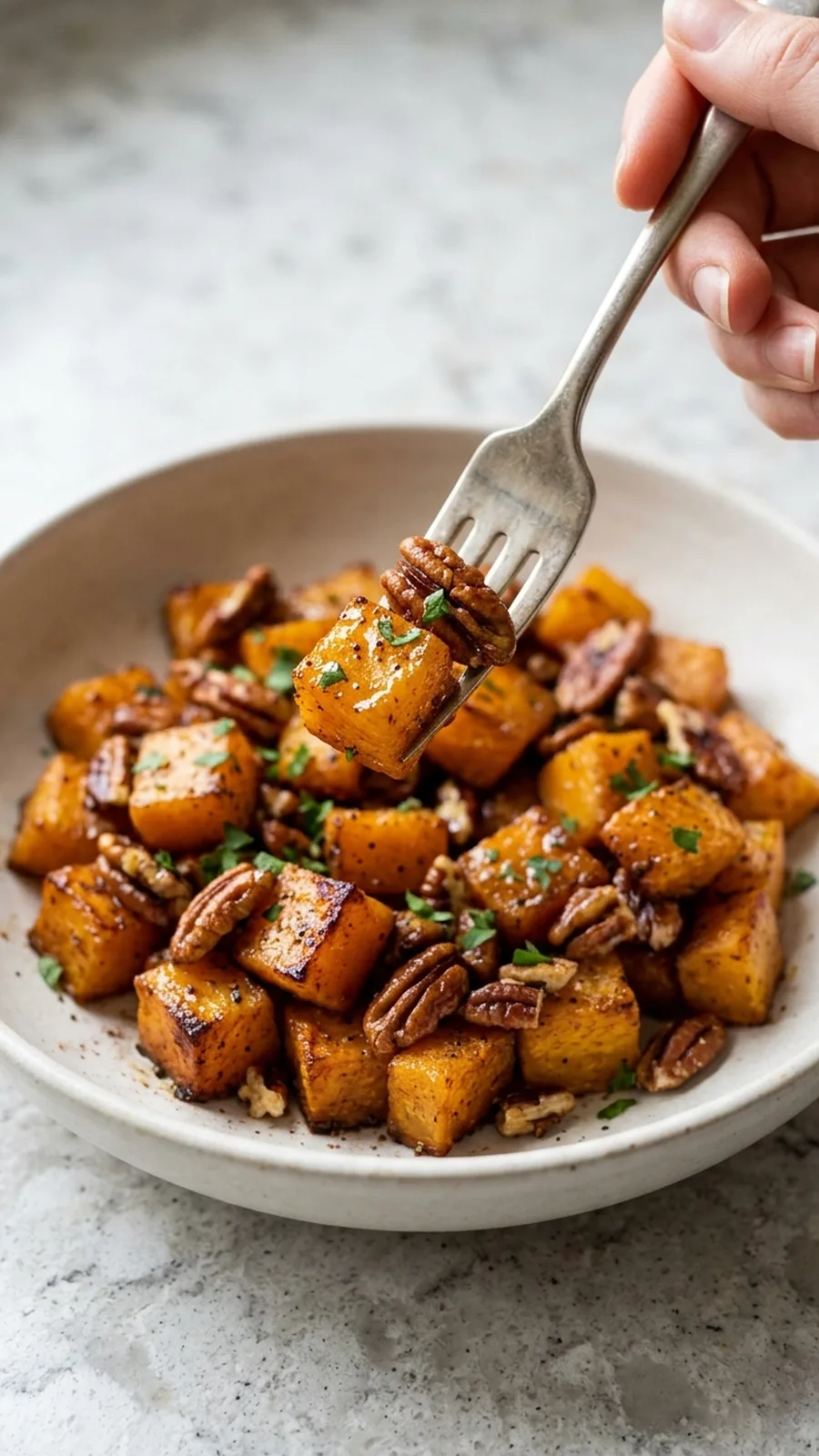
Serve warm while the squash is tender and the pecans still have a pleasant crunch.
Storage, Freezing, and Make-Ahead Instructions
- Refrigerator Storage: Allow leftover Cinnamon Pecan Roasted Butternut Squash to cool slightly, then transfer it to a shallow airtight container. Refrigerate promptly, within 2 hours of cooking, and store for up to 4 days . The squash will remain flavorful, although the pecans may soften as they absorb moisture from the glaze. For better texture, store the pecans separately whenever practical.
- Freezing Instructions: Roasted butternut squash can be frozen, but freezing changes its texture. Once cooled, transfer the squash to a freezer-safe container or resealable freezer bag. Remove excess air before sealing. Freeze for up to 2 months for best quality . For the best results, freeze the roasted squash without the pecans whenever possible. Nuts can lose their crisp texture when frozen with moist vegetables. Thaw overnight in the refrigerator before reheating. The squash may become softer after freezing, but it will still work well as a warm side dish.
- Reheating Instructions: For the best texture, reheat the squash in a preheated 375°F (190°C) oven until heated through. Spread it in a single layer on a baking sheet and warm for approximately 10–15 minutes , depending on the portion size. Stir gently if necessary to prevent the glaze from becoming too dark. For refrigerated leftovers, reheat to 165°F (74°C) in the center. A microwave can also be used for convenience, but the squash will have a softer texture and less caramelization. If the pecans were stored separately, add them after reheating to preserve their crunch.
- Make-Ahead Preparation: To prepare this recipe ahead of time, peel, seed, and cube the squash up to 24 hours in advance . Store the prepared cubes in an airtight container in the refrigerator. Keep the pecans and other ingredients separate until cooking. When ready to roast, pat the squash dry if any moisture has collected in the container. For a holiday meal, preparing the squash ahead of time reduces the amount of active work needed just before serving.
FAQ
Can I make Cinnamon Pecan Roasted Butternut Squash ahead of time?
Yes. You can peel and cube the squash up to 24 hours before roasting and keep it refrigerated in an airtight container. For the freshest texture, roast the squash shortly before serving. If the dish is fully cooked ahead of time, refrigerate it and reheat in the oven, adding separately stored pecans just before serving.
How do I know when roasted butternut squash is done?
The squash is ready when a fork slides easily into the center of a cube without resistance. The exterior should show golden, caramelized areas, while the inside should feel tender and creamy. If the edges are browning but the centers remain firm, continue cooking briefly and monitor the glaze carefully.
Can I use frozen butternut squash instead of fresh?
Yes, although frozen squash often releases more moisture during roasting. Roast it directly from frozen rather than thawing first, and expect a longer cooking time. Allow excess moisture to evaporate before adding the maple glaze and pecans. The finished texture may be softer, with less pronounced caramelization.
Why is my roasted butternut squash mushy instead of caramelized?
Mushy squash usually results from overcrowding, excess moisture, or overcooking. When the cubes are packed tightly together, steam becomes trapped and prevents the surfaces from browning. Cutting the squash evenly, drying the pieces before seasoning, and using enough baking sheet space can improve the texture.
Can I make this recipe without pecans?
Yes. You can omit the pecans if you have a nut allergy or prefer a simpler side dish. The squash will still develop a sweet cinnamon-maple glaze, but it will lack the crunchy contrast provided by the nuts. For a nut-free alternative, toasted pumpkin seeds can be added as a garnish, provided they are suitable for your dietary needs.
Ingredients
Method
- Preheat your oven to 425°F (220°C) . Peel the butternut squash with a sturdy vegetable peeler. Trim the ends, cut the squash in half lengthwise, and scoop out the seeds. Cut the flesh into approximately 1-inch (2.5 cm) cubes, aiming for uniform pieces so they roast at the same rate. Measure 2 pounds (900 g) of prepared squash. Pat the cubes dry with a clean kitchen towel or paper towels if they feel damp. Excess surface moisture can prevent proper caramelization.
- Place the prepared squash cubes in a large mixing bowl. Add: 2 tablespoons (30 ml) olive oil 1 teaspoon (2.6 g) ground cinnamon 1/2 teaspoon (3 g) fine sea salt 1/4 teaspoon (0.5 g) freshly ground black pepper Toss thoroughly until the cubes are evenly coated. The squash should have a light sheen from the oil, with the cinnamon distributed evenly across the surfaces. Avoid leaving dry pockets of seasoning at the bottom of the bowl.
- Line an 18 × 13-inch (46 × 33 cm) rimmed baking sheet with parchment paper, if desired. Spread the seasoned squash across the sheet in a single, even layer. Leave a little space between the cubes whenever possible. Crowded pieces release moisture that can cause the squash to steam instead of roast. If the squash appears tightly packed, use a second baking sheet to give the pieces more room.
- Place the baking sheet on the middle oven rack. Roast at 425°F (220°C) for 20 minutes . During this first roasting stage, the squash should begin to soften and develop lightly golden edges. Some pieces may show deeper brown spots where they touch the baking sheet. This is normal and contributes to the roasted flavor. The squash does not need to be completely tender yet.
- While the squash roasts, roughly chop 1/3 cup (35 g) raw pecan halves. In a small bowl, combine: 2 tablespoons (30 ml) pure maple syrup 1 tablespoon (14 g) unsalted butter, melted Stir until the mixture looks smooth and glossy. Keep the chopped pecans separate until the squash is ready for its final roasting stage.
- After the initial roasting period, carefully remove the baking sheet from the oven. Turn the squash cubes with a spatula to expose different sides to the hot baking sheet. Drizzle the maple-butter mixture over the squash and toss gently to coat. The cubes should look lightly glazed rather than sitting in a pool of syrup. Spread the squash back into a single layer.
- Scatter the chopped pecans evenly over the glazed squash. Return the baking sheet to the oven and roast at 425°F (220°C) for another 15 minutes , checking during the final few minutes. The finished squash should have: Tender centers that yield easily when pierced with a fork Golden-brown, lightly caramelized edges A thin, glossy maple coating Fragrant pecans with a lightly toasted appearance If the pecans begin darkening too quickly, gently move them toward the center of the baking sheet or remove any pieces that are already toasted. If the squash remains firm, continue roasting briefly, checking frequently to avoid burning the glaze.
- Remove the baking sheet from the oven and let the squash rest for 5 minutes . This short resting period allows the glaze to settle slightly and makes the squash easier to transfer without breaking apart. Use a spatula to gently transfer the roasted squash and pecans to a serving dish, including any flavorful glaze remaining on the baking sheet. If desired, sprinkle with 1 tablespoon (4 g) finely chopped fresh parsley. Serve warm while the squash is tender and the pecans still have a pleasant crunch.