Butternut Squash Risotto is a creamy Italian rice dish made with tender butternut squash, Arborio rice, Parmesan cheese, and fragrant fresh sage. The squash adds gentle sweetness and a beautiful golden-orange color, while the rice releases its natural starches to create a rich, velvety texture. A combination of mashed and diced squash gives this risotto a creamy consistency with tender pieces of squash in every serving.

This stovetop recipe uses a straightforward method of gradually adding warm broth and stirring regularly until the rice becomes tender. It takes about an hour from start to finish and makes a comforting vegetarian dinner or an elegant side dish for a special occasion. No heavy cream is needed to achieve its signature creamy texture.
Why This Recipe Works
Arborio rice creates a naturally creamy texture. Its starch releases gradually during cooking, helping the risotto develop a silky consistency without heavy cream.
Mashed and diced squash add two textures. Mashed squash blends into the rice for extra creaminess, while the remaining cubes provide soft, tender bites.
Warm broth promotes even cooking: Adding hot broth in small amounts helps maintain a steady simmer and allows the rice to absorb liquid gradually.
Fresh sage balances the sweetness: Its earthy, aromatic flavor complements butternut squash and adds depth to the finished dish.
Parmesan and butter create a smooth finish. Stirring them in off the heat adds richness and helps the risotto become glossy and cohesive.
Equipment Needed
- Large, heavy-bottomed saucepan or Dutch oven, 4 to 5 quarts (3.8 to 4.7 L)
- Medium saucepan, 2 to 3 quarts (1.9 to 2.8 L), for warming broth
- Sharp chef's knife
- Vegetable peeler
- Cutting board
- Wooden spoon or heat-resistant spatula
- Potato masher or fork
- Measuring cups and spoons
- Ladle
Ingredients List
For the Butternut Squash
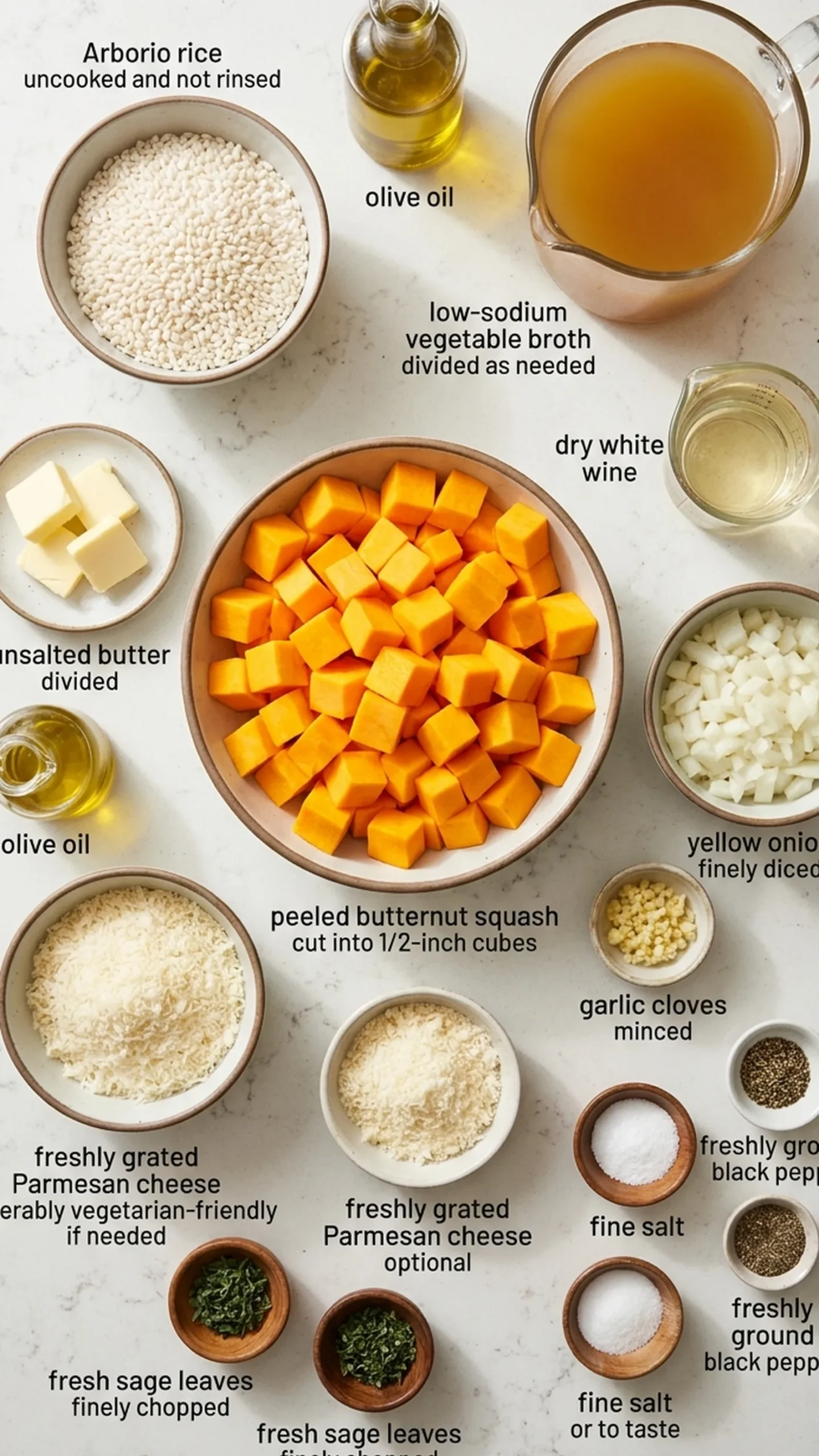
- 3 cups (about 420 g) peeled butternut squash, cut into 1/2-inch (1.3 cm) cubes
- 1 tablespoon (15 ml) olive oil
- 1/4 teaspoon (1.5 g) fine salt
- 1/8 teaspoon (0.25 g) freshly ground black pepper
For the Risotto
- 1 1/2 cups (300 g) Arborio rice, uncooked and not rinsed
- 5 cups (1.2 L) low-sodium vegetable broth, divided as needed
- 1 tablespoon (15 ml) olive oil
- 2 tablespoons (28 g) unsalted butter, divided
- 1 medium yellow onion (about 150 g), finely diced
- 2 garlic cloves (about 6 g), minced
- 1/2 cup (120 ml) dry white wine
- 1 tablespoon (about 3 g) fresh sage leaves, finely chopped
- 1/2 teaspoon (3 g) fine salt, or to taste
- 1/4 teaspoon (0.5 g) freshly ground black pepper
- 1/2 cup (about 50 g) freshly grated Parmesan cheese, preferably vegetarian-friendly if needed
Optional Garnish
- 2 tablespoons (10 g) freshly grated Parmesan cheese, optional, for serving
- 1 teaspoon (1 g) fresh sage leaves, finely chopped, optional, for serving
Ingredient Notes and Substitutions
1.
Butternut: Squash: Butternut squash provides natural sweetness, color, and a smooth texture when softened. Choose a firm squash with unblemished skin and bright orange flesh. You can substitute peeled kabocha squash in the same quantity. Kabocha tends to have a denser, slightly sweeter texture, so the finished risotto may be thicker and require a little additional broth. Frozen cubed butternut squash can also be used, although it may soften more quickly and release extra moisture.
2.
Arborio: Rice: Arborio rice is a short-grain Italian rice known for its ability to release starch while retaining some firmness in the center. This combination creates risotto's characteristic creamy texture. Carnaroli rice is an excellent substitute and often holds its shape particularly well during cooking. Avoid replacing Arborio with regular long-grain rice, which does not release starch in the same way and will produce a less creamy result.
3.
Vegetable: Broth: Vegetable broth provides savory flavor and supplies the liquid needed to cook the rice gradually. Low-sodium chicken broth can be substituted in the same quantity if a vegetarian dish is not required. It may create a richer, more savory flavor. Using low-sodium broth makes it easier to control the final seasoning.
4.
Dry White Wine: Dry white wine contributes acidity and balances the sweetness of the butternut squash. Sauvignon Blanc or Pinot Grigio are suitable choices. For an alcohol-free version, replace the 1/2 cup (120 ml) white wine with the same amount of vegetable broth and add 1 teaspoon of fresh lemon juice at the end of cooking. The flavor will be slightly different but still pleasantly balanced.
5.
Parmesan Cheese: Freshly grated Parmesan adds savory depth and helps create a smooth, cohesive finish. For a strictly vegetarian risotto, use a vegetarian-friendly hard cheese made without animal rennet. Traditional Parmigiano Reggiano is made with animal rennet. Pre-shredded cheese may not melt as smoothly because it often contains anti-caking ingredients.
Step-by-Step Instructions
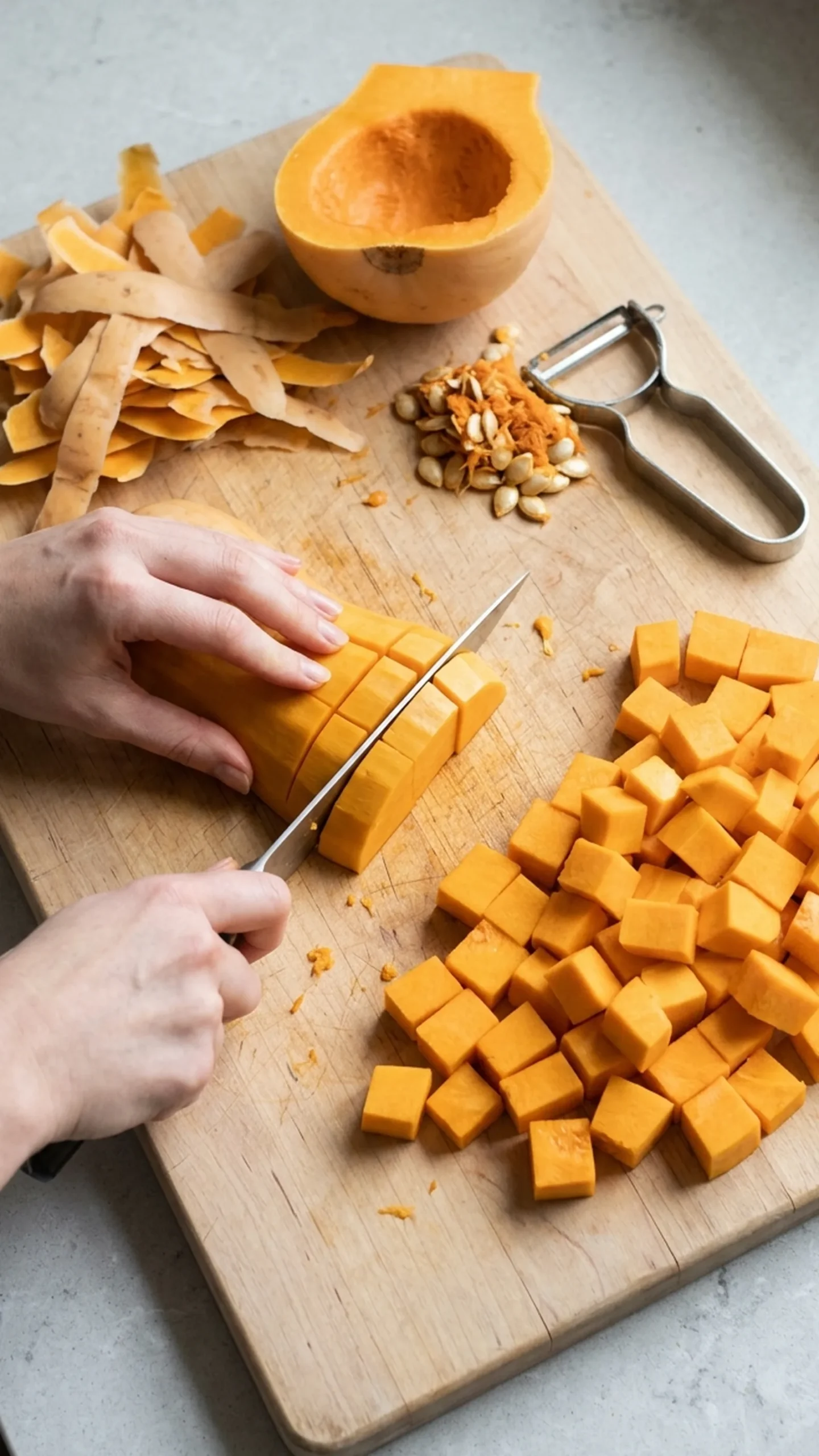
1. Prepare the Butternut Squash
Peel the butternut squash, remove the seeds, and cut the flesh into evenly sized 1/2-inch (1.3 cm) cubes.
Measure 3 cups (about 420 g) of prepared squash.
Try to keep the cubes similar in size so they soften evenly during cooking.
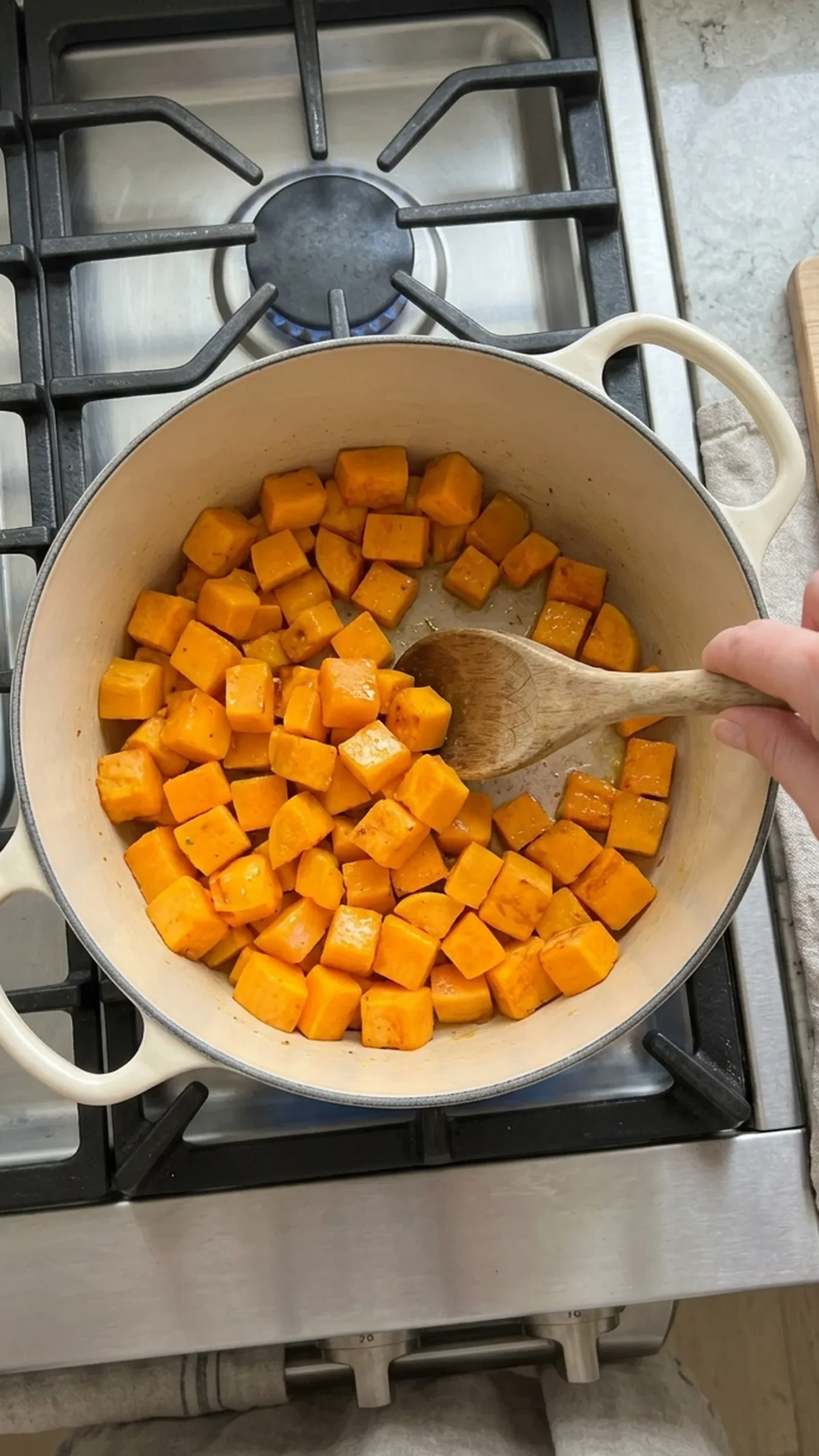
2. Cook the Squash
Heat 1 tablespoon (15 ml) olive oil in a large, heavy-bottomed saucepan or Dutch oven over medium heat.
Add the cubed butternut squash, 1/4 teaspoon (1.5 g) salt, and 1/8 teaspoon (0.25 g) black pepper.
Cook for approximately 10 to 12 minutes, stirring occasionally, until the squash is lightly golden in spots and tender enough to pierce easily with a fork.
If the squash begins browning before it softens, reduce the heat slightly and add 1 to 2 tablespoons of water to the pan.
Transfer the cooked squash to a bowl.
Mash approximately half of it with a fork or potato masher, leaving the remaining half in small cubes.
Set both portions aside.
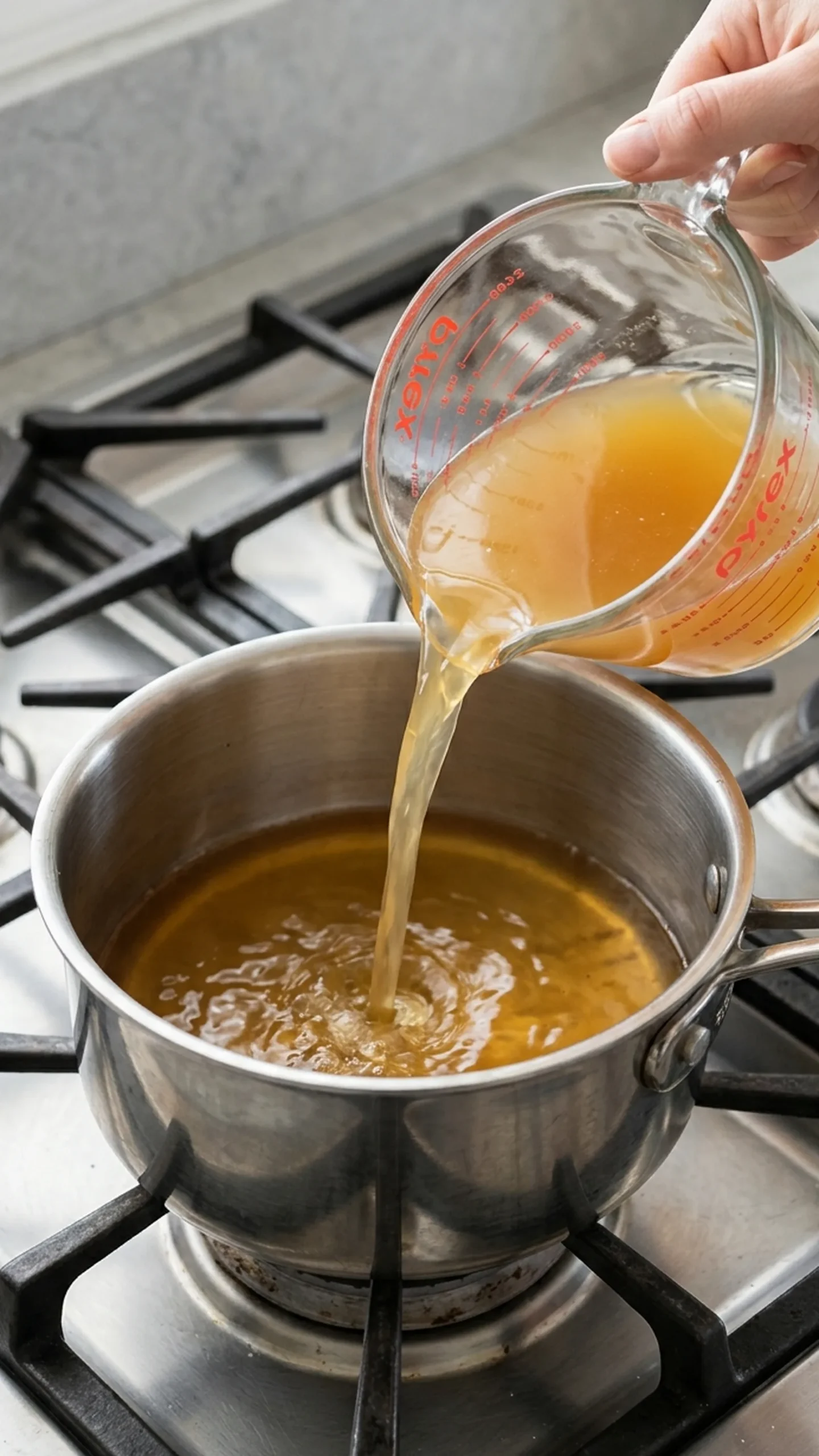
3. Warm the Vegetable Broth
Pour the 5 cups (1.2 L) vegetable broth into a medium saucepan.
Place it over medium heat until hot, then reduce the heat to low to maintain a gentle simmer.
Keep the broth warm throughout cooking.
Warm broth helps prevent the rice from cooling each time liquid is added, allowing the risotto to cook more consistently.
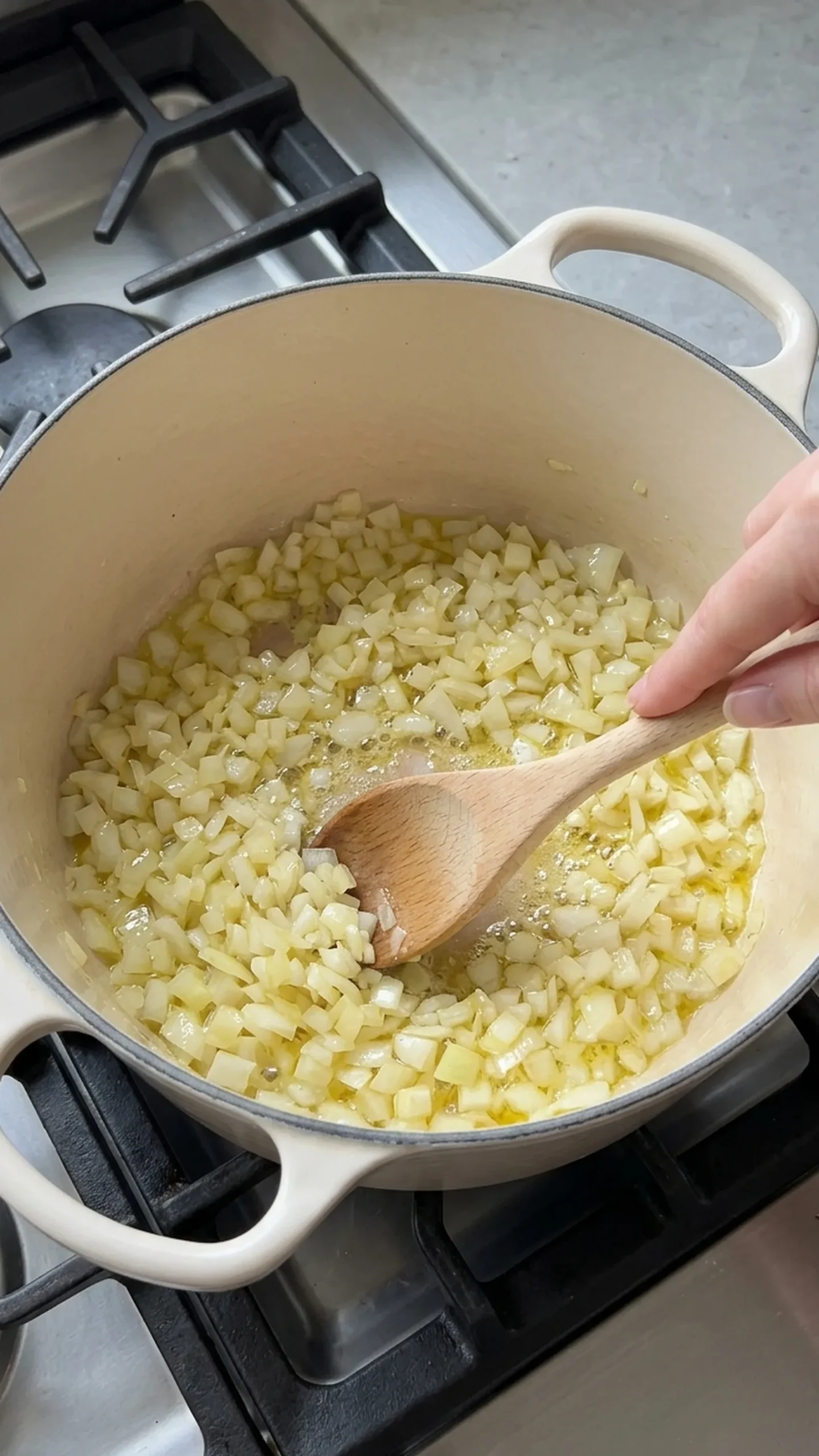
4. Sauté the Onion
Return the large saucepan or Dutch oven to medium heat.
Add the remaining 1 tablespoon (15 ml) olive oil and 1 tablespoon (14 g) of the unsalted butter.
Once the butter melts, add the finely diced yellow onion.
Cook for 4 to 5 minutes, stirring frequently, until the onion becomes soft and translucent.
Avoid letting it brown deeply, as the goal is to create a mild, savory base.
5. Add the Garlic and Sage
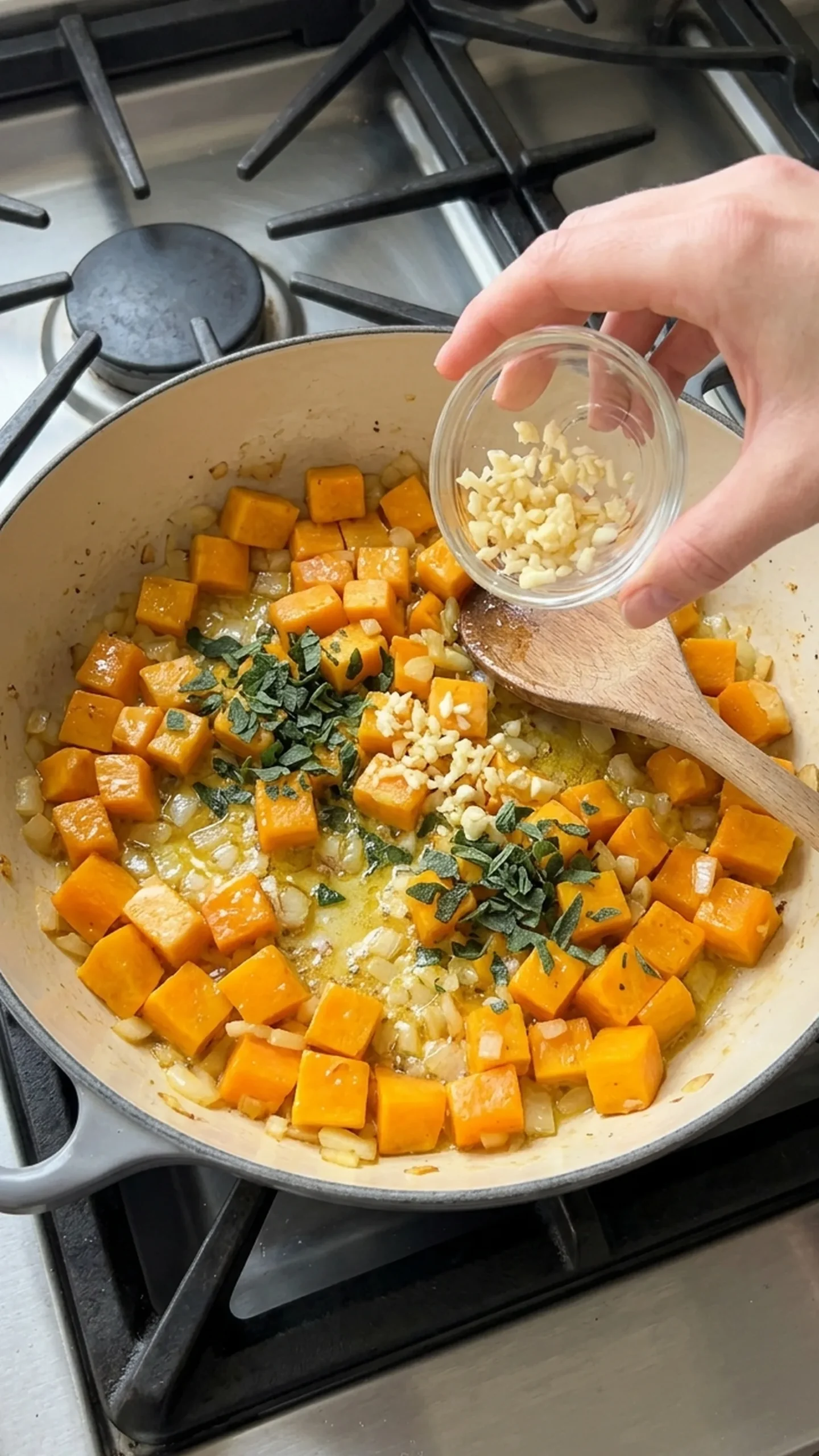
Add the 2 minced garlic cloves and 1 tablespoon (3 g) chopped fresh sage.
Stir for approximately 30 seconds, until fragrant.
The garlic should smell aromatic without turning dark brown.
If the pan seems too hot, lower the heat slightly to prevent the garlic from burning.
6. Toast the Arborio Rice
Add the 1 1/2 cups (300 g) uncooked Arborio rice directly to the saucepan.
Stir continuously for approximately 1 to 2 minutes, coating the grains with the oil and butter.
The rice should become slightly translucent around the edges while remaining opaque in the center.
Do not rinse Arborio rice before cooking, since its surface starch helps create the creamy consistency.
7. Deglaze with White Wine
Pour in the 1/2 cup (120 ml) dry white wine.
Stir gently and cook for approximately 1 to 2 minutes, until most of the wine has been absorbed and the sharp alcohol aroma has softened.
The rice should look moist but not submerged in liquid.
Scrape the bottom of the saucepan gently to release any flavorful bits left from cooking the vegetables.
8. Begin Adding the Warm Broth
Reduce the heat to medium-low.
Add approximately 1/2 cup (120 ml) of warm vegetable broth to the rice.
Stir regularly as the liquid simmers and absorbs.
When most of the broth has been absorbed but the rice still looks moist, add another 1/2 cup (120 ml).
Continue this process, adding broth gradually and stirring frequently to prevent sticking.
The mixture should maintain a gentle simmer rather than a vigorous boil.
9. Continue Cooking Until Nearly Tender
Continue adding warm broth in small portions for approximately 15 to 18 minutes.
The rice grains should gradually become larger and more tender while releasing starch into the surrounding liquid.
Taste a few grains.
They should be mostly tender but still have a small amount of firmness in the center.
If the rice becomes too thick before it is cooked, add another splash of warm broth.
Do not allow the saucepan to become completely dry between additions.
10. Add the Butternut Squash
Stir the mashed squash and the reserved cooked squash cubes into the risotto.
Mix gently until the mashed squash blends into the creamy rice and the cubes are evenly distributed.
Continue cooking for another 3 to 5 minutes, adding additional warm broth as needed.
The risotto should have a soft, flowing consistency rather than forming a stiff mound.
The rice should be tender with a slight bite in the center, and the squash should be thoroughly heated.
11. Finish with Butter and Parmesan
Remove the saucepan from the heat.
Add the remaining 1 tablespoon (14 g) unsalted butter, 1/2 cup (50 g) freshly grated Parmesan cheese, 1/2 teaspoon (3 g) fine salt, and 1/4 teaspoon (0.5 g) black pepper.
Stir gently until the butter and cheese melt into the rice.
Taste and adjust the seasoning if needed.
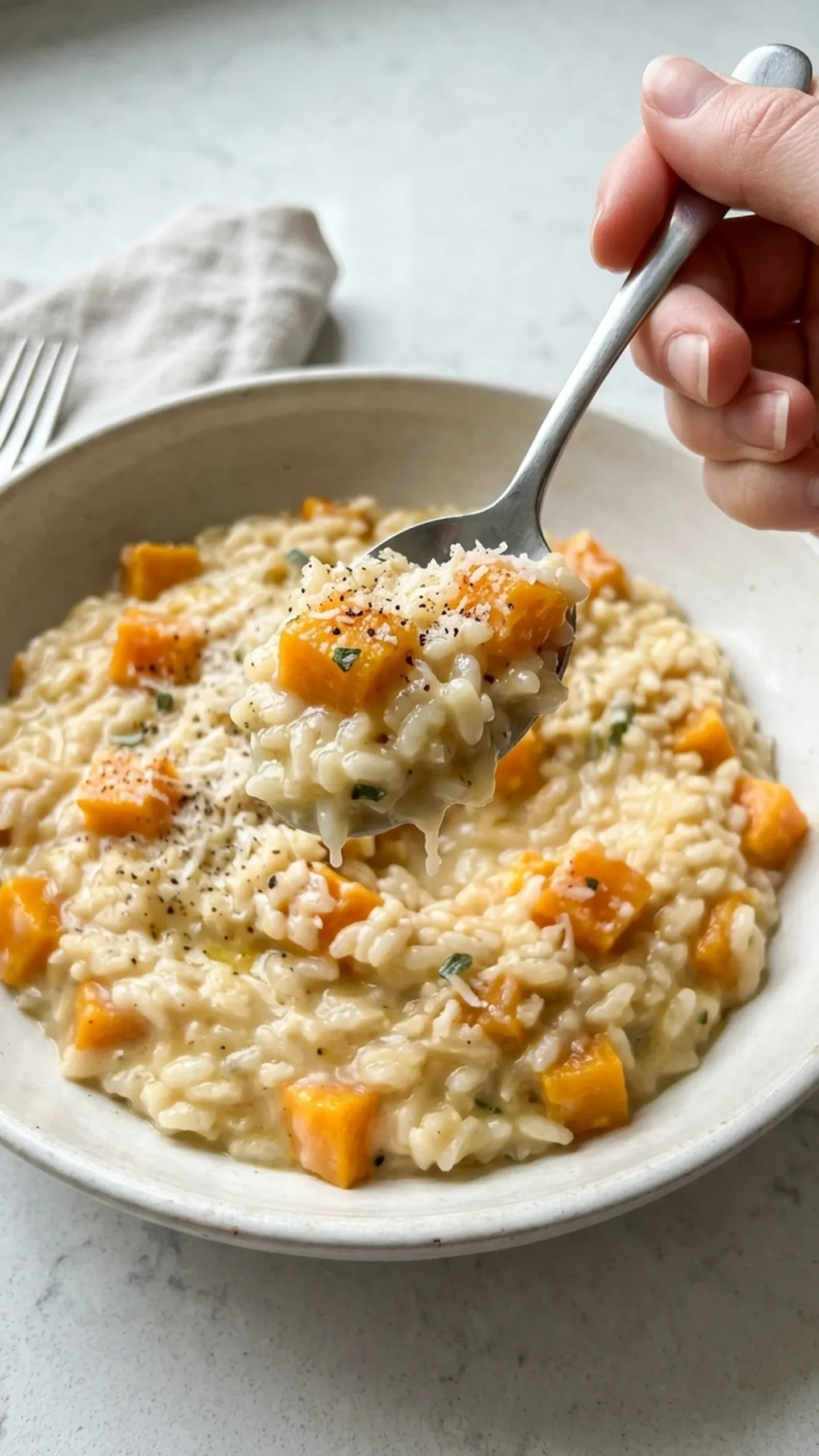
The finished risotto should look glossy, creamy, and slightly loose.
If it becomes too thick, stir in a small amount of remaining warm broth.
12. Rest and Serve
Cover the saucepan loosely and let the risotto rest for approximately 5 minutes.
Stir gently before serving.
Spoon the risotto into warm, shallow bowls.
If desired, garnish with the optional 2 tablespoons (10 g) freshly grated Parmesan and 1 teaspoon (1 g) chopped fresh sage.
Serve immediately while the rice is creamy and the squash is tender.
Storage, Freezing, and Make-Ahead Instructions
Refrigerator Storage: Risotto tastes creamiest immediately after cooking, but leftovers can be stored for another meal. Transfer the cooked risotto into shallow airtight containers and refrigerate promptly, preferably within 1 hour. Store in the refrigerator for up to 3 days at 40°F (4°C) or below. Because cooked rice can support bacterial growth if left at room temperature for too long, avoid leaving risotto sitting out after serving.
Freezing Instructions: Butternut squash risotto can be frozen, although the rice may become softer and less creamy after thawing. Allow the risotto to cool quickly in shallow containers. Transfer it to freezer-safe airtight containers, leaving a little room for expansion. Freeze for up to 2 months for the best quality.
Thawing Instructions: Thaw frozen risotto overnight in the refrigerator. Keep it refrigerated until ready to reheat. Avoid thawing cooked rice at room temperature.
Reheating Instructions: Place refrigerated risotto in a saucepan over medium-low heat. Add approximately 2 to 3 tablespoons (30 to 45 ml) vegetable broth or water per serving to loosen the rice. Stir frequently until the risotto is heated thoroughly and reaches 165°F (74°C). Add another small splash of liquid if it becomes too thick. Reheat only the amount you plan to eat and avoid repeatedly cooling and reheating leftovers.
Make-Ahead Instructions: For the freshest texture, prepare the butternut squash ahead of time rather than fully cooking the risotto. Peel, cube, and cook the squash up to 2 days in advance, then refrigerate it in an airtight container. You can also dice the onion, mince the garlic, and portion the remaining ingredients ahead of time. When ready to serve, prepare the risotto from the beginning using the refrigerated cooked squash. This approach saves preparation time while preserving the creamy texture of freshly cooked risotto.
FAQ
Can I make Butternut Squash Risotto ahead of time?
You can prepare the squash and other ingredients ahead of time, but risotto is at its creamiest when cooked just before serving. For easier preparation, cook the squash up to 2 days ahead and refrigerate it. When ready to eat, cook the rice with warm broth and add the prepared squash near the end.
Can I make this risotto without wine?
Yes. Replace the 1/2 cup (120 ml) dry white wine with an equal amount of vegetable broth. To replace some of the acidity normally provided by wine, stir in 1 teaspoon of fresh lemon juice at the end of cooking. The finished risotto will have a slightly different flavor but will still be creamy and balanced.
Why is my risotto too thick or sticky?
Risotto naturally thickens as it cools because the rice continues absorbing liquid. If it becomes too thick, stir in a small amount of warm vegetable broth until it returns to a loose, flowing consistency. Avoid cooking the rice until all the liquid disappears, as this can make the finished dish heavy and pasty.
Can I use frozen butternut squash?
Yes. Frozen cubed butternut squash can be used in the same quantity. It may release extra moisture and soften more quickly than fresh squash. Cook it until tender and allow excess moisture to evaporate before adding it to the risotto. The final texture may be slightly softer.
How do I know when risotto is done?
The rice should be tender with a slight firmness in the center rather than crunchy or mushy. The surrounding liquid should look creamy and glossy, and the risotto should spread gently when spooned into a bowl. If the rice is still hard, continue adding small amounts of warm broth and cooking until tender.
Pair this recipe with or save for later: Cinnamon Pecan Roasted Butternut Squash, Chicken and Butternut Squash Orzo, Roasted Butternut Squash with Cranberries & Feta, and Stuffed Peppers with Rice and Beef.


Butternut Squash Risotto
Ingredients
Method
- Peel the butternut squash, remove the seeds, and cut the flesh into evenly sized 1/2-inch (1.3 cm) cubes. Measure 3 cups (about 420 g) of prepared squash. Try to keep the cubes similar in size so they soften evenly during cooking.
- Heat 1 tablespoon (15 ml) olive oil in a large, heavy-bottomed saucepan or Dutch oven over medium heat. Add the cubed butternut squash, 1/4 teaspoon (1.5 g) salt, and 1/8 teaspoon (0.25 g) black pepper. Cook for approximately 10 to 12 minutes, stirring occasionally, until the squash is lightly golden in spots and tender enough to pierce easily with a fork. If the squash begins browning before it softens, reduce the heat slightly and add 1 to 2 tablespoons of water to the pan. Transfer the cooked squash to a bowl. Mash approximately half of it with a fork or potato masher, leaving the remaining half in small cubes. Set both portions aside.
- Pour the 5 cups (1.2 L) vegetable broth into a medium saucepan. Place it over medium heat until hot, then reduce the heat to low to maintain a gentle simmer. Keep the broth warm throughout cooking. Warm broth helps prevent the rice from cooling each time liquid is added, allowing the risotto to cook more consistently.
- Return the large saucepan or Dutch oven to medium heat. Add the remaining 1 tablespoon (15 ml) olive oil and 1 tablespoon (14 g) of the unsalted butter. Once the butter melts, add the finely diced yellow onion. Cook for 4 to 5 minutes, stirring frequently, until the onion becomes soft and translucent. Avoid letting it brown deeply, as the goal is to create a mild, savory base.
- Add the 2 minced garlic cloves and 1 tablespoon (3 g) chopped fresh sage. Stir for approximately 30 seconds, until fragrant. The garlic should smell aromatic without turning dark brown. If the pan seems too hot, lower the heat slightly to prevent the garlic from burning.
- Add the 1 1/2 cups (300 g) uncooked Arborio rice directly to the saucepan. Stir continuously for approximately 1 to 2 minutes, coating the grains with the oil and butter. The rice should become slightly translucent around the edges while remaining opaque in the center. Do not rinse Arborio rice before cooking, since its surface starch helps create the creamy consistency.
- Pour in the 1/2 cup (120 ml) dry white wine. Stir gently and cook for approximately 1 to 2 minutes, until most of the wine has been absorbed and the sharp alcohol aroma has softened. The rice should look moist but not submerged in liquid. Scrape the bottom of the saucepan gently to release any flavorful bits left from cooking the vegetables.
- Reduce the heat to medium-low: Add approximately 1/2 cup (120 ml) of warm vegetable broth to the rice. Stir regularly as the liquid simmers and absorbs. When most of the broth has been absorbed but the rice still looks moist, add another 1/2 cup (120 ml). Continue this process, adding broth gradually and stirring frequently to prevent sticking. The mixture should maintain a gentle simmer rather than a vigorous boil.
- Continue adding warm broth in small portions for approximately 15 to 18 minutes. The rice grains should gradually become larger and more tender while releasing starch into the surrounding liquid. Taste a few grains. They should be mostly tender but still have a small amount of firmness in the center. If the rice becomes too thick before it is cooked, add another splash of warm broth. Do not allow the saucepan to become completely dry between additions.
- Stir the mashed squash and the reserved cooked squash cubes into the risotto. Mix gently until the mashed squash blends into the creamy rice and the cubes are evenly distributed. Continue cooking for another 3 to 5 minutes, adding additional warm broth as needed. The risotto should have a soft, flowing consistency rather than forming a stiff mound. The rice should be tender with a slight bite in the center, and the squash should be thoroughly heated.
- Remove the saucepan from the heat: Add the remaining 1 tablespoon (14 g) unsalted butter, 1/2 cup (50 g) freshly grated Parmesan cheese, 1/2 teaspoon (3 g) fine salt, and 1/4 teaspoon (0.5 g) black pepper. Stir gently until the butter and cheese melt into the rice. Taste and adjust the seasoning if needed. The finished risotto should look glossy, creamy, and slightly loose. If it becomes too thick, stir in a small amount of remaining warm broth.
- Cover the saucepan loosely and let the risotto rest for approximately 5 minutes. Stir gently before serving. Spoon the risotto into warm, shallow bowls. If desired, garnish with the optional 2 tablespoons (10 g) freshly grated Parmesan and 1 teaspoon (1 g) chopped fresh sage. Serve immediately while the rice is creamy and the squash is tender.