Peppermint Bark Cheesecake combines a rich chocolate cookie crust, a smooth and creamy peppermint cheesecake filling, and a glossy chocolate ganache topping finished with crushed peppermint candy. Inspired by classic holiday peppermint bark, this festive dessert brings together deep chocolate flavor, cool peppermint, and a satisfying contrast of creamy and crunchy textures.
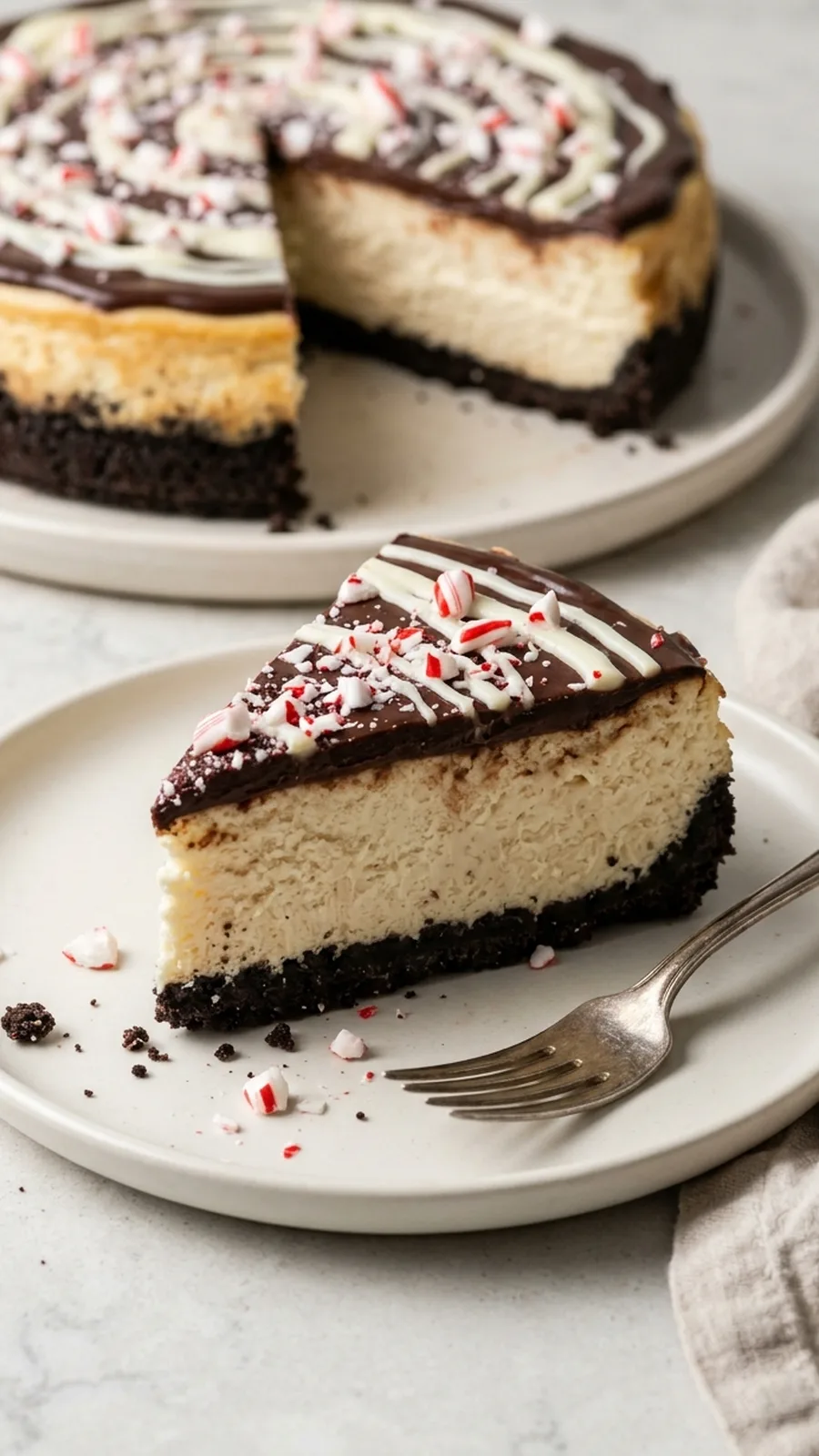
This baked cheesecake uses a little sour cream for a silky filling and a combination of vanilla and peppermint extracts for a balanced mint flavor. A gentle oven-cooling method helps prevent cracks, while an overnight-friendly chilling period gives the cheesecake time to develop a firm, sliceable texture. It's a practical make-ahead dessert for Christmas dinners, holiday parties, and winter celebrations.
Why This Recipe Works
A chocolate cookie crust adds contrast: Finely crushed chocolate sandwich cookies create a sturdy, chocolatey base that complements the cool peppermint filling without requiring a separate flour-based crust.
Full-fat cream cheese provides structure: Its fat content helps the cheesecake set into a dense yet creamy texture that holds its shape when sliced.
Sour cream softens the richness: It adds moisture and a subtle tang that balances the sweetness of the chocolate and peppermint.
Gentle baking protects the filling: A moderate oven temperature and gradual cooling reduce the likelihood of excessive puffing, sinking, and surface cracks.
Ganache and peppermint candy create a bark-inspired finish. The chocolate topping adds richness, while crushed peppermint candy provides color and a crisp, refreshing bite.
Equipment Needed
- 9-inch (23 cm) springform pan with sides at least 2 1/2 inches (6.5 cm) high
- Food processor or sturdy zip-top bag and rolling pin
- Electric hand mixer or stand mixer with paddle attachment
- Large mixing bowl
- Medium microwave-safe bowl
- Small saucepan
- Rubber spatula
- Measuring cups and spoons
- Kitchen scale
- Rimmed baking sheet
- Wire cooling rack
- Offset spatula
- Sharp knife for slicing
Ingredients List
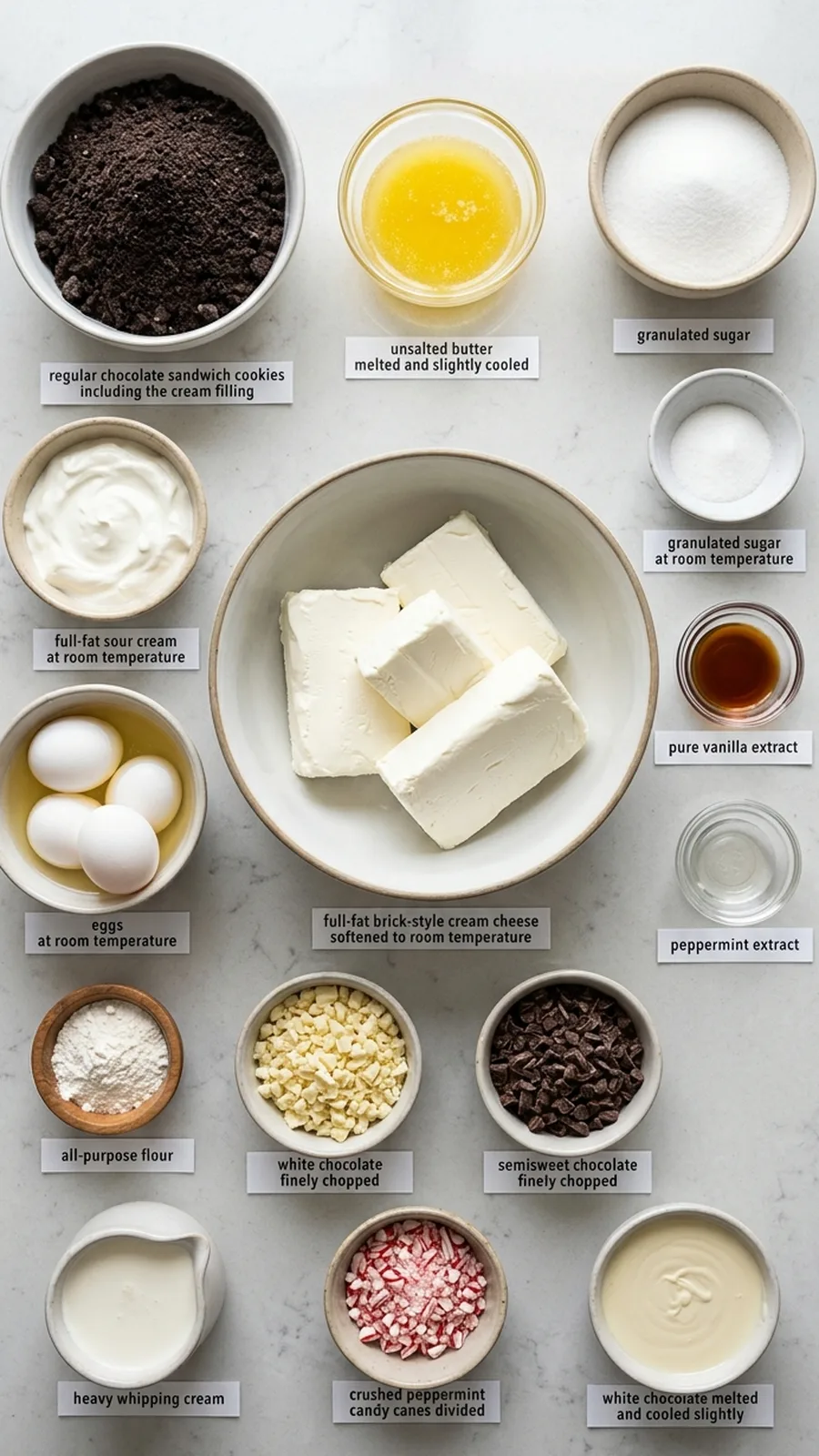
For the Chocolate Cookie Crust
- 24 regular chocolate sandwich cookies (about 10.5 oz / 300 g), including the cream filling, finely crushed
- 5 tablespoons (70 g) unsalted butter, melted and slightly cooled
For the Peppermint Cheesecake Filling
- 24 ounces (680 g) full-fat brick-style cream cheese, softened to room temperature
- 1 cup (200 g) granulated sugar
- 3/4 cup (180 g) full-fat sour cream, at room temperature
- 3 large eggs (about 150 g without shells), at room temperature
- 2 teaspoons (10 ml) pure vanilla extract
- 1/2 teaspoon (2.5 ml) peppermint extract
- 2 tablespoons (16 g) all-purpose flour
- 4 ounces (115 g) white chocolate, finely chopped, melted and cooled until lukewarm
For the Chocolate Ganache Topping
- 4 ounces (115 g) semisweet chocolate, finely chopped
- 1/2 cup (120 ml) heavy whipping cream
For the Peppermint Bark Garnish
- 1/3 cup (55 g) crushed peppermint candy canes, divided, optional
- 2 ounces (55 g) white chocolate, melted and cooled slightly, optional
Ingredient Notes and Substitutions
Cream Cheese: Full-fat brick-style cream cheese is essential for the cheesecake's rich flavor and stable structure. Allow it to soften before mixing so the batter becomes smooth without excessive beating. Avoid whipped cream cheese or spreadable cream cheese sold in tubs. These products often have different moisture levels and may produce a softer filling. Reduced-fat cream cheese can change the texture and firmness, so it is not a reliable direct substitute for this version.
Chocolate Sandwich Cookies: Chocolate sandwich cookies provide both chocolate flavor and sweetness. Their cream filling also helps the crumbs bind together with the melted butter. Plain chocolate wafer cookies can be substituted by weight, but the crust will be less sweet and may have a slightly drier, more crumbly texture.
Sour Cream: Full-fat sour cream adds moisture and a mild tang that keeps the filling from tasting overly sweet. Plain full-fat Greek yogurt can replace sour cream in the same quantity. The cheesecake may taste slightly tangier and have a somewhat firmer texture.
Peppermint Extract: Peppermint extract gives the filling its distinctive cool, minty flavor. It is concentrated, so careful measuring matters. Food-grade peppermint oil is not a direct one-to-one substitute because its strength varies considerably. Spearmint extract also produces a different flavor. For a milder peppermint cheesecake, use slightly less extract rather than increasing the sweetness.
White Chocolate: White chocolate adds sweetness and a smooth, creamy quality to the filling. It also contributes to the cheesecake's peppermint bark character. Choose real white chocolate containing cocoa butter rather than white baking chips when possible. White baking chips may melt less smoothly because their formulations vary. They are not a fully reliable substitute for the white chocolate incorporated into the filling.
Step-by-Step Instructions
Step 1: Prepare the Chocolate Cookie Crust
Preheat the oven to 325°F (165°C).
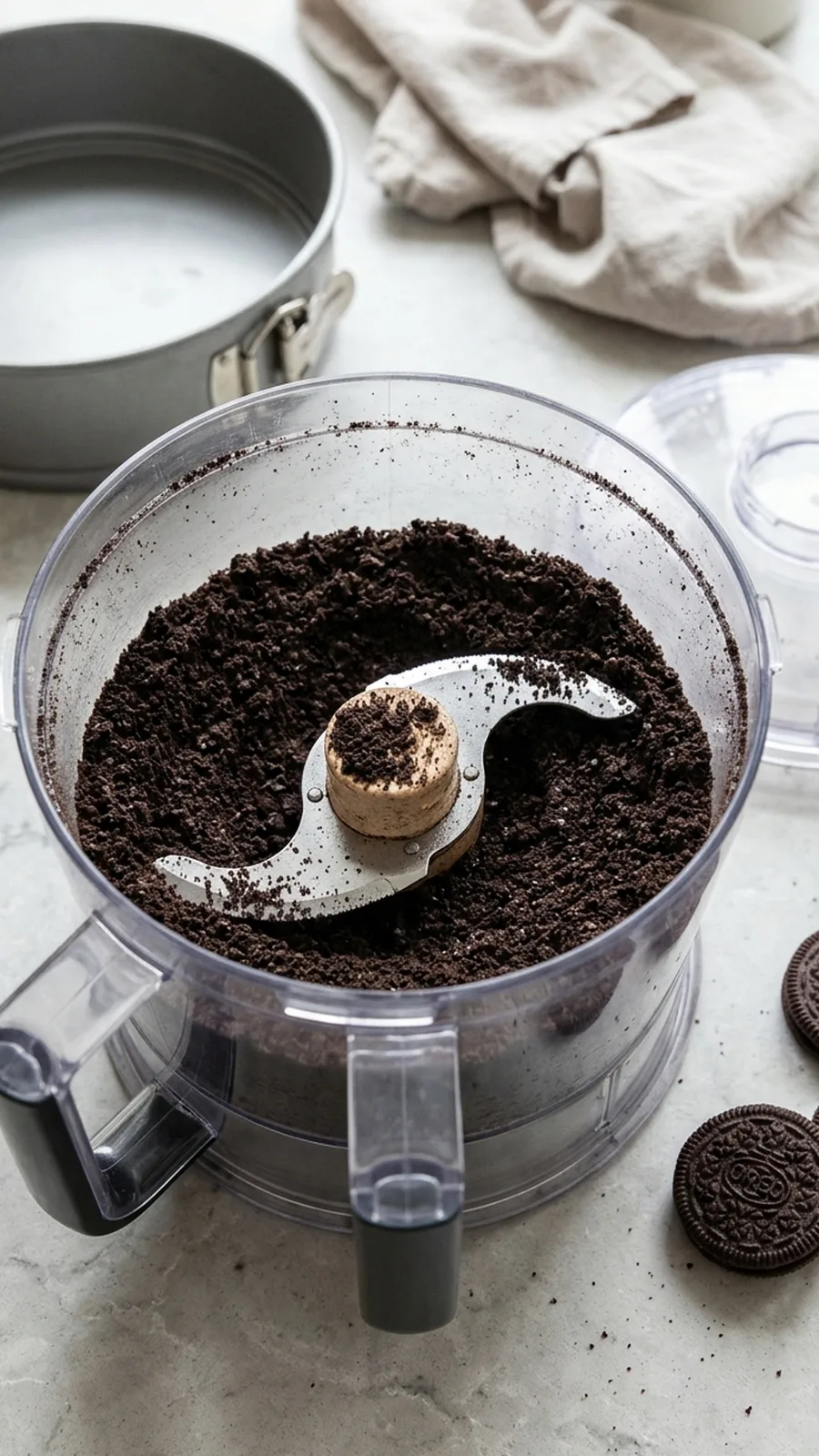
Place the 24 chocolate sandwich cookies in a food processor and pulse until they form fine, even crumbs. Alternatively, crush them inside a sealed zip-top bag with a rolling pin.
Transfer the crumbs to a mixing bowl and stir in the 5 tablespoons (70 g) melted unsalted butter.
The mixture should resemble damp sand and hold together when pressed between your fingers.
Lightly grease the bottom and sides of a 9-inch (23 cm) springform pan. Press the cookie mixture firmly and evenly across the bottom, using the flat bottom of a measuring cup to compact it.
Step 2: Bake and Cool the Crust
Place the springform pan on a rimmed baking sheet.
Bake the crust at 325°F (165°C) for 10 minutes.
The surface should look slightly darker and feel more cohesive, although it will still be somewhat soft while hot.
Remove the pan from the oven and allow the crust to cool while preparing the filling.
Keep the oven at 325°F (165°C).
Step 3: Beat the Cream Cheese and Sugar
Place the 24 ounces (680 g) softened cream cheese in a large mixing bowl.
Using an electric mixer on low to medium-low speed, beat until smooth and free of visible lumps.
Add the 1 cup (200 g) granulated sugar and mix until evenly incorporated.
Scrape the bottom and sides of the bowl with a rubber spatula.
The mixture should look thick, creamy, and smooth rather than fluffy or heavily aerated.
Avoid beating at high speed, which can introduce excessive air and contribute to cracking during baking.
Step 4: Add the Sour Cream, Extracts, and Flour
Add the 3/4 cup (180 g) sour cream, 2 teaspoons (10 ml) vanilla extract, and 1/2 teaspoon (2.5 ml) peppermint extract.
Mix on low speed until combined.
Sprinkle in the 2 tablespoons (16 g) all-purpose flour and mix just until no dry streaks remain.
The batter should be smooth, thick, and creamy.
If you notice small cream cheese lumps, scrape the bowl thoroughly and mix briefly on low speed.
Step 5: Incorporate the White Chocolate
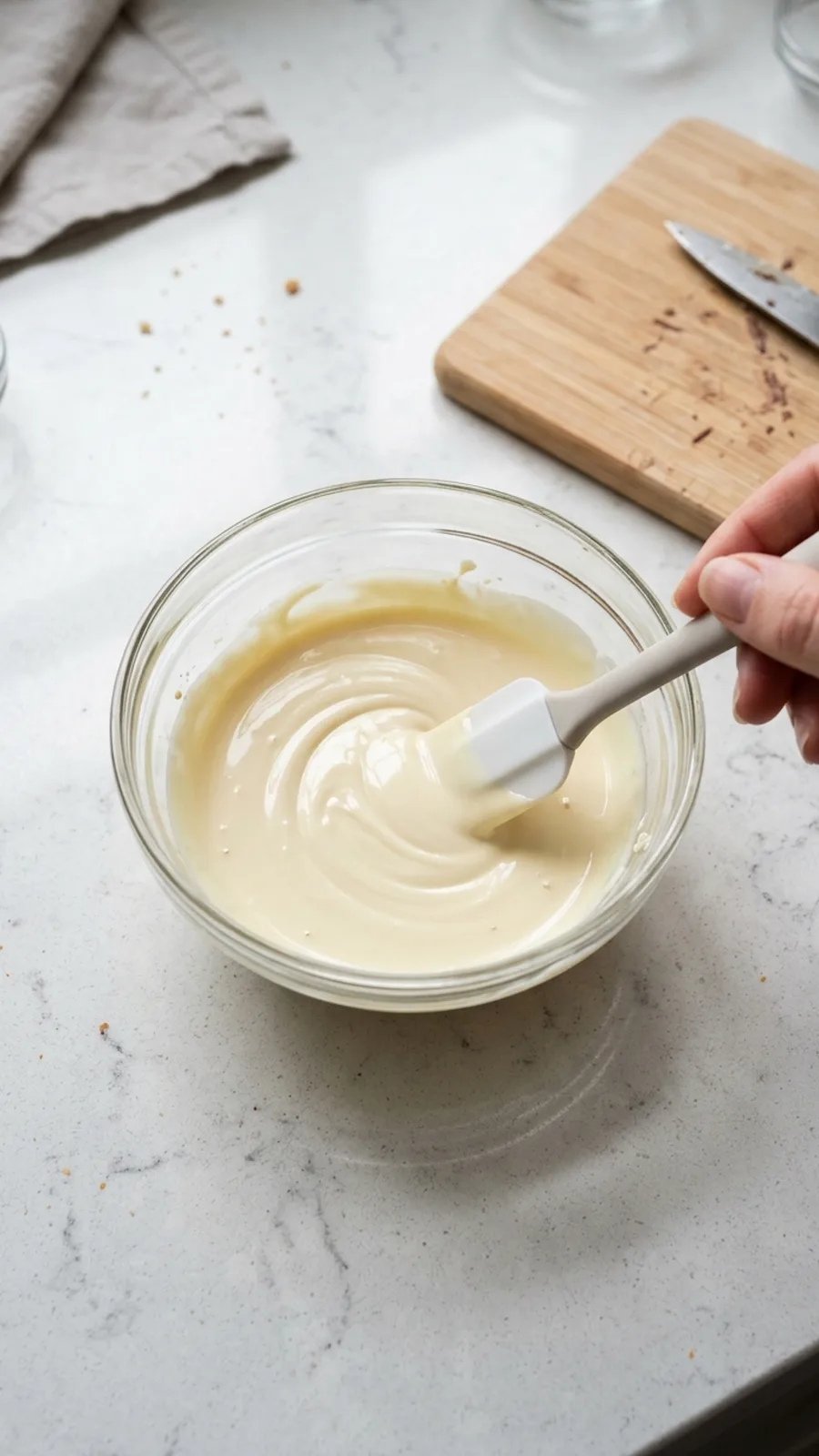
Place the 4 ounces (115 g) finely chopped white chocolate for the filling in a microwave-safe bowl.
Microwave in short intervals, stirring between each interval, until just melted and smooth.
Allow it to cool until lukewarm but still fluid.
Stir a small spoonful of cheesecake batter into the melted chocolate to help equalize the temperatures. Then fold the chocolate mixture into the remaining batter.
Mix gently until evenly incorporated.
Avoid adding hot chocolate directly to the batter, as it can affect the texture.
Step 6: Add the Eggs
Add the 3 large eggs one at a time, mixing on low speed after each addition.
Stop mixing as soon as each egg disappears into the batter.
Scrape the bowl as needed to ensure everything is evenly combined.
The finished filling should look smooth, glossy, and thick but pourable.
A few small surface bubbles are normal. Excessive foam indicates that too much air has been incorporated.
Step 7: Fill the Springform Pan
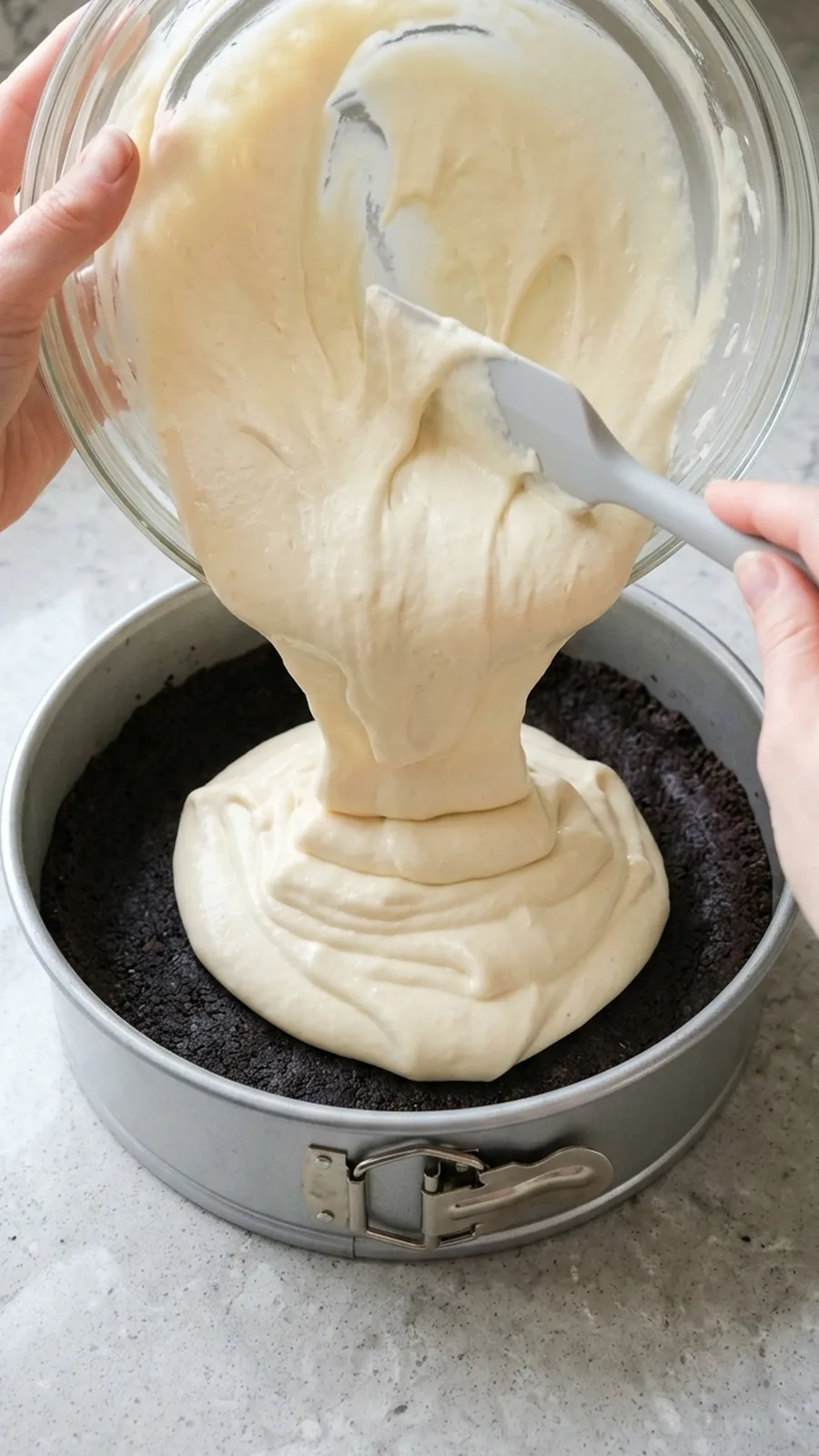
Pour the cheesecake filling over the cooled chocolate cookie crust.
Use a rubber spatula to spread the batter evenly.
Gently tap the pan against the countertop to release larger trapped air bubbles.
Place the springform pan on the rimmed baking sheet.
The baking sheet makes the cheesecake easier to move and catches any possible butter drips.
Step 8: Bake the Peppermint Cheesecake
Bake at 325°F (165°C) for approximately 60 minutes.
Begin checking near the end of the baking period.
The cheesecake is ready when:
- The outer edges look set and slightly puffed.
- The surface is mostly matte rather than wet.
- The center still has a gentle wobble when the pan is carefully nudged.
- The center moves as one soft mass rather than rippling like liquid.
For an additional doneness check, an instant-read thermometer inserted into the center should register approximately 150°F (66°C). Avoid baking until the entire center becomes rigid.
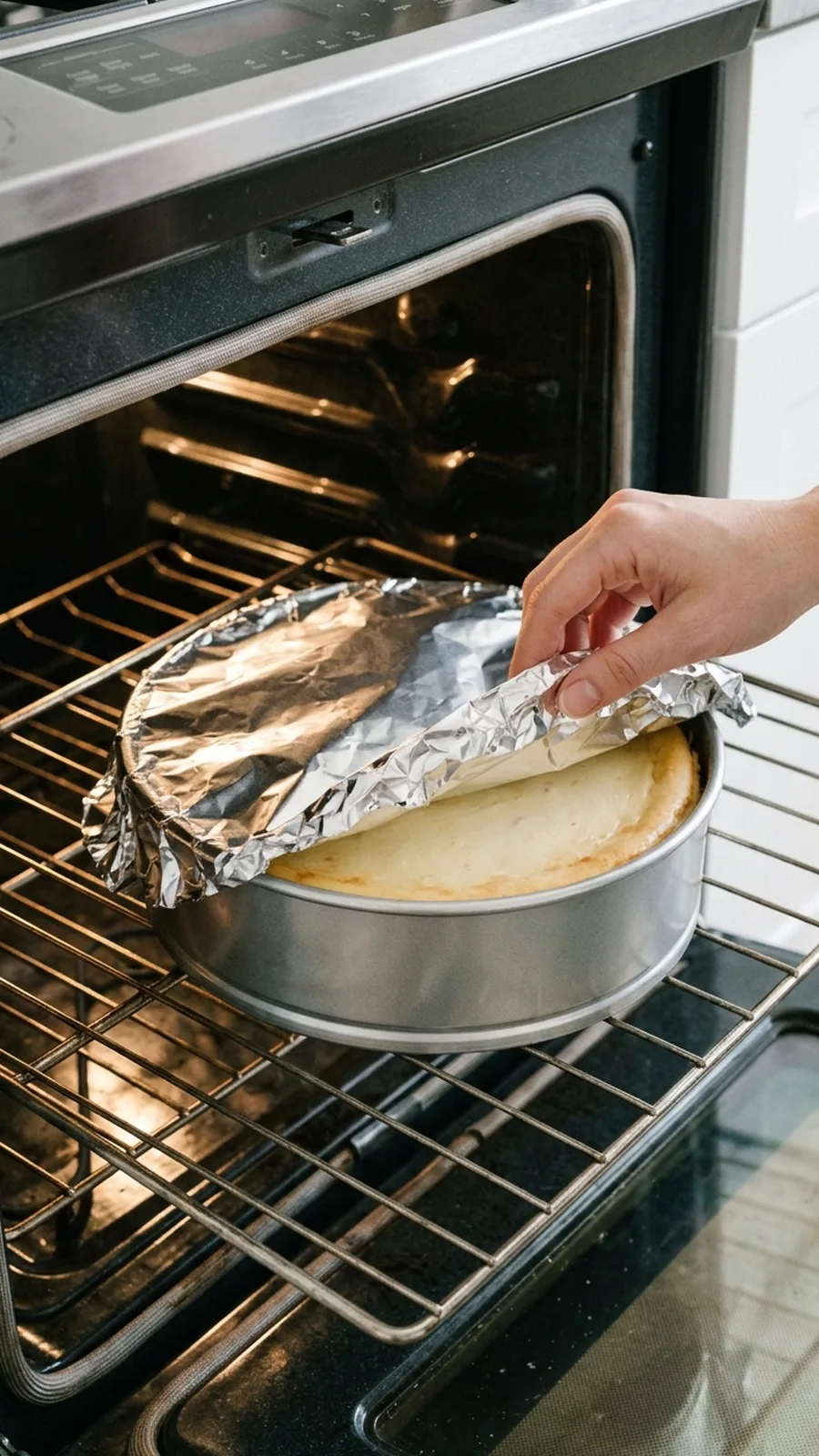
If the cheesecake is browning too quickly, loosely shield the top with aluminum foil without touching the filling.
Step 9: Cool the Cheesecake Gradually
Turn off the oven and crack the oven door slightly.
Leave the cheesecake inside for 1 hour.
This gradual cooling period helps reduce sudden temperature changes that can cause the cheesecake to contract and crack.
Remove the cheesecake from the oven and place it on a wire rack.
Run a thin knife carefully around the inside edge of the springform pan to loosen the cheesecake from the sides.
Allow it to cool at room temperature for another 1 hour.
The cheesecake should no longer feel hot before refrigeration.
Step 10: Chill Until Firm
Cover the springform pan loosely, taking care not to touch the cheesecake surface.
Refrigerate for at least 6 hours, preferably overnight.
The center should become fully chilled and firm enough to hold a clean slice.
Do not remove the springform ring while the cheesecake is still warm or partially set.
Step 11: Prepare the Chocolate Ganache
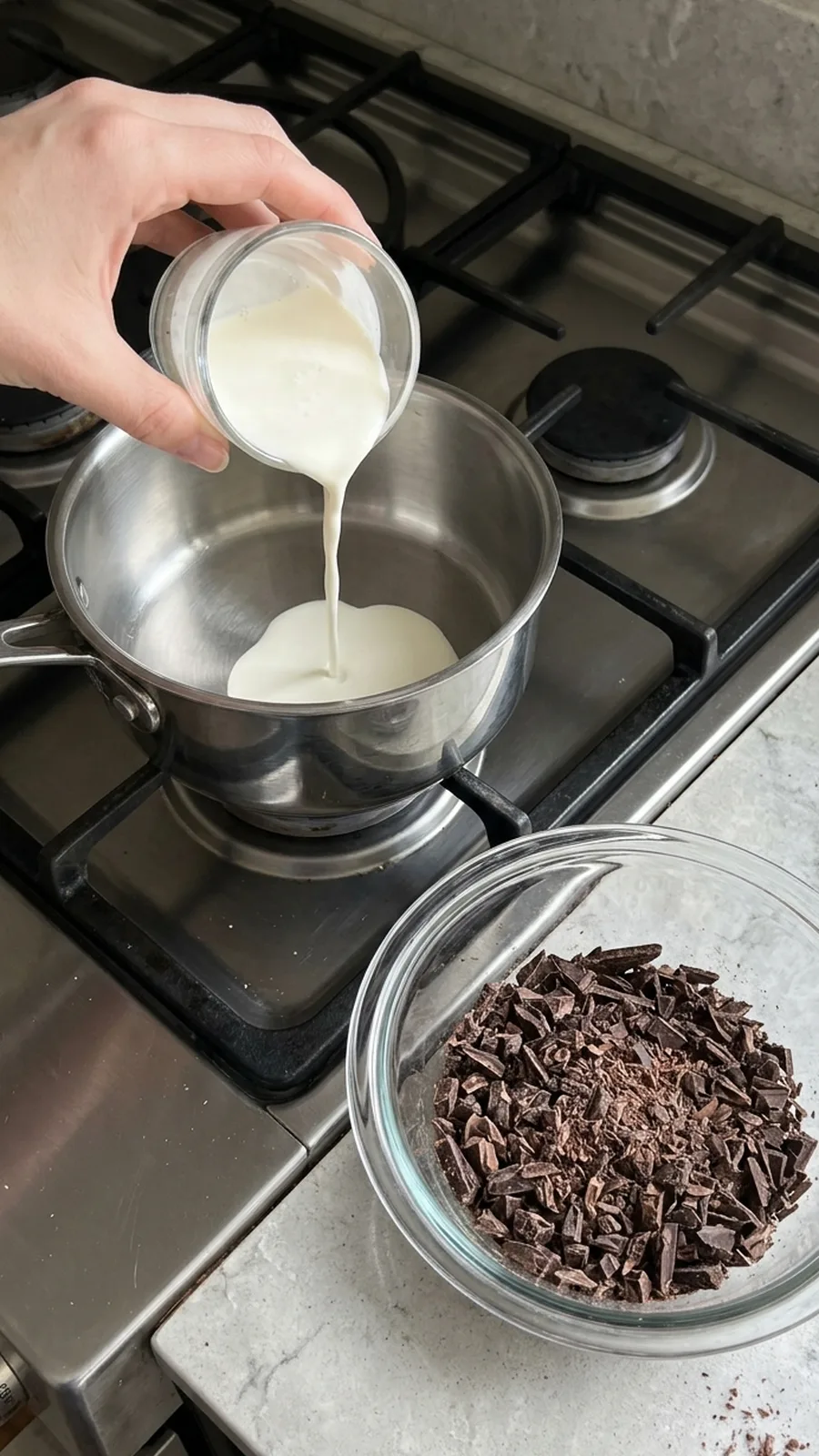
Place the 4 ounces (115 g) finely chopped semisweet chocolate in a heatproof bowl.
Pour the 1/2 cup (120 ml) heavy whipping cream into a small saucepan.
Heat over medium-low heat until the cream is steaming and small bubbles begin forming around the edges. Do not let it boil vigorously.
Pour the hot cream over the chopped chocolate.
Let stand for 2 minutes, then stir gently from the center outward until the mixture becomes smooth and glossy.
Allow the ganache to cool for approximately 10 minutes, until thickened slightly but still pourable.
If the chocolate does not melt completely, warm the mixture gently in short microwave intervals, stirring until smooth.
Step 12: Add the Chocolate Topping
Remove the chilled cheesecake from the refrigerator.
Carefully release and remove the springform ring.
Pour the slightly cooled ganache over the center of the cheesecake.
Use an offset spatula to spread it toward the edges, allowing a few natural drips if desired.
The ganache should spread smoothly without running off the cheesecake excessively.
If it becomes too thick to spread, warm it very briefly until fluid again.
Step 13: Decorate with Peppermint Bark Toppings
If using the optional white chocolate garnish, melt the 2 ounces (55 g) white chocolate in short microwave intervals, stirring until smooth.
Drizzle it over the ganache using a spoon.
Sprinkle the optional 1/3 cup (55 g) crushed peppermint candy canes over the top, reserving some for a fresh garnish just before serving.
For a decorative finish, drag the tip of a toothpick gently through the white chocolate drizzle to create a subtle marbled pattern.
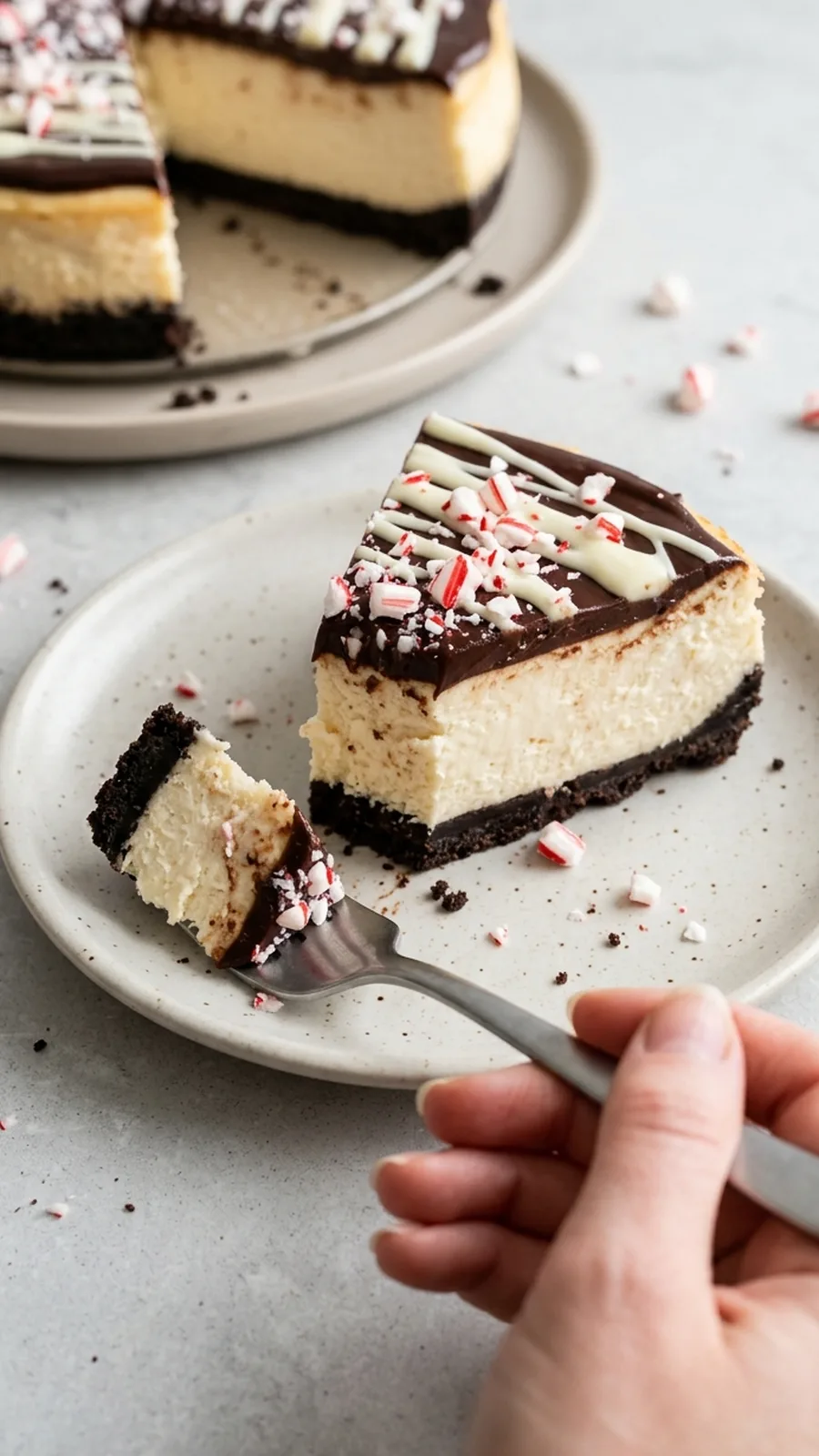
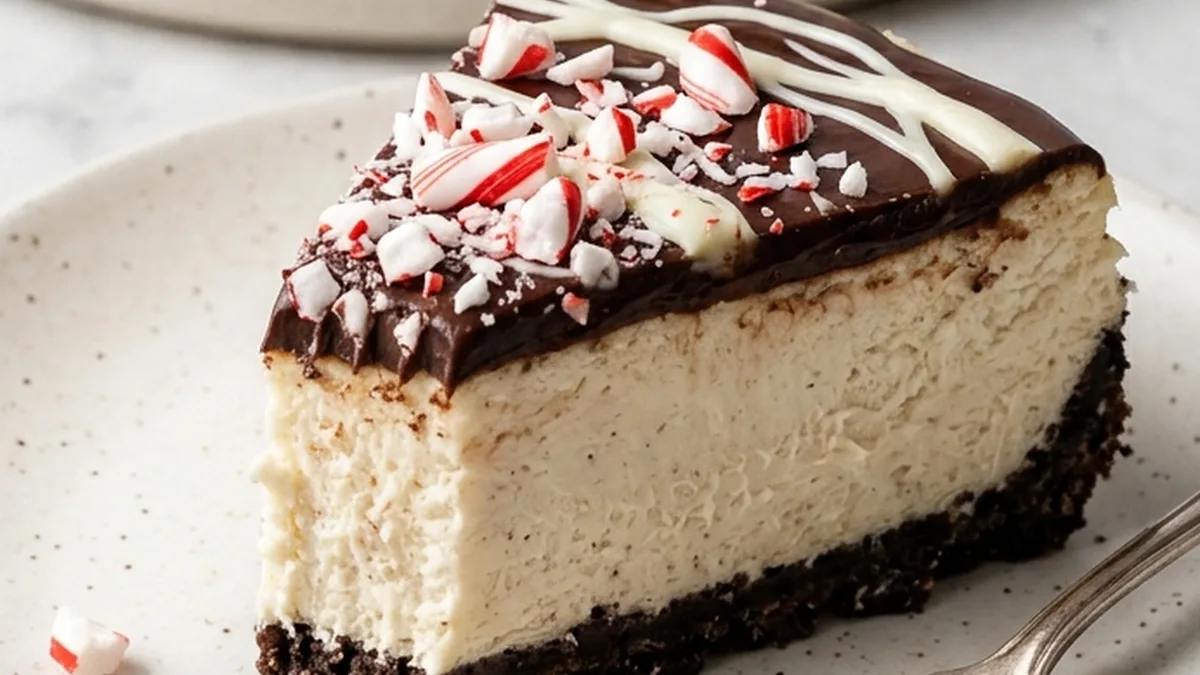
The finished topping should have a glossy chocolate surface with contrasting white chocolate and scattered peppermint pieces.
Step 14: Set the Topping and Serve
Return the decorated cheesecake to the refrigerator for approximately 30 minutes, or until the ganache is firm enough to slice neatly.
For clean slices, dip a sharp knife into hot water, wipe it dry, and cut through the cheesecake with a smooth downward motion.
Wipe the blade clean between cuts.
Add the reserved crushed peppermint candy immediately before serving to preserve its crunchy texture.
Cut into 12 slices and serve chilled.
Storage, Freezing, and Make-Ahead Instructions
Refrigerator Storage: Store Peppermint Bark Cheesecake in the refrigerator in a covered cake container or an airtight container. It will keep for up to 4 days when properly refrigerated. For the cleanest appearance, avoid pressing plastic wrap directly against the ganache topping. Keep the cheesecake refrigerated until shortly before serving. Because it contains cream cheese, sour cream, and eggs, do not leave it at room temperature for more than 2 hours.
Freezing Instructions: Peppermint Bark Cheesecake can be frozen for up to 2 months for good quality. For the most attractive finish, freeze the cheesecake without the ganache and peppermint decorations. First, chill the baked cheesecake completely. Remove the springform ring, place the cheesecake on a freezer-safe base, and freeze until firm. Wrap tightly in plastic wrap followed by aluminum foil, or place it in a freezer-safe airtight container. Individual slices can also be frozen with protective wrapping.
How to Thaw: Transfer the frozen cheesecake to the refrigerator and allow it to thaw overnight. Keep it covered while thawing to limit condensation. Once thawed, prepare the ganache and add the decorations before serving. Do not thaw cheesecake at room temperature for an extended period.
Make-Ahead Instructions: This cheesecake is particularly convenient for preparing ahead of a holiday gathering. Bake and chill the cheesecake the day before serving. Prepare the ganache and white chocolate decoration after the cheesecake has fully set. Add the crushed peppermint candy close to serving time so the pieces remain crisp and colorful.
FAQ
Can I make Peppermint Bark Cheesecake ahead of time?
Yes. This cheesecake benefits from a long refrigeration period, making it a convenient make-ahead dessert. Prepare the baked cheesecake the day before serving, keep it covered in the refrigerator, and add the chocolate ganache and peppermint decorations after it has fully chilled.
How do I know when the cheesecake is fully baked?
The edges should appear set, while the center should still wobble gently when the pan is moved. The center should not look liquid or ripple freely. An internal temperature of approximately 150°F (66°C) is another useful indicator. The cheesecake will continue to firm during cooling and refrigeration.
Why did my peppermint cheesecake crack?
Cracks can result from overmixing, overbaking, or cooling the cheesecake too quickly. Excess air causes the filling to expand in the oven and contract as it cools. Mixing gently, removing the cheesecake while the center still has a slight wobble, and allowing gradual cooling can reduce cracking. The ganache topping can also conceal minor surface imperfections.
Can I use peppermint baking chips instead of white chocolate?
Peppermint baking chips are not a reliable direct replacement for the white chocolate in the filling. Their melting behavior and sweetness vary by brand, and some contain ingredients that can affect the cheesecake's texture. For a predictable result, use real white chocolate in the filling and reserve peppermint-flavored chips, if desired, for an optional decorative variation.
Can I make this cheesecake without a springform pan?
A springform pan is recommended because its removable sides allow the cheesecake to be released without turning it upside down. A deep, solid cake pan may work if lined with enough parchment paper to help lift out the fully chilled cheesecake, but removal is more difficult and the edges may be damaged. Avoid using a shallow pan that cannot accommodate the filling.
If you enjoy this dish, you might also love Peppermint Bark Cookies, Peppermint Brownie Mix Cookies, No Bake Christmas Peppermint Pie, and Biscoff Cheesecake.

Peppermint Bark Cheesecake
Ingredients
Method
- Preheat the oven to 325°F (165°C). Place the 24 chocolate sandwich cookies in a food processor and pulse until they form fine, even crumbs. Alternatively, crush them inside a sealed zip-top bag with a rolling pin. Transfer the crumbs to a mixing bowl and stir in the 5 tablespoons (70 g) melted unsalted butter. The mixture should resemble damp sand and hold together when pressed between your fingers. Lightly grease the bottom and sides of a 9-inch (23 cm) springform pan. Press the cookie mixture firmly and evenly across the bottom, using the flat bottom of a measuring cup to compact it.
- Place the springform pan on a rimmed baking sheet. Bake the crust at 325°F (165°C) for 10 minutes. The surface should look slightly darker and feel more cohesive, although it will still be somewhat soft while hot. Remove the pan from the oven and allow the crust to cool while preparing the filling. Keep the oven at 325°F (165°C).
- Place the 24 ounces (680 g) softened cream cheese in a large mixing bowl. Using an electric mixer on low to medium-low speed, beat until smooth and free of visible lumps. Add the 1 cup (200 g) granulated sugar and mix until evenly incorporated. Scrape the bottom and sides of the bowl with a rubber spatula. The mixture should look thick, creamy, and smooth rather than fluffy or heavily aerated. Avoid beating at high speed, which can introduce excessive air and contribute to cracking during baking.
- Add the 3/4 cup (180 g) sour cream, 2 teaspoons (10 ml) vanilla extract, and 1/2 teaspoon (2.5 ml) peppermint extract. Mix on low speed until combined. Sprinkle in the 2 tablespoons (16 g) all-purpose flour and mix just until no dry streaks remain. The batter should be smooth, thick, and creamy. If you notice small cream cheese lumps, scrape the bowl thoroughly and mix briefly on low speed.
- Place the 4 ounces (115 g) finely chopped white chocolate for the filling in a microwave-safe bowl. Microwave in short intervals, stirring between each interval, until just melted and smooth. Allow it to cool until lukewarm but still fluid. Stir a small spoonful of cheesecake batter into the melted chocolate to help equalize the temperatures. Then fold the chocolate mixture into the remaining batter. Mix gently until evenly incorporated. Avoid adding hot chocolate directly to the batter, as it can affect the texture.
- Add the 3 large eggs one at a time, mixing on low speed after each addition. Stop mixing as soon as each egg disappears into the batter. Scrape the bowl as needed to ensure everything is evenly combined. The finished filling should look smooth, glossy, and thick but pourable. A few small surface bubbles are normal. Excessive foam indicates that too much air has been incorporated.
- Pour the cheesecake filling over the cooled chocolate cookie crust. Use a rubber spatula to spread the batter evenly. Gently tap the pan against the countertop to release larger trapped air bubbles. Place the springform pan on the rimmed baking sheet. The baking sheet makes the cheesecake easier to move and catches any possible butter drips.
- Bake at 325°F (165°C) for approximately 60 minutes. Begin checking near the end of the baking period. The cheesecake is ready when: The outer edges look set and slightly puffed. The surface is mostly matte rather than wet. The center still has a gentle wobble when the pan is carefully nudged. The center moves as one soft mass rather than rippling like liquid. For an additional doneness check, an instant-read thermometer inserted into the center should register approximately 150°F (66°C). Avoid baking until the entire center becomes rigid. If the cheesecake is browning too quickly, loosely shield the top with aluminum foil without touching the filling.
- Turn off the oven and crack the oven door slightly. Leave the cheesecake inside for 1 hour. This gradual cooling period helps reduce sudden temperature changes that can cause the cheesecake to contract and crack. Remove the cheesecake from the oven and place it on a wire rack. Run a thin knife carefully around the inside edge of the springform pan to loosen the cheesecake from the sides. Allow it to cool at room temperature for another 1 hour. The cheesecake should no longer feel hot before refrigeration.
- Cover the springform pan loosely, taking care not to touch the cheesecake surface. Refrigerate for at least 6 hours, preferably overnight. The center should become fully chilled and firm enough to hold a clean slice. Do not remove the springform ring while the cheesecake is still warm or partially set.
- Place the 4 ounces (115 g) finely chopped semisweet chocolate in a heatproof bowl. Pour the 1/2 cup (120 ml) heavy whipping cream into a small saucepan. Heat over medium-low heat until the cream is steaming and small bubbles begin forming around the edges. Do not let it boil vigorously. Pour the hot cream over the chopped chocolate. Let stand for 2 minutes, then stir gently from the center outward until the mixture becomes smooth and glossy. Allow the ganache to cool for approximately 10 minutes, until thickened slightly but still pourable. If the chocolate does not melt completely, warm the mixture gently in short microwave intervals, stirring until smooth.
- Remove the chilled cheesecake from the refrigerator: Carefully release and remove the springform ring. Pour the slightly cooled ganache over the center of the cheesecake. Use an offset spatula to spread it toward the edges, allowing a few natural drips if desired. The ganache should spread smoothly without running off the cheesecake excessively. If it becomes too thick to spread, warm it very briefly until fluid again.
- If using the optional white chocolate garnish, melt the 2 ounces (55 g) white chocolate in short microwave intervals, stirring until smooth. Drizzle it over the ganache using a spoon. Sprinkle the optional 1/3 cup (55 g) crushed peppermint candy canes over the top, reserving some for a fresh garnish just before serving. For a decorative finish, drag the tip of a toothpick gently through the white chocolate drizzle to create a subtle marbled pattern. The finished topping should have a glossy chocolate surface with contrasting white chocolate and scattered peppermint pieces.
- Return the decorated cheesecake to the refrigerator for approximately 30 minutes, or until the ganache is firm enough to slice neatly. For clean slices, dip a sharp knife into hot water, wipe it dry, and cut through the cheesecake with a smooth downward motion. Wipe the blade clean between cuts. Add the reserved crushed peppermint candy immediately before serving to preserve its crunchy texture. Cut into 12 slices and serve chilled.