Preheat your oven to 350°F (175°C). Line the bottoms of two 8-inch (20 cm) round cake pans with parchment paper. Lightly grease the parchment and sides of the pans using a small amount of the butter measured for the cake. In a medium mixing bowl, whisk together the all-purpose flour, baking powder, baking soda, salt, cinnamon, ginger, nutmeg, and cloves. Mix until the spices are evenly distributed and no visible clumps remain. Set the dry mixture aside.
Place the remaining softened cake butter in a large mixing bowl. Add the light brown sugar and granulated sugar. Beat with an electric mixer on medium speed for 3–4 minutes, until the mixture looks lighter in color, fluffy, and well combined. Scrape down the sides of the bowl as needed. The mixture should appear creamy rather than greasy or separated. Proper creaming helps create a lighter cake texture.
Add the eggs one at a time, beating on low to medium speed after each addition until incorporated. Pour in the vanilla extract and mix briefly. The batter should look thick, creamy, and mostly smooth. If it appears slightly curdled, do not worry; it should come together when the flour mixture is added. Avoid beating excessively after the eggs are incorporated.
Reduce the mixer speed to low: Add the dry ingredient mixture in three additions, alternating with the buttermilk in two additions. Begin and end with the dry ingredients. Mix just until the flour disappears after each addition. Use a silicone spatula to scrape the bottom and sides of the bowl, folding gently to incorporate any remaining dry patches. The finished batter should be thick, smooth, and spreadable, with visible specks of warm spices. If the batter seems unusually stiff, check that all the measured buttermilk has been incorporated before making any adjustments.
Divide the batter evenly between the prepared cake pans. Use an offset spatula to smooth the tops and gently tap each pan against the countertop to release large trapped air pockets. The batter should settle into an even layer without becoming runny. Keeping the layers approximately equal helps them bake at the same rate and makes stacking easier.
Place both pans on the center oven rack, leaving space between them for air circulation. Bake at 350°F (175°C) for 28–32 minutes, or until the tops are lightly golden brown and the centers spring back when gently pressed. Insert a toothpick into the center of each cake. It should come out clean or with a few moist crumbs, but no wet batter. If the tops are browning before the centers finish baking, loosely cover the pans with foil for the remaining baking time. Avoid opening the oven repeatedly during the early stages of baking, as sudden temperature changes can cause the cakes to sink.
Remove the pans from the oven and place them on a wire rack. Let the cakes cool in their pans for 15 minutes. Carefully run a thin knife around the edges, then turn the cakes out onto the rack. Remove the parchment paper and allow the layers to cool completely for approximately 1 hour 45 minutes more. The cakes must feel completely cool to the touch before frosting. Even slightly warm layers can soften the buttercream and cause the assembled cake to slide.
Place the softened butter for the frosting in a clean mixing bowl. Beat on medium speed for 3–4 minutes until pale, smooth, and creamy. Gradually add the sifted powdered sugar, mixing on low speed until incorporated. Add the chilled pasteurized eggnog, vanilla extract, ground nutmeg, and fine salt. Beat on medium speed for another 2–3 minutes until the frosting becomes light, fluffy, and spreadable. The buttercream should hold soft peaks and spread smoothly without running. If it appears too loose, refrigerate it briefly until it firms up, then beat again. If it looks grainy, continue mixing until the sugar is evenly incorporated.
Place one completely cooled cake layer on a cake stand or serving plate. If the top is noticeably domed, use a serrated knife to trim it flat. Spread approximately one-third of the eggnog buttercream over the first layer, creating an even filling that reaches close to the edges. Carefully position the second cake layer on top, placing its flattest side upward. Press very gently to settle the layers without squeezing out the filling.
Spread a thin layer of the remaining buttercream over the top and sides of the cake to trap loose crumbs. Refrigerate the cake for 15 minutes, or until this crumb coat feels slightly firm. Use the remaining buttercream to frost the top and sides evenly. Smooth the frosting with an offset spatula or create gentle swirls for a more rustic holiday appearance. The finished buttercream should be creamy and stable enough to hold its shape.
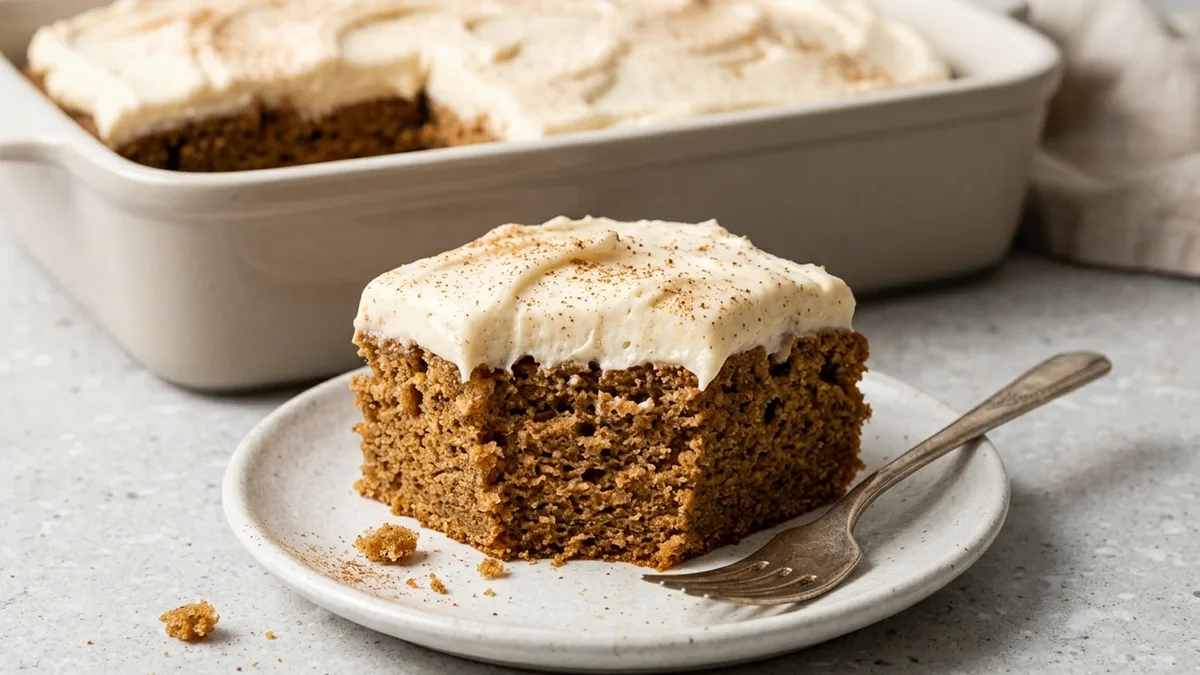
If desired, lightly dust the top of the cake with the optional ground cinnamon. For a simple presentation, leave the buttercream with soft swirls rather than smoothing it completely. Slice with a sharp knife, wiping the blade between cuts for cleaner portions. The finished Christmas Spice Cake with Eggnog Buttercream should have tender, evenly baked layers and a creamy frosting with a distinct but balanced eggnog flavor.