In a medium mixing bowl, whisk together the all-purpose flour, fine salt, and granulated sugar for the crust. Add the cold, cubed unsalted butter. Use a pastry cutter or fork to work the butter into the flour until the mixture resembles coarse crumbs with some pea-sized pieces of butter remaining. Add the ice water gradually, mixing gently with a fork. The dough should look slightly shaggy but hold together when squeezed. If dry flour remains and the dough will not hold together, add the reserved extra ice water. Avoid kneading the dough until completely smooth. Visible pieces of butter are desirable because they contribute to a flaky crust.
Gather the dough into a disk, wrap it tightly, and refrigerate for 30 minutes. After chilling, place the dough on a lightly floured work surface and roll it into a circle approximately 12 inches (30 cm) wide. Transfer the dough to a 9-inch (23 cm) pie plate, approximately 1 1/2 inches (3.8 cm) deep. Gently press it into the bottom and sides without stretching it. Trim excess dough and crimp the edges. Keep the prepared crust refrigerated while assembling the filling and crumble. The pastry should feel cool and firm rather than sticky or greasy.
Preheat the oven to 400°F (200°C). Position an oven rack in the lower third of the oven and place a rimmed baking sheet on the rack to preheat. The heated baking sheet will help transfer heat to the bottom of the pie plate, encouraging the lower crust to bake more thoroughly.
Peel, core, and slice the apples into pieces approximately 1/4 inch (6 mm) thick. Try to keep the slices similar in thickness so they soften at approximately the same rate. Place the sliced apples in a large mixing bowl. The slices should be thin enough to become tender during baking but thick enough to retain some structure.
Add the granulated sugar, packed light brown sugar, all-purpose flour, fresh lemon juice, ground cinnamon, ground nutmeg, ground ginger, vanilla extract, and fine salt to the apples. Toss thoroughly until the slices are evenly coated. The apples should look lightly glossy, with the spices and flour distributed throughout the mixture. A small amount of juice may collect at the bottom of the bowl as the sugar draws moisture from the apples. This is normal.
In a medium bowl, combine the all-purpose flour, packed light brown sugar, ground cinnamon, and fine salt for the crumble topping. Add the cold, cubed unsalted butter. Use a pastry cutter or your fingertips to work the butter into the dry ingredients until the mixture forms irregular crumbs. The finished crumble should contain both small sandy pieces and larger clusters. When gently squeezed, some of the mixture should hold together. If the topping begins to feel greasy or overly soft, refrigerate it briefly before assembling the pie.
Remove the prepared pie crust from the refrigerator: Spoon the cinnamon-coated apples into the crust, distributing them evenly. Arrange the slices so they fit snugly, with a gentle mound toward the center. Pour any remaining spiced juices from the bowl over the apples. Scatter the brown sugar crumble evenly across the filling, covering most of the exposed apple slices. Avoid pressing the topping firmly into the fruit. Keeping the crumbs loose allows them to brown and develop a more distinct texture.
Carefully place the assembled pie onto the preheated baking sheet. Bake at 400°F (200°C) for 20 minutes. During this initial stage, the crust begins to set and the butter in the crumble starts to melt. The pastry edges should begin to look dry and lightly colored, although the filling will not yet be fully cooked.
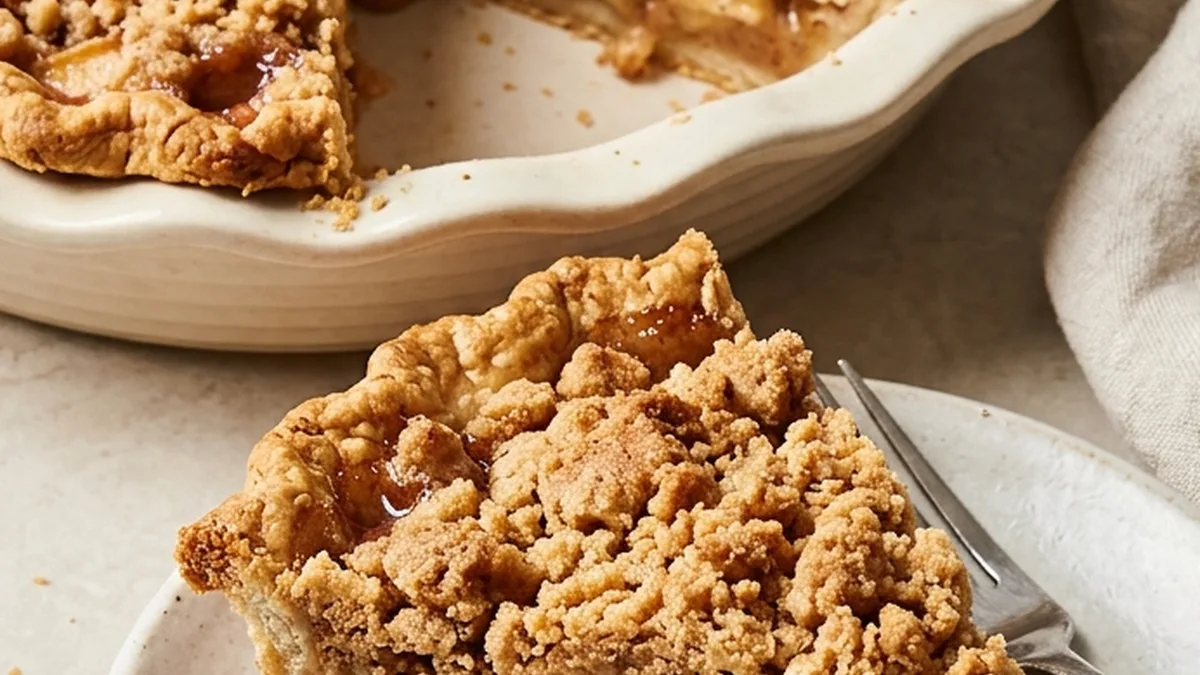
Without removing the pie from the oven, reduce the temperature to 350°F (175°C). Continue baking for 45 minutes, or until the crumble is golden brown and thick apple juices are bubbling through the topping near the center. The apples should feel tender when pierced with a thin knife through an opening in the crumble. If the crust edges or crumble begin browning too quickly, cover the affected areas loosely with aluminum foil. If the topping is golden but the filling is not yet bubbling near the center, continue baking until the filling reaches that stage.
Transfer the baked pie to a wire cooling rack. Allow it to cool for 2 hours before slicing. During cooling, the apple filling gradually thickens and the juices become less fluid. Cutting the pie immediately after baking can cause the filling to spread and soften the bottom crust. The crumble should remain lightly crisp on top, while the apple filling should be tender and cohesive.
Once the pie has cooled, use a sharp knife to cut it into 8 slices. For cleaner portions, cut through the crumble with a gentle sawing motion before moving the knife through the apple filling and crust. Serve the pie at room temperature or gently warmed. The contrast between the tender cinnamon-spiced apples, buttery crust, and golden crumble is the defining feature of this dessert.