Fall Apple Crumble Pie with Cinnamon Spices combines tender, cinnamon-coated apples, a flaky butter pie crust, and a golden brown crumble topping. The apples soften into a juicy filling as they bake, while the buttery streusel adds a lightly crisp, crumbly finish. Warm cinnamon, nutmeg, and a touch of ginger bring out the natural sweetness of the apples without overwhelming their flavor.
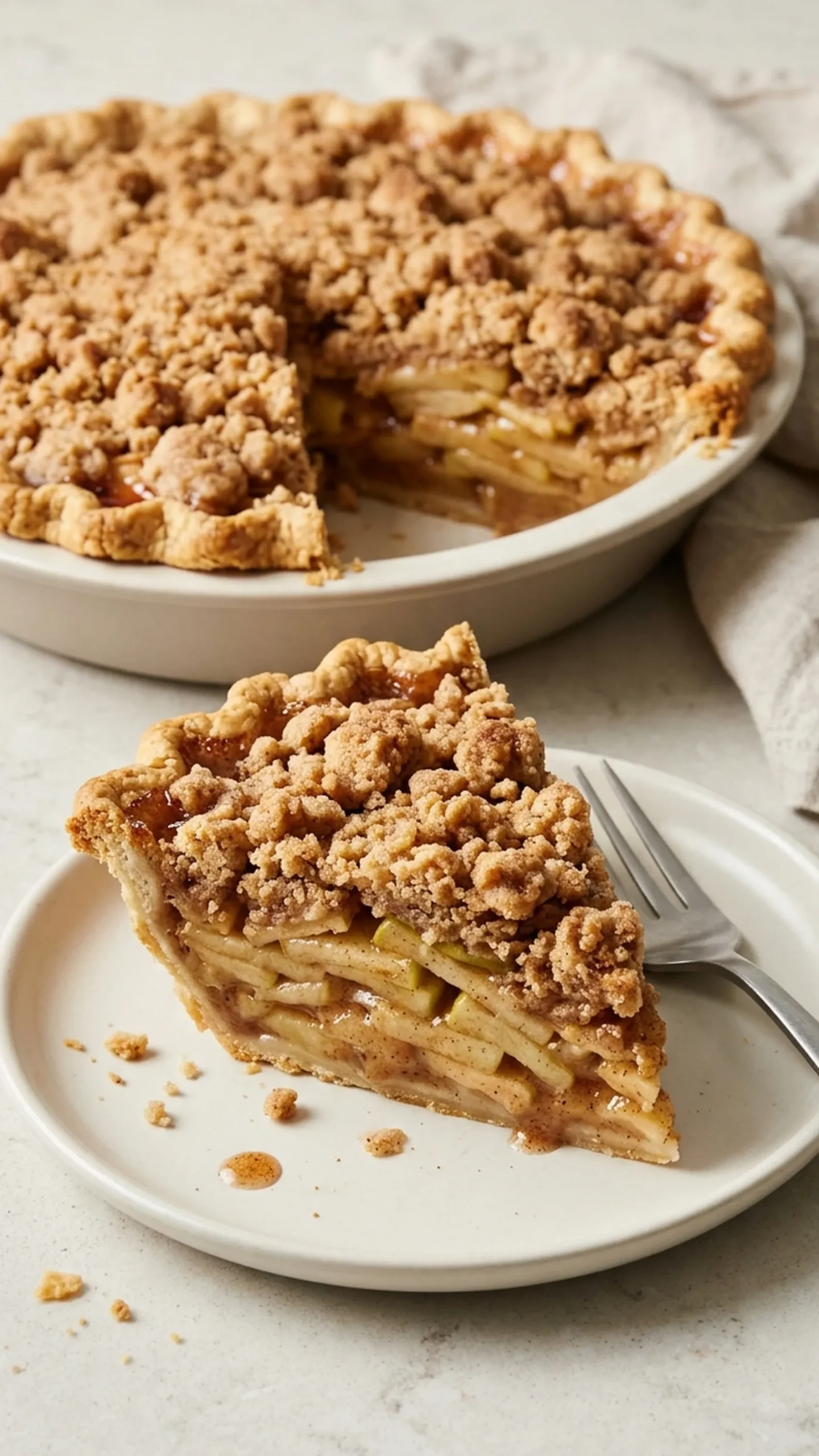
This apple crumble pie uses a single bottom crust instead of a traditional double-crust pastry, making it easier to assemble while still delivering the familiar texture of homemade apple pie. A mixture of tart and sweet apples creates a balanced filling, and a little flour helps thicken the juices. Allowing the finished pie to cool before slicing gives the filling time to settle, so each slice holds together more neatly.
Why This Recipe Works
- A combination of apple varieties balances flavor and texture. Granny Smith apples contribute tartness and hold their shape, while Honeycrisp apples add natural sweetness and a slightly softer bite.
- A chilled butter crust creates flaky layers. Keeping the butter cold helps it remain in small pieces throughout the dough, producing a more delicate pastry as the pie bakes.
- Flour thickens the apple juices. As the apples release moisture, the flour helps create a lightly thickened filling instead of leaving excess liquid at the bottom of the crust.
- Brown sugar gives the crumble a richer flavor. Its molasses notes complement the cinnamon and help the topping develop a golden, slightly caramelized finish.
- Cooling improves sliceability. The thickened apple juices become more stable as the pie cools, making it easier to serve without the filling spreading across the plate.
Equipment Needed
- 9-inch (23 cm) pie plate, approximately 1 1/2 inches (3.8 cm) deep
- Large mixing bowl for the apple filling
- Medium mixing bowls for the crust and crumble
- Pastry cutter or sturdy fork
- Rolling pin
- Measuring cups and spoons
- Kitchen scale for accurate ingredient measurements
- Vegetable peeler and sharp knife or apple corer
- Rimmed baking sheet to catch any bubbling juices
- Wire cooling rack
- Aluminum foil or pie crust shield to prevent excessive browning
Ingredients List
For the Homemade Butter Pie Crust
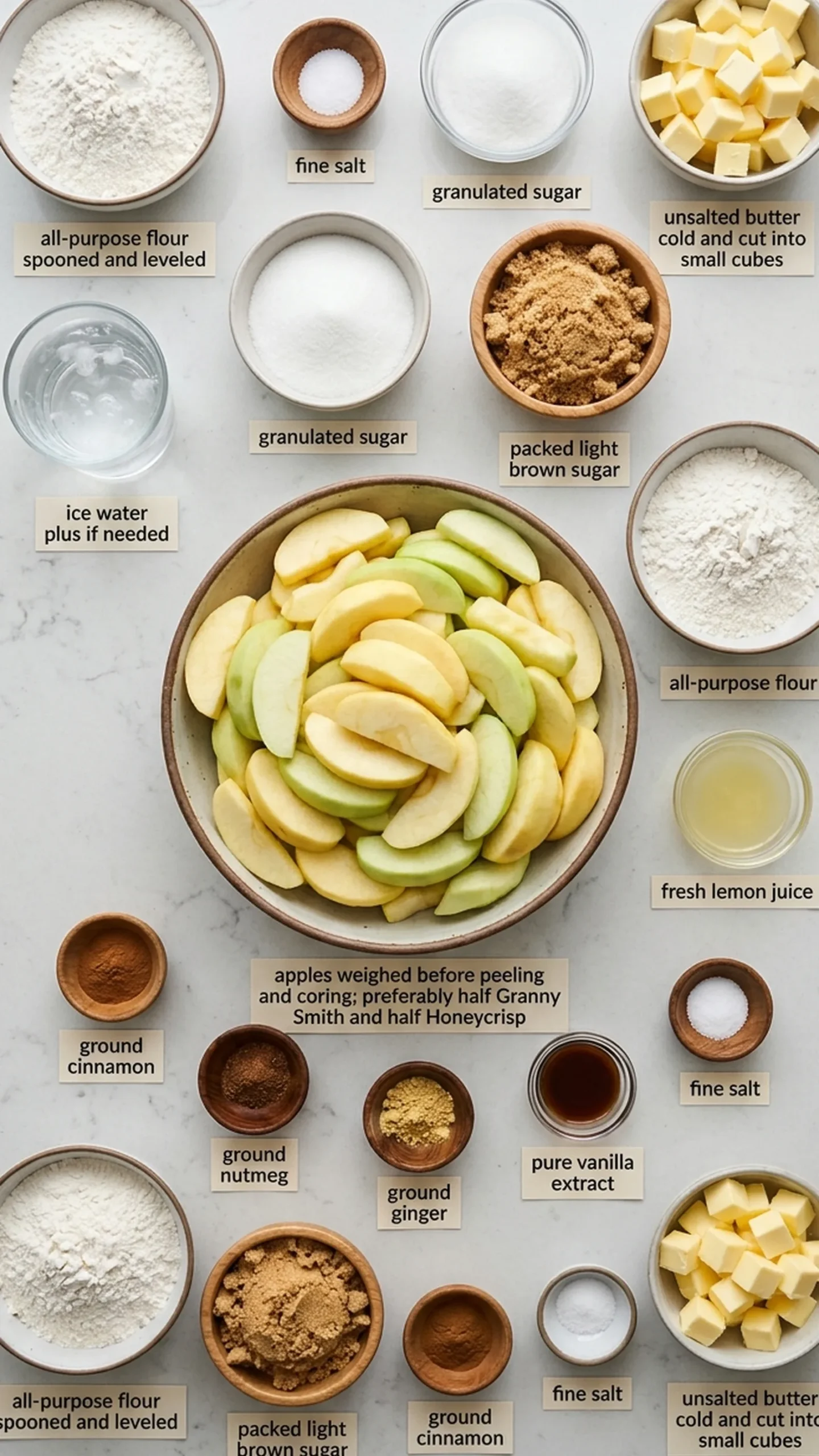
- 1 1/4 cups (150 g) all-purpose flour, spooned and leveled
- 1/2 teaspoon (3 g) fine salt
- 1 teaspoon (4 g) granulated sugar
- 1/2 cup (113 g) unsalted butter, cold and cut into small cubes
- 3 tablespoons (45 ml) ice water, plus 1 tablespoon (15 ml) if needed
For the Cinnamon-Spiced Apple Filling
- 3 pounds (1.36 kg) apples, weighed before peeling and coring; preferably half Granny Smith and half Honeycrisp, peeled, cored, and sliced 1/4 inch (6 mm) thick
- 1/2 cup (100 g) granulated sugar
- 1/4 cup (50 g) packed light brown sugar
- 3 tablespoons (24 g) all-purpose flour
- 1 tablespoon (15 ml) fresh lemon juice
- 1 1/2 teaspoons (4 g) ground cinnamon
- 1/4 teaspoon (0.5 g) ground nutmeg
- 1/4 teaspoon (0.5 g) ground ginger
- 1 teaspoon (5 ml) pure vanilla extract
- 1/4 teaspoon (1.5 g) fine salt
For the Brown Sugar Crumble Topping
- 3/4 cup (90 g) all-purpose flour, spooned and leveled
- 1/2 cup (100 g) packed light brown sugar
- 1/2 teaspoon (1.3 g) ground cinnamon
- 1/4 teaspoon (1.5 g) fine salt
- 6 tablespoons (85 g) unsalted butter, cold and cut into small cubes
Ingredient Notes and Substitutions
- Apples: The apples are the foundation of this pie, so their texture and natural acidity matter. Granny Smith apples remain relatively firm during baking, while Honeycrisp apples provide a sweeter contrast. Braeburn or Pink Lady apples can replace Honeycrisp. They offer a similar balance of sweetness and acidity, although their texture may soften differently. Avoid relying entirely on very soft apple varieties, which can break down and create a mushier filling.
- Unsalted Butter: Cold unsalted butter is important for both the pie crust and the crumble. In the crust, small pieces of butter help create flaky layers. In the topping, butter binds the flour and sugar into crumbs that brown as the pie bakes. Salted butter can be used if necessary, but the added salt may make the finished pie noticeably saltier. A reliable direct replacement with liquid oil is not recommended for the crust because it changes the pastry's structure.
- All-Purpose Flour: All-purpose flour gives the crust structure, thickens the apple filling, and helps the crumble form distinct crumbs. For the filling, cornstarch can replace the flour using approximately half as much by volume. It generally produces a clearer, glossier filling. However, replacing all-purpose flour in the crust or crumble with a gluten-free flour blend may require additional adjustments, and the texture may differ.
- Brown Sugar: Light brown sugar contributes moisture, mild molasses flavor, and deeper browning to the crumble topping. It also complements the warm spices in the apple filling. Dark brown sugar can be substituted in equal amounts for a stronger molasses flavor and a darker topping. Granulated sugar is another option, although the crumble may taste less rich and have a slightly drier texture.
- Cinnamon, Nutmeg, and Ginger: Cinnamon provides the dominant warm spice flavor, while nutmeg and ginger add subtle depth. A commercial apple pie spice blend can replace the combined spices in the same total volume, but the exact flavor will depend on the blend. Some contain allspice or cloves, which may produce a stronger, more aromatic filling.
Step-by-Step Instructions
1. Prepare the Butter Pie Dough
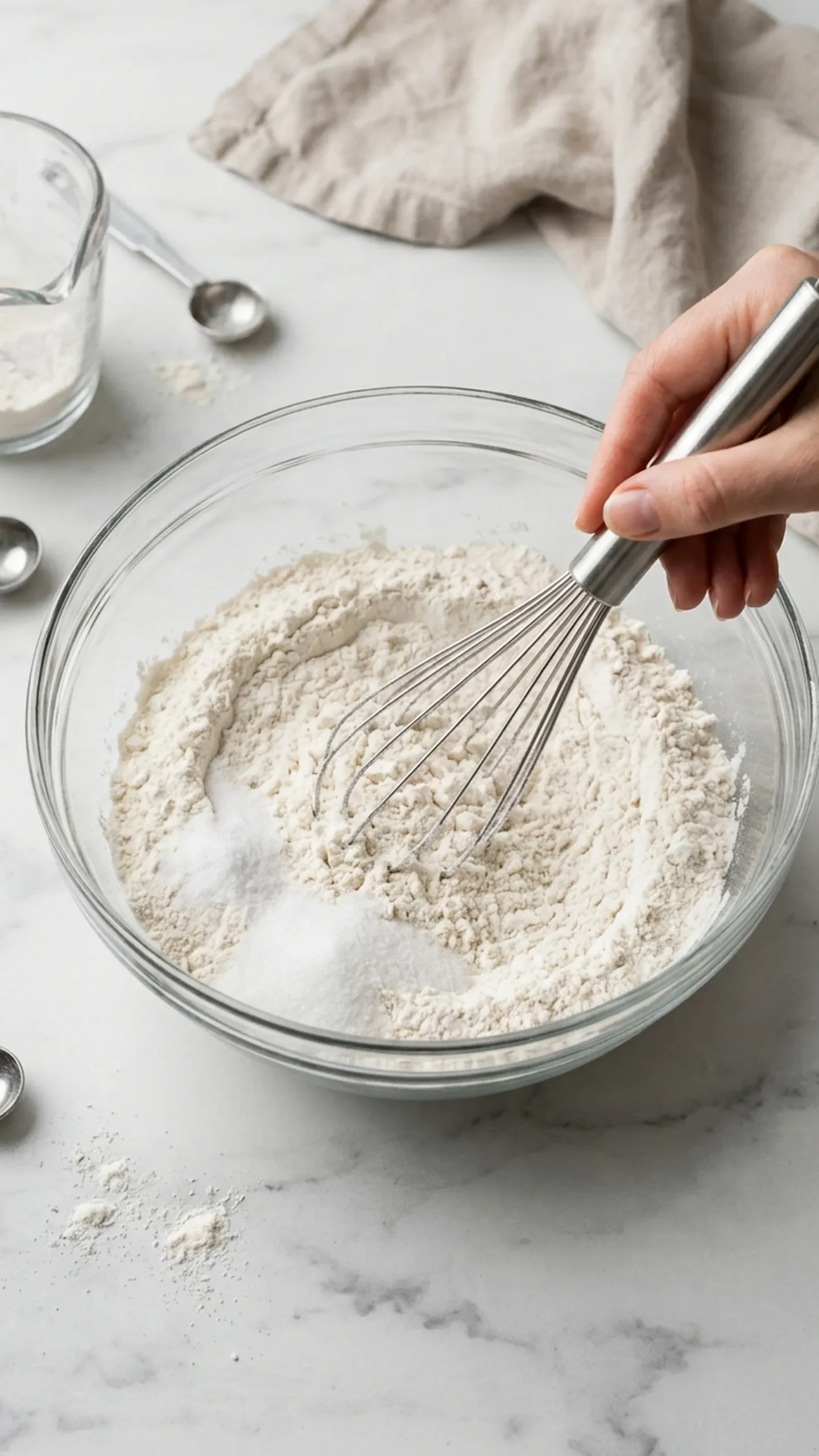
In a medium mixing bowl, whisk together the all-purpose flour, fine salt, and granulated sugar for the crust.
Add the cold, cubed unsalted butter. Use a pastry cutter or fork to work the butter into the flour until the mixture resembles coarse crumbs with some pea-sized pieces of butter remaining.
Add the ice water gradually, mixing gently with a fork. The dough should look slightly shaggy but hold together when squeezed. If dry flour remains and the dough will not hold together, add the reserved extra ice water.
Avoid kneading the dough until completely smooth. Visible pieces of butter are desirable because they contribute to a flaky crust.
2. Chill and Roll Out the Crust
Gather the dough into a disk, wrap it tightly, and refrigerate for 30 minutes.
After chilling, place the dough on a lightly floured work surface and roll it into a circle approximately 12 inches (30 cm) wide.
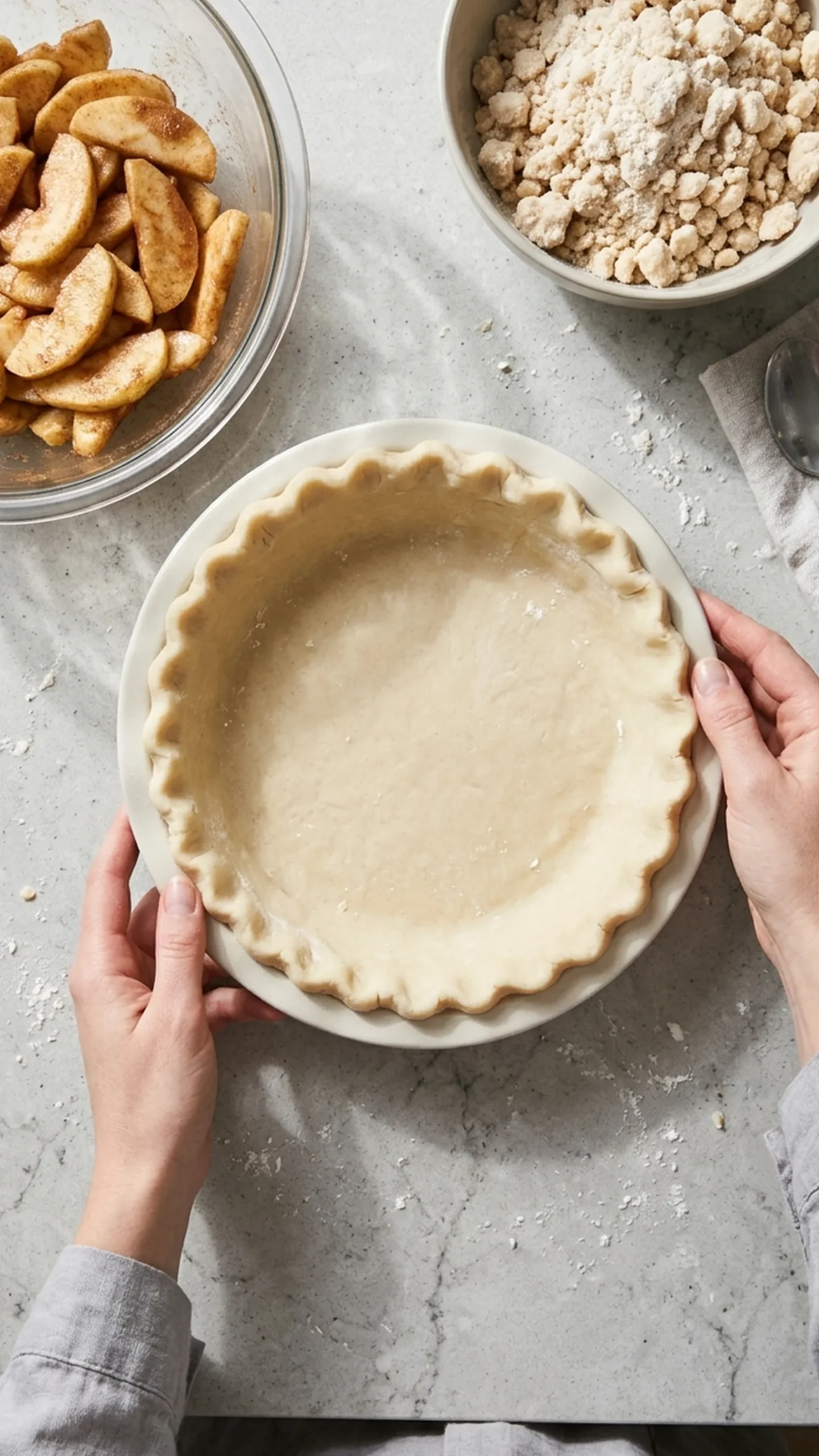
Transfer the dough to a 9-inch (23 cm) pie plate, approximately 1 1/2 inches (3.8 cm) deep. Gently press it into the bottom and sides without stretching it.
Trim excess dough and crimp the edges. Keep the prepared crust refrigerated while assembling the filling and crumble.
The pastry should feel cool and firm rather than sticky or greasy.
3. Preheat the Oven
Preheat the oven to 400°F (200°C).
Position an oven rack in the lower third of the oven and place a rimmed baking sheet on the rack to preheat.
The heated baking sheet will help transfer heat to the bottom of the pie plate, encouraging the lower crust to bake more thoroughly.
4. Prepare the Apples
Peel, core, and slice the apples into pieces approximately 1/4 inch (6 mm) thick.
Try to keep the slices similar in thickness so they soften at approximately the same rate.
Place the sliced apples in a large mixing bowl.
The slices should be thin enough to become tender during baking but thick enough to retain some structure.
5. Mix the Cinnamon-Spiced Filling
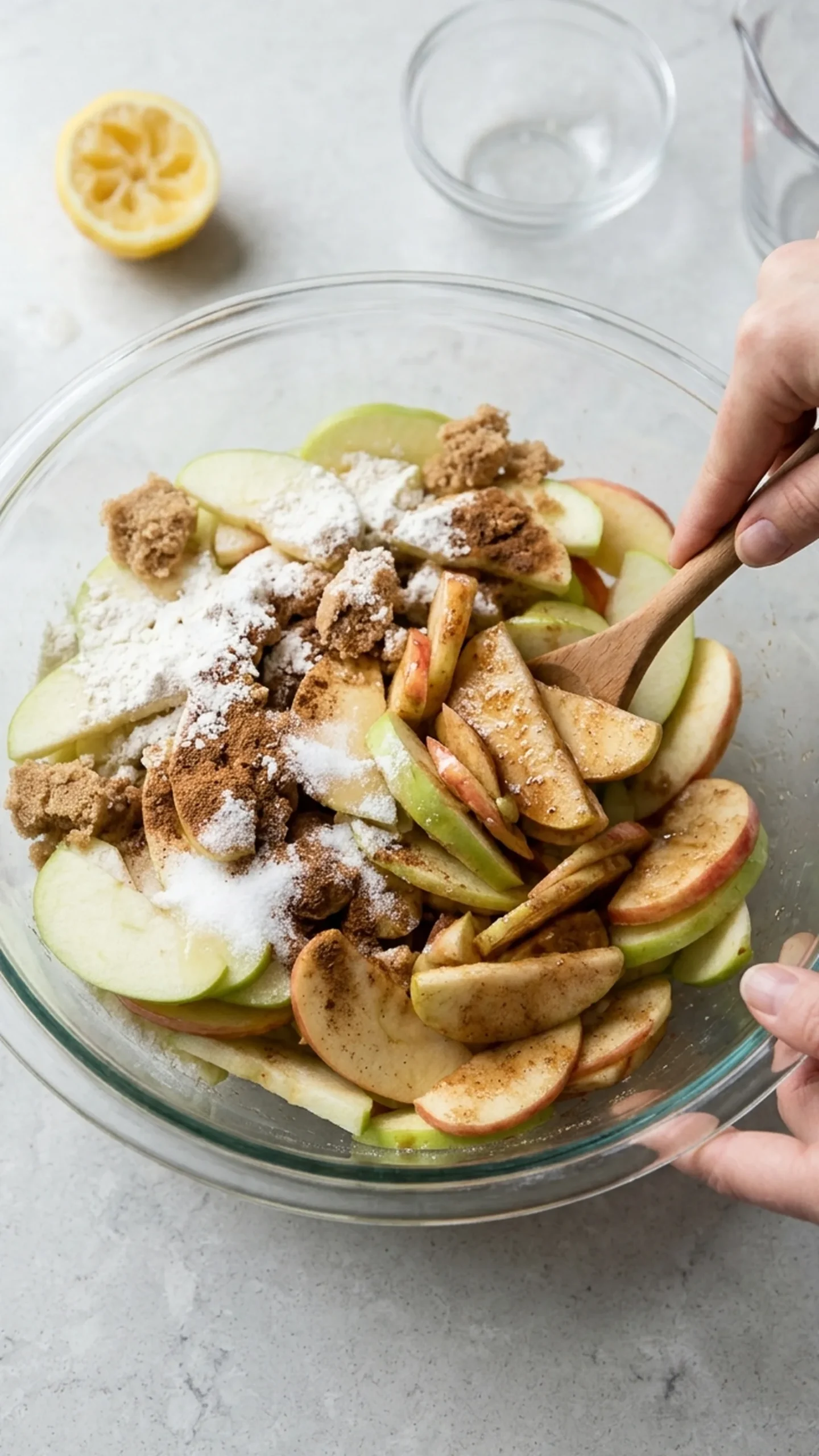
Add the granulated sugar, packed light brown sugar, all-purpose flour, fresh lemon juice, ground cinnamon, ground nutmeg, ground ginger, vanilla extract, and fine salt to the apples.
Toss thoroughly until the slices are evenly coated.
The apples should look lightly glossy, with the spices and flour distributed throughout the mixture.
A small amount of juice may collect at the bottom of the bowl as the sugar draws moisture from the apples. This is normal.
6. Make the Brown Sugar Crumble
In a medium bowl, combine the all-purpose flour, packed light brown sugar, ground cinnamon, and fine salt for the crumble topping.
Add the cold, cubed unsalted butter.
Use a pastry cutter or your fingertips to work the butter into the dry ingredients until the mixture forms irregular crumbs.
The finished crumble should contain both small sandy pieces and larger clusters. When gently squeezed, some of the mixture should hold together.
If the topping begins to feel greasy or overly soft, refrigerate it briefly before assembling the pie.
7. Assemble the Apple Crumble Pie
Remove the prepared pie crust from the refrigerator.
Spoon the cinnamon-coated apples into the crust, distributing them evenly. Arrange the slices so they fit snugly, with a gentle mound toward the center.
Pour any remaining spiced juices from the bowl over the apples.
Scatter the brown sugar crumble evenly across the filling, covering most of the exposed apple slices.
Avoid pressing the topping firmly into the fruit. Keeping the crumbs loose allows them to brown and develop a more distinct texture.
8. Begin Baking at High Heat
Carefully place the assembled pie onto the preheated baking sheet.
Bake at 400°F (200°C) for 20 minutes.
During this initial stage, the crust begins to set and the butter in the crumble starts to melt.
The pastry edges should begin to look dry and lightly colored, although the filling will not yet be fully cooked.
9. Reduce the Temperature and Finish Baking
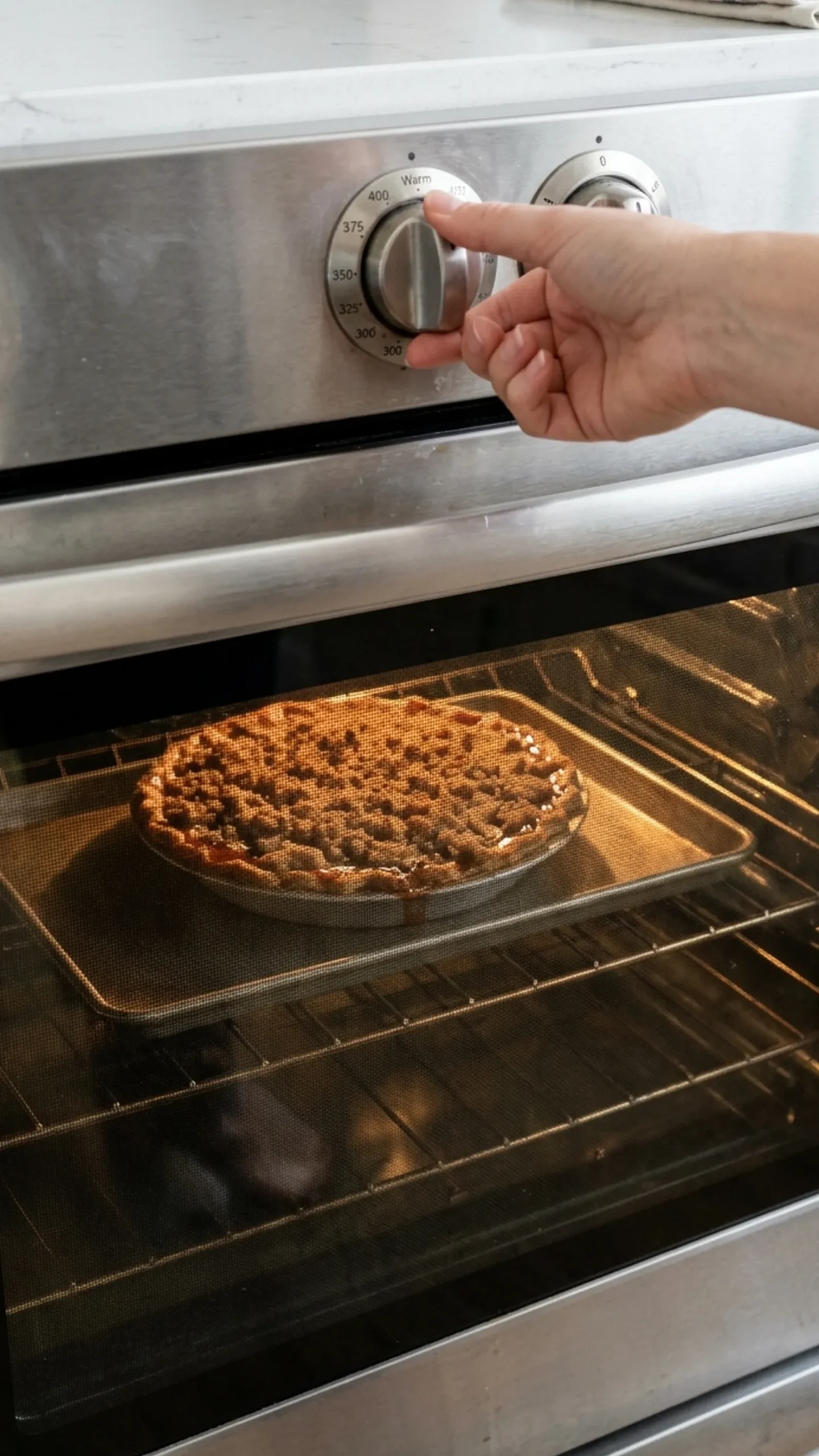
Without removing the pie from the oven, reduce the temperature to 350°F (175°C).
Continue baking for 45 minutes, or until the crumble is golden brown and thick apple juices are bubbling through the topping near the center.
The apples should feel tender when pierced with a thin knife through an opening in the crumble.
If the crust edges or crumble begin browning too quickly, cover the affected areas loosely with aluminum foil.
If the topping is golden but the filling is not yet bubbling near the center, continue baking until the filling reaches that stage.
10. Cool the Pie Before Slicing
Transfer the baked pie to a wire cooling rack.
Allow it to cool for 2 hours before slicing.
During cooling, the apple filling gradually thickens and the juices become less fluid. Cutting the pie immediately after baking can cause the filling to spread and soften the bottom crust.
The crumble should remain lightly crisp on top, while the apple filling should be tender and cohesive.
11. Slice and Serve
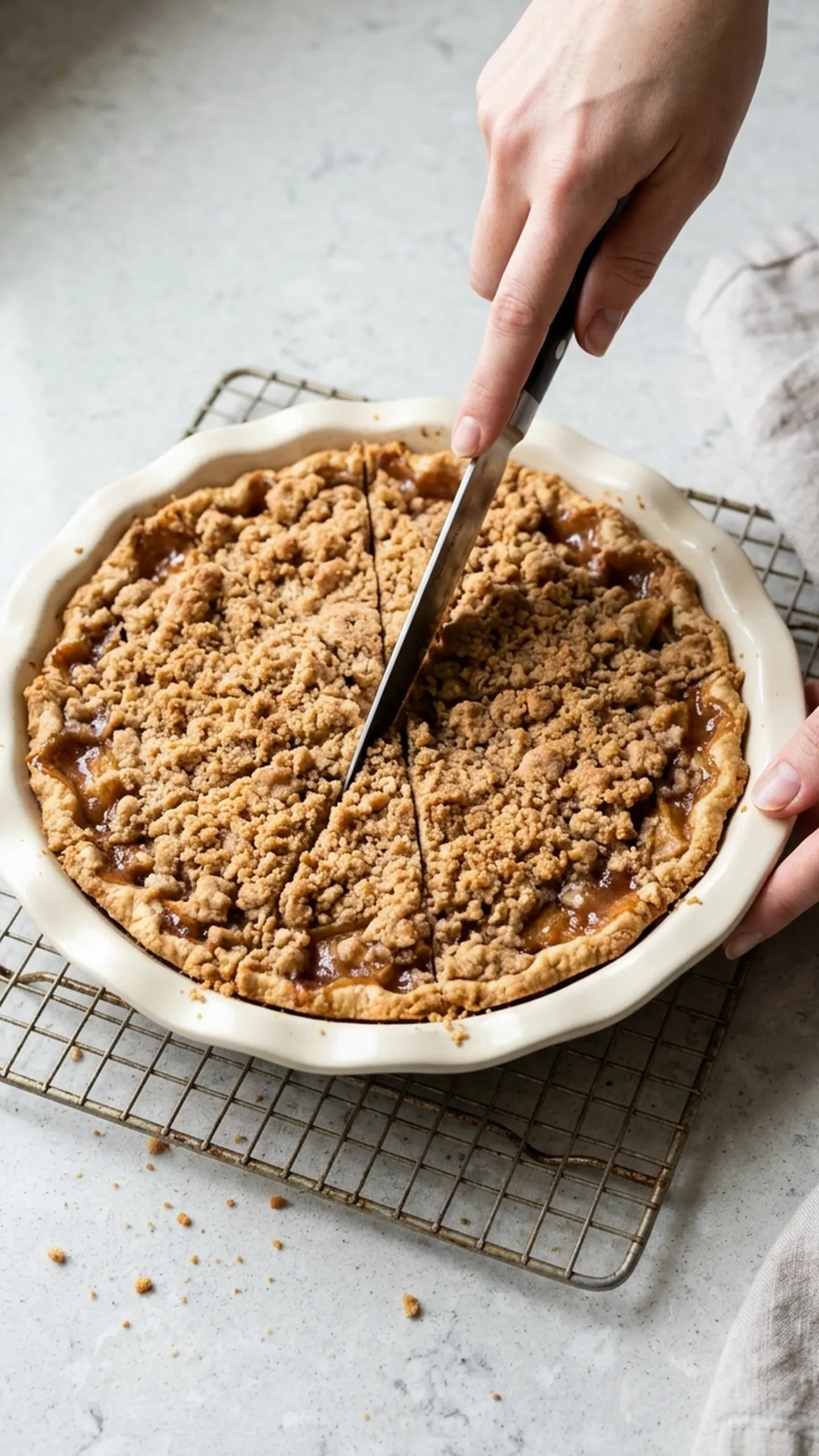
Once the pie has cooled, use a sharp knife to cut it into 8 slices.
For cleaner portions, cut through the crumble with a gentle sawing motion before moving the knife through the apple filling and crust.
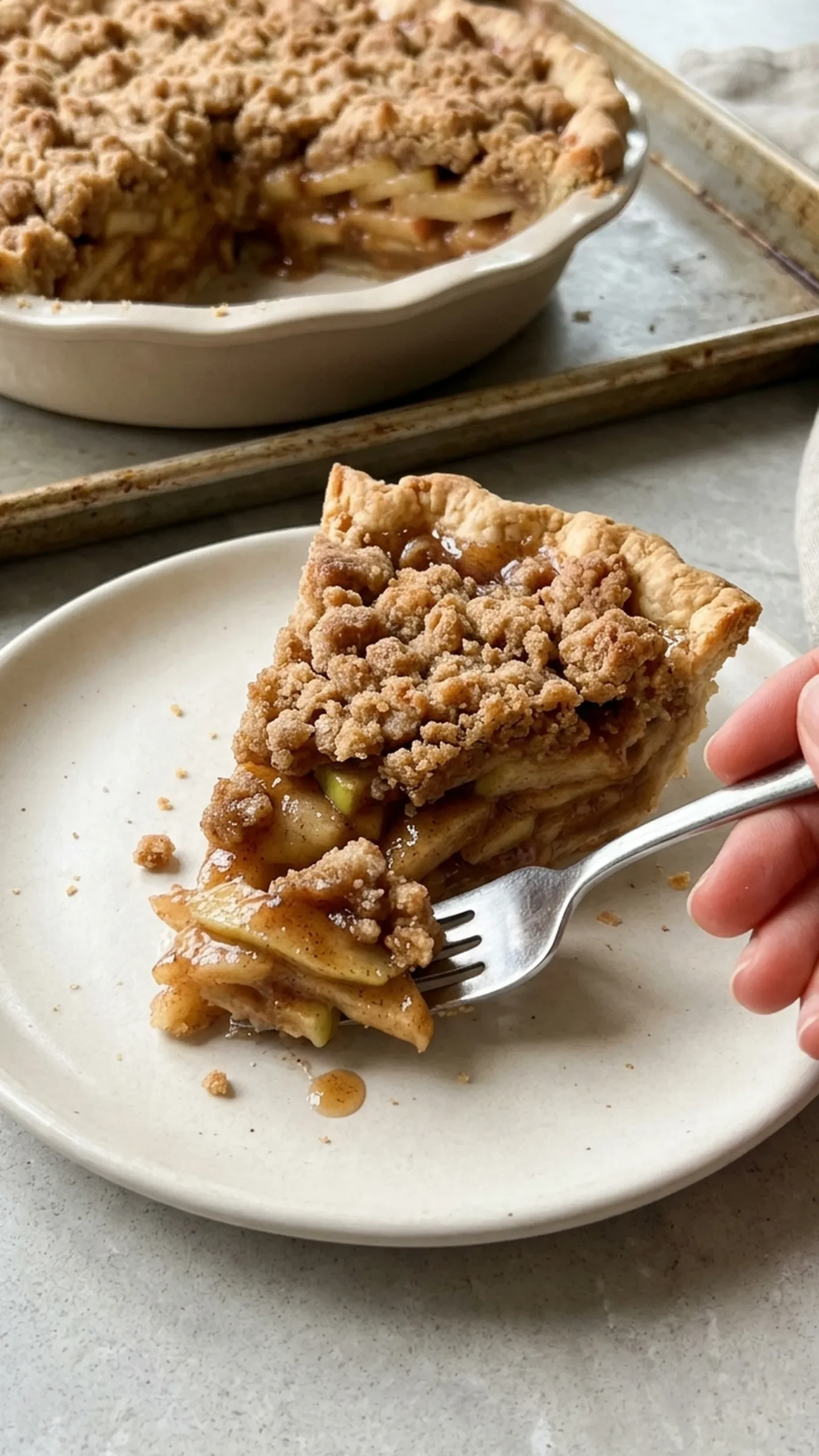
Serve the pie at room temperature or gently warmed. The contrast between the tender cinnamon-spiced apples, buttery crust, and golden crumble is the defining feature of this dessert.
Storage, Freezing, and Make-Ahead Instructions
- Room-Temperature Storage: Once completely cooled, cover the pie loosely with aluminum foil or place it in a covered pie container. It can be kept at a cool room temperature for up to 2 days. Avoid sealing the pie tightly while it is still warm. Trapped steam can soften the crumble topping and make the crust soggy.
- Refrigerator Storage: For longer storage, transfer the cooled pie to the refrigerator. Cover it well or place individual slices in airtight containers. Refrigerate for up to 4 days. The crumble may gradually soften as it absorbs moisture from the filling, but the pie will retain its spiced apple flavor.
- Freezing Instructions: Apple crumble pie can be frozen after baking and cooling. Wrap the whole pie securely in plastic wrap followed by aluminum foil, or place individual slices in freezer-safe airtight containers. Freeze for up to 3 months for best quality. For serving, thaw the pie overnight in the refrigerator. Freezing may slightly soften the apple filling and crumble, so reheating is helpful if a crisper topping is desired.
- Reheating Instructions: To restore some of the crumble's crispness, warm refrigerated or thawed pie in a 325°F (165°C) oven. Individual slices generally need 10–15 minutes, while a whole pie may require 20–30 minutes. Cover loosely with foil if the topping begins to darken. A microwave can warm individual slices, but it tends to soften the crust and crumble rather than restore their crisp texture.
- Make-Ahead Instructions: The pie dough can be prepared up to 2 days ahead and kept tightly wrapped in the refrigerator. The crumble topping can also be prepared up to 2 days ahead and stored in an airtight container in the refrigerator. For the best texture, prepare the apple filling shortly before assembling the pie. Apples release moisture as they sit with sugar, which can make the filling wetter and increase the risk of a soggy crust. Alternatively, bake the entire pie the day before serving and allow it to cool completely before storing.
FAQ
Can I make Fall Apple Crumble Pie with Cinnamon Spices ahead of time?
Yes. This pie is well suited to advance preparation because the filling benefits from cooling before slicing. You can bake it the day before serving, allow it to cool completely, and store it covered. For a fresher crumble texture, warm it gently in the oven before serving.
Why is my apple crumble pie watery?
A watery filling usually means the apple juices have not thickened sufficiently. This can happen when the pie is underbaked, when the apples release more liquid than expected, or when the pie is sliced while still hot. Look for thick bubbling juices near the center and allow the finished pie to cool before cutting.
How do I prevent a soggy bottom crust?
Start with cold pastry, use a preheated baking sheet, and bake the pie on a lower oven rack. These steps help the bottom crust receive enough heat. Avoid leaving the prepared apple filling sitting in the unbaked crust for an extended period, since the juices can soak into the pastry.
Can I use store-bought pie crust?
Yes. A refrigerated or frozen single-crust pastry can replace the homemade butter crust. Choose one intended for a standard 9-inch (23 cm) pie plate and follow any preparation instructions on the package. The flavor and flakiness may differ from homemade pastry, but the apple filling and crumble topping can remain the same.
Can I freeze the pie before baking?
Yes, although the crust and filling may bake differently from a freshly assembled pie. Assemble the pie in a freezer-safe metal pie plate, wrap it securely, and freeze until needed. Bake directly from frozen rather than thawing first, allowing additional baking time. Keep the pie covered loosely with foil if the topping browns before the center is fully cooked. Avoid transferring a frozen glass pie plate directly into a hot oven because sudden temperature changes can cause breakage.
Ingredients
Method
- In a medium mixing bowl, whisk together the all-purpose flour, fine salt, and granulated sugar for the crust. Add the cold, cubed unsalted butter. Use a pastry cutter or fork to work the butter into the flour until the mixture resembles coarse crumbs with some pea-sized pieces of butter remaining. Add the ice water gradually, mixing gently with a fork. The dough should look slightly shaggy but hold together when squeezed. If dry flour remains and the dough will not hold together, add the reserved extra ice water. Avoid kneading the dough until completely smooth. Visible pieces of butter are desirable because they contribute to a flaky crust.
- Gather the dough into a disk, wrap it tightly, and refrigerate for 30 minutes. After chilling, place the dough on a lightly floured work surface and roll it into a circle approximately 12 inches (30 cm) wide. Transfer the dough to a 9-inch (23 cm) pie plate, approximately 1 1/2 inches (3.8 cm) deep. Gently press it into the bottom and sides without stretching it. Trim excess dough and crimp the edges. Keep the prepared crust refrigerated while assembling the filling and crumble. The pastry should feel cool and firm rather than sticky or greasy.
- Preheat the oven to 400°F (200°C). Position an oven rack in the lower third of the oven and place a rimmed baking sheet on the rack to preheat. The heated baking sheet will help transfer heat to the bottom of the pie plate, encouraging the lower crust to bake more thoroughly.
- Peel, core, and slice the apples into pieces approximately 1/4 inch (6 mm) thick. Try to keep the slices similar in thickness so they soften at approximately the same rate. Place the sliced apples in a large mixing bowl. The slices should be thin enough to become tender during baking but thick enough to retain some structure.
- Add the granulated sugar, packed light brown sugar, all-purpose flour, fresh lemon juice, ground cinnamon, ground nutmeg, ground ginger, vanilla extract, and fine salt to the apples. Toss thoroughly until the slices are evenly coated. The apples should look lightly glossy, with the spices and flour distributed throughout the mixture. A small amount of juice may collect at the bottom of the bowl as the sugar draws moisture from the apples. This is normal.
- In a medium bowl, combine the all-purpose flour, packed light brown sugar, ground cinnamon, and fine salt for the crumble topping. Add the cold, cubed unsalted butter. Use a pastry cutter or your fingertips to work the butter into the dry ingredients until the mixture forms irregular crumbs. The finished crumble should contain both small sandy pieces and larger clusters. When gently squeezed, some of the mixture should hold together. If the topping begins to feel greasy or overly soft, refrigerate it briefly before assembling the pie.
- Remove the prepared pie crust from the refrigerator: Spoon the cinnamon-coated apples into the crust, distributing them evenly. Arrange the slices so they fit snugly, with a gentle mound toward the center. Pour any remaining spiced juices from the bowl over the apples. Scatter the brown sugar crumble evenly across the filling, covering most of the exposed apple slices. Avoid pressing the topping firmly into the fruit. Keeping the crumbs loose allows them to brown and develop a more distinct texture.
- Carefully place the assembled pie onto the preheated baking sheet. Bake at 400°F (200°C) for 20 minutes. During this initial stage, the crust begins to set and the butter in the crumble starts to melt. The pastry edges should begin to look dry and lightly colored, although the filling will not yet be fully cooked.
- Without removing the pie from the oven, reduce the temperature to 350°F (175°C). Continue baking for 45 minutes, or until the crumble is golden brown and thick apple juices are bubbling through the topping near the center. The apples should feel tender when pierced with a thin knife through an opening in the crumble. If the crust edges or crumble begin browning too quickly, cover the affected areas loosely with aluminum foil. If the topping is golden but the filling is not yet bubbling near the center, continue baking until the filling reaches that stage.
- Transfer the baked pie to a wire cooling rack. Allow it to cool for 2 hours before slicing. During cooling, the apple filling gradually thickens and the juices become less fluid. Cutting the pie immediately after baking can cause the filling to spread and soften the bottom crust. The crumble should remain lightly crisp on top, while the apple filling should be tender and cohesive.
- Once the pie has cooled, use a sharp knife to cut it into 8 slices. For cleaner portions, cut through the crumble with a gentle sawing motion before moving the knife through the apple filling and crust. Serve the pie at room temperature or gently warmed. The contrast between the tender cinnamon-spiced apples, buttery crust, and golden crumble is the defining feature of this dessert.