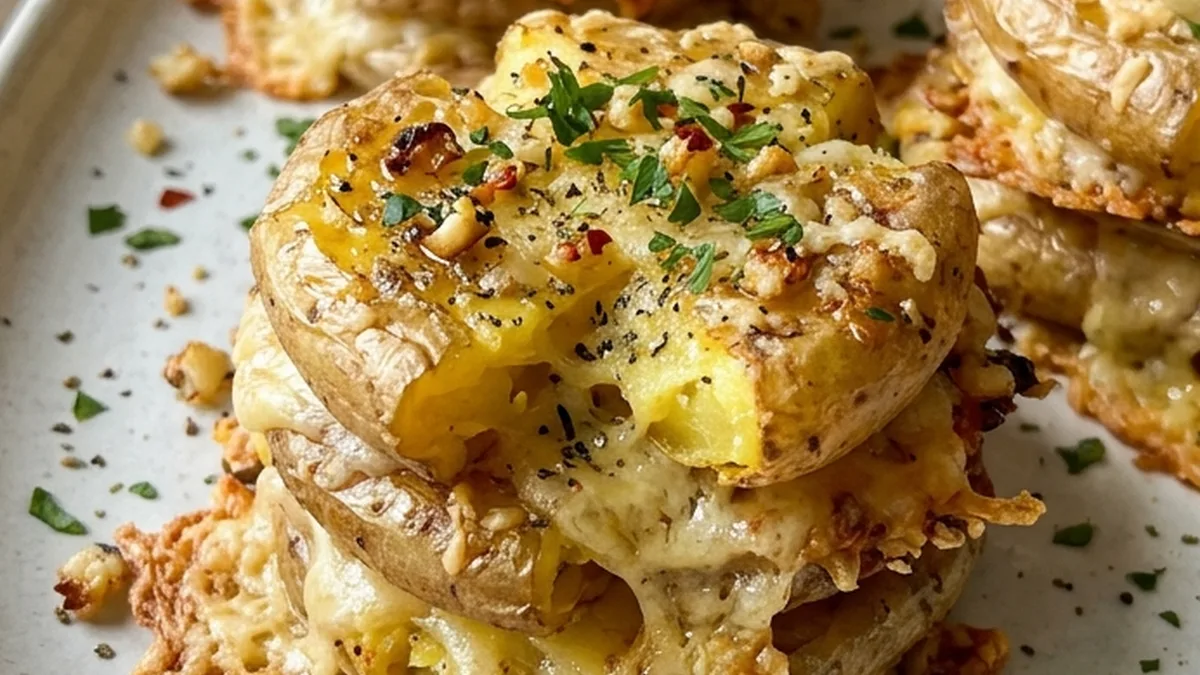
Wash and scrub the 2 pounds (900 g) baby Yukon Gold potatoes thoroughly, leaving the skins intact. Choose potatoes of similar size so they cook evenly and form consistent layers. Aim for 18 potatoes, allowing three flattened potatoes per tower. Discard any potatoes with significant soft spots or green areas.
Place the potatoes in a large pot and add enough cold water to cover them by about 1 inch (2.5 cm). Add the 1 tablespoon (15 g) fine sea salt reserved for the boiling water. Bring to a boil over high heat, then reduce to a steady simmer over medium heat. Cook for 18–20 minutes, or until a fork slides easily into the center of the largest potato without resistance. The potatoes should be tender but not falling apart. Overcooked potatoes can break into loose pieces when smashed. Drain thoroughly in a colander.
Allow the drained potatoes to steam-dry for 5 minutes. This short drying period helps remove surface moisture, which improves browning during roasting. Meanwhile, preheat the oven to 425°F (220°C). Line an 18 × 13-inch (46 × 33 cm) rimmed baking sheet with parchment paper.
In a small bowl, combine: 3 tablespoons (42 g) melted unsalted butter 2 tablespoons (30 ml) olive oil 4 medium garlic cloves (about 12 g), finely minced 1/2 teaspoon (3 g) fine sea salt 1/2 teaspoon (1 g) freshly ground black pepper 1 teaspoon (1 g) dried Italian seasoning Stir until the garlic and seasonings are evenly distributed. The mixture should be fluid enough to brush over the potatoes. If the butter begins to solidify, warm it gently until liquid again.
Arrange the boiled potatoes on the prepared baking sheet, leaving space between them. Using the flat bottom of a sturdy glass or measuring cup, gently press each potato into a round approximately 1/2 inch (1.3 cm) thick. Apply steady pressure rather than striking the potatoes. The skins should split slightly, exposing the fluffy interior and creating irregular edges that can crisp during roasting. If a potato begins to crumble, stop pressing and gently push the pieces back together.
Brush the potatoes with approximately two-thirds of the garlic butter mixture, making sure some reaches the exposed interiors and cracked edges. Reserve the remaining mixture for assembling the towers. Spread the potatoes into an even layer without overlapping them. Avoid leaving large pieces of minced garlic exposed on the baking sheet, where they can burn before the potatoes finish roasting.
Place the baking sheet on the middle oven rack. Roast at 425°F (220°C) for 25 minutes, until the bottoms are golden and the edges begin to crisp. Carefully turn the potatoes using a thin metal spatula. Continue roasting for another 10 minutes. The finished rounds should have visibly browned edges, lightly crisp surfaces, and tender centers. If the potatoes remain pale, check that they are not crowded or sitting in excess moisture.
Remove the baking sheet from the oven and reduce the temperature to 400°F (205°C). Carefully arrange the roasted potatoes into 6 towers, using 3 flattened potatoes per tower. Build each tower directly on the baking sheet:
Place one roasted potato round on the parchment.
Sprinkle with a portion of the 3/4 cup (75 g) Parmesan cheese.
Add a second potato round and another sprinkle of Parmesan.
Distribute the cheese evenly among the towers, reserving a little for their tops. Brush or drizzle the reserved garlic butter mixture over the assembled towers. Keep the rounds centered so the stacks remain stable. Place larger rounds at the bottom when possible.
Return the baking sheet to the oven: Bake at 400°F (205°C) for 10 minutes, until the Parmesan has melted and the exposed cheese develops lightly golden edges. The towers should look cohesive, with visible layers and crisp potato edges. If the cheese browns too quickly, move the baking sheet to a lower oven rack. Avoid baking until the cheese becomes dark brown, which can give it a bitter flavor.
Remove the towers from the oven: If desired, sprinkle with the 2 tablespoons (8 g) finely chopped fresh parsley and 1/4 teaspoon (0.5 g) crushed red pepper flakes. Use a thin spatula to transfer each tower to a serving plate, supporting the base so the layers remain aligned. Serve hot while the edges are crisp and the Parmesan is still warm.