
Ingredients
Method
Method
- In a medium mixing bowl, whisk together the 2¼ cups (270 g) all-purpose flour, 1 teaspoon (4 g) baking powder, ¼ teaspoon (1 g) baking soda, and ½ teaspoon (3 g) fine salt. Whisk for approximately 30 seconds to distribute the leavening agents evenly. Set the mixture aside while preparing the butter and sugar.
- Place the ½ cup (113 g) softened unsalted butter and ¾ cup (150 g) granulated sugar in a large mixing bowl. Using an electric mixer on medium speed, beat for 2–3 minutes until the mixture looks lighter in color and creamy. Scrape down the sides of the bowl as needed. The butter should be soft enough to mix easily but not melted or greasy.
- Add the large egg and 2 teaspoons (10 ml) vanilla extract to the creamed butter mixture. Beat on medium-low speed until combined, approximately 30–45 seconds. Add ¼ teaspoon (about 1 ml) green gel food coloring and mix until the color is evenly distributed. The mixture should appear bright green, smooth, and creamy. If the color looks too pale, add a very small additional amount of gel coloring. Keep in mind that the flour will slightly soften the intensity of the green color.
- Add the prepared flour mixture to the green butter mixture in two additions. Mix on low speed just until the flour disappears and a thick, soft cookie dough forms. The dough should be slightly tacky but not runny. It should hold together when gathered with a spoon. Avoid overmixing once the flour has been incorporated, as excessive mixing can produce tougher cookies.
- Cover the bowl tightly with plastic wrap or a reusable lid. Refrigerate the dough for 45 minutes. The chilled dough should feel firmer and be easier to scoop without sticking excessively to your hands. If it still feels unusually soft after chilling, refrigerate it for another 10–15 minutes before shaping. This extra time will extend the total preparation time.
- Toward the end of the chilling period, preheat the oven to 350°F (175°C). Line two large baking sheets, approximately 13 × 18 inches (33 × 46 cm), with parchment paper. Position an oven rack in the center of the oven. For consistent results, bake one sheet at a time.
- Place the remaining ¼ cup (50 g) granulated sugar in one shallow bowl. Place the ¾ cup (90 g) sifted powdered sugar in a separate shallow bowl. Keeping the sugars separate allows each dough ball to receive two distinct coatings. The powdered sugar should be fluffy and free from large lumps.
- Using a 1½-tablespoon (22 ml) cookie scoop, divide the chilled dough into 24 approximately equal portions. Roll each portion gently between your palms to form a smooth ball. If the dough becomes sticky as you work, return it to the refrigerator briefly. Try to keep the dough balls similar in size so the cookies bake evenly.
- Roll each green dough ball lightly in the granulated sugar, then generously in the powdered sugar. Make sure the entire surface is covered in a thick, visible layer of powdered sugar. Do not shake off too much of the coating. A generous layer helps create the contrasting white exterior and green cracks. Place 12 coated dough balls on the first prepared baking sheet, leaving approximately 2 inches (5 cm) between them. Keep the remaining dough balls chilled while the first batch bakes.
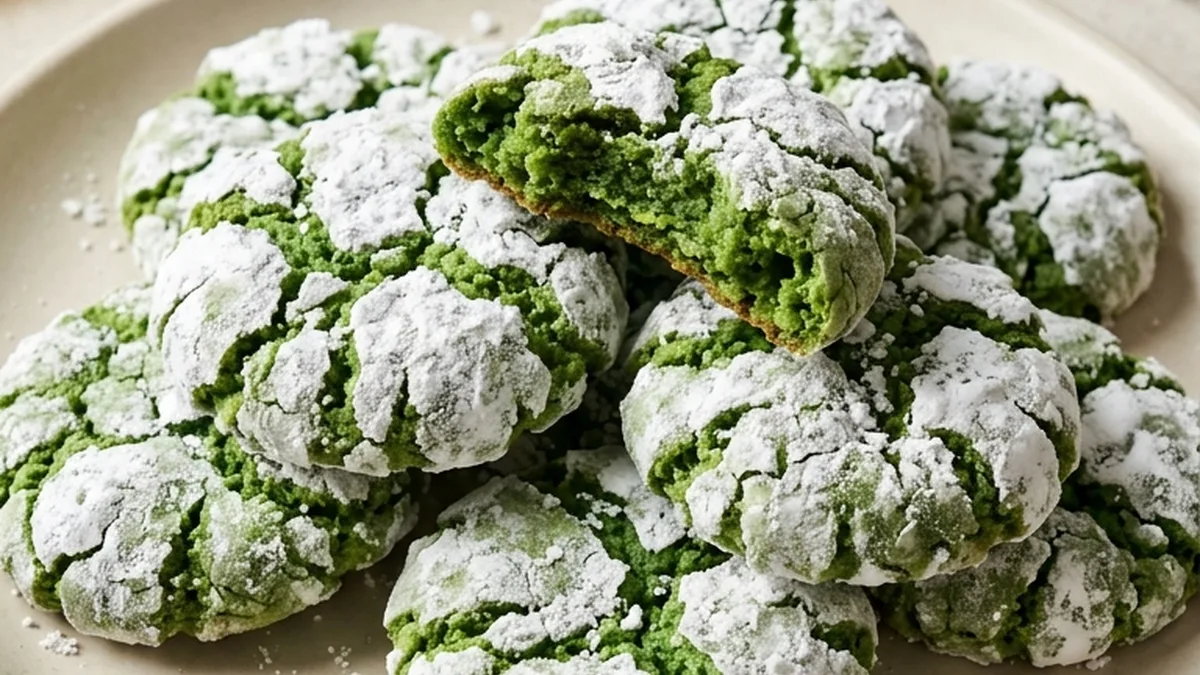
- Bake at 350°F (175°C) for approximately 10–12 minutes. The cookies should spread slightly and develop visible cracks across their powdered sugar coating. Look for these signs of doneness: The edges appear set and no longer look wet. The tops have developed distinct cracks with green dough showing through. The centers still look slightly soft but not glossy or raw. The cookies remain mostly green and white rather than turning golden brown. Avoid baking until the entire cookie feels firm. The centers will continue setting as the cookies cool.
- Immediately after removing the baking sheet from the oven, gently press one red heart-shaped candy sprinkle onto the top of each warm cookie, if using. Position the heart near the center or slightly off-center for a playful Grinch-inspired appearance. Use only enough pressure to secure the decoration without flattening the cookie. The hearts should remain visible on the snowy surface.
- Let the cookies rest on the baking sheet for 5 minutes. During this time, the soft centers will firm up enough to handle without breaking. Carefully transfer the cookies to a wire cooling rack and allow them to cool for another 20 minutes. The finished cookies should have lightly crisp edges, tender centers, and a visible powdered sugar coating.
- Arrange the remaining 12 coated dough balls on the second prepared baking sheet. Bake at 350°F (175°C) for another 10–12 minutes, following the same doneness cues. Add the remaining red candy hearts immediately after baking, if using. Cool for 5 minutes on the baking sheet and another 20 minutes on a wire rack. Once both batches have cooled, the Grinch Crinkle Cookies are ready to serve.