Preheat the oven to 350°F (175°C). Place a roasting rack inside a 13 x 9-inch (33 x 23 cm) roasting pan. Make sure the rack holds the turkey above the bottom of the pan so hot air can circulate around the meat. Pour 1 cup (240 ml) low-sodium chicken broth into the bottom of the pan, keeping it below the rack. The broth provides moisture in the roasting environment and helps prevent the drippings from scorching.
Remove the fully thawed turkey breast from its packaging. Check for any gravy packets or other packaging materials and remove them. Pat the turkey thoroughly dry with paper towels, especially around the skin. Removing excess surface moisture encourages browning. Rub the turkey with 2 tablespoons (30 ml) olive oil. In a small bowl, combine: 1 1/2 teaspoons (9 g) kosher salt 1 teaspoon (2 g) freshly ground black pepper 1 teaspoon (3 g) garlic powder 1 teaspoon (1 g) dried thyme 1/2 teaspoon (1 g) smoked paprika Rub the seasoning mixture evenly over the turkey, including the sides and any accessible areas beneath the skin. The skin should look lightly coated with oil and evenly speckled with seasoning rather than covered in thick patches.
Place the seasoned turkey breast on the roasting rack, skin-side up. Transfer the pan to the middle oven rack and roast uncovered for approximately 60 minutes before beginning the glazing stage. During this initial roasting period, the skin should gradually change from pale to light golden brown. If the skin begins browning too quickly, loosely cover the darkest areas with aluminum foil. Avoid repeatedly opening the oven, since temperature fluctuations can slow cooking and affect browning.
While the turkey roasts, combine the following ingredients in a small heavy-bottomed saucepan: 1 cup (240 ml) unsweetened pomegranate juice 1/4 cup (85 g) honey 2 tablespoons (30 ml) balsamic vinegar 1 tablespoon (15 g) Dijon mustard 1 teaspoon (2 g) finely chopped fresh rosemary 1/4 teaspoon (1.5 g) kosher salt Whisk until the honey and mustard are evenly incorporated. Place the saucepan over medium heat and bring the mixture to a gentle simmer. Reduce the heat to medium-low and simmer for approximately 12 to 15 minutes, stirring occasionally, until the liquid reduces by roughly half. The glaze should look glossy and lightly syrupy. It should coat the back of a spoon while remaining thin enough to brush over the turkey. If the mixture thickens too much, remove it from the heat before it becomes sticky or candy-like.
Remove the saucepan from the heat: Add 1 tablespoon (14 g) cold unsalted butter and whisk until completely melted and incorporated. The butter should give the glaze a smooth, slightly richer appearance without making it greasy. Set the glaze aside until the turkey is ready for its first coating. Keep the glaze separate from raw turkey juices. If you want additional glaze for serving, reserve a portion in a clean container before brushing the turkey.
After the turkey has roasted for approximately 60 minutes, check its progress with an instant-read thermometer inserted into the thickest part of the breast without touching bone. The turkey may still be below its final safe temperature at this point. Using a clean pastry brush, apply a thin, even coating of pomegranate glaze over the skin and exposed surfaces. Avoid pouring a large amount of glaze into the roasting pan. A thin coating adheres better and reduces the risk of burning. Return the turkey to the oven.
Continue roasting for approximately 30 to 45 minutes, checking the internal temperature and applying additional thin layers of glaze about every 15 minutes. As the turkey cooks, the glaze should gradually deepen from reddish-purple to a glossy mahogany color. The skin may become slightly sticky as the glaze caramelizes. This is normal, provided it is not turning black or developing a burnt smell. If the glaze darkens too quickly, loosely tent the turkey with aluminum foil and continue roasting. The estimated total roasting time is approximately 1 hour 30 minutes to 1 hour 45 minutes for the specified turkey breast, although the actual time depends on its shape, thickness, starting temperature, and oven performance.
Insert an instant-read thermometer into the thickest part of the turkey breast, avoiding the bone. The turkey is safely cooked when the thickest part reaches 165°F (74°C). Check more than one thick area to make sure the breast is cooked evenly. Do not rely on skin color or clear juices as the sole indicators of doneness. The pomegranate glaze can make the exterior appear fully cooked before the center reaches a safe temperature. If the turkey has not reached the required temperature, return it to the oven and continue roasting, checking frequently.
Transfer the fully cooked turkey breast to a clean cutting board. Loosely tent it with aluminum foil and let it rest for 20 minutes. During this time, the internal juices redistribute throughout the meat, making the turkey easier to carve without losing excessive moisture. Avoid wrapping the turkey tightly in foil, which traps steam and can soften the glazed skin.
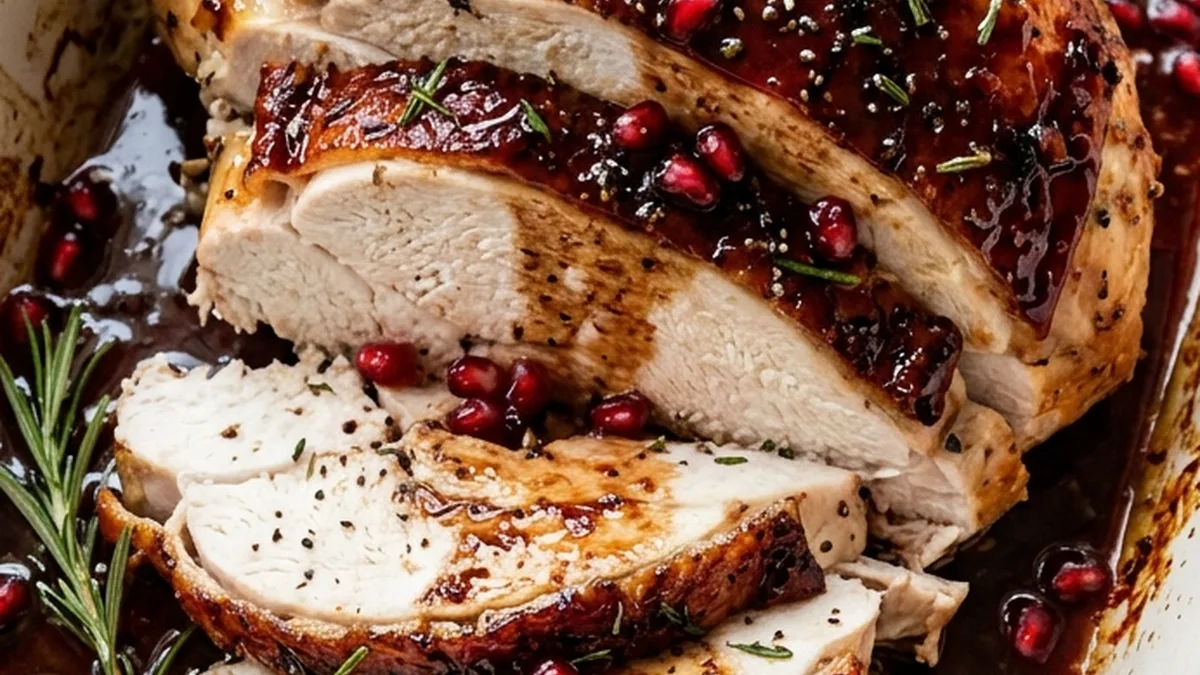
Using a sharp carving knife, carefully separate the breast meat from the bone. Slice the meat against the grain into even pieces, keeping some of the glazed skin attached to each slice. Arrange the turkey slices on a serving platter. If desired, spoon a little of the clean, reserved pomegranate glaze over the slices. Finish with 1/4 cup (40 g) fresh pomegranate arils and 2 fresh rosemary sprigs, if using. The finished turkey should have a lightly caramelized, glossy exterior and tender, moist meat with a mild herbal aroma. Serve warm with your preferred holiday side dishes.