This Pomegranate Glazed Turkey Breast Recipe features tender, oven-roasted turkey coated in a glossy, ruby-red glaze made with pomegranate juice, honey, Dijon mustard, and fresh rosemary. The combination of sweet, tart, and savory flavors complements the mild richness of turkey, while the glaze develops a lightly caramelized finish as it roasts.
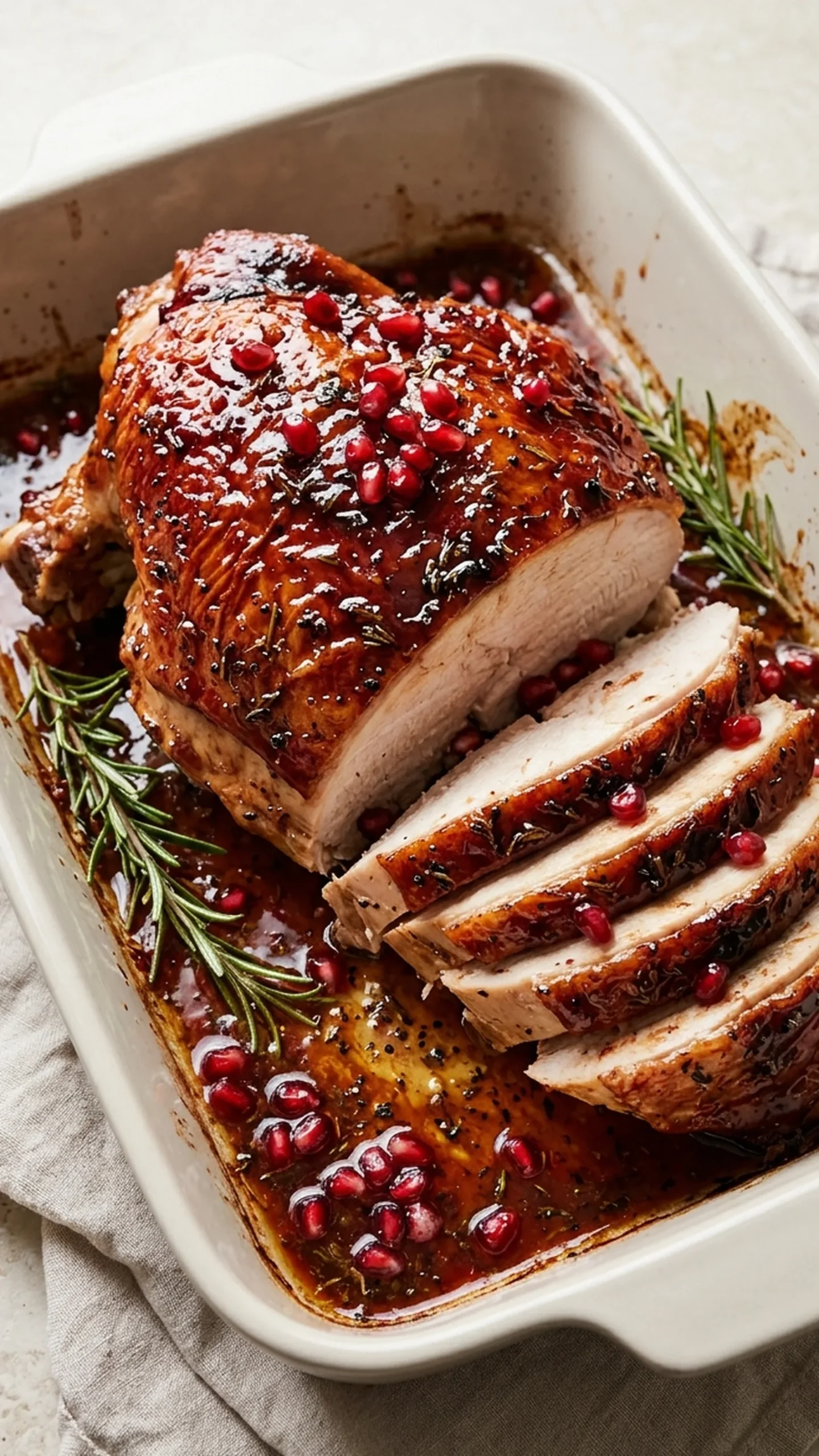
Using a bone-in turkey breast helps keep the meat moist during roasting, and applying the glaze toward the end of cooking prevents its natural sugars from burning. This recipe is a practical alternative to roasting a whole turkey, making it especially useful for smaller Thanksgiving gatherings, Christmas dinners, or an elegant Sunday meal. A short resting period before carving helps preserve the turkey's juices.
Why This Recipe Works
- Bone-in turkey breast retains moisture. The bone helps moderate heat penetration during roasting, making the breast more forgiving than a thin, boneless cut.
- Pomegranate juice creates a naturally tangy glaze. Its acidity balances the honey's sweetness and gives the turkey a rich, reddish finish without artificial coloring.
- Reducing the glaze concentrates its flavor. Simmering the juice with honey and Dijon mustard creates a syrupy consistency that clings to the turkey instead of running off.
- Glazing near the end protects the sugars. Adding the glaze during the final roasting stage encourages caramelization without exposing the honey to prolonged high heat.
- Resting improves carving and juiciness. Allowing the turkey to rest before slicing gives the juices time to redistribute, reducing moisture loss on the cutting board.
Equipment Needed
- Large roasting pan, approximately 13 x 9 inches (33 x 23 cm), with sides deep enough to catch drippings
- Roasting rack that fits inside the pan
- Small heavy-bottomed saucepan, approximately 1 to 2 quarts (1 to 2 liters)
- Instant-read meat thermometer
- Silicone pastry brush
- Sharp carving knife
- Cutting board with a juice groove
- Aluminum foil for loosely covering the turkey if necessary
Ingredients List
For the Roasted Turkey Breast
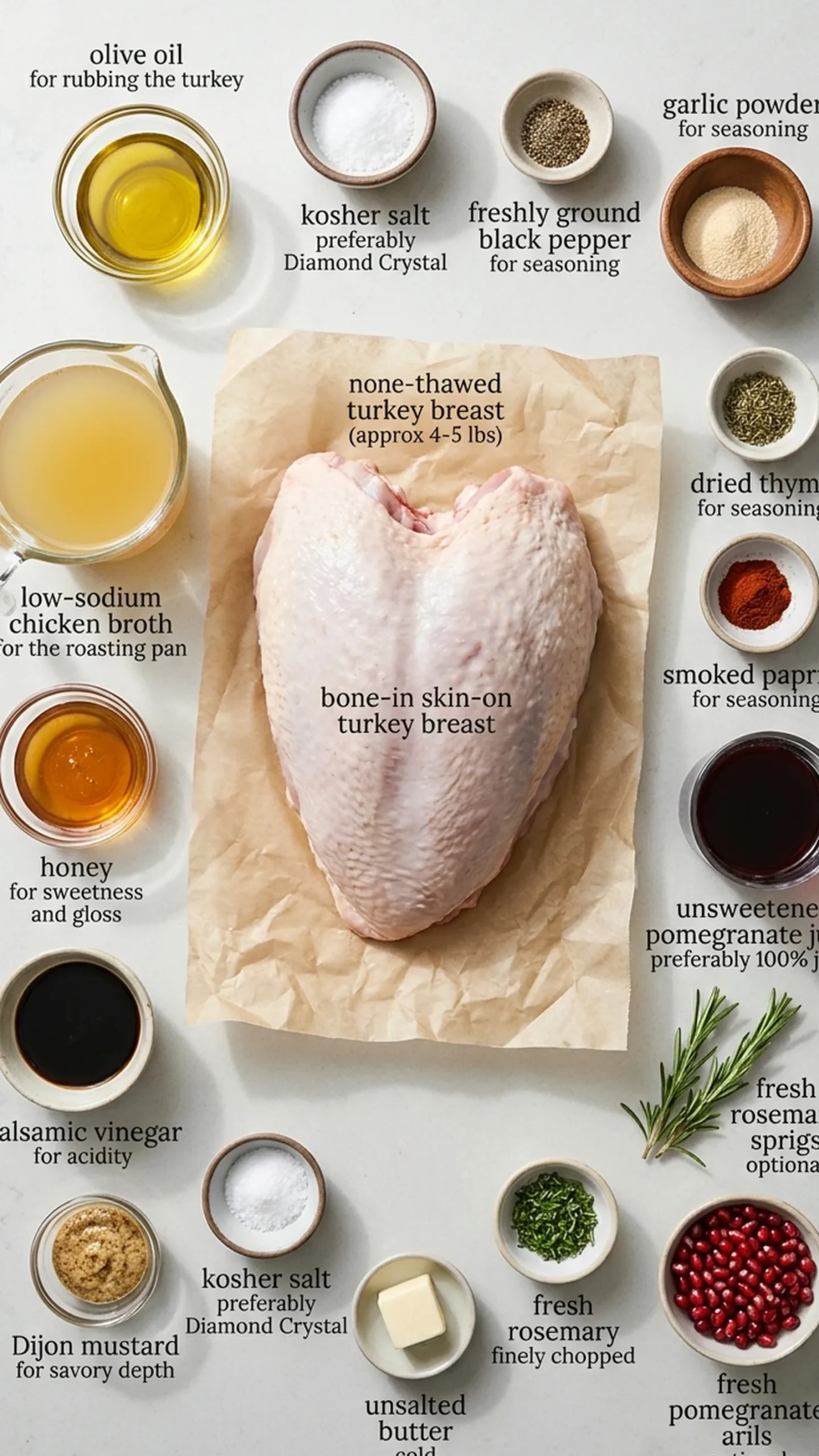
- 1 bone-in, skin-on turkey breast, 4 to 5 pounds (1.8 to 2.3 kg), fully thawed if previously frozen
- 2 tablespoons (30 ml) olive oil, for rubbing the turkey
- 1 1/2 teaspoons (9 g) kosher salt, preferably Diamond Crystal, for seasoning
- 1 teaspoon (2 g) freshly ground black pepper, for seasoning
- 1 teaspoon (3 g) garlic powder, for seasoning
- 1 teaspoon (1 g) dried thyme, for seasoning
- 1/2 teaspoon (1 g) smoked paprika, for seasoning
- 1 cup (240 ml) low-sodium chicken broth, for the roasting pan
For the Pomegranate Glaze
- 1 cup (240 ml) unsweetened pomegranate juice, preferably 100% juice
- 1/4 cup (85 g) honey, for sweetness and gloss
- 2 tablespoons (30 ml) balsamic vinegar, for acidity
- 1 tablespoon (15 g) Dijon mustard, for savory depth
- 1 tablespoon (14 g) unsalted butter, cold, for finishing the glaze
- 1 teaspoon (2 g) fresh rosemary, finely chopped
- 1/4 teaspoon (1.5 g) kosher salt, preferably Diamond Crystal, for balancing the glaze
Optional Garnishes
- 1/4 cup (40 g) fresh pomegranate arils, optional, for serving
- 2 fresh rosemary sprigs, optional, for presentation
Ingredient Notes and Substitutions
- Bone-In Turkey Breast: A bone-in, skin-on turkey breast is ideal for this recipe because the skin protects the surface during roasting, while the bone helps moderate heat distribution. The skin also develops a golden finish that contrasts with the dark pomegranate glaze. A boneless turkey breast can be substituted, but its shape, thickness, and weight will affect roasting time. Begin checking the internal temperature earlier rather than following the bone-in timing exactly. Keep the skin on whenever possible for better browning and moisture retention.
- Unsweetened Pomegranate Juice: Pomegranate juice provides the glaze's distinctive sweet-tart flavor and deep red color. Choose unsweetened juice rather than a sweetened pomegranate beverage, which can make the glaze overly sugary. Pure cranberry juice can be used as an alternative, although it produces a sharper, more acidic glaze. The sweetness may need adjustment, and the finished sauce will have a different fruit flavor.
- Honey: Honey adds sweetness, creates a smooth texture, and encourages the glaze to cling to the turkey as it roasts. Pure maple syrup can replace honey in an equal amount. The glaze will have a slightly thinner consistency and a more pronounced maple flavor. Watch the surface carefully during the final roasting stage because both sweeteners can darken quickly.
- Dijon Mustard: Dijon mustard adds mild acidity and savory complexity, preventing the glaze from tasting like a dessert sauce. It also helps the ingredients combine into a cohesive mixture. Whole-grain mustard is a reasonable substitute. It creates a slightly more textured glaze with visible mustard seeds but maintains a similar tangy flavor.
- Fresh Rosemary: Fresh rosemary adds a piney, aromatic note that complements both the turkey and pomegranate. Its strong flavor works particularly well with the glaze's sweetness. Fresh thyme can replace rosemary in an equal amount for a softer, more earthy herbal flavor. Dried rosemary is more concentrated and can feel coarse, so it is not an ideal direct replacement without adjusting the quantity and texture.
Step-by-Step Instructions
Step 1: Preheat the Oven and Prepare the Roasting Pan
Preheat the oven to 350°F (175°C).
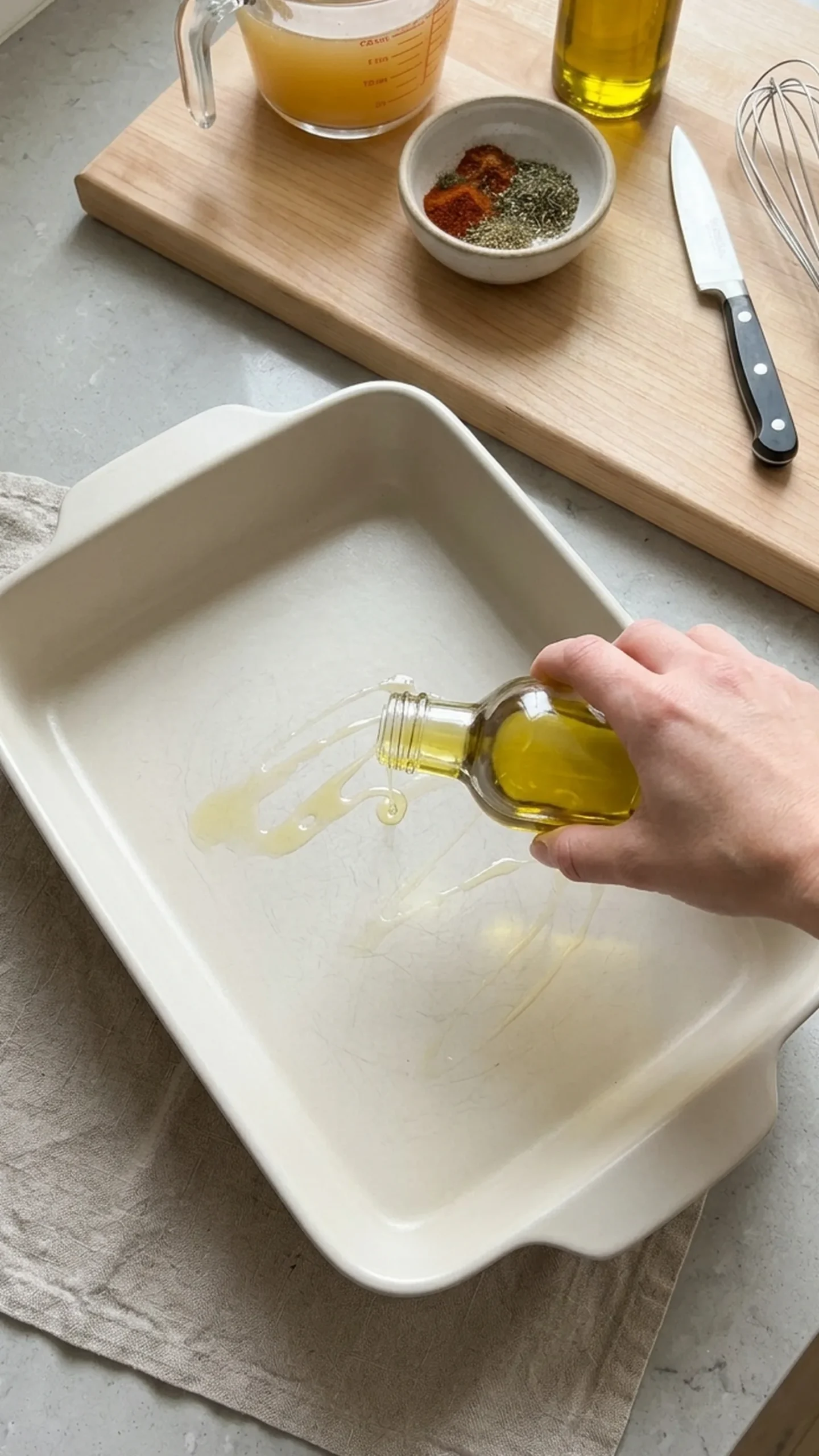
Place a roasting rack inside a 13 x 9-inch (33 x 23 cm) roasting pan. Make sure the rack holds the turkey above the bottom of the pan so hot air can circulate around the meat.
Pour 1 cup (240 ml) low-sodium chicken broth into the bottom of the pan, keeping it below the rack. The broth provides moisture in the roasting environment and helps prevent the drippings from scorching.
Step 2: Dry and Season the Turkey Breast
Remove the fully thawed turkey breast from its packaging. Check for any gravy packets or other packaging materials and remove them.
Pat the turkey thoroughly dry with paper towels, especially around the skin. Removing excess surface moisture encourages browning.
Rub the turkey with 2 tablespoons (30 ml) olive oil.
In a small bowl, combine:
- 1 1/2 teaspoons (9 g) kosher salt
- 1 teaspoon (2 g) freshly ground black pepper
- 1 teaspoon (3 g) garlic powder
- 1 teaspoon (1 g) dried thyme
- 1/2 teaspoon (1 g) smoked paprika
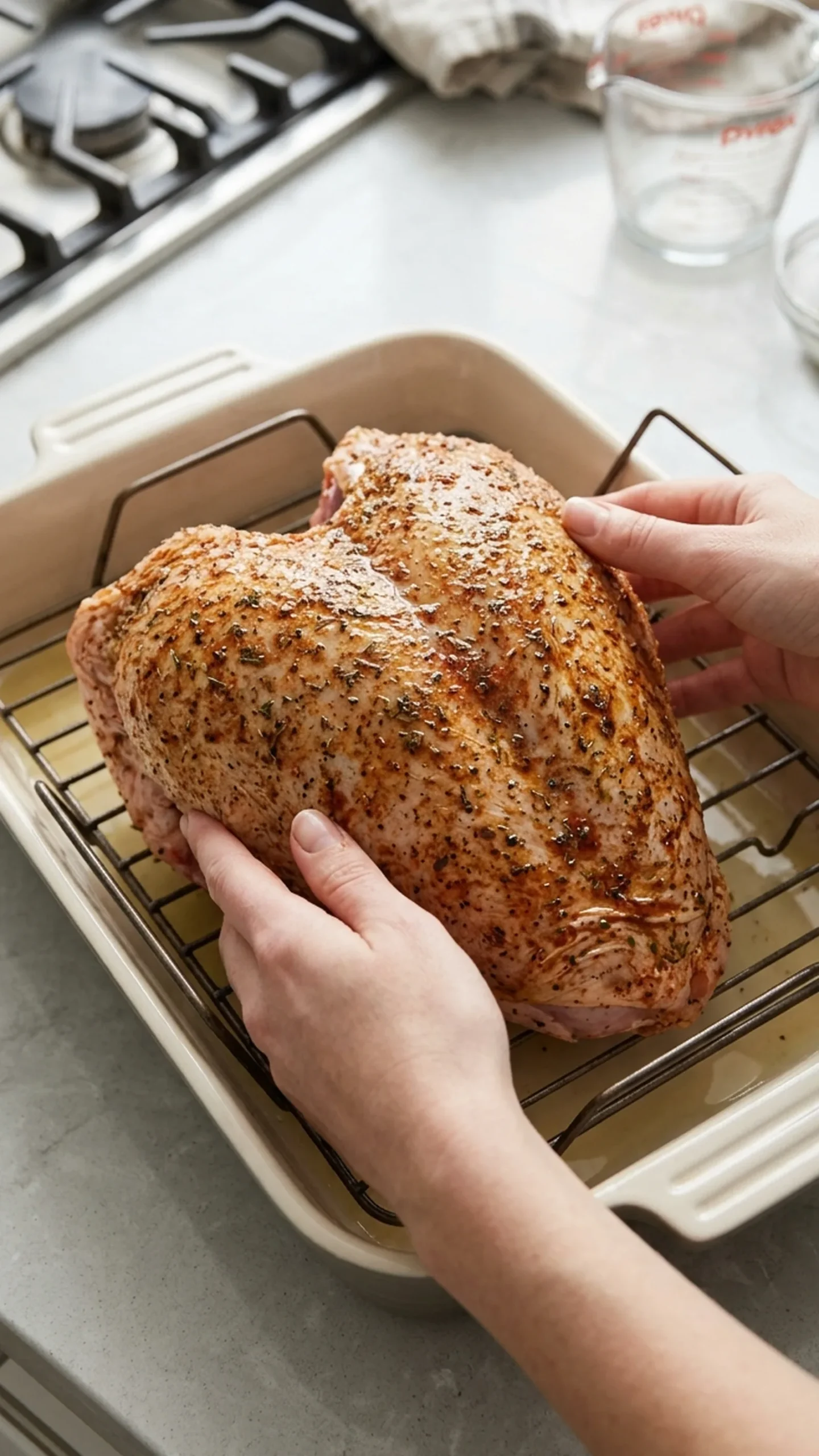
Rub the seasoning mixture evenly over the turkey, including the sides and any accessible areas beneath the skin.
The skin should look lightly coated with oil and evenly speckled with seasoning rather than covered in thick patches.
Step 3: Begin Roasting the Turkey
Place the seasoned turkey breast on the roasting rack, skin-side up.
Transfer the pan to the middle oven rack and roast uncovered for approximately 60 minutes before beginning the glazing stage.
During this initial roasting period, the skin should gradually change from pale to light golden brown.
If the skin begins browning too quickly, loosely cover the darkest areas with aluminum foil.
Avoid repeatedly opening the oven, since temperature fluctuations can slow cooking and affect browning.
Step 4: Prepare the Pomegranate Glaze
While the turkey roasts, combine the following ingredients in a small heavy-bottomed saucepan:
- 1 cup (240 ml) unsweetened pomegranate juice
- 1/4 cup (85 g) honey
- 2 tablespoons (30 ml) balsamic vinegar
- 1 tablespoon (15 g) Dijon mustard
- 1 teaspoon (2 g) finely chopped fresh rosemary
- 1/4 teaspoon (1.5 g) kosher salt
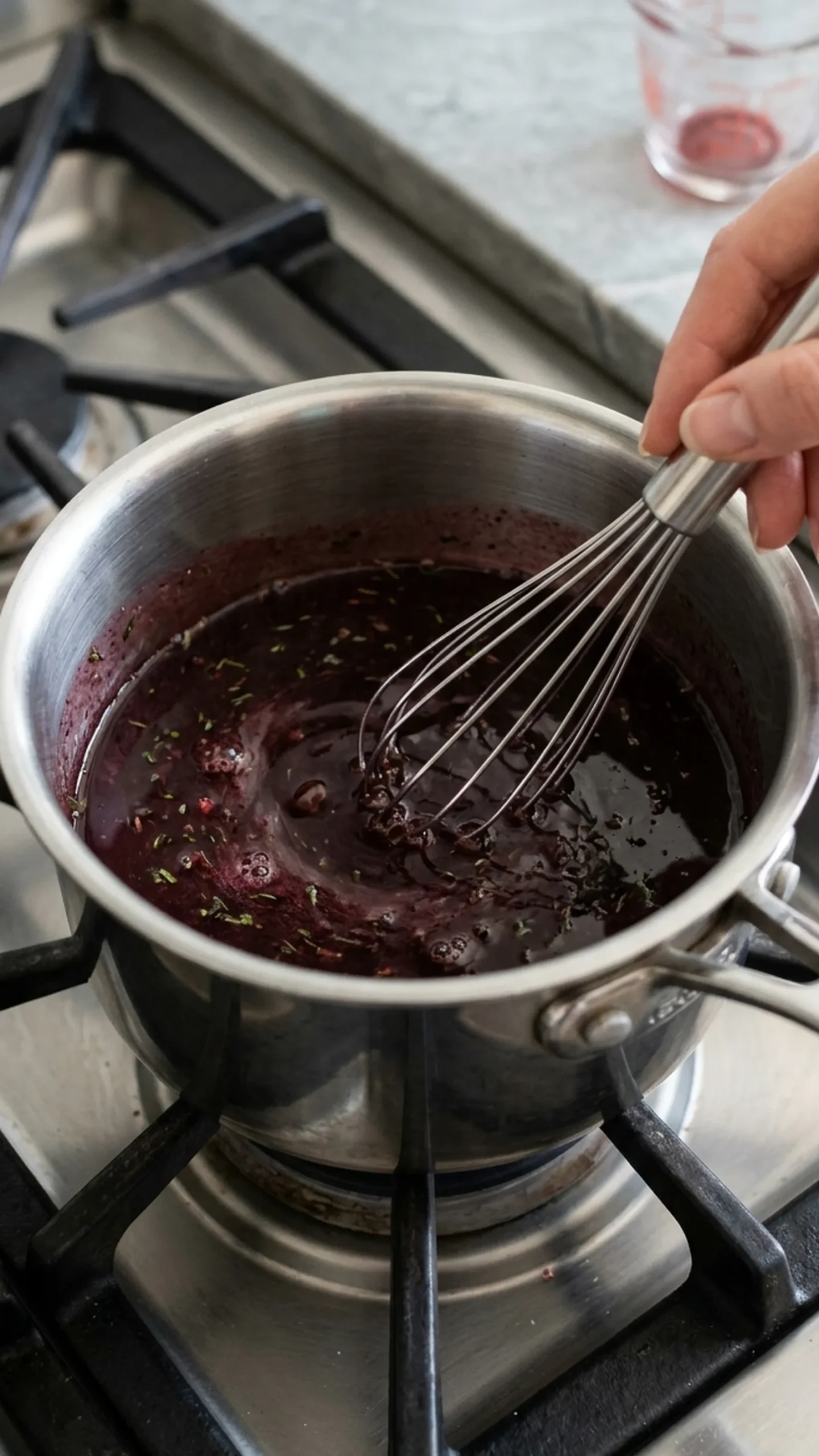
Whisk until the honey and mustard are evenly incorporated.
Place the saucepan over medium heat and bring the mixture to a gentle simmer.
Reduce the heat to medium-low and simmer for approximately 12 to 15 minutes, stirring occasionally, until the liquid reduces by roughly half.
The glaze should look glossy and lightly syrupy. It should coat the back of a spoon while remaining thin enough to brush over the turkey.
If the mixture thickens too much, remove it from the heat before it becomes sticky or candy-like.
Step 5: Finish the Glaze with Butter
Remove the saucepan from the heat.
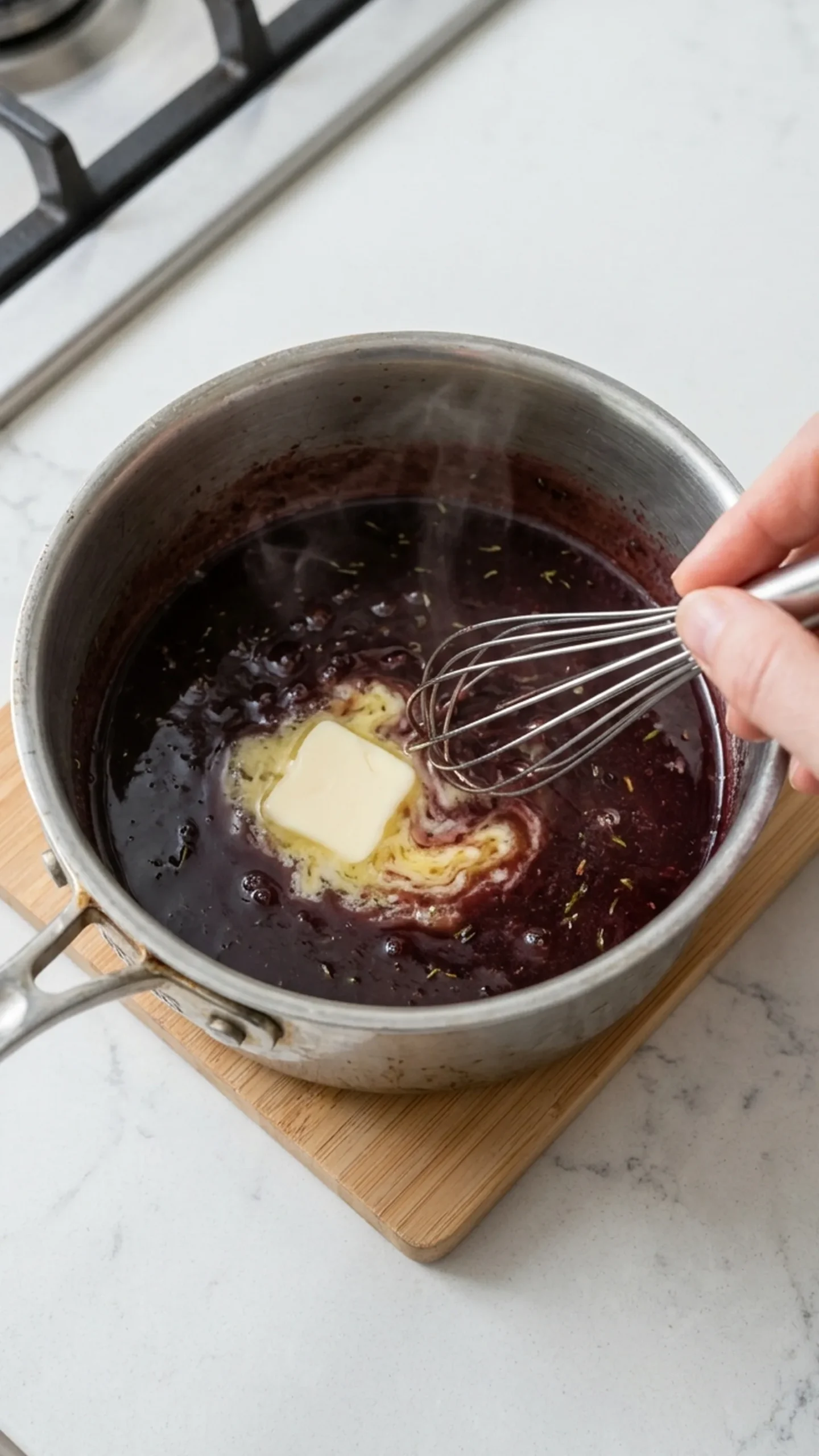
Add 1 tablespoon (14 g) cold unsalted butter and whisk until completely melted and incorporated.
The butter should give the glaze a smooth, slightly richer appearance without making it greasy.
Set the glaze aside until the turkey is ready for its first coating.
Keep the glaze separate from raw turkey juices. If you want additional glaze for serving, reserve a portion in a clean container before brushing the turkey.
Step 6: Apply the First Layer of Glaze
After the turkey has roasted for approximately 60 minutes, check its progress with an instant-read thermometer inserted into the thickest part of the breast without touching bone.
The turkey may still be below its final safe temperature at this point.
Using a clean pastry brush, apply a thin, even coating of pomegranate glaze over the skin and exposed surfaces.
Avoid pouring a large amount of glaze into the roasting pan. A thin coating adheres better and reduces the risk of burning.
Return the turkey to the oven.
Step 7: Continue Roasting and Build the Glaze
Continue roasting for approximately 30 to 45 minutes, checking the internal temperature and applying additional thin layers of glaze about every 15 minutes.
As the turkey cooks, the glaze should gradually deepen from reddish-purple to a glossy mahogany color.
The skin may become slightly sticky as the glaze caramelizes. This is normal, provided it is not turning black or developing a burnt smell.
If the glaze darkens too quickly, loosely tent the turkey with aluminum foil and continue roasting.
The estimated total roasting time is approximately 1 hour 30 minutes to 1 hour 45 minutes for the specified turkey breast, although the actual time depends on its shape, thickness, starting temperature, and oven performance.
Step 8: Check the Internal Temperature
Insert an instant-read thermometer into the thickest part of the turkey breast, avoiding the bone.
The turkey is safely cooked when the thickest part reaches 165°F (74°C).
Check more than one thick area to make sure the breast is cooked evenly.
Do not rely on skin color or clear juices as the sole indicators of doneness. The pomegranate glaze can make the exterior appear fully cooked before the center reaches a safe temperature.
If the turkey has not reached the required temperature, return it to the oven and continue roasting, checking frequently.
Step 9: Rest the Turkey Before Carving
Transfer the fully cooked turkey breast to a clean cutting board.
Loosely tent it with aluminum foil and let it rest for 20 minutes.
During this time, the internal juices redistribute throughout the meat, making the turkey easier to carve without losing excessive moisture.
Avoid wrapping the turkey tightly in foil, which traps steam and can soften the glazed skin.
Step 10: Carve and Serve
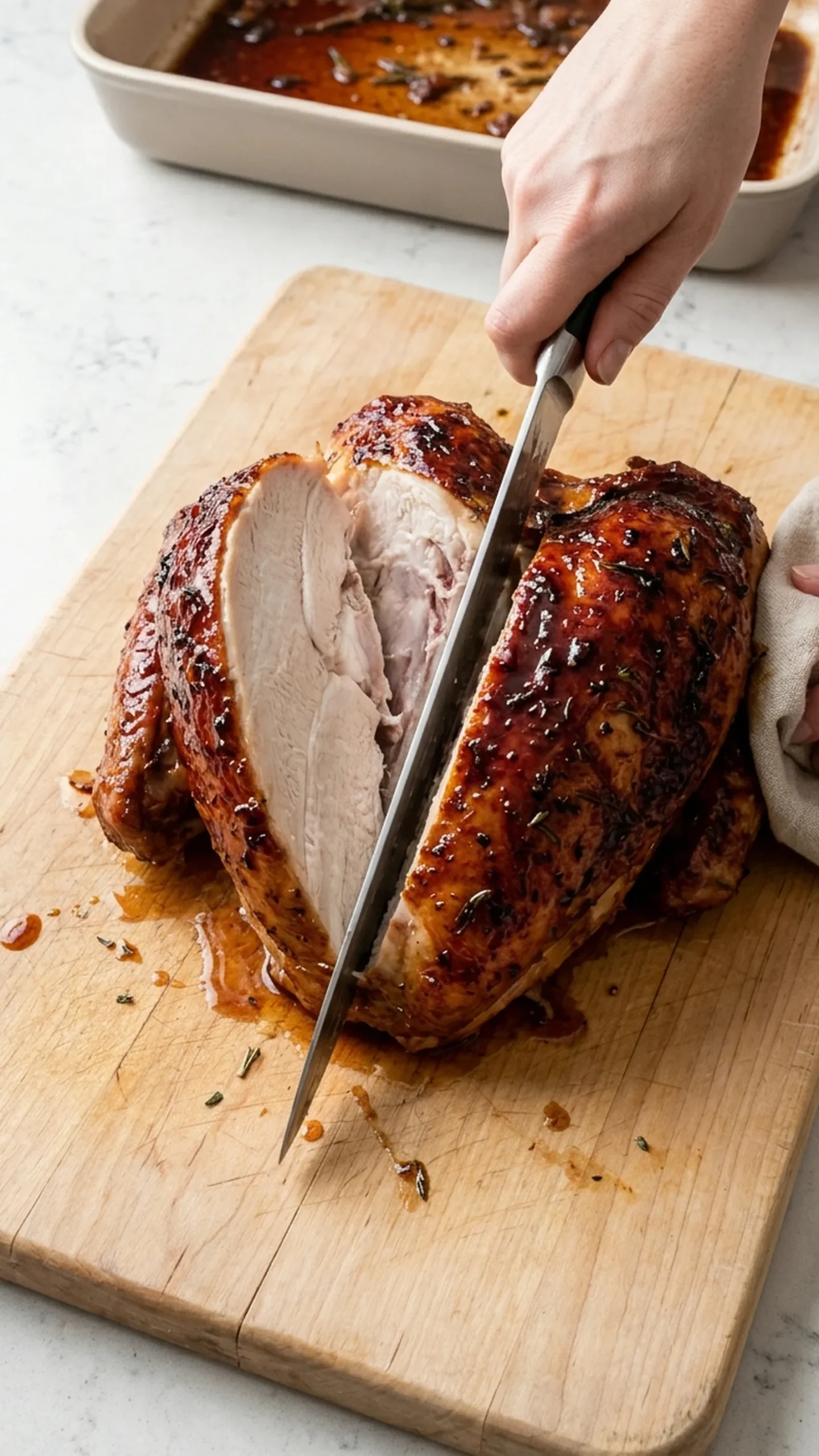
Using a sharp carving knife, carefully separate the breast meat from the bone.
Slice the meat against the grain into even pieces, keeping some of the glazed skin attached to each slice.
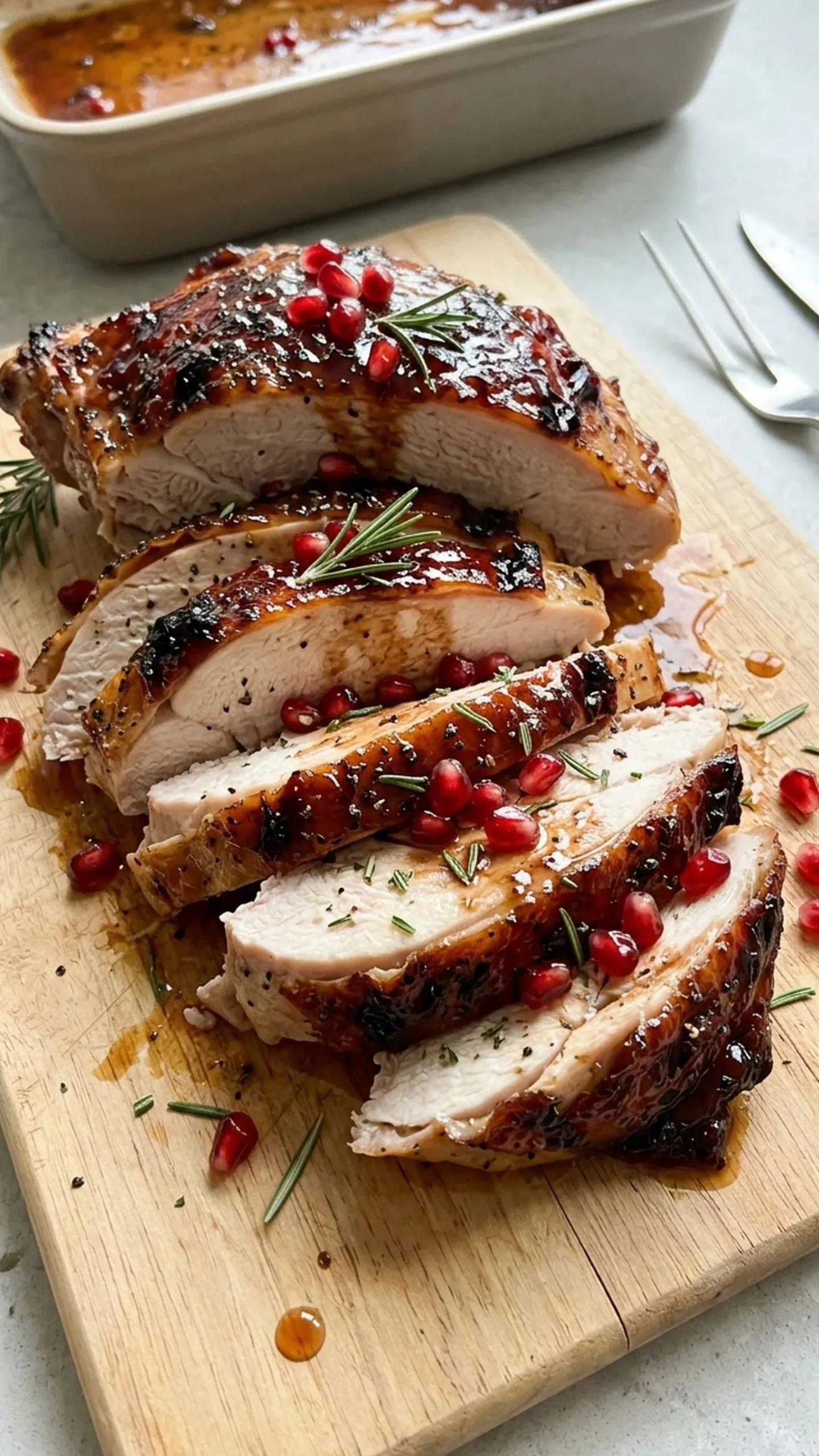
Arrange the turkey slices on a serving platter.
If desired, spoon a little of the clean, reserved pomegranate glaze over the slices.
Finish with 1/4 cup (40 g) fresh pomegranate arils and 2 fresh rosemary sprigs, if using.
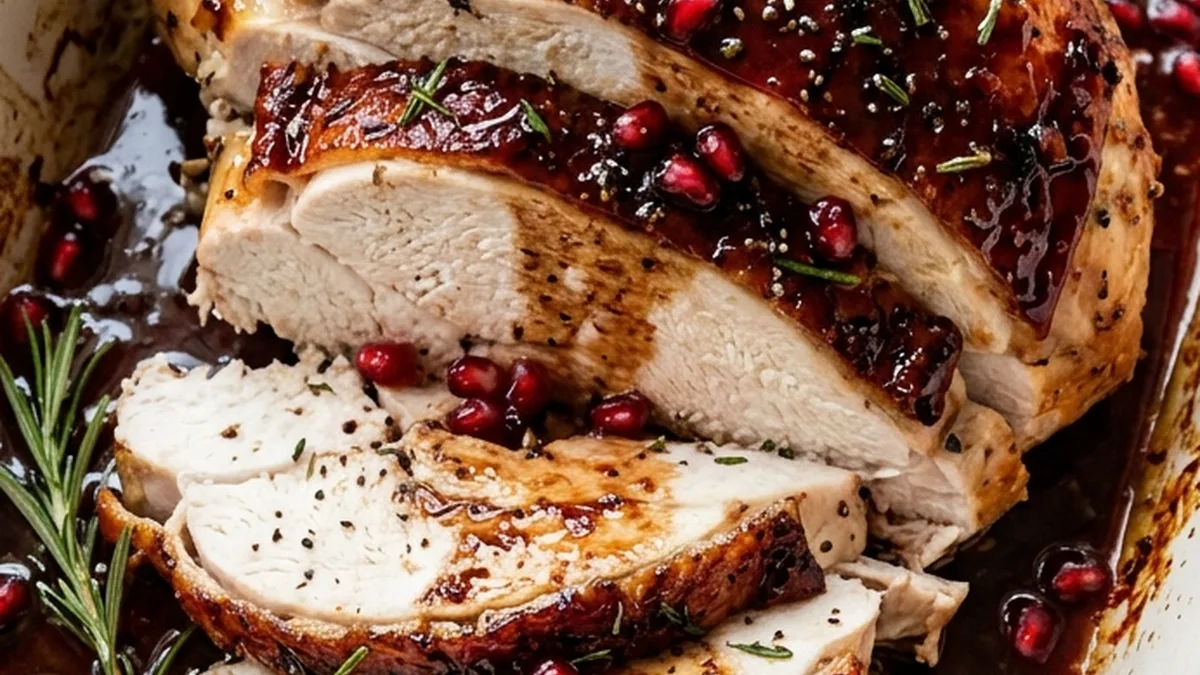
The finished turkey should have a lightly caramelized, glossy exterior and tender, moist meat with a mild herbal aroma.
Serve warm with your preferred holiday side dishes.
Storage, Freezing, and Make-Ahead Instructions
- Refrigerator Storage: Allow leftover turkey to cool briefly, then refrigerate promptly. Do not leave cooked turkey at room temperature for more than 2 hours. Place sliced or whole leftover turkey in shallow, airtight containers and refrigerate at 40°F (4°C) or below for up to 3 to 4 days. For better moisture retention, store the turkey with a small amount of its cooking juices. Keep any unused, uncontaminated pomegranate glaze in a separate airtight container.
- Freezing Instructions: Cooked turkey breast freezes well, although the glazed skin may lose some of its original texture after thawing. For convenient portions, carve the turkey before freezing. Arrange the slices in freezer-safe containers or heavy-duty freezer bags, adding a small amount of cooking juices to help prevent dryness. Remove excess air, seal tightly, and label the containers. Freeze at 0°F (-18°C) for up to 2 to 3 months for the best quality. Freeze any clean, reserved glaze separately if desired.
- Thawing and Reheating: Thaw frozen turkey overnight in the refrigerator, allowing additional time for larger portions. To reheat, arrange the turkey slices in a covered baking dish with a little of their reserved cooking juices. Warm in a 300°F (150°C) oven until the thickest portion reaches 165°F (74°C). Keeping the dish covered helps prevent moisture loss. Add any reserved glaze toward the end of reheating so it does not become overly thick. Avoid prolonged reheating, which can dry out the lean breast meat.
- Make-Ahead Preparation: The pomegranate glaze can be prepared up to 3 days in advance and stored in an airtight container in the refrigerator. It may thicken as it chills. Warm it gently over low heat until it becomes brushable again. The turkey can also be seasoned in advance and refrigerated, covered, overnight. Keep it chilled until ready to roast. For the most appealing glazed skin and juicy slices, roast and carve the turkey on the day you plan to serve it.
FAQ
Can I make this Pomegranate Glazed Turkey Breast Recipe ahead of time?
Yes. Prepare the pomegranate glaze up to 3 days in advance and refrigerate it in an airtight container. You can also season the turkey the night before roasting. For the best texture, roast the turkey on the day of serving, then allow it to rest before carving. If cooking the turkey completely in advance, refrigerate it promptly and reheat thoroughly before serving.
How do I know when the turkey breast is fully cooked?
The most reliable method is to use an instant-read meat thermometer. Insert it into the thickest part of the breast without touching bone. The turkey is safe to eat when it reaches 165°F (74°C). The glaze may darken before the turkey finishes cooking, so exterior color alone is not a dependable indicator.
Can I use boneless turkey breast instead?
Yes, but boneless turkey breast generally cooks faster than a similarly weighted bone-in breast, depending on its thickness and shape. Follow the same seasoning and glazing approach, but begin checking the internal temperature earlier. A skin-on boneless breast is preferable because the skin helps retain moisture and provides a surface for the glaze.
Why is my pomegranate glaze too thin or too thick?
A thin glaze usually needs more reduction time. Continue simmering gently until it coats the back of a spoon. If it becomes too thick, it may have reduced too far or cooled significantly. Warm it gently and loosen it with a small amount of additional pomegranate juice, if needed. The glaze should be syrupy but still easy to brush onto the turkey.
Can I freeze leftover pomegranate glazed turkey breast?
Yes. Slice the cooked turkey, pack it into airtight freezer-safe containers with a little cooking juice, and freeze for up to 2 to 3 months for the best quality. Thaw in the refrigerator before reheating. The turkey should retain much of its flavor, although the skin will usually be softer after freezing and thawing.
Ingredients
Method
- Preheat the oven to 350°F (175°C). Place a roasting rack inside a 13 x 9-inch (33 x 23 cm) roasting pan. Make sure the rack holds the turkey above the bottom of the pan so hot air can circulate around the meat. Pour 1 cup (240 ml) low-sodium chicken broth into the bottom of the pan, keeping it below the rack. The broth provides moisture in the roasting environment and helps prevent the drippings from scorching.
- Remove the fully thawed turkey breast from its packaging. Check for any gravy packets or other packaging materials and remove them. Pat the turkey thoroughly dry with paper towels, especially around the skin. Removing excess surface moisture encourages browning. Rub the turkey with 2 tablespoons (30 ml) olive oil. In a small bowl, combine: 1 1/2 teaspoons (9 g) kosher salt 1 teaspoon (2 g) freshly ground black pepper 1 teaspoon (3 g) garlic powder 1 teaspoon (1 g) dried thyme 1/2 teaspoon (1 g) smoked paprika Rub the seasoning mixture evenly over the turkey, including the sides and any accessible areas beneath the skin. The skin should look lightly coated with oil and evenly speckled with seasoning rather than covered in thick patches.
- Place the seasoned turkey breast on the roasting rack, skin-side up. Transfer the pan to the middle oven rack and roast uncovered for approximately 60 minutes before beginning the glazing stage. During this initial roasting period, the skin should gradually change from pale to light golden brown. If the skin begins browning too quickly, loosely cover the darkest areas with aluminum foil. Avoid repeatedly opening the oven, since temperature fluctuations can slow cooking and affect browning.
- While the turkey roasts, combine the following ingredients in a small heavy-bottomed saucepan: 1 cup (240 ml) unsweetened pomegranate juice 1/4 cup (85 g) honey 2 tablespoons (30 ml) balsamic vinegar 1 tablespoon (15 g) Dijon mustard 1 teaspoon (2 g) finely chopped fresh rosemary 1/4 teaspoon (1.5 g) kosher salt Whisk until the honey and mustard are evenly incorporated. Place the saucepan over medium heat and bring the mixture to a gentle simmer. Reduce the heat to medium-low and simmer for approximately 12 to 15 minutes, stirring occasionally, until the liquid reduces by roughly half. The glaze should look glossy and lightly syrupy. It should coat the back of a spoon while remaining thin enough to brush over the turkey. If the mixture thickens too much, remove it from the heat before it becomes sticky or candy-like.
- Remove the saucepan from the heat: Add 1 tablespoon (14 g) cold unsalted butter and whisk until completely melted and incorporated. The butter should give the glaze a smooth, slightly richer appearance without making it greasy. Set the glaze aside until the turkey is ready for its first coating. Keep the glaze separate from raw turkey juices. If you want additional glaze for serving, reserve a portion in a clean container before brushing the turkey.
- After the turkey has roasted for approximately 60 minutes, check its progress with an instant-read thermometer inserted into the thickest part of the breast without touching bone. The turkey may still be below its final safe temperature at this point. Using a clean pastry brush, apply a thin, even coating of pomegranate glaze over the skin and exposed surfaces. Avoid pouring a large amount of glaze into the roasting pan. A thin coating adheres better and reduces the risk of burning. Return the turkey to the oven.
- Continue roasting for approximately 30 to 45 minutes, checking the internal temperature and applying additional thin layers of glaze about every 15 minutes. As the turkey cooks, the glaze should gradually deepen from reddish-purple to a glossy mahogany color. The skin may become slightly sticky as the glaze caramelizes. This is normal, provided it is not turning black or developing a burnt smell. If the glaze darkens too quickly, loosely tent the turkey with aluminum foil and continue roasting. The estimated total roasting time is approximately 1 hour 30 minutes to 1 hour 45 minutes for the specified turkey breast, although the actual time depends on its shape, thickness, starting temperature, and oven performance.
- Insert an instant-read thermometer into the thickest part of the turkey breast, avoiding the bone. The turkey is safely cooked when the thickest part reaches 165°F (74°C). Check more than one thick area to make sure the breast is cooked evenly. Do not rely on skin color or clear juices as the sole indicators of doneness. The pomegranate glaze can make the exterior appear fully cooked before the center reaches a safe temperature. If the turkey has not reached the required temperature, return it to the oven and continue roasting, checking frequently.
- Transfer the fully cooked turkey breast to a clean cutting board. Loosely tent it with aluminum foil and let it rest for 20 minutes. During this time, the internal juices redistribute throughout the meat, making the turkey easier to carve without losing excessive moisture. Avoid wrapping the turkey tightly in foil, which traps steam and can soften the glazed skin.
- Using a sharp carving knife, carefully separate the breast meat from the bone. Slice the meat against the grain into even pieces, keeping some of the glazed skin attached to each slice. Arrange the turkey slices on a serving platter. If desired, spoon a little of the clean, reserved pomegranate glaze over the slices. Finish with 1/4 cup (40 g) fresh pomegranate arils and 2 fresh rosemary sprigs, if using. The finished turkey should have a lightly caramelized, glossy exterior and tender, moist meat with a mild herbal aroma. Serve warm with your preferred holiday side dishes.