These Crispy Roast Potatoes have deeply golden, crunchy edges and soft, fluffy centers. The secret is a combination of parboiling, roughing up the potato surfaces, and roasting them in hot oil. Those simple techniques create a crisp exterior without drying out the inside.

This recipe uses Yukon Gold potatoes for their naturally buttery flavor and creamy texture. A little baking soda in the boiling water helps break down the outer layer, creating a starchy coating that turns beautifully crisp in the oven. Serve these potatoes alongside roasted chicken, steak, or a holiday dinner.
Why This Recipe Works
- Parboiling creates fluffy centers. Partially cooking the potatoes before roasting helps the interiors become tender while allowing the exteriors to develop a crisp crust.
- Baking soda encourages a rough surface. Slightly alkaline boiling water softens the outer potato layer, helping create more starch on the surface.
- Rough edges turn extra crispy. Gently shaking the drained potatoes creates a thin coating of mashed potato starch that browns during roasting.
- Hot oil promotes immediate browning. Preheating the oil on the baking sheet helps the potatoes begin crisping as soon as they touch the pan.
- A spacious baking sheet prevents steaming. Keeping the potatoes in a single layer allows moisture to escape and encourages even browning.
Equipment Needed
- Large 5- to 6-quart pot for parboiling the potatoes
- Large colander for draining
- Heavy-duty rimmed metal baking sheet, approximately 18 × 13 inches (46 × 33 cm)
- Heat-resistant spatula or metal turner
- Large mixing bowl
- Measuring spoons
- Sharp knife and cutting board
A heavy-duty metal baking sheet is especially useful because it holds heat well and encourages browning. Avoid overcrowding the pan or using a deep roasting dish that traps steam around the potatoes.
Ingredients List

Potatoes
- 3 pounds (1.36 kg) Yukon Gold potatoes, peeled and cut into approximately 2-inch (5 cm) chunks
For Parboiling
- 2 quarts (1.9 liters) water, for boiling
- 1 tablespoon (18 g) kosher salt, for the boiling water, using Diamond Crystal
- 1/2 teaspoon (2.5 g) baking soda
For Roasting and Seasoning
- 1/3 cup (80 ml) olive oil, divided
- 1 teaspoon (3 g) garlic powder
- 1 teaspoon (1 g) dried rosemary, lightly crushed
- 1/2 teaspoon (1 g) freshly ground black pepper
- 1/2 teaspoon (3 g) fine sea salt, for finishing
Optional Garnish
- 2 tablespoons (8 g) fresh flat-leaf parsley, finely chopped, optional
Ingredient Notes and Substitutions
- Yukon Gold Potatoes: Yukon Gold potatoes have a balance of starch and moisture that makes them particularly suitable for roasting. Their interiors become creamy and tender while their exteriors develop a golden crust. Russet potatoes are a good substitute in the same weight. They tend to produce fluffier interiors and a more delicate, craggy crust, but they can break apart more easily during parboiling. Red potatoes hold their shape well but generally produce a firmer, less fluffy center.
- Baking Soda: Baking soda raises the alkalinity of the boiling water, helping soften the outer surface of the potatoes. This encourages a starchy coating that becomes crisp during roasting. There is no equally effective direct substitute for this particular technique. You can omit the baking soda, but the potato surfaces may remain smoother and develop a less pronounced crust.
- Olive Oil: Olive oil helps transfer heat to the potatoes, supports browning, and adds a mild savory flavor. Avocado oil or another neutral, high-heat cooking oil can replace olive oil in the same amount. The potatoes will still brown, although their flavor will be slightly different.
- Garlic Powder: Garlic powder adds savory flavor without introducing the moisture of fresh garlic. It also distributes easily over the rough potato surfaces. Onion powder can replace it in the same amount, but the flavor will be sweeter and less distinctly garlicky. Fresh minced garlic is not a direct substitute here because it may burn during the extended roasting time.
- Dried Rosemary: Rosemary adds a woodsy, aromatic flavor that complements roasted potatoes. Dried rosemary is convenient because it can be mixed directly into the seasoning. Dried thyme can replace it in the same amount for a milder, earthier flavor. You can also omit the herb for a simpler potato flavor.
Step-by-Step Instructions
Step 1: Prepare the potatoes
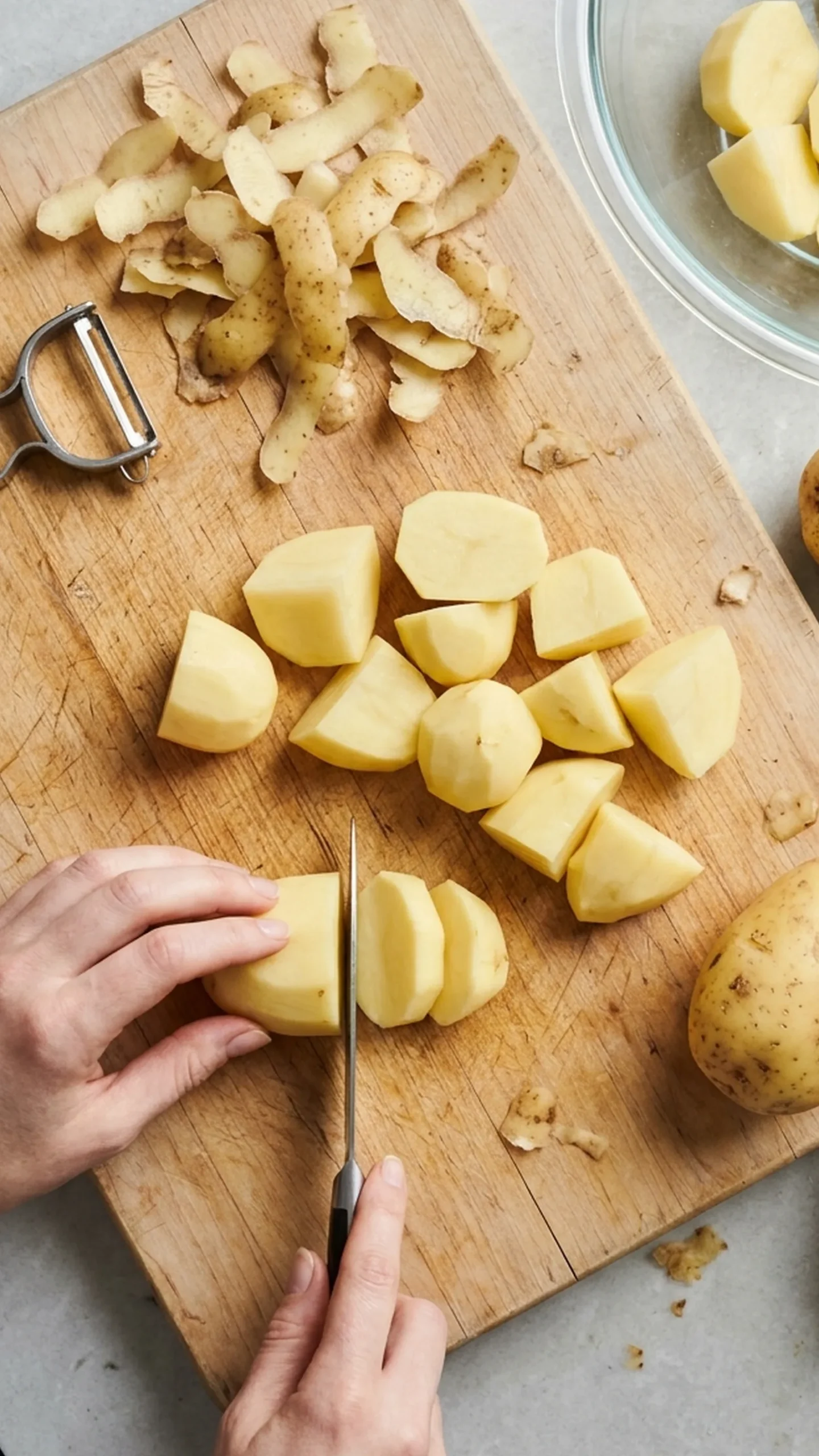
Peel the Yukon Gold potatoes and cut them into approximately 2-inch (5 cm) chunks. Try to keep the pieces similar in size so they cook evenly. Avoid cutting them too small, since smaller pieces may become overly soft during parboiling.
Step 2: Parboil the potatoes
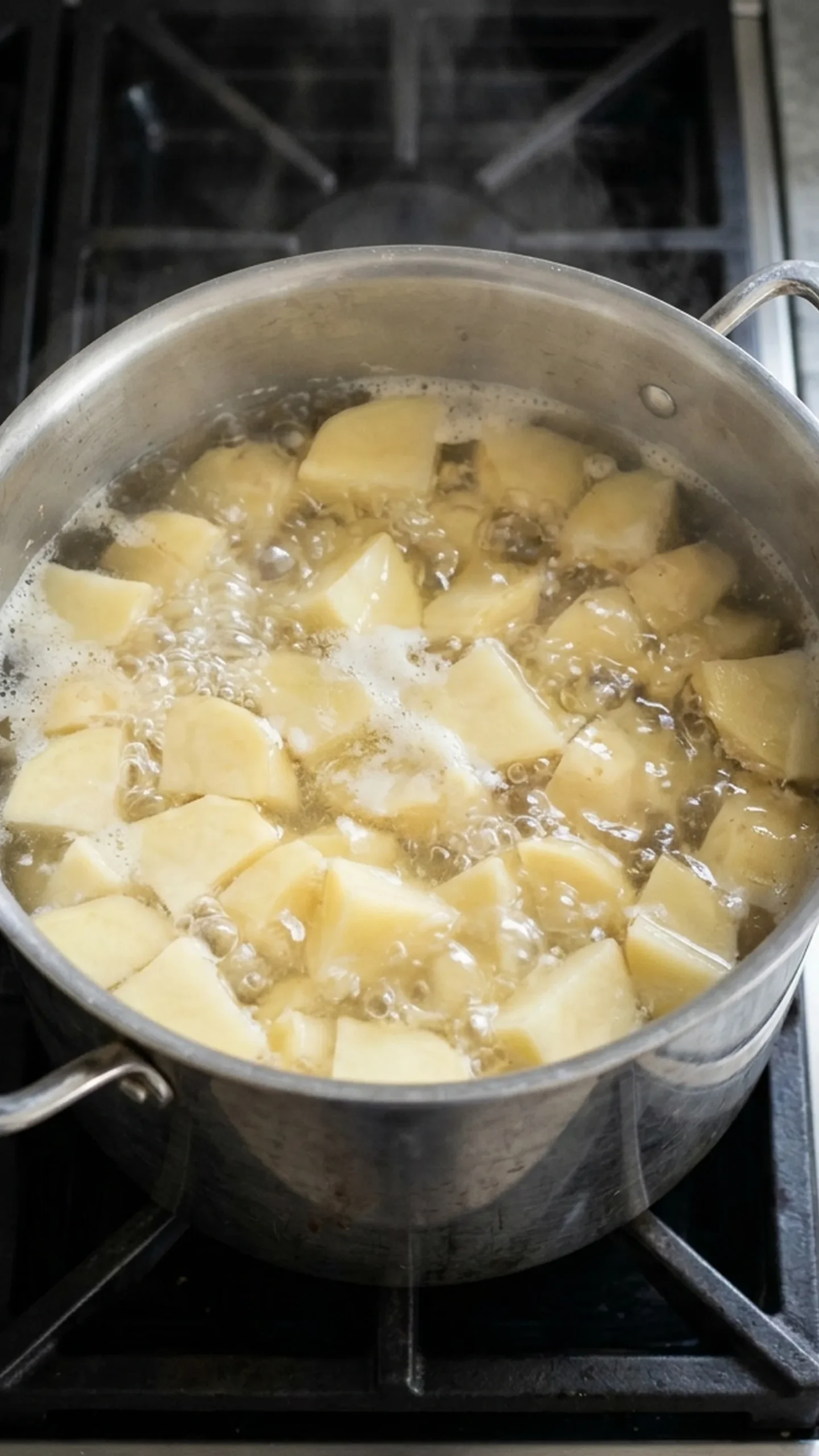
Add the water to a large pot and bring it to a boil over high heat. Stir in the kosher salt and baking soda, then carefully add the potatoes.
Return to a boil, reduce the heat to maintain a steady simmer, and cook for 10 minutes. The edges should begin to soften, while the centers should still offer slight resistance when pierced with a knife.
Step 3: Drain and release excess moisture
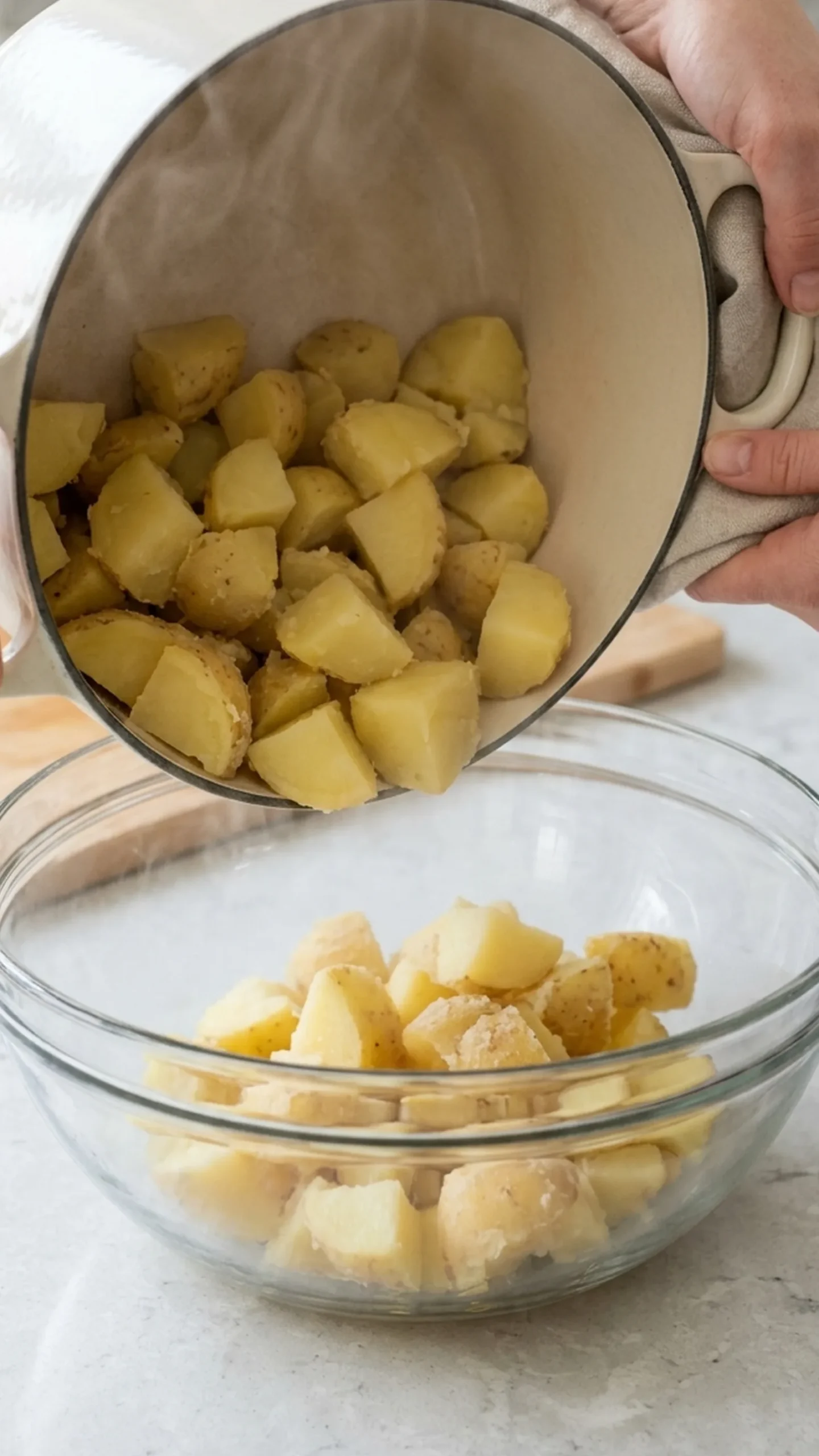
Drain the potatoes thoroughly in a colander. Leave them for 2 minutes so excess steam can escape.
The surfaces should look relatively dry rather than glossy or wet. Removing moisture at this stage helps the potatoes roast instead of steam.
Step 4: Create the starchy coating
Transfer the drained potatoes to a large mixing bowl. Gently shake or toss them several times until the surfaces look slightly mashed and rough.
You should see a thin, fluffy layer forming around the chunks. The pieces should remain mostly intact. If they begin breaking apart, stop tossing.
Step 5: Preheat the oven and baking sheet
Preheat the oven to 425°F (220°C).
Pour 1/4 cup (60 ml) of the olive oil onto the 18 × 13-inch (46 × 33 cm) rimmed baking sheet. Tilt the pan carefully to distribute the oil.
Place the baking sheet in the oven for 5 minutes while the oven is fully heated. The oil should become hot and fluid without smoking.
Step 6: Season the potatoes
Add the remaining 1 tablespoon plus 1 teaspoon (20 ml) olive oil to the potatoes.
Sprinkle with the garlic powder, dried rosemary, and black pepper. Gently fold everything together until the seasonings are distributed across the rough surfaces.
The potatoes should look lightly coated, not saturated with oil.
Step 7: Arrange on the hot baking sheet
Carefully remove the hot baking sheet from the oven and place it on a heatproof surface.
Add the seasoned potatoes, spreading them into a single layer with space between the pieces. You should hear some sizzling as the potatoes contact the hot oil.
Position the flatter sides against the pan whenever possible to encourage a crisp, golden crust.

Step 8: Roast until golden and crispy
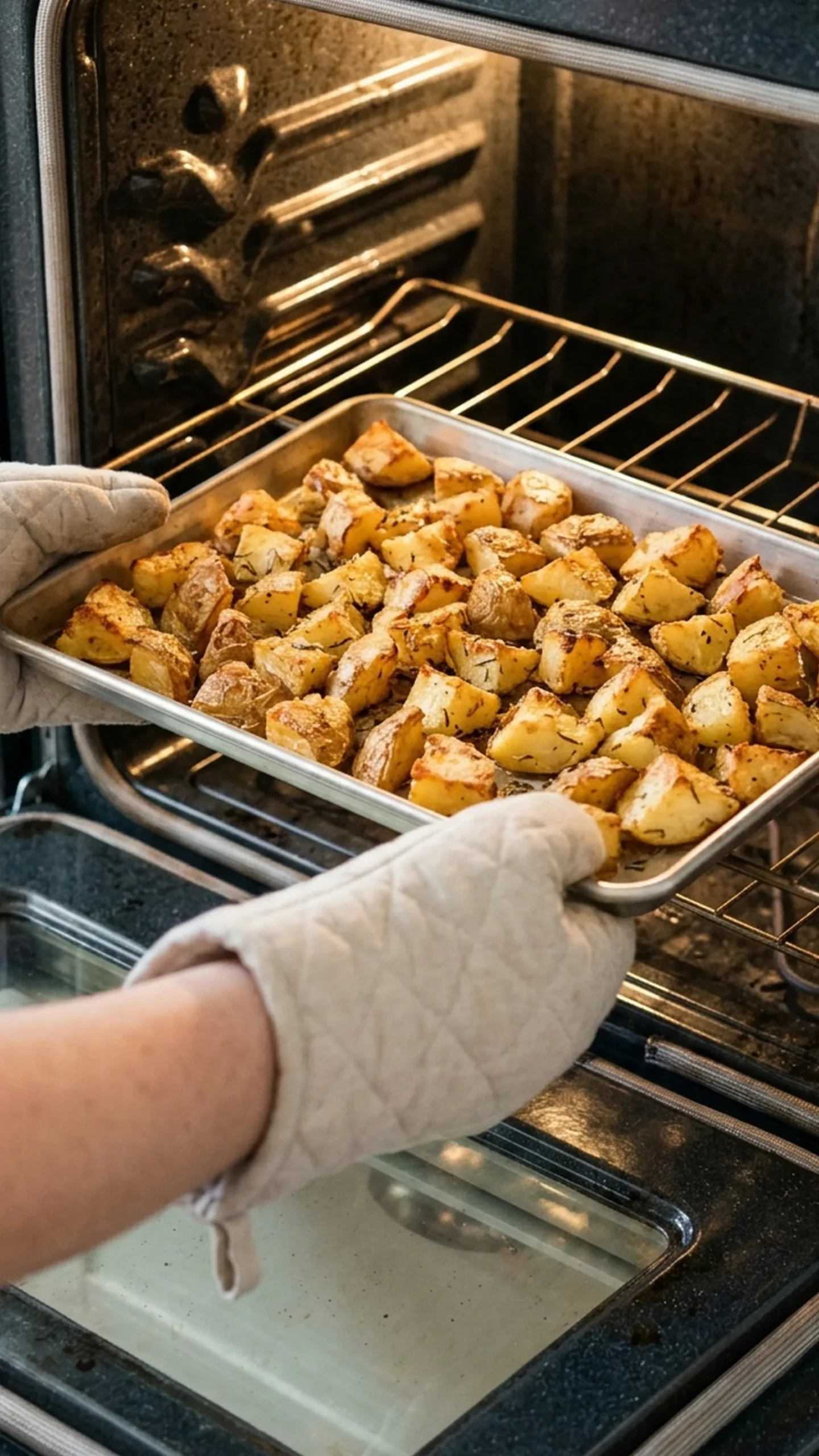
Return the baking sheet to the oven and roast at 425°F (220°C) for 45 minutes.
After the first 25 minutes, use a spatula to turn the potatoes, gently releasing any pieces attached to the pan. Continue roasting for the remaining 20 minutes.
The potatoes should develop deep golden-brown patches, crisp edges, and tender centers. If they brown unevenly, rotate the baking sheet when turning them.
Step 9: Finish and serve
Remove the potatoes from the oven and sprinkle with the fine sea salt. Add the chopped parsley, if using, and toss gently.
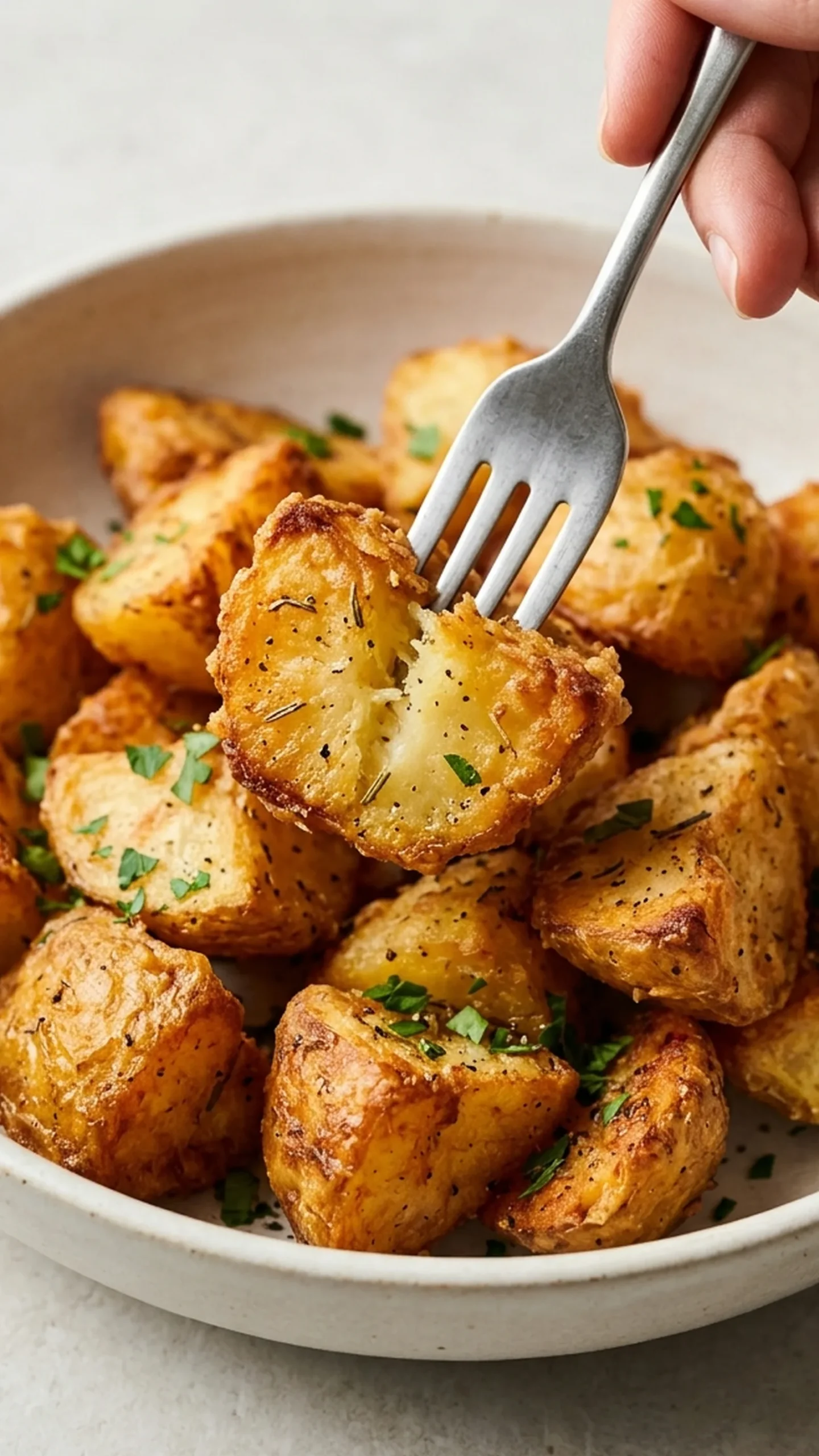
Let the potatoes rest uncovered for 3 minutes before serving. Their crust should feel firm and crisp, while the inside should be soft and fluffy.
Storage, Freezing, and Make-Ahead Instructions
- Refrigerator Storage: Allow leftover potatoes to cool, then transfer them to an airtight container and refrigerate within 2 hours of cooking. Store in the refrigerator for up to 4 days. The crust will soften during storage, but it can regain some crispness when reheated.
- Freezing: Crispy roast potatoes can be frozen after cooking, although their texture may change slightly. Arrange the cooled potatoes in a single layer on a freezer-safe tray until firm, then transfer them to a freezer-safe bag or airtight container. For better quality, use within 2 months. Freezing them separately first helps prevent the pieces from sticking together.
- Reheating: For the crispiest results, reheat refrigerated potatoes on a baking sheet in a preheated 400°F (205°C) oven for approximately 10–15 minutes, or until thoroughly hot and crisp. Frozen cooked potatoes can be reheated directly from frozen in the oven, allowing additional time as needed until heated through. Avoid covering them during reheating, since trapped steam can soften the crust. Reheat leftovers to an internal temperature of 165°F (74°C).
- Make-Ahead Preparation: You can peel and cut the potatoes ahead of time and keep them completely submerged in cold water in a covered container in the refrigerator for up to 24 hours. Drain them before following the recipe. This helps prevent discoloration and makes preparation easier when cooking for guests. For the best texture, complete the roasting shortly before serving rather than holding the finished potatoes in a covered dish.
FAQ
Why aren't my roast potatoes crispy?
The most common causes are excess surface moisture, overcrowding, or insufficient browning. Make sure the potatoes are thoroughly drained, their surfaces are roughened, and they are arranged in a single layer. A heavy metal baking sheet also helps create a crisp crust.
Can I make Crispy Roast Potatoes ahead of time?
Yes. You can peel and cut the potatoes up to 24 hours ahead and refrigerate them submerged in cold water. For the best crust, parboil and roast them close to serving time. Fully cooked potatoes can also be reheated, although their texture may be slightly less crisp.
Can I use russet potatoes instead of Yukon Gold?
Yes. Russet potatoes work well and usually produce a fluffier interior with a rougher exterior. They are more fragile after boiling, so handle them gently when creating the starchy coating.
How do I know when the potatoes are done?
The exterior should be deeply golden in several places, with visibly crisp edges. A knife should slide easily through the center without resistance. If the potatoes are tender but pale, they have not developed the same level of surface browning.
Can I make these roast potatoes without baking soda?
Yes. The potatoes will still roast and brown, but their surfaces may be smoother and less craggy. Baking soda helps soften the outer layer during boiling, which creates more starch on the surface for crisping.

Ingredients
Method
- Peel the Yukon Gold potatoes and cut them into approximately 2-inch (5 cm) chunks. Try to keep the pieces similar in size so they cook evenly. Avoid cutting them too small, since smaller pieces may become overly soft during parboiling.
- Add the water to a large pot and bring it to a boil over high heat. Stir in the kosher salt and baking soda, then carefully add the potatoes. Return to a boil, reduce the heat to maintain a steady simmer, and cook for 10 minutes. The edges should begin to soften, while the centers should still offer slight resistance when pierced with a knife.
- Drain the potatoes thoroughly in a colander: Leave them for 2 minutes so excess steam can escape. The surfaces should look relatively dry rather than glossy or wet. Removing moisture at this stage helps the potatoes roast instead of steam.
- Transfer the drained potatoes to a large mixing bowl. Gently shake or toss them several times until the surfaces look slightly mashed and rough. You should see a thin, fluffy layer forming around the chunks. The pieces should remain mostly intact. If they begin breaking apart, stop tossing.
- Preheat the oven to 425°F (220°C). Pour 1/4 cup (60 ml) of the olive oil onto the 18 × 13-inch (46 × 33 cm) rimmed baking sheet. Tilt the pan carefully to distribute the oil. Place the baking sheet in the oven for 5 minutes while the oven is fully heated. The oil should become hot and fluid without smoking.
- Add the remaining 1 tablespoon plus 1 teaspoon (20 ml) olive oil to the potatoes. Sprinkle with the garlic powder, dried rosemary, and black pepper. Gently fold everything together until the seasonings are distributed across the rough surfaces. The potatoes should look lightly coated, not saturated with oil.
- Carefully remove the hot baking sheet from the oven and place it on a heatproof surface. Add the seasoned potatoes, spreading them into a single layer with space between the pieces. You should hear some sizzling as the potatoes contact the hot oil. Position the flatter sides against the pan whenever possible to encourage a crisp, golden crust.
- Return the baking sheet to the oven and roast at 425°F (220°C) for 45 minutes. After the first 25 minutes, use a spatula to turn the potatoes, gently releasing any pieces attached to the pan. Continue roasting for the remaining 20 minutes. The potatoes should develop deep golden-brown patches, crisp edges, and tender centers. If they brown unevenly, rotate the baking sheet when turning them.
- Remove the potatoes from the oven and sprinkle with the fine sea salt. Add the chopped parsley, if using, and toss gently. Let the potatoes rest uncovered for 3 minutes before serving. Their crust should feel firm and crisp, while the inside should be soft and fluffy.