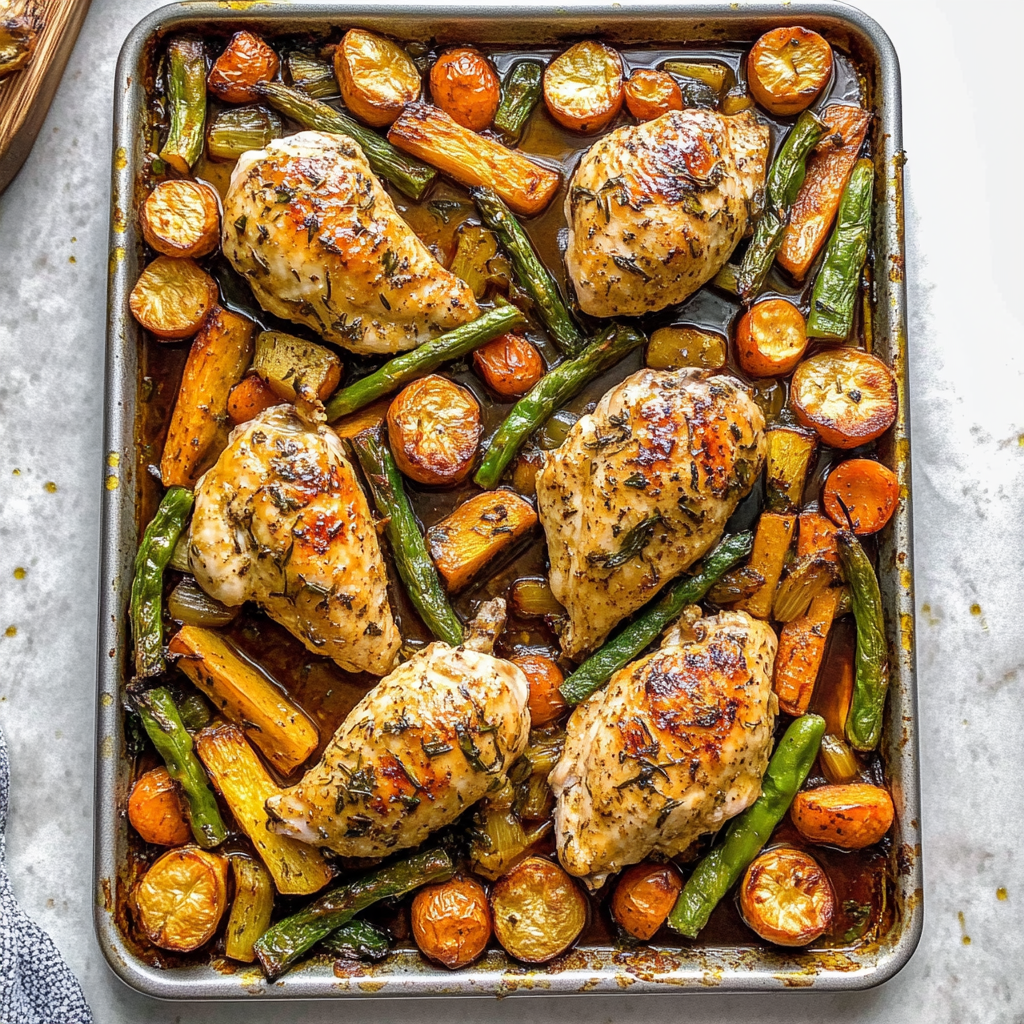
Sheet Pan Honey Mustard Chicken Veggies is a colorful, satisfying dinner made with juicy chicken, golden roasted potatoes, tender carrots, and crisp-edged broccoli. A homemade honey mustard glaze combines Dijon mustard, honey, garlic, and a splash of apple cider vinegar for a sweet, tangy finish that complements both the chicken and vegetables.
This recipe uses one extra-large baking sheet and a staggered roasting method so everything finishes cooking at approximately the same time. The potatoes and carrots get a head start before the chicken and broccoli join them, making this a practical weeknight meal with relatively little cleanup.
Why This Recipe Works
- Staggered roasting prevents overcooking. Potatoes and carrots need more oven time than bite-sized chicken and broccoli, so adding the ingredients in stages gives each one the right texture.
- Honey and Dijon create a balanced glaze. Honey encourages caramelization, while mustard and vinegar add tanginess that keeps the dish from tasting overly sweet.
- Chicken thighs stay juicy. Boneless, skinless chicken thighs tolerate high-heat roasting well and develop flavorful golden edges.
- High oven heat encourages browning. Roasting at 425°F (220°C) gives the vegetables caramelized edges without requiring a separate stovetop step.
- A reserved portion of glaze adds freshness. Drizzling clean, unused honey mustard sauce over the finished dish reinforces its flavor without overcooking the honey.
Equipment Needed
- 1 extra-large rimmed baking sheet, approximately 21 × 15 inches, or 2 standard 18 × 13-inch baking sheets
- Large mixing bowl
- Small mixing bowl
- Whisk
- Sharp knife and cutting board
- Tongs or a large spatula
- Instant-read meat thermometer
Ingredients List
For the Chicken and Vegetables
- 1¾ pounds (about 795 g) boneless, skinless chicken thighs, trimmed and cut into approximately 1½-inch pieces
- 1 pound (454 g) baby potatoes, halved or quartered into approximately ¾-inch pieces
- 2 medium carrots (about 225 g), peeled and sliced into ½-inch-thick pieces
- 12 ounces (340 g) broccoli florets, cut into medium, evenly sized pieces
- 2 tablespoons (30 mL) olive oil, divided
- ¾ teaspoon (about 2.5 g) kosher salt, divided
- ½ teaspoon (about 1 g) freshly ground black pepper, divided
For the Honey Mustard Glaze
- 3 tablespoons (45 g) Dijon mustard
- 3 tablespoons (63 g) honey
- 1 tablespoon (15 mL) olive oil
- 1 tablespoon (15 mL) apple cider vinegar
- 3 medium garlic cloves (about 9 g), finely minced
- 1 teaspoon (about 1 g) dried thyme
- ½ teaspoon (about 1 g) smoked paprika
- ½ teaspoon (about 1.5 g) kosher salt
Optional Garnish
- 2 tablespoons (8 g) chopped fresh parsley, optional
Ingredient Notes and Substitutions
- Boneless Chicken Thighs: Chicken thighs remain juicy during high-heat roasting and pair well with the bold honey mustard glaze. Boneless, skinless chicken breasts can be substituted, but they cook more quickly and can dry out if overbaked. Cut breast meat into evenly sized pieces and check its internal temperature early.
- Dijon Mustard: Dijon provides the sharp, tangy flavor that balances the sweetness of the honey. Whole-grain mustard can replace up to half of it for a more textured glaze. Yellow mustard can be used in a pinch, although it produces a milder, more vinegary flavor.
- Honey: Honey sweetens the glaze and helps it develop caramelized edges in the oven. Pure maple syrup can replace it in the same amount for a slightly thinner glaze with a distinct maple flavor. Watch the chicken closely near the end of roasting because either sweetener can darken quickly.
- Baby Potatoes: Baby potatoes have tender skins and develop creamy interiors with crisp, golden edges when roasted. Yukon Gold potatoes are a suitable substitute; cut them into approximately ¾-inch pieces. Larger chunks need more time, which can throw off the staggered roasting schedule.
- Broccoli: Broccoli develops lightly crisp, browned tips while remaining tender in the center. Cauliflower florets can replace it, although they may need a few additional minutes in the oven. Cut either vegetable into similar-sized pieces for consistent cooking.
Step-by-Step Instructions
1. Preheat the Oven
Preheat the oven to 425°F (220°C). Position a rack in the center.
Use an extra-large rimmed baking sheet to give the chicken and vegetables enough room to roast. If using two standard baking sheets, plan to distribute the ingredients between them rather than crowding everything onto one pan.
2. Prepare the Potatoes and Carrots
Place the cut baby potatoes and sliced carrots in a large mixing bowl.
Add 1 tablespoon (15 mL) of the olive oil, ½ teaspoon of the kosher salt, and ¼ teaspoon of the black pepper. Toss until evenly coated.
Spread the vegetables across the baking sheet in a single layer, concentrating them toward one side so there will be room for the chicken and broccoli later.
3. Begin Roasting the Vegetables
Place the baking sheet in the preheated oven and roast the potatoes and carrots for 15 minutes.
The potatoes should begin developing golden edges, and the carrots should start to soften. Neither needs to be fully cooked at this stage.
4. Prepare the Honey Mustard Glaze
While the vegetables roast, whisk together the Dijon mustard, honey, olive oil, apple cider vinegar, minced garlic, dried thyme, smoked paprika, and ½ teaspoon kosher salt in a small bowl.
The glaze should be smooth, glossy, and thick enough to coat a spoon.
Transfer 2 tablespoons of the glaze to a separate clean bowl and set it aside for serving. Keep this reserved portion away from the raw chicken.
5. Coat the Chicken
Place the chicken pieces in a clean mixing bowl.
Pour the remaining honey mustard glaze over the chicken and toss until every piece is thoroughly coated.
The glaze should cling to the chicken without pooling excessively at the bottom of the bowl.
Keep the chicken refrigerated if the vegetables are not yet ready for the next roasting stage.
6. Season the Broccoli
Place the broccoli florets in a separate bowl.
Add the remaining 1 tablespoon (15 mL) olive oil, ¼ teaspoon kosher salt, and ¼ teaspoon black pepper.
Toss thoroughly, making sure the florets are lightly coated. Avoid adding too much oil, which can make the broccoli greasy rather than crisp-edged.
7. Add the Chicken and Broccoli
After the potatoes and carrots have roasted for 15 minutes, carefully remove the baking sheet from the oven.
Turn the potatoes and carrots with a spatula. Add the glazed chicken and seasoned broccoli, distributing them across the remaining space.
Arrange the chicken in a single layer with a little space between the pieces. Avoid piling the broccoli on top of the chicken, as this can trap steam and prevent proper browning.
If the pan looks crowded, transfer some of the ingredients to a second baking sheet.
8. Finish Roasting
Return the baking sheet to the oven and roast for another 20–25 minutes.
The chicken should develop golden, lightly caramelized edges, the potatoes should be fork-tender, and the broccoli should have browned tips with tender stems.
Use an instant-read thermometer to check the thickest pieces of chicken. They must reach an internal temperature of 165°F (74°C).
If the chicken finishes before the potatoes, transfer it to a clean plate and keep it warm while the vegetables finish roasting. If the honey glaze begins darkening too quickly, move the baking sheet to a lower oven rack.
9. Rest and Add the Reserved Glaze
Remove the baking sheet from the oven and let the chicken rest for 5 minutes.
Stir the reserved 2 tablespoons of honey mustard glaze, then drizzle it lightly over the cooked chicken and vegetables.
Use clean tongs or a spatula to toss everything gently, keeping the roasted potatoes and broccoli intact.
10. Garnish and Serve
Sprinkle the optional chopped parsley over the finished dish.
Divide the chicken, potatoes, carrots, and broccoli evenly among five plates. Serve warm, spooning any cooked juices from the baking sheet over the portions.
Storage, Freezing, and Make-Ahead Instructions
- Refrigeration: Allow the chicken and vegetables to cool slightly, then transfer them to shallow, airtight containers. Refrigerate within 2 hours of cooking and store for up to 3–4 days. Keeping the chicken with some of the cooked pan juices helps prevent it from drying out during storage.
- Freezing: The cooked honey mustard chicken freezes well, but the roasted potatoes and broccoli may become softer after thawing. For the best texture, freeze the chicken separately in a freezer-safe container with a little of its cooked sauce for up to 2 months. Thaw overnight in the refrigerator before reheating.
- Reheating: Spread the chicken and vegetables in a baking dish and cover loosely with aluminum foil. Reheat in a 350°F (175°C) oven for approximately 15–20 minutes, or until the chicken reaches 165°F (74°C). Remove the foil during the last few minutes if you want to restore some crispness to the roasted vegetables. A small splash of water or broth can help prevent the chicken from drying out.
- Make-Ahead Preparation: Prepare the honey mustard glaze up to 3 days ahead and refrigerate it in a sealed container. You can also cut the potatoes and carrots the day before cooking. Keep the carrots refrigerated in an airtight container and the potatoes submerged in cold water in the refrigerator. Drain and dry the potatoes thoroughly before roasting. Cut the broccoli in advance and refrigerate it in a separate container. Keep the raw chicken refrigerated until ready to coat and roast. For the freshest flavor and texture, assemble and cook the sheet pan dinner shortly before serving.
FAQ
Can I use chicken breasts instead of chicken thighs?
Yes. Cut boneless, skinless chicken breasts into evenly sized pieces and roast them alongside the vegetables. Begin checking their temperature a little earlier, since lean chicken breast can dry out more quickly. The chicken is fully cooked when its thickest pieces reach 165°F (74°C).
Why are my roasted vegetables soggy?
The baking sheet may be overcrowded, or the vegetables may have been wet before roasting. Dry the potatoes and broccoli thoroughly and arrange everything in a single layer. Use two baking sheets if necessary to allow moisture to evaporate and the vegetables to brown.
Can I make Sheet Pan Honey Mustard Chicken Veggies ahead of time?
Yes. Prepare the glaze and chop the vegetables up to a day ahead, storing everything separately in the refrigerator. For the best caramelization and texture, roast the chicken and vegetables just before serving.
Can I use other vegetables?
Yes. Brussels sprouts, cauliflower, and sweet potatoes work well with honey mustard. Keep in mind that cooking times vary. Firm vegetables, such as sweet potatoes and Brussels sprouts, generally need an earlier start than quick-cooking vegetables such as broccoli or zucchini.
How do I prevent the honey mustard glaze from burning?
Keep the oven at the recommended temperature and add the glazed chicken only after the potatoes and carrots have had their initial roasting time. Check the pan near the end of cooking. If the glaze darkens too quickly, move the pan to a lower rack while the chicken finishes cooking.
Ingredients
Method
- Preheat the oven to 425°F (220°C). Position a rack in the center. Use an extra-large rimmed baking sheet to give the chicken and vegetables enough room to roast. If using two standard baking sheets, plan to distribute the ingredients between them rather than crowding everything onto one pan.
- Place the cut baby potatoes and sliced carrots in a large mixing bowl. Add 1 tablespoon (15 mL) of the olive oil, ½ teaspoon of the kosher salt, and ¼ teaspoon of the black pepper. Toss until evenly coated. Spread the vegetables across the baking sheet in a single layer, concentrating them toward one side so there will be room for the chicken and broccoli later.
- Place the baking sheet in the preheated oven and roast the potatoes and carrots for 15 minutes. The potatoes should begin developing golden edges, and the carrots should start to soften. Neither needs to be fully cooked at this stage.
- While the vegetables roast, whisk together the Dijon mustard, honey, olive oil, apple cider vinegar, minced garlic, dried thyme, smoked paprika, and ½ teaspoon kosher salt in a small bowl. The glaze should be smooth, glossy, and thick enough to coat a spoon. Transfer 2 tablespoons of the glaze to a separate clean bowl and set it aside for serving. Keep this reserved portion away from the raw chicken.
- Place the chicken pieces in a clean mixing bowl. Pour the remaining honey mustard glaze over the chicken and toss until every piece is thoroughly coated. The glaze should cling to the chicken without pooling excessively at the bottom of the bowl. Keep the chicken refrigerated if the vegetables are not yet ready for the next roasting stage.
- Place the broccoli florets in a separate bowl: Add the remaining 1 tablespoon (15 mL) olive oil, ¼ teaspoon kosher salt, and ¼ teaspoon black pepper. Toss thoroughly, making sure the florets are lightly coated. Avoid adding too much oil, which can make the broccoli greasy rather than crisp-edged.
- After the potatoes and carrots have roasted for 15 minutes, carefully remove the baking sheet from the oven. Turn the potatoes and carrots with a spatula. Add the glazed chicken and seasoned broccoli, distributing them across the remaining space. Arrange the chicken in a single layer with a little space between the pieces. Avoid piling the broccoli on top of the chicken, as this can trap steam and prevent proper browning. If the pan looks crowded, transfer some of the ingredients to a second baking sheet.
- Return the baking sheet to the oven and roast for another 20–25 minutes. The chicken should develop golden, lightly caramelized edges, the potatoes should be fork-tender, and the broccoli should have browned tips with tender stems. Use an instant-read thermometer to check the thickest pieces of chicken. They must reach an internal temperature of 165°F (74°C) . If the chicken finishes before the potatoes, transfer it to a clean plate and keep it warm while the vegetables finish roasting. If the honey glaze begins darkening too quickly, move the baking sheet to a lower oven rack.
- Remove the baking sheet from the oven and let the chicken rest for 5 minutes. Stir the reserved 2 tablespoons of honey mustard glaze, then drizzle it lightly over the cooked chicken and vegetables. Use clean tongs or a spatula to toss everything gently, keeping the roasted potatoes and broccoli intact.
- Sprinkle the optional chopped parsley over the finished dish. Divide the chicken, potatoes, carrots, and broccoli evenly among five plates. Serve warm, spooning any cooked juices from the baking sheet over the portions.