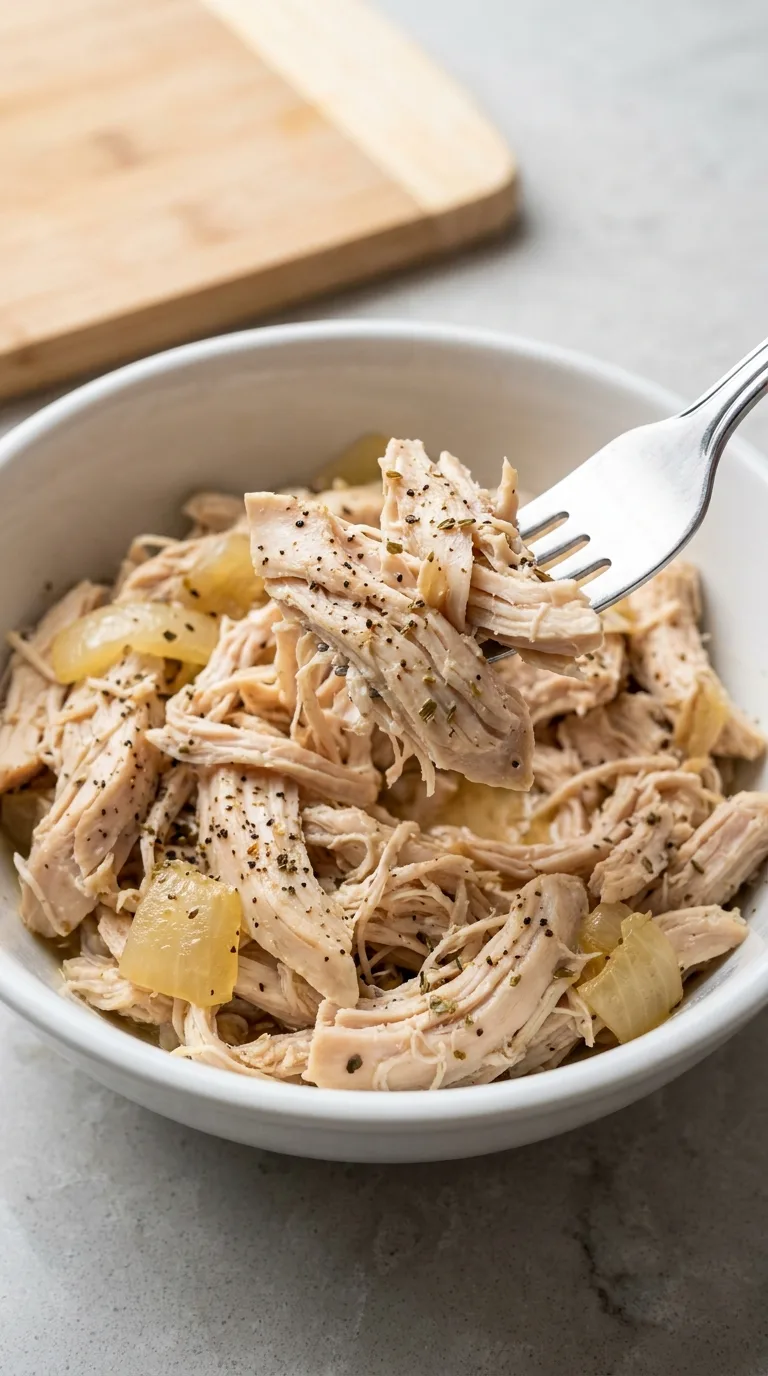
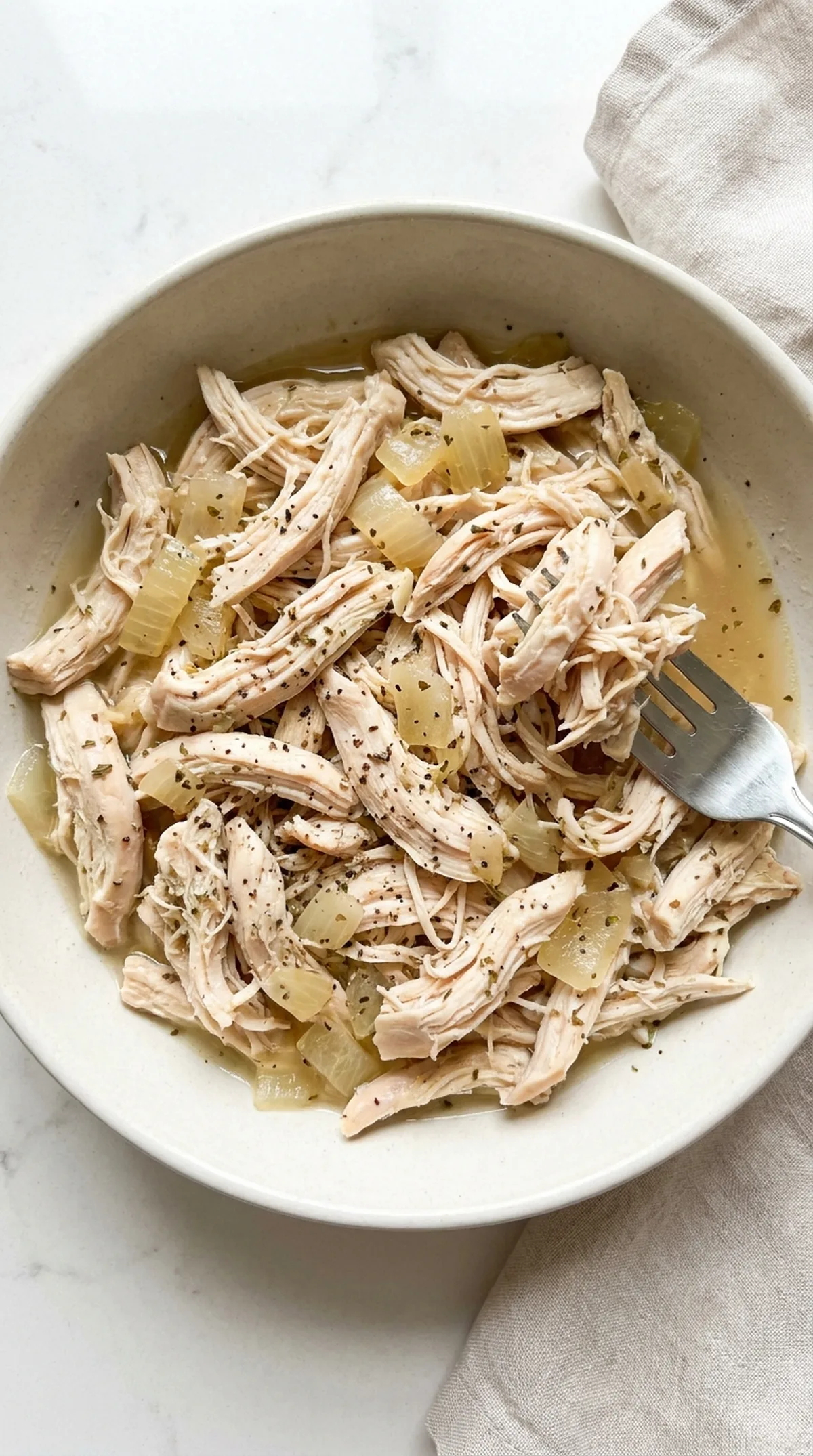
Shredded Chicken is a simple stovetop recipe for tender, juicy chicken that can be used in tacos, casseroles, soups, sandwiches, salads, pasta, and meal-prep bowls. The chicken cooks gently in seasoned broth, which helps it stay moist and gives it enough flavor to use in a wide variety of recipes.
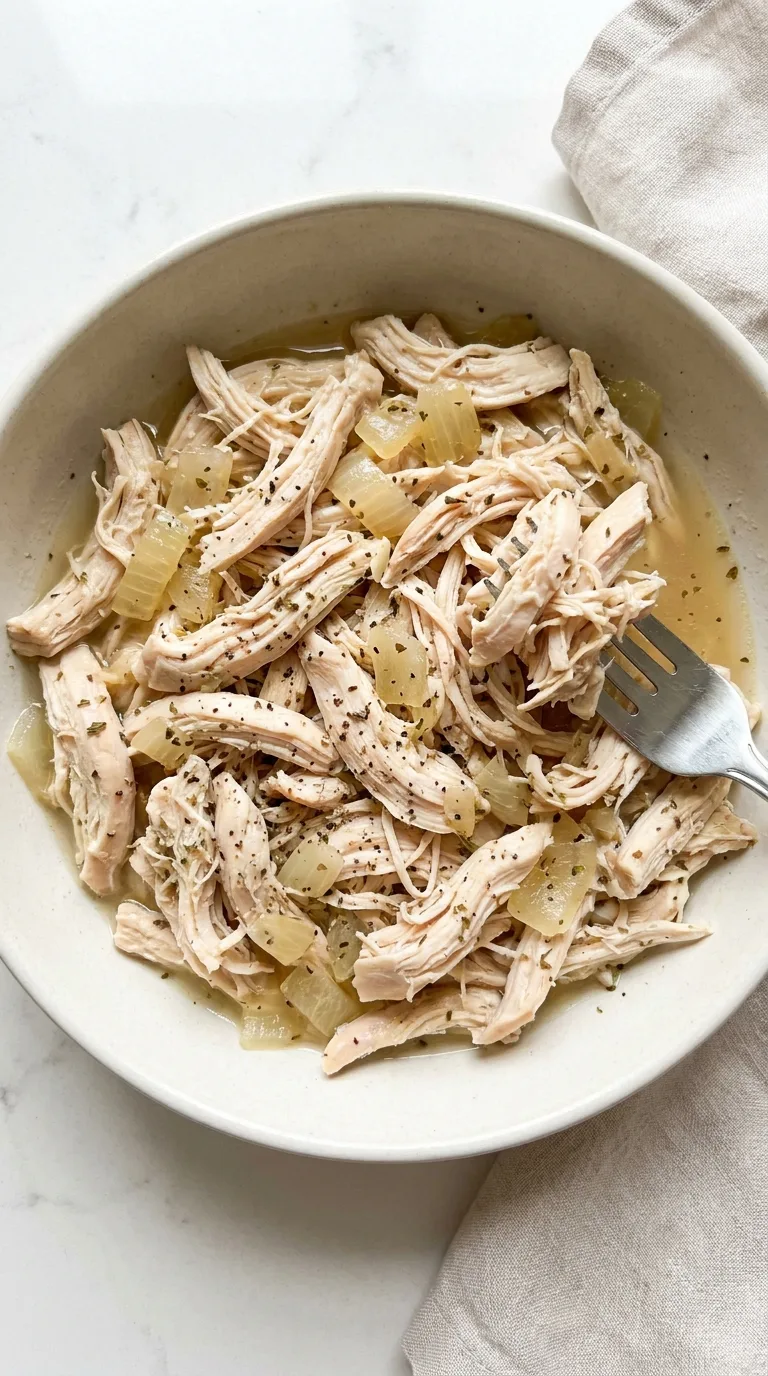
Boneless, skinless chicken breasts are simmered rather than aggressively boiled, then rested briefly before shredding. A little of the cooking liquid is mixed back into the meat at the end so the shredded chicken stays succulent instead of drying out during storage.
Why This Recipe Works
- Gentle simmering cooks the chicken evenly without the tough texture that can result from a hard boil.
- Chicken broth, garlic, onion, and simple seasonings give the meat a versatile savory flavor.
- Resting the chicken before shredding helps retain its juices.
- Shredding the meat while it is still warm makes it easier to pull into tender strands.
- Mixing some strained cooking liquid back into the chicken keeps it moist for serving and meal prep.
Equipment Needed
- 4- to 5-quart saucepan or Dutch oven with lid
- Tongs
- Cutting board or large shallow bowl
- 2 forks
- Fine-mesh strainer
- Instant-read meat thermometer
Ingredients List
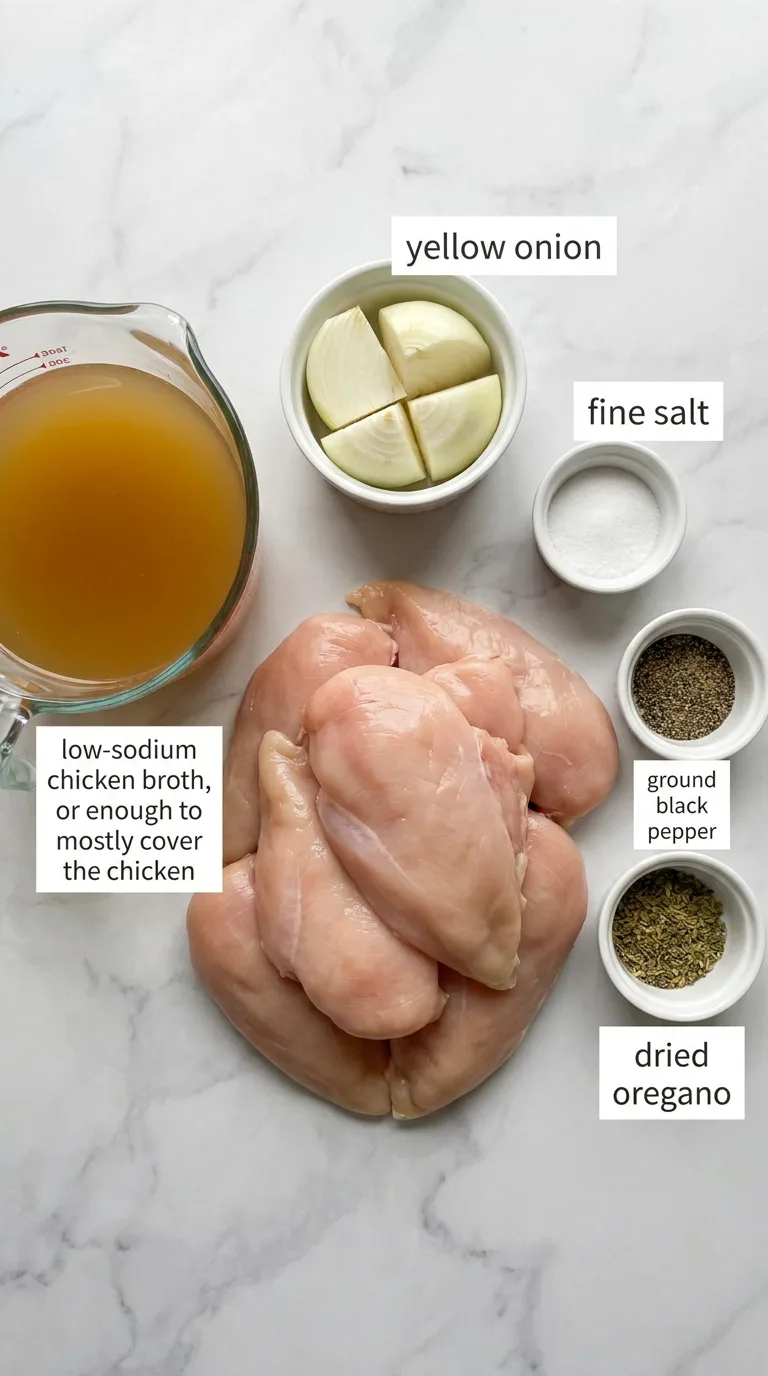
For the Shredded Chicken
- 2 pounds (910 g) boneless, skinless chicken breasts
- 4 cups (960 ml) low-sodium chicken broth, or enough to mostly cover the chicken
- 1 small yellow onion, about 5 ounces (140 g), quartered
- 3 garlic cloves, peeled and lightly crushed
- 1 teaspoon fine salt
- 1/2 teaspoon ground black pepper
- 1 teaspoon dried oregano
- 1 bay leaf
Ingredient Notes and Substitutions
- Chicken breasts: Boneless, skinless chicken breasts produce lean shredded chicken with a neutral flavor that works in many dishes. Boneless, skinless chicken thighs can be substituted in the same weight for richer, slightly more tender meat. Both should reach 165°F (74°C).
- Chicken broth: Low-sodium chicken broth seasons the meat as it cooks without making it overly salty. Water can be substituted, but the chicken will have a milder flavor and may need additional seasoning after shredding.
- Onion: Onion adds gentle savory sweetness to the cooking liquid. A large shallot can be substituted, although its flavor is slightly sweeter and more delicate.
- Garlic: Crushed garlic infuses the cooking liquid without leaving strong raw pieces in the shredded meat. About 1/2 teaspoon garlic powder can be substituted if fresh garlic is unavailable.
- Oregano: Dried oregano gives the chicken a mild herbal flavor while keeping it versatile. Italian seasoning can be substituted in the same quantity, though the finished chicken will have a more pronounced herb blend.
Step-by-Step Instructions
Step 1: Arrange the chicken
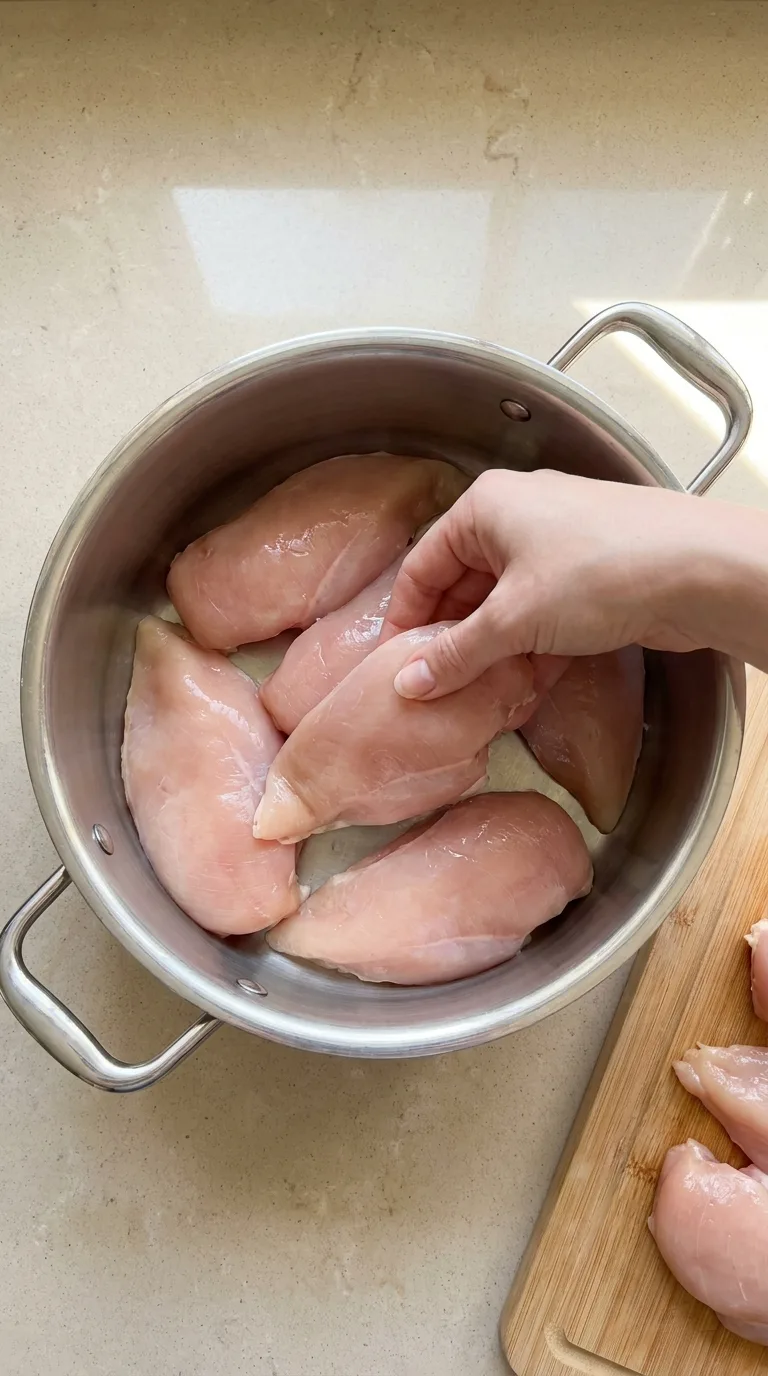
Place the chicken breasts in a single layer in a 4- to 5-quart saucepan or Dutch oven. If the breasts are unusually thick, cut them horizontally into thinner pieces so they cook more evenly.
Step 2: Add the aromatics
Add the quartered onion, crushed garlic, salt, black pepper, oregano, and bay leaf.
Step 3: Add the broth
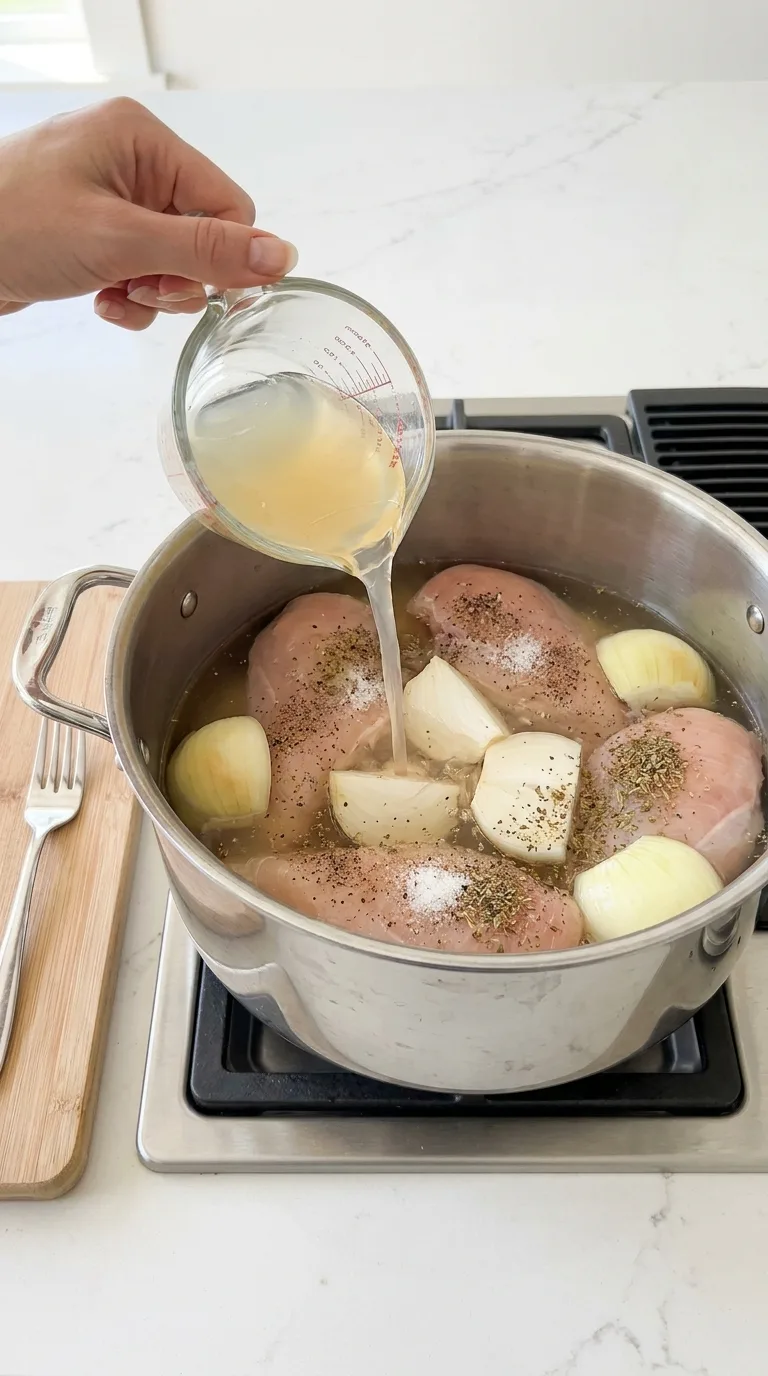
Pour in the chicken broth. The liquid should mostly cover the chicken. If necessary, add a small amount of water to bring the liquid level just over the thickest pieces.
Step 4: Bring to a gentle simmer
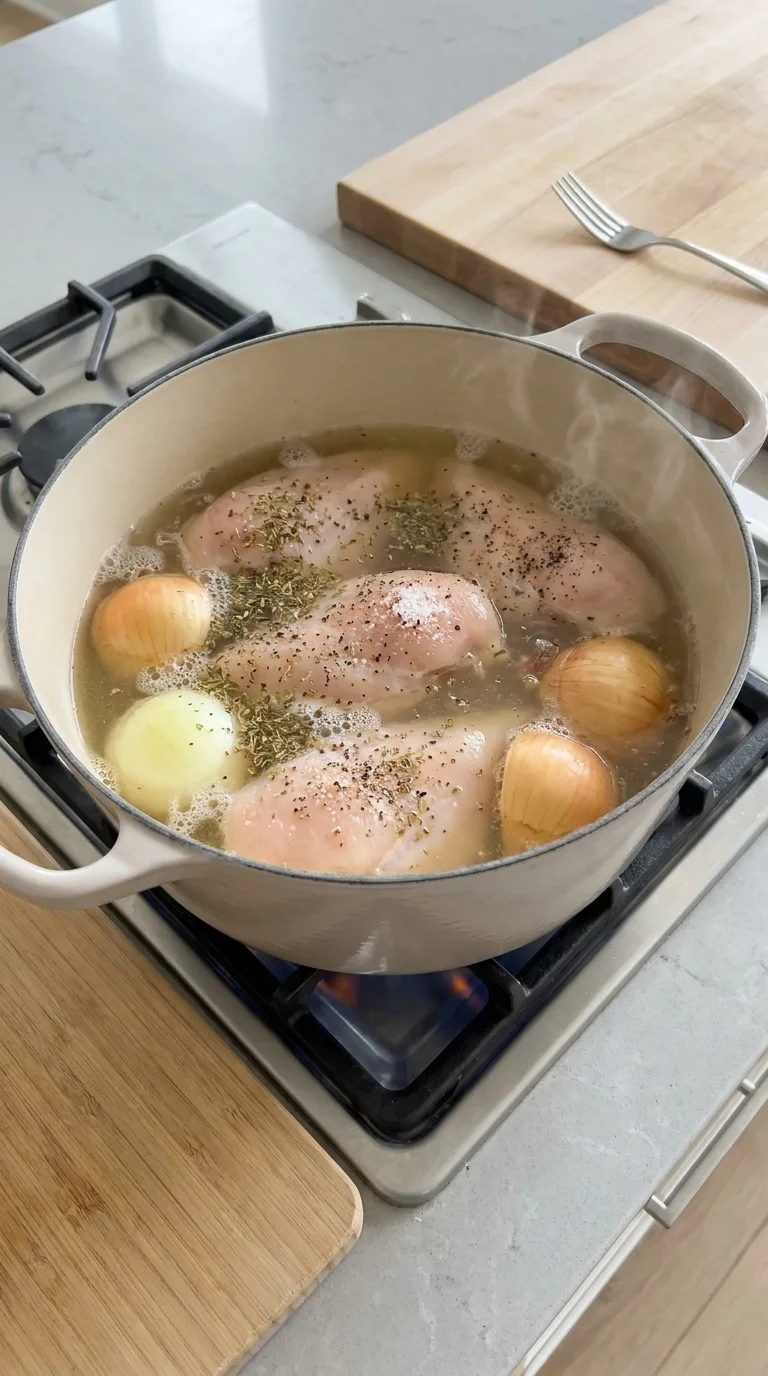
Place the pan over medium-high heat and bring the broth just to a simmer. Small bubbles should rise steadily around the edges, but the liquid should not boil aggressively.
Step 5: Cook gently
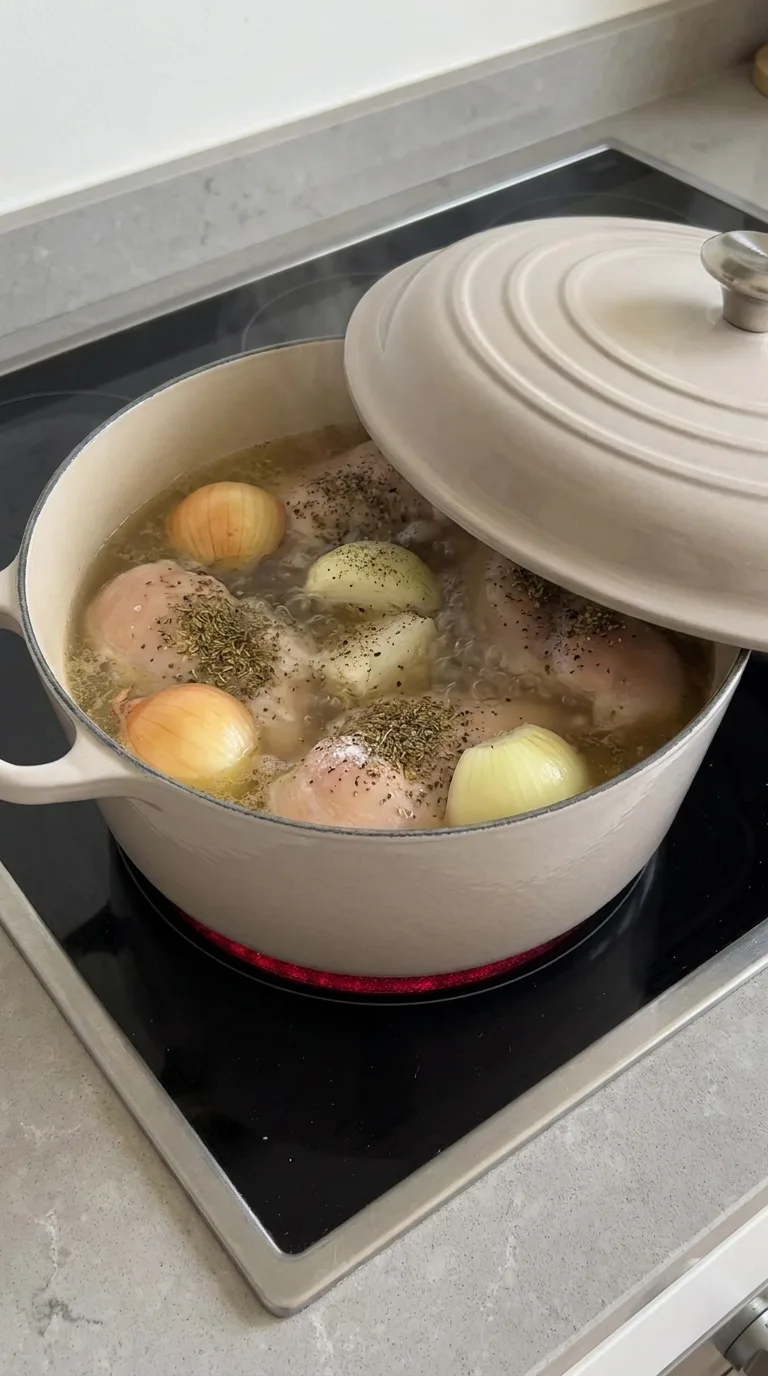
Reduce the heat to low or medium-low and partially cover the pan. Simmer gently for 12 to 18 minutes, depending on the thickness of the chicken.
Step 6: Check for doneness
Insert an instant-read thermometer into the thickest part of the largest chicken breast. The chicken is done when it reaches 165°F (74°C). The center should be opaque with no translucent areas.
Step 7: Remove the chicken
Transfer the cooked chicken to a clean cutting board or shallow bowl using tongs.
Step 8: Rest the meat
Let the chicken rest for 5 minutes before shredding. This short rest allows the juices to settle inside the meat.
Step 9: Reserve some cooking liquid
Strain about 1 cup (240 ml) of the cooking broth through a fine-mesh strainer. Discard the onion, garlic, and bay leaf.
Step 10: Shred the chicken
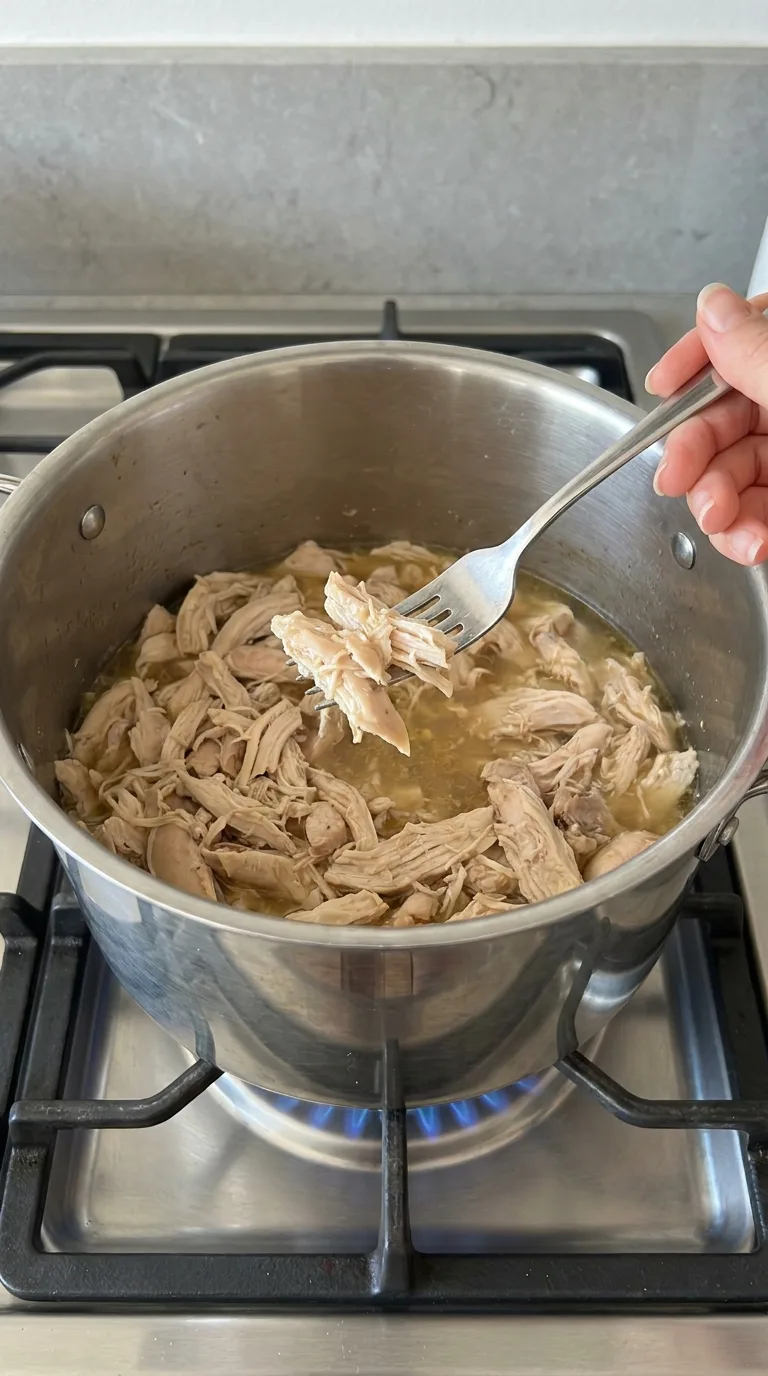
Use two forks to pull the warm chicken into thin strands. For chunkier shredded chicken, stop once the meat separates into bite-size pieces.
Step 11: Moisten the chicken
Add 1/4 cup (60 ml) of the reserved cooking liquid to the shredded chicken and toss gently. Add another tablespoon or two if the chicken still looks dry.
Step 12: Taste and serve
Taste and adjust the seasoning if necessary. Use immediately or cool promptly for storage.
Storage, Freezing, and Make-Ahead Instructions
- Cool Shredded Chicken promptly and transfer it to an airtight container within 2 hours of cooking. Add a few tablespoons of the reserved broth before refrigerating to help keep the meat moist.
- Refrigerate for up to 4 days. Reheat only the amount needed, adding a splash of broth or water if the chicken looks dry. Heat leftovers to 165°F (74°C).
- For freezing, divide the cooled shredded chicken into meal-size portions and add 1 to 2 tablespoons (15 to 30 ml) cooking liquid to each portion. Store in freezer-safe airtight containers or bags for up to 3 months.
- Thaw overnight in the refrigerator before reheating. The chicken can also be added directly from frozen to soups and other dishes that will cook thoroughly.
- For make-ahead preparation, cook and shred the chicken up to 4 days before it is needed and keep it refrigerated in an airtight container.
FAQ
Can I make Shredded Chicken with chicken thighs?
Yes. Replace the chicken breasts with 2 pounds (910 g) boneless, skinless chicken thighs. Cook them gently until they reach at least 165°F (74°C). Thigh meat will be slightly richer and more tender.
Why is my shredded chicken dry?
The chicken was likely overcooked or boiled too aggressively. Cook at a gentle simmer, stop once the thickest portion reaches 165°F (74°C), and mix some reserved cooking broth into the shredded meat.
Can I shred chicken in a mixer?
Yes. Place warm cooked chicken in the bowl of a stand mixer fitted with the paddle attachment and mix on low speed for several seconds. Stop as soon as the desired texture is reached to avoid turning it into very fine pieces.
Can I use frozen chicken breasts?
For the most even and predictable cooking, thaw chicken breasts completely in the refrigerator before using this recipe. Frozen pieces can cook unevenly, especially when they vary in thickness.
What can I make with shredded chicken?
Use it in tacos, enchiladas, chicken salad, quesadillas, casseroles, soups, wraps, sandwiches, pasta dishes, rice bowls, or Buffalo chicken dip. Its mild seasoning is designed to work with many different sauces and flavor profiles.
Ingredients
Method
- Arrange the Chicken: Place the chicken breasts in a single layer in a 4- to 5-quart saucepan or Dutch oven. If the breasts are unusually thick, cut them horizontally into thinner pieces so they cook more evenly.
- Add the Aromatics: Add the quartered onion, crushed garlic, salt, black pepper, oregano, and bay leaf. These aromatics will infuse the chicken with flavor as it cooks.
- Add the Broth: Pour in the chicken broth: The liquid should mostly cover the chicken. If necessary, add a small amount of water to bring the liquid level just over the thickest pieces.
- Bring to a Gentle Simmer: Place the pan over medium-high heat and bring the broth just to a simmer. Small bubbles should rise steadily around the edges, but the liquid should not boil aggressively to avoid toughening the chicken.
- Cook Gently: Reduce the heat to low or medium-low and partially cover the pan. Simmer gently for 12 to 18 minutes, depending on the thickness of the chicken. This gentle cooking ensures the chicken remains tender.
- Check for Doneness: Insert an instant-read thermometer into the thickest part of the largest chicken breast. The chicken is done when it reaches 165°F (74°C). The center should be opaque with no translucent areas.
- Remove the Chicken: Transfer the cooked chicken to a clean cutting board or shallow bowl using tongs. This helps prevent any cross-contamination from the raw chicken.
- Rest the Meat: Let the chicken rest for 5 minutes before shredding. This short rest allows the juices to settle inside the meat, keeping it moist.
- Reserve Some Cooking Liquid: Strain about 1 cup (240 ml) of the cooking broth through a fine-mesh strainer. Discard the onion, garlic, and bay leaf. This reserved liquid will help keep the shredded chicken moist.
- Shred the Chicken: Use two forks to pull the warm chicken into thin strands. For chunkier shredded chicken, stop once the meat separates into bite-size pieces.
- Moisten the Chicken: Add 1/4 cup (60 ml) of the reserved cooking liquid to the shredded chicken and toss gently. Add another tablespoon or two if the chicken still looks dry. This step is crucial for maintaining moisture.
- Taste and Serve