Camping Chicken Foil Packets are an easy outdoor dinner made with tender chicken breast, buttery potatoes, colorful bell peppers, zucchini, and savory garlic-herb seasonings. Everything cooks together inside tightly sealed foil packets, allowing the vegetables to soften while the chicken stays moist and flavorful. A little olive oil and butter add richness, while smoked paprika gives the dish a subtle smoky flavor that complements campfire cooking.
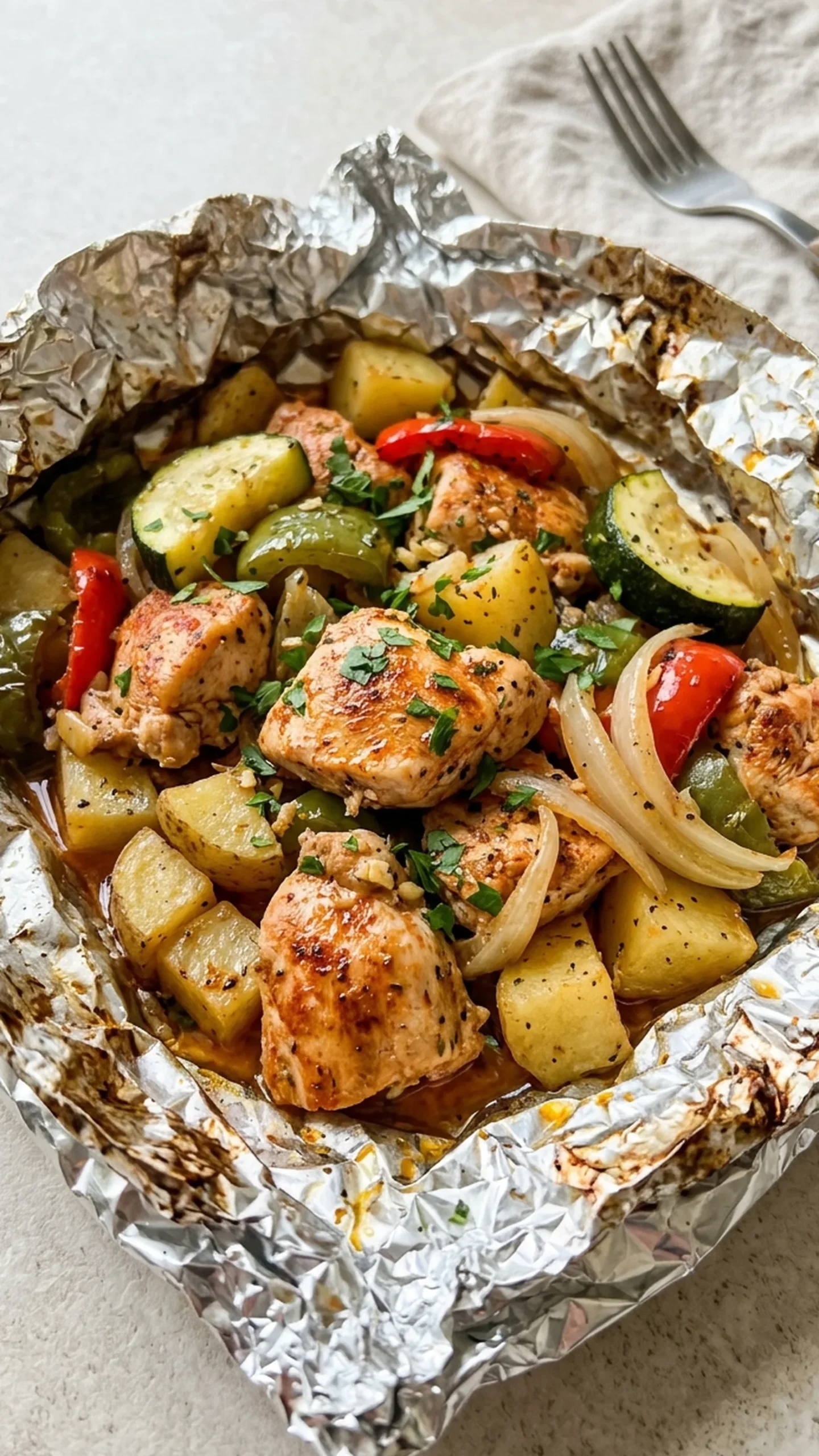
These foil packets are ideal for camping trips because they require minimal equipment and keep cleanup simple. You can chop the vegetables and prepare the seasoning ahead of time, then assemble the packets when you're ready to cook. Whether you're cooking over campfire coals or using a grill, this recipe makes four satisfying portions with very little hands-on cooking.
Why This Recipe Works
Small chicken pieces cook more evenly: Cutting the chicken into uniform pieces helps it cook at a similar rate to the potatoes and other vegetables.
Foil packets lock in moisture: The tightly folded foil traps steam, keeping the chicken tender while the vegetables soften.
Quick-cooking vegetables add flavor and color: Bell peppers, zucchini, and onions become tender during cooking and contribute natural sweetness.
A garlic-herb seasoning blend flavors every bite. Olive oil helps distribute the spices evenly over the chicken and vegetables.
Individual packets simplify serving: Each person receives a complete portion, and the sealed packets reduce the number of dishes needed at the campsite.
Equipment Needed
- Heavy-duty aluminum foil, enough for four double-layered packets
- Large mixing bowl
- Sharp chef's knife
- Cutting board
- Measuring spoons
- Long-handled campfire tongs
- Heat-resistant gloves
- Instant-read meat thermometer
- Campfire grill grate suitable for cooking over coals
- Heat-safe tray or baking sheet for transferring packets
Ingredients List
For the Chicken and Vegetables
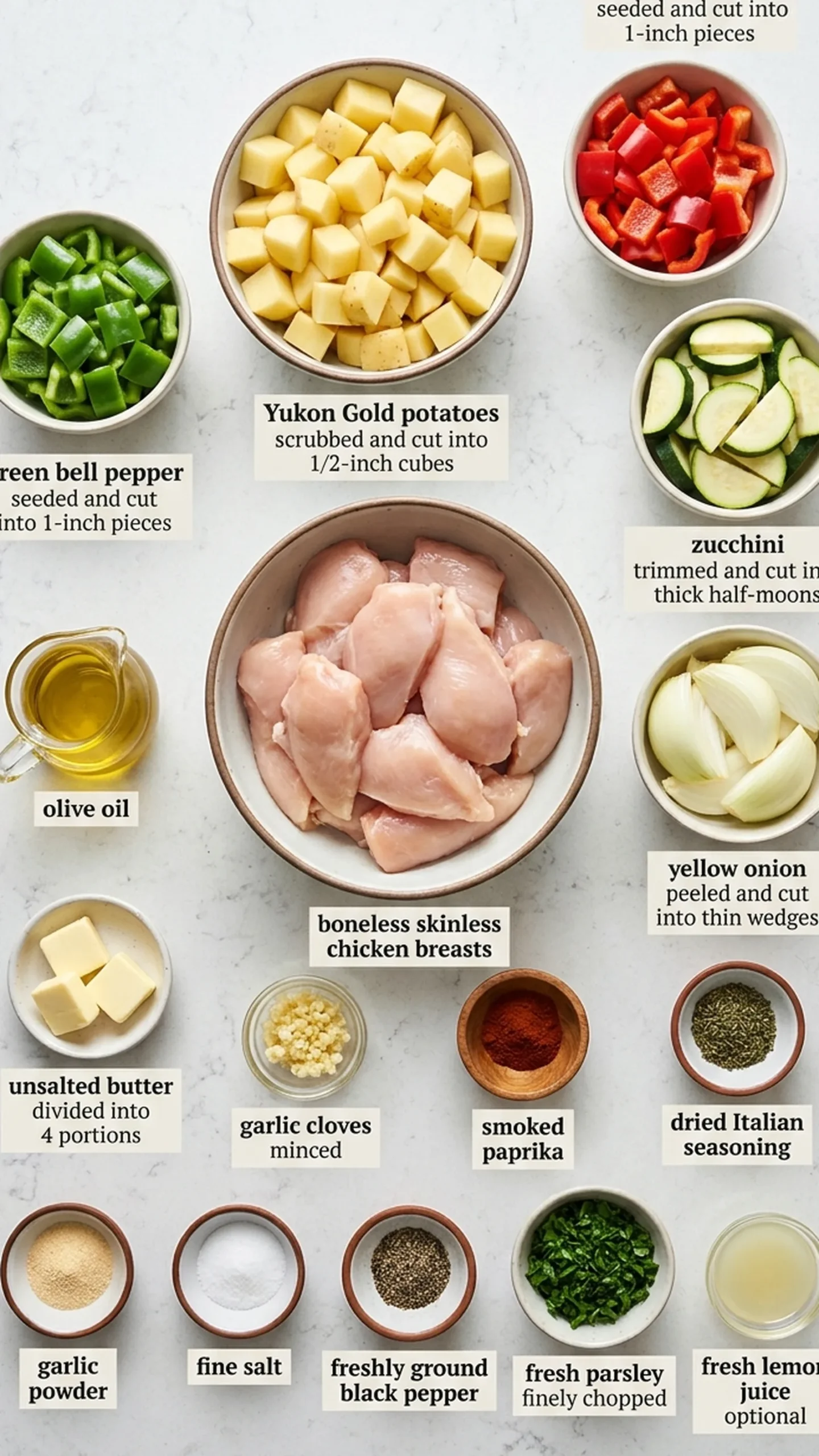
- 1 1/2 pounds (680 g) boneless, skinless chicken breasts, cut into 1-inch (2.5 cm) pieces
- 1 pound (450 g) Yukon Gold potatoes, scrubbed and cut into 1/2-inch (1.3 cm) cubes
- 1 medium red bell pepper (about 150 g), seeded and cut into 1-inch (2.5 cm) pieces
- 1 medium green bell pepper (about 150 g), seeded and cut into 1-inch (2.5 cm) pieces
- 1 medium zucchini (about 200 g), trimmed and cut into thick half-moons
- 1 small yellow onion (about 110 g), peeled and cut into thin wedges
- 3 tablespoons (45 ml) olive oil
- 2 tablespoons (28 g) unsalted butter, divided into 4 portions
For the Garlic-Herb Seasoning
- 3 garlic cloves (about 9 g), minced
- 1 teaspoon (2 g) smoked paprika
- 1 teaspoon (1 g) dried Italian seasoning
- 1/2 teaspoon (1.5 g) garlic powder
- 3/4 teaspoon (4.5 g) fine salt
- 1/2 teaspoon (1 g) freshly ground black pepper
Optional Garnish
- 2 tablespoons (8 g) fresh parsley, finely chopped, optional, for serving
- 1 tablespoon (15 ml) fresh lemon juice, optional, for serving
Ingredient Notes and Substitutions
1.
Chicken Breasts: Boneless, skinless chicken breasts are a lean protein that works well in foil packets when cut into even pieces. The sealed cooking environment helps retain moisture. Boneless, skinless chicken thighs can replace the chicken breasts in the same weight. Thighs contain more fat and tend to remain juicier during longer cooking, making them forgiving over variable campfire heat. Whichever cut you choose, cook the chicken to a safe internal temperature of 165°F (74°C).
2.
Yukon Gold Potatoes: Yukon Gold potatoes have a creamy interior and thin skin, making them suitable for foil packet cooking. Red potatoes are a good substitute and hold their shape well. Russet potatoes can also be used, although they may become more crumbly as they cook. Keep the potato cubes around 1/2 inch thick so they soften in a reasonable amount of time.
3.
Bell Peppers: Red and green bell peppers add color, mild sweetness, and a slightly earthy flavor. Yellow or orange bell peppers can replace either variety without significantly changing the cooking time. Yellow and orange peppers generally taste sweeter than green peppers. Cut them into larger pieces than the potatoes because they soften more quickly.
4.
Zucchini: Zucchini adds moisture and a tender texture to the packets. Its mild flavor absorbs the garlic, herbs, and seasonings. Yellow summer squash is an easy substitute in the same quantity. It cooks at a similar rate and has a comparable texture. Avoid slicing either squash too thinly because it may become overly soft before the potatoes finish cooking.
5.
Smoked Paprika and Italian Seasoning: Smoked paprika adds a mild smoky flavor, while Italian seasoning contributes herbal notes from ingredients such as oregano, basil, and thyme. Regular sweet paprika can replace smoked paprika, although the finished dish will taste less smoky. If you don't have Italian seasoning, use a similar amount of dried oregano mixed with a little dried thyme. The flavor will be slightly more herb-forward.
Step-by-Step Instructions
1. Preheat the Oven and Prepare the Baking Sheet
Preheat your oven to 400°F (200°C) and position an oven rack in the center.
Set a large rimmed baking sheet on the kitchen counter to hold the foil packets.
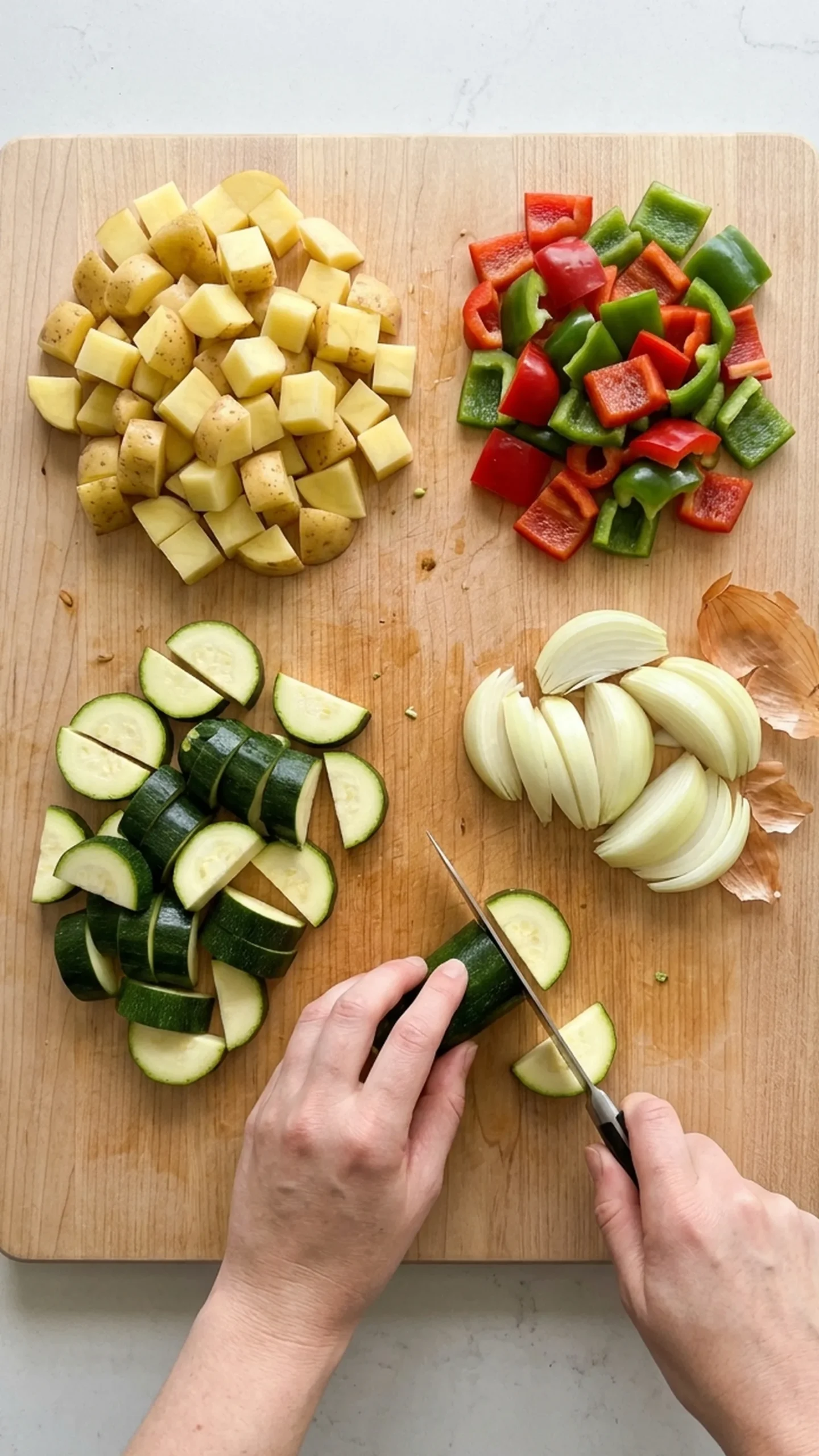
2. Prepare the Potatoes and Vegetables
Scrub the Yukon Gold potatoes and cut them into 1/2-inch (1.3 cm) cubes.
Cut the bell peppers into 1-inch (2.5 cm) pieces, the zucchini into thick half-moons, and the onion into thin wedges.
Place the prepared potatoes and vegetables in a large mixing bowl.
Keep the potato pieces smaller than the other vegetables so they become tender at approximately the same time.
3. Prepare the Chicken
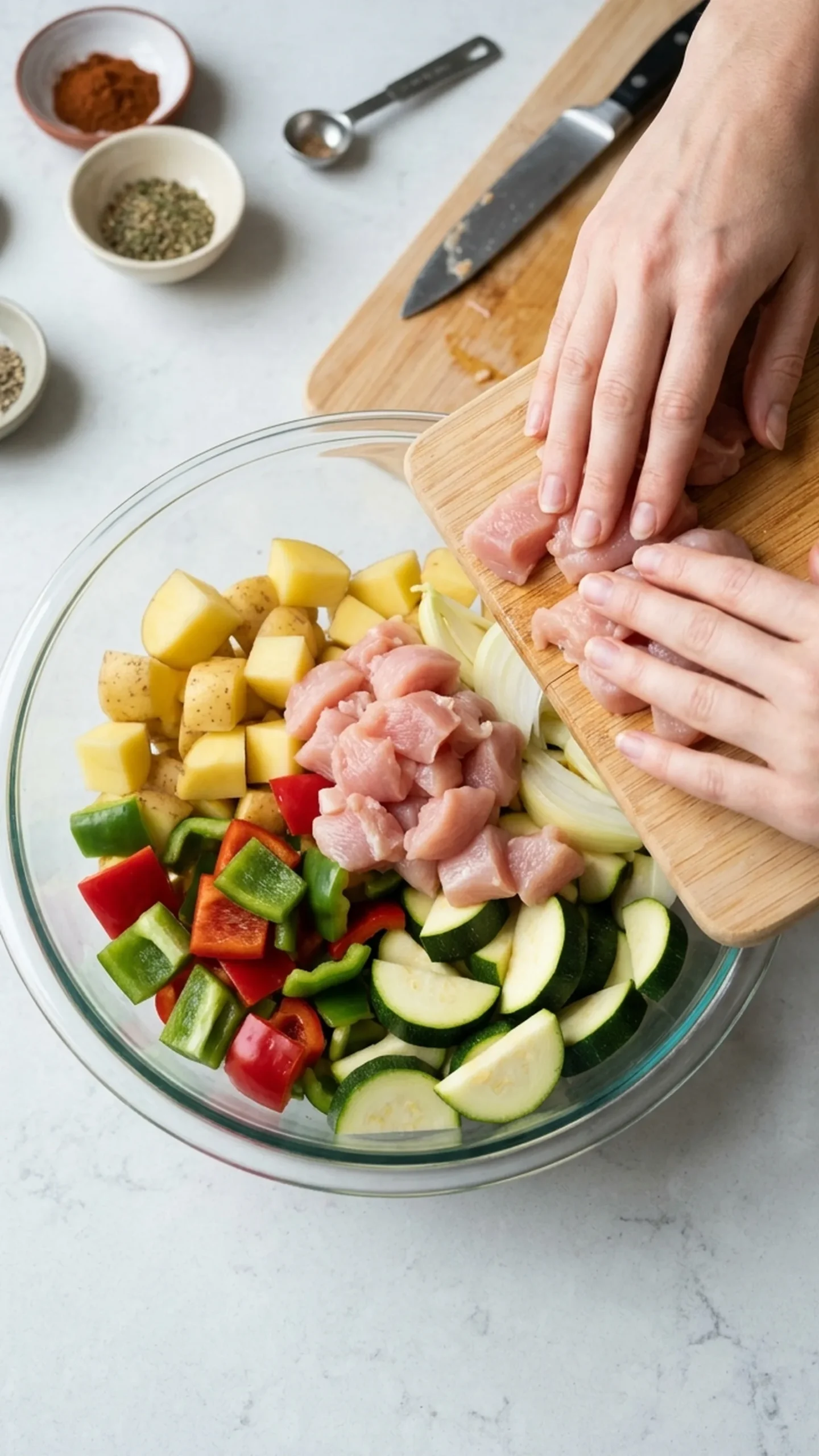
On a separate cutting board, cut the boneless, skinless chicken breasts into uniform 1-inch (2.5 cm) pieces.
Pat the chicken dry with paper towels.
Keep the raw chicken separate from the vegetables until you're ready to combine everything.
Wash your hands and clean any surfaces or utensils that have touched raw chicken before handling other ingredients.
Keep the chicken refrigerated or in a properly chilled cooler until assembly.
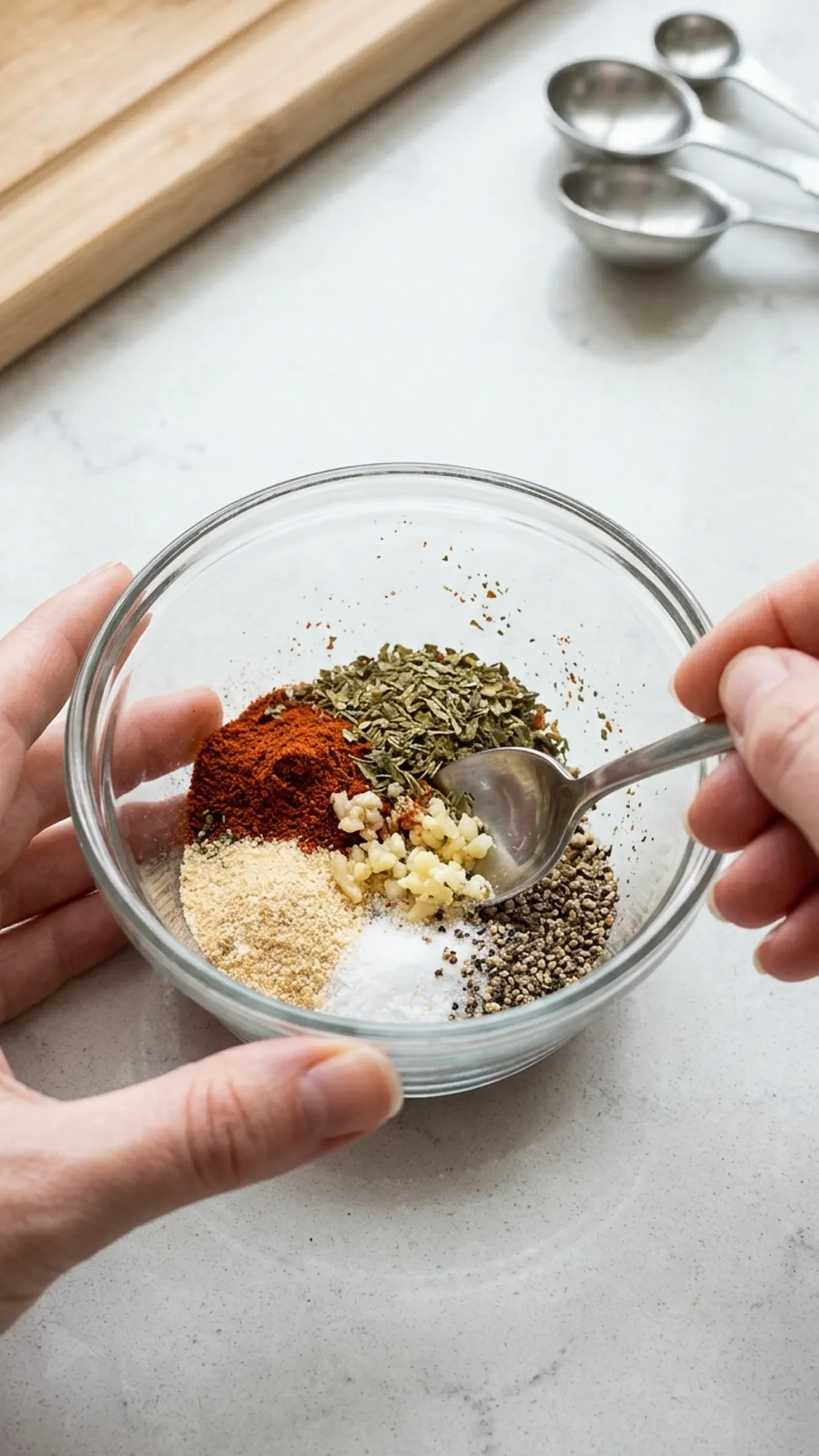
4. Mix the Garlic-Herb Seasoning
In a small bowl, combine the minced garlic, smoked paprika, dried Italian seasoning, garlic powder, fine salt, and black pepper.
Stir until the ingredients are evenly mixed.
The seasoning should have a consistent color without large clumps of spices.
This mixture will flavor both the chicken and vegetables.
5. Season the Chicken and Vegetables
Add the chicken pieces to the bowl of prepared vegetables.
Drizzle with the 3 tablespoons (45 ml) olive oil.
Sprinkle the garlic-herb seasoning mixture over the ingredients.
Toss thoroughly until the chicken, potatoes, and vegetables are evenly coated.
The mixture should look lightly glossy, with the spices distributed across the surfaces.
Avoid adding extra liquid because the vegetables will release moisture as they cook.
6. Prepare the Foil Sheets
Tear eight sheets of heavy-duty aluminum foil, each approximately 18 inches (46 cm) long.
Arrange them into four double-layered sets.
Place each set on a flat, clean surface.
Using two layers helps reduce the risk of tearing when packets are moved over hot coals.
7. Assemble the Chicken Foil Packets
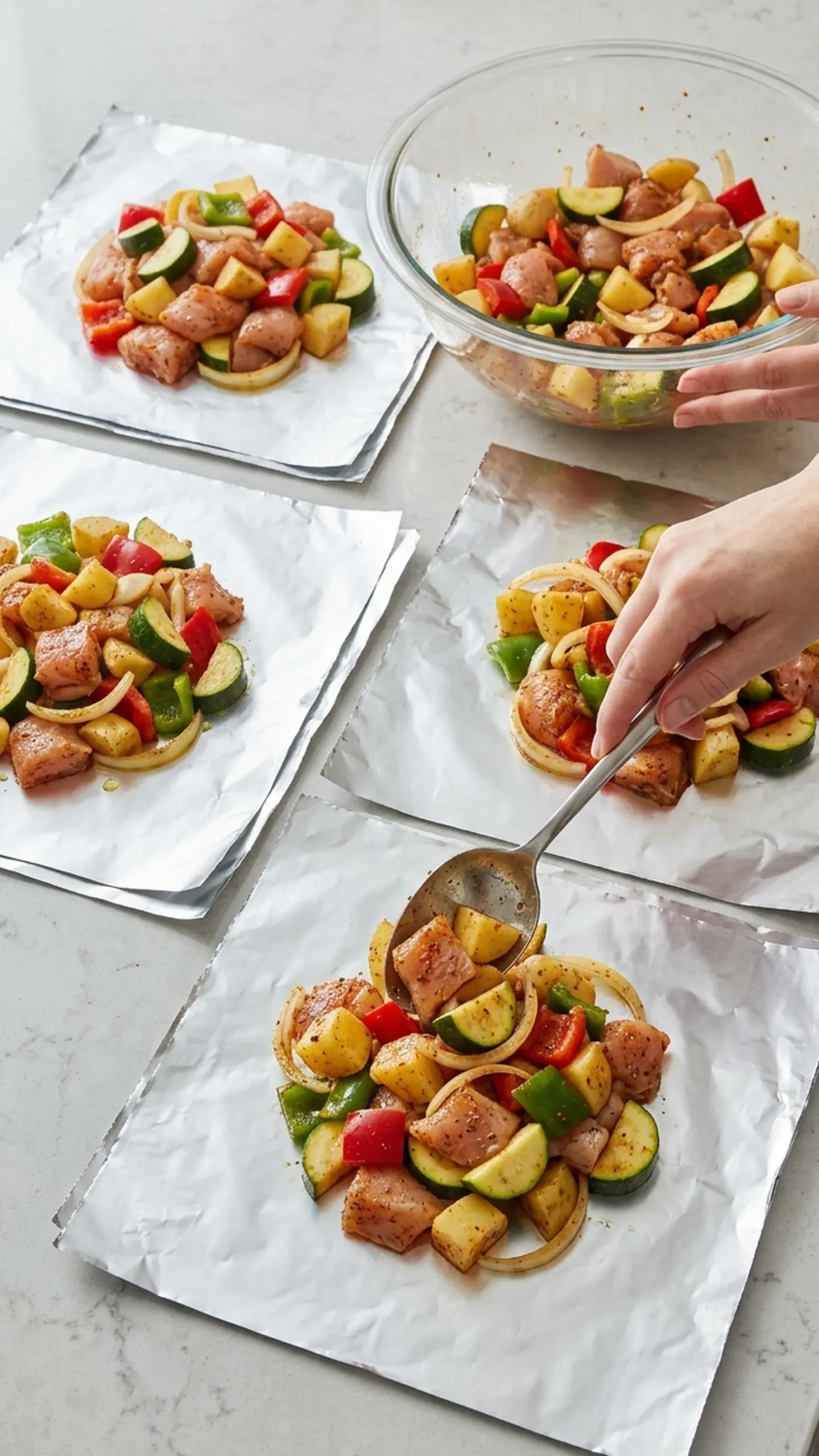
Divide the seasoned chicken and vegetable mixture evenly among the four double-layered foil sheets.
Distribute the chicken pieces throughout each portion rather than placing them in one large pile.
Place 1/2 tablespoon (7 g) of unsalted butter over the ingredients in each packet.
Leave enough foil around the edges to fold and seal the packets securely.
Avoid stacking the ingredients too deeply because thick packets may cook unevenly.
8. Seal the Packets
Bring the long sides of each foil sheet together above the ingredients.
Fold the edges down several times to create a tight seam.
Fold and crimp the short ends securely.
Leave a small amount of space above the food to allow steam to circulate.
The packets should be sealed well enough to retain moisture but should not be packed tightly around the chicken.
9. Bake the Foil Packets
Arrange the sealed foil packets in a single layer on the rimmed baking sheet.
Bake at 400°F (200°C) for 30 to 40 minutes until the chicken reaches 165°F (74°C) and the potatoes are fork-tender.
The packets should become hot and slightly puffed as steam develops inside.
10. Check the Chicken and Potatoes
After approximately 30 minutes, carefully move one packet to a heat-safe surface.
Wearing heat-resistant gloves, open the foil away from your face to avoid escaping steam.
Use an instant-read thermometer to check several of the largest chicken pieces.
The chicken must reach 165°F (74°C) in the center.
Check that the potatoes are fork-tender, with no firm or crunchy center.
If the chicken or potatoes need more time, reseal the packet and return it to the heat for another 5 to 10 minutes.
Check each packet before serving because heat distribution over campfire coals can vary.
11. Rest the Packets
Once the chicken is fully cooked and the potatoes are tender, remove the baking sheet with the packets from the oven.
Place them on a heat-safe tray or baking sheet.
Let them rest for approximately 5 minutes before opening completely.
The short rest allows the steam to settle slightly and makes serving easier.
Be careful when opening the packets, as the trapped steam can cause burns.
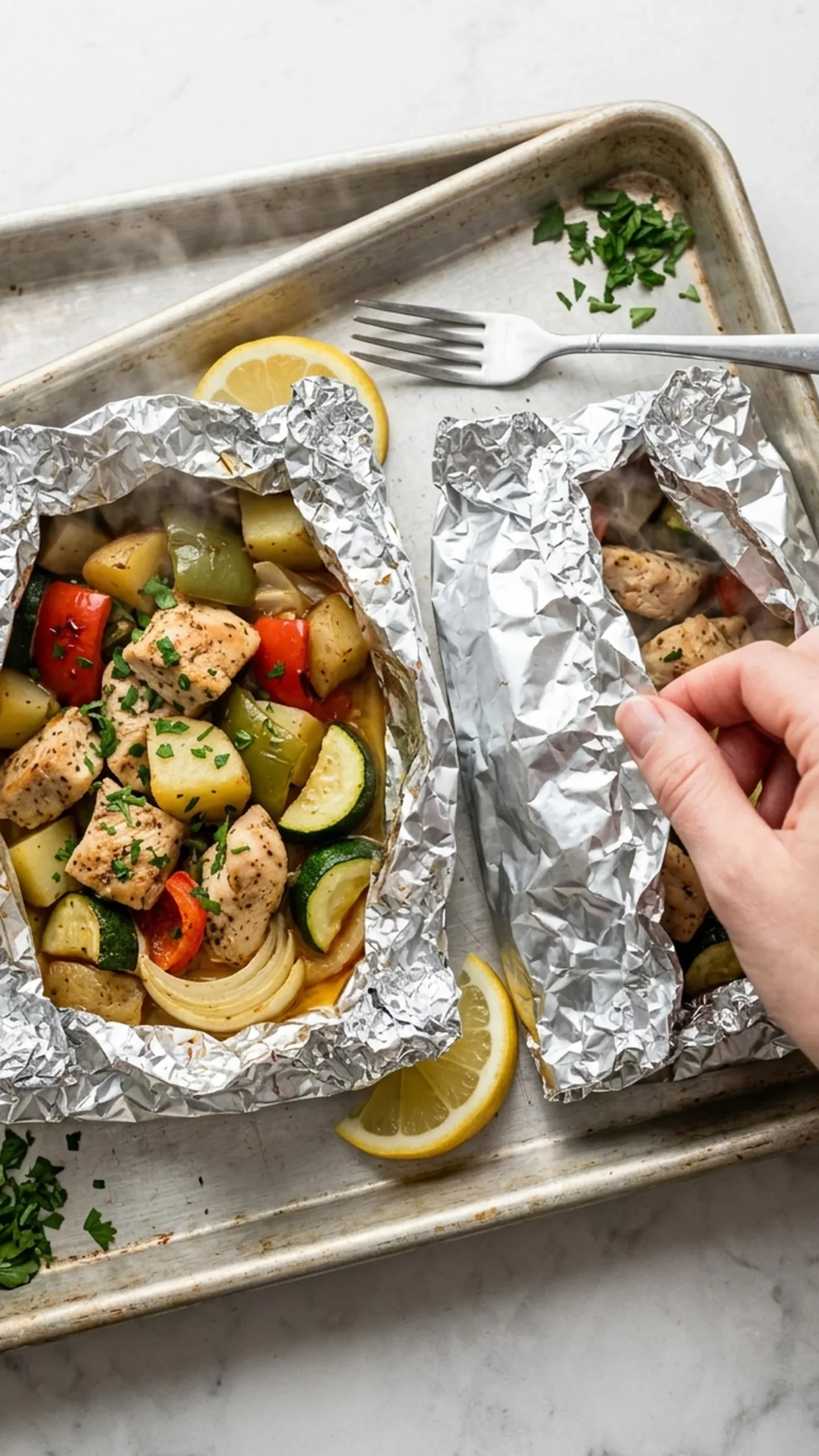
12. Garnish and Serve
Carefully open each packet and check that the ingredients are evenly cooked.
If desired, sprinkle the optional fresh parsley over the chicken and vegetables.
Drizzle with the optional fresh lemon juice for a brighter flavor.
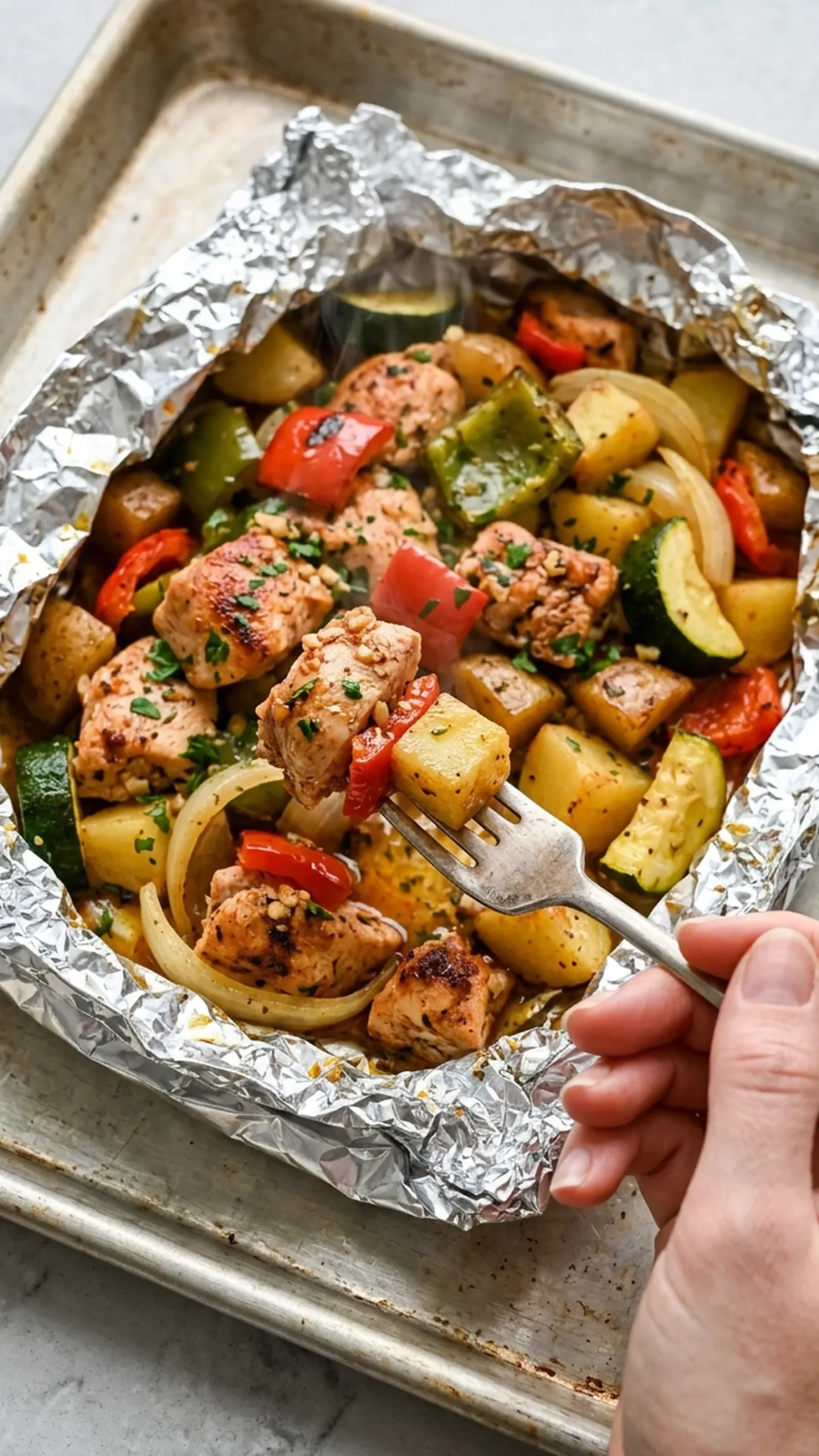
Serve directly from the foil packets on heat-safe plates, or transfer the contents to bowls.
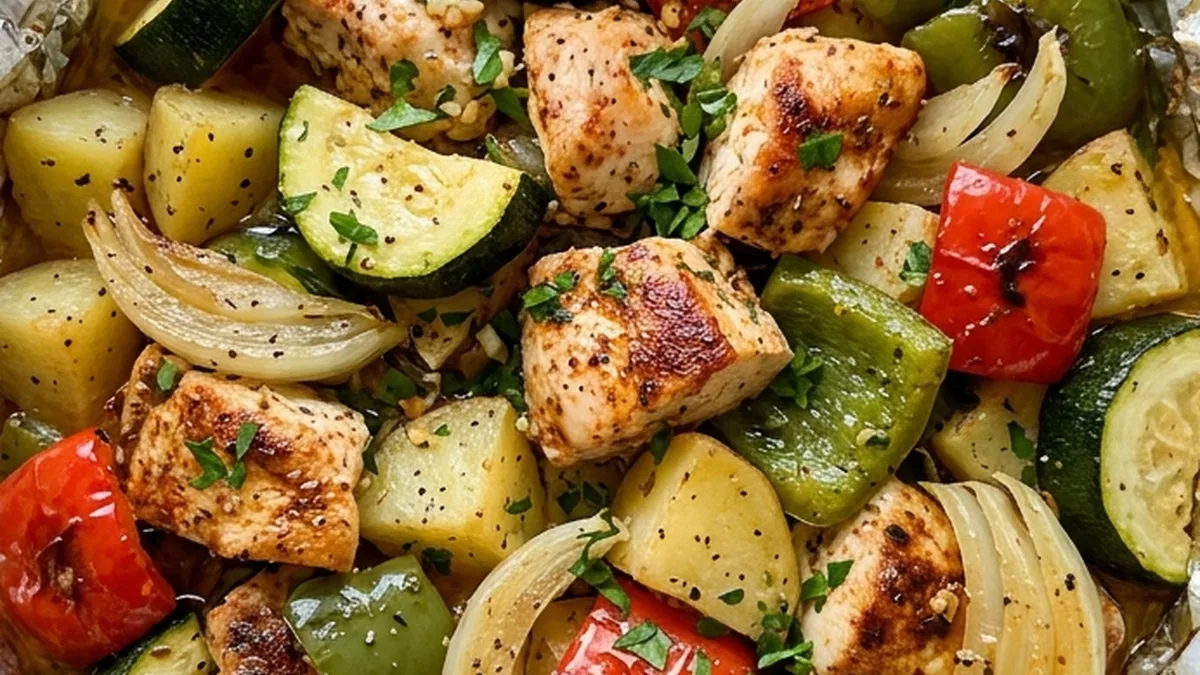
The finished dish should have juicy chicken, tender potatoes, softened vegetables, and a light coating of buttery garlic-herb juices.
Serve immediately while hot.
Storage, Freezing, and Make-Ahead Instructions
Refrigerator Storage: Allow the cooked chicken and vegetables to cool slightly after serving. Transfer leftovers from the foil packets into shallow airtight containers. Refrigerate within 2 hours of cooking, or within 1 hour if the outdoor temperature is above 90°F (32°C). Store at 40°F (4°C) or below for up to 3 to 4 days. Keep the chicken and vegetables together to help preserve their flavor and moisture.
Freezing Instructions: Cooked Camping Chicken Foil Packets can be frozen, although the potatoes and zucchini may become softer after thawing. Allow the cooked food to cool quickly in shallow containers before freezing. Transfer portions to freezer-safe airtight containers or freezer bags. Remove as much excess air as possible. Freeze for up to 2 months for the best quality. For a better texture after freezing, consider preparing fresh zucchini when reheating the meal.
Thawing Instructions: Transfer frozen portions to the refrigerator and allow them to thaw overnight. Keep the thawed chicken and vegetables refrigerated until reheating. Do not thaw cooked chicken at room temperature.
Reheating Instructions: Preheat the oven to 350°F (175°C). Place the refrigerated chicken and vegetables in an oven-safe baking dish. Cover loosely with aluminum foil to retain moisture. Heat for approximately 15 to 20 minutes, or until the center reaches 165°F (74°C). If the mixture appears dry, add 1 to 2 tablespoons (15 to 30 ml) water before covering. For individual portions, microwave in a microwave-safe container until thoroughly heated, stirring halfway through when possible. Never place aluminum foil in the microwave.
Make-Ahead Instructions: You can prepare most of the ingredients before leaving for your camping trip. Cut the chicken into pieces up to 1 day ahead and store it in a tightly sealed, leakproof container in the refrigerator. Chop the bell peppers, zucchini, and onion up to 1 day in advance and refrigerate them separately. Mix the dry seasonings ahead of time and keep them in a small airtight container. For the best texture, cut the potatoes shortly before cooking. If necessary, cut them several hours ahead and keep them submerged in cold water in a covered container in the refrigerator or a properly chilled cooler. Drain and dry the potatoes before adding them to the seasoning mixture. Keep the raw chicken at 40°F (4°C) or below in a cooler, separated from vegetables and ready-to-eat foods. Assemble the packets shortly before cooking rather than storing fully assembled raw chicken packets for an extended period.
FAQ
Can I make Camping Chicken Foil Packets ahead of time?
Yes. You can cut the chicken, chop the vegetables, and prepare the seasonings up to 1 day ahead. Store the raw chicken separately from the vegetables in a refrigerator or cooler at 40°F (4°C) or below. Assemble the foil packets shortly before cooking to keep the ingredients fresh and reduce the risk of cross-contamination.
Can I bake these chicken foil packets in the oven?
Yes. Preheat the oven to 400°F (200°C). Place the sealed foil packets on a rimmed baking sheet and bake for approximately 30 to 40 minutes. Check that the potatoes are fork-tender and the thickest chicken pieces reach 165°F (74°C). Cooking time may vary depending on the size of the ingredients and how tightly the packets are filled.
Can I use chicken thighs instead of chicken breasts?
Yes. Boneless, skinless chicken thighs work well and often stay juicier during foil packet cooking. Cut them into evenly sized 1-inch pieces and use the same weight as the chicken breasts. Always confirm that the chicken reaches 165°F (74°C) before serving.
How do I prevent the potatoes from staying hard?
Cut the potatoes into uniform 1/2-inch cubes and avoid overfilling the packets. Keep the foil tightly sealed so steam can soften the potatoes. If the chicken reaches 165°F (74°C) before the potatoes are tender, remove the chicken to a clean covered dish and return the vegetables to the heat until the potatoes finish cooking.
What other vegetables can I add to chicken foil packets?
Broccoli florets, sliced mushrooms, asparagus, and green beans are suitable additions. Choose vegetables that can cook within a similar time frame, and cut firmer vegetables into smaller pieces. Replace some of the original vegetables rather than adding too much extra volume, which could make the packets cook unevenly.
Craving similar flavors from the kitchen? Don’t miss Fragrant Butter Chicken Biryani, Tzatziki Chicken Veggie Naan Pizza, Chicken Spaghetti Recipe with Rotel, and Chicken Shawarma Bowl.

Camping Chicken Foil Packets
Ingredients
Method
- Preheat your oven to 400°F (200°C) and position an oven rack in the center. Set a large rimmed baking sheet on the kitchen counter to hold the foil packets.
- Scrub the Yukon Gold potatoes and cut them into 1/2-inch (1.3 cm) cubes. Cut the bell peppers into 1-inch (2.5 cm) pieces, the zucchini into thick half-moons, and the onion into thin wedges. Place the prepared potatoes and vegetables in a large mixing bowl. Keep the potato pieces smaller than the other vegetables so they become tender at approximately the same time.
- On a separate cutting board, cut the boneless, skinless chicken breasts into uniform 1-inch (2.5 cm) pieces. Pat the chicken dry with paper towels. Keep the raw chicken separate from the vegetables until you're ready to combine everything. Wash your hands and clean any surfaces or utensils that have touched raw chicken before handling other ingredients. Keep the chicken refrigerated or in a properly chilled cooler until assembly.
- In a small bowl, combine the minced garlic, smoked paprika, dried Italian seasoning, garlic powder, fine salt, and black pepper. Stir until the ingredients are evenly mixed. The seasoning should have a consistent color without large clumps of spices. This mixture will flavor both the chicken and vegetables.
- Add the chicken pieces to the bowl of prepared vegetables. Drizzle with the 3 tablespoons (45 ml) olive oil. Sprinkle the garlic-herb seasoning mixture over the ingredients. Toss thoroughly until the chicken, potatoes, and vegetables are evenly coated. The mixture should look lightly glossy, with the spices distributed across the surfaces. Avoid adding extra liquid because the vegetables will release moisture as they cook.
- Tear eight sheets of heavy-duty aluminum foil, each approximately 18 inches (46 cm) long. Arrange them into four double-layered sets. Place each set on a flat, clean surface. Using two layers helps reduce the risk of tearing when packets are moved over hot coals.
- Divide the seasoned chicken and vegetable mixture evenly among the four double-layered foil sheets. Distribute the chicken pieces throughout each portion rather than placing them in one large pile. Place 1/2 tablespoon (7 g) of unsalted butter over the ingredients in each packet. Leave enough foil around the edges to fold and seal the packets securely. Avoid stacking the ingredients too deeply because thick packets may cook unevenly.
- Bring the long sides of each foil sheet together above the ingredients. Fold the edges down several times to create a tight seam. Fold and crimp the short ends securely. Leave a small amount of space above the food to allow steam to circulate. The packets should be sealed well enough to retain moisture but should not be packed tightly around the chicken.
- Arrange the sealed foil packets in a single layer on the rimmed baking sheet. Bake at 400°F (200°C) for 30 to 40 minutes until the chicken reaches 165°F (74°C) and the potatoes are fork-tender. The packets should become hot and slightly puffed as steam develops inside.
- After approximately 30 minutes, carefully move one packet to a heat-safe surface. Wearing heat-resistant gloves, open the foil away from your face to avoid escaping steam. Use an instant-read thermometer to check several of the largest chicken pieces. The chicken must reach 165°F (74°C) in the center. Check that the potatoes are fork-tender, with no firm or crunchy center. If the chicken or potatoes need more time, reseal the packet and return it to the heat for another 5 to 10 minutes. Check each packet before serving because heat distribution over campfire coals can vary.
- Once the chicken is fully cooked and the potatoes are tender, remove the baking sheet with the packets from the oven. Place them on a heat-safe tray or baking sheet. Let them rest for approximately 5 minutes before opening completely. The short rest allows the steam to settle slightly and makes serving easier. Be careful when opening the packets, as the trapped steam can cause burns.
- Carefully open each packet and check that the ingredients are evenly cooked. If desired, sprinkle the optional fresh parsley over the chicken and vegetables. Drizzle with the optional fresh lemon juice for a brighter flavor. Serve directly from the foil packets on heat-safe plates, or transfer the contents to bowls. The finished dish should have juicy chicken, tender potatoes, softened vegetables, and a light coating of buttery garlic-herb juices. Serve immediately while hot.