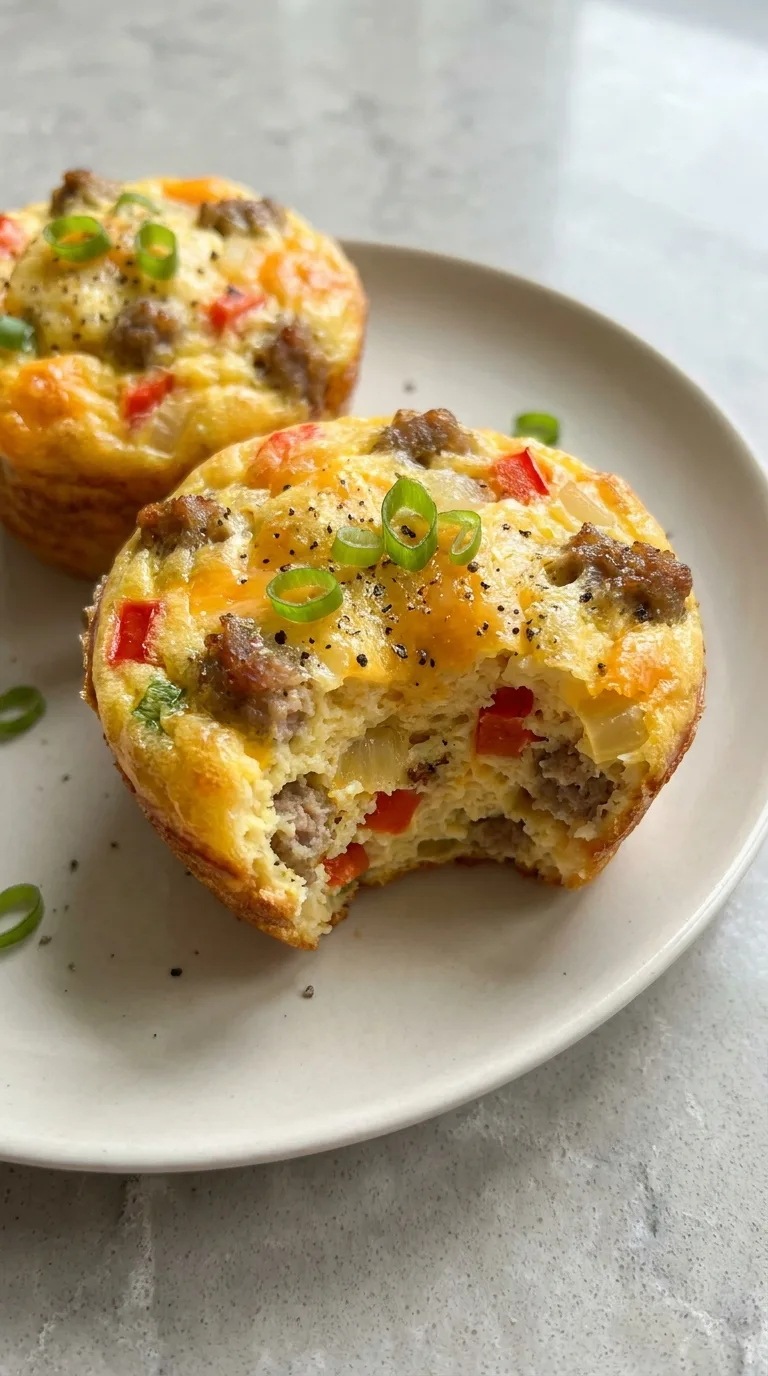
Egg, Cheese, and Sausage Muffins are savory breakfast cups filled with browned breakfast sausage, tender vegetables, fluffy eggs, and melted cheddar. They bake in a standard muffin pan and have lightly browned edges with soft, moist centers.

These muffins are easy to portion, refrigerate, and reheat, making them practical for make-ahead breakfasts. Cooking the sausage and vegetables before adding them to the egg mixture prevents excess grease and moisture from collecting in the muffin cups.
Why This Recipe Works
Browning the sausage before baking develops savory flavor and removes excess fat that could make the muffins greasy.
Cooking the onion and bell pepper briefly softens them and reduces the moisture they release into the eggs.
A small amount of milk keeps the egg mixture tender without making the muffins watery.
Shredded cheddar adds flavor and helps the muffins hold together as they cool.
Resting the baked muffins for 5 minutes allows the centers to finish setting and makes them easier to remove from the pan.
Equipment Needed
- Standard 12-cup muffin pan
- 10-inch skillet
- Large mixing bowl
- Whisk
- Wooden spoon or heat-resistant spatula
- 1/3-cup measuring cup or ladle
- Instant-read thermometer
- Wire cooling rack
Ingredients List
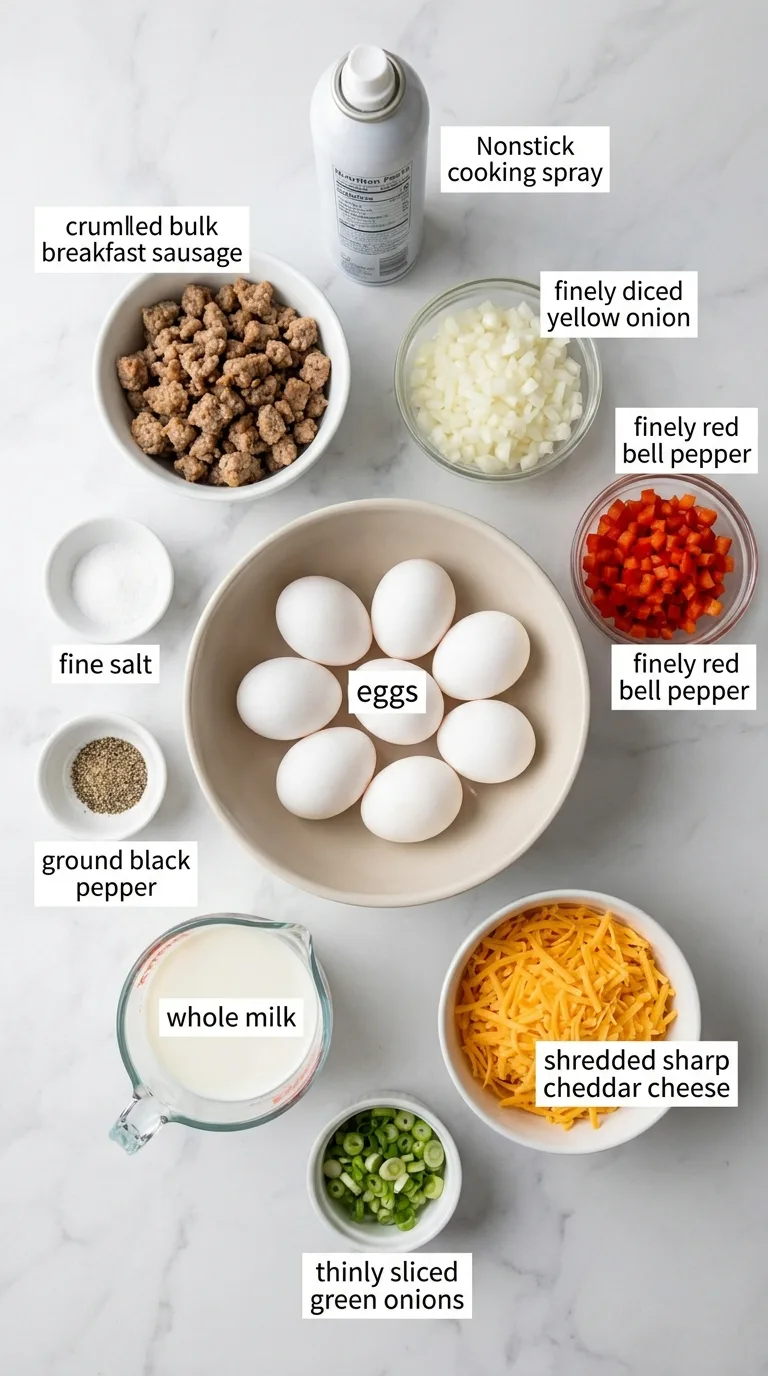
- Nonstick cooking spray, about 1 teaspoon (5 ml), for the muffin pan
- 8 ounces (225 g) bulk breakfast sausage
- 1/2 cup (75 g) finely diced yellow onion
- 1/2 cup (75 g) finely diced red bell pepper
- 8 large eggs, about 14 ounces (400 g) without shells
- 1/3 cup (80 ml) whole milk
- 1 cup (115 g) shredded sharp cheddar cheese, divided
- 1/2 teaspoon (3 g) fine salt
- 1/4 teaspoon (0.5 g) ground black pepper
- 2 tablespoons (6 g) thinly sliced green onions, optional, for garnish
Ingredient Notes and Substitutions
Breakfast sausage: Breakfast sausage gives the muffins their savory seasoning and hearty texture. Ground turkey breakfast sausage can replace pork sausage in the same quantity. Turkey sausage is usually leaner and may produce slightly firmer, less rich muffins.
Eggs: Whole eggs provide structure, moisture, and richness. Liquid whole eggs can be used according to the package conversion. Using only egg whites will make the muffins lighter but also firmer and less flavorful.
Whole milk: Milk softens the baked egg texture and helps the eggs blend evenly. Half-and-half can be used for a richer result, while unsweetened dairy-free milk can be substituted but may produce a slightly less creamy texture.
Cheddar cheese: Sharp cheddar adds strong flavor without requiring a large quantity. Monterey Jack, Colby, or a Mexican-style cheese blend can be used instead. Softer melting cheeses may make the centers slightly creamier.
Bell pepper: Red bell pepper adds sweetness, color, and moisture. Green bell pepper can be substituted for a more savory, slightly bitter flavor. Finely chopped spinach can also be used, but it should be cooked and squeezed dry first to prevent watery muffins.
Step-by-Step Instructions
Step 1: Prepare the oven and muffin pan
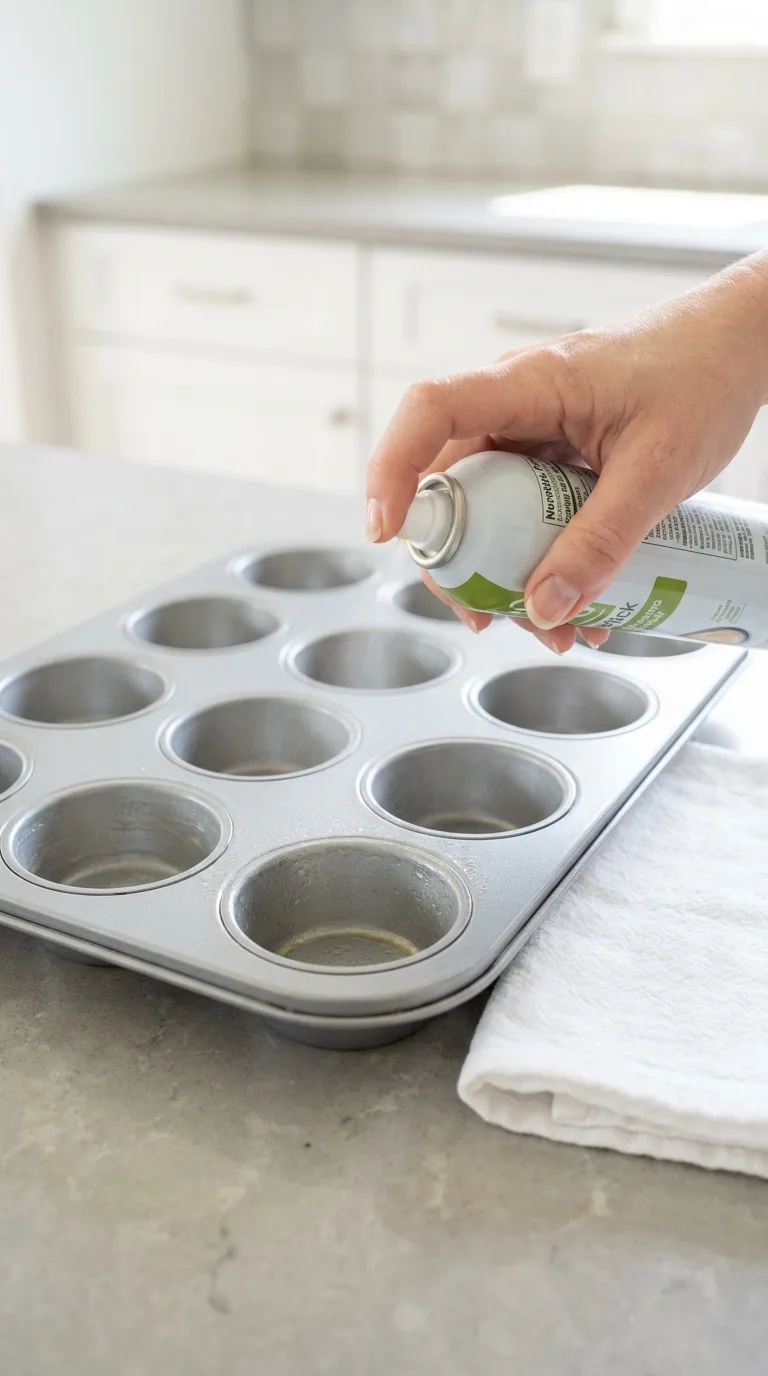
Preheat the oven to 350°F (175°C). Coat the cups of a standard 12-cup muffin pan thoroughly with nonstick cooking spray, including the upper edges where the eggs may rise.
Step 2: Brown the sausage
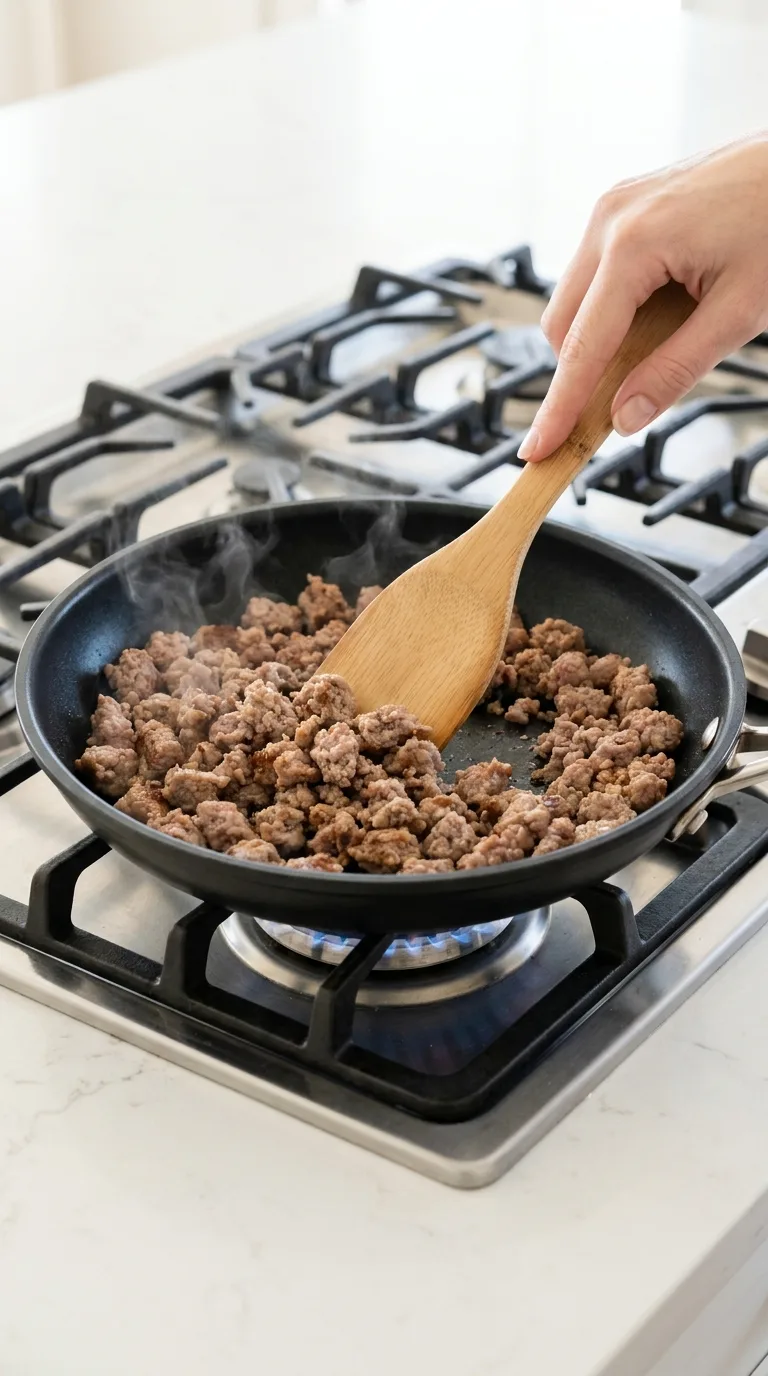
Place the breakfast sausage in a 10-inch skillet over medium heat. Cook for 5 to 7 minutes, breaking it into small crumbles with a spoon. Continue until no pink remains and the sausage reaches 160°F (71°C).
Step 3: Drain excess fat
If more than a thin coating of grease remains in the skillet, carefully spoon it out. Excess fat can settle at the bottom of the muffin cups and make the eggs feel oily.
Step 4: Cook the vegetables
Add the diced onion and bell pepper to the cooked sausage. Cook over medium heat for 3 to 4 minutes, stirring occasionally, until the onion begins to look translucent and the pepper softens slightly. Remove the skillet from the heat.
Step 5: Whisk the egg mixture
Crack the eggs into a large mixing bowl. Add the milk, salt, and black pepper. Whisk until the yolks and whites are completely blended and the mixture looks evenly pale yellow.
Step 6: Add the cheese
Stir 3/4 cup (85 g) of the shredded cheddar into the egg mixture. Reserve the remaining 1/4 cup (30 g) for topping.
Step 7: Divide the sausage mixture
Spoon the sausage and vegetable mixture evenly among the 12 prepared muffin cups. Each cup should contain approximately 2 tablespoons of filling.
Step 8: Add the eggs
Pour or ladle the egg mixture evenly into the muffin cups, filling each about three-quarters full. Stir each cup gently with the tip of a spoon so the sausage and cheese are distributed rather than sitting only at the bottom.

Step 9: Top with cheese
Sprinkle the reserved cheddar evenly over the muffin cups. Keep the cheese mostly inside the edges of each cup to reduce sticking.
Step 10: Bake the muffins
Bake on the center rack for 18 to 21 minutes. The muffins are done when the tops look set, the edges are lightly golden, and the centers no longer ripple when the pan is gently moved. The center of an egg muffin should reach 160°F (71°C).

Step 11: Cool briefly
Place the pan on a wire rack and let the muffins cool for 5 minutes. They may puff in the oven and settle slightly as they cool; this is normal.
Step 12: Remove and serve
Run a thin silicone spatula or butter knife around the edges, then lift the muffins from the pan. Garnish with sliced green onions, if using, and serve warm.

Storage, Freezing, and Make-Ahead Instructions
Let the egg muffins cool completely, then place them in an airtight container lined with a dry paper towel. Refrigerate for up to 4 days. The paper towel helps absorb moisture that could make the surfaces wet.
Reheat refrigerated muffins in the microwave for 20 to 30 seconds per muffin, or until the center reaches 165°F (74°C). To reheat several at once, place them in a covered baking dish and warm at 325°F (165°C) for 8 to 10 minutes.
To freeze, arrange the cooled muffins on a baking sheet and freeze until firm. Transfer them to a freezer-safe container or bag, separating layers with parchment paper, and freeze for up to 2 months. Thaw overnight in the refrigerator before reheating, or microwave from frozen in short intervals until hot throughout.
The sausage and vegetable mixture can be cooked up to 2 days ahead and refrigerated in an airtight container. Assemble the egg muffins just before baking so the beaten eggs do not sit with the salty filling for an extended period.
FAQ
Can I make Egg, Cheese, and Sausage Muffins ahead of time?
Yes. Bake and refrigerate them for up to 4 days, or freeze them for up to 2 months. Cool them completely before storing to reduce condensation.
Why did my egg muffins turn watery?
The sausage may not have been drained, the vegetables may have released excess moisture, or the muffins may have been overbaked. Cook the filling first, drain it well, and remove the muffins as soon as the centers are set.
Can I use muffin liners?
Silicone liners work well and release the eggs easily. Paper liners often stick to egg muffins, even when greased, so a well-coated muffin pan or silicone liners are preferable.
Can I add other vegetables?
Yes. Finely chopped mushrooms, spinach, or broccoli can be added, but cook them first and remove excess moisture. Keep the total cooked vegetable volume close to 1 cup (150 g) so the egg mixture still fits in the pan.
Why did the muffins deflate after baking?
Egg muffins naturally puff as hot air and steam expand, then settle as they cool. Significant collapse can occur if they are underbaked or contain too much milk or watery vegetables.

Ingredients
Method
- Preheat the oven to 350°F (175°C). Coat the cups of a standard 12-cup muffin pan thoroughly with nonstick cooking spray, including the upper edges where the eggs may rise.
- Place the breakfast sausage in a 10-inch skillet over medium heat. Cook for 5 to 7 minutes, breaking it into small crumbles with a spoon. Continue until no pink remains and the sausage reaches 160°F (71°C).
- If more than a thin coating of grease remains in the skillet, carefully spoon it out. Excess fat can settle at the bottom of the muffin cups and make the eggs feel oily.
- Add the diced onion and bell pepper to the cooked sausage. Cook over medium heat for 3 to 4 minutes, stirring occasionally, until the onion begins to look translucent and the pepper softens slightly. Remove the skillet from the heat.
- Crack the eggs into a large mixing bowl: Add the milk, salt, and black pepper. Whisk until the yolks and whites are completely blended and the mixture looks evenly pale yellow.
- Stir 3/4 cup (85 g) of the shredded cheddar into the egg mixture. Reserve the remaining 1/4 cup (30 g) for topping.
- Spoon the sausage and vegetable mixture evenly among the 12 prepared muffin cups. Each cup should contain approximately 2 tablespoons of filling.
- Pour or ladle the egg mixture evenly into the muffin cups, filling each about three-quarters full. Stir each cup gently with the tip of a spoon so the sausage and cheese are distributed rather than sitting only at the bottom.
- Sprinkle the reserved cheddar evenly over the muffin cups. Keep the cheese mostly inside the edges of each cup to reduce sticking.
- Bake on the center rack for 18 to 21 minutes. The muffins are done when the tops look set, the edges are lightly golden, and the centers no longer ripple when the pan is gently moved. The center of an egg muffin should reach 160°F (71°C).
- Place the pan on a wire rack and let the muffins cool for 5 minutes. They may puff in the oven and settle slightly as they cool; this is normal.
- Run a thin silicone spatula or butter knife around the edges, then lift the muffins from the pan. Garnish with sliced green onions, if using, and serve warm.

Kate Handsom
Home cook and recipe creator behind Hibord in Austin, Texas—sharing cozy comfort food, crowd-pleasing party dips, and dependable weeknight dinners built with everyday ingredients.