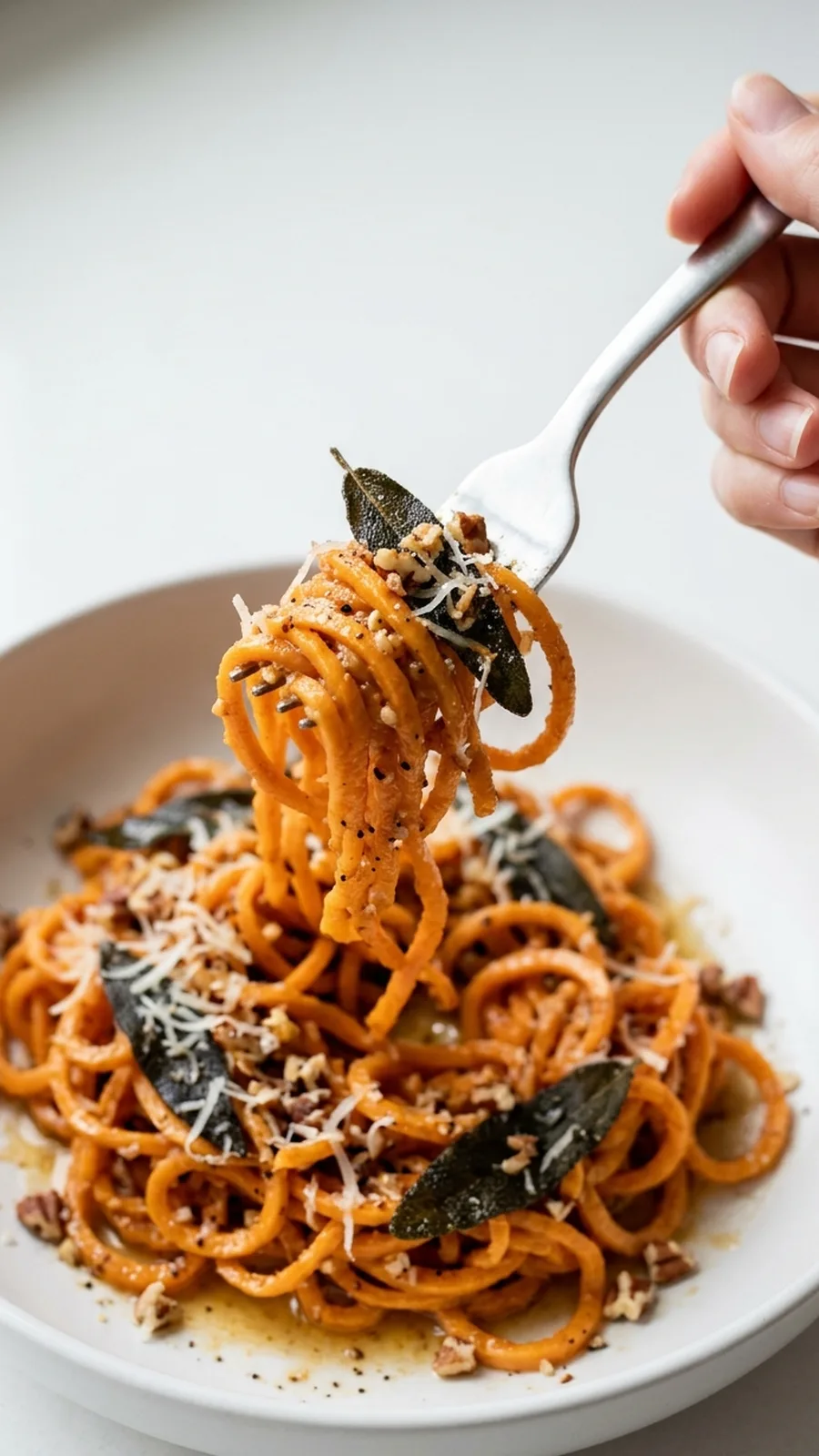
Sweet Potato Noodles with Sage Brown Butter Sauce turn fresh sweet potatoes into tender, colorful vegetable noodles coated in a rich, nutty butter sauce. As the butter browns, it develops a toasted aroma that pairs beautifully with earthy sage, garlic, and the natural sweetness of the potatoes. A splash of lemon juice adds brightness, while Parmesan cheese brings a savory finish.
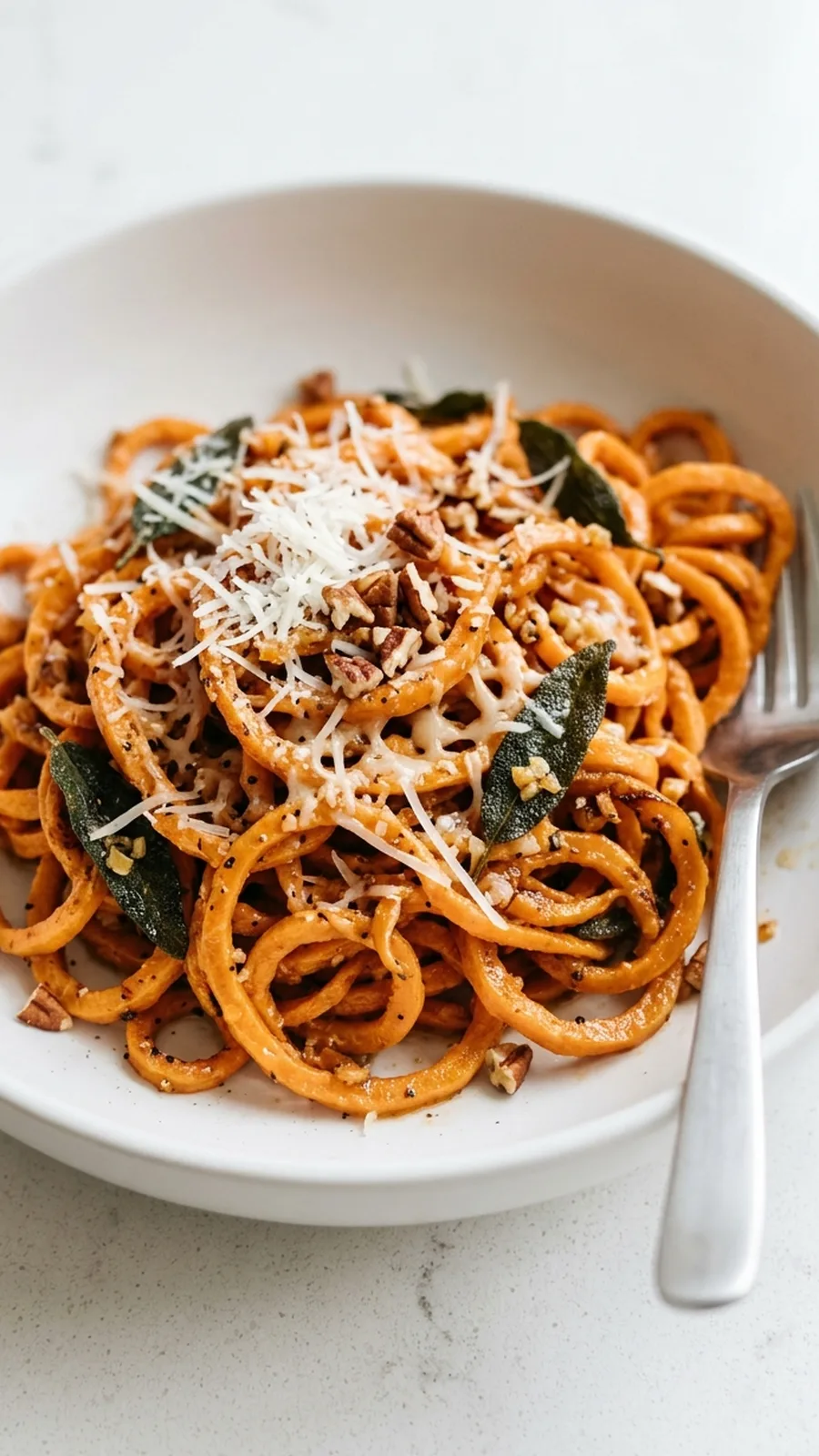
This stovetop recipe uses a spiralizer and a large skillet, with no boiling required. The sweet potato noodles cook directly in the pan, keeping them tender with a slight bite rather than soft or mushy. It's a comforting vegetable-forward dish that works as a light main course or an elegant side for a fall or winter meal.
Why This Recipe Works
Brown butter adds depth without a complicated sauce. Cooking butter until its milk solids turn golden brown creates toasted, nutty flavors that balance the sweet potatoes.
Fresh sage flavors the butter directly: Briefly frying the leaves releases their herbal aroma into the sauce and gives the leaves a delicate, crisp texture.
A little water helps the noodles soften evenly. The sweet potatoes steam briefly in the skillet, allowing them to become tender without needing to boil them first.
Lemon juice balances the richness: Its acidity cuts through the butter and Parmesan, keeping the finished dish from tasting overly heavy.
Cooking the noodles separately from the brown butter protects the sauce. This prevents the butter solids and delicate sage from burning while the sweet potatoes soften.
Equipment Needed
- Spiralizer with a medium noodle blade, approximately 1/4 inch (6 mm)
- Large 12-inch (30 cm) nonstick or well-seasoned skillet with a lid
- Small 8-inch (20 cm) light-colored skillet for browning the butter
- Vegetable peeler
- Sharp chef's knife and cutting board
- Heatproof spatula or wooden spoon
- Kitchen tongs
- Fine grater for Parmesan cheese
A light-colored skillet is especially helpful for the butter sauce because it makes the changing color of the milk solids easier to see.
Ingredients List
For the Sweet Potato Noodles
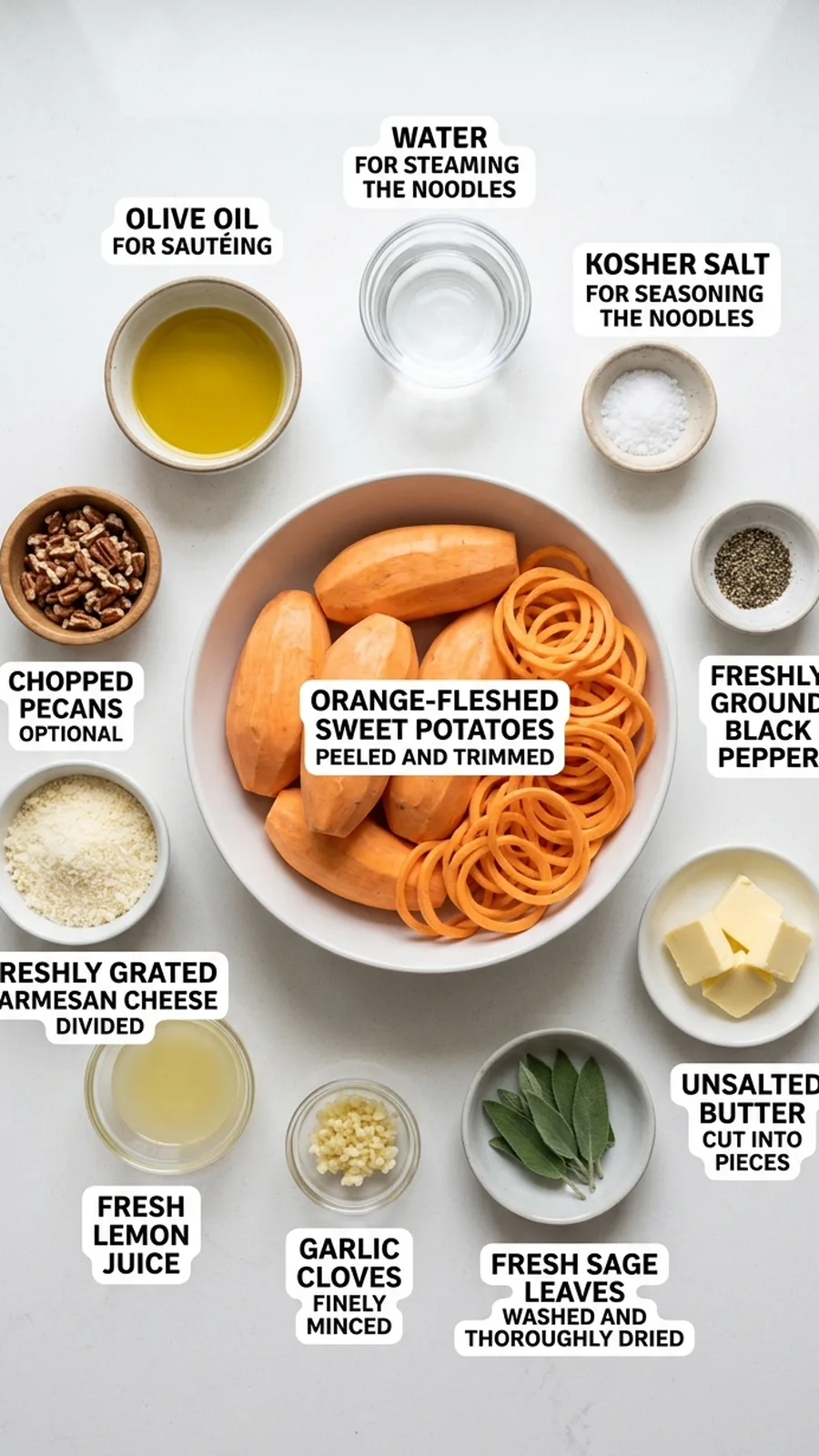
- 1 1/2 pounds (680 g) orange-fleshed sweet potatoes, peeled and trimmed
- 1 tablespoon (15 ml) olive oil, for sautéing
- 1/4 cup (60 ml) water, for steaming the noodles
- 1/4 teaspoon (1.5 g) kosher salt, for seasoning the noodles
- 1/8 teaspoon (0.3 g) freshly ground black pepper
For the Sage Brown Butter Sauce
- 4 tablespoons (57 g) unsalted butter, cut into pieces
- 10 fresh sage leaves (about 2 g), washed and thoroughly dried
- 2 garlic cloves (about 6 g), finely minced
- 1 tablespoon (15 ml) fresh lemon juice
- 1/4 cup (25 g) freshly grated Parmesan cheese, divided
- 2 tablespoons (15 g) chopped pecans, optional, for garnish
Ingredient Notes and Substitutions
Sweet Potatoes: Orange-fleshed sweet potatoes provide the dish's color, natural sweetness, and tender texture. Choose firm, relatively straight potatoes that fit securely in the spiralizer. White-fleshed sweet potatoes can be substituted in the same quantity, although they may have a firmer, starchier texture and a milder sweetness. Butternut squash noodles are another option, but their moisture content and cooking time can differ.
Unsalted Butter: Butter is the foundation of the sauce. Its milk solids toast during cooking, creating the characteristic nutty flavor of brown butter. Salted butter can be used in the same quantity, but it adds salt to the sauce, so the seasoning may need adjustment. Clarified butter or ghee will not brown in the same way because most of the milk solids have already been removed.
Fresh Sage: Fresh sage gives the sauce its earthy, slightly peppery aroma. Its leaves also become lightly crisp when briefly fried in butter. Fresh thyme can replace sage for a different herbal flavor, but it will not produce the same crisp-leaf garnish. Dried sage is not a direct substitute for frying because it can scorch quickly and may taste more concentrated.
Parmesan Cheese: Parmesan adds saltiness and umami, balancing the sweetness of the potatoes and the richness of the butter. Finely grated Pecorino Romano can be substituted in the same quantity, although it has a sharper, saltier flavor. A vegetarian hard cheese can also work if it grates finely.
Lemon Juice: Fresh lemon juice brightens the sauce and balances the richness of the brown butter. Fresh lime juice can be used in the same quantity, but it introduces a more pronounced citrus flavor. Bottled lemon juice works in a pinch, although it may lack the fresh aroma of squeezed lemon.
Step-by-Step Instructions
Step 1: Prepare the Sweet Potato Noodles
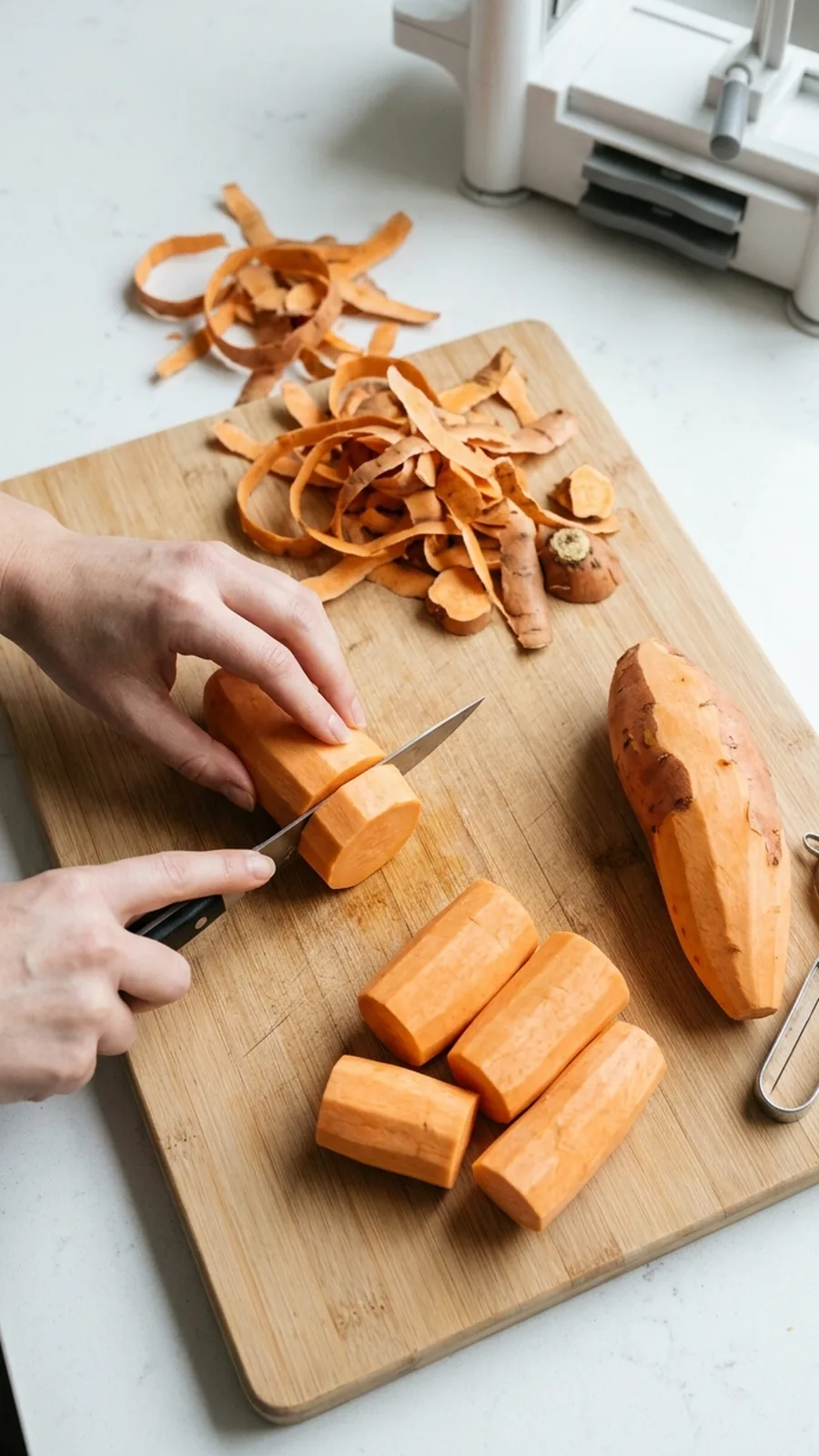
Peel and trim the sweet potatoes, removing any tough ends. Cut them into sections that fit securely in your spiralizer.
Using the medium noodle blade, spiralize the potatoes into strands approximately 1/4 inch (6 mm) thick.
If the strands are especially long, cut them into shorter lengths with kitchen scissors or a knife to make tossing and serving easier.
The noodles should look firm and relatively uniform. Pat away excess surface moisture if necessary.
Step 2: Heat the Skillet
Place a large 12-inch (30 cm) skillet over medium heat and add the olive oil.
Once the oil is warm and shimmering, add the spiralized sweet potatoes.
Use kitchen tongs to gently turn the noodles, coating them evenly with the oil.
Cook for 2 minutes, stirring occasionally, until the noodles begin to soften slightly but still hold their shape.
Step 3: Steam the Sweet Potato Noodles
Pour the water into the skillet and immediately cover with the lid.
Reduce the heat to medium-low and cook for 4 minutes, allowing the steam to soften the noodles.
Remove the lid and gently toss the strands. They should bend easily without breaking apart.
If the noodles still feel firm in the center, continue cooking briefly, checking frequently. Avoid cooking them until they collapse or become mushy.
Step 4: Finish Cooking the Noodles
Remove the lid and increase the heat to medium.
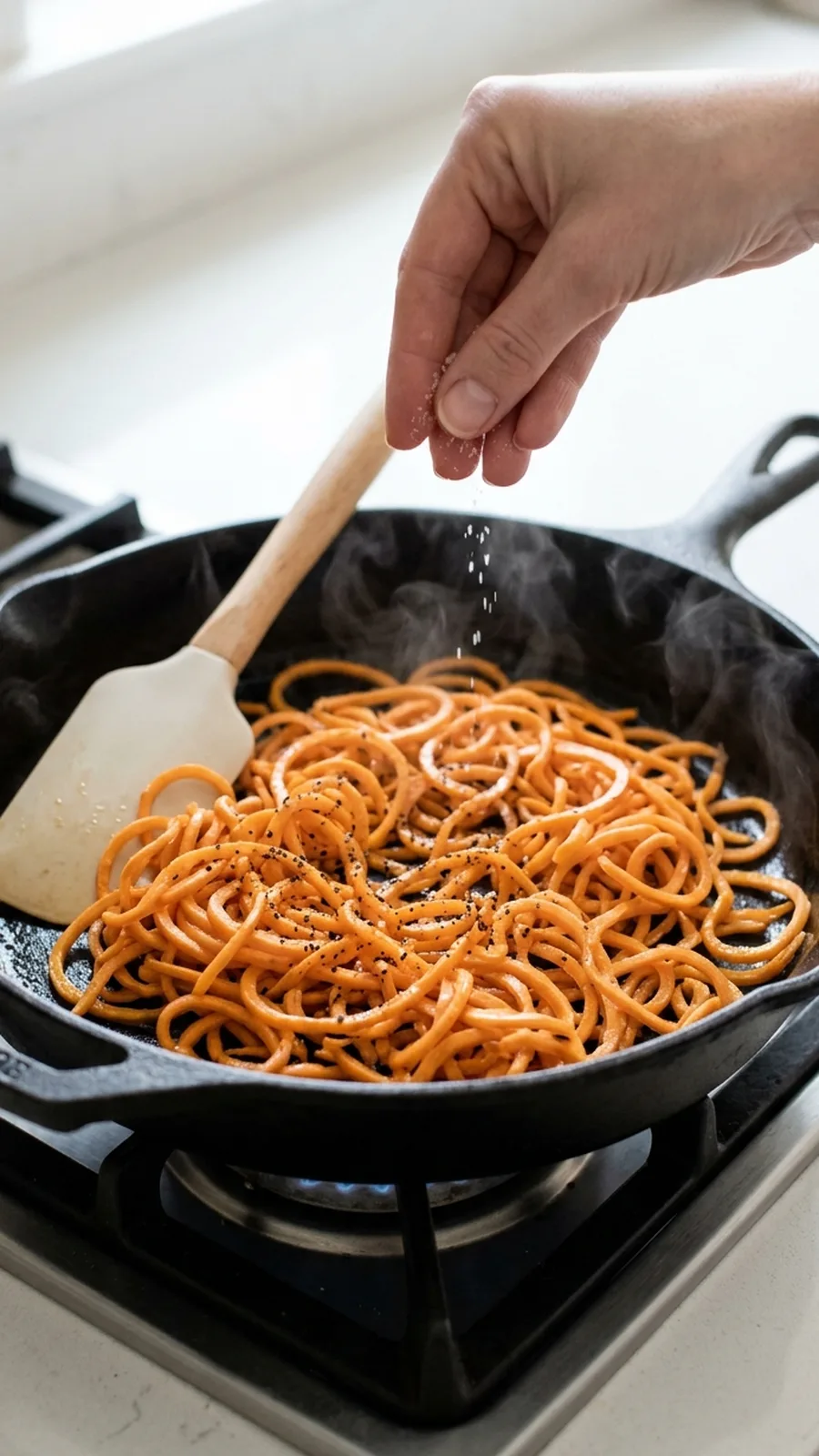
Sprinkle the noodles with the kosher salt and freshly ground black pepper.
Cook uncovered for another 2 minutes, tossing gently, until the remaining moisture has mostly evaporated.
The noodles should be tender but retain a little bite, with a few lightly golden edges.
Remove the skillet from the heat and keep the noodles nearby while preparing the sauce.
Step 5: Brown the Butter
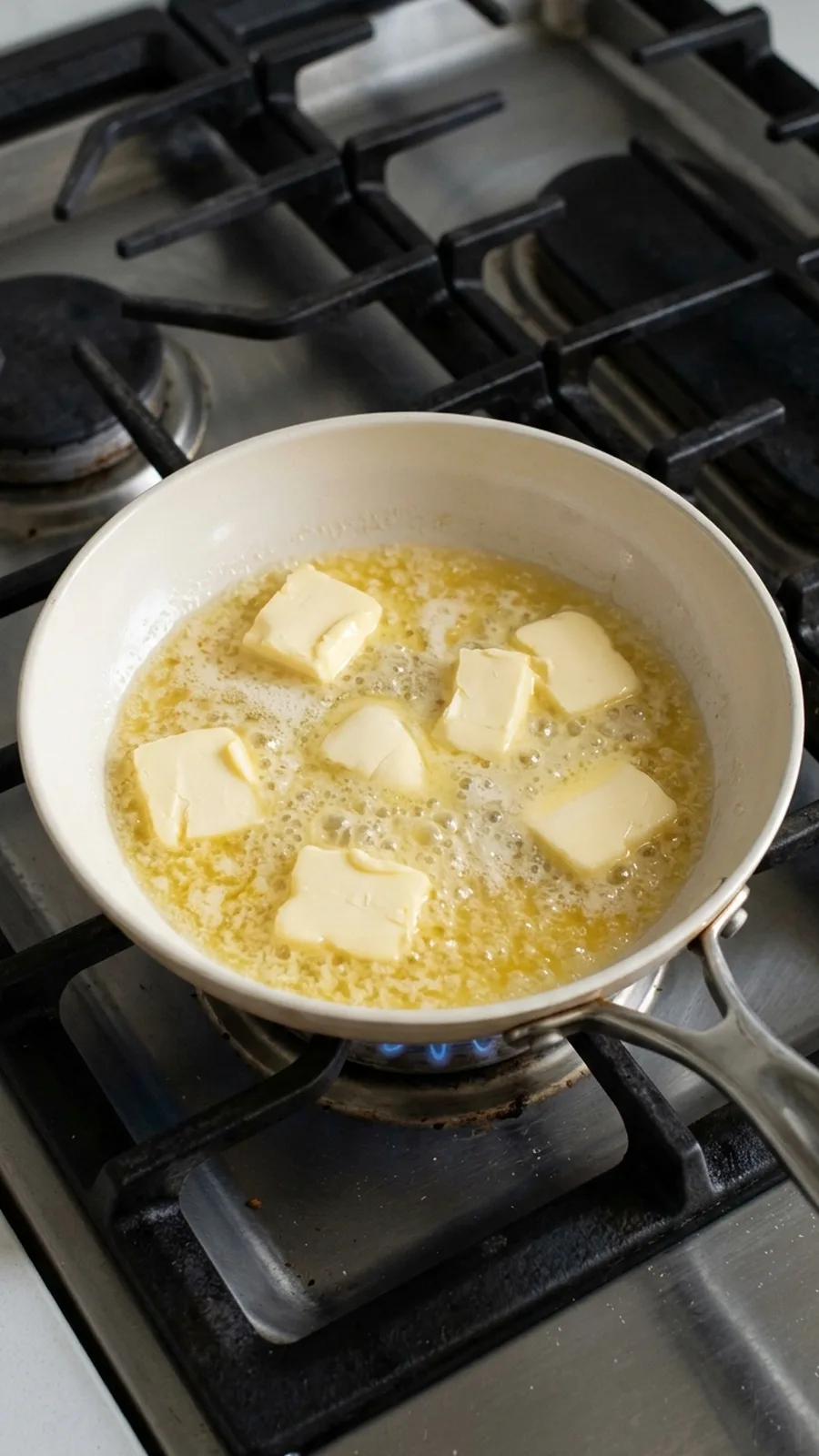
Place the unsalted butter in a small 8-inch (20 cm) light-colored skillet over medium heat.
Allow it to melt completely, then continue cooking for approximately 2 to 3 minutes, gently swirling the pan.
The butter will foam and bubble as its water evaporates. Watch closely as the milk solids at the bottom begin changing from pale yellow to golden brown.
When the butter smells nutty and the solids turn amber-gold, reduce the heat to medium-low.
Do not let the solids become dark brown or black, which indicates burning.
Step 6: Crisp the Sage
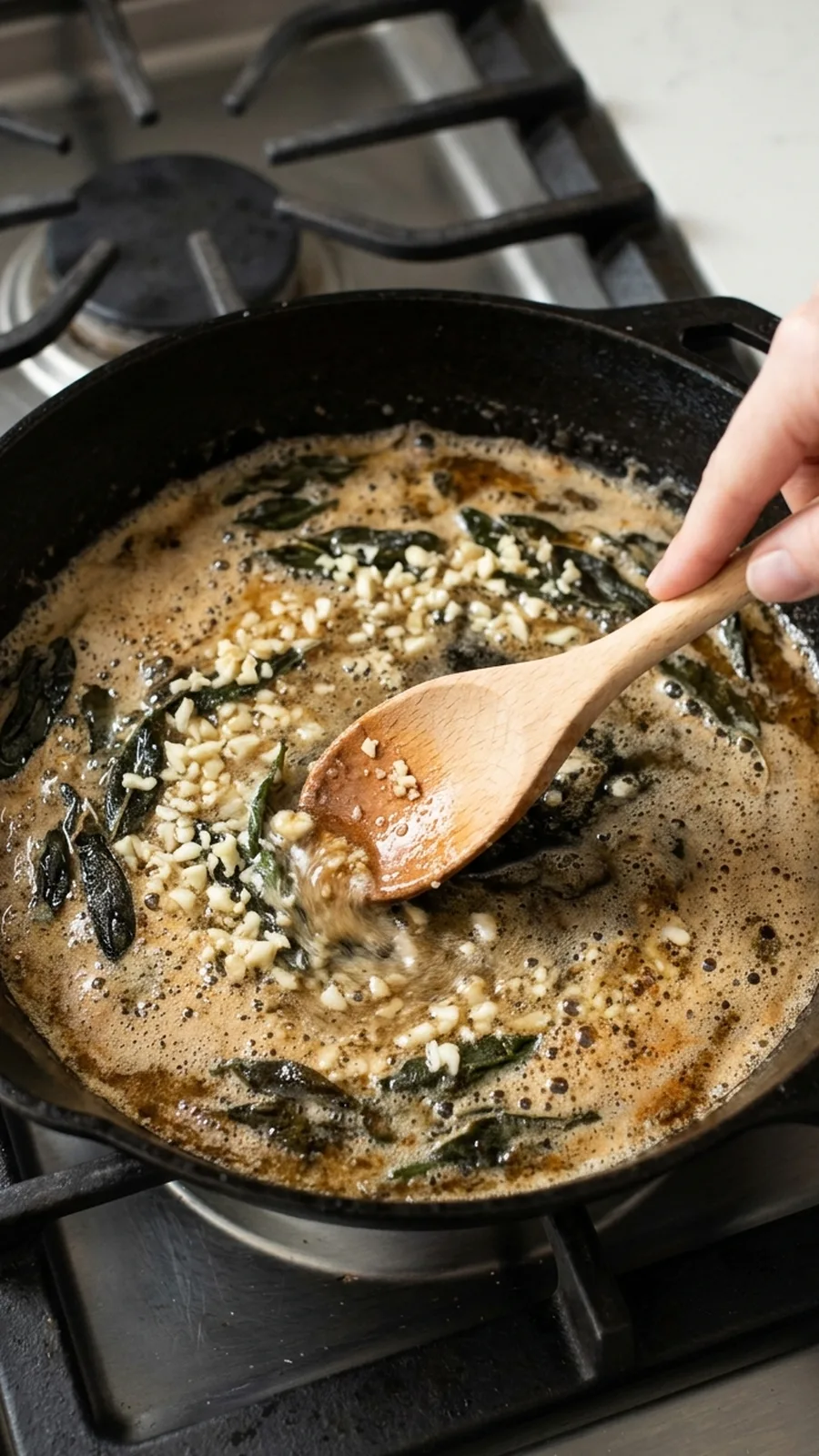
Carefully add the dried sage leaves to the browned butter.
Let them sizzle for approximately 30 seconds, turning gently if necessary.
The leaves should become darker green and slightly crisp while releasing their herbal aroma.
Transfer the sage leaves to a small plate using a fork or tongs, leaving the flavored butter in the skillet.
Step 7: Add the Garlic and Lemon
With the heat on low, stir the minced garlic into the warm brown butter.
Cook for approximately 30 seconds, just until fragrant. The garlic should remain pale rather than turning dark brown.
Remove the skillet from the heat and carefully stir in the fresh lemon juice. The sauce may bubble briefly.
Swirl the pan until the lemon juice is distributed throughout the butter.
The finished sauce should be glossy, golden, and aromatic, with visible toasted butter solids.
Step 8: Toss the Noodles with the Sauce
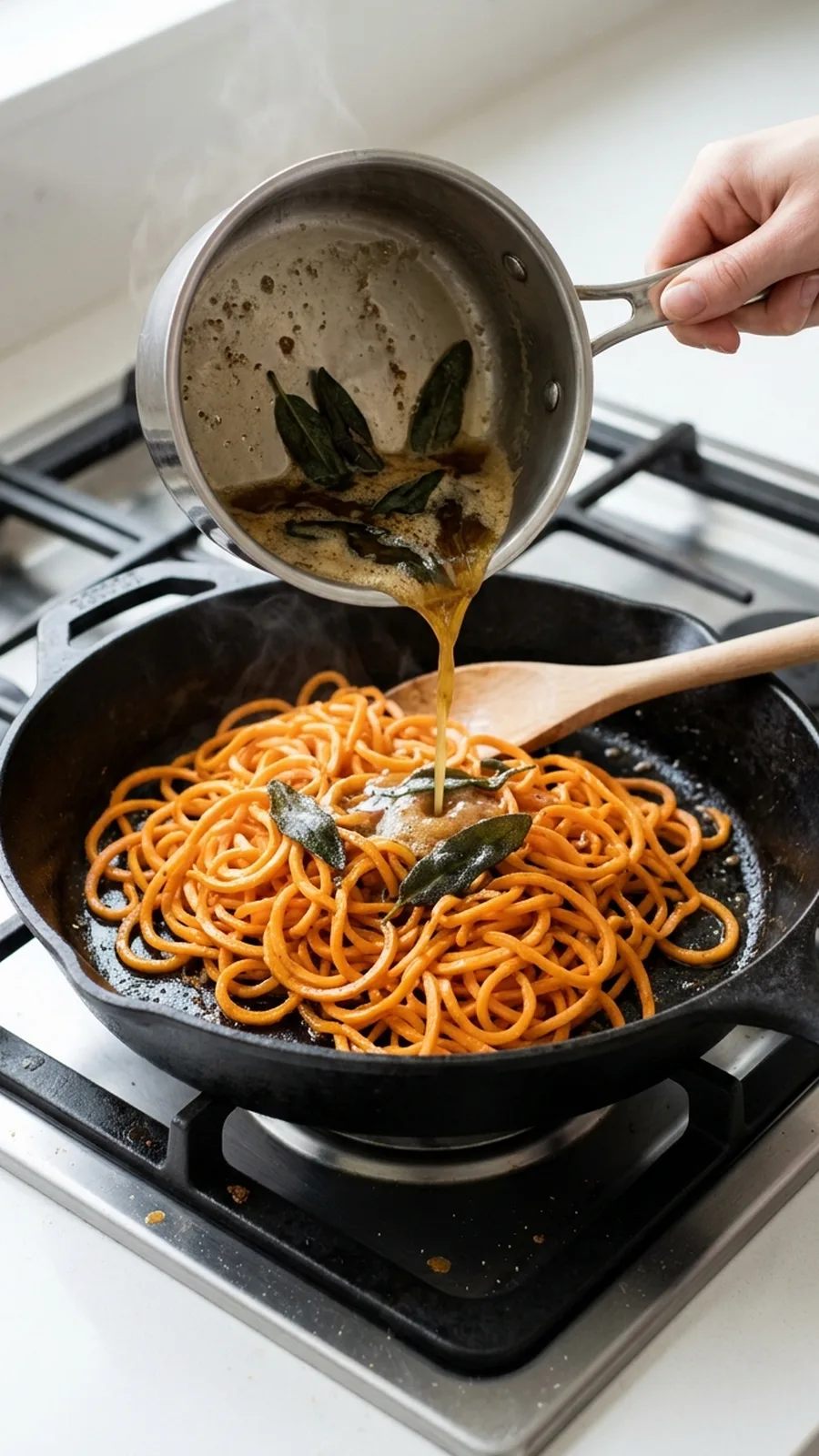
Pour the warm sage brown butter sauce over the cooked sweet potato noodles.
Return the large skillet to low heat and gently toss for approximately 1 minute, making sure the noodles are evenly coated.
Add half of the grated Parmesan cheese and toss again.
The noodles should look glossy and lightly coated rather than swimming in butter. The cheese will soften and cling to the strands, although it will not form a completely smooth cream sauce.
If moisture collects at the bottom of the skillet, continue tossing briefly over low heat until the sauce coats the noodles more evenly.
Step 9: Garnish and Serve
Transfer the sweet potato noodles to a serving bowl or divide them among plates.
Scatter the crisp sage leaves over the noodles, breaking them into smaller pieces if desired.
Sprinkle with the remaining Parmesan cheese and add the chopped pecans, if using.
Serve immediately while the noodles are warm, tender, and coated in the fragrant brown butter sauce.
Storage, Freezing, and Make-Ahead Instructions
Refrigeration: Allow leftover Sweet Potato Noodles with Sage Brown Butter Sauce to cool slightly, then transfer them to an airtight container. Refrigerate promptly, within 2 hours of cooking, and store for up to 3 to 4 days. The noodles will soften as they sit, and the butter sauce may firm up in the refrigerator. This is normal. For the best texture, store any extra crisp sage leaves and pecans separately and add them just before serving.
Freezing: Freezing the finished dish is not recommended. Cooked sweet potato noodles tend to release moisture after thawing, which can make them watery and overly soft. The butter and cheese coating may also separate. If preparing ingredients in advance, refrigeration is a better option than freezing.
Reheating: For the best texture, reheat the noodles in a nonstick skillet over low to medium-low heat. Toss gently until heated throughout, allowing the butter coating to melt and redistribute. Avoid prolonged cooking, which can make the noodles mushy. You can also reheat individual portions in the microwave in short intervals, stirring between intervals to distribute the heat. Reheat leftovers to 165°F (74°C).
Make-Ahead Preparation: The sweet potatoes can be spiralized up to 24 hours in advance. Place the raw noodles in an airtight container lined with a dry paper towel and refrigerate until ready to cook. Keep them dry rather than soaking them in water, which can introduce unnecessary moisture. The Parmesan can also be grated ahead and refrigerated in a covered container. For the freshest flavor and best texture, prepare the sage brown butter sauce shortly before serving.
FAQ
Can I make Sweet Potato Noodles with Sage Brown Butter Sauce ahead of time?
Yes, but preparing the components ahead works better than cooking the entire dish. Spiralize the sweet potatoes up to 24 hours in advance and refrigerate them in an airtight container. Cook the noodles and prepare the brown butter sauce just before serving to preserve their texture and flavor.
Why are my sweet potato noodles mushy?
Mushy noodles are usually caused by overcooking, excess moisture, or overcrowding the skillet. Sweet potatoes soften quickly once they begin steaming, so check their texture frequently. They should bend easily while maintaining their individual strands. A wide skillet also helps excess moisture evaporate.
Can I use store-bought sweet potato noodles?
Yes. Fresh, refrigerated sweet potato noodles are a convenient substitute for spiralizing whole potatoes. Use the same weight of prepared noodles as the peeled and trimmed sweet potatoes specified in the recipe. Because packaged noodles can vary in thickness, check their tenderness during cooking and adjust the time if necessary.
How do I know when brown butter is ready?
Brown butter is ready when the foaming begins to subside, the milk solids at the bottom turn golden brown, and the butter develops a distinctly nutty aroma. Remove it from direct heat promptly once it reaches this stage. If the solids turn black or the butter smells acrid, it has burned and should be replaced.
Can I make this recipe without a spiralizer?
Yes. A julienne peeler can create thin sweet potato strips, although they will be flatter and may cook faster than spiralized noodles. A mandoline with a julienne attachment is another option. Use the appropriate hand guard and check the noodles frequently during cooking because thinner strands soften more quickly.
Looking for more homemade favorites to try next? Check out Small Batch Brown Butter Chocolate Chip Cookies, Brown Butter Pecan Cookies, Honey Butter Sweet Potato Cornbread, and Brown Butter Herb Roasted Turkey with Cranberry Mustarda.

Potato Noodles with Sage Brown Butter Sauce
Ingredients
Method
- Peel and trim the sweet potatoes, removing any tough ends. Cut them into sections that fit securely in your spiralizer. Using the medium noodle blade, spiralize the potatoes into strands approximately 1/4 inch (6 mm) thick. If the strands are especially long, cut them into shorter lengths with kitchen scissors or a knife to make tossing and serving easier. The noodles should look firm and relatively uniform. Pat away excess surface moisture if necessary.
- Place a large 12-inch (30 cm) skillet over medium heat and add the olive oil. Once the oil is warm and shimmering, add the spiralized sweet potatoes. Use kitchen tongs to gently turn the noodles, coating them evenly with the oil. Cook for 2 minutes, stirring occasionally, until the noodles begin to soften slightly but still hold their shape.
- Pour the water into the skillet and immediately cover with the lid. Reduce the heat to medium-low and cook for 4 minutes, allowing the steam to soften the noodles. Remove the lid and gently toss the strands. They should bend easily without breaking apart. If the noodles still feel firm in the center, continue cooking briefly, checking frequently. Avoid cooking them until they collapse or become mushy.
- Remove the lid and increase the heat to medium. Sprinkle the noodles with the kosher salt and freshly ground black pepper. Cook uncovered for another 2 minutes, tossing gently, until the remaining moisture has mostly evaporated. The noodles should be tender but retain a little bite, with a few lightly golden edges. Remove the skillet from the heat and keep the noodles nearby while preparing the sauce.
- Place the unsalted butter in a small 8-inch (20 cm) light-colored skillet over medium heat. Allow it to melt completely, then continue cooking for approximately 2 to 3 minutes, gently swirling the pan. The butter will foam and bubble as its water evaporates. Watch closely as the milk solids at the bottom begin changing from pale yellow to golden brown. When the butter smells nutty and the solids turn amber-gold, reduce the heat to medium-low. Do not let the solids become dark brown or black, which indicates burning.
- Carefully add the dried sage leaves to the browned butter. Let them sizzle for approximately 30 seconds, turning gently if necessary. The leaves should become darker green and slightly crisp while releasing their herbal aroma. Transfer the sage leaves to a small plate using a fork or tongs, leaving the flavored butter in the skillet.
- With the heat on low, stir the minced garlic into the warm brown butter. Cook for approximately 30 seconds, just until fragrant. The garlic should remain pale rather than turning dark brown. Remove the skillet from the heat and carefully stir in the fresh lemon juice. The sauce may bubble briefly. Swirl the pan until the lemon juice is distributed throughout the butter. The finished sauce should be glossy, golden, and aromatic, with visible toasted butter solids.
- Pour the warm sage brown butter sauce over the cooked sweet potato noodles. Return the large skillet to low heat and gently toss for approximately 1 minute, making sure the noodles are evenly coated. Add half of the grated Parmesan cheese and toss again. The noodles should look glossy and lightly coated rather than swimming in butter. The cheese will soften and cling to the strands, although it will not form a completely smooth cream sauce. If moisture collects at the bottom of the skillet, continue tossing briefly over low heat until the sauce coats the noodles more evenly.
- Transfer the sweet potato noodles to a serving bowl or divide them among plates. Scatter the crisp sage leaves over the noodles, breaking them into smaller pieces if desired. Sprinkle with the remaining Parmesan cheese and add the chopped pecans, if using. Serve immediately while the noodles are warm, tender, and coated in the fragrant brown butter sauce.