Slow Cooker Chicken Stew is a comforting, hearty dinner made with tender chunks of chicken, soft potatoes, carrots, celery, and a savory herb-seasoned broth. As everything cooks slowly, the vegetables become tender and the chicken absorbs the flavors of garlic, thyme, rosemary, and chicken broth. A simple cornstarch slurry thickens the cooking liquid into a rich, silky gravy that coats every spoonful.
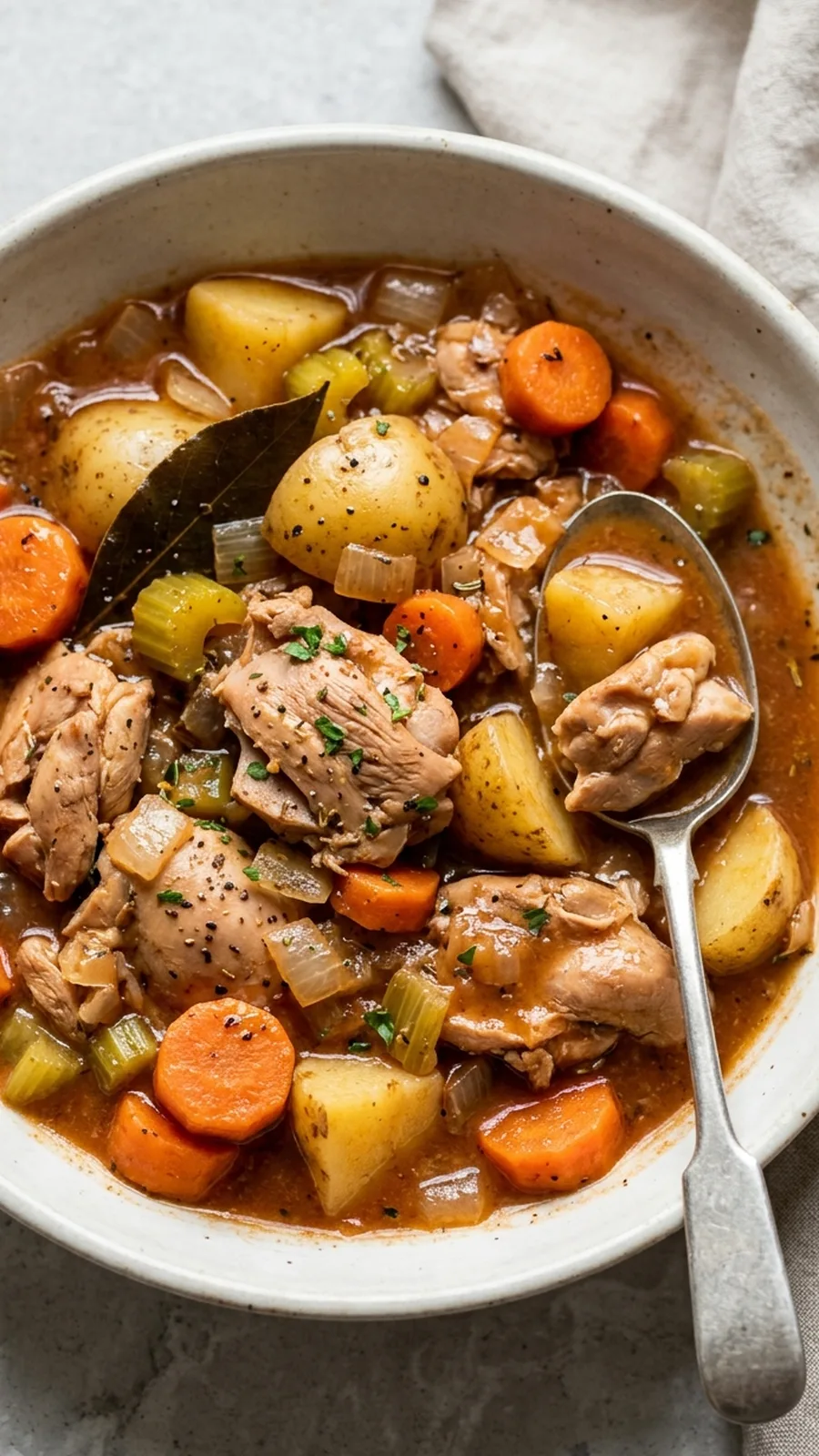
This version uses boneless, skinless chicken thighs for their moisture and tenderness, along with everyday ingredients that require minimal preparation. Everything cooks in a standard kitchen slow cooker, with no browning or stovetop cooking required. It's a practical option for busy days, and the leftovers reheat well for another meal.
Why This Recipe Works
Chicken thighs stay tender during slow cooking. Their slightly higher fat content helps prevent the meat from drying out during the long cooking process.
Potatoes naturally add body: Yukon Gold potatoes release some starch as they soften, giving the broth a heartier texture without turning the stew into a purée.
Aromatic vegetables build flavor: Onion, carrots, celery, and garlic create a savory foundation while slowly cooking alongside the chicken.
Herbs and tomato paste deepen the broth. Thyme, rosemary, bay leaves, and tomato paste add complexity without overpowering the chicken and vegetables.
A cornstarch slurry provides a smooth finish. Adding it near the end thickens the broth without requiring a separate flour-based roux.
Equipment Needed
- 6-quart (5.7-liter) slow cooker with a LOW and HIGH setting
- Large cutting board
- Sharp chef's knife
- Measuring cups and spoons
- Small mixing bowl for the cornstarch slurry
- Whisk or fork
- Large spoon or silicone spatula
- Instant-read meat thermometer
Ingredients List
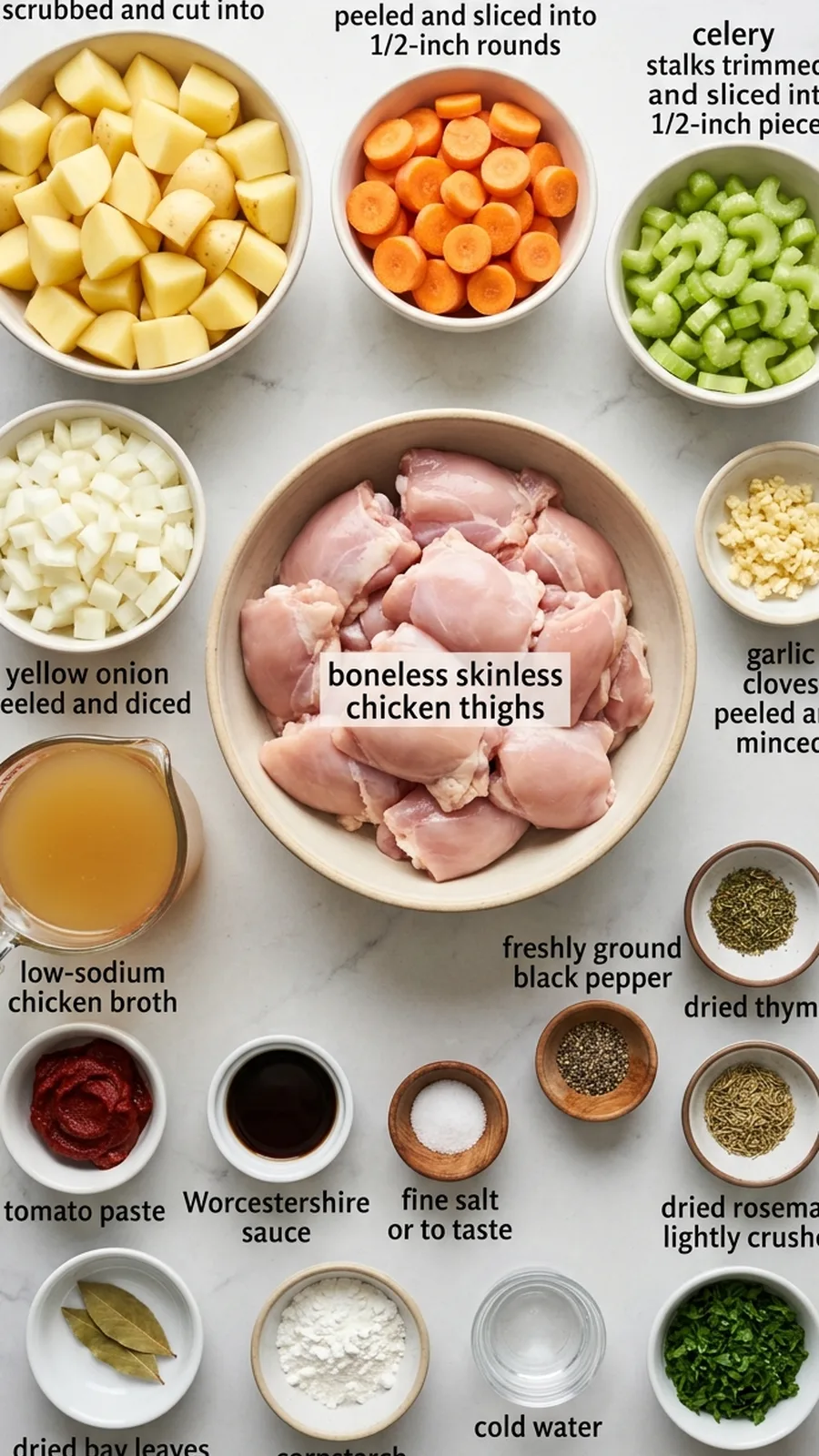
Chicken and Vegetables
- 2 pounds (900 g) boneless, skinless chicken thighs, trimmed of excess fat and cut into approximately 1 1/2-inch (4-cm) pieces
- 1 1/2 pounds (680 g) Yukon Gold potatoes, scrubbed and cut into approximately 1-inch (2.5-cm) chunks
- 3 medium carrots (about 225 g), peeled and sliced into 1/2-inch (1.3-cm) rounds
- 3 medium celery stalks (about 150 g), trimmed and sliced into 1/2-inch (1.3-cm) pieces
- 1 medium yellow onion (about 150 g), peeled and diced
- 4 garlic cloves (about 12 g), peeled and minced
Broth and Seasonings
- 3 cups (720 ml) low-sodium chicken broth
- 2 tablespoons (30 g) tomato paste
- 1 tablespoon (15 ml) Worcestershire sauce
- 1 teaspoon (5 g) fine salt, or to taste
- 1/2 teaspoon (1 g) freshly ground black pepper
- 1 teaspoon (1 g) dried thyme
- 1/2 teaspoon (0.5 g) dried rosemary, lightly crushed
- 2 dried bay leaves, left whole for easy removal
Thickening Slurry
- 3 tablespoons (24 g) cornstarch
- 3 tablespoons (45 ml) cold water
Optional Garnish
- 2 tablespoons (8 g) fresh parsley, finely chopped, optional for serving
Ingredient Notes and Substitutions
Chicken Thighs: Boneless, skinless chicken thighs are particularly suitable for slow cooker stew because they remain moist during extended cooking. Their flavor also contributes to a richer broth. Boneless, skinless chicken breasts can be substituted in the same weight, but they are leaner and more likely to become dry or stringy. They may also reach a safe internal temperature sooner, so cooking time may need adjustment.
Yukon Gold Potatoes: Yukon Gold potatoes have a naturally creamy texture and hold their shape reasonably well during slow cooking. Their thin skins also make peeling unnecessary. Red potatoes are a suitable substitute and tend to hold their shape slightly better. Russet potatoes can work, but their higher starch content makes them more likely to break down, resulting in a softer, thicker stew.
Low-Sodium Chicken Broth: Chicken broth provides the savory liquid that cooks the meat and vegetables. Using a low-sodium version gives you better control over the final seasoning, especially because Worcestershire sauce also contributes saltiness. Unsalted chicken stock is a good alternative, although you may need to adjust the salt before serving. Vegetable broth can also be used, but the stew will have a slightly lighter chicken flavor.
Tomato Paste: Tomato paste adds concentrated savory flavor, subtle sweetness, and a little color to the broth. The amount is small enough that the stew does not taste like tomato soup. It can be omitted if necessary, but the broth will taste less rounded and may look paler. There is no equally concentrated substitute that provides exactly the same flavor and consistency.
Cornstarch: Cornstarch thickens the cooking liquid into a glossy, gravy-like sauce without making it heavy. It is added near the end so it does not interfere with the slow cooking of the chicken and vegetables. Arrowroot starch may be used in the same quantity, but it can create a slightly more translucent sauce and may lose thickening power if heated for too long. For that substitution, stir it in near the end and heat only until thickened.
Step-by-Step Instructions
Step 1: Prepare the Chicken
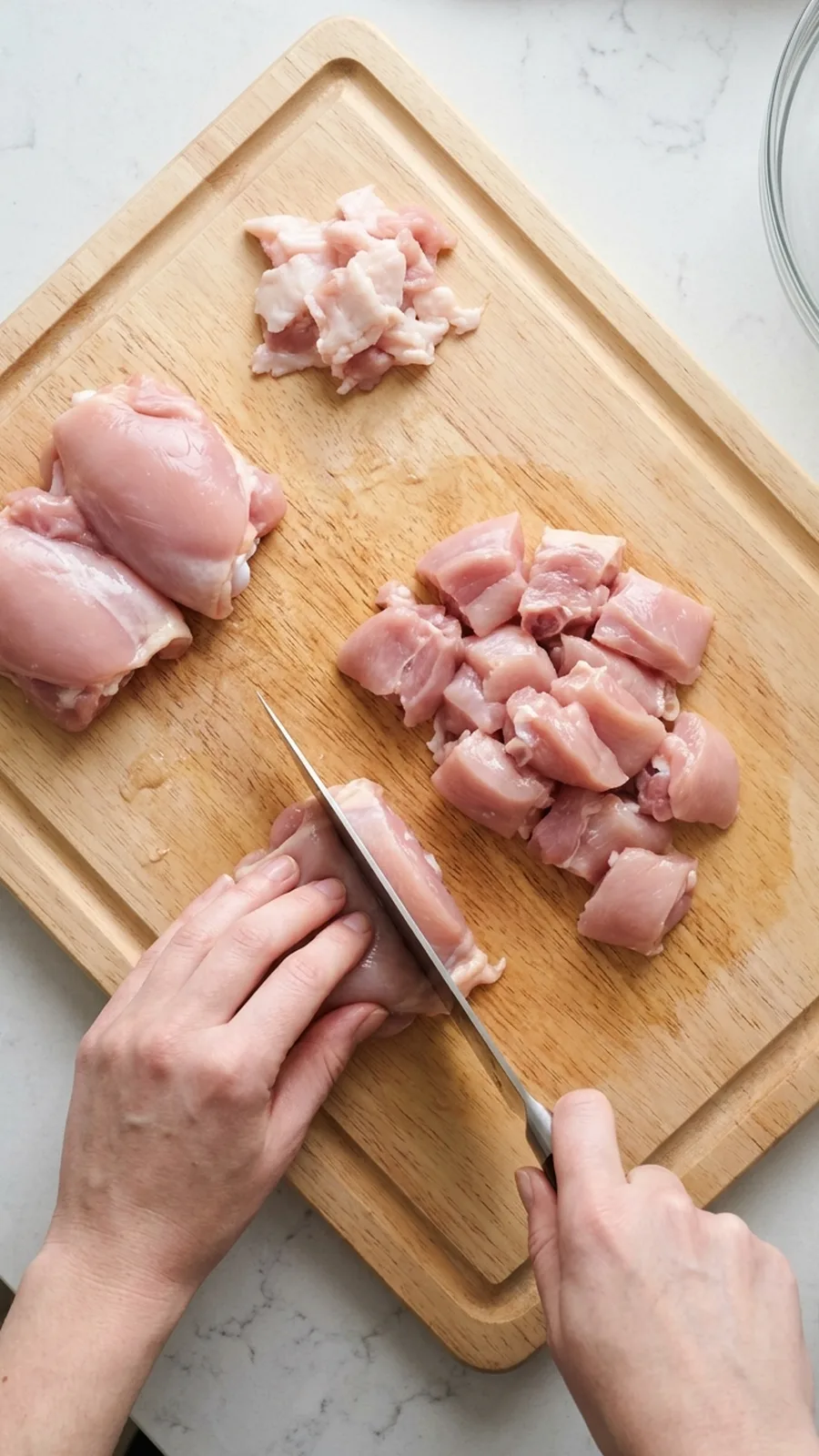
Trim excess fat from the chicken thighs and cut them into approximately 1 1/2-inch (4-cm) pieces using a sharp knife and a clean cutting board.
Keep the pieces relatively uniform so they cook at a similar rate. The chicken should be free of large pieces of visible fat, but there is no need to remove every small bit.
Step 2: Cut the Vegetables
Scrub the Yukon Gold potatoes and cut them into approximately 1-inch (2.5-cm) chunks. Peel the carrots and slice them into 1/2-inch (1.3-cm) rounds.
Trim and slice the celery into 1/2-inch (1.3-cm) pieces, dice the yellow onion, and mince the garlic.
Keep the potato chunks reasonably large. Very small pieces can soften excessively during the long cooking process.
Step 3: Layer the Slow Cooker
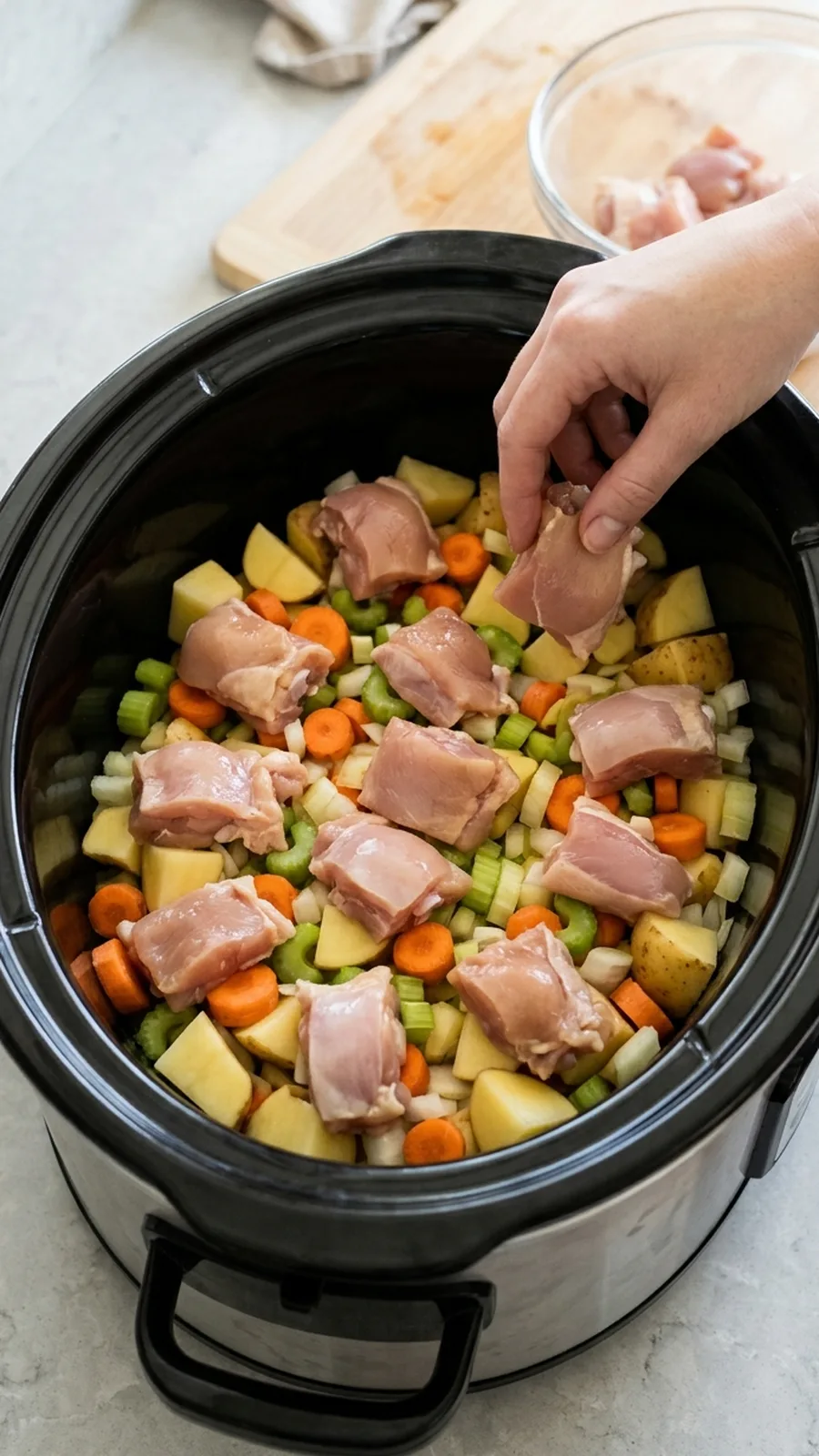
Place the potatoes, carrots, celery, and diced onion in the bottom of a 6-quart (5.7-liter) slow cooker.
Spread the vegetables into an even layer, then distribute the chicken pieces over the top.
This arrangement keeps the firmer vegetables closer to the heat at the bottom of the appliance while allowing the chicken juices to mingle with the broth as everything cooks.
Step 4: Prepare the Seasoned Broth
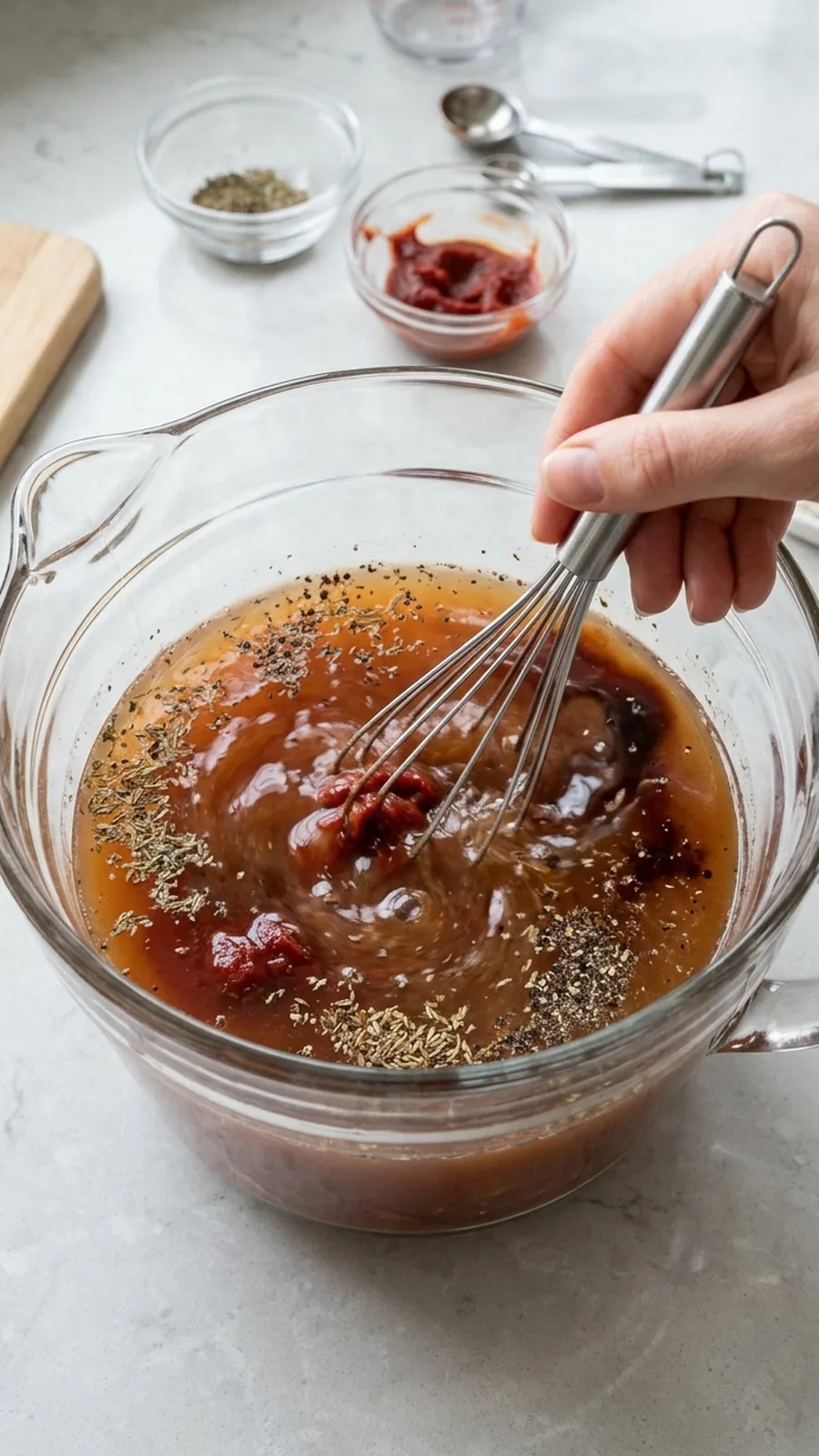
In a mixing bowl or large measuring jug, combine the chicken broth, tomato paste, Worcestershire sauce, salt, black pepper, dried thyme, and dried rosemary.
Whisk until the tomato paste is mostly dispersed throughout the liquid. The mixture should look reddish-brown with small flecks of herbs.
A few tiny pieces of tomato paste are fine because they will dissolve during cooking.
Step 5: Add the Broth and Aromatics
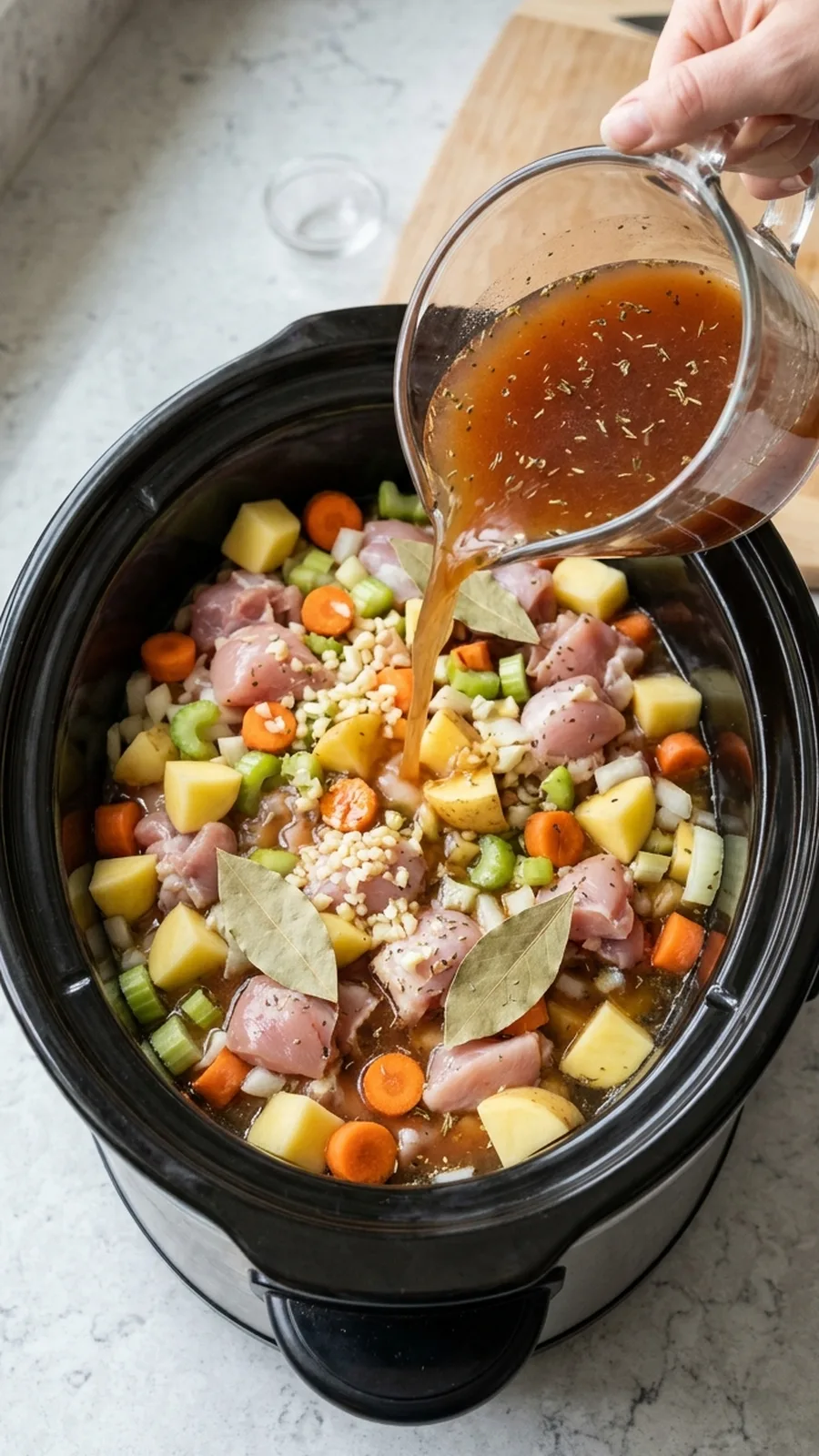
Pour the seasoned broth over the chicken and vegetables.
Scatter the minced garlic over the mixture and tuck the bay leaves into the liquid.
Gently press down any vegetables sticking up excessively, but do not worry if the broth does not completely cover everything. The chicken and vegetables will release additional moisture as they cook.
Step 6: Slow Cook Until Tender
Cover the slow cooker with its lid and cook on LOW for approximately 6 hours, until the vegetables are fork-tender and the chicken is fully cooked.
Check the thickest chicken pieces with an instant-read thermometer. They must reach an internal temperature of at least 165°F (74°C).
The potatoes should yield easily when pierced with a fork, while the carrots should be tender without completely falling apart.
Avoid repeatedly lifting the lid during cooking because heat loss can extend the cooking time. If the chicken or vegetables are not ready, continue cooking until both are done.
Step 7: Prepare the Cornstarch Slurry
When the chicken and vegetables are tender, place the cornstarch in a small bowl.
Add the cold water and whisk until the mixture is completely smooth, with no dry lumps remaining.
The slurry should look thin, milky, and evenly blended. Stir it again immediately before adding it to the stew because cornstarch settles quickly.
Step 8: Thicken the Stew
Remove and discard the bay leaves.
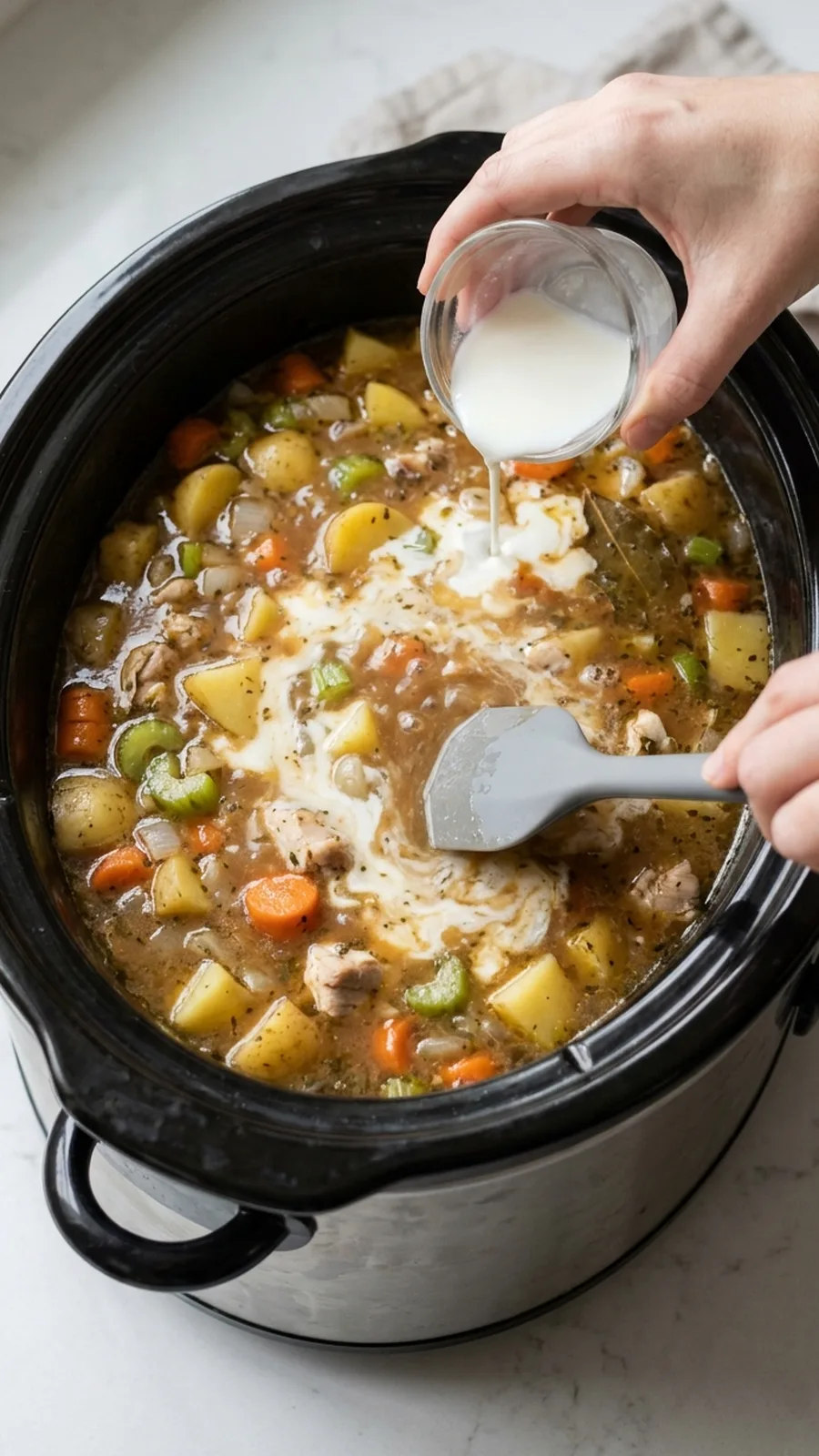
Stir the cornstarch slurry into the hot cooking liquid, gently folding it through the stew without crushing the potatoes.
Cover the slow cooker, switch it to HIGH, and cook for approximately 20 minutes, or until the broth is visibly thickened and bubbling gently around the edges.
The finished sauce should lightly coat the back of a spoon rather than run off like plain broth. If it remains thin, stir gently and allow a little more time for the slurry to heat through.
Step 9: Check the Texture and Seasoning
Gently stir the stew from the bottom upward to distribute the chicken, potatoes, and vegetables evenly.
Taste the broth and adjust the seasoning if needed. The flavor should be savory and balanced, with noticeable herbs but no single seasoning dominating.
If the stew seems thicker than you prefer, gently stir it to redistribute the liquid before deciding whether any adjustment is necessary.
Step 10: Garnish and Serve
Ladle the Slow Cooker Chicken Stew into serving bowls.
If desired, sprinkle the finely chopped fresh parsley over each portion just before serving.
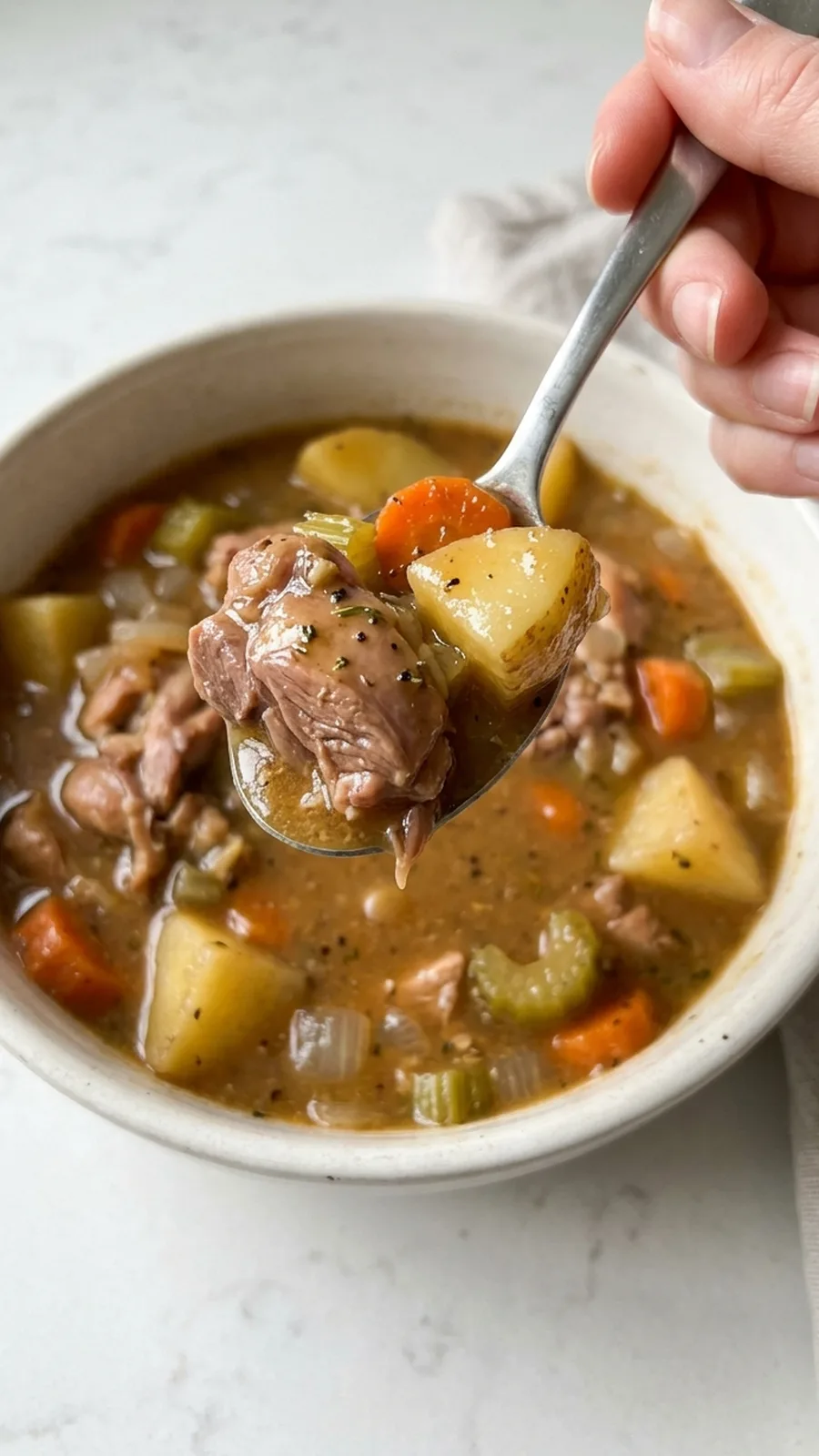
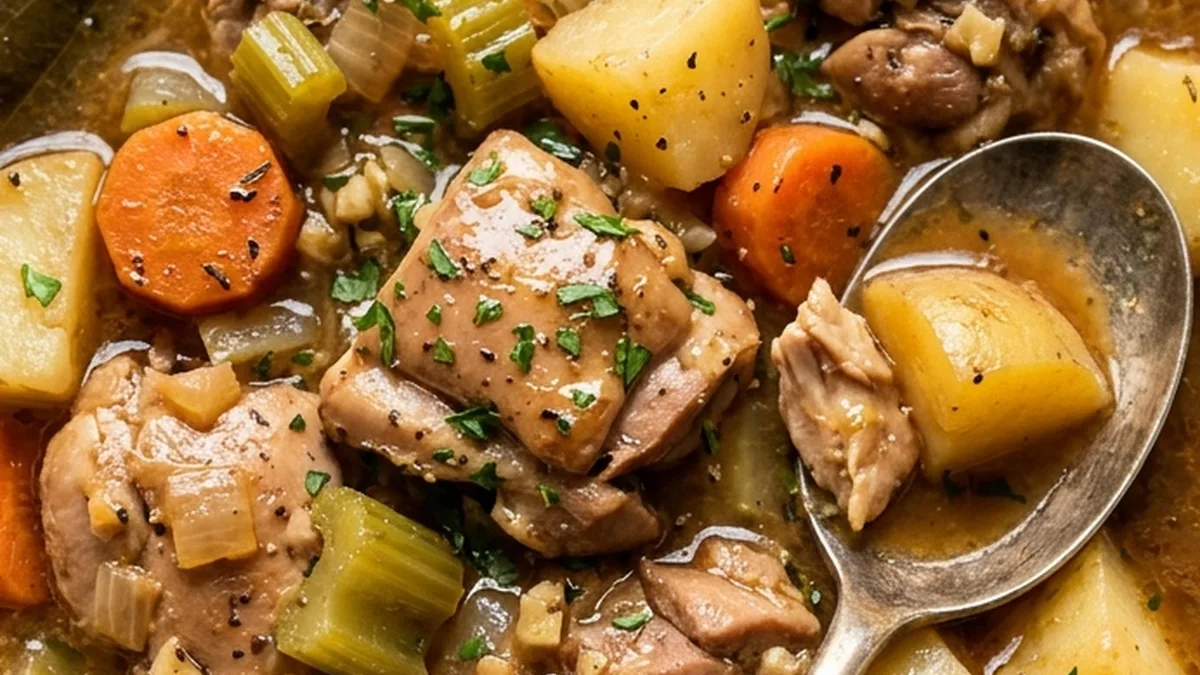
The finished stew should have tender chicken, soft but recognizable vegetables, and a rich broth thick enough to cling to the ingredients.
Serve hot.
Storage, Freezing, and Make-Ahead Instructions
Refrigerator Storage: Allow the stew to cool briefly, then transfer it to shallow, airtight containers and refrigerate promptly. Do not leave the stew at room temperature for more than 2 hours. Store refrigerated at 40°F (4°C) or below for up to 3 to 4 days. The broth may become thicker after refrigeration because the potato starch and cornstarch continue to absorb moisture. This is normal.
Freezing Instructions: Slow Cooker Chicken Stew can be frozen, although the potatoes may become slightly softer or grainier after thawing. Transfer the cooled stew into freezer-safe containers, leaving room for expansion. Divide it into individual portions for easier thawing. Freeze at 0°F (-18°C) for up to 2 to 3 months for the best quality. Avoid adding the optional fresh parsley before freezing. It will retain a fresher appearance and flavor when added just before serving.
Thawing Instructions: Thaw frozen stew overnight in the refrigerator. Avoid thawing it on the countertop, where the outer portions can warm into an unsafe temperature range while the center remains frozen. Once thawed, stir the stew gently to redistribute any liquid that has separated.
Reheating Instructions: Reheat the stew in a covered saucepan over medium-low heat, stirring occasionally until it is heated evenly. Add a small splash of water if the broth has become too thick during storage. Bring the stew to a thorough simmer and reheat leftovers to 165°F (74°C) before serving. Individual portions can also be reheated in the microwave in a microwave-safe container. Cover loosely, stir partway through, and check the temperature before eating.
Make-Ahead Instructions: The vegetables can be chopped ahead and stored separately in airtight containers in the refrigerator. Keep cut potatoes submerged in cold water in a covered refrigerated container to prevent browning, then drain them before cooking. Store prepared raw chicken separately from the vegetables to prevent cross-contamination. For convenience, the stew can also be cooked in advance, refrigerated promptly, and reheated before serving. Do not assemble raw chicken and vegetables in an unheated slow cooker and leave them sitting at room temperature before cooking.
FAQ
Can I make Slow Cooker Chicken Stew ahead of time?
Yes. This stew is suitable for making ahead because the flavors continue to blend during refrigeration. Cook it completely, cool it promptly, and store it in airtight containers in the refrigerator. Reheat until thoroughly hot, adding a little water if the broth has thickened too much.
Can I use chicken breasts instead of chicken thighs?
Yes. Boneless, skinless chicken breasts can replace the thighs in the same weight. However, breast meat is leaner and can become dry during prolonged slow cooking. Check the chicken earlier and make sure it reaches an internal temperature of 165°F (74°C). The vegetables must also be tender before serving.
Why is my slow cooker chicken stew watery?
Slow cookers trap moisture, and the chicken and vegetables release liquid as they cook. This can produce a thinner broth than expected. Make sure the cornstarch slurry is completely mixed before adding it and that the stew becomes hot enough to activate the thickener. The broth should gradually develop a glossy, lightly thickened consistency.
Can I cook this stew on HIGH instead of LOW?
Yes, but the cooking time will be shorter and will vary by appliance. Start checking after approximately 3 to 4 hours on HIGH. The chicken must reach 165°F (74°C), and the potatoes and carrots must be fork-tender. Add the cornstarch slurry only after the main ingredients are cooked, then allow it to thicken before serving.
Can I freeze Slow Cooker Chicken Stew with potatoes?
Yes, but potatoes can change texture after freezing. Yukon Gold potatoes generally hold together reasonably well, although they may become softer when thawed and reheated. Freeze the stew in airtight portions, thaw it in the refrigerator, and reheat gently to avoid breaking apart the vegetables.
Craving similar flavors from the kitchen? Don’t miss Slow Cooker Chicken Shawarma, Slow Cooker Buffalo Chicken Rotel Dip, Slow Cooker Chicken Pot Pie Soup, and Slow Cooker Beef Manhattan.

Slow Cooker Chicken Stew
Ingredients
Method
- Trim excess fat from the chicken thighs and cut them into approximately 1 1/2-inch (4-cm) pieces using a sharp knife and a clean cutting board. Keep the pieces relatively uniform so they cook at a similar rate. The chicken should be free of large pieces of visible fat, but there is no need to remove every small bit.
- Scrub the Yukon Gold potatoes and cut them into approximately 1-inch (2.5-cm) chunks. Peel the carrots and slice them into 1/2-inch (1.3-cm) rounds. Trim and slice the celery into 1/2-inch (1.3-cm) pieces, dice the yellow onion, and mince the garlic. Keep the potato chunks reasonably large. Very small pieces can soften excessively during the long cooking process.
- Place the potatoes, carrots, celery, and diced onion in the bottom of a 6-quart (5.7-liter) slow cooker. Spread the vegetables into an even layer, then distribute the chicken pieces over the top. This arrangement keeps the firmer vegetables closer to the heat at the bottom of the appliance while allowing the chicken juices to mingle with the broth as everything cooks.
- In a mixing bowl or large measuring jug, combine the chicken broth, tomato paste, Worcestershire sauce, salt, black pepper, dried thyme, and dried rosemary. Whisk until the tomato paste is mostly dispersed throughout the liquid. The mixture should look reddish-brown with small flecks of herbs. A few tiny pieces of tomato paste are fine because they will dissolve during cooking.
- Pour the seasoned broth over the chicken and vegetables. Scatter the minced garlic over the mixture and tuck the bay leaves into the liquid. Gently press down any vegetables sticking up excessively, but do not worry if the broth does not completely cover everything. The chicken and vegetables will release additional moisture as they cook.
- Cover the slow cooker with its lid and cook on LOW for approximately 6 hours, until the vegetables are fork-tender and the chicken is fully cooked. Check the thickest chicken pieces with an instant-read thermometer. They must reach an internal temperature of at least 165°F (74°C). The potatoes should yield easily when pierced with a fork, while the carrots should be tender without completely falling apart. Avoid repeatedly lifting the lid during cooking because heat loss can extend the cooking time. If the chicken or vegetables are not ready, continue cooking until both are done.
- When the chicken and vegetables are tender, place the cornstarch in a small bowl. Add the cold water and whisk until the mixture is completely smooth, with no dry lumps remaining. The slurry should look thin, milky, and evenly blended. Stir it again immediately before adding it to the stew because cornstarch settles quickly.
- Remove and discard the bay leaves: Stir the cornstarch slurry into the hot cooking liquid, gently folding it through the stew without crushing the potatoes. Cover the slow cooker, switch it to HIGH, and cook for approximately 20 minutes, or until the broth is visibly thickened and bubbling gently around the edges. The finished sauce should lightly coat the back of a spoon rather than run off like plain broth. If it remains thin, stir gently and allow a little more time for the slurry to heat through.
- Gently stir the stew from the bottom upward to distribute the chicken, potatoes, and vegetables evenly. Taste the broth and adjust the seasoning if needed. The flavor should be savory and balanced, with noticeable herbs but no single seasoning dominating. If the stew seems thicker than you prefer, gently stir it to redistribute the liquid before deciding whether any adjustment is necessary.
- Ladle the Slow Cooker Chicken Stew into serving bowls. If desired, sprinkle the finely chopped fresh parsley over each portion just before serving. The finished stew should have tender chicken, soft but recognizable vegetables, and a rich broth thick enough to cling to the ingredients. Serve hot.