This Cranberry Orange Bundt Cake combines the bright, citrusy flavor of fresh oranges with the tartness of juicy cranberries in a soft, buttery cake. Each slice has a tender, moist crumb dotted with ruby-red berries, while a simple orange glaze adds a sweet, tangy finish that complements the fruit without overpowering it. Made with fresh orange zest, orange juice, sour cream, and cranberries, this cake is a lovely choice for holiday gatherings, winter brunches, or an afternoon treat with coffee.
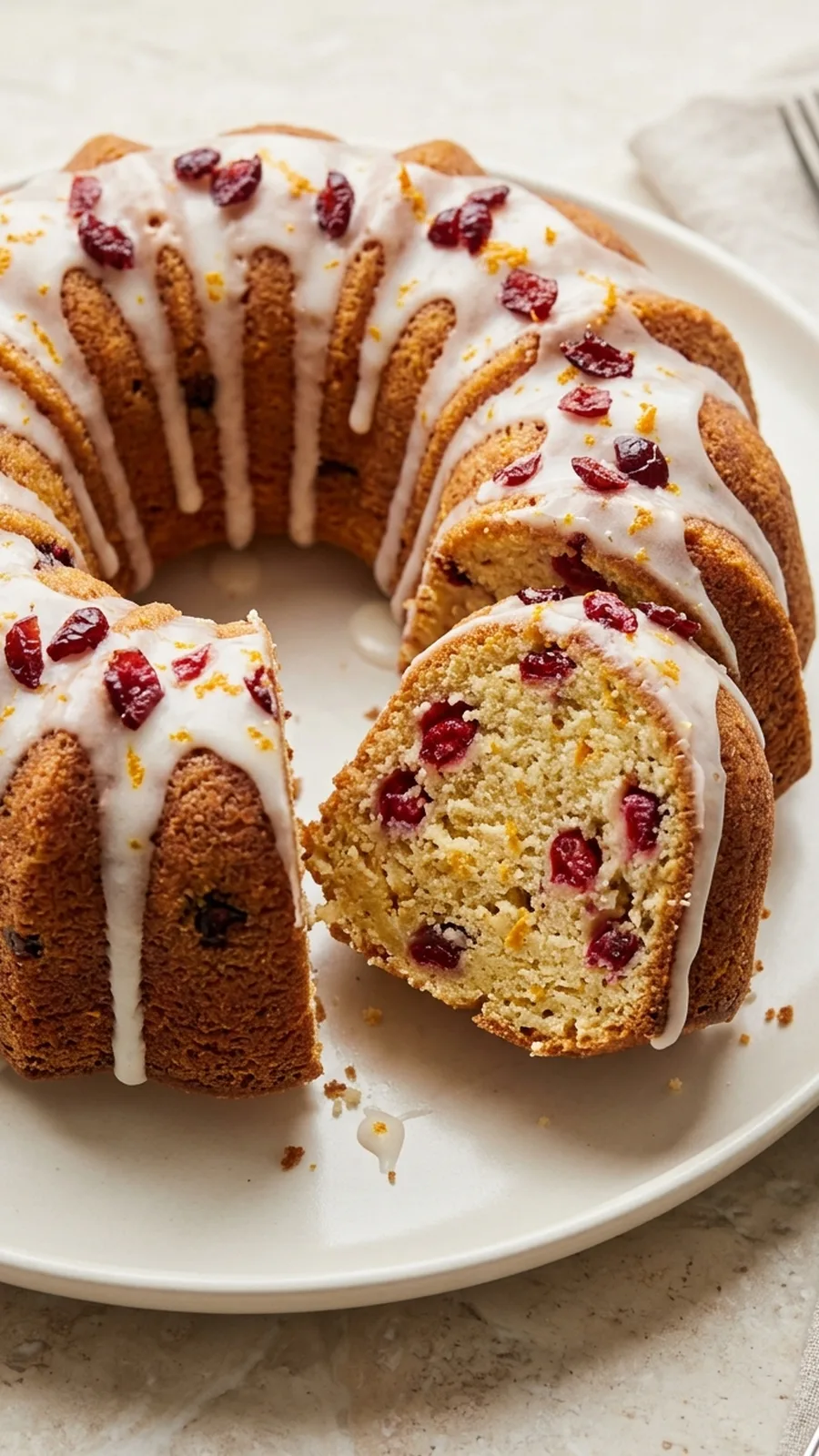
It bakes in a standard Bundt pan, requires no complicated decorating, and can be prepared ahead of time. The most important steps are preparing the pan thoroughly, avoiding overmixing, and allowing the cake to cool before glazing.
Why This Recipe Works
Fresh orange zest and juice provide layered citrus flavor. The zest contains fragrant citrus oils, while the juice adds brightness and moisture to the cake batter.
Sour cream creates a tender crumb: Its acidity and richness help keep the cake moist without making the batter excessively thin.
Butter and sugar create a light structure. Creaming them together incorporates air, helping the cake rise and develop a soft texture.
A small flour coating helps distribute the cranberries. Tossing the berries with a portion of the measured flour helps reduce sinking during baking, although some movement is natural.
The orange glaze adds flavor without a heavy frosting. A thin drizzle settles into the cake's ridges, providing sweetness while allowing the cranberry and orange flavors to remain prominent.
Equipment Needed
- 10- to 12-cup Bundt pan (2.4–2.8 L capacity)
- Stand mixer with paddle attachment or electric hand mixer
- Large mixing bowl
- Medium mixing bowl
- Fine-mesh sieve or flour sifter
- Microplane or fine citrus zester
- Citrus juicer
- Silicone spatula
- Wire cooling rack
- Small bowl and whisk for the glaze
- Digital kitchen scale or US measuring cups and spoons
- Wooden skewer or cake tester
Ingredients List
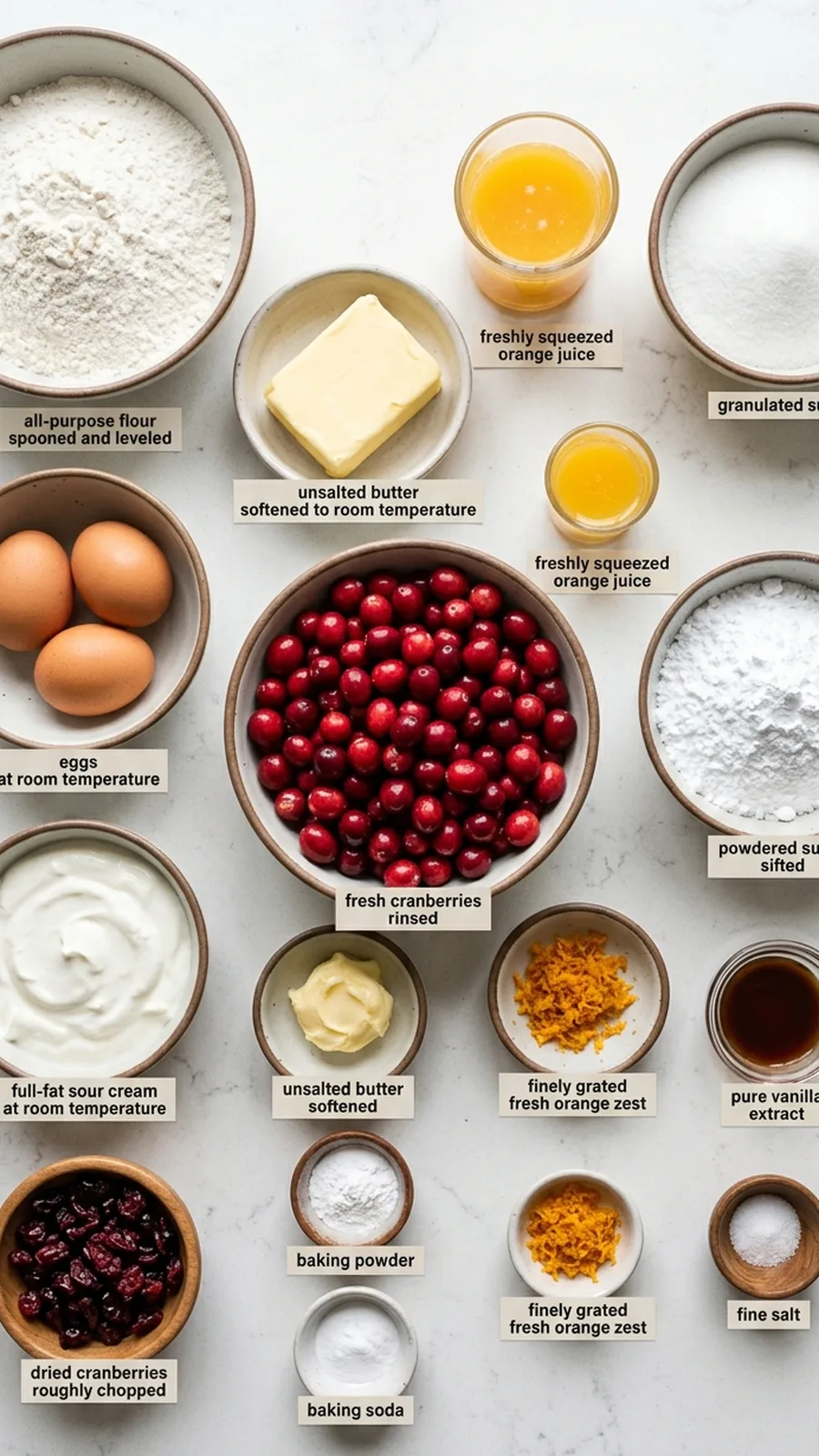
For the Cranberry Orange Bundt Cake
- 2 3/4 cups (330 g) all-purpose flour, spooned and leveled, divided
- 2 teaspoons (8 g) baking powder
- 1/2 teaspoon (2.5 g) baking soda
- 1/2 teaspoon (3 g) fine salt
- 3/4 cup (170 g) unsalted butter, softened to room temperature
- 1 3/4 cups (350 g) granulated sugar
- 3 large eggs (about 150 g without shells), at room temperature
- 1 cup (240 g) full-fat sour cream, at room temperature
- 1/4 cup (60 ml) freshly squeezed orange juice
- 2 tablespoons (about 12 g) finely grated fresh orange zest
- 1 teaspoon (5 ml) pure vanilla extract
- 1 1/2 cups (150 g) fresh cranberries, rinsed, dried thoroughly, and left whole
- 1 tablespoon (14 g) unsalted butter, softened, for greasing the Bundt pan
For the Orange Glaze
- 1 cup (120 g) powdered sugar, sifted
- 2 tablespoons (30 ml) freshly squeezed orange juice
- 1 teaspoon (about 2 g) finely grated fresh orange zest
Optional Garnish
- 2 tablespoons (about 15 g) dried cranberries, roughly chopped, optional, for decorating
Ingredient Notes and Substitutions
Fresh Cranberries: Fresh cranberries provide little bursts of tartness that balance the sweet cake and orange glaze. Their firm texture also helps them retain their shape during baking. Frozen cranberries can replace fresh cranberries in the same quantity. Add them directly from frozen without thawing, and expect that the cake may need slightly longer to bake. Thawed berries can release excess liquid and create red streaks in the batter. Dried cranberries are not a direct equivalent because they contain much less moisture and are usually sweeter.
Fresh Orange Juice and Zest: Fresh orange juice adds acidity and moisture, while orange zest contributes concentrated citrus aroma. Bottled orange juice can replace the fresh juice in the same quantity, although the flavor may be less vibrant. Fresh zest is strongly recommended because juice alone cannot provide the same aromatic citrus oils. Avoid grating the white pith beneath the orange peel, as it can introduce bitterness.
Full-Fat Sour Cream: Sour cream contributes moisture, richness, and a tender texture. Its acidity also works with the baking soda to support the cake's rise. Plain full-fat Greek yogurt can replace sour cream in the same quantity. The finished cake may be slightly tangier and somewhat firmer. Avoid thin, pourable yogurt because it can change the batter's consistency.
Unsalted Butter: Butter provides richness and helps create the cake's structure when beaten with sugar. Softened butter should yield to gentle pressure without looking melted or greasy. Salted butter can be substituted, but its salt content varies by brand. For consistent seasoning, unsalted butter is preferable. Oil is not a direct one-to-one substitute in this recipe because it does not trap air during creaming the way softened butter does.
All-Purpose Flour: All-purpose flour provides enough structure to support the cranberries while allowing the cake to remain tender. A commercial gluten-free all-purpose flour blend designed for one-to-one baking may work as a substitute, but the crumb can be more delicate and the moisture balance may differ. Choose a blend intended for cakes and follow its manufacturer's guidance. Cake flour is not a direct replacement without adjusting the recipe because its lower protein content changes the cake's structure.
Step-by-Step Instructions
1. Prepare the oranges and preheat the oven
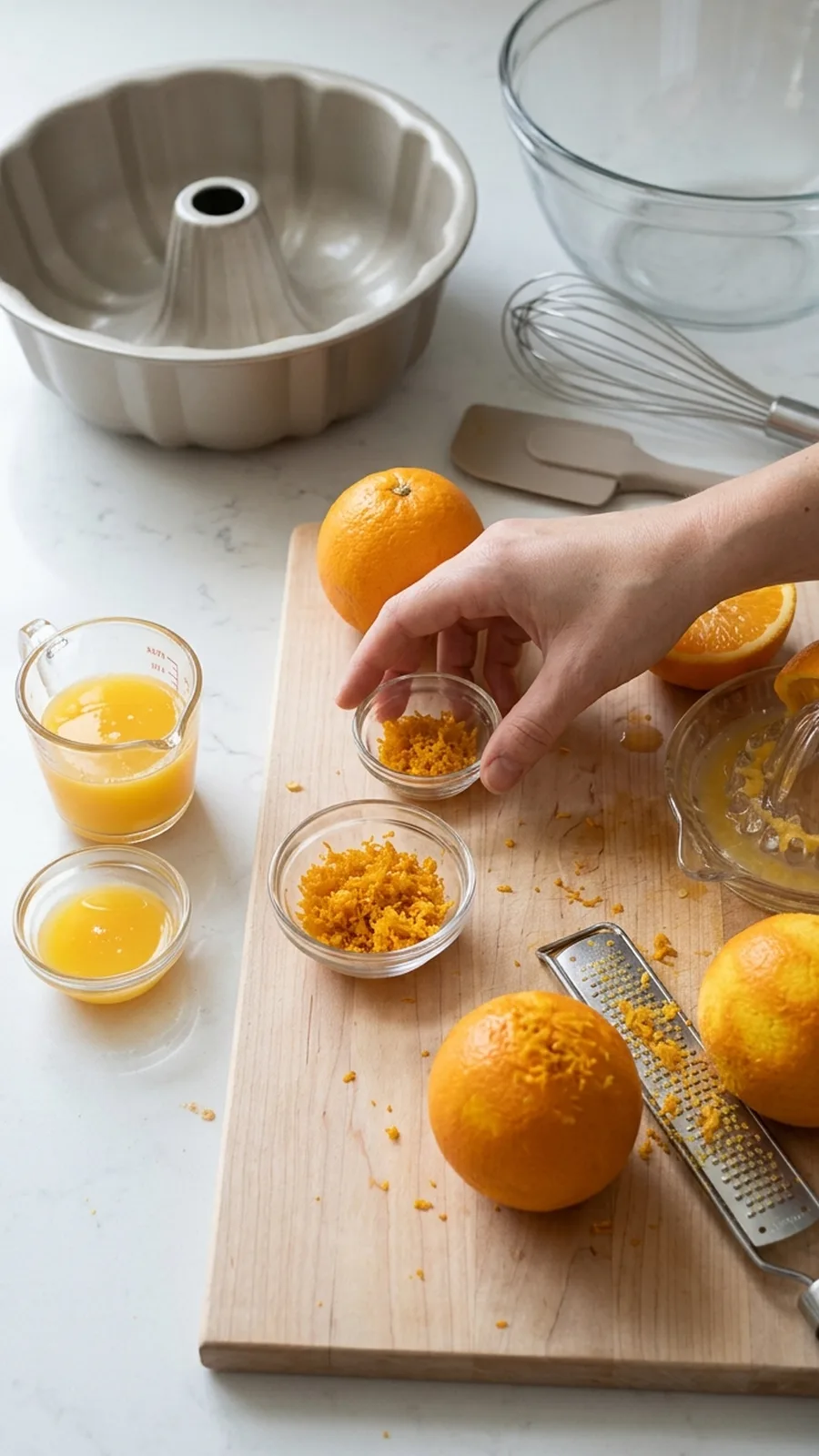
Wash and dry the oranges thoroughly. Finely grate the zest, avoiding the bitter white pith, then squeeze the juice.
Measure the orange zest and juice separately for the cake and glaze, following the ingredient list.
Preheat the oven to 350°F (175°C). Position an oven rack in the lower-middle part of the oven so the Bundt pan has adequate space and the cake can bake evenly.
2. Prepare the Bundt pan
Using the softened butter reserved for greasing, coat the entire inside of a 10- to 12-cup Bundt pan (2.4–2.8 L capacity).
Pay particular attention to the center tube, ridges, corners, and decorative grooves.
The surface should have a thin, continuous coating without large clumps of butter. Thorough greasing is especially important because Bundt cakes have more contact with the pan than cakes baked in standard round pans.
3. Combine the dry ingredients
In a medium mixing bowl, whisk together the all-purpose flour, baking powder, baking soda, and fine salt.
Before mixing, reserve 1 tablespoon (8 g) from the measured flour to coat the cranberries later.
Whisk the remaining dry ingredients until evenly combined, breaking up any visible lumps.
The mixture should look uniform, with no pockets of baking powder or baking soda.
4. Cream the butter and sugar
Place the softened butter and granulated sugar in a large mixing bowl or the bowl of a stand mixer fitted with the paddle attachment.
Beat on medium speed for 3–4 minutes, scraping down the bowl as needed.
The mixture should become lighter in color, fluffy, and slightly increased in volume.
If the butter looks shiny or greasy, it may be too warm. Briefly cool the mixture before continuing.
5. Add the eggs and vanilla
Add the eggs one at a time, beating on medium-low speed after each addition until incorporated.
Scrape down the sides and bottom of the bowl to prevent unmixed butter from collecting around the edges.
Add the vanilla extract and mix briefly.
The mixture should look creamy and relatively smooth. A slightly curdled appearance is not unusual at this stage and generally improves once the flour is incorporated.
6. Mix the sour cream and orange flavorings
In a separate bowl, stir together the sour cream, freshly squeezed orange juice, and orange zest reserved for the cake.
Mix until the orange zest is evenly distributed.
The mixture should be creamy and slightly loosened by the juice, with small flecks of orange zest throughout.
7. Combine the wet and dry mixtures
With the mixer on low speed, add approximately one-third of the flour mixture to the butter mixture.
Follow with half of the sour cream mixture.
Continue alternating the flour and sour cream mixtures, finishing with the flour.
Mix only until the ingredients are incorporated, then use a spatula to gently fold in any remaining streaks of flour.
The finished batter should be thick, smooth, and spoonable rather than thin or pourable.
Avoid prolonged mixing, which can develop too much gluten and produce a dense or tough cake.
8. Coat and fold in the cranberries
Pat the cranberries dry if any moisture remains on their surfaces.
Place them in a small bowl and toss with the reserved 1 tablespoon (8 g) of flour until lightly coated.
Add the cranberries to the cake batter.
Using a silicone spatula, gently fold them in until distributed throughout the mixture.
Take care not to crush the berries. The batter should remain thick, with whole cranberries visible throughout.
9. Fill the Bundt pan
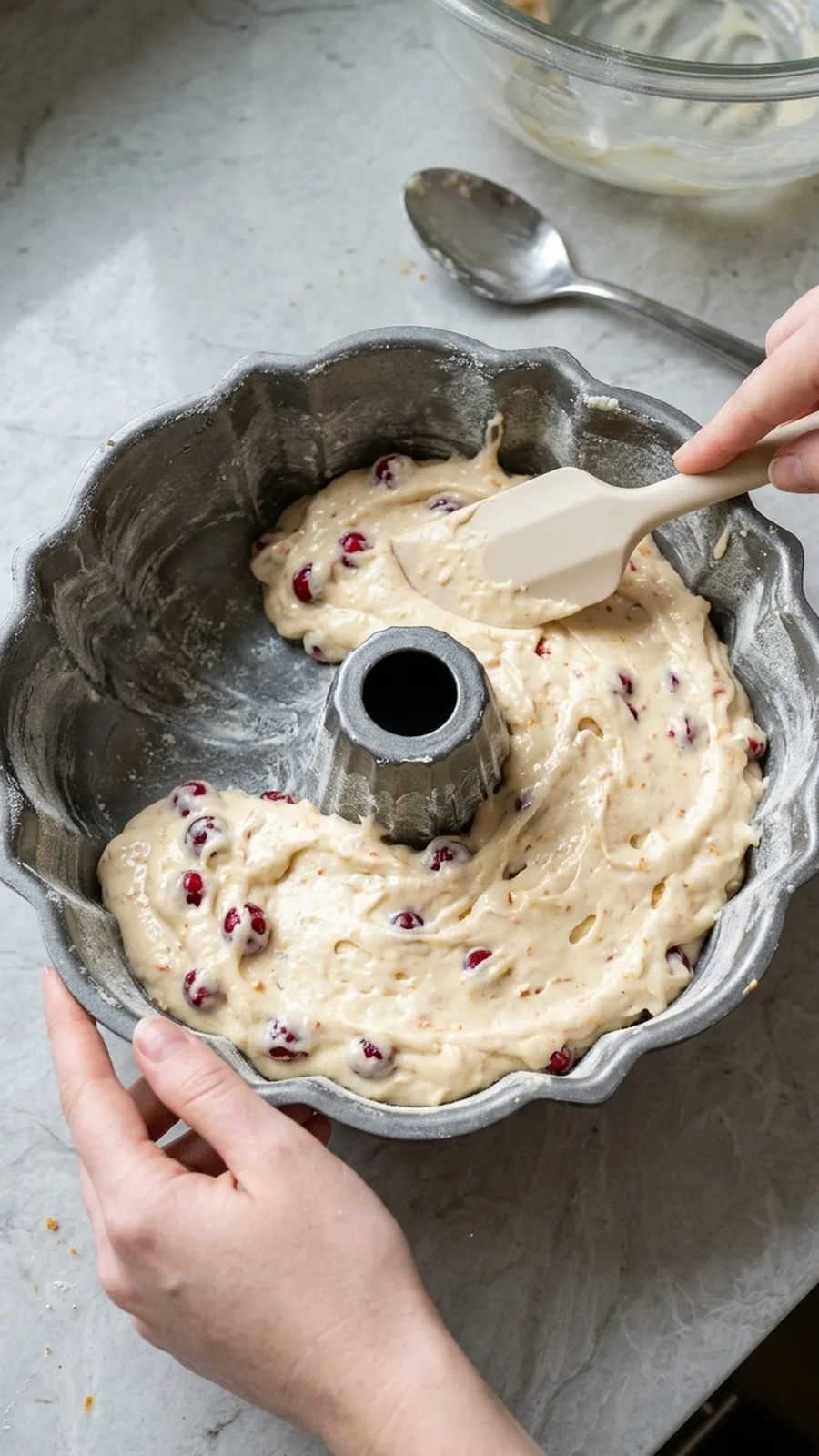
Spoon the batter evenly into the prepared Bundt pan.
Use a spatula to spread it into the decorative grooves and smooth the surface.
Gently tap the pan against the countertop to release large trapped air pockets.
The batter should fill the pan no more than about two-thirds full, leaving room for the cake to rise.
10. Bake the cranberry orange cake
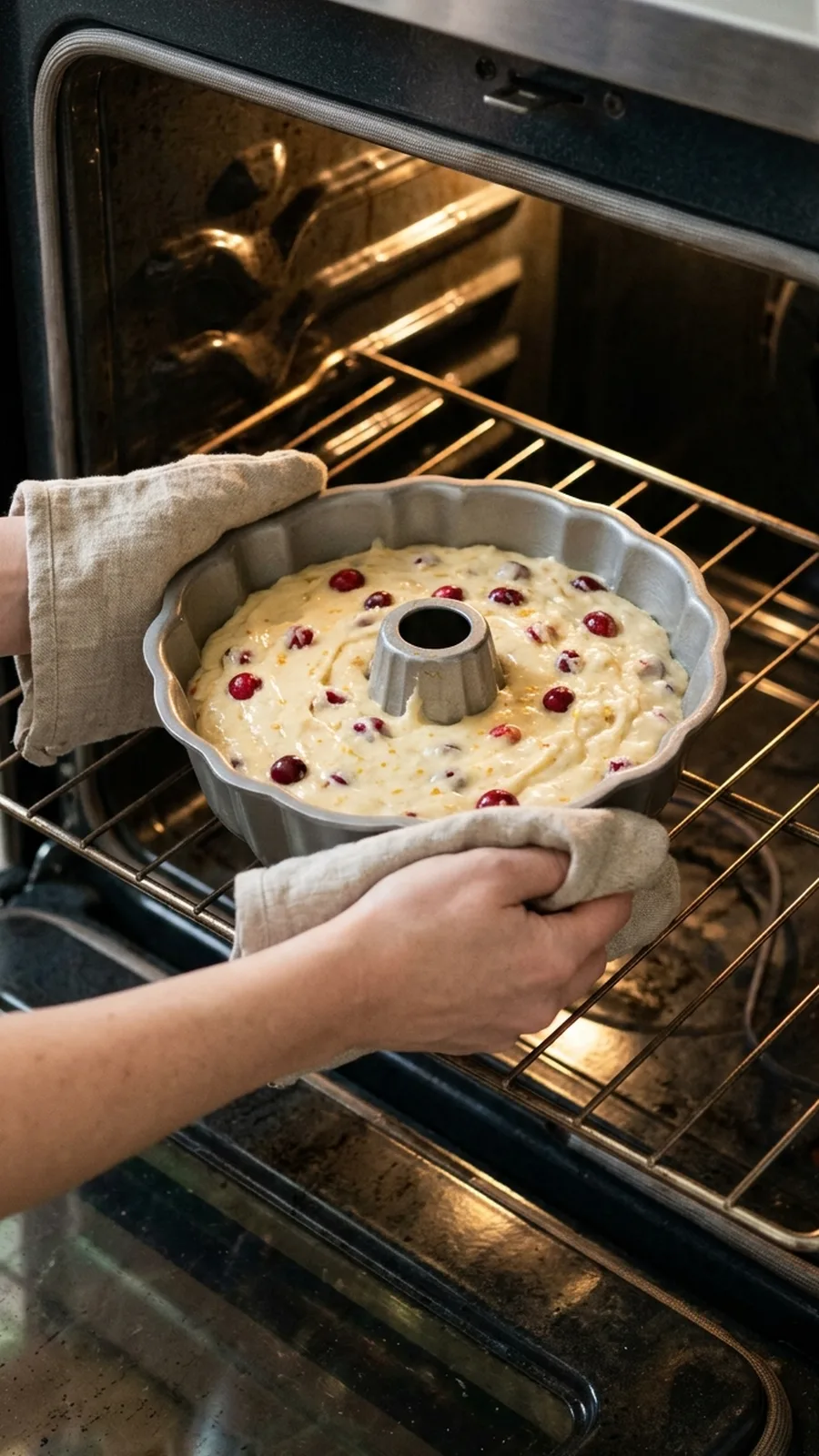
Place the pan in the preheated oven and bake at 350°F (175°C) for 50–60 minutes, with 55 minutes as the expected baking time.
Begin checking near the earlier end of the baking range.
The cake is ready when:
- The top is golden brown and feels set.
- The surface springs back gently when pressed.
- The edges begin pulling slightly away from the pan.
- A wooden skewer inserted into a thick section of cake comes out clean or with a few moist crumbs, rather than wet batter.
Avoid judging doneness by a cranberry-stained skewer alone. Insert the skewer into a cake-rich area when possible.
If the top is browning too quickly while the center remains underbaked, loosely cover the cake with aluminum foil and continue baking until done.
11. Cool and unmold the cake
Remove the Bundt pan from the oven and place it on a wire cooling rack.
Allow the cake to cool in the pan for 15 minutes.
During this time, the cake's structure will firm up enough to make unmolding easier.
Gently loosen any visible edges with a thin, flexible spatula, taking care not to damage the cake or the pan.
Place the wire rack over the pan, then carefully invert them together.
Lift away the pan slowly.
If the cake resists, allow it to rest briefly in the inverted position rather than shaking it forcefully.
Let the unmolded cake cool for approximately 1 hour, or until completely cool before glazing.
12. Prepare the orange glaze
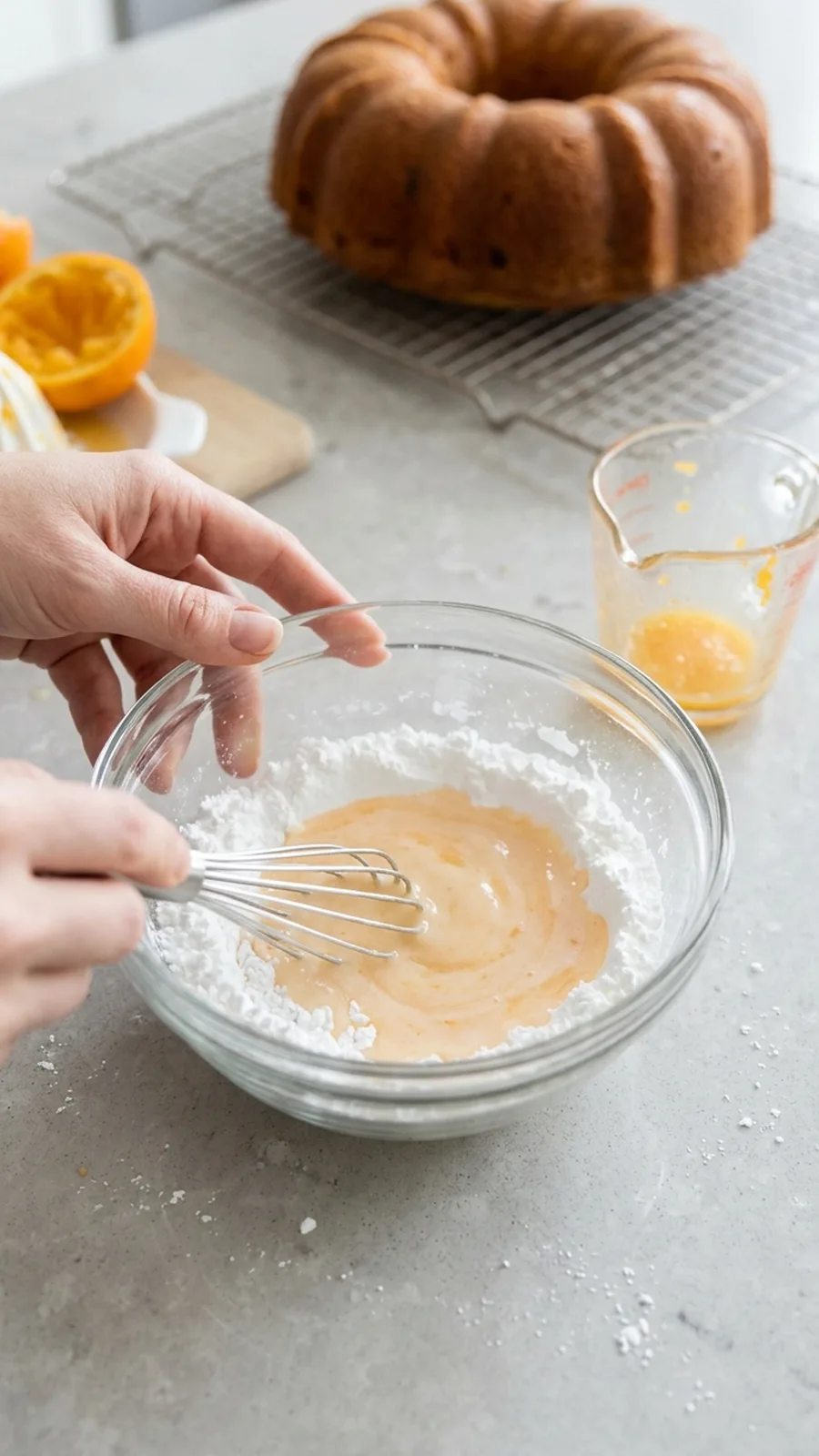
While the cake finishes cooling, place the sifted powdered sugar in a small mixing bowl.
Add the freshly squeezed orange juice reserved for the glaze and whisk until smooth.
Stir in the orange zest reserved for the glaze.
The glaze should be thick enough to coat a spoon but fluid enough to drizzle slowly.
If it seems too stiff, continue stirring thoroughly before making any adjustment. If it appears thin, allow it to stand briefly and check the consistency again.
13. Glaze and decorate the cake
Once the cake is completely cool, transfer it to a serving plate.
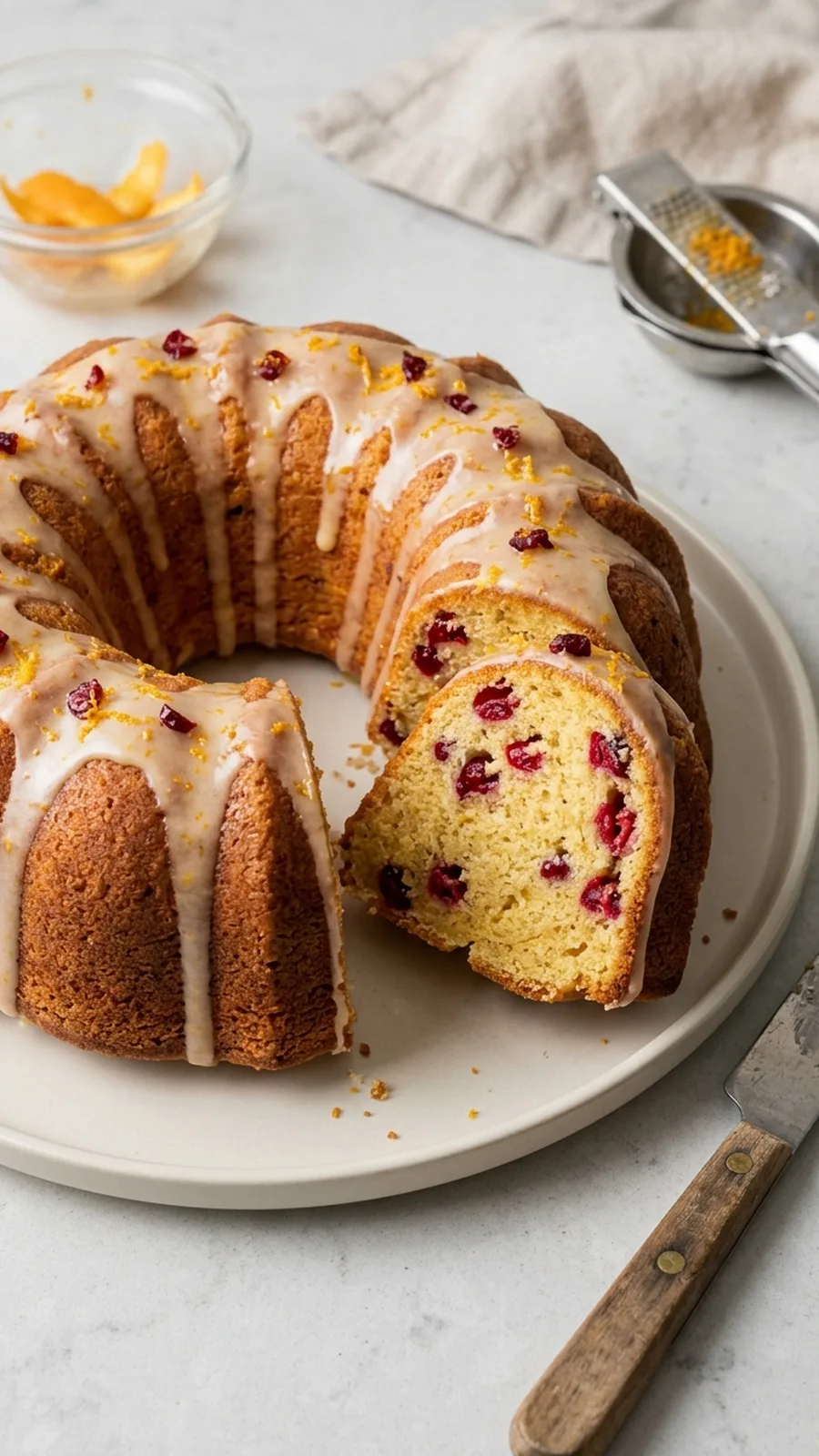
Slowly spoon the orange glaze over the top, allowing it to flow naturally down the Bundt cake's ridges.
For a decorative finish, scatter the optional chopped dried cranberries over the glaze while it is still wet.
Allow the glaze to set for approximately 15 minutes before slicing.
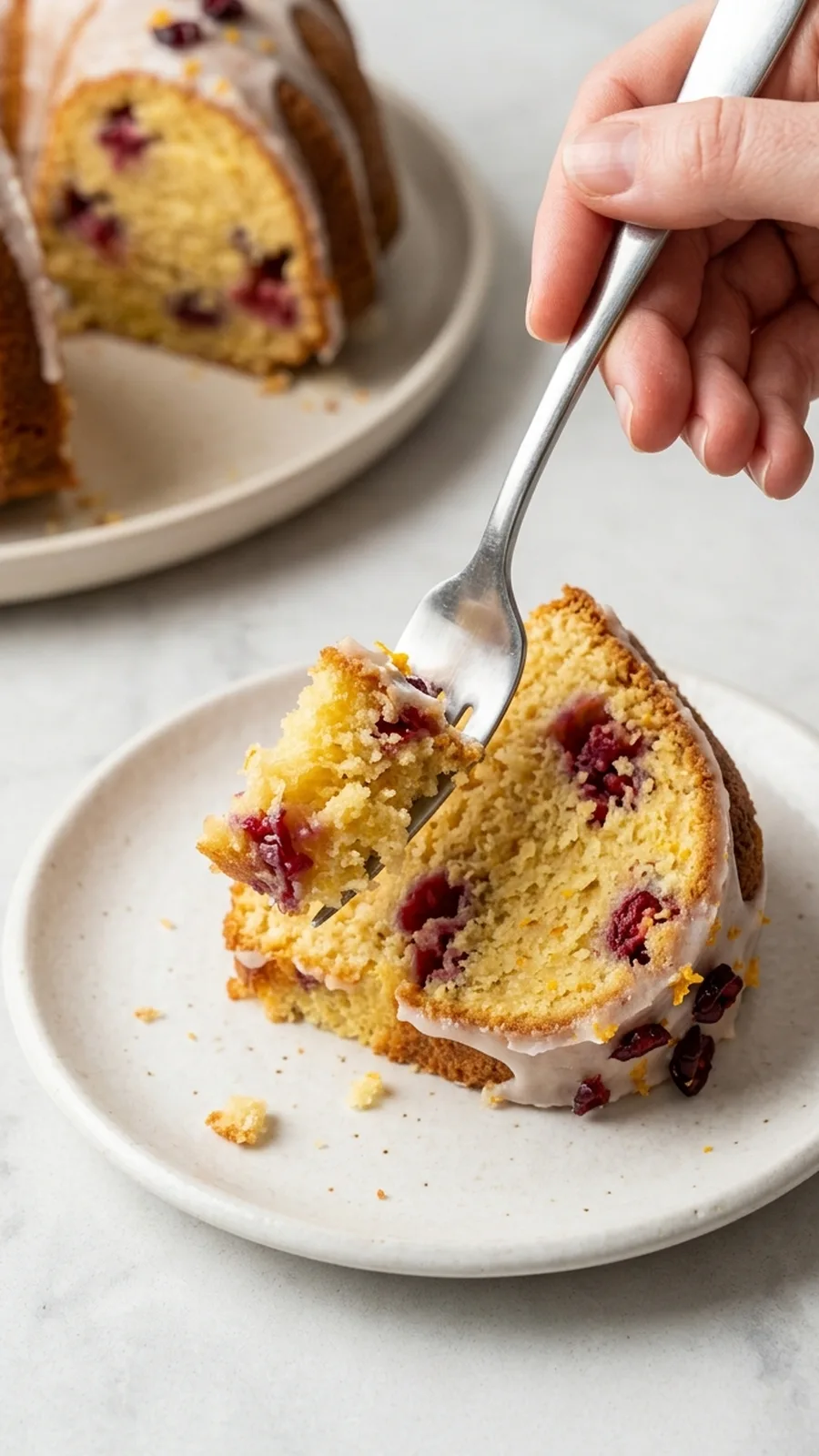
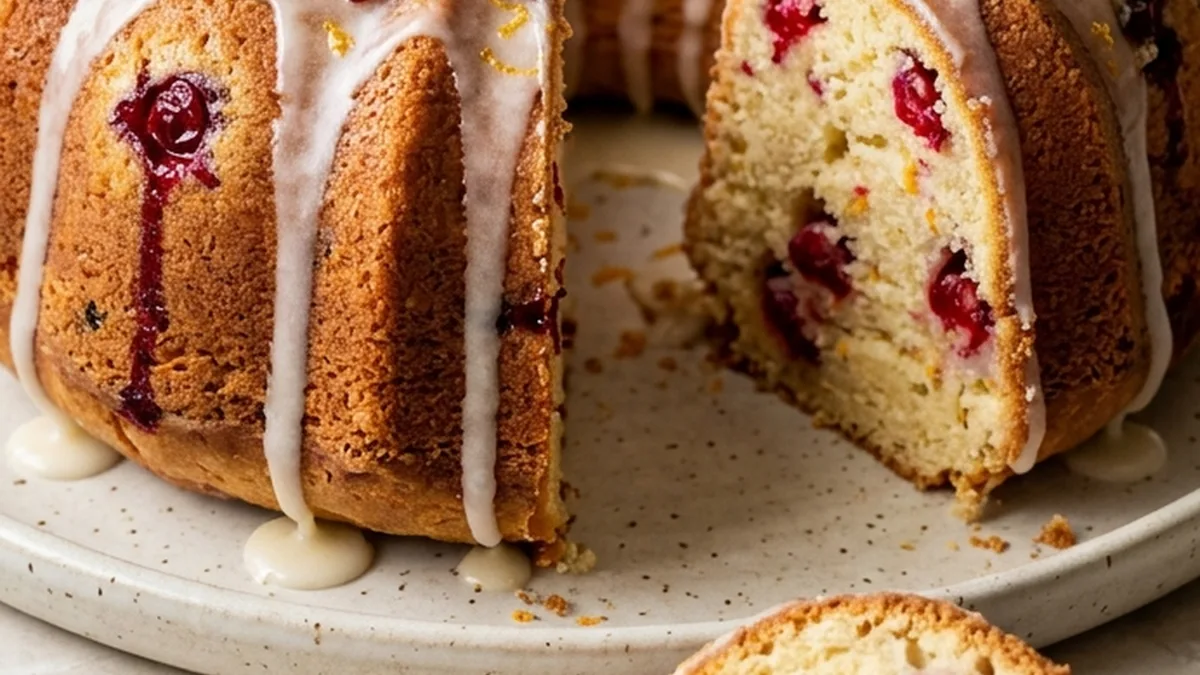
The finished cake should have a soft, moist crumb, visible cranberries, and a delicate orange glaze that holds its shape without becoming excessively thick.
Storage, Freezing, and Make-Ahead Instructions
Room-Temperature Storage: Store the completely cooled Cranberry Orange Bundt Cake in an airtight cake container at room temperature for up to 2 days, provided the kitchen is cool. Keep the cake away from direct sunlight and heat sources. For the neatest appearance, allow the glaze to set before covering the cake.
Refrigerator Storage: For longer storage, place the cake in an airtight container and refrigerate for up to 5 days. Refrigeration can make butter-based cakes feel firmer, so let individual slices return to room temperature before serving. Keep the cake well covered to prevent it from absorbing refrigerator odors or drying out.
Freezing Instructions: This cake freezes well, especially before glazing. Allow the baked cake to cool completely. Wrap the whole cake or individual slices tightly in plastic wrap, followed by a layer of aluminum foil or a freezer-safe container. Freeze for up to 3 months for best quality. For the best appearance, prepare and add the orange glaze after thawing.
Thawing: Thaw the wrapped cake overnight in the refrigerator. Leave it wrapped during thawing to help limit condensation directly on the cake's surface. Allow it to come to room temperature before glazing or serving.
Make-Ahead Instructions: The cake can be baked a day before serving. Once completely cooled, store it tightly covered and prepare the glaze on the day it will be served. This approach keeps the glaze looking fresh and helps prevent moisture from softening the decorative finish. Avoid preparing the fully mixed batter far in advance because the chemical leavening begins reacting once the wet and dry ingredients are combined.
FAQ
Can I use frozen cranberries instead of fresh cranberries?
Yes. Frozen cranberries can replace fresh cranberries in the same quantity. Do not thaw them before adding them to the batter, as thawing releases moisture and may cause excessive color bleeding. The cake may need slightly more baking time, so rely on the doneness cues rather than the clock alone.
Why did my Cranberry Orange Bundt Cake stick to the pan?
Bundt cakes commonly stick when the pan's decorative grooves are not thoroughly greased or when the cake is unmolded too soon or too late. A well-prepared pan and a short cooling period help the cake release more cleanly. Nonstick coatings can also lose effectiveness as pans age or become scratched.
How do I keep the cranberries from sinking to the bottom?
A thick cake batter helps suspend the cranberries during baking. Coating them lightly with the reserved flour can also help, although it does not guarantee that every berry will stay in place. Avoid adding excess liquid or crushing the berries, as both can affect their distribution.
Can I make this recipe ahead of time?
Yes. Bake the cake in advance, allow it to cool completely, and store it tightly covered. For the freshest presentation, prepare the orange glaze shortly before serving. The cake can also be frozen without glaze and decorated after thawing.
Can I bake this cake in a loaf pan instead?
The full batter quantity is too large for a standard loaf pan. Dividing the batter between appropriately sized loaf pans may work, but the baking time and final texture will differ because loaf pans distribute heat differently from a Bundt pan. A separate loaf-pan adaptation is preferable if you want reliable pan capacity and baking guidance.
Readers who cook this dish also love making Christmas Spice Cake with Eggnog Buttercream, Turkey Cranberry Meatballs, Cranberry Jalapeño Dip, and Cranberry Turkey Ramen.

Cranberry Orange Bundt Cake
Ingredients
Method
- Wash and dry the oranges thoroughly: Finely grate the zest, avoiding the bitter white pith, then squeeze the juice. Measure the orange zest and juice separately for the cake and glaze, following the ingredient list. Preheat the oven to 350°F (175°C) . Position an oven rack in the lower-middle part of the oven so the Bundt pan has adequate space and the cake can bake evenly.
- Using the softened butter reserved for greasing, coat the entire inside of a 10- to 12-cup Bundt pan (2.4–2.8 L capacity). Pay particular attention to the center tube, ridges, corners, and decorative grooves. The surface should have a thin, continuous coating without large clumps of butter. Thorough greasing is especially important because Bundt cakes have more contact with the pan than cakes baked in standard round pans.
- In a medium mixing bowl, whisk together the all-purpose flour, baking powder, baking soda, and fine salt. Before mixing, reserve 1 tablespoon (8 g) from the measured flour to coat the cranberries later. Whisk the remaining dry ingredients until evenly combined, breaking up any visible lumps. The mixture should look uniform, with no pockets of baking powder or baking soda.
- Place the softened butter and granulated sugar in a large mixing bowl or the bowl of a stand mixer fitted with the paddle attachment. Beat on medium speed for 3–4 minutes, scraping down the bowl as needed. The mixture should become lighter in color, fluffy, and slightly increased in volume. If the butter looks shiny or greasy, it may be too warm. Briefly cool the mixture before continuing.
- Add the eggs one at a time, beating on medium-low speed after each addition until incorporated. Scrape down the sides and bottom of the bowl to prevent unmixed butter from collecting around the edges. Add the vanilla extract and mix briefly. The mixture should look creamy and relatively smooth. A slightly curdled appearance is not unusual at this stage and generally improves once the flour is incorporated.
- In a separate bowl, stir together the sour cream, freshly squeezed orange juice, and orange zest reserved for the cake. Mix until the orange zest is evenly distributed. The mixture should be creamy and slightly loosened by the juice, with small flecks of orange zest throughout.
- With the mixer on low speed, add approximately one-third of the flour mixture to the butter mixture. Follow with half of the sour cream mixture. Continue alternating the flour and sour cream mixtures, finishing with the flour. Mix only until the ingredients are incorporated, then use a spatula to gently fold in any remaining streaks of flour. The finished batter should be thick, smooth, and spoonable rather than thin or pourable. Avoid prolonged mixing, which can develop too much gluten and produce a dense or tough cake.
- Pat the cranberries dry if any moisture remains on their surfaces. Place them in a small bowl and toss with the reserved 1 tablespoon (8 g) of flour until lightly coated. Add the cranberries to the cake batter. Using a silicone spatula, gently fold them in until distributed throughout the mixture. Take care not to crush the berries. The batter should remain thick, with whole cranberries visible throughout.
- Spoon the batter evenly into the prepared Bundt pan. Use a spatula to spread it into the decorative grooves and smooth the surface. Gently tap the pan against the countertop to release large trapped air pockets. The batter should fill the pan no more than about two-thirds full, leaving room for the cake to rise.
- Place the pan in the preheated oven and bake at 350°F (175°C) for 50–60 minutes , with 55 minutes as the expected baking time. Begin checking near the earlier end of the baking range. The cake is ready when: The top is golden brown and feels set. The surface springs back gently when pressed. The edges begin pulling slightly away from the pan. A wooden skewer inserted into a thick section of cake comes out clean or with a few moist crumbs, rather than wet batter. Avoid judging doneness by a cranberry-stained skewer alone. Insert the skewer into a cake-rich area when possible. If the top is browning too quickly while the center remains underbaked, loosely cover the cake with aluminum foil and continue baking until done.
- Remove the Bundt pan from the oven and place it on a wire cooling rack. Allow the cake to cool in the pan for 15 minutes. During this time, the cake's structure will firm up enough to make unmolding easier. Gently loosen any visible edges with a thin, flexible spatula, taking care not to damage the cake or the pan. Place the wire rack over the pan, then carefully invert them together. Lift away the pan slowly. If the cake resists, allow it to rest briefly in the inverted position rather than shaking it forcefully. Let the unmolded cake cool for approximately 1 hour, or until completely cool before glazing.
- While the cake finishes cooling, place the sifted powdered sugar in a small mixing bowl. Add the freshly squeezed orange juice reserved for the glaze and whisk until smooth. Stir in the orange zest reserved for the glaze. The glaze should be thick enough to coat a spoon but fluid enough to drizzle slowly. If it seems too stiff, continue stirring thoroughly before making any adjustment. If it appears thin, allow it to stand briefly and check the consistency again.
- Once the cake is completely cool, transfer it to a serving plate. Slowly spoon the orange glaze over the top, allowing it to flow naturally down the Bundt cake's ridges. For a decorative finish, scatter the optional chopped dried cranberries over the glaze while it is still wet. Allow the glaze to set for approximately 15 minutes before slicing. The finished cake should have a soft, moist crumb, visible cranberries, and a delicate orange glaze that holds its shape without becoming excessively thick.