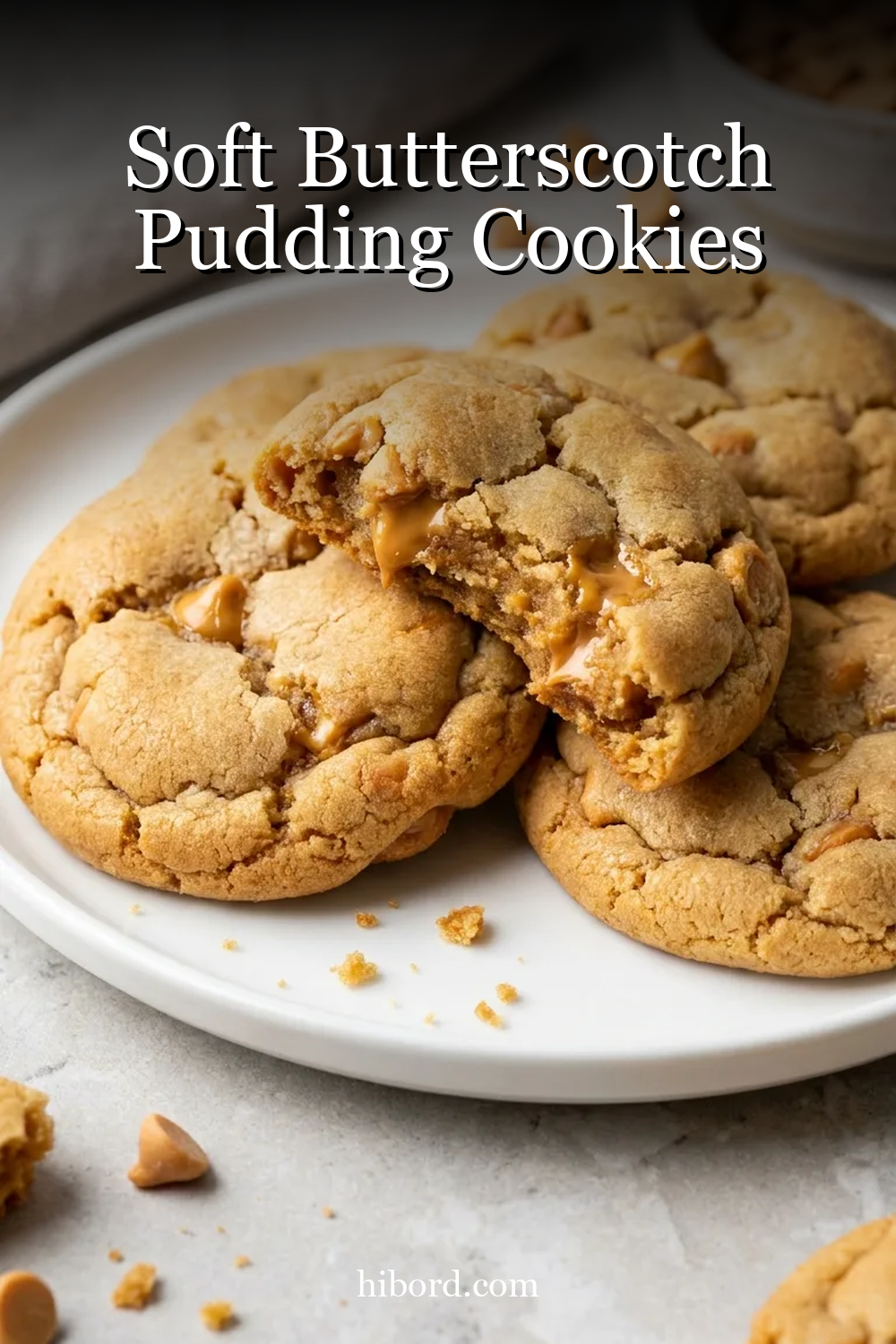
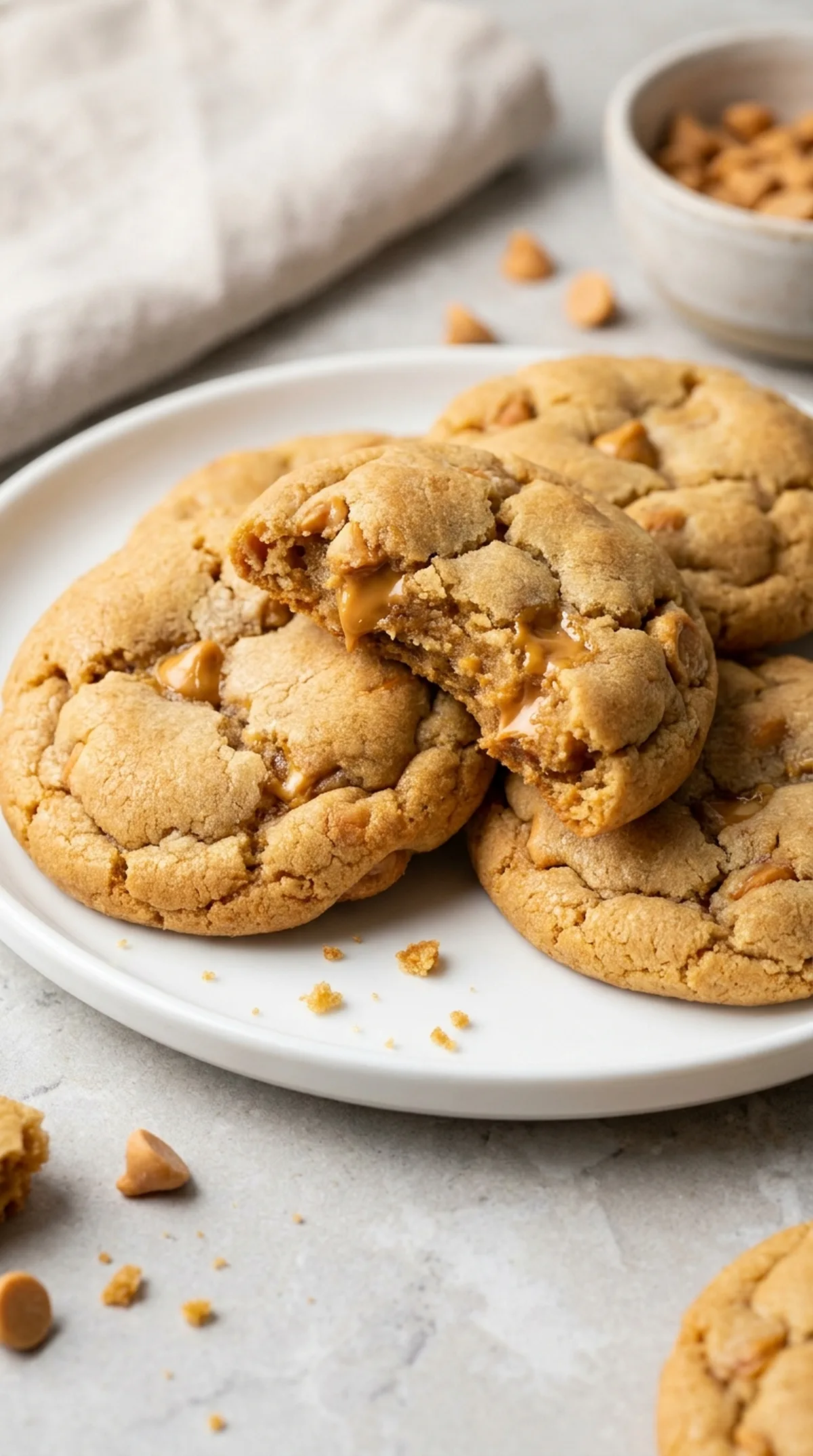
Butterscotch Pudding Cookies are soft, chewy cookies made with brown sugar, instant butterscotch pudding mix, and plenty of butterscotch chips. They have caramel-like flavor, lightly crisp edges, and tender centers that remain soft after cooling.
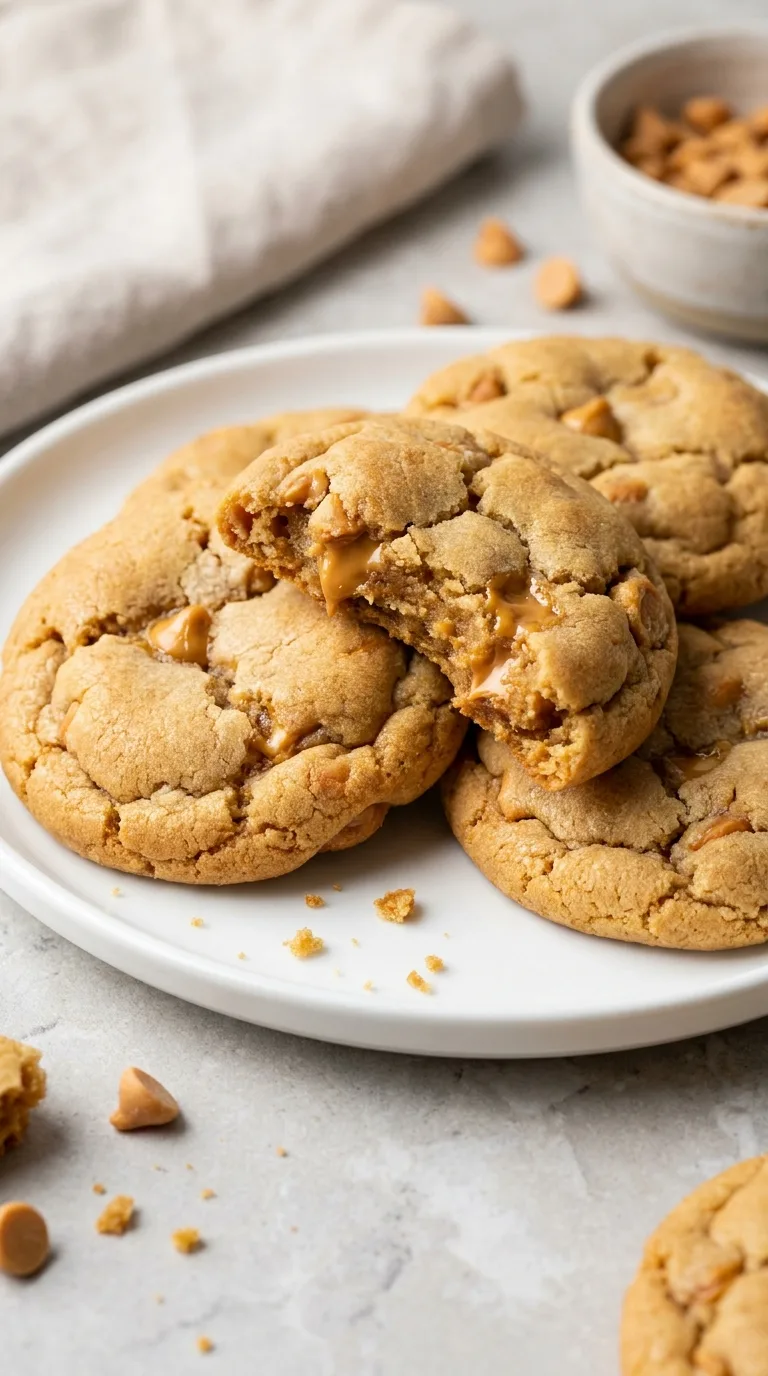
Chilling the dough for 30 minutes limits spreading and gives the flour time to absorb moisture. Be sure to use dry instant pudding mix rather than prepared pudding or cook-and-serve mix, as those products behave differently in cookie dough.
Recipe at a Glance
- Prep Time: 20 minutes
- Cook Time: 22 minutes
- Additional Time: 40 minutes
- Total Time: 1 hour 22 minutes
- Yield: 24 cookies
- Difficulty: Easy
Why You'll Love This Recipe
- Instant pudding mix helps retain moisture and creates soft, thick centers.
- Brown sugar adds caramel notes and contributes to a chewier texture.
- Creaming butter with sugars incorporates air for lift without making them cakey.
- Chilling the dough reduces spreading and ensures even baking.
- Removing cookies while they still look slightly soft prevents dryness.
Equipment Needed
- Two large rimmed baking sheets
- Parchment paper or silicone baking mats
- Electric hand mixer or stand mixer with paddle attachment
- Large mixing bowl
- Medium mixing bowl
- Flexible spatula
- 2-tablespoon cookie scoop
- Wire cooling rack
Ingredients You'll Need
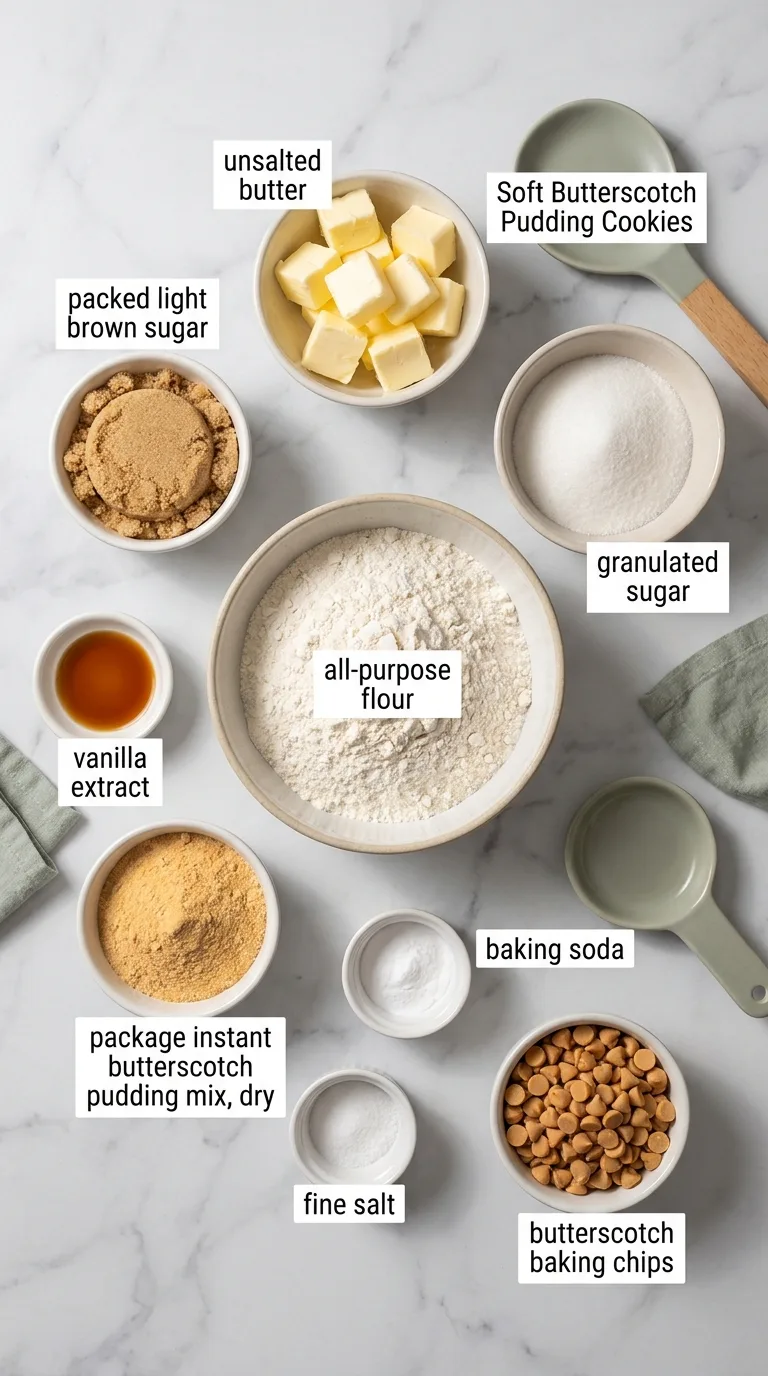
- ⭐ 1 cup (226 g) unsalted butter, softened to cool room temperature
- ⭐ 3/4 cup packed (150 g) light brown sugar
- ⭐ 1/2 cup (100 g) granulated sugar
- ⭐ 2 large eggs, at room temperature
- ⭐ 2 teaspoons (10 ml) vanilla extract
- ⭐ 1 package (3.4 ounces/96 g) instant butterscotch pudding mix, dry
- ⭐ 2 1/4 cups (270 g) all-purpose flour
- ⭐ 1 teaspoon baking soda
- ⭐ 1/2 teaspoon fine salt
- ⭐ 1 cup (170 g) butterscotch baking chips
How to Make Soft Butterscotch Pudding Cookies
Prepare the Baking Sheets
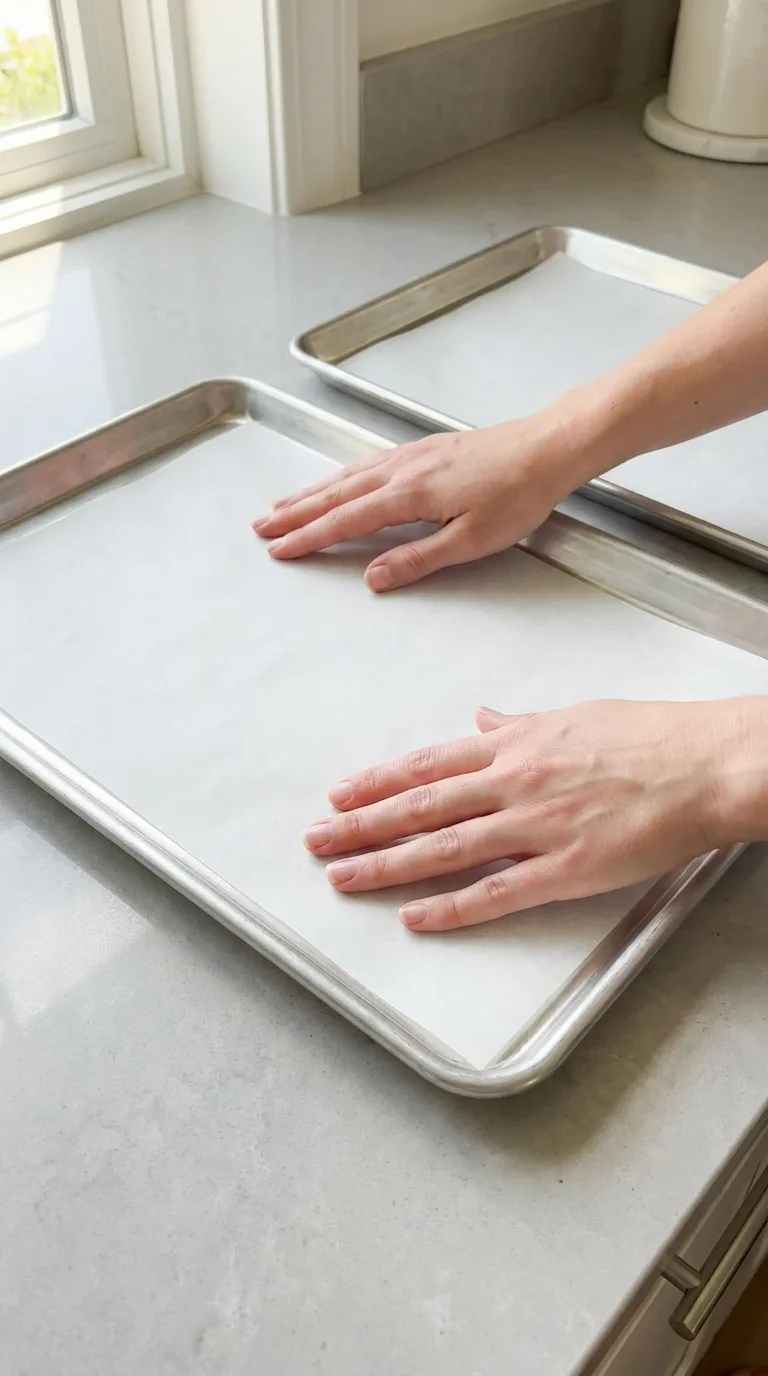
Line two large rimmed baking sheets with parchment paper or silicone baking mats. Clear enough refrigerator space to chill the portioned cookie dough.
Cream the Butter and Sugars
Place the softened butter, brown sugar, and granulated sugar in a large mixing bowl. Beat on medium speed for 2 to 3 minutes, until the mixture looks pale, fluffy, and evenly blended. Scrape down the bowl once during mixing to ensure everything is well combined.
Add the Eggs and Vanilla
Add the eggs one at a time, beating on low speed until each is fully incorporated. Mix in the vanilla. The mixture should look smooth and creamy rather than separated or greasy, indicating that the ingredients are well combined.
Mix in the Pudding Powder
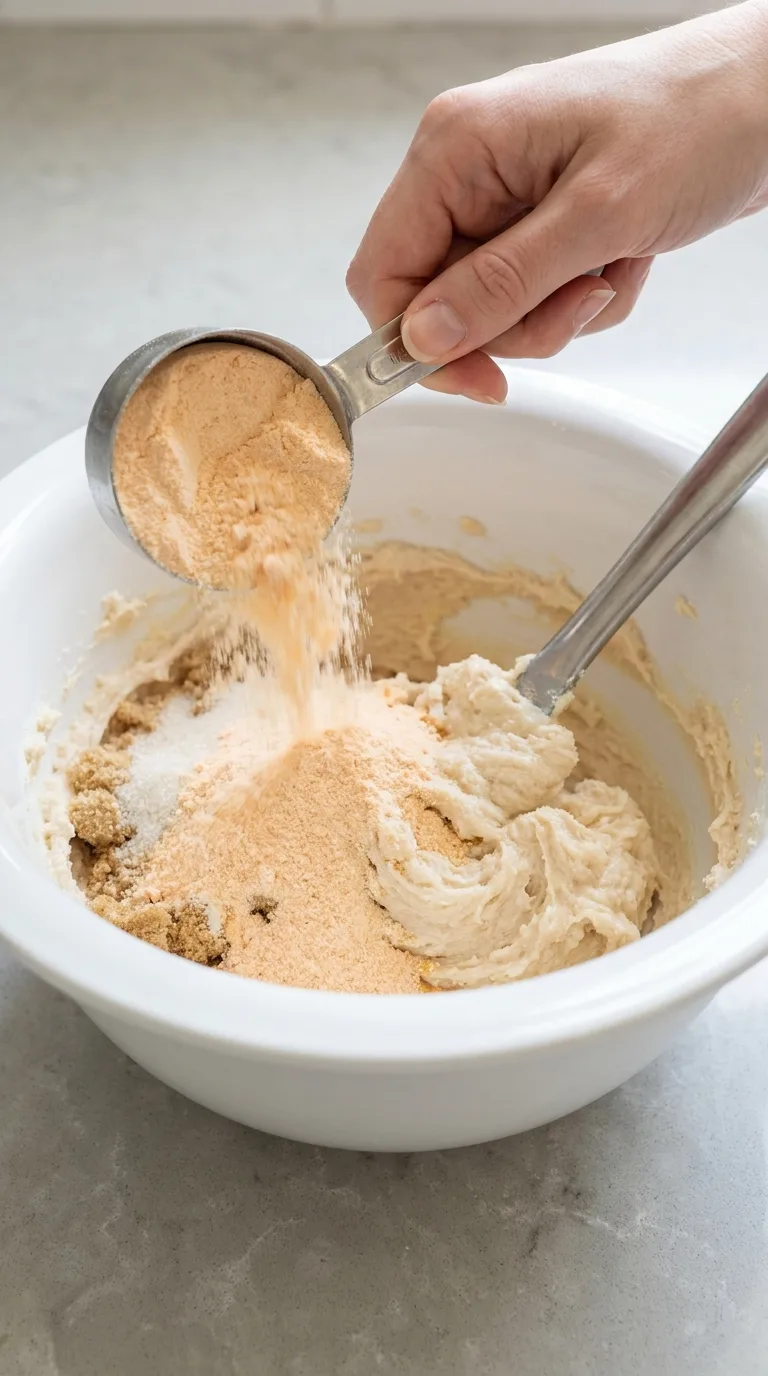
Add the dry instant butterscotch pudding mix. Beat on low speed for about 30 seconds, until no dry streaks remain and the mixture is evenly golden. This step is crucial for achieving the desired flavor and texture.
Combine the Dry Ingredients
In a medium bowl, whisk together the flour, baking soda, and salt. Break up any flour lumps so the baking soda is distributed evenly, which is important for proper leavening.
Make the Cookie Dough
Add the dry ingredients to the butter mixture in two additions, mixing on low speed after each. Stop when only a few flour streaks remain, then finish folding by hand. The dough should be thick, soft, and slightly tacky but firm enough to scoop.
Add the Butterscotch Chips
Fold in the butterscotch chips until they are evenly distributed. Avoid prolonged mixing, which can make the cookies tougher. This ensures that the chips are well incorporated without overworking the dough.
Portion the Dough
Scoop the dough into 24 portions of about 2 tablespoons each. Arrange them on the prepared baking sheets, leaving about 2 inches (5 cm) between portions. Roll any uneven scoops gently between your palms without compacting them to maintain the desired texture.
Chill the Dough
Refrigerate the portioned dough for 30 minutes. The dough should feel firmer and less sticky after chilling, which helps prevent excessive spreading during baking.
Preheat the Oven
Near the end of the chilling time, preheat the oven to 350°F (175°C). Position a rack in the center of the oven to ensure even baking.
Bake the First Batch
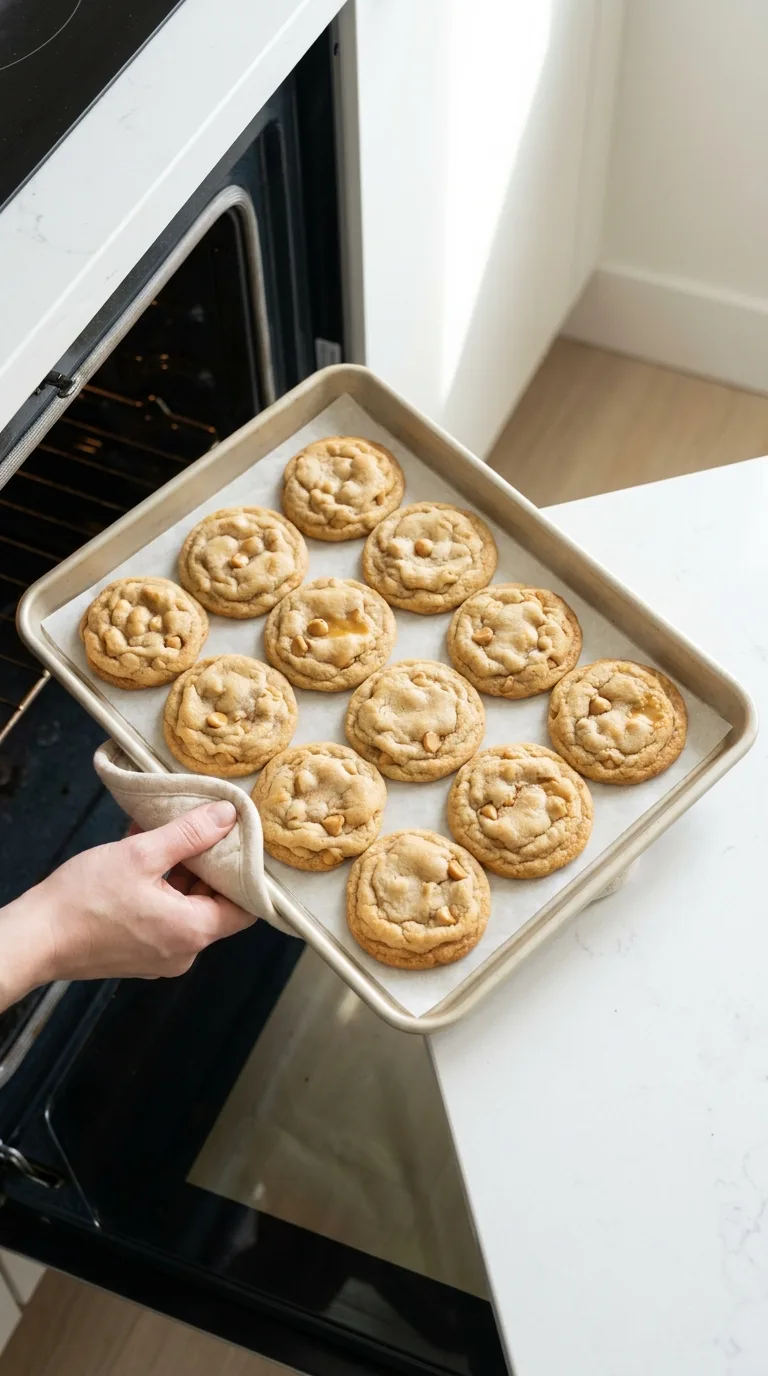
Bake one sheet at a time for 10 to 12 minutes. The edges should look set and lightly golden, while the centers should appear puffed and slightly underdone. The cookies should not be deeply browned across the tops, as they will continue to cook after being removed from the oven.
Shape if Necessary
If the cookies have spread unevenly, immediately place a round cookie cutter or wide glass around each warm cookie and gently move it in a circular motion to neaten the edges. This step helps achieve a uniform shape.
Cool on the Baking Sheet
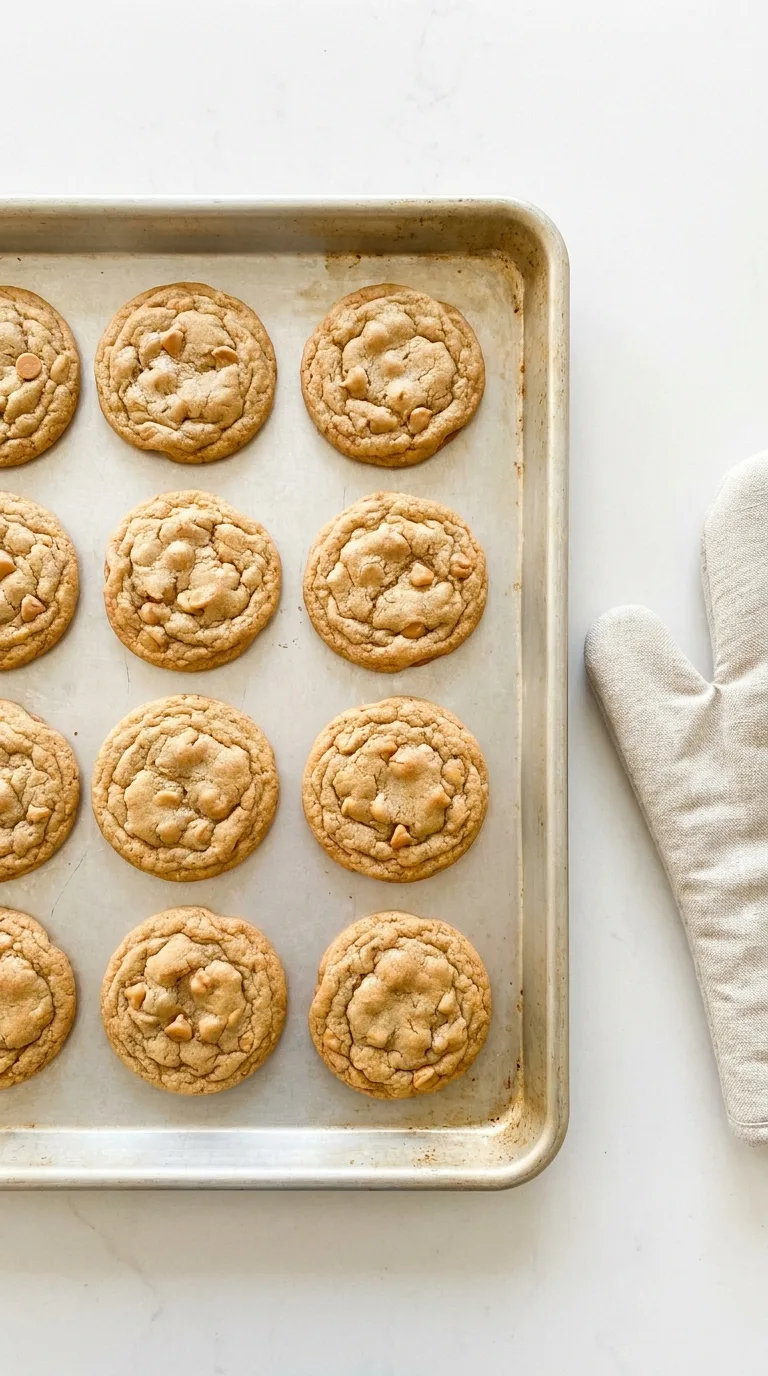
Let the cookies cool on the baking sheet for 5 minutes. They will be very soft when first removed from the oven but will firm as they rest, making them easier to transfer.
Bake the Remaining Cookies
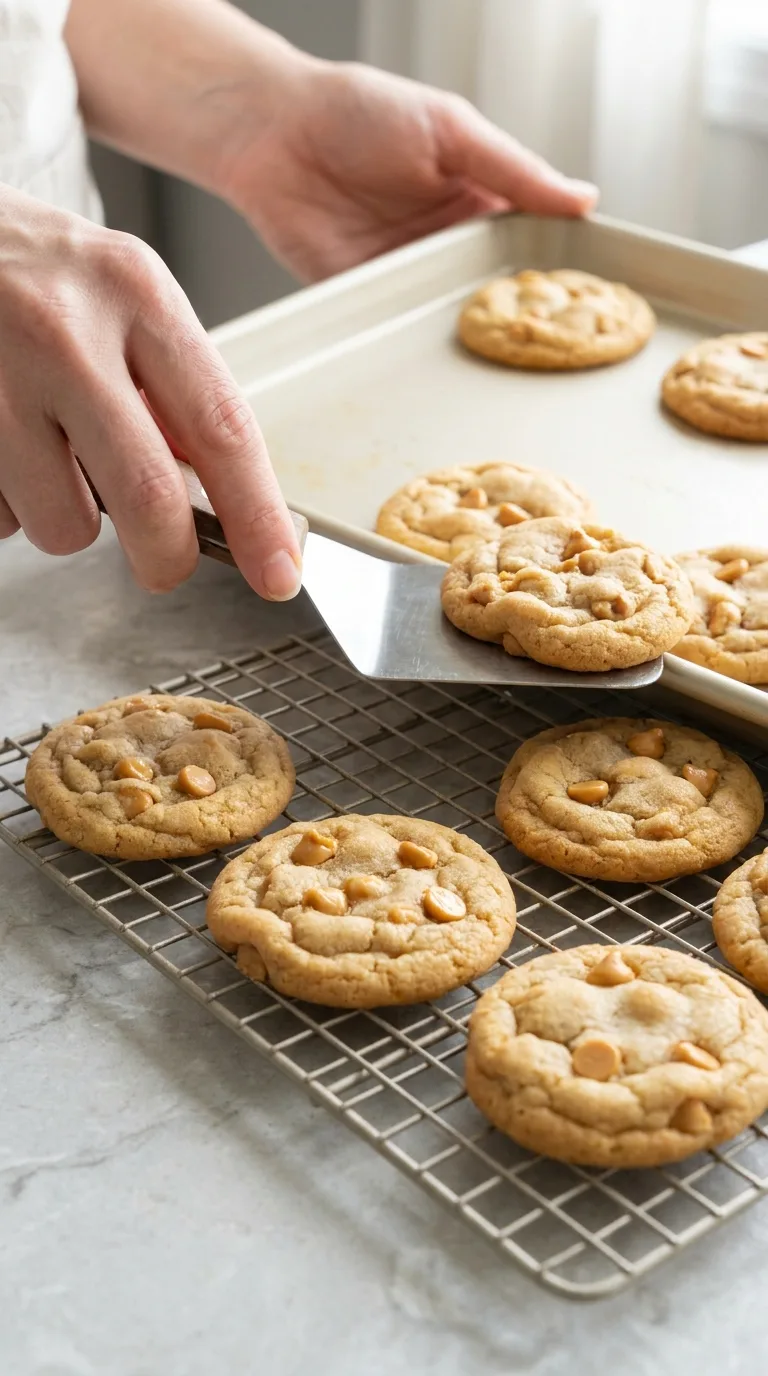
Bake the second sheet for 10 to 12 minutes. Transfer the first batch to a wire rack, then repeat the 5-minute pan cooling process with the second batch to ensure even cooling.
Finish Cooling
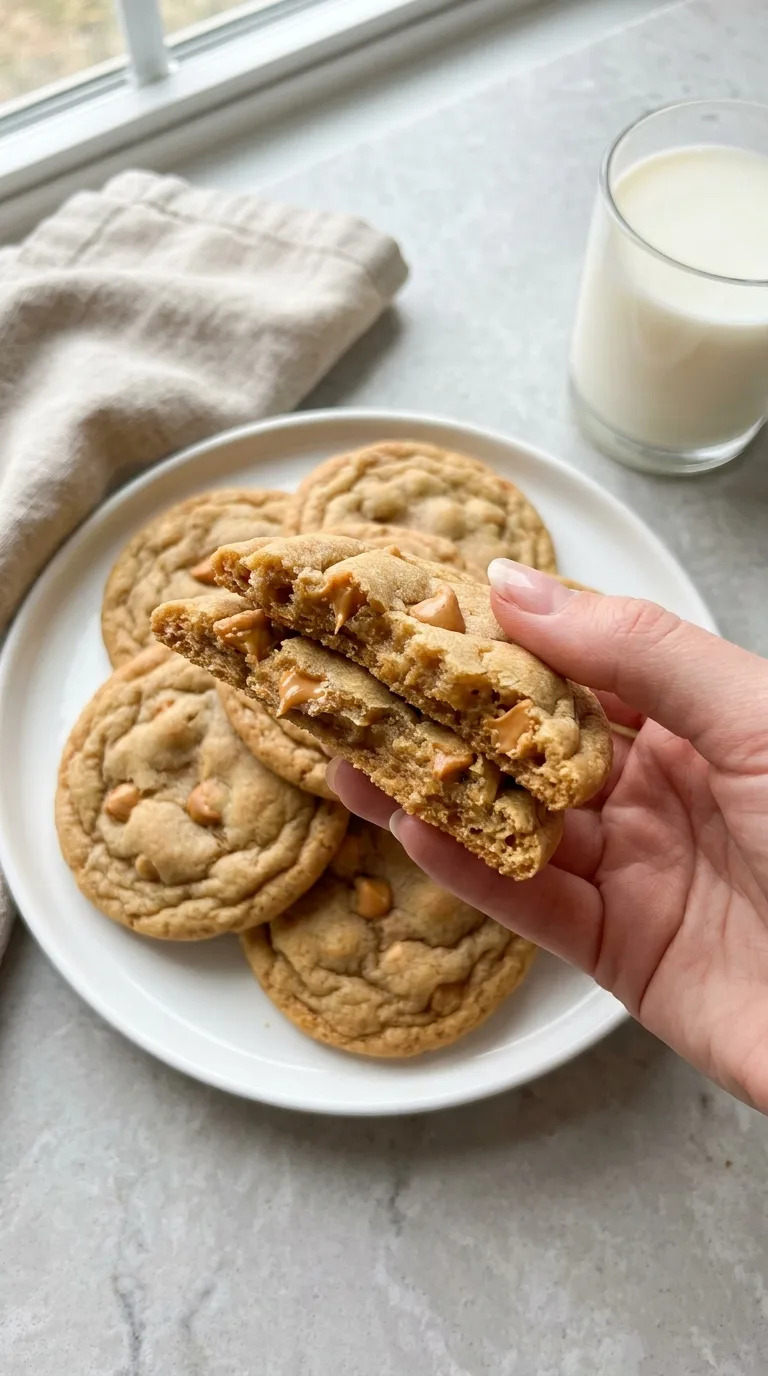
Move all cookies to a wire rack and let them cool for at least 5 more minutes before serving. The edges should be lightly crisp, with soft and chewy centers, providing the perfect texture.
Tips for Success
- Use butter that is soft enough to indent with a finger but not shiny, greasy, or partially melted.
- Do not prepare the pudding according to the package directions. Add only the dry powder to the cookie dough.
- Measure flour by spooning it into the measuring cup and leveling the top. Excess flour can make the cookies dry and prevent spreading.
- Chill the dough for the full 30 minutes, especially if the kitchen is warm.
- Bake one sheet at a time on the center rack for the most even browning.
- Remove the cookies when the centers still look slightly soft. They continue cooking from residual heat on the baking sheet.
Storage, Freezing, and Make-Ahead Instructions
Let the cookies cool completely before placing them in an airtight container. Store at room temperature for up to 5 days. Place a sheet of parchment paper between layers to keep the cookies from sticking together.
To freeze baked cookies, place the completely cooled cookies in a freezer-safe container with parchment between layers. Freeze for up to 2 months. Thaw them in the covered container at room temperature to reduce condensation on the surfaces.
To freeze the dough, portion it onto a lined baking sheet and freeze until firm. Transfer the dough balls to a freezer-safe bag and freeze for up to 2 months. Bake directly from frozen at 350°F (175°C), adding approximately 2 minutes to the baking time.
The cookie dough can also be refrigerated for up to 2 days before baking. Cover it tightly so it does not dry out. Let very firm dough stand at room temperature for about 10 minutes if it is difficult to scoop.
FAQ
Can I make Butterscotch Pudding Cookies ahead of time?
Yes. Prepare and refrigerate the dough for up to 2 days, or freeze portioned dough for up to 2 months. Baked cookies can be stored at room temperature for up to 5 days.
Can I use cook-and-serve pudding mix?
Cook-and-serve pudding is not recommended because it contains a different type of starch and may cause changes in texture and spreading. Use dry instant butterscotch pudding mix.
Why did my cookies spread too much?
The butter may have been too warm, the dough may not have chilled long enough, or the flour may have been undermeasured. Chill the portioned dough until firm and place it only on completely cool baking sheets.
Why are my cookies dry?
Too much flour or excessive baking can produce dry cookies. Measure the flour carefully and remove the cookies when the edges are set but the centers still look slightly soft.
Can I add nuts?
Yes. Fold in up to 1/2 cup (55 g) of chopped pecans or walnuts with the butterscotch chips. The nuts will add crunch and reduce the overall sweetness slightly.
Ingredients
Method
- Line two large rimmed baking sheets with parchment paper or silicone baking mats. Clear enough refrigerator space to chill the portioned cookie dough.
- Place the softened butter, brown sugar, and granulated sugar in a large mixing bowl. Beat on medium speed for 2 to 3 minutes, until the mixture looks pale, fluffy, and evenly blended. Scrape down the bowl once during mixing.
- Add the eggs one at a time, beating on low speed until each is fully incorporated. Mix in the vanilla. The mixture should look smooth and creamy rather than separated or greasy.
- Add the dry instant butterscotch pudding mix: Beat on low speed for about 30 seconds, until no dry streaks remain and the mixture is evenly golden.
- In a medium bowl, whisk together the flour, baking soda, and salt. Break up any flour lumps so the baking soda is distributed evenly.
- Add the dry ingredients to the butter mixture in two additions, mixing on low speed after each. Stop when only a few flour streaks remain, then finish folding by hand. The dough should be thick, soft, and slightly tacky but firm enough to scoop.
- Fold in the butterscotch chips until they are evenly distributed. Avoid prolonged mixing, which can make the cookies tougher.
- Scoop the dough into 24 portions of about 2 tablespoons each. Arrange them on the prepared baking sheets, leaving about 2 inches (5 cm) between portions. Roll any uneven scoops gently between your palms without compacting them.
- Near the end of the chilling time, preheat the oven to 350°F (175°C). Position a rack in the center of the oven.
- Bake one sheet at a time for 10 to 12 minutes. The edges should look set and lightly golden, while the centers should appear puffed and slightly underdone. The cookies should not be deeply browned across the tops.
- If the cookies have spread unevenly, immediately place a round cookie cutter or wide glass around each warm cookie and gently move it in a circular motion to neaten the edges.
- Let the cookies cool on the baking sheet for 5 minutes. They will be very soft when first removed from the oven but will firm as they rest.
- Bake the second sheet for 10 to 12 minutes. Transfer the first batch to a wire rack, then repeat the 5-minute pan cooling process with the second batch.
- Move all cookies to a wire rack and let them cool for at least 5 more minutes before serving. The edges should be lightly crisp, with soft and chewy centers.