# German Pancake
## 2. Introduction
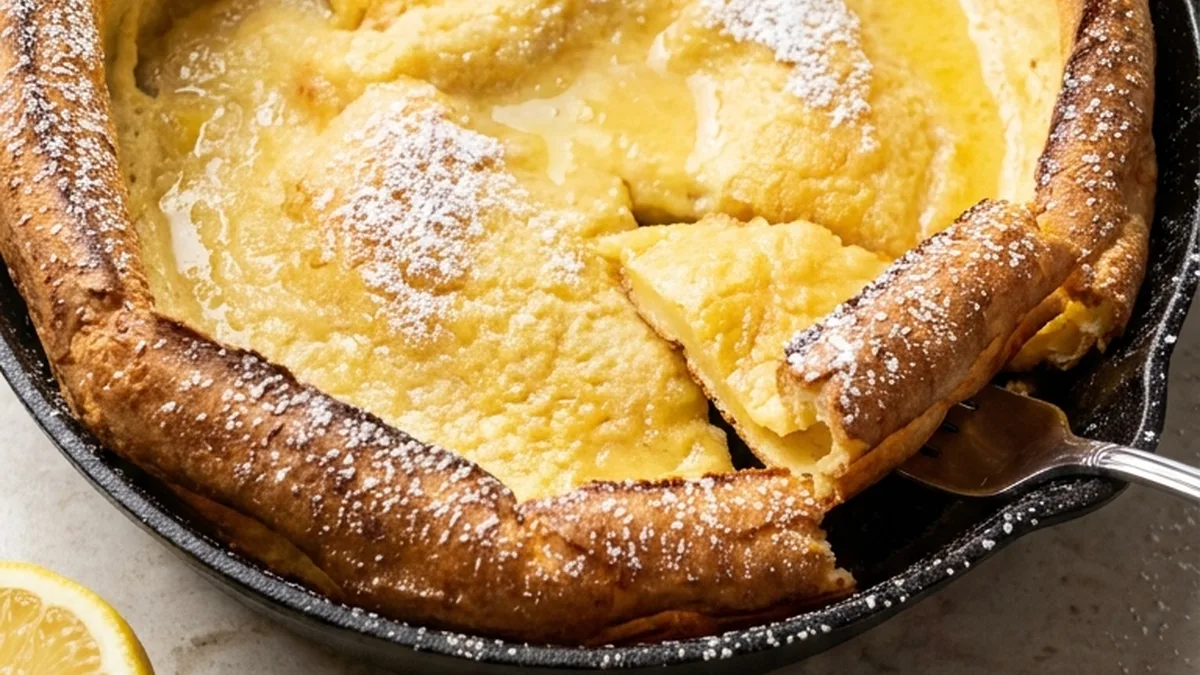
German Pancake is a large, oven-baked pancake that puffs dramatically around the edges as it cooks, creating crisp, golden sides and a soft, custardy center. Made with simple pantry ingredients like eggs, milk, flour, butter, and vanilla, it has a delicate texture that is closer to a baked custard pancake than a stack of traditional pancakes.
The batter takes only a few minutes to prepare, then bakes in a hot skillet until puffed and deeply golden. It is best served immediately because the dramatic rise naturally settles as the pancake cools. Finish it with powdered sugar, fresh berries, lemon juice, or maple syrup.
## 3. Recipe Card Details
Prep Time: 10 minutes
Cook Time: 20 minutes
Additional Time: 5 minutes
Total Time: 35 minutes
Yield: 1 large 10-inch pancake
Servings: 4
Category: Breakfast & Brunch
Cuisine: German-American
Cooking Method: Oven-Baked
Difficulty: Easy
Calories Per Serving: Not calculated
## 4. Why This Recipe Works
* **A hot skillet creates rapid steam and lift.** This is what makes the edges rise dramatically during baking.
* **Eggs provide the main structure.** They set around the milk and flour as the pancake bakes, creating a tender, custardy center.
* **Whole milk keeps the interior rich and soft.** It also helps produce a smooth, pourable batter.
* **Melted butter coats the hot pan.** This encourages browning and helps create crisp, flavorful edges.
* **Blending or whisking the batter until smooth prevents flour pockets.** A smooth batter spreads evenly across the skillet and bakes consistently.
## 5. Equipment Needed
* 10-inch oven-safe cast-iron skillet
* Blender or large mixing bowl
* Whisk, if mixing by hand
* Rubber spatula
* Measuring cups and spoons
## 6. Ingredients List
### German Pancake
* 3 large eggs (about 150 g without shells)
* 3/4 cup (180 ml) whole milk
* 3/4 cup (90 g) all-purpose flour
* 1 tablespoon (13 g) granulated sugar
* 1 teaspoon (5 ml) vanilla extract
* 1/4 teaspoon (1 g) fine salt
* 2 tablespoons (28 g) unsalted butter
### For Serving
* 2 tablespoons (15 g) powdered sugar, optional
* Fresh berries, optional
* Lemon wedges, optional
* Maple syrup, optional
## 7. Ingredient Notes and Substitutions
* **Eggs:** They provide most of the structure and help the pancake puff in the oven. Because eggs are central to the recipe, there is no reliable egg-free substitute for the same texture.
* **Whole milk:** Creates a tender, rich center. 2% milk can replace it, although the pancake will be slightly less rich.
* **All-purpose flour:** Gives the pancake enough structure to hold the custardy center. A 1-to-1 gluten-free flour blend can be used, although the texture may be somewhat different.
* **Unsalted butter:** Provides flavor and helps the edges brown. Salted butter can be used, but reduce or omit the added salt.
* **Vanilla:** Adds a warm, sweet aroma. It can be omitted for a more neutral pancake, or replaced with a small amount of lemon zest for a brighter flavor.
## 8. Step-by-Step Instructions
1. **Preheat the oven and skillet.**
Place a 10-inch cast-iron skillet in the oven and preheat to 425°F (220°C). Let the skillet heat for at least 10 minutes after the oven reaches temperature. A thoroughly heated pan is important for the pancake’s rise.
2. **Make the batter.**
Add the eggs, milk, flour, sugar, vanilla, and salt to a blender. Blend for about 15 to 20 seconds, just until smooth. Alternatively, whisk the eggs and milk together, then gradually whisk in the flour, sugar, vanilla, and salt. The batter should be thin and completely pourable.
3. **Rest the batter.**
Let the batter rest for 5 minutes while the skillet finishes heating. This allows the flour to hydrate and helps reduce excessive bubbling in the batter.
4. **Add the butter to the hot skillet.**
Carefully remove the skillet from the oven using oven mitts. Add the butter and swirl the pan until the butter melts and coats the bottom and lower sides. Work quickly so the skillet remains hot.
5. **Pour in the batter.**
Immediately pour the batter into the center of the buttered skillet. Do not stir or spread it. Return the skillet to the oven.
6. **Bake without opening the oven.**
Bake at 425°F (220°C) for about 18 to 20 minutes. The edges should rise dramatically and become deep golden brown, while the center should look puffed and set around the edges but still slightly soft.
7. **Check for doneness.**
The pancake is ready when the edges are crisp and browned and the center no longer looks like liquid batter. If the center is still very wet, bake for another 1 to 2 minutes.
8. **Let it settle briefly.**
Remove the skillet from the oven and place it on a heatproof surface. Let the pancake rest for about 5 minutes. It will naturally deflate as it cools, leaving a tender center and browned edges.
9. **Finish and serve.**
Dust with powdered sugar and add optional fresh berries, lemon juice, or maple syrup. Cut into wedges and serve immediately.
## 9. Tips for Success
* **Heat the skillet thoroughly.** A cold or lukewarm pan can prevent the dramatic rise.
* **Use room-temperature ingredients when possible.** They combine more smoothly and help maintain the skillet’s heat when the batter is added.
* **Do not open the oven while baking.** A sudden temperature drop can interfere with the pancake’s rise.
* **Work quickly after adding the butter.** The pan and butter should still be hot when the batter goes in.
* **Expect the pancake to collapse.** The puffed edges naturally settle after leaving the oven; this is normal.
* **Serve immediately.** The texture is best while the edges are crisp and the center is still warm and tender.
## 10. Storage, Freezing, and Make-Ahead Instructions
German Pancake is best served immediately and does not retain its dramatic puff after cooling.
If you have leftovers, cool them completely and refrigerate them in an airtight container for up to 2 days. Reheat gently in a 350°F (175°C) oven until warmed through. The edges will not be as crisp as when freshly baked.
Freezing is not recommended because the custardy center can become watery and lose its delicate texture after thawing.
The batter can be mixed up to several hours ahead and refrigerated in a covered container. Bring it close to room temperature and whisk gently before baking. For the best rise, bake the pancake immediately after the batter has been prepared and the skillet is thoroughly heated.
## 11. FAQ
### Why didn’t my German Pancake puff?
The most common causes are a skillet that was not hot enough, an oven that was not fully preheated, or opening the oven during baking. Make sure the skillet is thoroughly heated before adding the batter.
### Why does my German Pancake collapse after baking?
A German Pancake naturally deflates once it is removed from the oven. The steam that inflated the pancake escapes as it cools, leaving the characteristic browned edges and tender center.
### Can I use a different skillet size?
Yes, but the thickness and cooking time will change. A larger skillet produces a thinner pancake that may cook faster, while a smaller skillet creates a thicker pancake that may need additional baking time.
### Can I prepare the batter ahead of time?
Yes. The batter can be refrigerated for several hours in a covered container. Whisk gently before using. For the best rise, use a thoroughly heated skillet and bake the pancake immediately after pouring in the batter.
### What is the best way to serve German Pancake?
Powdered sugar, fresh berries, lemon juice, and maple syrup all work well. The combination of sweet toppings and bright lemon is particularly good with the rich egg-based center.
## 12. SEO and Pinterest Metadata
SEO Title: German Pancake with Golden Crispy Edges
Meta Description: Make a classic German Pancake in a hot cast-iron skillet for crisp golden edges and a soft, custardy center. Serve warm with powdered sugar, berries, lemon, or maple syrup.
Suggested URL Slug: german-pancake
Primary Keyword: German Pancake
Secondary Keywords: German pancake recipe, Dutch baby pancake, oven baked pancake, German oven pancake, cast iron pancake, fluffy baked pancake, breakfast pancake
Pinterest Title: German Pancake with Crisp Edges and a Custardy Center
Pinterest Description: This German Pancake puffs dramatically in the oven, creating golden, crisp edges around a soft, tender center. Bake it in a hot cast-iron skillet and serve warm with powdered sugar, fresh berries, lemon, or maple syrup.
Image Alt Text: Golden German pancake puffed around the edges in a cast-iron skillet with powdered sugar and fresh berries
Recipe Category: Breakfast & Brunch
Recipe Cuisine: German-American
Cooking Method: Oven-Baked
Ingredients
Method
- Place a 10-inch cast-iron skillet in the oven and preheat to 425°F (220°C). Let the skillet heat for at least 10 minutes after the oven reaches temperature. A thoroughly heated pan is important for the pancake's rise.
- Add the eggs, milk, flour, sugar, vanilla, and salt to a blender. Blend for about 15 to 20 seconds, just until smooth. Alternatively, whisk the eggs and milk together, then gradually whisk in the flour, sugar, vanilla, and salt. The batter should be thin and completely pourable.
- Let the batter rest for 5 minutes while the skillet finishes heating. This allows the flour to hydrate and helps reduce excessive bubbling in the batter.
- Carefully remove the skillet from the oven using oven mitts. Add the butter and swirl the pan until the butter melts and coats the bottom and lower sides. Work quickly so the skillet remains hot.
- Immediately pour the batter into the center of the buttered skillet. Do not stir or spread it. Return the skillet to the oven.
- Bake at 425°F (220°C) for about 18 to 20 minutes. The edges should rise dramatically and become deep golden brown, while the center should look puffed and set around the edges but still slightly soft.
- The pancake is ready when the edges are crisp and browned and the center no longer looks like liquid batter. If the center is still very wet, bake for another 1 to 2 minutes.
- Remove the skillet from the oven and place it on a heatproof surface. Let the pancake rest for about 5 minutes. It will naturally deflate as it cools, leaving a tender center and browned edges.
- Dust with powdered sugar and add optional fresh berries, lemon juice, or maple syrup. Cut into wedges and serve immediately.