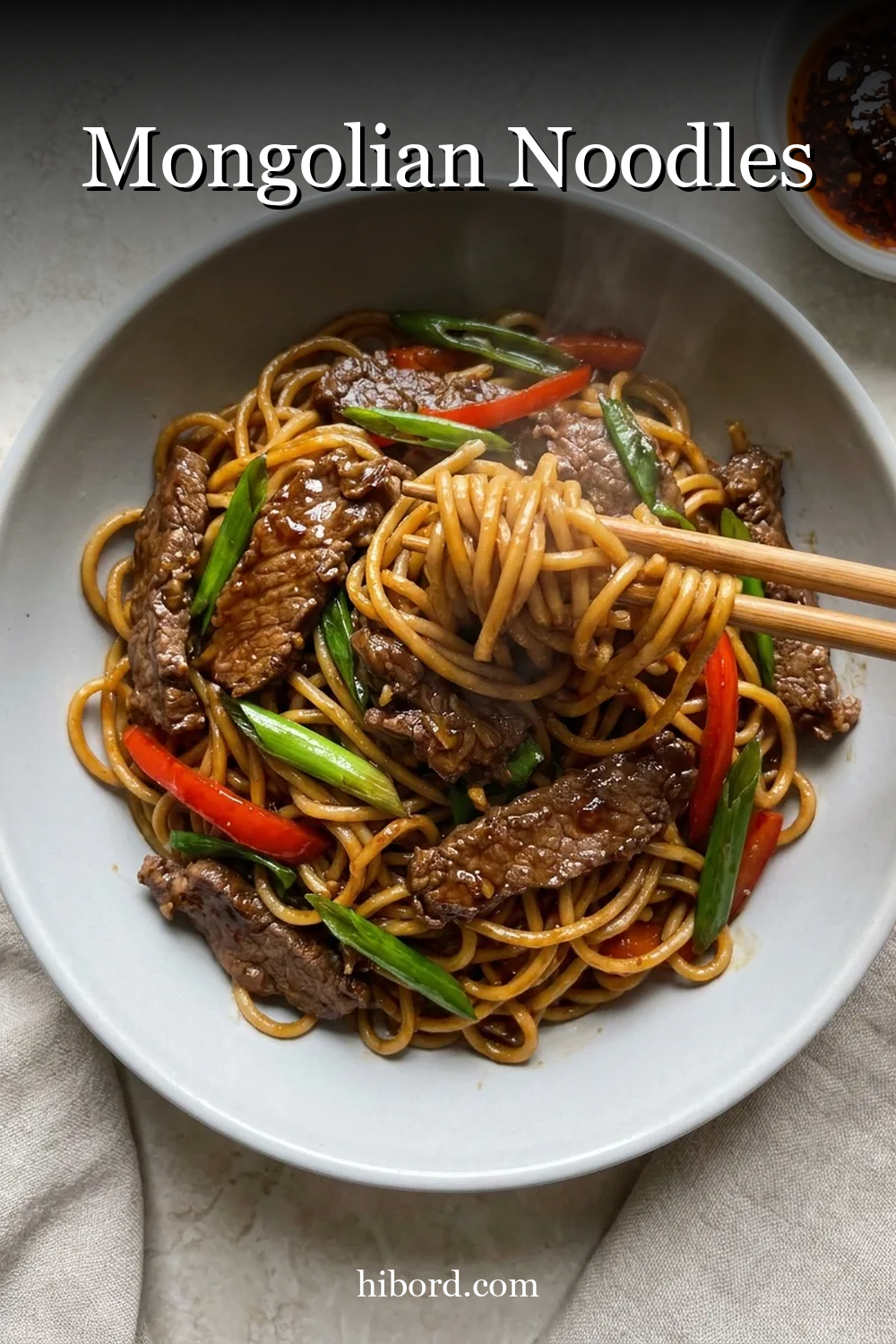
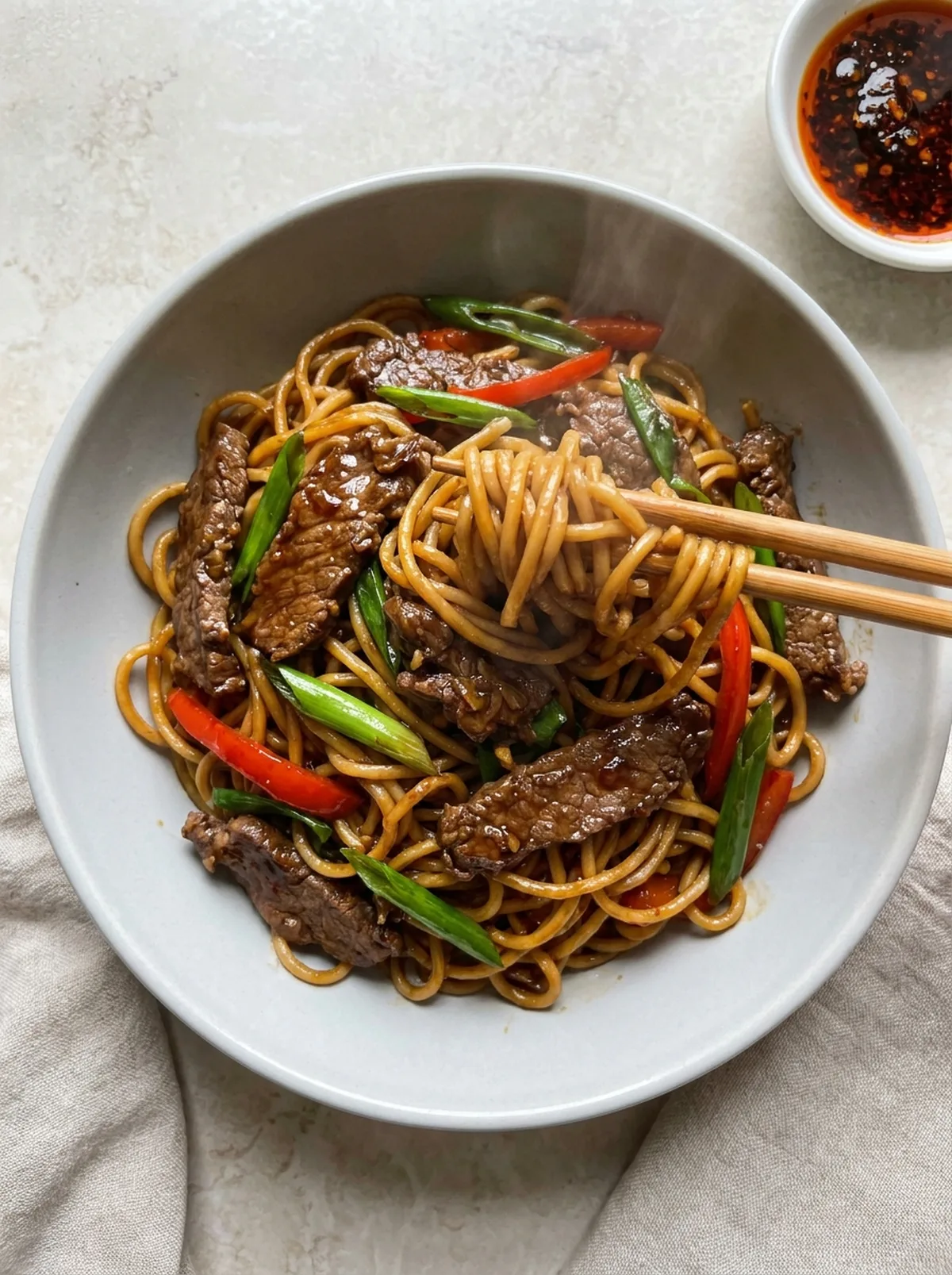
Quick & Savory Mongolian Noodles Recipe combines tender noodles with a glossy garlic, ginger, soy, and brown sugar sauce inspired by the sweet-and-savory flavors often associated with Mongolian-style dishes. Green onions and sesame seeds add freshness and texture, while the silky sauce coats every strand of pasta.
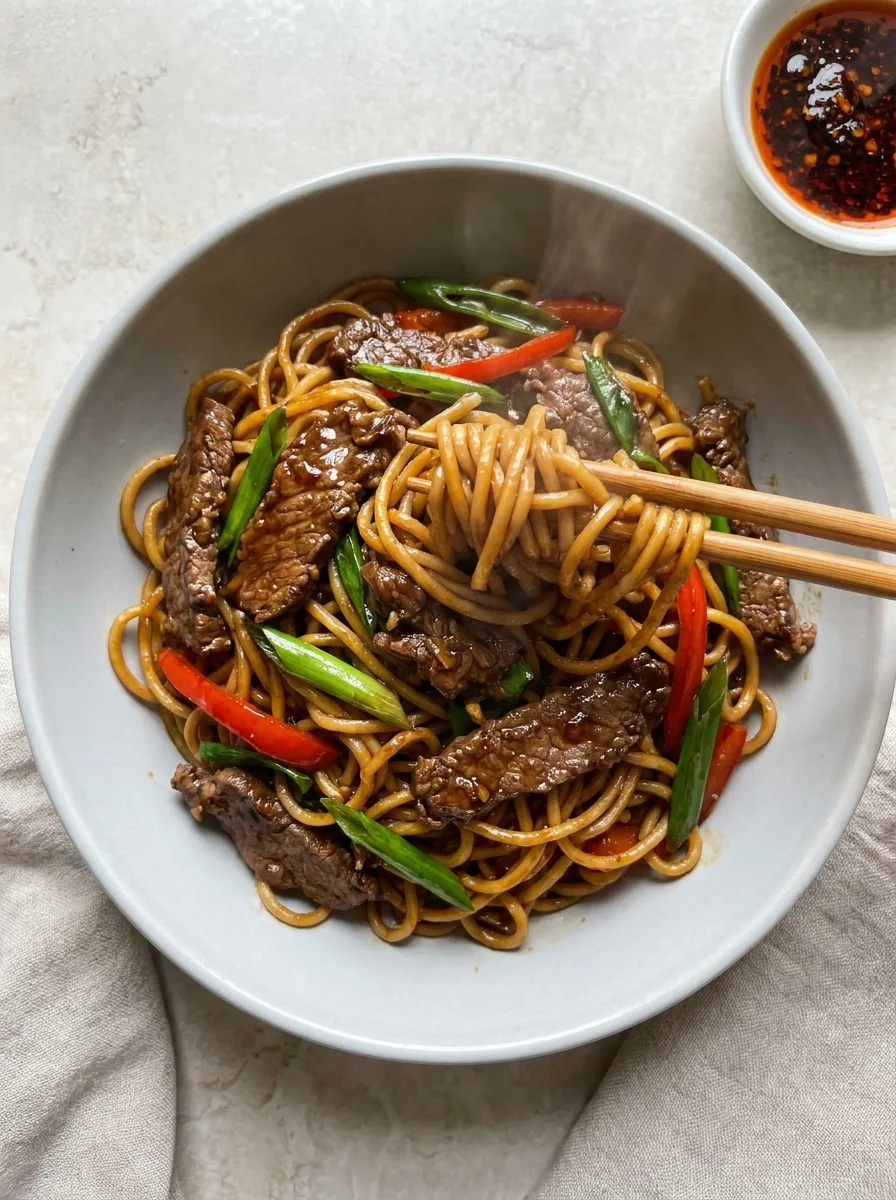
This easy stovetop meal comes together in about 30 minutes, making it a practical option for busy weeknights. It can be served as a vegetarian main dish or paired with chicken, beef, shrimp, or tofu for extra protein.
Recipe at a Glance
- Prep Time: 15 minutes
- Cook Time: 15 minutes
- Total Time: 30 minutes
- Yield: About 8 cups
- Servings: 4
- Difficulty: Easy
- Cooking Method: Stovetop
Why This Recipe Works
- Garlic and fresh ginger create a flavorful base without requiring long cooking.
- Brown sugar balances the salty soy sauce for a glossy, well-rounded sauce.
- A cornstarch slurry thickens the sauce quickly so it clings to the noodles.
- Sesame oil is added near the end to preserve its rich, toasted flavor.
- Reserved noodle cooking water makes it easy to adjust the sauce consistency.
Equipment Needed
- Large pot
- Colander
- 12-inch (30-cm) skillet or wok
- Small mixing bowl
- Whisk
- Tongs
Ingredients You’ll Need
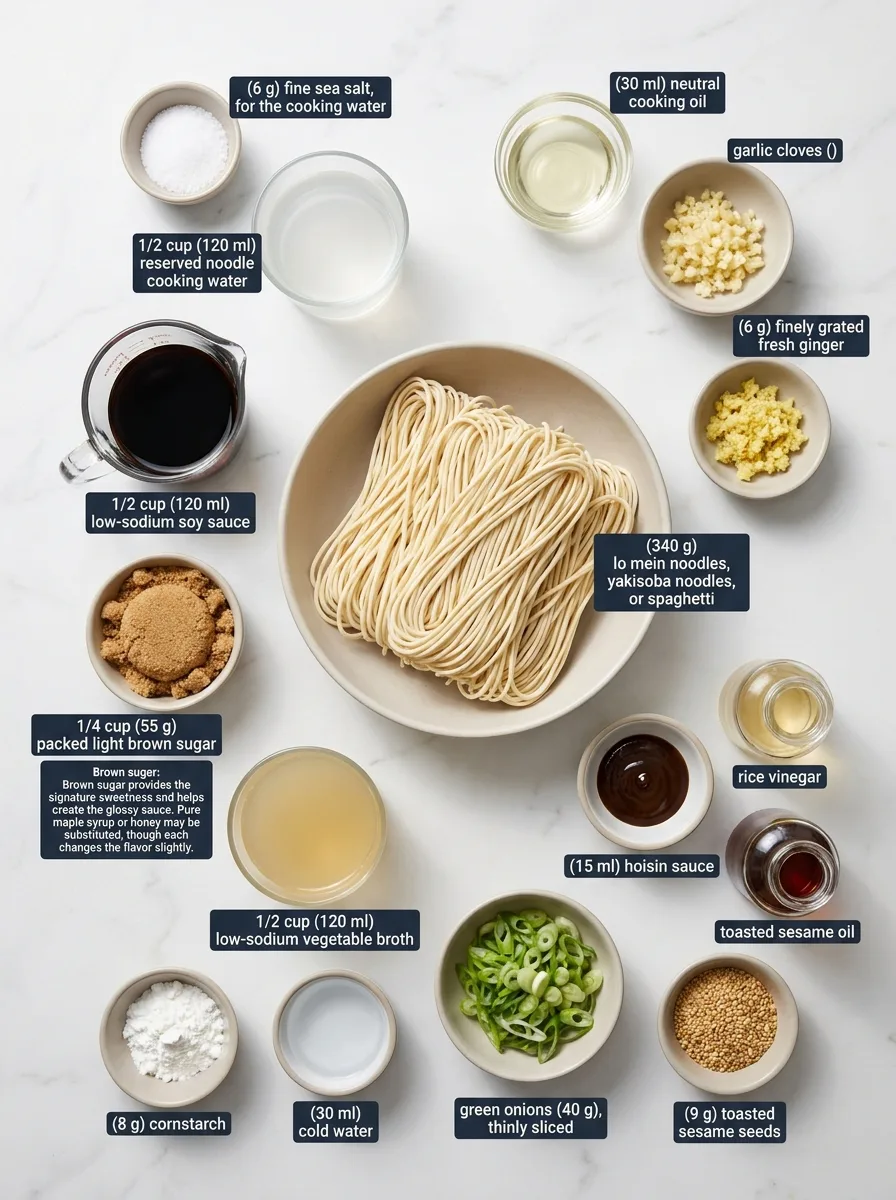
For the Noodles
- 12 ounces (340 g) lo mein noodles, yakisoba noodles, or spaghetti
- 1 teaspoon (6 g) fine sea salt, for the cooking water
- 1/2 cup (120 ml) reserved noodle cooking water
For the Mongolian Sauce
- 2 tablespoons (30 ml) neutral cooking oil
- 4 medium garlic cloves (about 12 g), finely minced
- 1 tablespoon (6 g) finely grated fresh ginger
- 1/2 cup (120 ml) low-sodium soy sauce
- 1/4 cup (55 g) packed light brown sugar
- 1/2 cup (120 ml) low-sodium vegetable broth
- 1 tablespoon (15 ml) hoisin sauce
- 1 teaspoon rice vinegar
- 1 teaspoon toasted sesame oil
- 1 tablespoon (8 g) cornstarch
- 2 tablespoons (30 ml) cold water
For Garnish
- 4 green onions (40 g), thinly sliced
- 1 tablespoon (9 g) toasted sesame seeds, optional
- Crushed red pepper flakes, optional
How to Make Mongolian Noodles
Cook the Noodles
Bring a large pot of water to a boil. Add the salt and cook the noodles according to the package directions until just tender. Reserve 1/2 cup (120 ml) of the cooking water before draining. Do not rinse the noodles. This step is crucial as rinsing can wash away the starch that helps the sauce adhere to the noodles.
Prepare the Sauce Mixture
In a small bowl, whisk together the soy sauce, brown sugar, vegetable broth, hoisin sauce, rice vinegar, and sesame oil until the sugar is mostly dissolved. Mixing these ingredients thoroughly ensures that the flavors meld together before cooking.
Mix the Slurry
In another small bowl, stir together the cornstarch and cold water until completely smooth. Set aside. This slurry will help thicken the sauce, giving it a nice glossy finish once cooked.
Cook the Aromatics
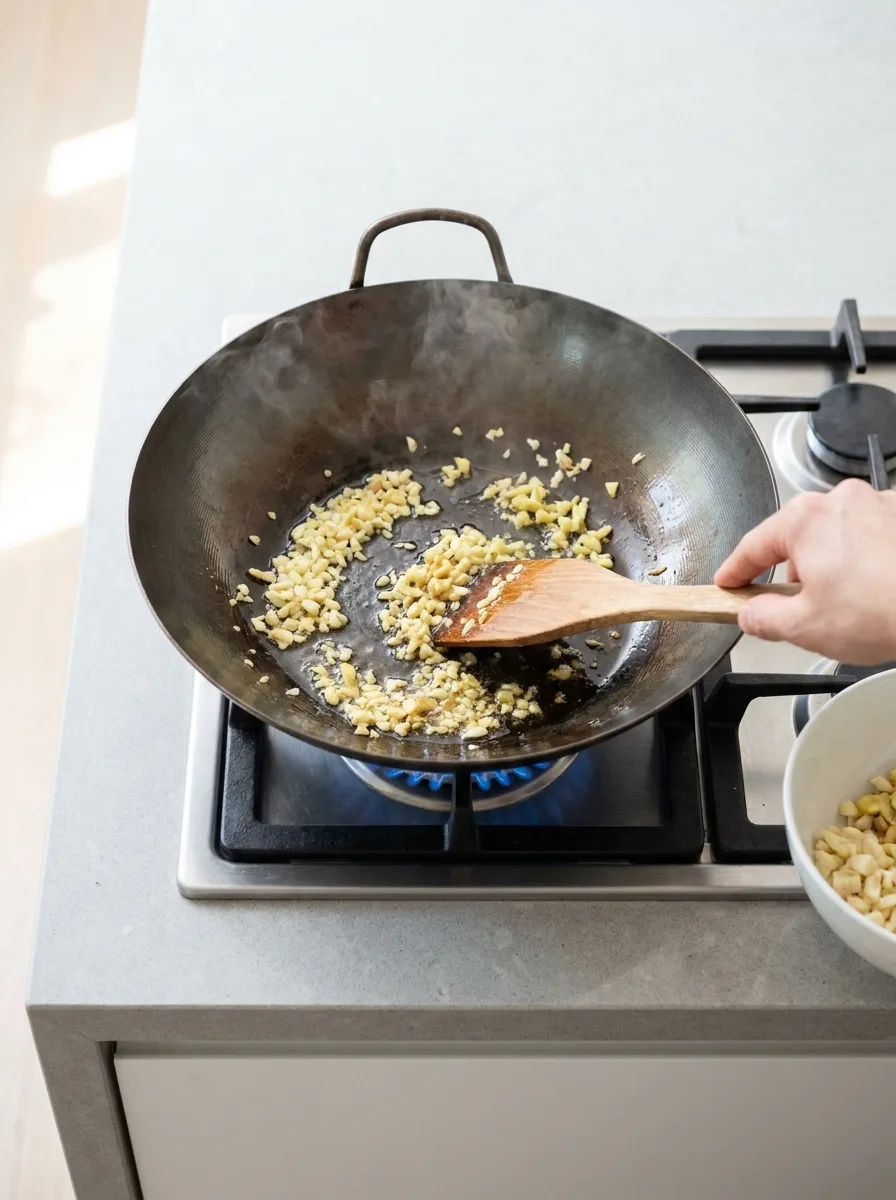
Heat the neutral oil in a large skillet or wok over medium heat. Add the garlic and ginger and cook for 30 to 45 seconds, stirring constantly, until fragrant. Do not allow the garlic to brown, as burnt garlic can impart a bitter flavor to the dish.
Simmer the Sauce
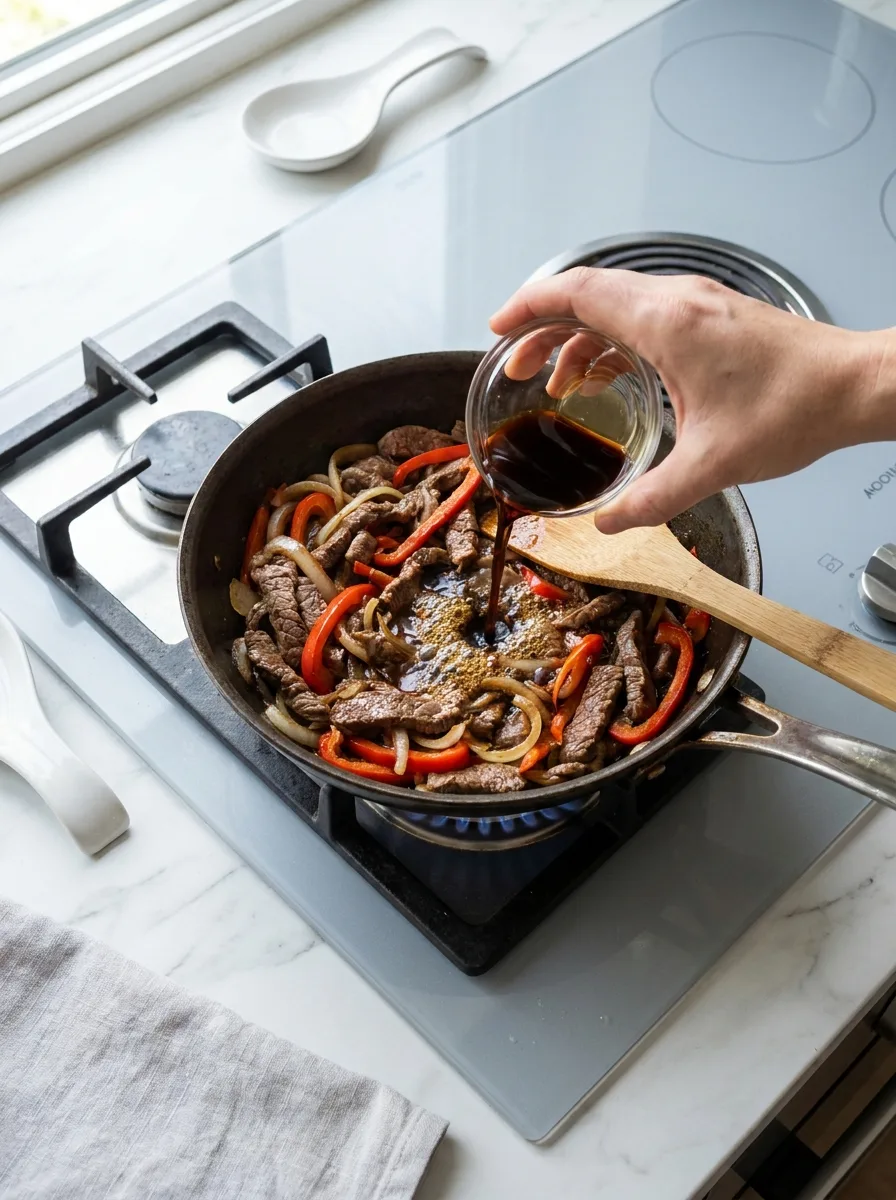
Pour the soy sauce mixture into the skillet. Bring it to a gentle simmer for about 2 minutes, stirring occasionally. This simmering step allows the flavors to deepen and the sauce to begin thickening.
Thicken the Sauce
Stir the cornstarch slurry again, then whisk it into the simmering sauce. Continue cooking for 1 to 2 minutes until the sauce becomes glossy and lightly coats the back of a spoon. This is an important step to achieve the desired sauce consistency.
Combine with the Noodles
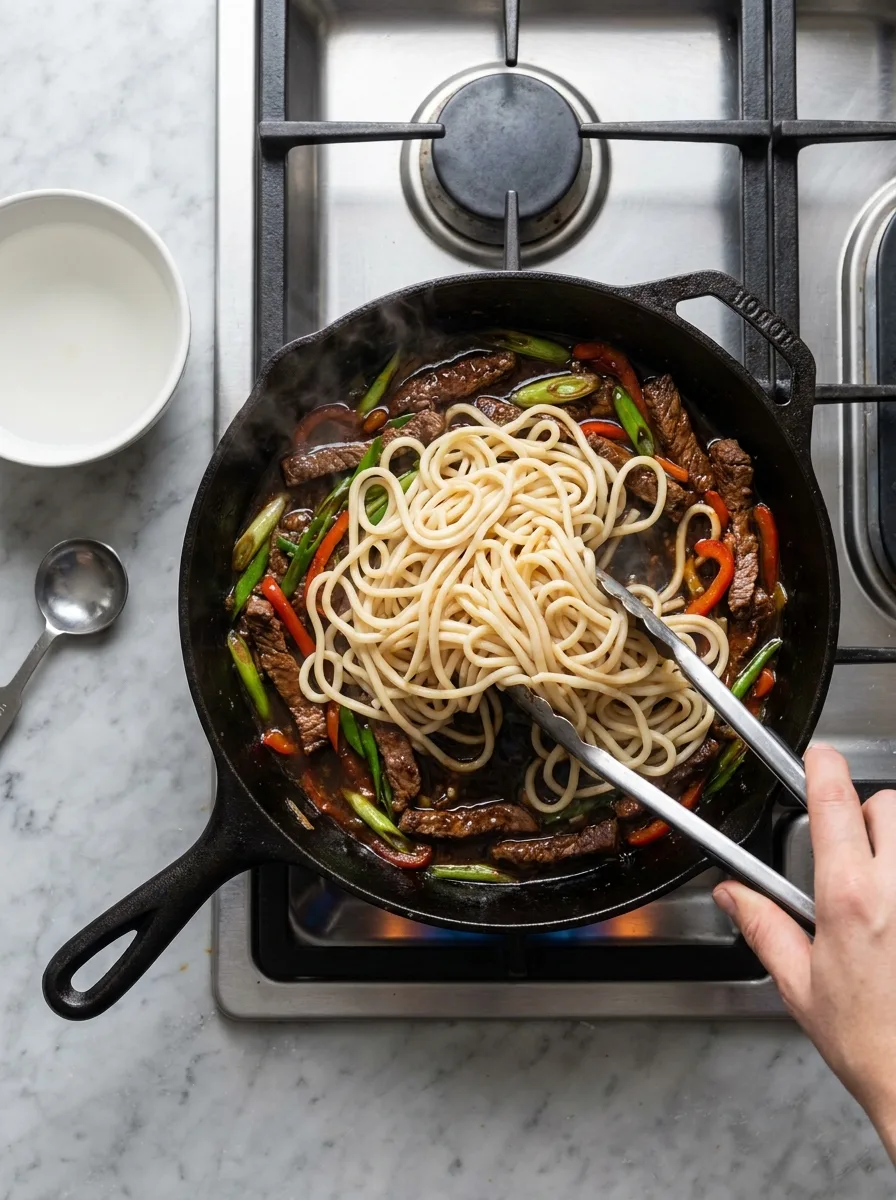
Add the drained noodles to the skillet. Toss continuously with tongs until every strand is coated. If the sauce becomes too thick, add reserved noodle water 1 tablespoon at a time until the noodles are evenly coated. This ensures that the noodles are well-dressed without becoming too dry.
Finish and Serve
Remove the skillet from the heat. Toss in the sliced green onions, reserving a small amount for garnish. Sprinkle with sesame seeds and crushed red pepper flakes, if desired, and serve immediately. Serving right away ensures the noodles maintain their texture and the sauce stays glossy.
Tips for Success
* Cook the noodles only until al dente because they continue softening when tossed with the hot sauce.
* Keep the garlic moving in the pan to prevent bitterness.
* Stir the cornstarch slurry immediately before adding it since it settles quickly.
* Add reserved noodle water gradually to avoid thinning the sauce too much.
* Serve the noodles immediately for the best texture and gloss.
* For additional protein, stir in cooked chicken, beef, shrimp, tofu, or edamame after the sauce thickens.
Storage, Freezing, and Make-Ahead Instructions
Store leftover noodles in an airtight container in the refrigerator for up to 4 days. Reheat gently in a skillet over medium-low heat with 1 to 2 tablespoons of water or vegetable broth, stirring until the noodles are hot throughout. Microwave reheating also works when covered loosely and stirred halfway through. Freezing is not recommended because the noodles may become soft after thawing. For make-ahead preparation, mix the sauce ingredients up to 3 days in advance and refrigerate them in a sealed container. Cook the noodles shortly before serving for the best texture.
FAQ
Can I add vegetables?
Yes. Broccoli, snap peas, carrots, mushrooms, bell peppers, or bok choy are excellent additions. Stir-fry them before cooking the garlic and ginger, then return them to the pan with the noodles.
Can I make these noodles spicy?
Yes. Increase the crushed red pepper flakes or stir 1 to 2 teaspoons of chili garlic sauce or sriracha into the sauce mixture.
Which noodles work best?
Fresh lo mein noodles provide the closest texture, but yakisoba noodles, ramen noodles, or spaghetti all work well.
Can I make this recipe gluten-free?
Yes. Use gluten-free noodles, tamari instead of soy sauce, and verify that the hoisin sauce is labeled gluten-free.
Why is my sauce too thick?
Cornstarch thickens quickly. Stir in reserved noodle cooking water a tablespoon at a time until the sauce reaches the desired consistency.
Ingredients
Method
- Bring a large pot of water to a boil. Add the salt and cook the noodles according to the package directions until just tender. Reserve 1/2 cup (120 ml) of the cooking water before draining. Do not rinse the noodles.
- In a small bowl, whisk together the soy sauce, brown sugar, vegetable broth, hoisin sauce, rice vinegar, and sesame oil until the sugar is mostly dissolved.
- In another small bowl, stir together the cornstarch and cold water until completely smooth. Set aside.
- Heat the neutral oil in a large skillet or wok over medium heat. Add the garlic and ginger and cook for 30 to 45 seconds, stirring constantly, until fragrant. Do not allow the garlic to brown.
- Pour the soy sauce mixture into the skillet: Bring it to a gentle simmer for about 2 minutes, stirring occasionally.
- Stir the cornstarch slurry again, then whisk it into the simmering sauce. Continue cooking for 1 to 2 minutes until the sauce becomes glossy and lightly coats the back of a spoon.
- Add the drained noodles to the skillet: Toss continuously with tongs until every strand is coated. If the sauce becomes too thick, add reserved noodle water 1 tablespoon at a time until the noodles are evenly coated.
- Remove the skillet from the heat: Toss in the sliced green onions, reserving a small amount for garnish. Sprinkle with sesame seeds and crushed red pepper flakes, if desired, and serve immediately.