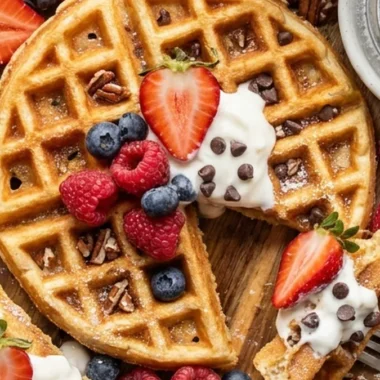
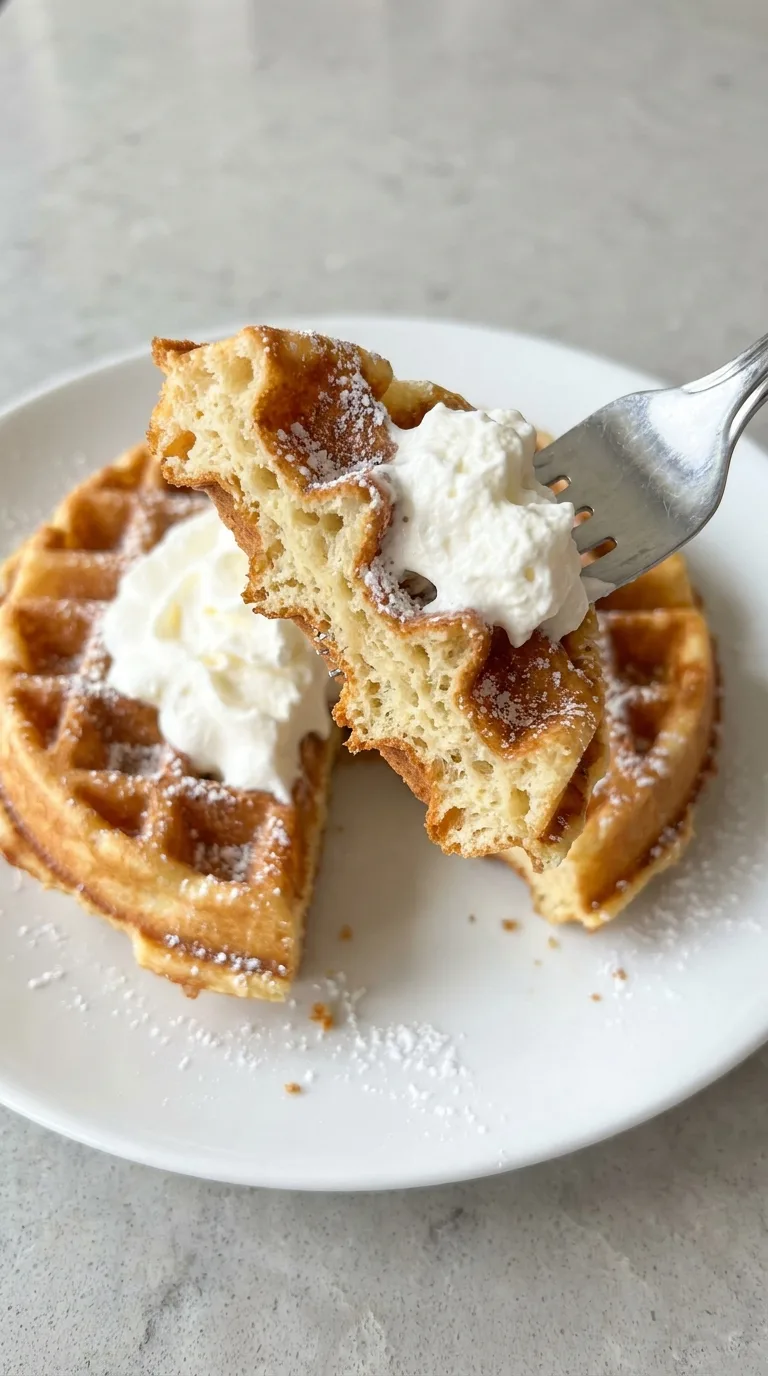
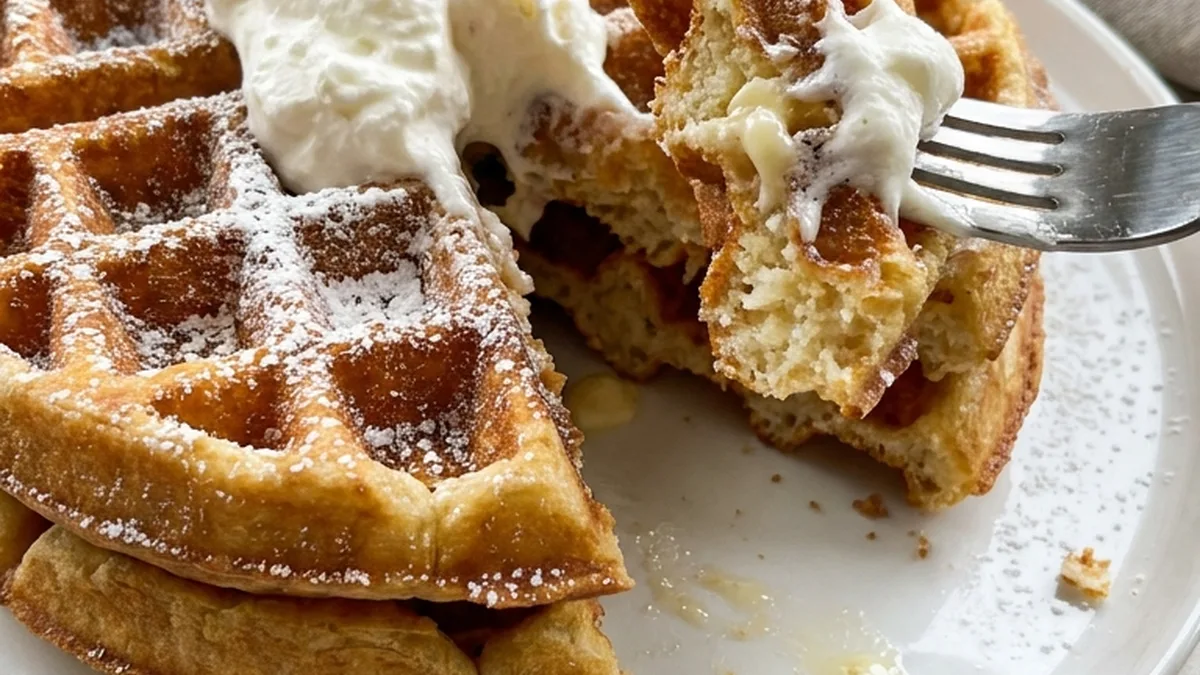
Belgian Waffles are known for their crisp, deeply golden exterior and light, fluffy centers. This version uses a yeast-free batter with melted butter, eggs, milk, and vanilla, making it straightforward enough for a weekend breakfast while still producing waffles with plenty of texture.
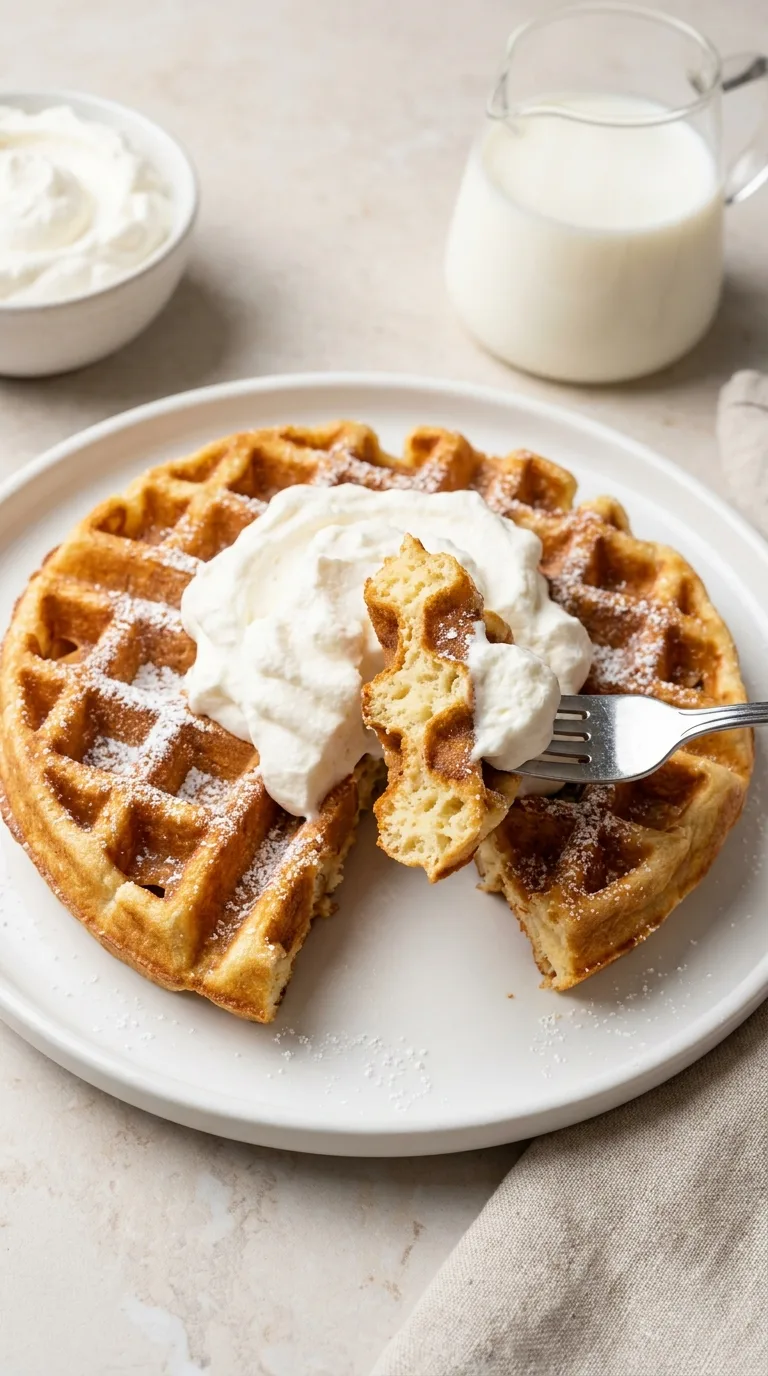
The batter rests briefly before cooking in a Belgian-style waffle maker, which gives the waffles their characteristic deeper pockets for holding maple syrup, berries, whipped cream, or other toppings. Keep the finished waffles on a wire rack rather than stacking them so the crisp edges stay intact.
Why This Recipe Works
- A generous amount of butter adds richness and browning. It also helps create a lightly crisp exterior.
- Separated eggs make the texture lighter. Whipped egg whites add air to the batter without requiring yeast.
- A short batter rest improves consistency. It gives the flour time to hydrate and allows the batter to thicken slightly.
- Belgian-style waffle plates create deep pockets. Those pockets hold maple syrup, fruit, and other toppings without immediately running off.
- A wire rack protects crispness. Allowing steam to escape prevents freshly cooked waffles from becoming soft.
Equipment Needed
- Belgian-style waffle maker with deep plates
- Large mixing bowl
- Medium mixing bowl
- Electric hand mixer or stand mixer
- Whisk
- Rubber spatula
- Wire cooling rack
- 1/2-cup measuring cup or scoop
Ingredients List
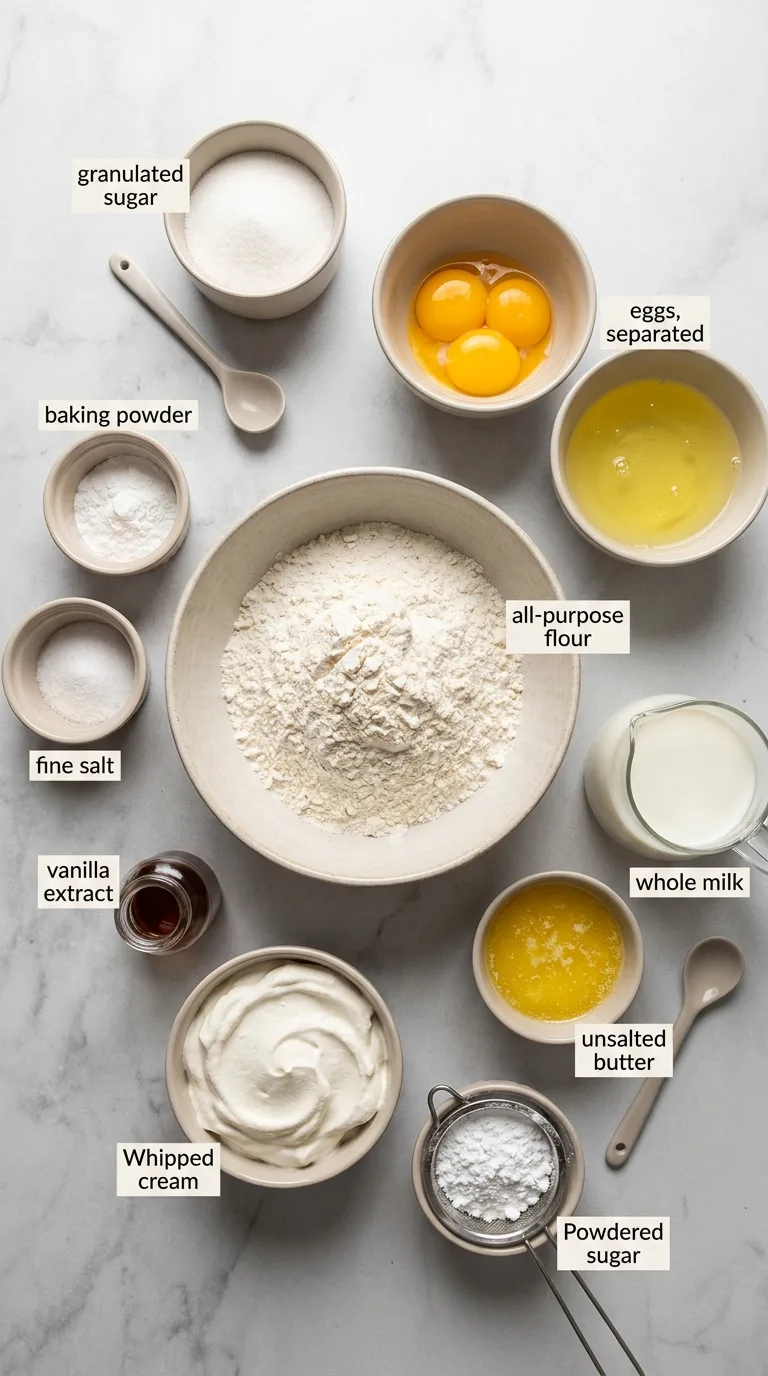
Belgian Waffle Batter
- 2 cups (240 g) all-purpose flour
- 2 tablespoons (25 g) granulated sugar
- 2 teaspoons (8 g) baking powder
- 1/2 teaspoon (2 g) fine salt
- 3 large eggs (about 150 g without shells), separated
- 1 3/4 cups (420 ml) whole milk
- 1/2 cup (113 g) unsalted butter, melted and cooled slightly
- 2 teaspoons (10 ml) vanilla extract
For Serving
- Maple syrup, optional
- Fresh strawberries, optional
- Fresh blueberries, optional
- Whipped cream, optional
- Powdered sugar, optional
Ingredient Notes and Substitutions
- All-purpose flour: Provides the structure needed for waffles while keeping the centers tender. Cake flour can be used by weight for a slightly softer texture, but the waffles may be more delicate.
- Eggs: Separated eggs provide both structure and additional airiness. For the lightest texture, whip the whites separately rather than mixing the whole eggs directly into the batter.
- Whole milk: Adds moisture and richness. Two-percent milk can replace it, although the waffles will be slightly less rich.
- Unsalted butter: Gives the waffles their buttery flavor and helps with browning. Melted coconut oil can replace it, but it may add a subtle coconut flavor.
- Granulated sugar: Adds mild sweetness and supports browning. Do not eliminate it completely, as the waffles will be less flavorful and may brown differently.
Step-by-Step Instructions
Step 1: Combine the dry ingredients.
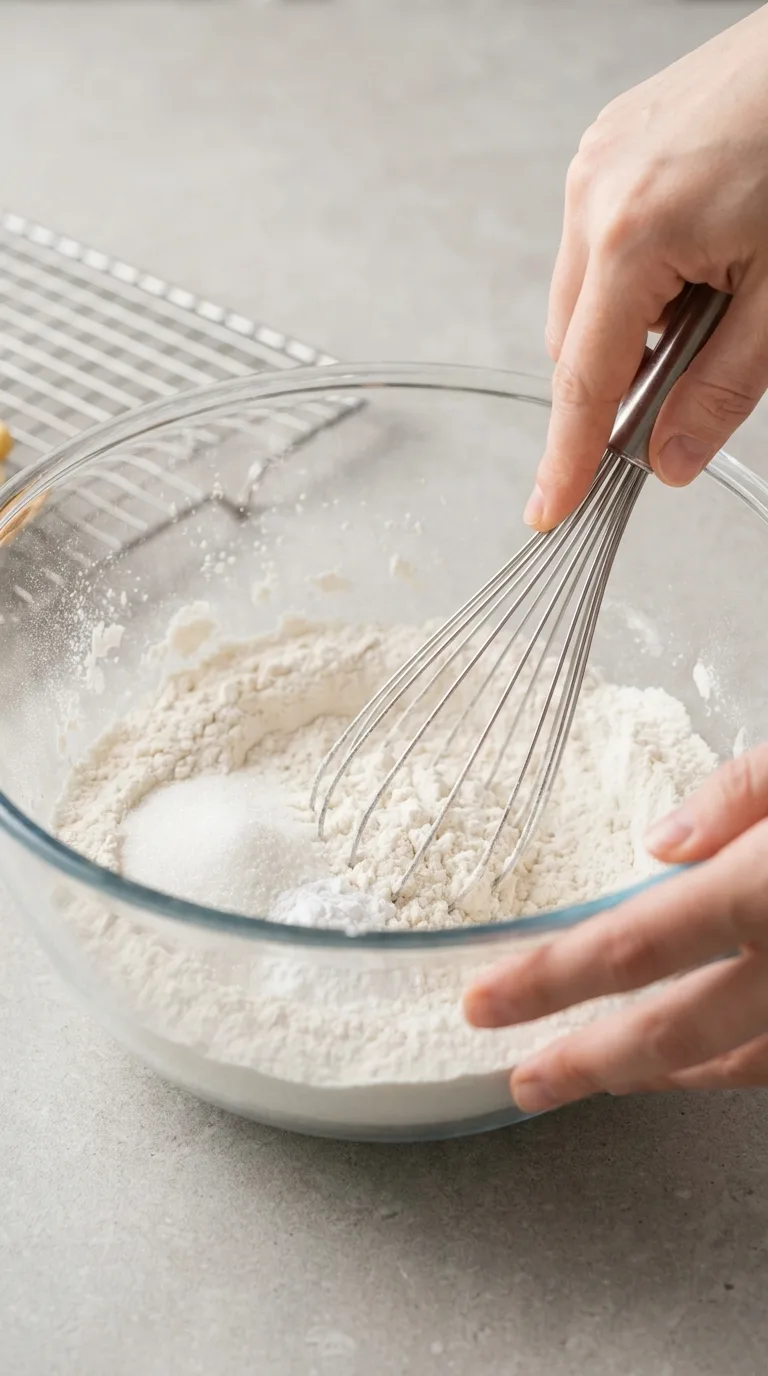
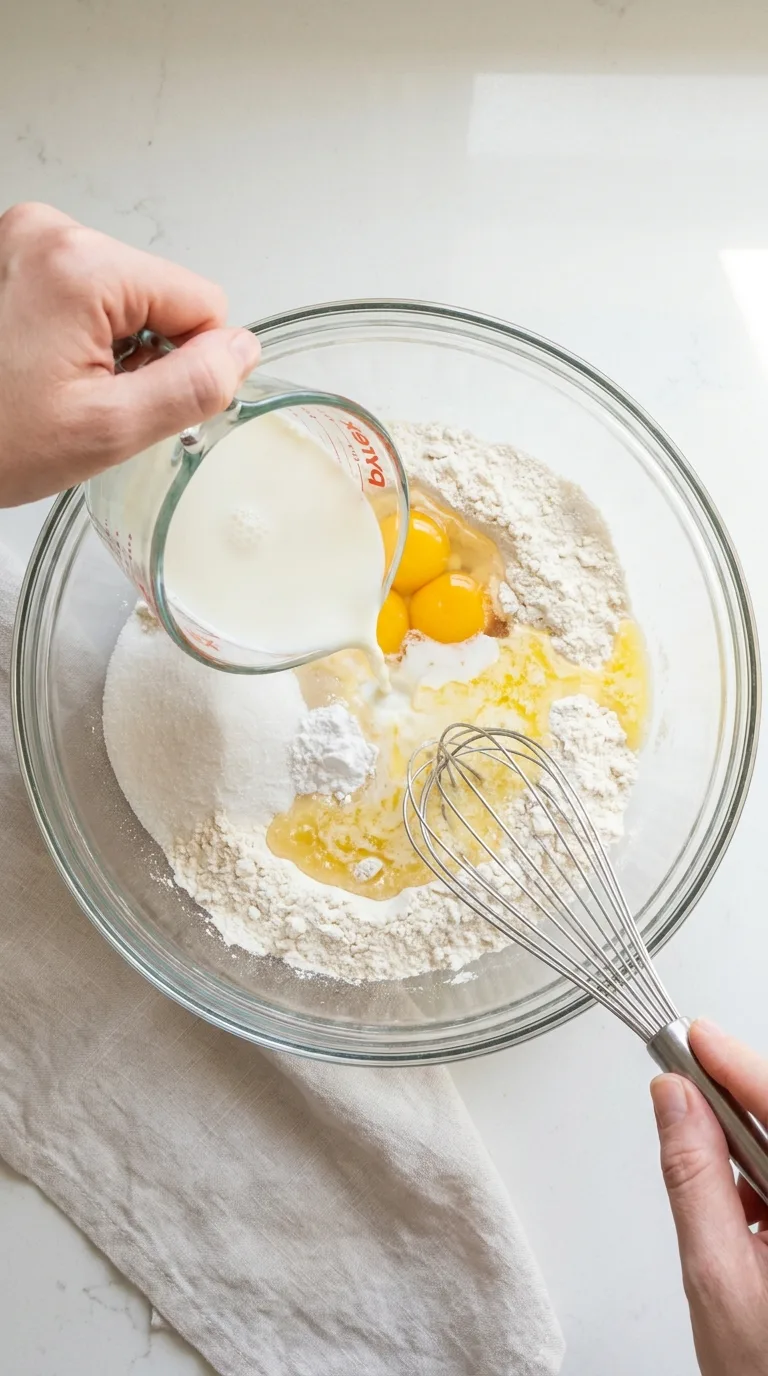
In a large bowl, whisk together the flour, sugar, baking powder, and salt. Break up any visible lumps so the leavening is evenly distributed.
Step 2: Mix the wet ingredients.
In a separate medium bowl, whisk the egg yolks, milk, melted butter, and vanilla until smooth. The butter should be melted but only slightly warm so it does not scramble the yolks.
Step 3: Make the batter.
Pour the wet mixture into the dry ingredients and whisk gently just until combined. The batter should be thick but pourable. A few small lumps are preferable to overmixing.
Step 4: Whip the egg whites.
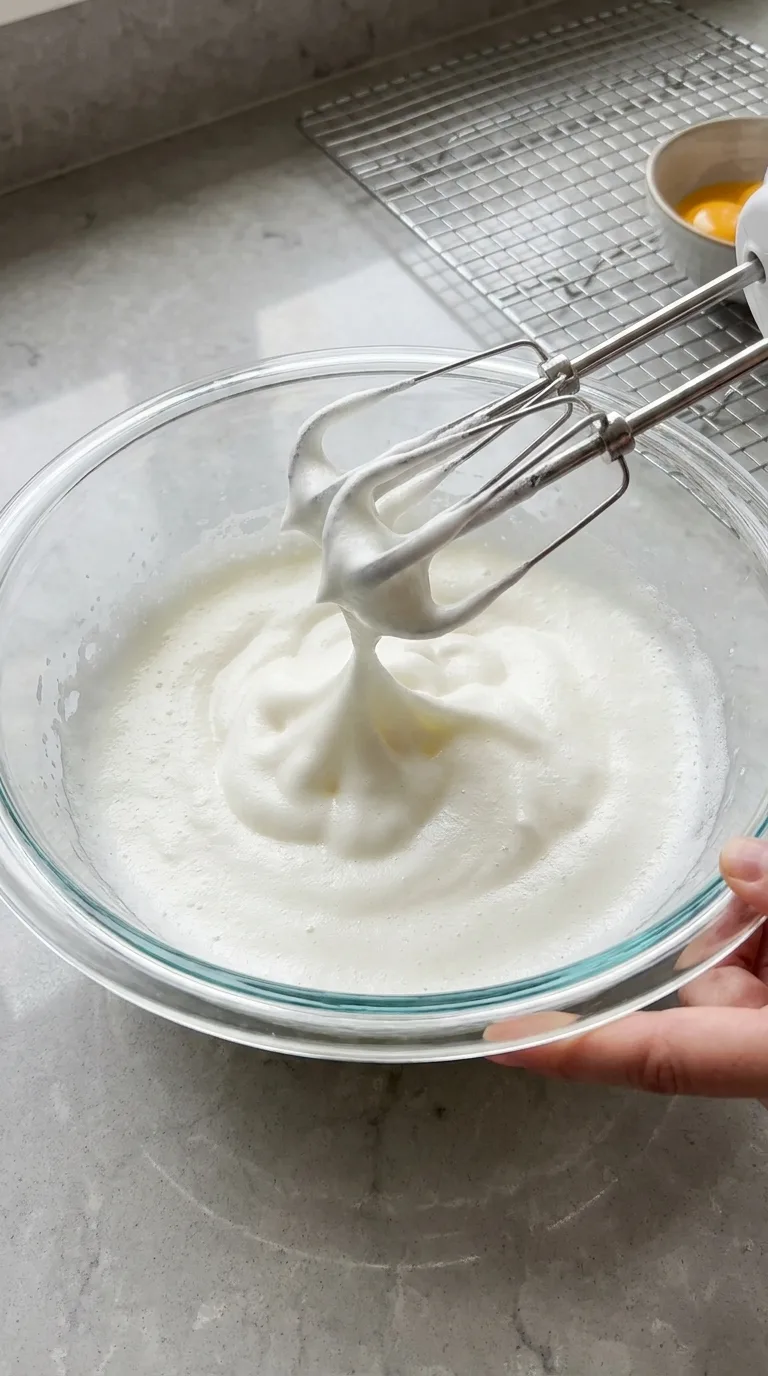
In a clean bowl, beat the egg whites with an electric mixer on medium-high speed until they form soft to medium peaks. The whites should hold their shape when the beaters are lifted but still look smooth rather than dry.
Step 5: Fold in the whites.
Add about one-third of the whipped egg whites to the batter and fold gently to lighten it. Fold in the remaining whites in two additions, using a rubber spatula and stopping as soon as no large streaks of white remain.
Step 6: Rest the batter.
Let the batter rest for 10 minutes at room temperature. It should become slightly thicker while remaining easy to scoop or pour.
Step 7: Preheat the waffle maker.
Preheat the Belgian-style waffle maker according to the manufacturer's instructions. If the plates are not reliably nonstick, lightly grease them before the first waffle.
Step 8: Cook the waffles.
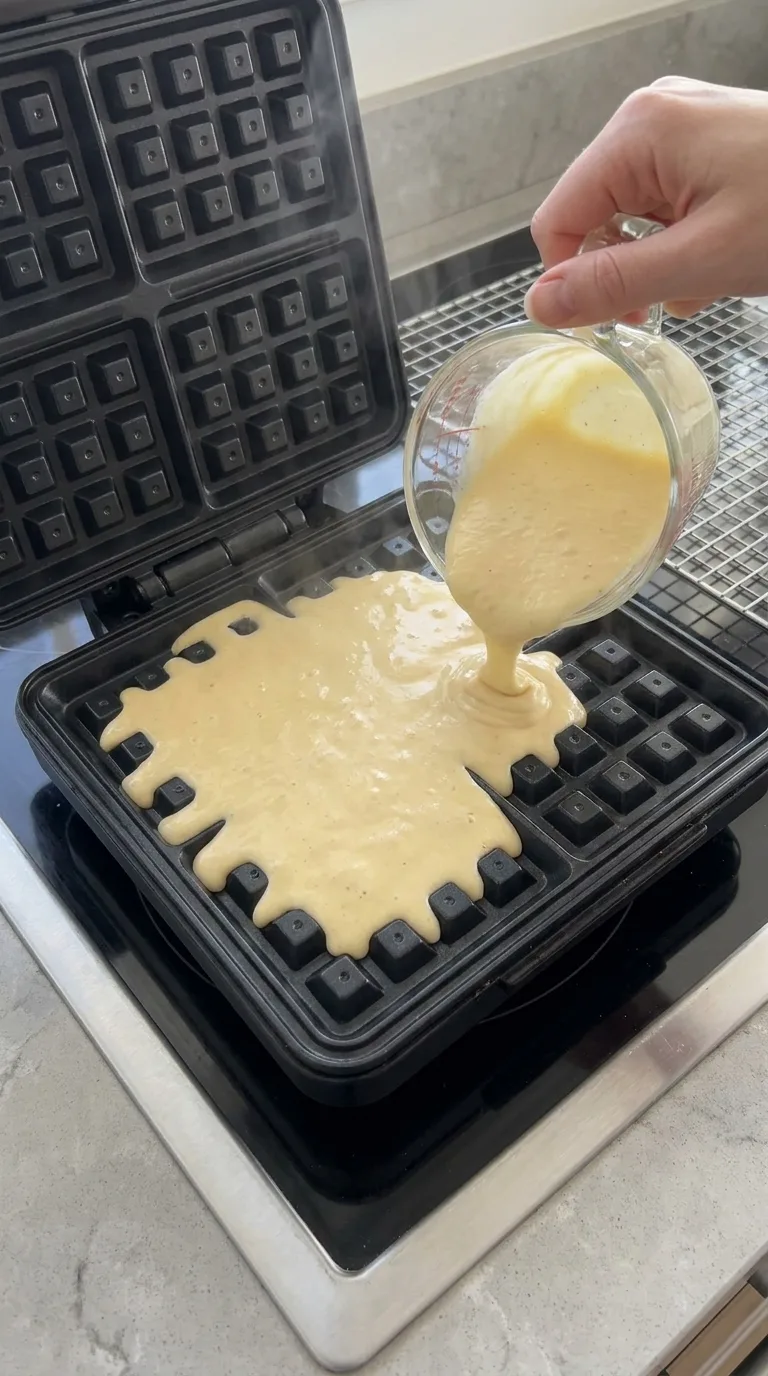
Add enough batter to cover the waffle plates without overflowing; for many deep Belgian-style makers, about 1/2 to 3/4 cup (120 to 180 ml) per waffle is appropriate, but follow your appliance's capacity. Close the lid and cook until the waffle is deeply golden brown and releases easily, usually about 4 to 5 minutes.
Step 9: Check the texture.
The waffle should feel crisp around the edges and firm enough to lift without bending excessively. If it is pale or soft, continue cooking in short intervals until the exterior is properly browned.
Step 10: Keep cooked waffles crisp.
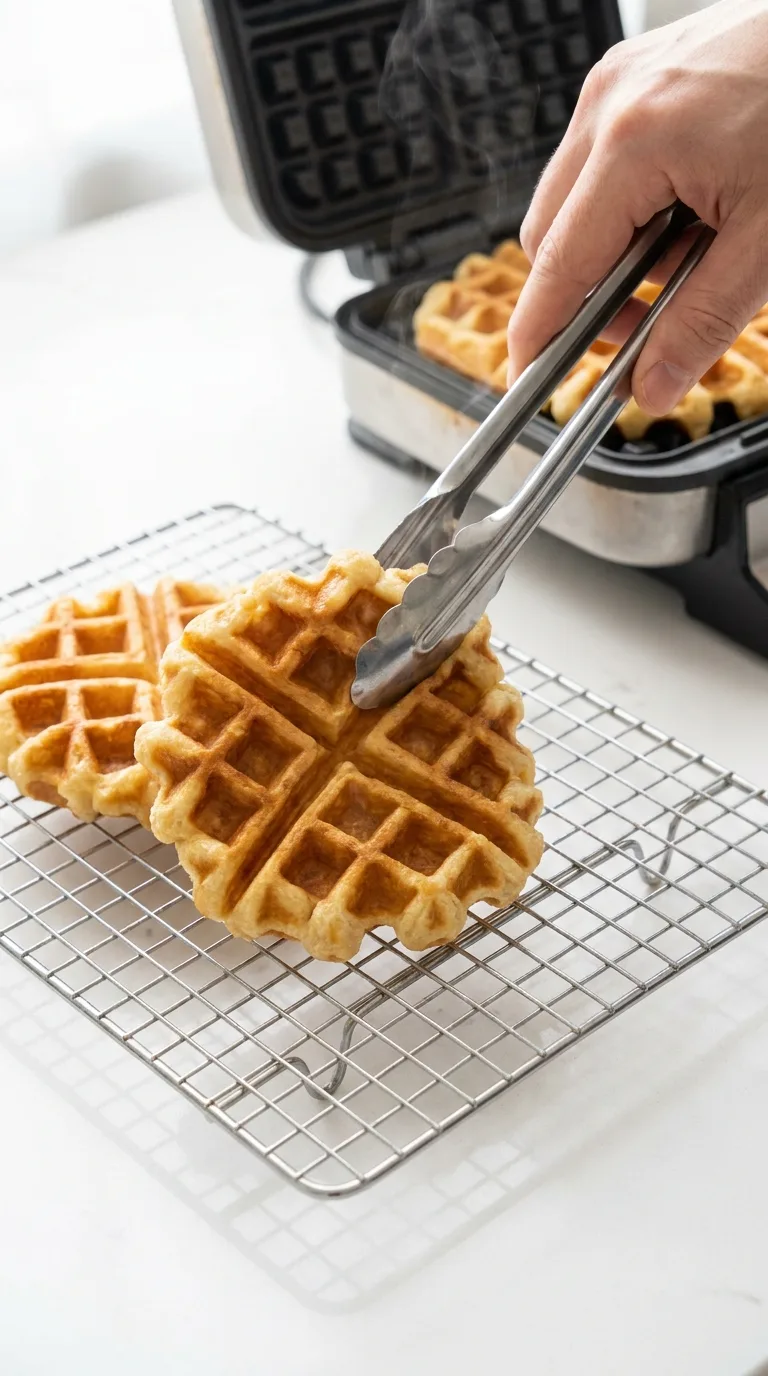
Transfer each waffle directly to a wire rack. Do not stack the waffles while hot, because trapped steam will soften the exterior.
Step 11: Finish the batch.
Repeat with the remaining batter, lightly greasing the waffle plates between batches only if needed.
Step 12: Serve warm.
Serve the Belgian Waffles immediately with optional maple syrup, fresh berries, whipped cream, or powdered sugar.
Storage, Freezing, and Make-Ahead Instructions
- Store cooled waffles in an airtight container in the refrigerator for up to 3 days. Place parchment paper between waffles if stacking them.
- For freezing, cool the waffles completely and arrange them in a single layer until firm. Transfer them to a freezer-safe bag or container with parchment between layers. Freeze for up to 2 months.
- Reheat refrigerated or frozen waffles in a toaster or toaster oven until hot and crisp. Avoid microwaving when possible, as it tends to soften the exterior.
- The batter is best cooked shortly after the 10-minute rest because the whipped egg whites gradually lose volume. For make-ahead preparation, cook the waffles completely and refrigerate or freeze them instead.
FAQ
What makes Belgian Waffles different from regular waffles?
Belgian Waffles are generally thicker and have deeper pockets than standard American-style waffles. This recipe also uses whipped egg whites to help create a lighter interior.
Can I make Belgian Waffles without separating the eggs?
Yes, but the texture will be somewhat denser. Separating and whipping the egg whites adds air to the batter and helps create a lighter center.
Why are my Belgian Waffles not crispy?
They may need more cooking time, or they may have been stacked while hot. Cook until deeply golden and transfer each waffle to a wire rack immediately after removing it from the iron.
Can I freeze Belgian Waffles?
Yes. Cool them completely, freeze them in a single layer, then transfer them to a freezer-safe container or bag. They can be frozen for up to 2 months and reheated directly from frozen in a toaster or toaster oven.
Can I use a regular waffle maker?
Yes, but the amount of batter and cooking time will depend on the size and depth of the appliance. Use the manufacturer's filling guidelines to avoid overflow.
Ingredients
Method
- In a large bowl, whisk together the flour, sugar, baking powder, and salt. Break up any visible lumps so the leavening is evenly distributed.
- In a separate medium bowl, whisk the egg yolks, milk, melted butter, and vanilla until smooth. The butter should be melted but only slightly warm so it does not scramble the yolks.
- Pour the wet mixture into the dry ingredients and whisk gently just until combined. The batter should be thick but pourable. A few small lumps are preferable to overmixing.
- In a clean bowl, beat the egg whites with an electric mixer on medium-high speed until they form soft to medium peaks. The whites should hold their shape when the beaters are lifted but still look smooth rather than dry.
- Add about one-third of the whipped egg whites to the batter and fold gently to lighten it. Fold in the remaining whites in two additions, using a rubber spatula and stopping as soon as no large streaks of white remain.
- Let the batter rest for 10 minutes at room temperature. It should become slightly thicker while remaining easy to scoop or pour.
- Preheat the Belgian-style waffle maker according to the manufacturer's instructions. If the plates are not reliably nonstick, lightly grease them before the first waffle.
- Add enough batter to cover the waffle plates without overflowing; for many deep Belgian-style makers, about 1/2 to 3/4 cup (120 to 180 ml) per waffle is appropriate, but follow your appliance's capacity. Close the lid and cook until the waffle is deeply golden brown and releases easily, usually about 4 to 5 minutes.
- The waffle should feel crisp around the edges and firm enough to lift without bending excessively. If it is pale or soft, continue cooking in short intervals until the exterior is properly browned.
- Transfer each waffle directly to a wire rack: Do not stack the waffles while hot, because trapped steam will soften the exterior.
- Repeat with the remaining batter, lightly greasing the waffle plates between batches only if needed.
- Serve the Belgian Waffles immediately with optional maple syrup, fresh berries, whipped cream, or powdered sugar.