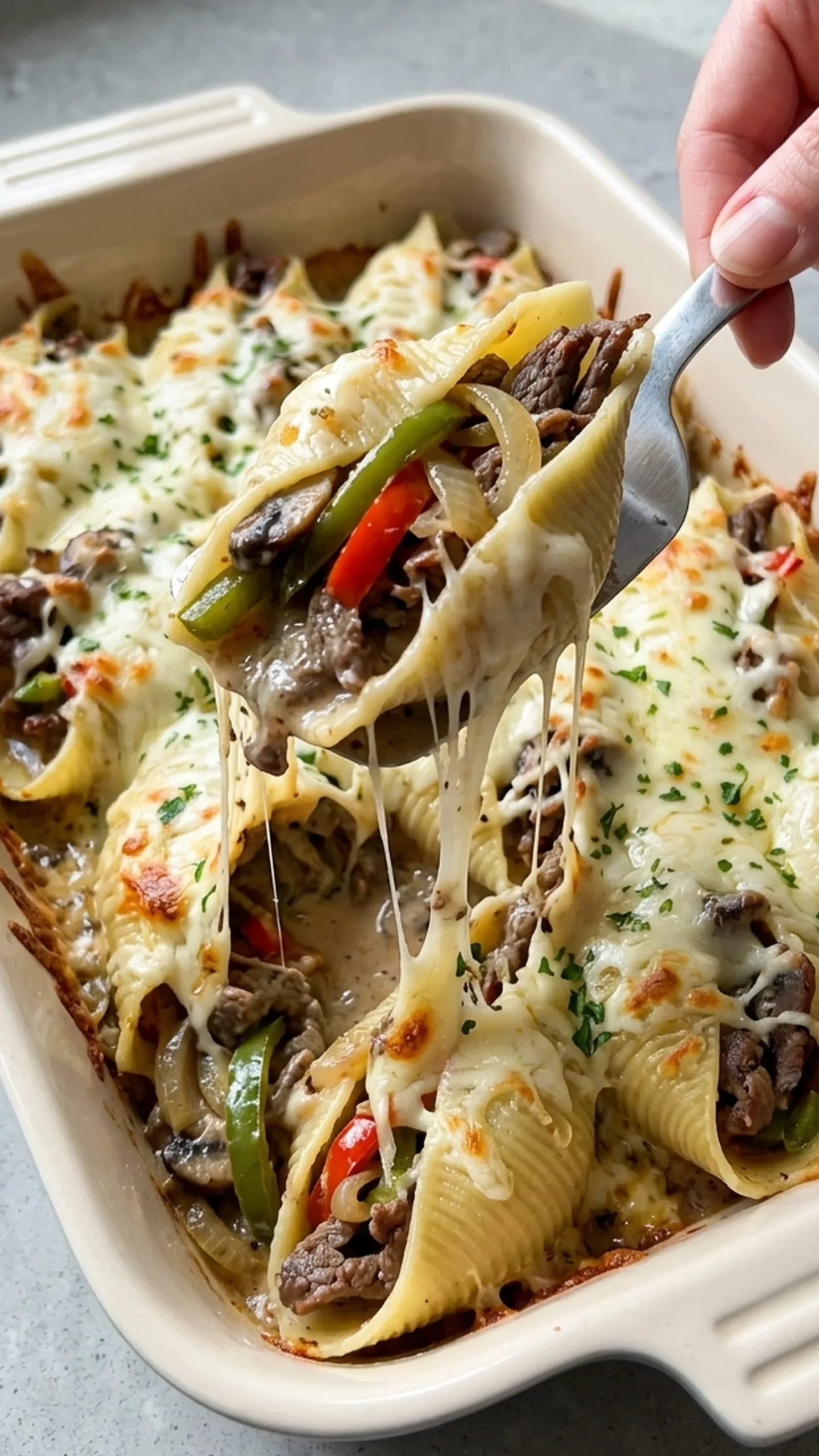
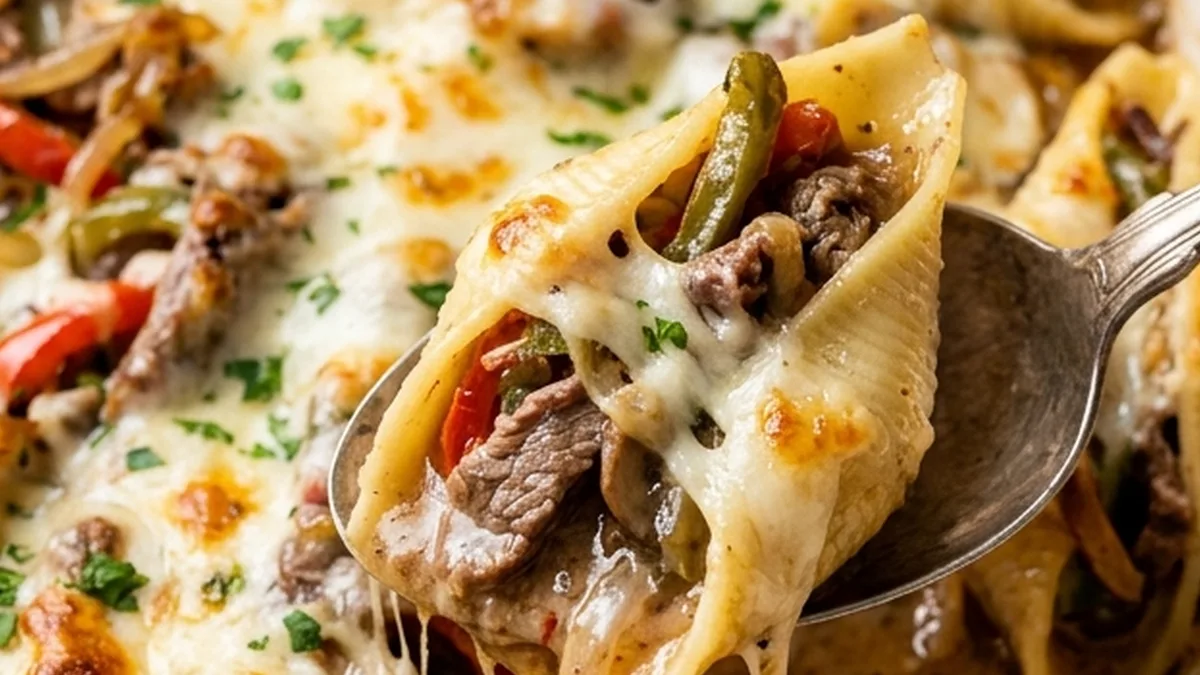
Philly Cheese Steak Stuffed Shells combine the savory flavors of a Philly cheesesteak with the comfort of baked pasta. Jumbo pasta shells are filled with tender slices of beef, sautéed onions, bell peppers, and mushrooms, then covered with a creamy provolone cheese sauce. A final layer of melted cheese makes this a rich, satisfying casserole with lightly golden edges.
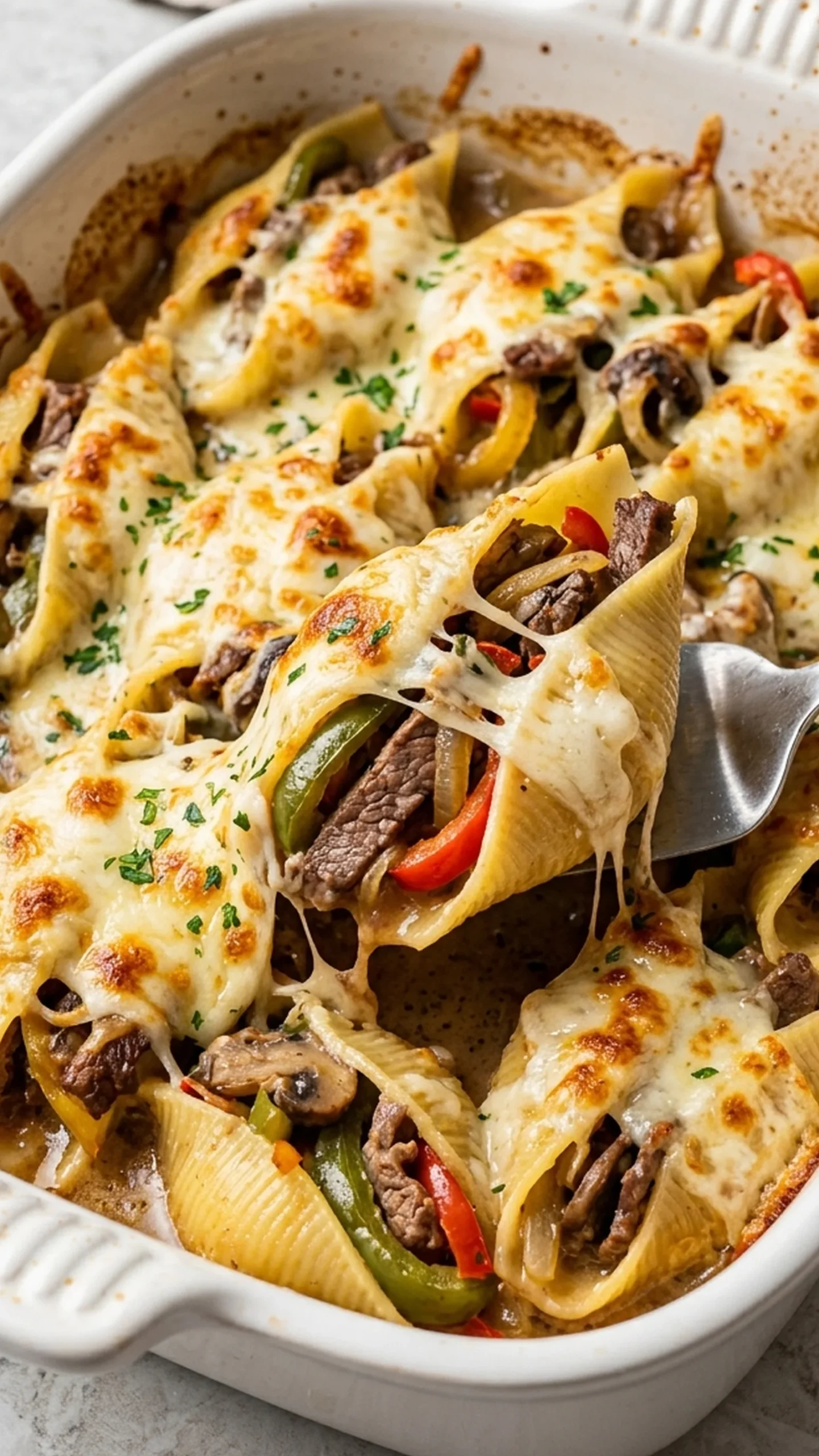
This version uses thinly sliced sirloin and a homemade cheese sauce instead of ground beef or jarred Alfredo sauce. Cooking the filling before assembling the shells keeps the vegetables tender and helps prevent a watery casserole. It's a practical make-ahead dinner for family meals or casual gatherings.
Why This Recipe Works
- Thinly sliced sirloin cooks quickly. Searing the beef over medium-high heat develops savory browned edges without requiring a long cooking time.
- Cooking the vegetables removes excess moisture. Sautéed peppers, onions, and mushrooms create a flavorful filling without releasing too much liquid into the pasta.
- A homemade cheese sauce keeps the shells moist. Milk, butter, flour, and provolone form a smooth sauce that surrounds the pasta as it bakes.
- Provolone delivers classic cheesesteak flavor. Its mild, creamy taste complements the beef and vegetables without overpowering them.
- Baking the shells covered prevents dryness. Foil traps moisture during the first stage of baking, while a short uncovered finish melts and lightly browns the cheese.
Equipment Needed
- 9 × 13-inch baking dish
- Large pot, at least 5 quarts, for boiling pasta
- Large 12-inch skillet
- Medium heavy-bottomed saucepan, approximately 3 quarts
- Colander
- Whisk
- Sharp knife and cutting board
- Aluminum foil
- Instant-read meat thermometer
Ingredients List
For the Pasta
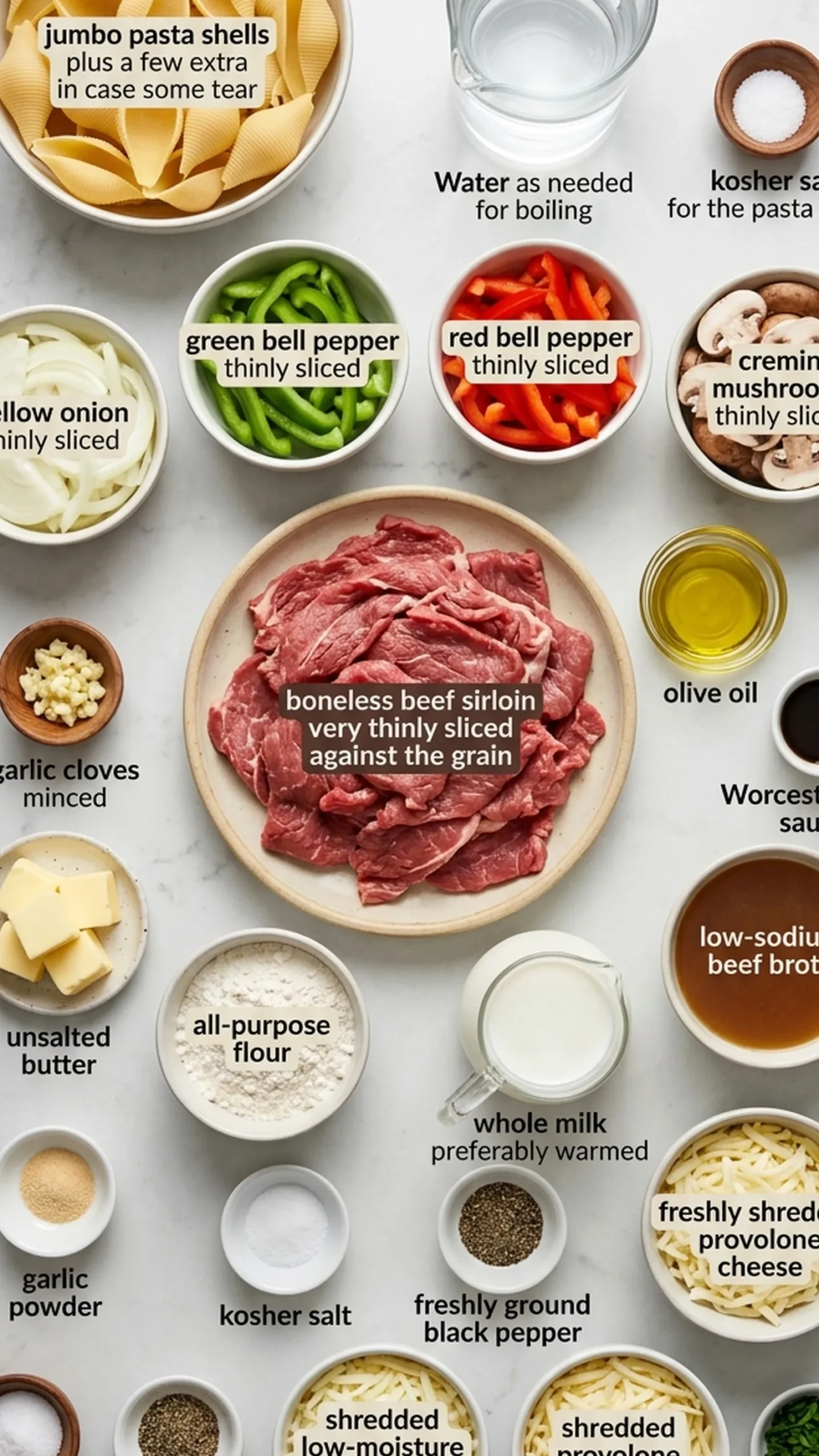
- 24 jumbo pasta shells (approximately 8 ounces / 225 g dry), plus a few extra in case some tear
- Water, as needed for boiling
- 1 tablespoon (about 15 g) kosher salt, for the pasta water
For the Cheesesteak Filling
- 1 pound (454 g) boneless beef sirloin, very thinly sliced against the grain
- 1 tablespoon (15 mL) olive oil
- 1 medium yellow onion (about 150 g), thinly sliced
- 1 medium green bell pepper (about 150 g), thinly sliced
- 1 medium red bell pepper (about 150 g), thinly sliced
- 8 ounces (227 g) cremini mushrooms, thinly sliced
- 3 medium garlic cloves (about 9 g), minced
- 1 tablespoon (15 mL) Worcestershire sauce
- ½ teaspoon (about 1.5 g) kosher salt
- ½ teaspoon (about 1 g) freshly ground black pepper
- ½ teaspoon (about 1.5 g) garlic powder
For the Creamy Provolone Sauce
- 3 tablespoons (42 g) unsalted butter
- 3 tablespoons (24 g) all-purpose flour
- 2 cups (480 mL) whole milk, preferably warmed
- ½ cup (120 mL) low-sodium beef broth
- 1½ cups (170 g) freshly shredded provolone cheese
- ½ teaspoon (about 1.5 g) kosher salt
- ¼ teaspoon (about 0.5 g) freshly ground black pepper
For the Cheese Topping
- 1 cup (113 g) shredded low-moisture mozzarella cheese
- ½ cup (57 g) shredded provolone cheese
- 2 tablespoons (8 g) chopped fresh parsley, optional
Ingredient Notes and Substitutions
- Beef Sirloin: Sirloin provides a good balance of tenderness and beef flavor. Slice it very thinly against the grain so it remains easy to bite through inside the pasta shells. Ribeye is a richer alternative with more marbling. Thinly sliced deli roast beef can also be used, but it needs only brief heating rather than searing.
- Jumbo Pasta Shells: Jumbo shells have enough space to hold the beef and vegetable filling while maintaining their shape during baking. Cook them just until al dente so they do not become mushy in the oven. There is no direct pasta substitute that produces the same presentation, although the filling and sauce can be layered with cooked lasagna noodles to make a different casserole.
- Provolone Cheese: Provolone gives the sauce its characteristic mild, savory cheesesteak flavor. Mild provolone melts more smoothly than aged, sharp varieties. Monterey Jack can replace it for a creamy sauce, although the finished dish will have a less traditional cheesesteak flavor.
- Bell Peppers: Green bell peppers provide a slightly earthy flavor, while red bell peppers contribute sweetness and color. You can use two peppers of the same color if preferred. For a milder filling, replace the green pepper with an additional red or yellow pepper.
- Mushrooms: Cremini mushrooms add savory depth and a meaty texture. White button mushrooms are a suitable substitute. If you prefer a mushroom-free filling, omit them and add another small bell pepper, although the mixture will taste slightly sweeter and less earthy.
Step-by-Step Instructions
1. Cook the Pasta Shells
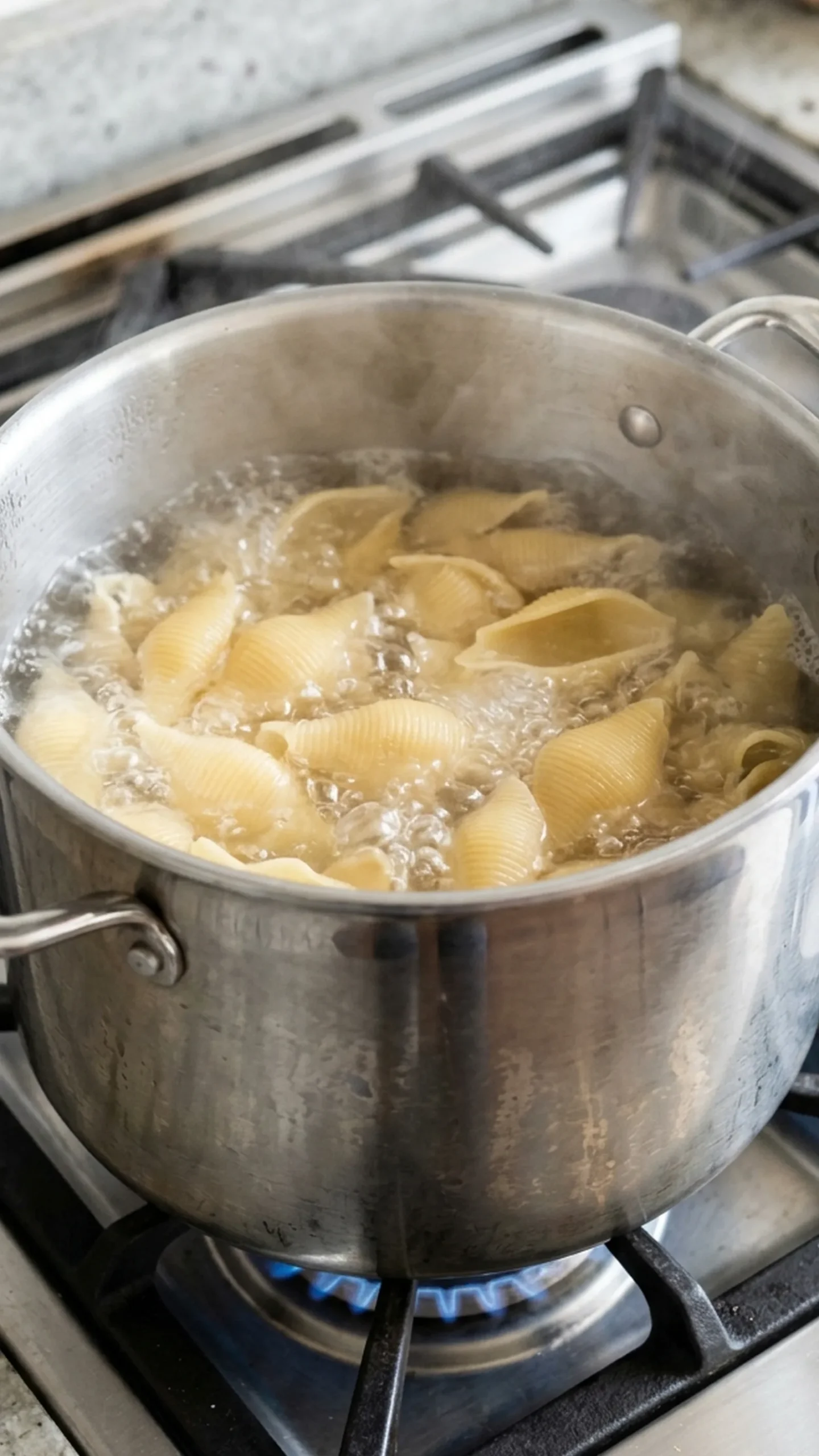
Bring a large pot of water to a rolling boil over high heat. Add the kosher salt and jumbo pasta shells.
Cook according to the package directions, stopping approximately 1–2 minutes before the recommended cooking time so the shells remain al dente.
Drain carefully and rinse briefly under cool running water to stop the cooking process. Arrange the shells open-side down on a clean baking sheet so they do not stick together.
2. Prepare the Beef
Pat the thinly sliced sirloin dry with paper towels.
Season it with the kosher salt, black pepper, and garlic powder listed for the filling.
If slicing the beef yourself, place it in the freezer for approximately 15–20 minutes beforehand to firm it slightly. This makes it easier to cut into thin strips.
3. Sear the Beef
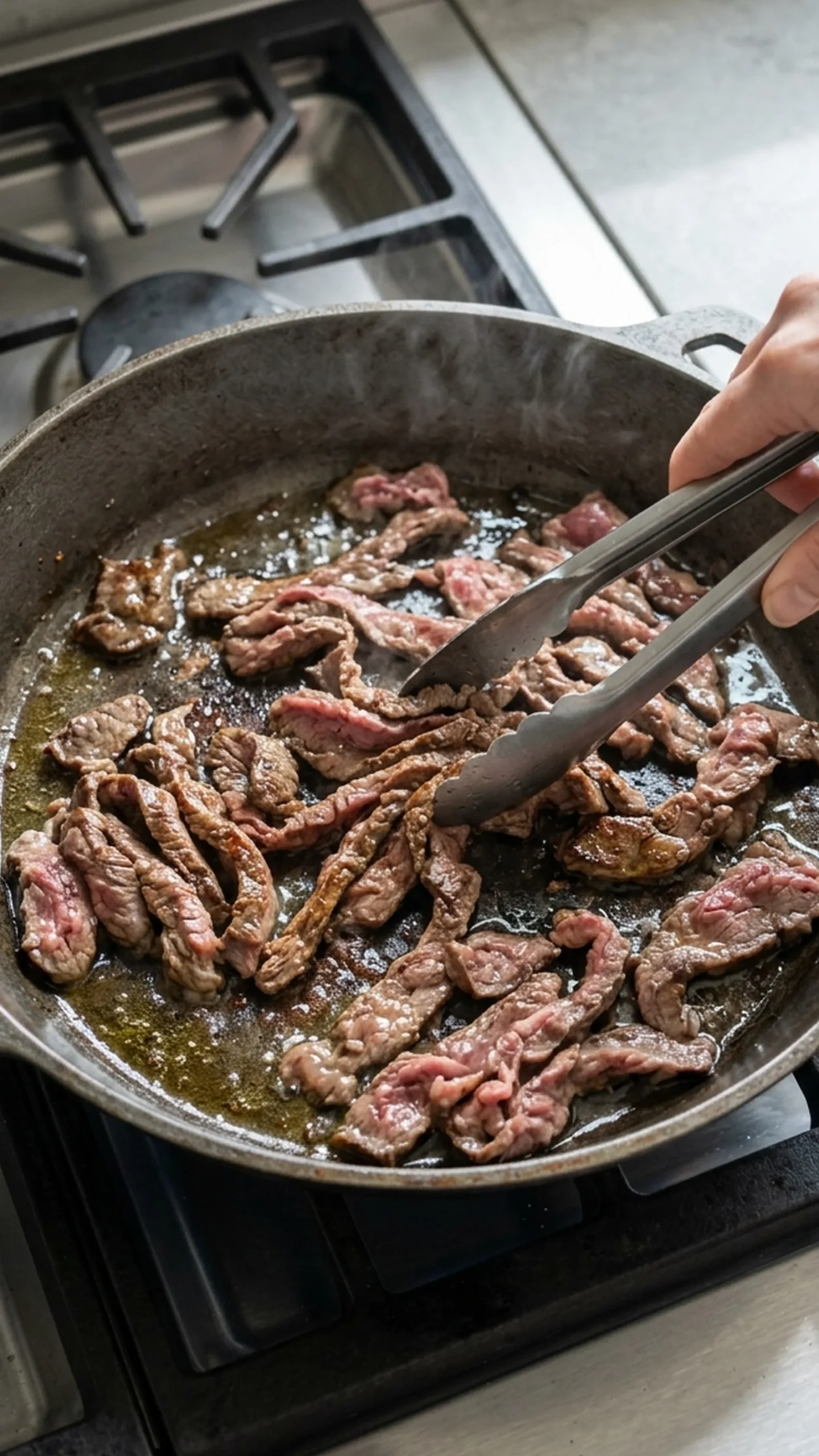
Heat the olive oil in a large 12-inch skillet over medium-high heat.
Add the beef in two batches if necessary, keeping the pieces in a relatively even layer. Cook for approximately 2–3 minutes per batch, stirring or turning until browned and cooked through.
For food safety, cook the sirloin to at least 145°F (63°C), followed by a 3-minute rest.
Transfer the beef to a plate and set aside.
4. Sauté the Vegetables
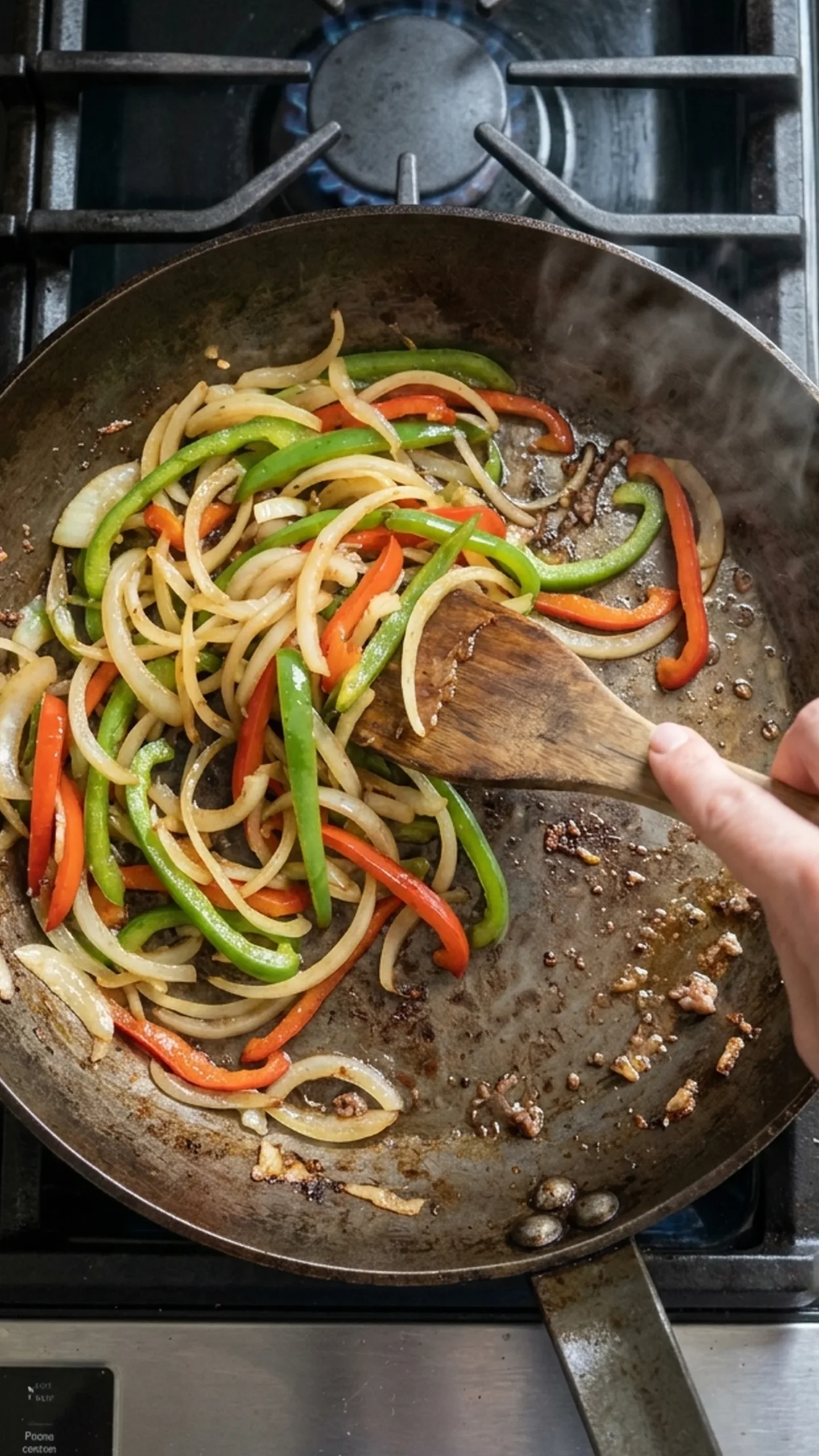
In the same skillet, add the sliced onion, green bell pepper, and red bell pepper.
Cook over medium heat for 5–6 minutes, stirring occasionally, until the vegetables begin to soften.
Add the sliced mushrooms and cook for another 5–6 minutes, until they release most of their moisture and begin to develop golden edges.
The vegetables should be tender but not mushy, with very little excess liquid remaining in the skillet.
5. Finish the Cheesesteak Filling
Add the minced garlic to the vegetables and cook for approximately 30 seconds, until fragrant.
Return the cooked beef and its accumulated juices to the skillet. Add the Worcestershire sauce and stir until the beef and vegetables are evenly coated.
Cook for another minute, then remove the skillet from the heat.
If the beef slices are particularly long, chop the filling into smaller, bite-sized pieces so it fits neatly inside the pasta shells.
6. Make the Cheese Sauce Base
Preheat the oven to 375°F (190°C).
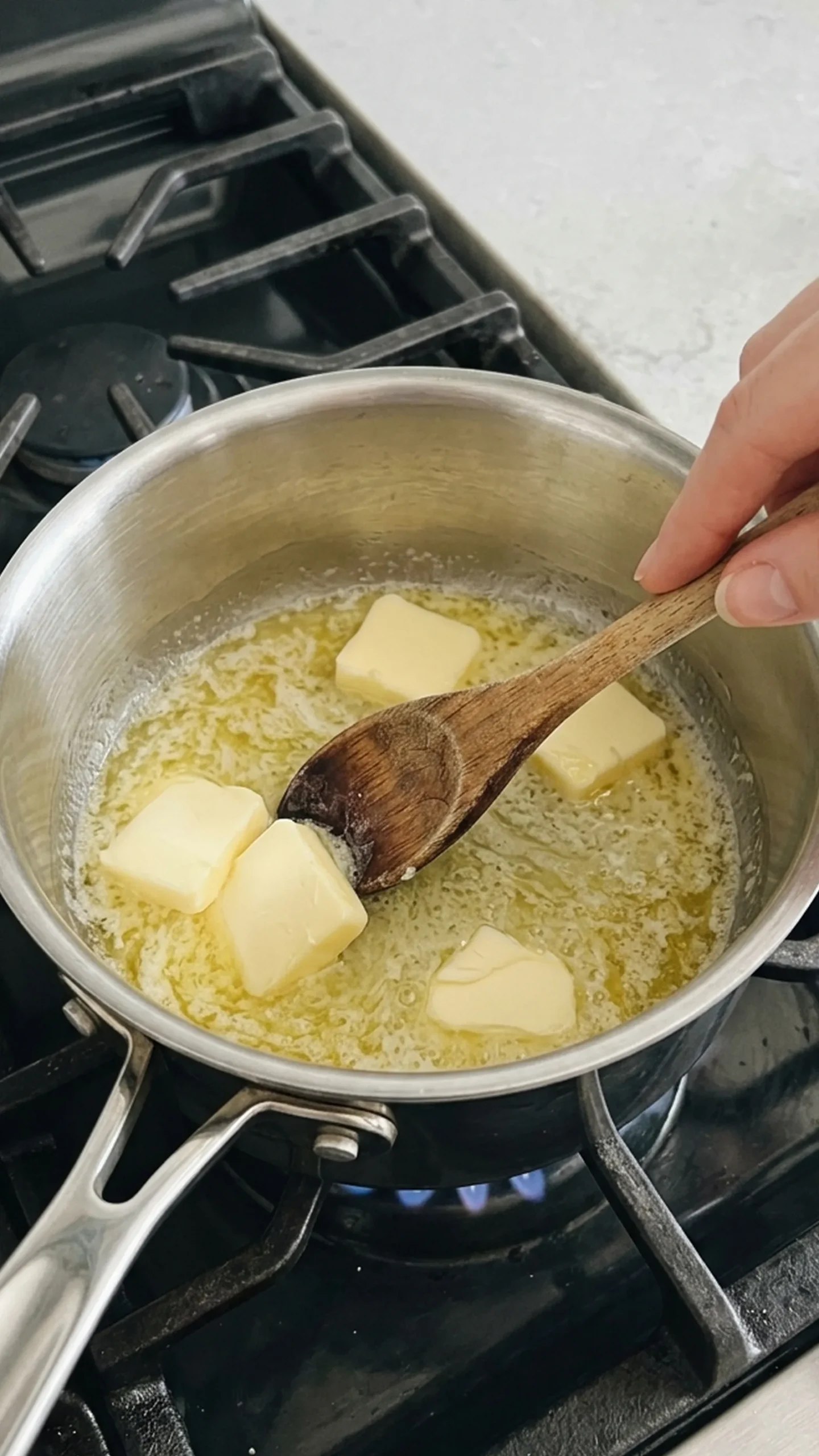
Melt the butter in a medium saucepan over medium heat. Add the flour and whisk continuously for approximately 1–2 minutes.
The mixture should form a smooth paste and develop a lightly nutty aroma without turning dark brown.
Slowly pour in the warmed milk and beef broth, whisking constantly to prevent lumps.
7. Thicken the Sauce
Continue cooking the sauce over medium heat for approximately 4–6 minutes, stirring frequently.
It should begin to bubble gently and thicken enough to coat the back of a spoon.
If lumps appear, whisk vigorously until smooth. Avoid rapidly boiling the sauce, which can cause the milk to scorch along the bottom of the saucepan.
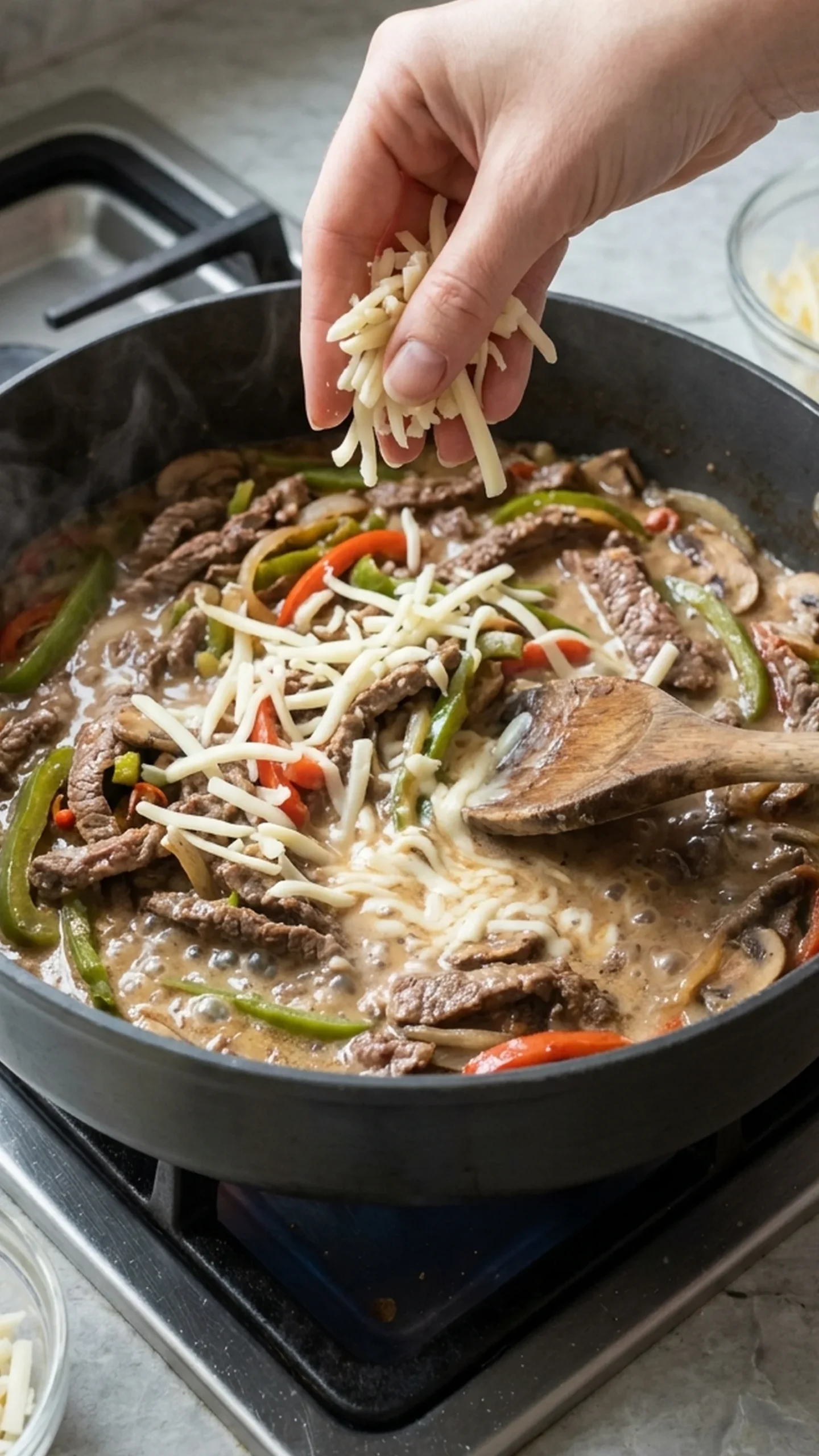
8. Add the Provolone
Reduce the heat to low.
Add the 1½ cups of shredded provolone cheese in small handfuls, stirring until each addition has melted before adding more.
Season with the kosher salt and black pepper listed for the sauce.
The finished sauce should be smooth, creamy, and pourable. If it becomes excessively thick, stir in a small splash of warm milk.
Remove the saucepan from the heat.
9. Prepare the Baking Dish
Spread approximately ¾ cup of the provolone sauce evenly over the bottom of a 9 × 13-inch baking dish.
This prevents the pasta shells from sticking and helps keep their bottoms moist during baking.
Arrange the cooked shells nearby with the open sides facing upward, ready for filling.
10. Stuff the Pasta Shells
Spoon approximately 2 tablespoons of the beef and vegetable filling into each cooked pasta shell, dividing the mixture as evenly as possible.
Arrange the stuffed shells in the baking dish, filling-side up.
Place them close enough together to remain upright, but avoid stacking or crushing them.
11. Add the Sauce and Cheese
Spoon the remaining provolone sauce evenly over and around the stuffed pasta shells.
Sprinkle the mozzarella and remaining provolone cheese over the top.
Make sure the edges of the pasta are lightly coated with sauce so they do not become excessively dry while baking.
12. Bake the Stuffed Shells
Cover the baking dish tightly with aluminum foil, taking care to keep the foil from touching the cheese if possible.
Bake at 375°F (190°C) for 20 minutes.
Carefully remove the foil and continue baking for another 10–15 minutes, until the cheese is completely melted, the sauce is bubbling around the edges, and the casserole is heated throughout.
The center should reach 165°F (74°C).
For additional browning, broil for 1–2 minutes at the end, watching closely to prevent the cheese from burning.
13. Rest Before Serving
Remove the baking dish from the oven and allow the stuffed shells to rest for 10 minutes.
This gives the cheese sauce time to settle and makes the shells easier to serve without the filling spilling out.
Sprinkle with the optional chopped parsley just before serving.
14. Serve
Divide the stuffed shells among six plates, allowing approximately four shells per serving.
Spoon some of the creamy provolone sauce from the baking dish over each portion.
Serve warm with a crisp green salad, roasted vegetables, or garlic bread.
Storage, Freezing, and Make-Ahead Instructions
- Refrigeration: Allow leftover Philly Cheese Steak Stuffed Shells to cool slightly, then transfer them to an airtight container with some of the cheese sauce. Refrigerate within 2 hours of cooking and store for up to 3–4 days. Keeping the pasta covered with sauce helps prevent the edges from drying out.
- Freezing: For the most reliable texture, freeze the assembled casserole before baking. Prepare the filling, pasta shells, and cheese sauce as directed. Assemble everything in a freezer-safe baking dish, but do not bake. Allow all components to cool completely before covering the dish tightly with plastic wrap and aluminum foil. Freeze for up to 2 months. Cream-based cheese sauces may become slightly grainy after freezing and thawing, but gentle reheating can help maintain a creamy consistency.
- Thawing and Reheating: Thaw the frozen casserole overnight in the refrigerator. Remove the plastic wrap and cover the dish with aluminum foil. Bake at 375°F (190°C) for approximately 35–45 minutes, removing the foil during the final 10–15 minutes. The center should reach an internal temperature of 165°F (74°C). To reheat individual cooked portions, place them in an oven-safe dish with a splash of milk, cover with foil, and warm at 350°F (175°C) for approximately 15–20 minutes, or until heated through.
- Make-Ahead Preparation: Assemble the stuffed shells up to 24 hours before baking. Cover the baking dish tightly and refrigerate. When ready to cook, let it stand at room temperature briefly while the oven preheats, then bake as directed. A chilled casserole may require an additional 5–10 minutes of covered baking time. You can also prepare the beef and vegetable filling separately up to 2 days ahead and refrigerate it in an airtight container.
FAQ
Can I make Philly Cheese Steak Stuffed Shells ahead of time?
Yes. Assemble the entire casserole up to 24 hours in advance and store it tightly covered in the refrigerator. Bake when needed, adding approximately 5–10 minutes to the covered baking time if the dish is cold.
What is the best beef for Philly Cheese Steak Stuffed Shells?
Thinly sliced sirloin is a practical choice because it is tender, flavorful, and easy to cook quickly. Ribeye is another option with a richer flavor and more marbling. Whichever cut you choose, slice it thinly against the grain.
Can I use ground beef instead of sliced steak?
Yes. Substitute 1 pound (454 g) of lean ground beef for the sirloin. Brown it thoroughly, breaking it into small crumbles, and cook it to an internal temperature of 160°F (71°C). Drain excess grease before combining it with the vegetables.
Why is my cheese sauce grainy?
Grainy cheese sauce usually results from overheating the cheese or using packaged shredded cheese that does not melt smoothly. Reduce the heat before adding the provolone, stir gently, and avoid boiling the sauce after the cheese melts.
Can I make this recipe without mushrooms?
Yes. Omit the mushrooms and replace them with an additional small bell pepper or extra onion. The filling will be slightly sweeter and less earthy, but it will still have the savory beef, peppers, onions, and cheese flavors associated with a cheesesteak.
Ingredients
Method
- Bring a large pot of water to a rolling boil over high heat. Add the kosher salt and jumbo pasta shells. Cook according to the package directions, stopping approximately 1–2 minutes before the recommended cooking time so the shells remain al dente. Drain carefully and rinse briefly under cool running water to stop the cooking process. Arrange the shells open-side down on a clean baking sheet so they do not stick together.
- Pat the thinly sliced sirloin dry with paper towels. Season it with the kosher salt, black pepper, and garlic powder listed for the filling. If slicing the beef yourself, place it in the freezer for approximately 15–20 minutes beforehand to firm it slightly. This makes it easier to cut into thin strips.
- Heat the olive oil in a large 12-inch skillet over medium-high heat. Add the beef in two batches if necessary, keeping the pieces in a relatively even layer. Cook for approximately 2–3 minutes per batch, stirring or turning until browned and cooked through. For food safety, cook the sirloin to at least 145°F (63°C), followed by a 3-minute rest. Transfer the beef to a plate and set aside.
- In the same skillet, add the sliced onion, green bell pepper, and red bell pepper. Cook over medium heat for 5–6 minutes, stirring occasionally, until the vegetables begin to soften. Add the sliced mushrooms and cook for another 5–6 minutes, until they release most of their moisture and begin to develop golden edges. The vegetables should be tender but not mushy, with very little excess liquid remaining in the skillet.
- Add the minced garlic to the vegetables and cook for approximately 30 seconds, until fragrant. Return the cooked beef and its accumulated juices to the skillet. Add the Worcestershire sauce and stir until the beef and vegetables are evenly coated. Cook for another minute, then remove the skillet from the heat. If the beef slices are particularly long, chop the filling into smaller, bite-sized pieces so it fits neatly inside the pasta shells.
- Preheat the oven to 375°F (190°C). Melt the butter in a medium saucepan over medium heat. Add the flour and whisk continuously for approximately 1–2 minutes. The mixture should form a smooth paste and develop a lightly nutty aroma without turning dark brown. Slowly pour in the warmed milk and beef broth, whisking constantly to prevent lumps.
- Continue cooking the sauce over medium heat for approximately 4–6 minutes, stirring frequently. It should begin to bubble gently and thicken enough to coat the back of a spoon. If lumps appear, whisk vigorously until smooth. Avoid rapidly boiling the sauce, which can cause the milk to scorch along the bottom of the saucepan.
- Reduce the heat to low: Add the 1½ cups of shredded provolone cheese in small handfuls, stirring until each addition has melted before adding more. Season with the kosher salt and black pepper listed for the sauce. The finished sauce should be smooth, creamy, and pourable. If it becomes excessively thick, stir in a small splash of warm milk. Remove the saucepan from the heat.
- Spread approximately ¾ cup of the provolone sauce evenly over the bottom of a 9 × 13-inch baking dish. This prevents the pasta shells from sticking and helps keep their bottoms moist during baking. Arrange the cooked shells nearby with the open sides facing upward, ready for filling.
- Spoon approximately 2 tablespoons of the beef and vegetable filling into each cooked pasta shell, dividing the mixture as evenly as possible. Arrange the stuffed shells in the baking dish, filling-side up. Place them close enough together to remain upright, but avoid stacking or crushing them.
- Spoon the remaining provolone sauce evenly over and around the stuffed pasta shells. Sprinkle the mozzarella and remaining provolone cheese over the top. Make sure the edges of the pasta are lightly coated with sauce so they do not become excessively dry while baking.
- Cover the baking dish tightly with aluminum foil, taking care to keep the foil from touching the cheese if possible. Bake at 375°F (190°C) for 20 minutes. Carefully remove the foil and continue baking for another 10–15 minutes, until the cheese is completely melted, the sauce is bubbling around the edges, and the casserole is heated throughout. The center should reach 165°F (74°C). For additional browning, broil for 1–2 minutes at the end, watching closely to prevent the cheese from burning.
- Remove the baking dish from the oven and allow the stuffed shells to rest for 10 minutes. This gives the cheese sauce time to settle and makes the shells easier to serve without the filling spilling out. Sprinkle with the optional chopped parsley just before serving.
- Divide the stuffed shells among six plates, allowing approximately four shells per serving. Spoon some of the creamy provolone sauce from the baking dish over each portion. Serve warm with a crisp green salad, roasted vegetables, or garlic bread.