These Soft & Chewy Gingerbread Men Cookies have crisp, lightly browned edges and tender centers with the classic warmth of ginger, cinnamon, and molasses. The dough is easy to roll and cut into festive shapes, making these cookies a natural choice for holiday baking and decorating.

A short chilling period helps the dough hold its shape in the oven while keeping the finished cookies soft. They can be decorated with a simple vanilla icing once completely cool.
Why This Recipe Works
- Molasses adds moisture and chew: It gives the cookies their characteristic deep flavor while helping the centers stay soft.
- Brown sugar contributes tenderness: Its moisture helps prevent the cookies from becoming dry or brittle.
- Chilling firms the dough: Cold dough is easier to roll and helps the cut-out shapes retain their definition during baking.
- Moderate baking time protects the center: Removing the cookies when the edges are set but the centers still look slightly soft keeps them chewy after cooling.
- A balanced spice blend gives classic gingerbread flavor: Ginger and cinnamon provide warmth without overpowering the molasses.
Equipment Needed
- 2 large baking sheets
- Parchment paper
- Electric hand mixer or stand mixer
- Rolling pin
- 4- to 5-inch (10- to 13-cm) gingerbread man cookie cutter
- Mixing bowls
- Wire cooling rack
- Piping bag or small zip-top bag, optional for decorating
Ingredients List
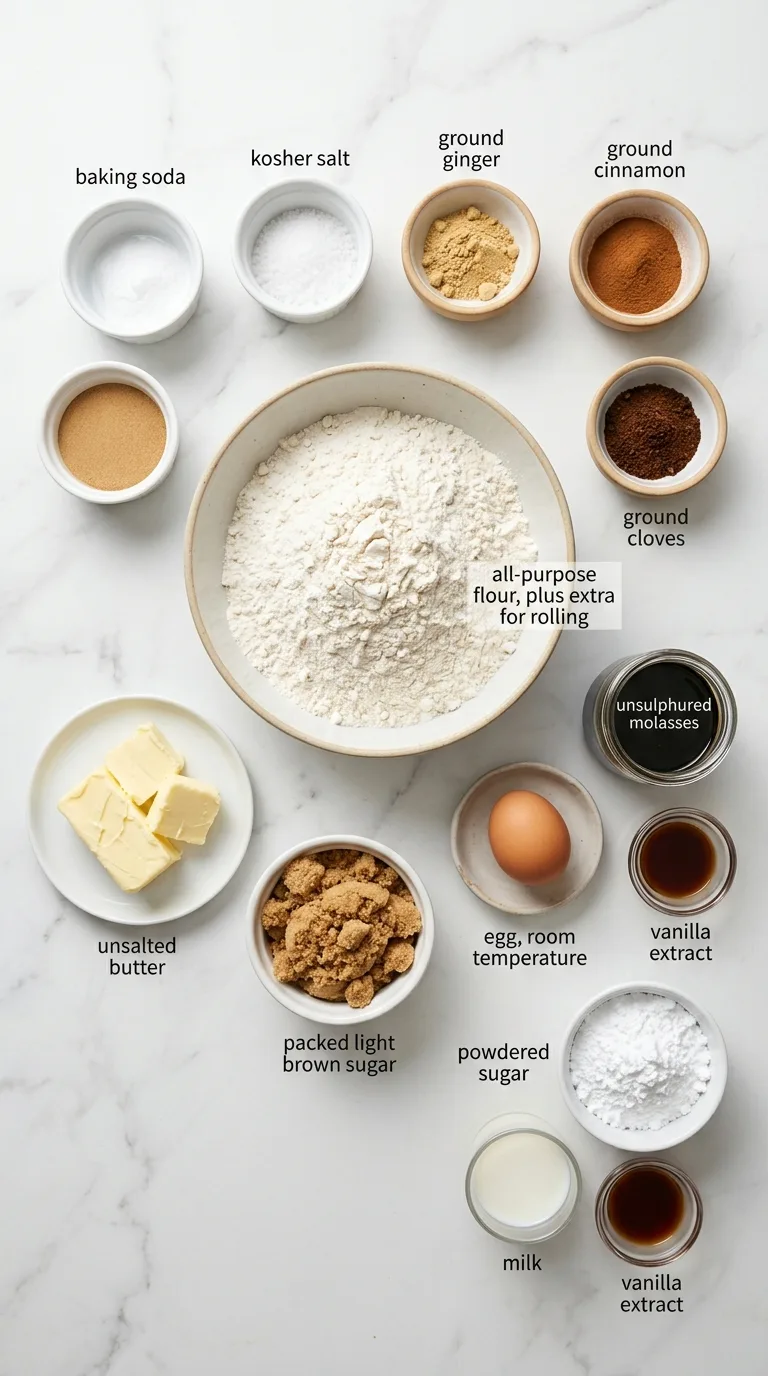
For the Cookies
- 3 cups (375 g) all-purpose flour, plus extra for rolling
- 1 teaspoon (5 g) baking soda
- 1/2 teaspoon (1.5 g) kosher salt
- 2 teaspoons (5 g) ground ginger
- 1 1/2 teaspoons (4 g) ground cinnamon
- 1/4 teaspoon (0.5 g) ground cloves
- 1/2 cup (113 g) unsalted butter, softened
- 1/2 cup (100 g) packed light brown sugar
- 1 large egg (about 50 g), room temperature
- 1/2 cup (160 g) unsulphured molasses
- 1 teaspoon (5 mL) vanilla extract
For the Optional Vanilla Icing
- 1 cup (120 g) powdered sugar
- 1 1/2 tablespoons (22 mL) milk
- 1/2 teaspoon (2.5 mL) vanilla extract
Ingredient Notes and Substitutions
- Molasses: Unsulphured molasses provides the deep, slightly bittersweet flavor and moisture that define gingerbread. Avoid blackstrap molasses, which is much more bitter and can make the cookies taste harsh.
- Brown sugar: Brown sugar keeps the cookies tender and adds a mild caramel note. Granulated sugar can replace it, but the cookies will generally be a little less moist and flavorful.
- All-purpose flour: It provides enough structure for cleanly cut shapes while keeping the cookies tender. A 1:1 gluten-free baking blend may work, but the dough can be slightly more fragile and may require careful handling.
- Ground ginger: Ginger gives the cookies their characteristic spicy warmth. For a milder cookie, reduce it slightly, although changing the quantity will alter the intended spice balance.
- Butter: Unsalted butter provides flavor and helps create a tender texture. Margarine formulated for baking can work, but the flavor and spread may differ.
Step-by-Step Instructions
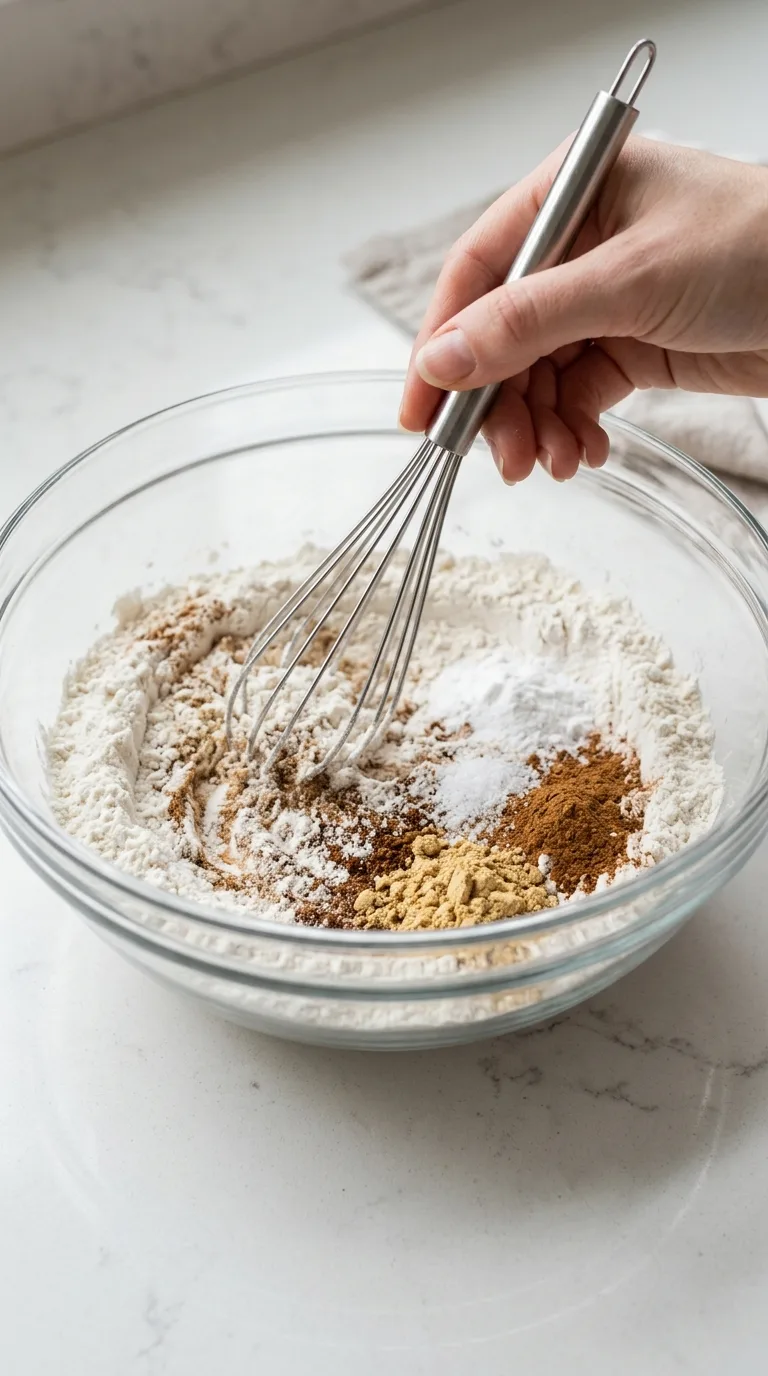
Step 1: Mix the dry ingredients: In a medium bowl, whisk together the flour, baking soda, kosher salt, ground ginger, cinnamon, and cloves.
Set aside.
Step 2: Cream the butter and sugar: In a large bowl, beat the softened butter and brown sugar on medium speed for about 2 minutes, until smooth and creamy.
The mixture does not need to become extremely fluffy.
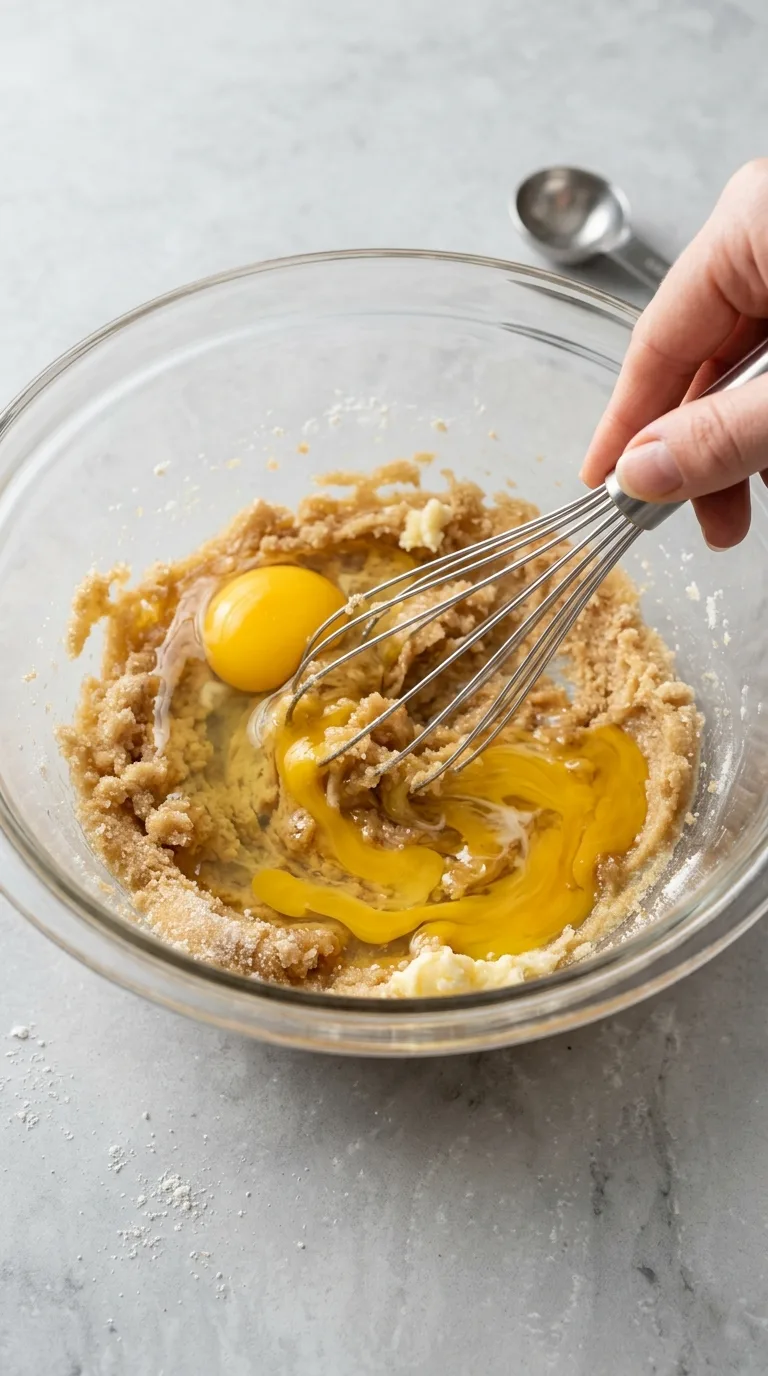
Step 3: Add the wet ingredients: Beat in the egg until incorporated.
Add the molasses and vanilla and mix until smooth. Scrape down the sides of the bowl so the mixture is evenly combined.
Step 4: Make the dough: Add the dry ingredients in two additions, mixing on low speed just until no dry flour remains.
The dough should be soft and slightly tacky but cohesive. If it seems unusually sticky, cover and chill it rather than adding a large amount of extra flour.
Step 5: Chill the dough: Divide the dough into two portions and flatten each into a disk.
Wrap tightly and refrigerate for at least 1 hour. The dough should feel firm and cool when ready to roll.
Step 6: Prepare the oven and baking sheets: Preheat the oven to 350°F (175°C).
Line two baking sheets with parchment paper.
Step 7: Roll the dough: Lightly flour the work surface and rolling pin.
Roll one portion of dough to about 1/4 inch (6 mm) thick. Keep the second portion refrigerated while working with the first. If the dough becomes too soft to handle, return it to the refrigerator for 10–15 minutes.
Step 8: Cut the cookies: Cut the dough with a 4- to 5-inch (10- to 13-cm) gingerbread man cutter.
Transfer the shapes to the prepared baking sheets, leaving about 1 1/2 inches (4 cm) between cookies. Gather the scraps, chill them briefly if needed, reroll once, and continue cutting.
Step 9: Bake: Bake for 8–10 minutes, one sheet at a time, until the edges look set and slightly darker while the centers still look soft.
Do not wait for the cookies to become completely firm in the oven; they will continue setting as they cool.
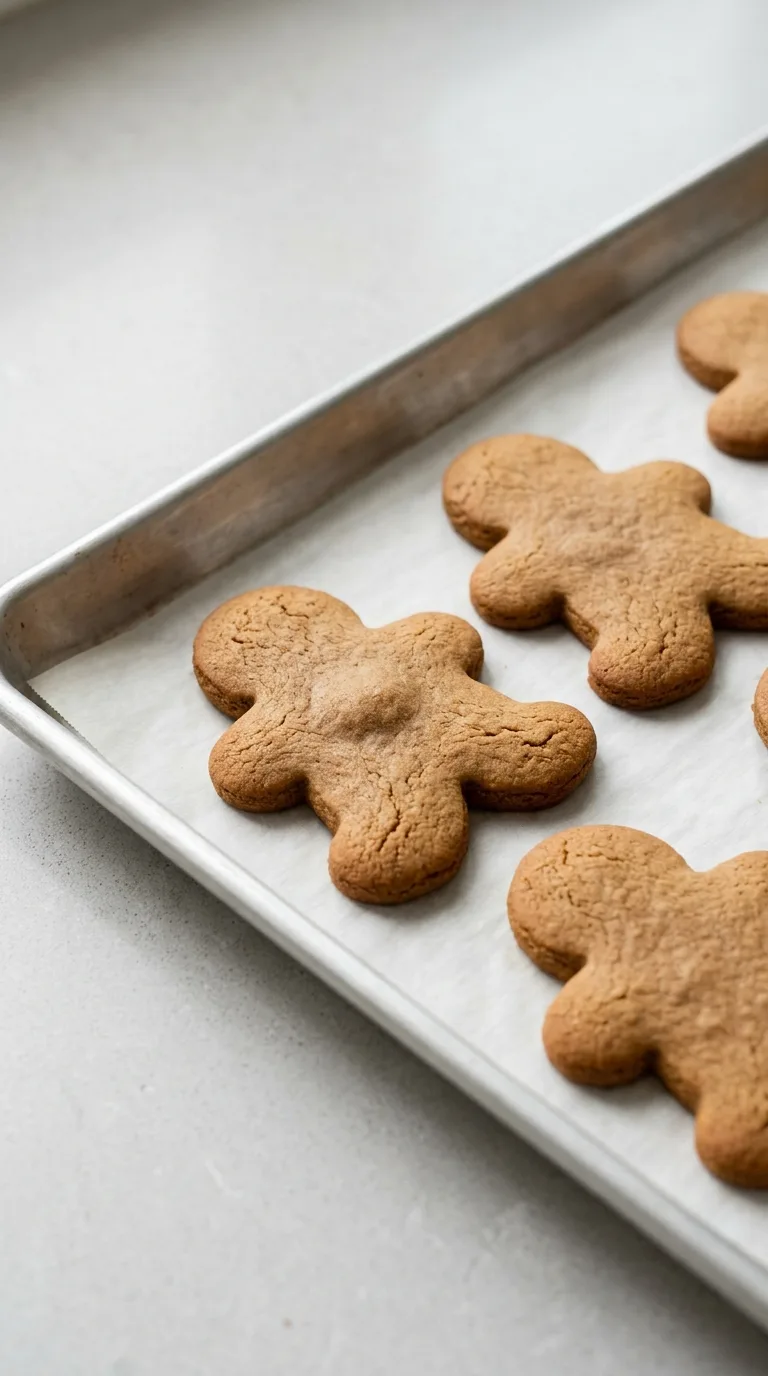
Step 10: Cool: Let the cookies cool on the baking sheet for 5 minutes, then transfer them to a wire rack.
Cool completely before decorating. The centers should be tender and chewy once fully cooled.
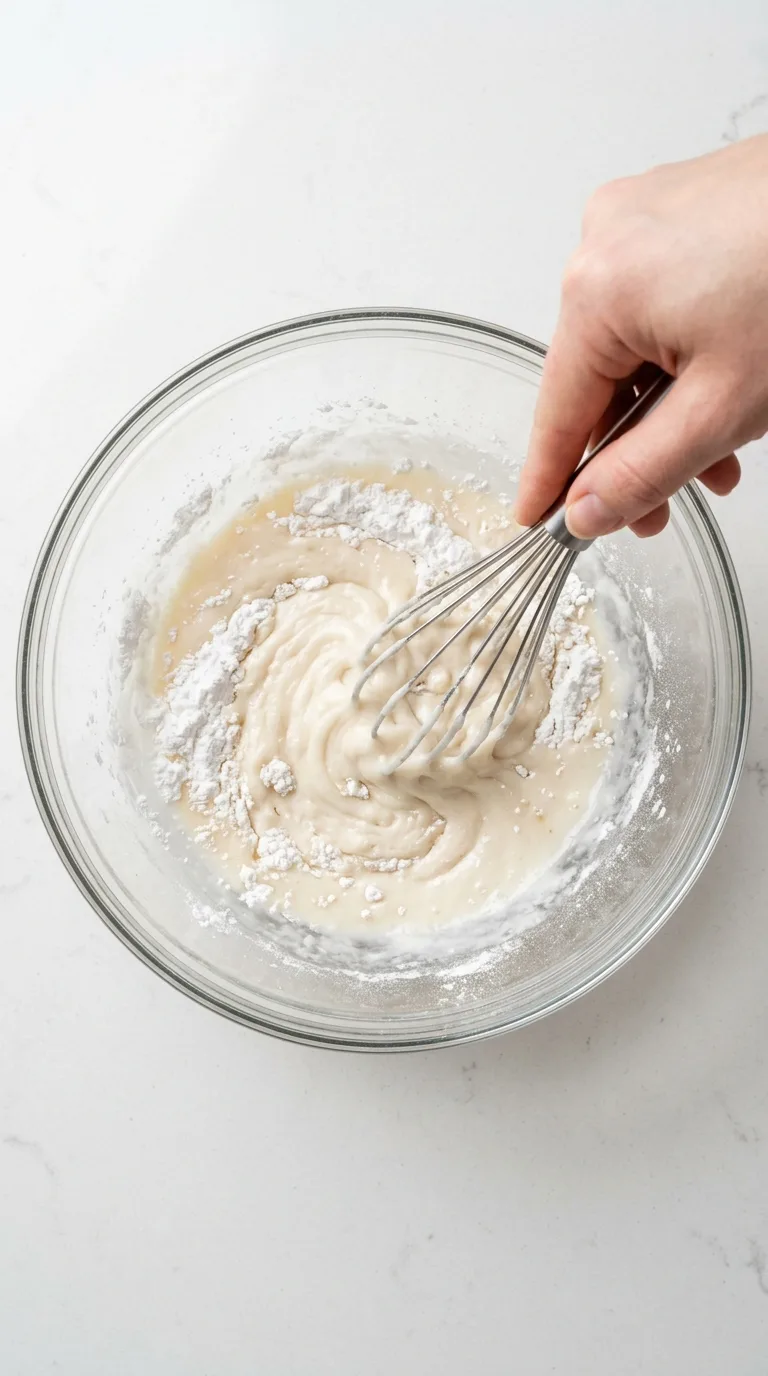
Step 11: Make the icing: Whisk the powdered sugar, milk, and vanilla together until smooth and thick enough to pipe.
If the icing is too thick, add milk a few drops at a time. If it is too thin, whisk in a little more powdered sugar.
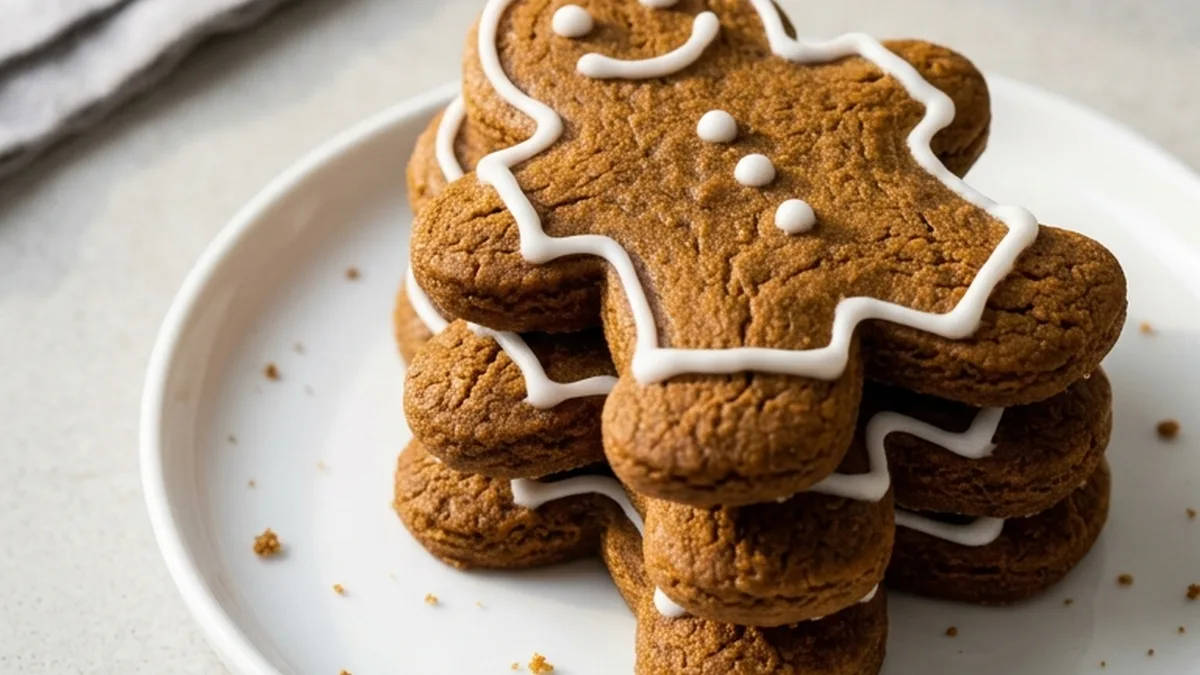
Step 12: Decorate and set: Pipe the icing onto the completely cooled gingerbread men as desired.
Let the icing sit uncovered until firm before stacking or storing.

Storage, Freezing, and Make-Ahead Instructions
- Store completely cooled cookies in an airtight container at room temperature for up to 5 days. Place parchment between decorated layers if the icing remains slightly soft.
- The unbaked dough can be refrigerated, tightly wrapped, for up to 3 days. Let it sit at room temperature for a few minutes if it becomes too firm to roll.
- For longer storage, freeze baked, undecorated cookies in a freezer-safe airtight container for up to 2 months, separating layers with parchment paper. Thaw at room temperature while still covered to reduce condensation. Decorate after the cookies have fully thawed and dried.
- You can also freeze cut, unbaked cookie shapes on a parchment-lined sheet until firm, then transfer them to a freezer-safe container. Bake from frozen, adding about 1–2 minutes to the baking time and watching the edges closely.

FAQ
Can I make the gingerbread dough ahead of time?
Yes. Wrap the dough tightly and refrigerate it for up to 3 days. Let it soften slightly at room temperature if it is too firm to roll.
Why are my gingerbread cookies hard instead of chewy?
Overbaking or adding too much flour are the most common causes. Measure the flour carefully and remove the cookies when the edges are set but the centers still look slightly soft.
Can I use blackstrap molasses?
It is not recommended for this recipe. Blackstrap molasses has a much stronger, more bitter flavor than regular unsulphured molasses and can overpower the spices.
Can I make smaller gingerbread men?
Yes. Smaller cookies will bake more quickly, so begin checking them a few minutes earlier. Remove them when the edges are set and the centers still look slightly soft.
Can I decorate these cookies with royal icing?
Yes. Royal icing can be used instead of the simple vanilla icing. Make sure the cookies are completely cool before decorating.
Chewy Gingerbread Men Cookies
Ingredients
Method
- Mix the dry ingredients: In a medium bowl, whisk together the flour, baking soda, kosher salt, ground ginger, cinnamon, and cloves. Set aside.
- Cream the butter and sugar: In a large bowl, beat the softened butter and brown sugar on medium speed for about 2 minutes, until smooth and creamy. The mixture does not need to become extremely fluffy.
- Add the wet ingredients: Beat in the egg until incorporated. Add the molasses and vanilla and mix until smooth. Scrape down the sides of the bowl so the mixture is evenly combined.
- Make the dough: Add the dry ingredients in two additions, mixing on low speed just until no dry flour remains. The dough should be soft and slightly tacky but cohesive. If it seems unusually sticky, cover and chill it rather than adding a large amount of extra flour.
- Chill the dough: Divide the dough into two portions and flatten each into a disk. Wrap tightly and refrigerate for at least 1 hour. The dough should feel firm and cool when ready to roll.
- Prepare the oven and baking sheets: Preheat the oven to 350°F (175°C). Line two baking sheets with parchment paper.
- Roll the dough: Lightly flour the work surface and rolling pin. Roll one portion of dough to about 1/4 inch (6 mm) thick. Keep the second portion refrigerated while working with the first. If the dough becomes too soft to handle, return it to the refrigerator for 10–15 minutes.
- Cut the cookies: Cut the dough with a 4- to 5-inch (10- to 13-cm) gingerbread man cutter. Transfer the shapes to the prepared baking sheets, leaving about 1 1/2 inches (4 cm) between cookies. Gather the scraps, chill them briefly if needed, reroll once, and continue cutting.
- Bake: Bake for 8–10 minutes, one sheet at a time, until the edges look set and slightly darker while the centers still look soft. Do not wait for the cookies to become completely firm in the oven; they will continue setting as they cool.
- Cool: Let the cookies cool on the baking sheet for 5 minutes, then transfer them to a wire rack. Cool completely before decorating. The centers should be tender and chewy once fully cooled.
- Make the icing: Whisk the powdered sugar, milk, and vanilla together until smooth and thick enough to pipe. If the icing is too thick, add milk a few drops at a time. If it is too thin, whisk in a little more powdered sugar.
- Decorate and set: Pipe the icing onto the completely cooled gingerbread men as desired. Let the icing sit uncovered until firm before stacking or storing.