# Crepes
## 2. Introduction
Crepes are thin, delicate French-style pancakes with lightly crisp edges and a soft, tender center. This simple version uses flour, eggs, milk, melted butter, and vanilla for a lightly sweet flavor that works equally well with fresh fruit, powdered sugar, whipped cream, chocolate, or savory fillings.
The batter is quick to mix and benefits from a short rest before cooking. Each crepe is cooked in a lightly buttered skillet until just golden, making them flexible enough to fold or roll without tearing.
## 3. Recipe Card Details
Prep Time: 10 minutes
Cook Time: 20 minutes
Additional Time: 15 minutes
Total Time: 45 minutes
Yield: 12 crepes
Servings: 6
Category: Breakfast & Brunch
Cuisine: French
Cooking Method: Stovetop
Difficulty: Easy
Calories Per Serving: Not calculated
## 4. Why This Recipe Works
* **A thin, fluid batter spreads easily.** The higher milk-to-flour ratio creates delicate crepes instead of thick pancakes.
* **Eggs provide structure and flexibility.** They help the crepes hold together while remaining soft enough to fold.
* **Melted butter adds richness.** It also contributes to browning and helps prevent sticking during cooking.
* **A short resting period hydrates the flour.** This gives the batter a smoother consistency and helps reduce toughness.
* **Moderate skillet heat allows controlled browning.** The crepes cook through without becoming overly crisp or dry.
## 5. Equipment Needed
* 10-inch nonstick skillet or crepe pan
* Large mixing bowl
* Whisk
* Ladle or 1/4-cup measuring cup
* Flexible spatula
* Wire rack or large plate
## 6. Ingredients List
### Crepe Batter
* 1 1/2 cups (180 g) all-purpose flour
* 2 tablespoons (25 g) granulated sugar
* 1/4 teaspoon (1 g) fine salt
* 3 large eggs (about 150 g without shells)
* 1 1/2 cups (360 ml) whole milk
* 1/2 cup (120 ml) water
* 3 tablespoons (43 g) unsalted butter, melted and cooled slightly, divided
* 1 teaspoon (5 ml) vanilla extract
### For Cooking
* 1 tablespoon (14 g) unsalted butter, divided as needed
### For Serving
* Powdered sugar, optional
* Fresh berries, optional
* Whipped cream, optional
* Maple syrup, optional
* Chocolate hazelnut spread, optional
* Lemon wedges, optional
## 7. Ingredient Notes and Substitutions
* **All-purpose flour:** Provides enough structure for thin, flexible crepes. A 1-to-1 gluten-free flour blend can be used, but the crepes may be slightly more delicate.
* **Whole milk:** Gives the batter richness and helps create tender crepes. Two-percent milk can replace it with only a small change in texture.
* **Eggs:** Help bind the batter and give the finished crepes their flexible texture. They are essential to the structure, so there is no simple direct egg-free substitution for this recipe.
* **Unsalted butter:** Adds flavor and helps with browning. Neutral oil can replace it, although the crepes will taste less buttery.
* **Vanilla extract:** Adds a subtle sweet aroma. It can be omitted if making savory crepes.
## 8. Step-by-Step Instructions
1. **Mix the dry ingredients.**
In a large bowl, whisk together the flour, sugar, and salt.
2. **Add the eggs and milk.**
Make a well in the center of the flour mixture. Add the eggs and about half of the milk. Whisk from the center outward, gradually incorporating the flour until a thick, smooth mixture forms.
3. **Finish the batter.**
Gradually whisk in the remaining milk, water, melted butter, and vanilla. The finished batter should be very thin and pourable, similar to heavy cream. If it looks noticeably thick, whisk in 1 tablespoon (15 ml) water at a time until it reaches the right consistency.
4. **Rest the batter.**
Cover the bowl and let the batter rest at room temperature for 15 minutes. This allows the flour to hydrate and helps produce smoother, more tender crepes.
5. **Heat the skillet.**
Place a 10-inch nonstick skillet over medium heat. Once hot, lightly brush the surface with a small amount of the cooking butter. The pan should be hot enough for the batter to begin setting immediately but not so hot that it browns before spreading.
6. **Pour and spread the batter.**
Stir the batter briefly, then pour about 1/4 cup (60 ml) into the center of the skillet. Immediately lift and tilt the skillet in a circular motion so the batter spreads into a thin, even layer.
7. **Cook the first side.**
Cook for about 45 to 60 seconds. The surface should look mostly dry, the edges should begin to lift, and the underside should have light golden spots.
8. **Flip the crepe.**
Slide a flexible spatula under the edge and carefully flip the crepe. Cook the second side for about 20 to 30 seconds, just until lightly golden. Do not overcook or the crepe may become brittle.
9. **Transfer and continue.**
Move the cooked crepe to a plate or wire rack. Repeat with the remaining batter, adding a small amount of butter to the pan as needed. Stir the batter occasionally because flour can settle at the bottom.
10. **Adjust the heat if needed.**
If the crepes brown before the batter has fully spread, reduce the heat slightly. If they remain pale and take much longer than 1 minute to set, increase the heat slightly.
11. **Fill or fold.**
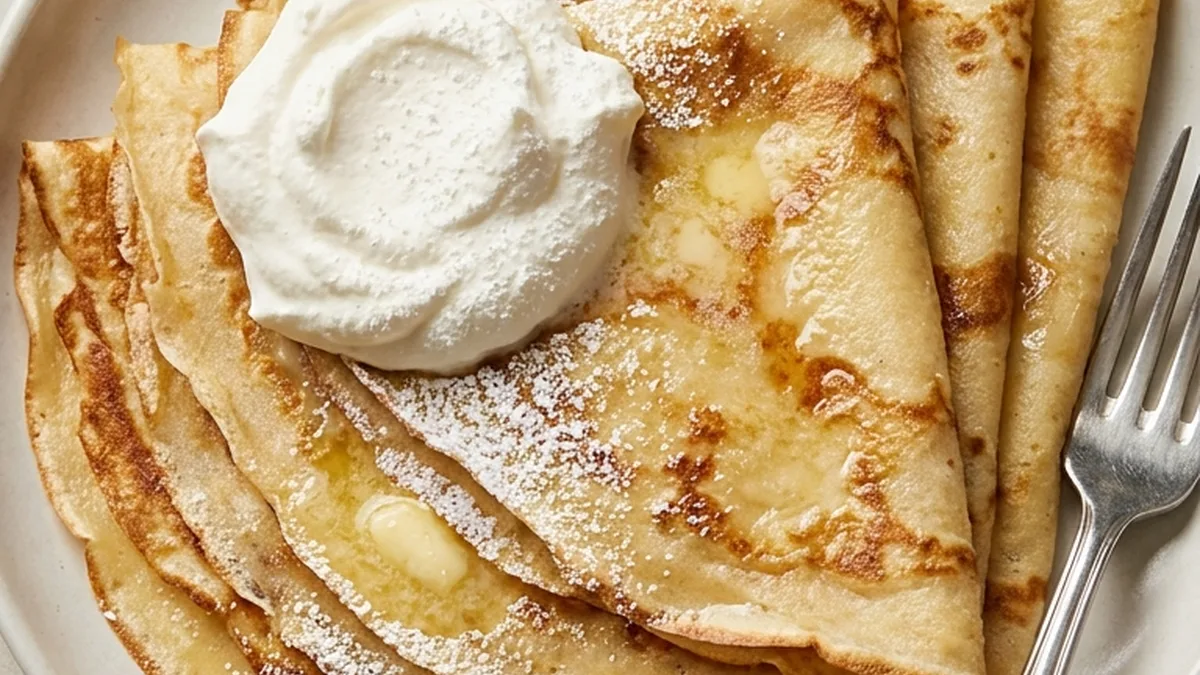
Spread each warm crepe with your chosen filling and fold into quarters or roll it into a cylinder. For plain sweet crepes, dust with powdered sugar and add berries or maple syrup.
12. **Serve.**
Serve the crepes warm. For a classic sweet combination, add lemon juice and powdered sugar, fresh berries, or chocolate hazelnut spread.
## 9. Tips for Success
* **Keep the batter thin.** Thin batter is essential for classic delicate crepes. If the first crepe comes out thick, add a small splash of water or milk.
* **Use the first crepe as a heat test.** It can help you determine whether the skillet needs more or less heat before cooking the rest.
* **Swirl immediately.** The batter starts setting as soon as it hits the hot skillet, so spread it quickly.
* **Do not over-butter the pan.** Too much butter can make the batter slide around instead of forming an even layer.
* **Watch the edges.** When the edges begin lifting and the surface looks mostly dry, the crepe is ready to flip.
* **Avoid overcooking.** Crepes should be flexible and tender, not crunchy or brittle.
## 10. Storage, Freezing, and Make-Ahead Instructions
Cool the crepes completely, then stack them with parchment paper between each one. Store them in an airtight container or zip-top bag in the refrigerator for up to 3 days.
To freeze, stack cooled crepes with parchment between the layers and place them in a freezer-safe bag or container. Freeze for up to 2 months. Thaw overnight in the refrigerator or separate the crepes carefully while still slightly frozen.
Reheat refrigerated crepes in a lightly buttered skillet over medium-low heat for about 20 to 30 seconds per side, or warm several at once in a covered skillet over low heat.
The batter can be prepared up to 1 day ahead and refrigerated in a covered container. Whisk gently before cooking; if it has thickened, add a small splash of milk or water until it returns to a thin, pourable consistency.
## 11. FAQ
### Can I make the crepe batter ahead of time?
Yes. The batter can be refrigerated in a covered container for up to 1 day. Whisk it gently before cooking and thin it with a small amount of milk or water if necessary.
### Why are my crepes thick?
The batter may be too thick or you may be using too much batter for the skillet. Add a small amount of water or milk and use about 1/4 cup (60 ml) batter for a 10-inch skillet.
### Why are my crepes tearing when I flip them?
They may be too thin, undercooked, or not fully set. Let the first side cook until the surface is mostly dry and the edges begin to lift before flipping.
### Can I make these crepes savory?
Yes. Omit the sugar and vanilla and use the same basic batter for savory fillings such as cheese, cooked vegetables, ham, or eggs.
### Can I freeze homemade crepes?
Yes. Place parchment paper between completely cooled crepes, seal them in a freezer-safe bag or container, and freeze for up to 2 months.
## 12. SEO and Pinterest Metadata
SEO Title: Easy Crepes Recipe with Thin, Tender Edges
Meta Description: Make thin, tender French crepes with flour, eggs, milk, butter, and vanilla. Serve them with berries, powdered sugar, maple syrup, or your favorite filling.
Suggested URL Slug: crepes
Primary Keyword: Crepes
Secondary Keywords: crepe recipe, French crepes, homemade crepes, easy crepes recipe, sweet crepes, breakfast crepes, thin pancakes
Pinterest Title: Easy Crepes Recipe with Thin, Tender French-Style Pancakes
Pinterest Description: These easy Crepes are thin, tender, and lightly sweet with delicate golden edges. Make them on the stovetop and serve warm with fresh berries, powdered sugar, maple syrup, lemon, whipped cream, or chocolate hazelnut spread.
Image Alt Text: Stack of thin golden crepes folded and topped with fresh berries and powdered sugar
Recipe Category: Breakfast & Brunch
Recipe Cuisine: French
Cooking Method: Stovetop
Ingredients
Method
- In a large bowl, whisk together the flour, sugar, and salt.
- Make a well in the center of the flour mixture. Add the eggs and about half of the milk. Whisk from the center outward, gradually incorporating the flour until a thick, smooth mixture forms.
- Gradually whisk in the remaining milk, water, melted butter, and vanilla. The finished batter should be very thin and pourable, similar to heavy cream. If it looks noticeably thick, whisk in 1 tablespoon (15 ml) water at a time until it reaches the right consistency.
- Cover the bowl and let the batter rest at room temperature for 15 minutes. This allows the flour to hydrate and helps produce smoother, more tender crepes.
- Place a 10-inch nonstick skillet over medium heat: Once hot, lightly brush the surface with a small amount of the cooking butter. The pan should be hot enough for the batter to begin setting immediately but not so hot that it browns before spreading.
- Stir the batter briefly, then pour about 1/4 cup (60 ml) into the center of the skillet. Immediately lift and tilt the skillet in a circular motion so the batter spreads into a thin, even layer.
- Cook for about 45 to 60 seconds: The surface should look mostly dry, the edges should begin to lift, and the underside should have light golden spots.
- Slide a flexible spatula under the edge and carefully flip the crepe. Cook the second side for about 20 to 30 seconds, just until lightly golden. Do not overcook or the crepe may become brittle.
- Move the cooked crepe to a plate or wire rack. Repeat with the remaining batter, adding a small amount of butter to the pan as needed. Stir the batter occasionally because flour can settle at the bottom.
- If the crepes brown before the batter has fully spread, reduce the heat slightly. If they remain pale and take much longer than 1 minute to set, increase the heat slightly.
- Spread each warm crepe with your chosen filling and fold into quarters or roll it into a cylinder. For plain sweet crepes, dust with powdered sugar and add berries or maple syrup.
- Serve the crepes warm: For a classic sweet combination, add lemon juice and powdered sugar, fresh berries, or chocolate hazelnut spread.