This Delicious Olive Tapenade & Goat Cheese Sandwich combines the bold, briny flavor of olives with creamy, tangy goat cheese, juicy tomatoes, peppery arugula, and crusty ciabatta bread. Each bite offers a satisfying contrast between the rich olive spread, soft cheese, fresh vegetables, and lightly toasted bread.
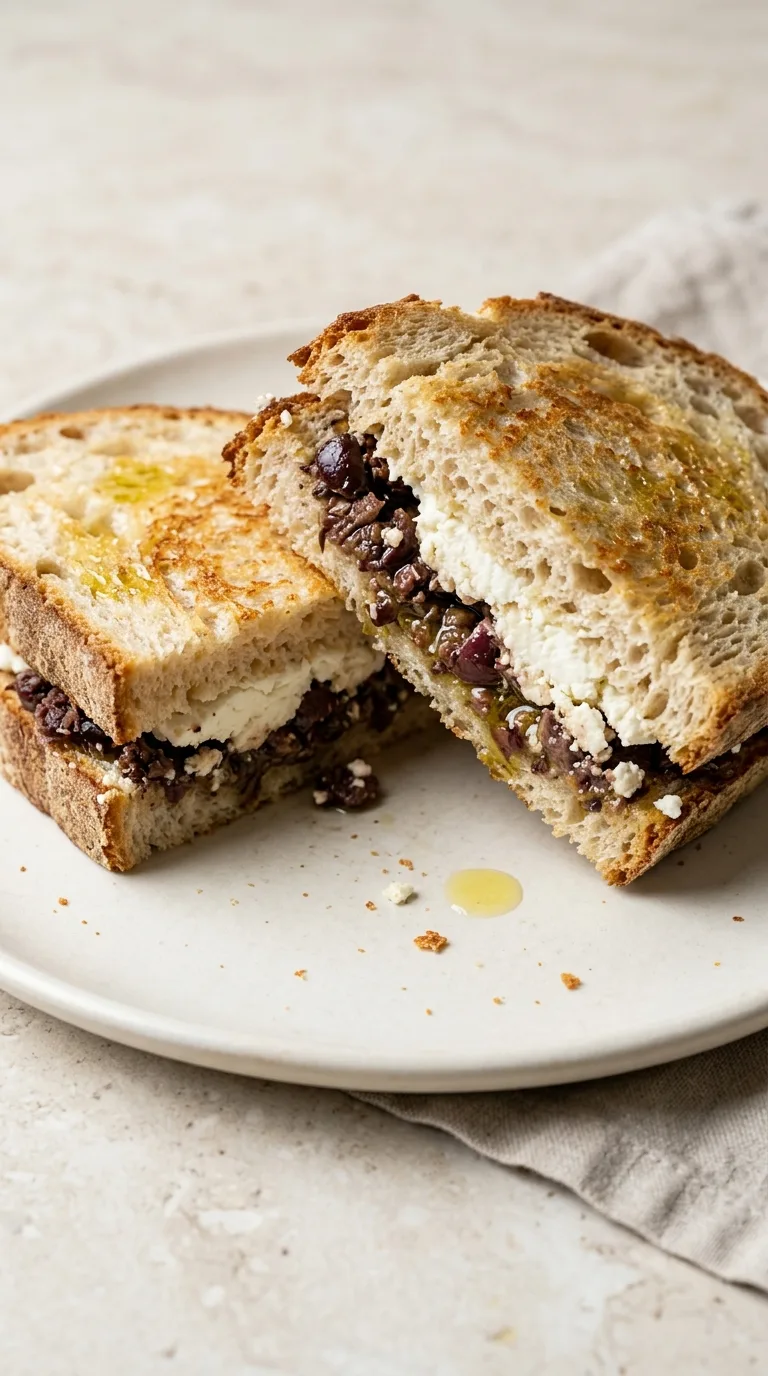
Inspired by Mediterranean flavors, this vegetarian sandwich is an easy option for lunch, a light dinner, or a picnic. A homemade olive tapenade made with Kalamata olives, green olives, capers, garlic, lemon juice, and olive oil adds plenty of flavor without complicated preparation. The sandwich comes together in about 20 minutes, and the tapenade can be prepared ahead to make assembly even faster.
Equipment Needed
- Food processor or mini food chopper, preferably with at least a 2-cup (475 ml) capacity
- Large skillet or grill pan, approximately 10–12 inches (25–30 cm)
- Sharp knife and cutting board
- Small spatula or butter knife for spreading
- Measuring cups and spoons
- A food processor makes preparing the tapenade easier, but finely chopping the ingredients by hand is also effective.
Ingredients List
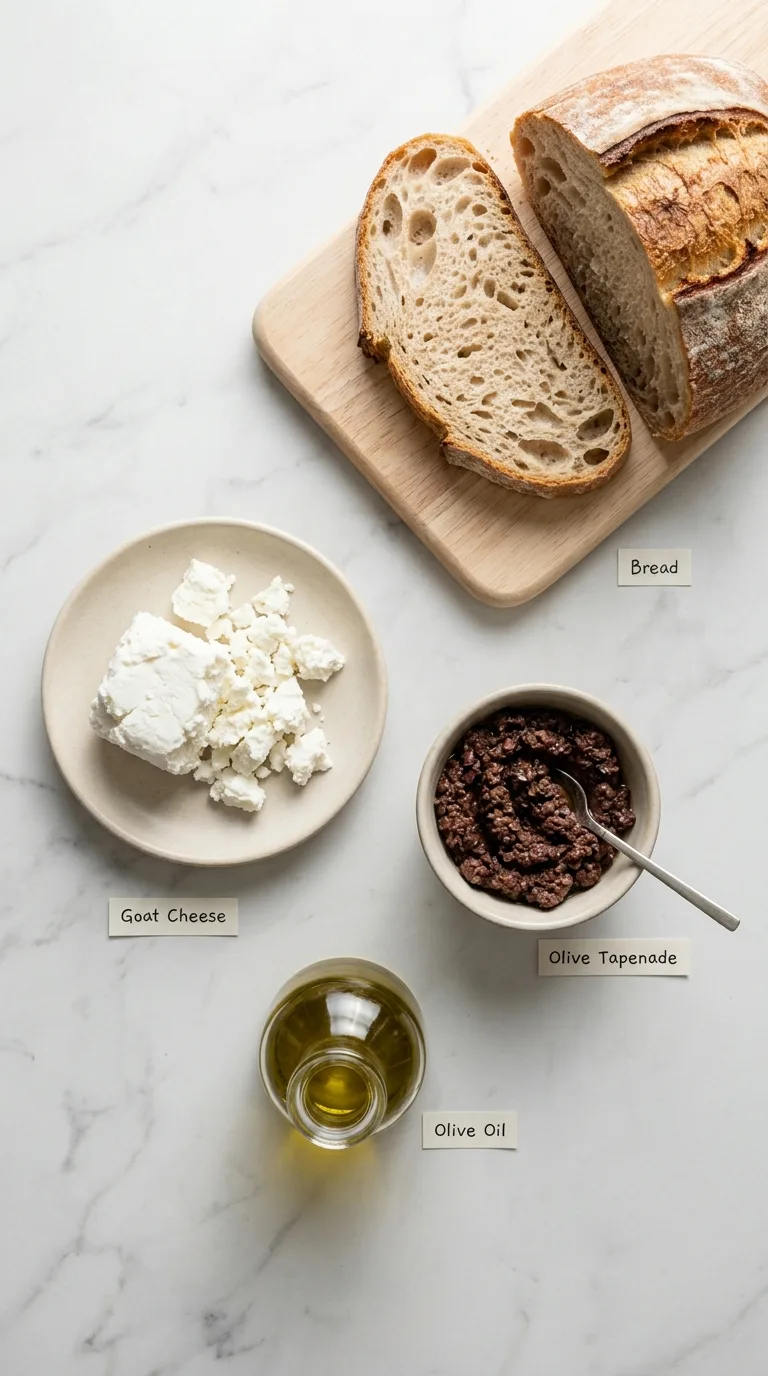
For the Olive Tapenade:
- 1/2 cup (75 g) pitted Kalamata olives, drained
- 1/4 cup (35 g) pitted green olives, drained
- 1 tablespoon (9 g) capers, drained
- 1 small garlic clove (3 g), peeled and roughly chopped
- 1 tablespoon (15 ml) fresh lemon juice
- 1 tablespoon (15 ml) extra-virgin olive oil
- 1/2 teaspoon (0.5 g) dried oregano
- 1/8 teaspoon (0.25 g) freshly ground black pepper
For the Sandwiches:
- 2 ciabatta sandwich rolls (about 4 ounces/115 g each), sliced horizontally
- 4 ounces (115 g) soft goat cheese, softened
- 1 medium tomato (about 120 g), sliced into 1/4-inch (6 mm) rounds
- 1 cup (20 g) baby arugula, washed and thoroughly dried
- 1 teaspoon (5 ml) extra-virgin olive oil, for toasting the bread
- 2 tablespoons (8 g) fresh basil leaves, torn (optional, for serving)
Ingredient Notes and Substitutions
Kalamata and Green Olives
Kalamata olives provide the tapenade's deep, fruity flavor, while green olives contribute brightness and a slightly firmer bite.
You can make the spread using only Kalamata olives or only green olives, keeping the same total olive quantity. An all-Kalamata version will taste richer and fruitier, while an all-green-olive version will be sharper and more briny.
Choose pitted olives and drain them thoroughly before processing.
Soft Goat Cheese
Fresh goat cheese, often labeled chèvre, gives this sandwich its creamy texture and tangy flavor. Allowing it to soften briefly makes it easier to spread without tearing the bread.
For a milder alternative, substitute an equal amount of cream cheese. It will create a smoother, less tangy filling.
Whipped feta is another option, although it will produce a saltier sandwich. Taste the combination before adding extra salty ingredients.
Ciabatta Bread
Ciabatta has an airy interior and sturdy crust that hold up well against the moist tapenade and creamy cheese.
Sourdough bread, focaccia, or a crusty baguette can also work. Sourdough adds tanginess, focaccia makes the sandwich softer and richer, and a baguette creates a chewier bite.
If using thin sandwich bread, toast it lightly to help prevent sogginess.
Capers and Lemon Juice
Capers add concentrated salty, tangy flavor, while fresh lemon juice brightens the olive mixture and balances its richness.
If capers are unavailable, use a little extra chopped green olive. The tapenade will still be flavorful but will have less of the distinctive sharpness that capers provide.
Fresh lemon juice is preferable, although bottled lemon juice can be used in the same amount. Bottled juice may taste slightly less fresh.
Baby Arugula
Baby arugula adds a peppery note and a fresh, delicate texture that cuts through the rich cheese and olive spread.
Baby spinach is a milder substitute, while thinly sliced romaine provides more crunch without the peppery flavor.
Whichever green you choose, dry it thoroughly to avoid introducing excess moisture into the sandwich.
Step-by-Step Instructions
Prepare the Tapenade Ingredients
Drain the Kalamata olives, green olives, and capers thoroughly. Add them to the bowl of a food processor along with the roughly chopped garlic. Check that no olive pits remain. Excess brine can make the finished spread watery and overly salty.
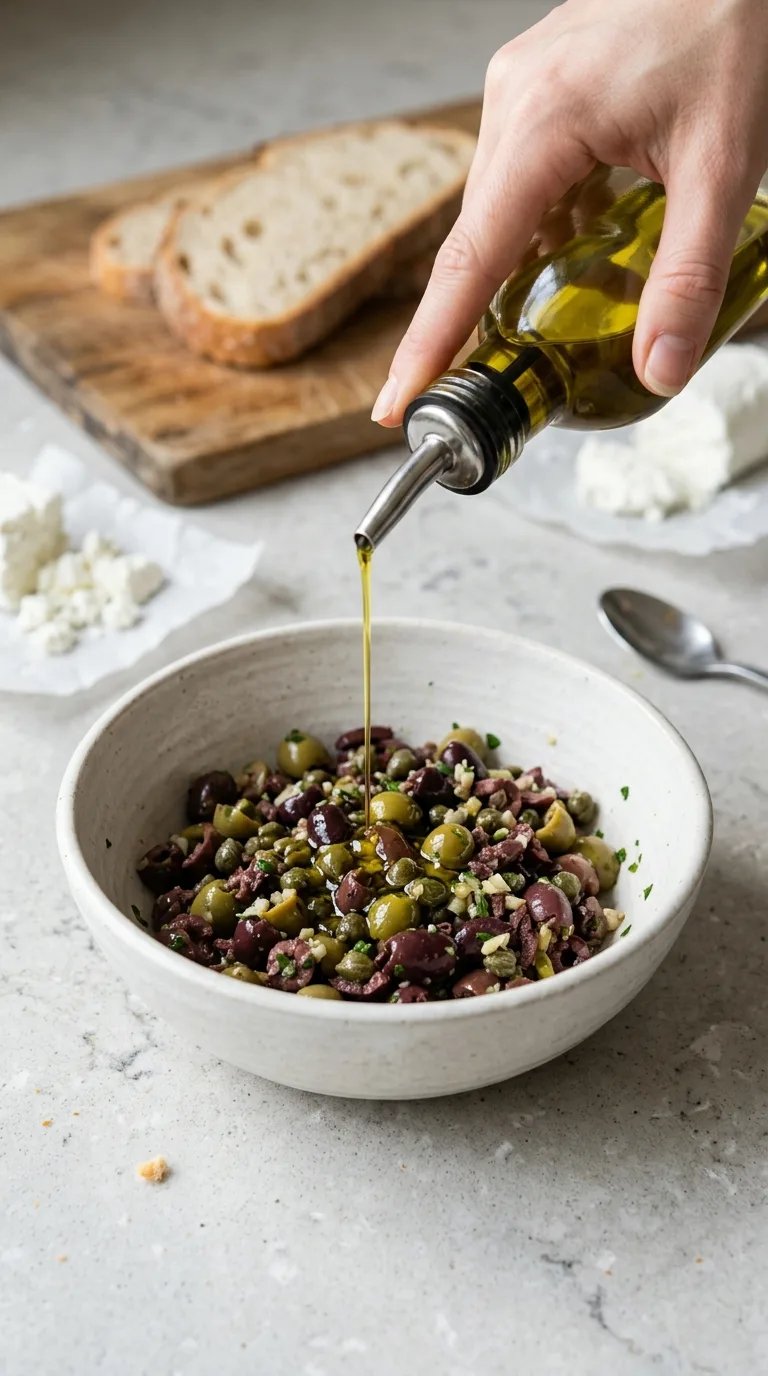
Blend the Olive Tapenade
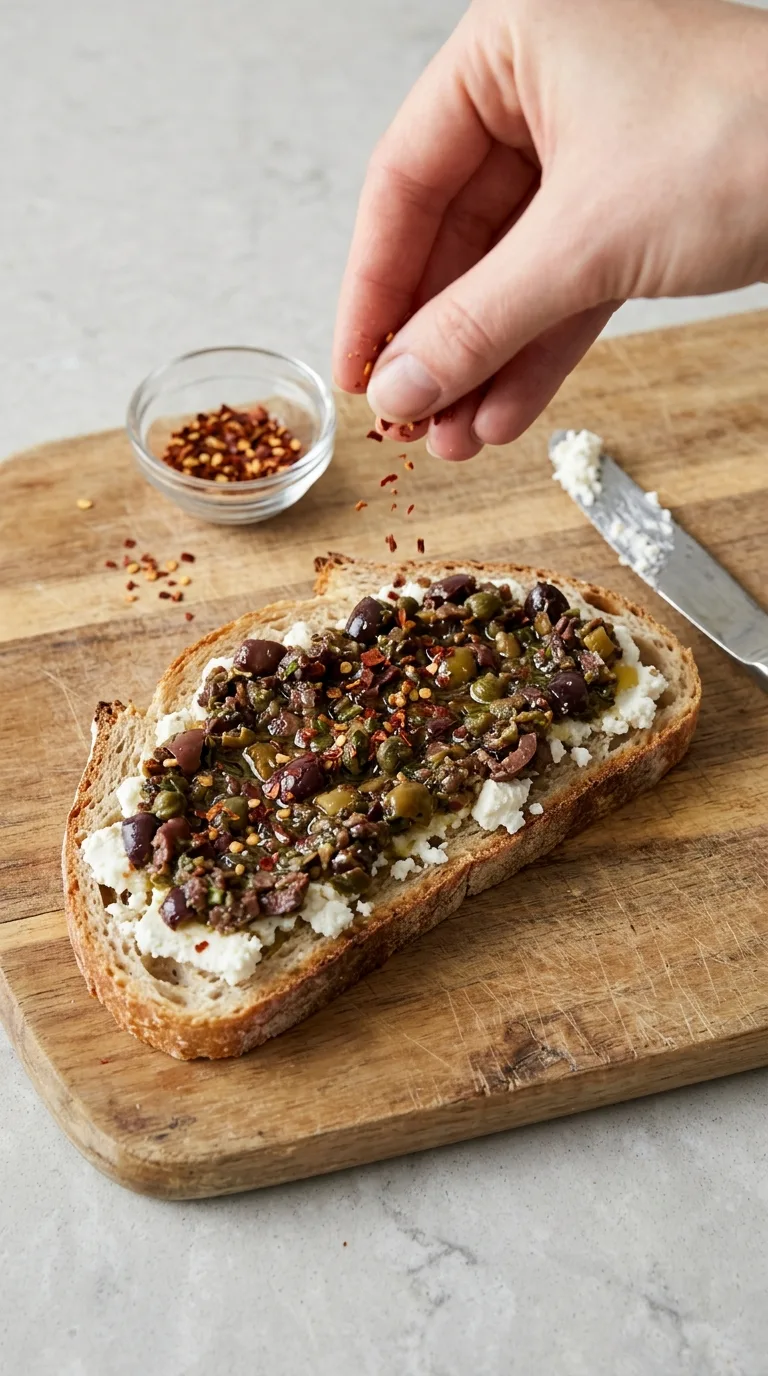
Add the lemon juice, 1 tablespoon (15 ml) extra-virgin olive oil, dried oregano, and black pepper. Pulse the mixture 6–10 times, stopping to scrape down the sides as necessary. The finished tapenade should be finely chopped and moist enough to spread, with small visible pieces of olives. Avoid processing continuously, which can turn the mixture into a smooth paste. If it looks too loose, stir it and allow any excess liquid to settle before spreading.
Prepare the Ciabatta Bread
Slice both ciabatta rolls horizontally if they are not already split. Lightly brush the cut surfaces with the remaining 1 teaspoon (5 ml) extra-virgin olive oil. The oil should form a thin coating rather than soak into the bread.
Toast the Bread
Heat a large skillet or grill pan over medium heat. Place the ciabatta halves cut-side down and toast for approximately 2–3 minutes, or until the surfaces become lightly golden and crisp. Work in batches if necessary, using approximately 5 minutes total for toasting. If the bread browns too quickly, reduce the heat slightly. Transfer the toasted bread to a cutting board with the cut sides facing up.
Spread the Goat Cheese
Divide the softened goat cheese evenly between the two bottom halves of the ciabatta rolls, using approximately 2 ounces (57 g) per sandwich. Spread it into an even layer, reaching close to the edges. The cheese should be soft enough to spread smoothly while remaining thick enough to hold the toppings in place.
Add the Olive Tapenade
Divide the prepared tapenade evenly between the two sandwiches, spreading it over the goat cheese. Keep the tapenade in a fairly even layer rather than piling it in the center. The goat cheese helps anchor the chopped olives and creates a creamy base beneath the vegetables.
Layer the Fresh Vegetables
Divide the tomato slices evenly between the two sandwiches, arranging them over the tapenade. Add the baby arugula, distributing it evenly over the tomatoes. If using the optional fresh basil, scatter the torn leaves over the arugula. Keep the vegetables in relatively flat layers so the sandwiches are easier to close and slice.
Assemble and Serve
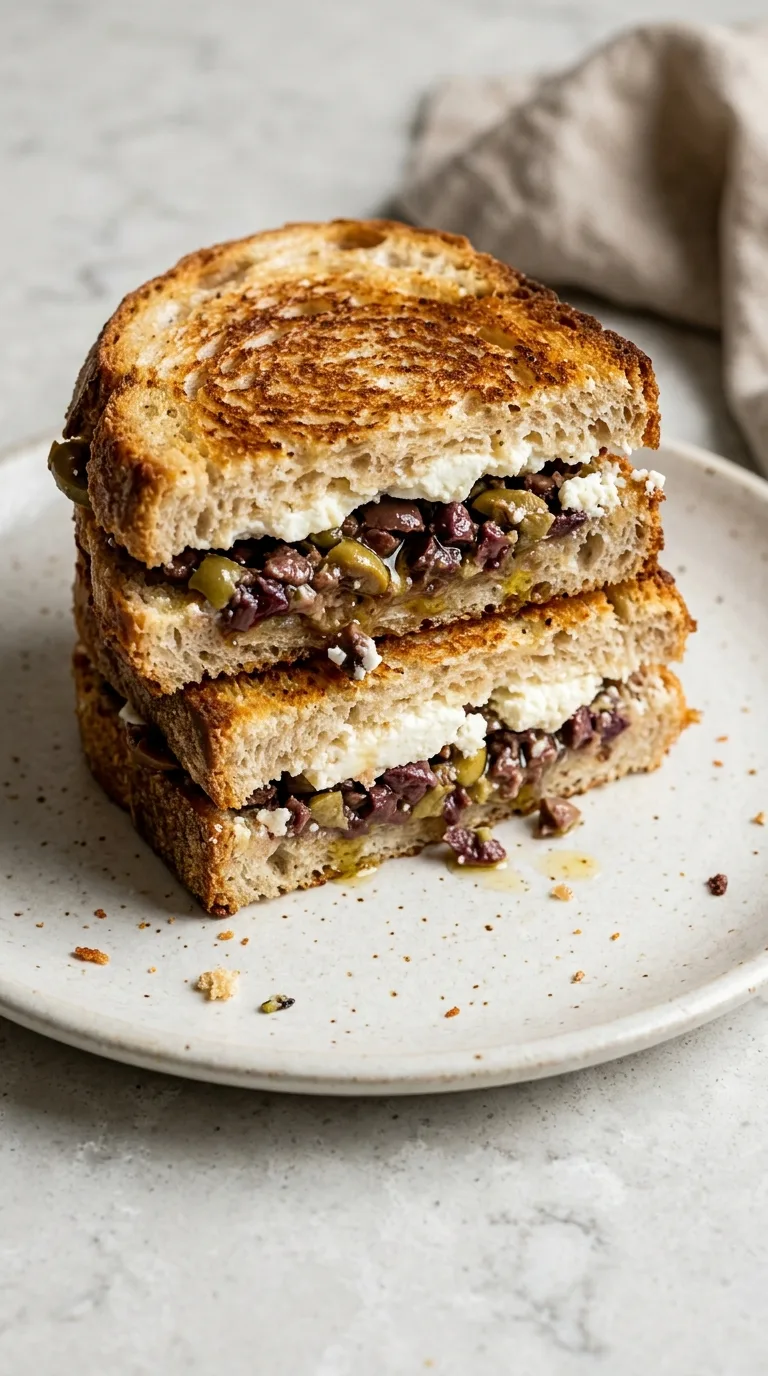
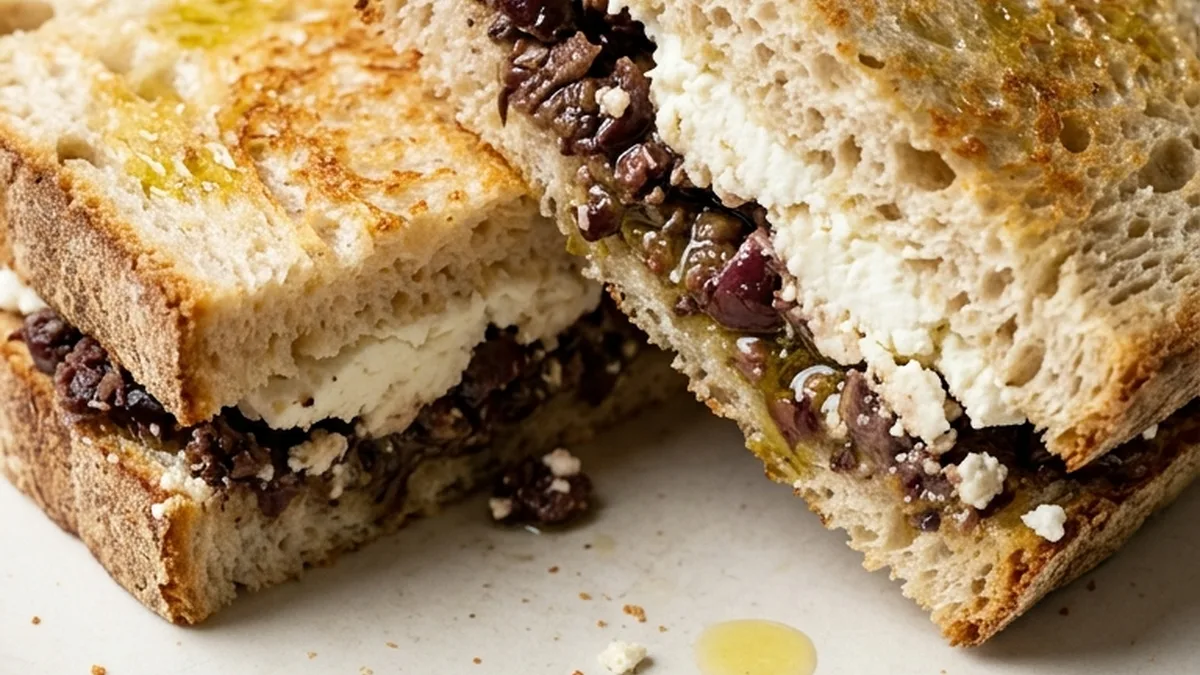
Place the top halves of the ciabatta rolls over the fillings. Press gently to help the ingredients settle without squeezing out the goat cheese or tapenade. Slice each sandwich in half using a serrated knife, if desired, and serve immediately while the bread retains its lightly crisp texture.
Tips for Success
- Use room-temperature goat cheese. Cold goat cheese can crumble or drag across the bread instead of forming a smooth layer. About 10–15 minutes out of the refrigerator is usually enough to soften it slightly. Avoid overly salty tapenade. Olives and capers already contain substantial salt. Taste the tapenade before considering any additional seasoning. Keep the tapenade slightly chunky. A coarse texture gives the sandwich more bite and prevents the spread from becoming too oily or paste-like. Choose firm, ripe tomatoes. Very soft tomatoes release excess juice and can make the bread soggy. Blot freshly sliced tomatoes with a paper towel if they are especially juicy. Build the sandwich shortly before serving. The bread stays crispest when the tapenade, cheese, and vegetables are added just before eating. Use a serrated knife for cleaner slices. Gentle sawing motions help cut through the crust without pushing the filling out of the sandwich.
Storage, Freezing, and Make-Ahead Instructions
Refrigerating Leftover Sandwiches
These sandwiches are best enjoyed immediately after assembly because the vegetables and olive tapenade gradually soften the bread.
If necessary, wrap leftover sandwiches tightly or place them in an airtight container and refrigerate promptly for up to 24 hours for the best texture.
Keep them refrigerated at 40°F (4°C) or below. Do not leave sandwiches containing goat cheese at room temperature for more than 2 hours, or more than 1 hour when temperatures exceed 90°F (32°C).
Storing Homemade Olive Tapenade
The olive tapenade can be prepared up to 3 days in advance.
Transfer it to a clean, airtight container and refrigerate at 40°F (4°C) or below.
Stir before using because a little olive oil or liquid may separate during storage.
Always use a clean utensil when removing tapenade from the container.
Preparing the Ingredients Ahead
For convenient meal preparation, store the components separately.
Olive tapenade: Prepare up to 3 days ahead and refrigerate.
Goat cheese: Keep refrigerated in its original packaging or an airtight container until needed.
Vegetables: Wash and thoroughly dry the arugula ahead of time. Slice the tomato shortly before assembling.
Ciabatta: Store the unfilled bread according to its package directions and toast just before serving.
Assemble the sandwiches immediately before eating to preserve the contrast between crisp bread, creamy cheese, and fresh vegetables.
Freezing Instructions
Freezing fully assembled sandwiches is not recommended.
Goat cheese can become grainier after thawing, while fresh tomatoes and arugula lose their crisp texture and release moisture.
The olive tapenade can be frozen separately in a freezer-safe airtight container for up to 2 months for good quality. Leave a little space for expansion.
Thaw it overnight in the refrigerator and stir thoroughly before using. The texture may soften slightly after freezing.
Reheating Instructions
For a refrigerated assembled sandwich, remove the arugula and tomatoes before warming the bread and cheese.
Place the remaining sandwich components in a skillet over low heat for 2–3 minutes, checking frequently. The goal is to warm the bread gently without overheating the goat cheese.
Return the fresh vegetables before serving.
For the freshest texture, however, assemble the sandwich with newly toasted bread instead of reheating a fully prepared sandwich.
FAQ
Can I make this recipe ahead of time?
Yes. The olive tapenade can be prepared up to 3 days in advance and stored in an airtight container in the refrigerator. Keep the goat cheese, bread, and vegetables separate until you are ready to assemble the sandwiches. This prevents the bread from becoming soggy and helps the vegetables retain their freshness.
Can I use store-bought olive tapenade instead of homemade?
Absolutely. Store-bought olive tapenade is a convenient alternative when you want to reduce preparation time. Choose a thick, spreadable version rather than one with excessive liquid. Use approximately 1/2 cup (120 g) for the two sandwiches, adjusting to taste. Since commercial tapenades vary in saltiness, start with a thinner layer and add more if needed.
What can I use instead of goat cheese?
Cream cheese is an easy substitute if you prefer a milder flavor. Whipped feta also works, although it creates a saltier and slightly sharper sandwich. For a dairy-free option, use a thick, plain plant-based cream cheese alternative. The finished sandwich may have a different level of tanginess and richness depending on the substitute.
How do I keep the sandwich from getting soggy?
Start with lightly toasted ciabatta and thoroughly drained tapenade ingredients. Pat tomato slices dry if they release a lot of juice, and make sure the arugula is completely dry. Spreading goat cheese directly onto the bread also provides a partial barrier between the bread and the moist toppings. Assemble shortly before serving for the crispest result.
Can I make this sandwich without a food processor?
Yes. Place the drained olives, capers, and garlic on a cutting board and chop them finely with a sharp knife. Transfer the mixture to a bowl, then stir in the lemon juice, olive oil, oregano, and black pepper. The result will be slightly chunkier than a food-processor tapenade, but it will still spread well and provide plenty of flavor.
Can I serve this sandwich cold instead of toasted?
Yes. This sandwich can be served cold using fresh ciabatta, focaccia, or another sturdy sandwich bread. Toasting adds a crisp texture and a slightly nutty flavor, but it is not essential. For a cold version, choose bread with a firm enough structure to support the tapenade and cheese without tearing.
Ingredients
Method
- Drain the Kalamata olives, green olives, and capers thoroughly. Add them to the bowl of a food processor along with the roughly chopped garlic. Check that no olive pits remain. Excess brine can make the finished spread watery and overly salty.
- Add the lemon juice, 1 tablespoon (15 ml) extra-virgin olive oil, dried oregano, and black pepper. Pulse the mixture 6–10 times, stopping to scrape down the sides as necessary. The finished tapenade should be finely chopped and moist enough to spread, with small visible pieces of olives. Avoid processing continuously, which can turn the mixture into a smooth paste. If it looks too loose, stir it and allow any excess liquid to settle before spreading.
- Slice both ciabatta rolls horizontally if they are not already split. Lightly brush the cut surfaces with the remaining 1 teaspoon (5 ml) extra-virgin olive oil. The oil should form a thin coating rather than soak into the bread.
- Heat a large skillet or grill pan over medium heat. Place the ciabatta halves cut-side down and toast for approximately 2–3 minutes, or until the surfaces become lightly golden and crisp. Work in batches if necessary, using approximately 5 minutes total for toasting. If the bread browns too quickly, reduce the heat slightly. Transfer the toasted bread to a cutting board with the cut sides facing up.
- Divide the softened goat cheese evenly between the two bottom halves of the ciabatta rolls, using approximately 2 ounces (57 g) per sandwich. Spread it into an even layer, reaching close to the edges. The cheese should be soft enough to spread smoothly while remaining thick enough to hold the toppings in place.
- Divide the prepared tapenade evenly between the two sandwiches, spreading it over the goat cheese. Keep the tapenade in a fairly even layer rather than piling it in the center. The goat cheese helps anchor the chopped olives and creates a creamy base beneath the vegetables.
- Divide the tomato slices evenly between the two sandwiches, arranging them over the tapenade. Add the baby arugula, distributing it evenly over the tomatoes. If using the optional fresh basil, scatter the torn leaves over the arugula. Keep the vegetables in relatively flat layers so the sandwiches are easier to close and slice.
- Place the top halves of the ciabatta rolls over the fillings. Press gently to help the ingredients settle without squeezing out the goat cheese or tapenade. Slice each sandwich in half using a serrated knife, if desired, and serve immediately while the bread retains its lightly crisp texture.