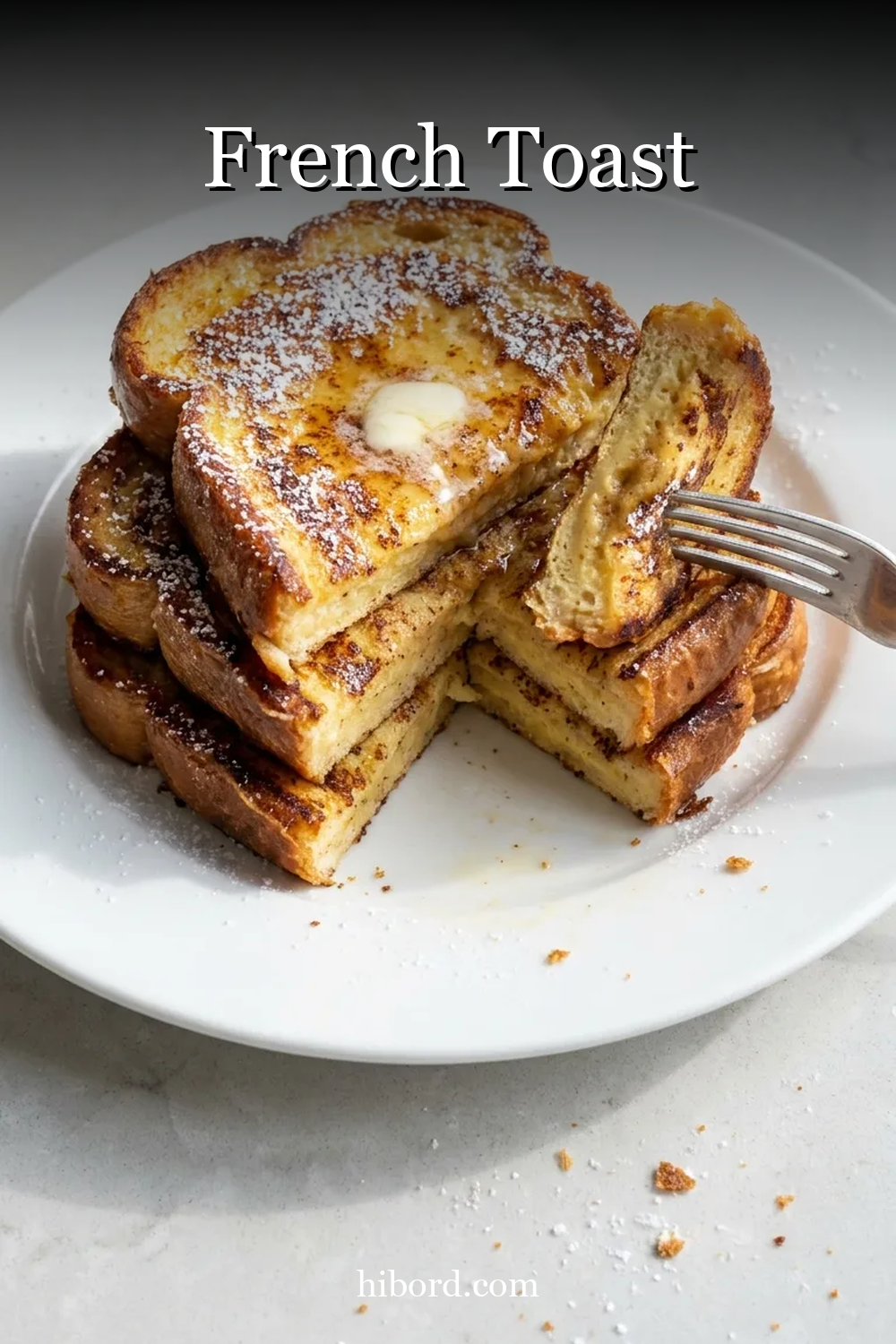
French Toast is a classic breakfast made by soaking thick slices of bread in a rich egg-and-milk custard, then cooking them in butter until golden brown. The finished slices have lightly crisp edges, a tender center, and warm vanilla-cinnamon flavor.
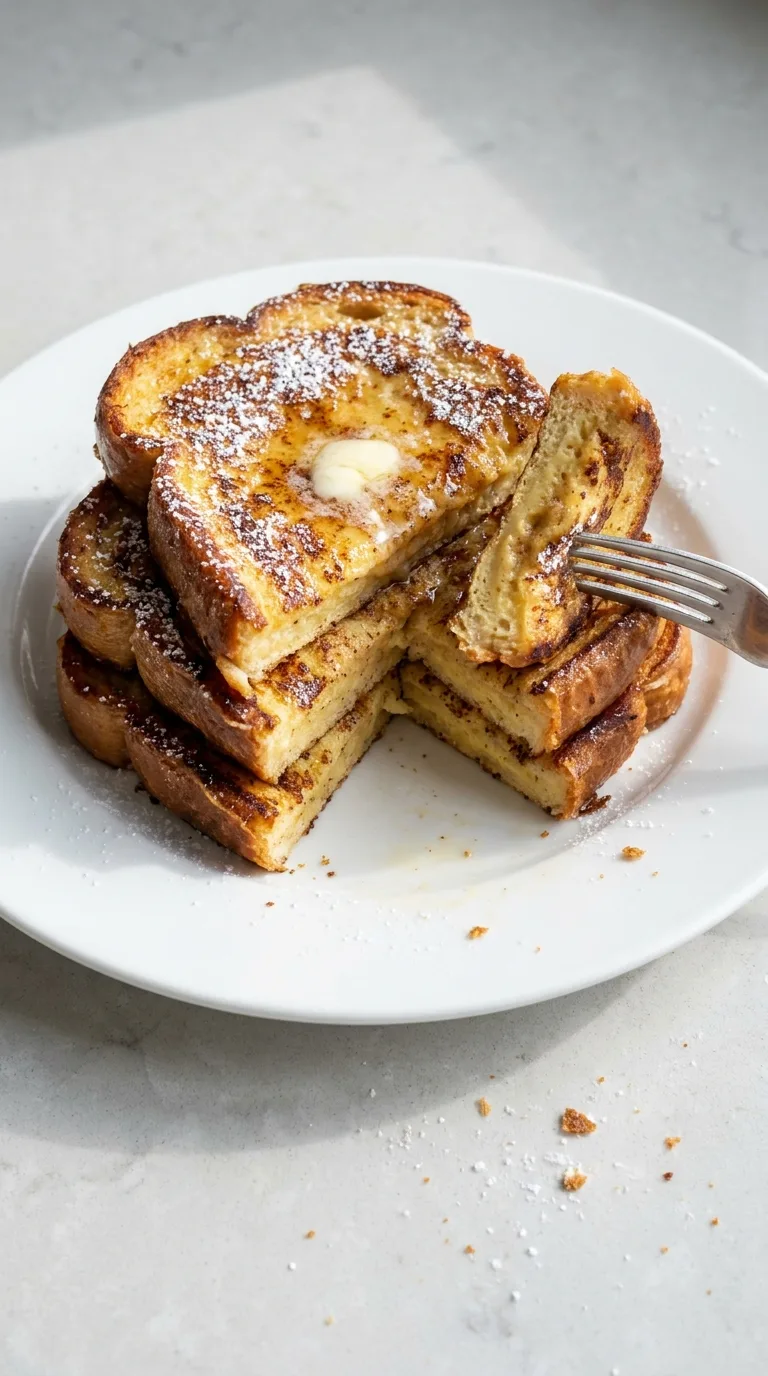
This simple stovetop version uses thick-cut bread and a short soaking time to keep the slices moist without making them fall apart. It comes together quickly and is easy to serve with maple syrup, powdered sugar, or fresh fruit.
Recipe at a Glance
- Prep Time: 10 minutes
- Cook Time: 15 minutes
- Additional Time: 5 minutes
- Total Time: 30 minutes
- Yield: 8 slices
- Servings: 4
- Category: Breakfast & Brunch
- Cuisine: American
- Cooking Method: Stovetop
- Difficulty: Easy
What Makes This Recipe Work
- Thick-cut bread creates a tender center. It absorbs enough custard to become soft while remaining sturdy enough to flip.
- Eggs provide structure. They help the custard set as the bread cooks.
- Whole milk adds richness. It keeps the interior tender without making the custard excessively heavy.
- Vanilla and cinnamon add classic flavor. They give the French toast warmth without overwhelming the buttery bread.
- Medium heat promotes even browning. The outside becomes golden while the custard has enough time to cook through.
Tools for This Recipe
- Large shallow bowl or baking dish
- Whisk
- 10- to 12-inch nonstick skillet or griddle
- Wide spatula
- Measuring spoons
Ingredient Notes
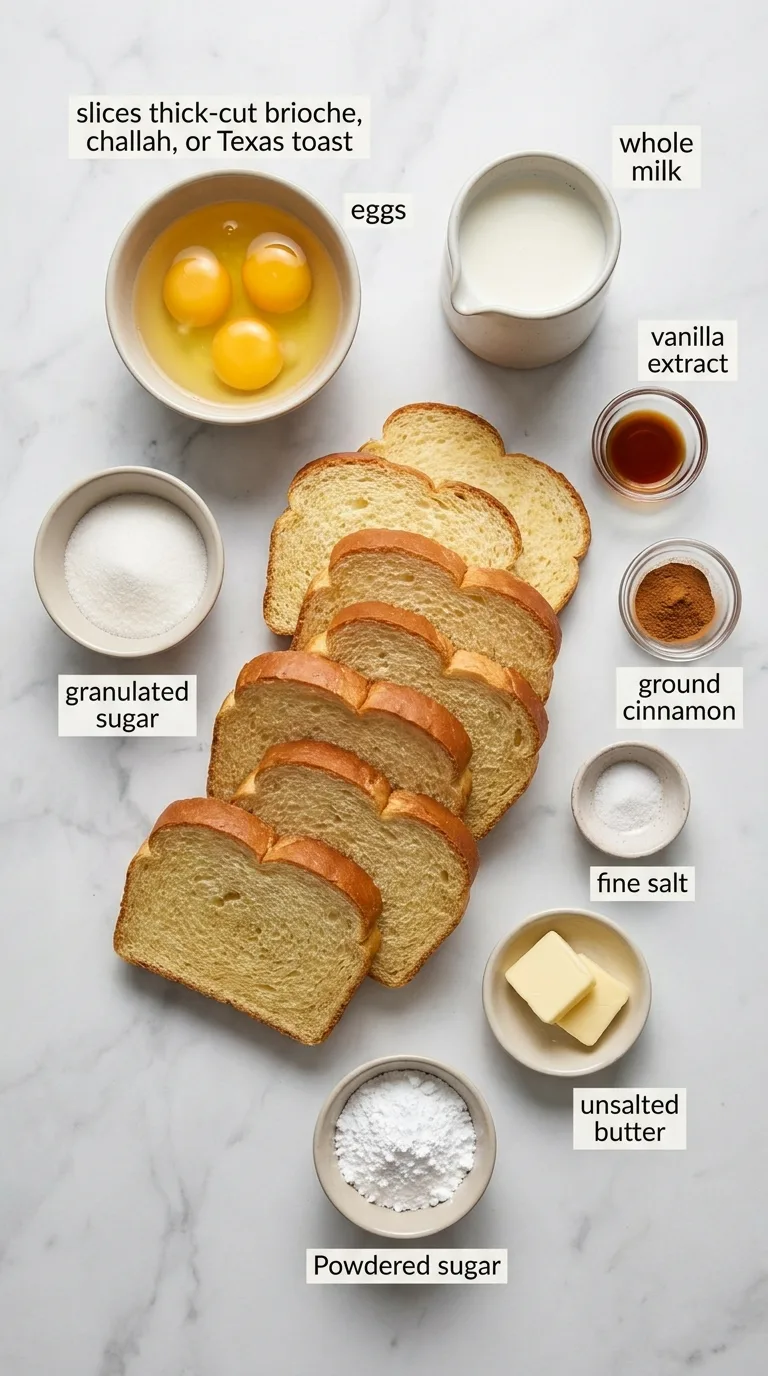
- ■ Thick-cut bread: Brioche, challah, and Texas toast are good choices because they absorb the custard without becoming too fragile.
- ■ Whole milk: Creates a creamy custard. Half-and-half can replace it for a richer result.
- ■ Eggs: Give the French toast its structure and help the custard set during cooking.
- ■ Granulated sugar: Adds sweetness to the custard and helps with browning.
- ■ Unsalted butter: Adds richness and helps create a golden exterior.
Step-by-Step Method
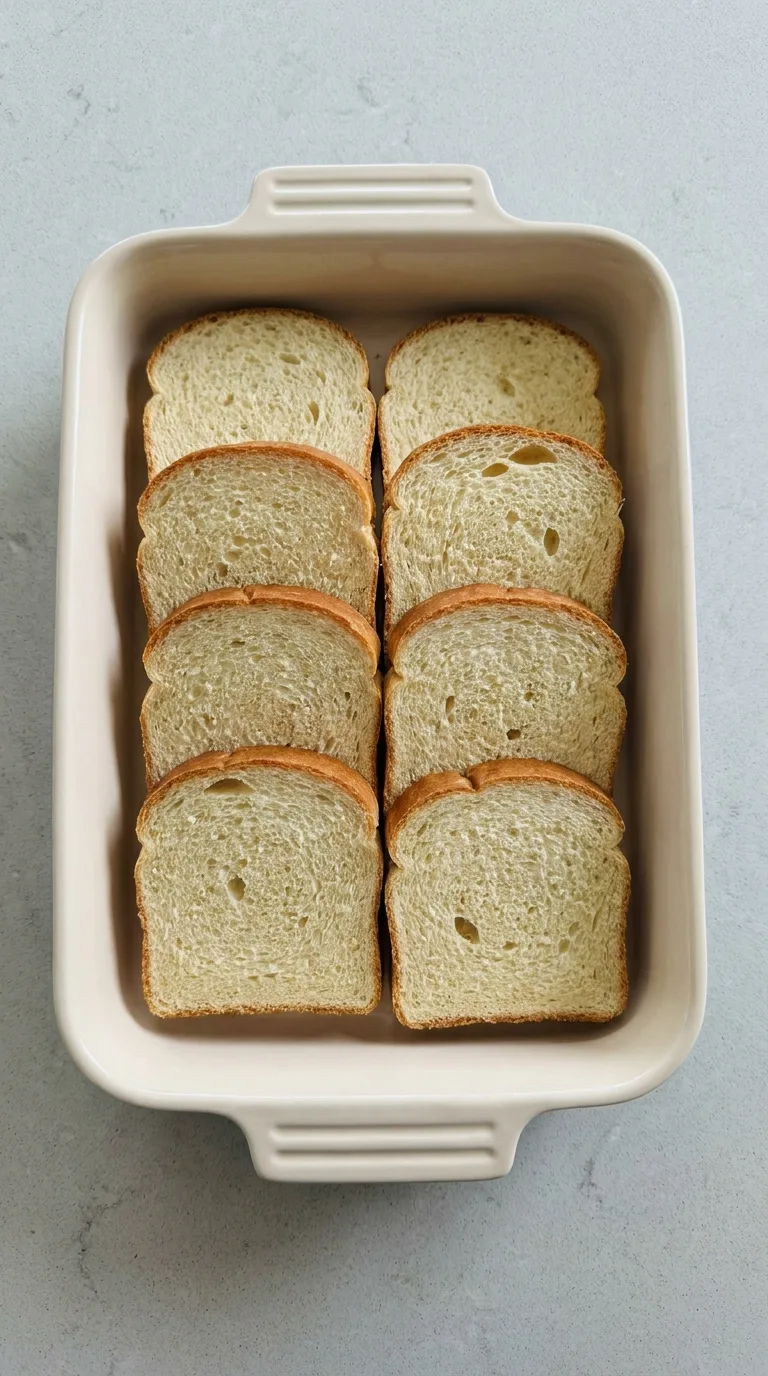
- Prepare the bread. If the bread is very fresh and soft, leave the slices uncovered for 30 to 60 minutes to dry slightly. Slightly stale bread absorbs the custard better while maintaining its structure.

- Make the custard. Whisk the eggs, milk, sugar, vanilla, cinnamon, and salt in a shallow bowl or baking dish until smooth. Make sure there are no visible streaks of egg white.
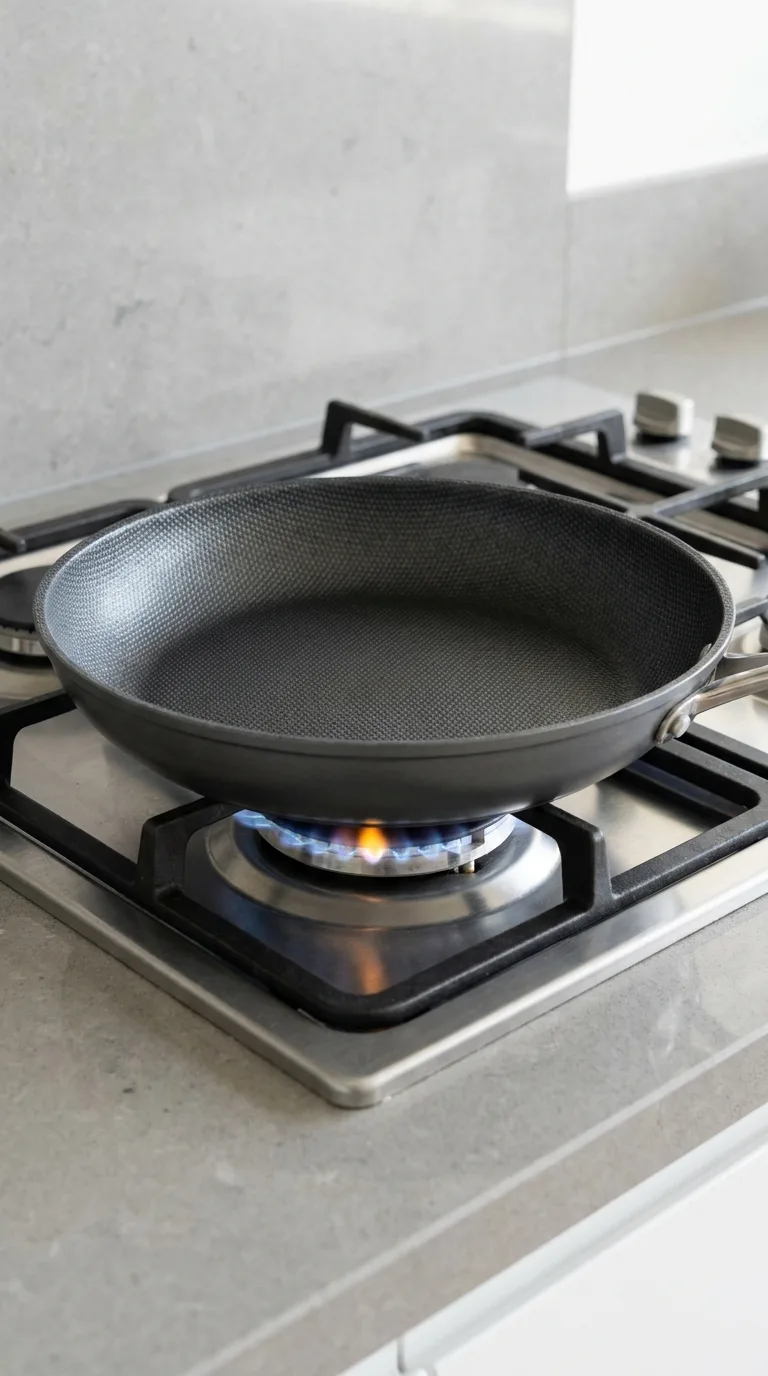
- Heat the skillet. Place a 10- to 12-inch nonstick skillet or griddle over medium heat. Add 1 tablespoon (14 g) of butter and let it melt until foamy but not browned.
- Soak the bread. Place one or two slices of bread in the custard. Soak for about 20 to 30 seconds per side, turning carefully. The bread should be moistened throughout but should still feel sturdy when lifted.
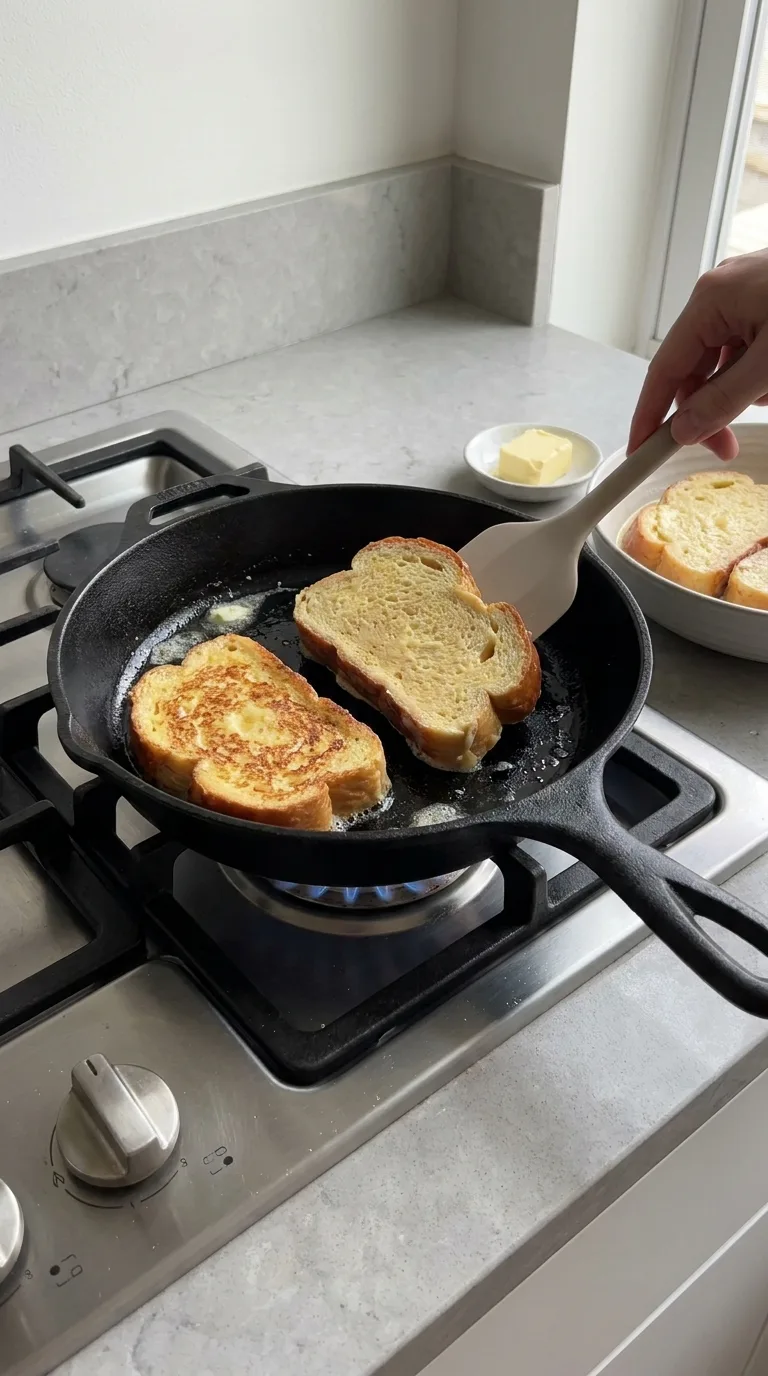
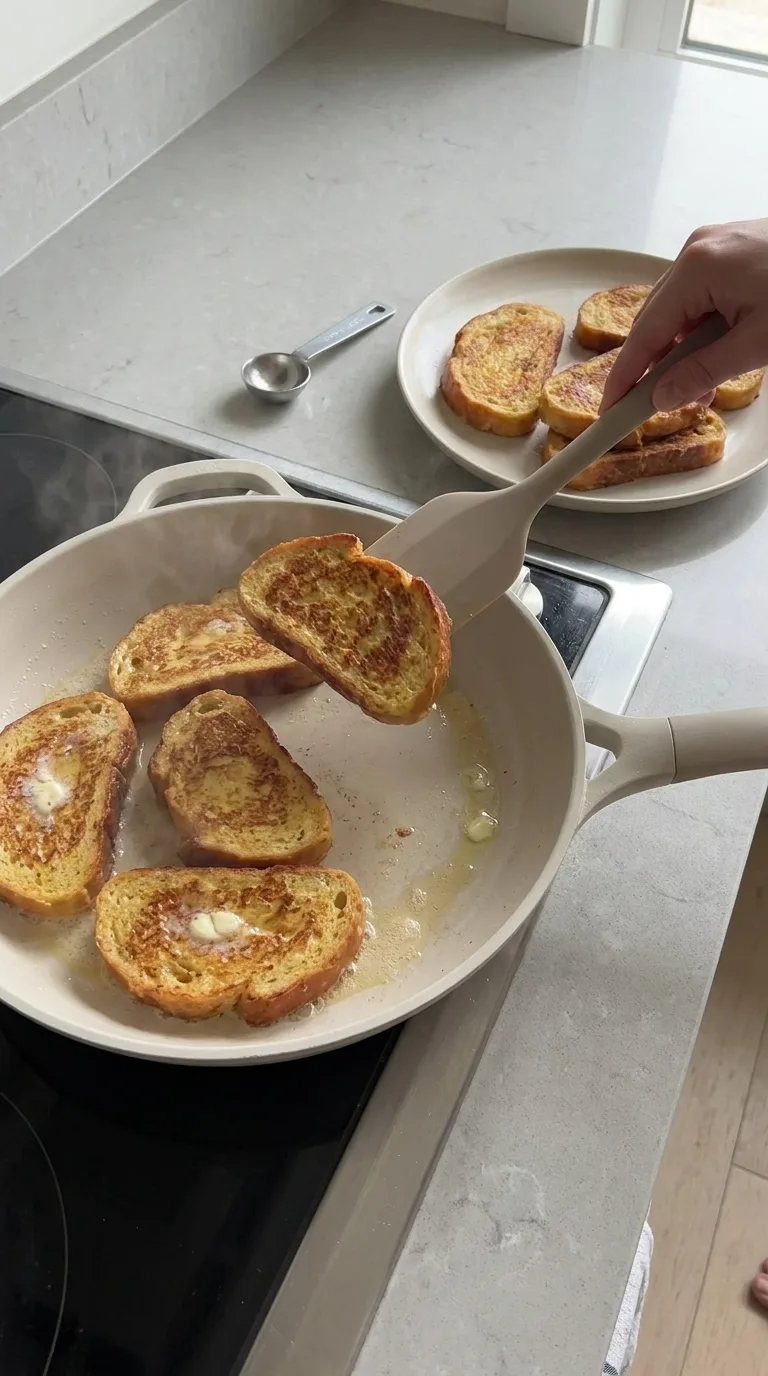
- Cook the first side. Place the soaked bread in the skillet without overcrowding it. Cook for 2 to 3 minutes, until the underside is golden brown and the edges look set.
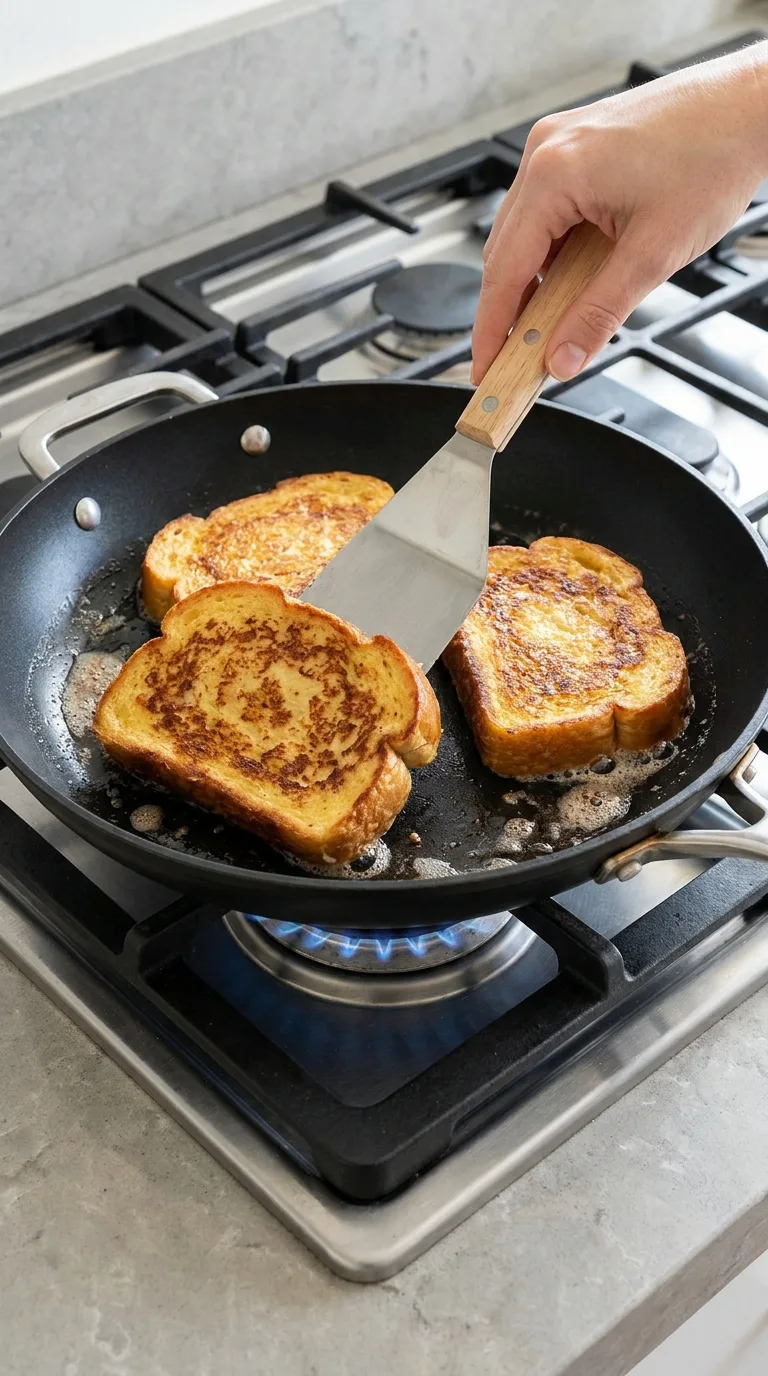
- Flip and finish cooking. Turn the slices with a wide spatula and cook for another 2 to 3 minutes. The second side should be golden brown, and the center should feel set but tender.
- Cook the remaining slices. Transfer the finished French toast to a plate. Add the remaining 1 tablespoon (14 g) butter to the skillet as needed and repeat with the remaining bread.
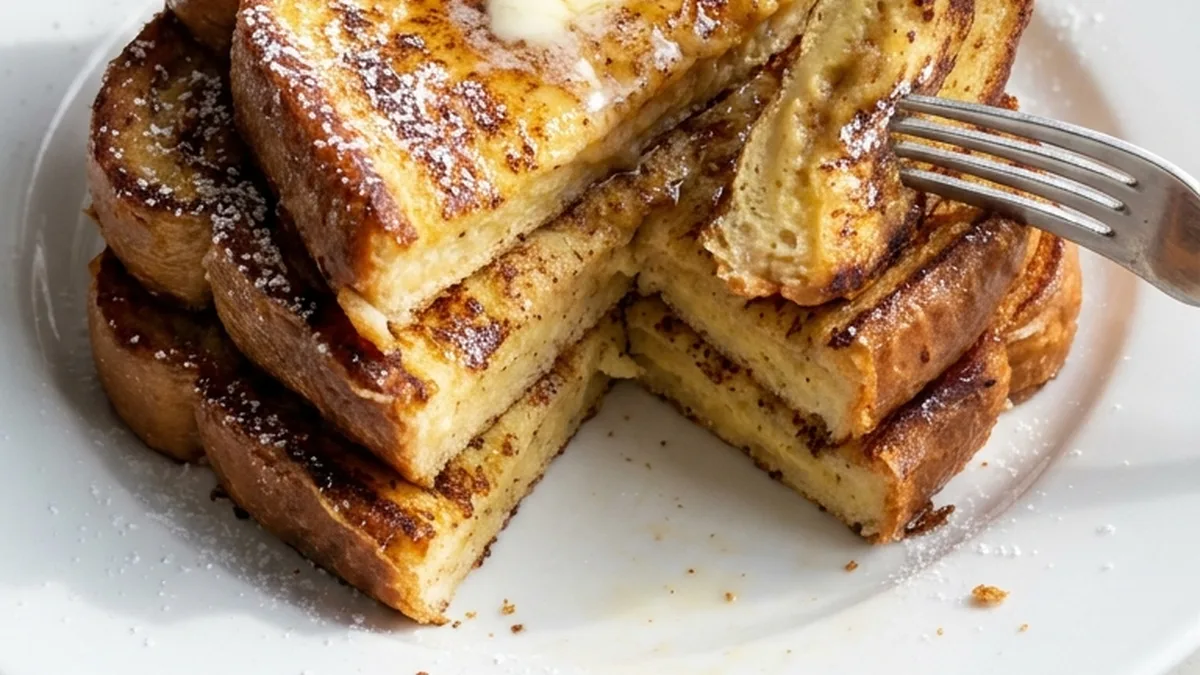
- Check for doneness. The outside should be golden rather than dark, and the center should no longer look wet or contain visible liquid egg. If the exterior browns too quickly, lower the heat and continue cooking.
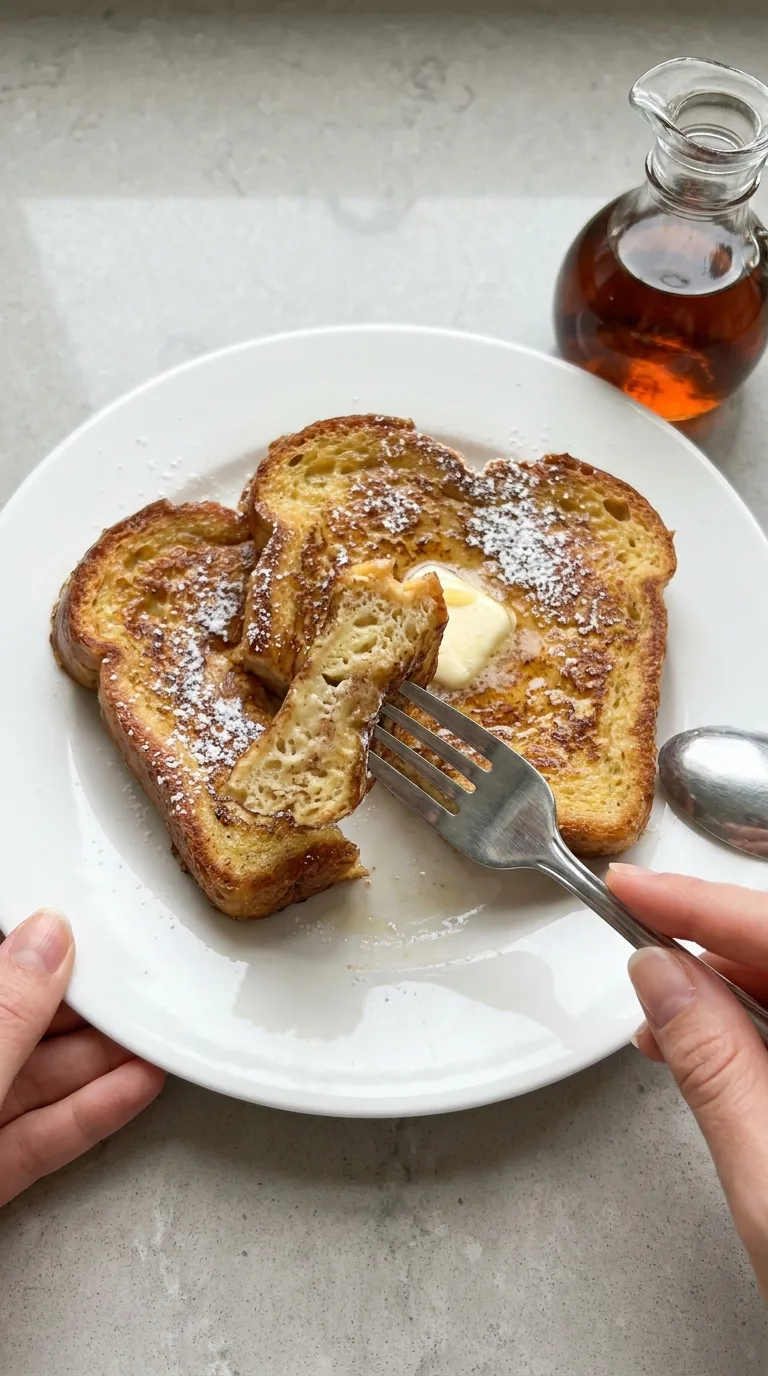
- Serve warm. Serve immediately with optional maple syrup, powdered sugar, or fresh berries.
Make-Ahead and Storage Notes
- Store cooled French toast in an airtight container in the refrigerator for up to 3 days. Place parchment paper between slices if stacking them.
- For longer storage, cool the slices completely, freeze them in a single layer until firm, then transfer them to a freezer-safe bag or airtight container. Freeze for up to 2.
- Reheat refrigerated or frozen French toast in a toaster, toaster oven, or skillet until heated through.
FAQ
Can I use regular sandwich bread?
Yes. Regular sandwich bread works, but it is softer and thinner than brioche, challah, or Texas toast.
Why is my French toast soggy?
The bread may have been too fresh, soaked for too long, or cooked over heat that was too low. Use slightly stale thick-cut bread and soak it only until the custard has been absorbed.
Can I make French Toast ahead of time?
Yes. Cooked French toast can be refrigerated for up to 3 days and reheated in a toaster, toaster oven, or skillet.
Can I freeze French Toast?
Yes. Cool the cooked slices completely, freeze them in a single layer, and transfer them to a freezer-safe bag or container.
What bread is best for French Toast?
Brioche, challah, and thick Texas toast are excellent choices because they are sturdy enough to absorb the custard while remaining tender after cooking.
Ingredients
Method
- If the bread is very fresh and soft, leave the slices uncovered for 30 to 60 minutes to dry slightly. Slightly stale bread absorbs the custard better while maintaining its structure.
- Whisk the eggs, milk, sugar, vanilla, cinnamon, and salt in a shallow bowl or baking dish until smooth. Make sure there are no visible streaks of egg white.
- Place a 10- to 12-inch nonstick skillet or griddle over medium heat. Add 1 tablespoon (14 g) of butter and let it melt until foamy but not browned.
- Place one or two slices of bread in the custard. Soak for about 20 to 30 seconds per side, turning carefully. The bread should be moistened throughout but should still feel sturdy when lifted.
- Place the soaked bread in the skillet without overcrowding it. Cook for 2 to 3 minutes, until the underside is golden brown and the edges look set.
- Turn the slices with a wide spatula and cook for another 2 to 3 minutes. The second side should be golden brown, and the center should feel set but tender.
- Transfer the finished French toast to a plate: Add the remaining 1 tablespoon (14 g) butter to the skillet as needed and repeat with the remaining bread.
- The outside should be golden rather than dark, and the center should no longer look wet or contain visible liquid egg. If the exterior browns too quickly, lower the heat and continue cooking.
- Serve immediately with optional maple syrup, powdered sugar, or fresh berries.