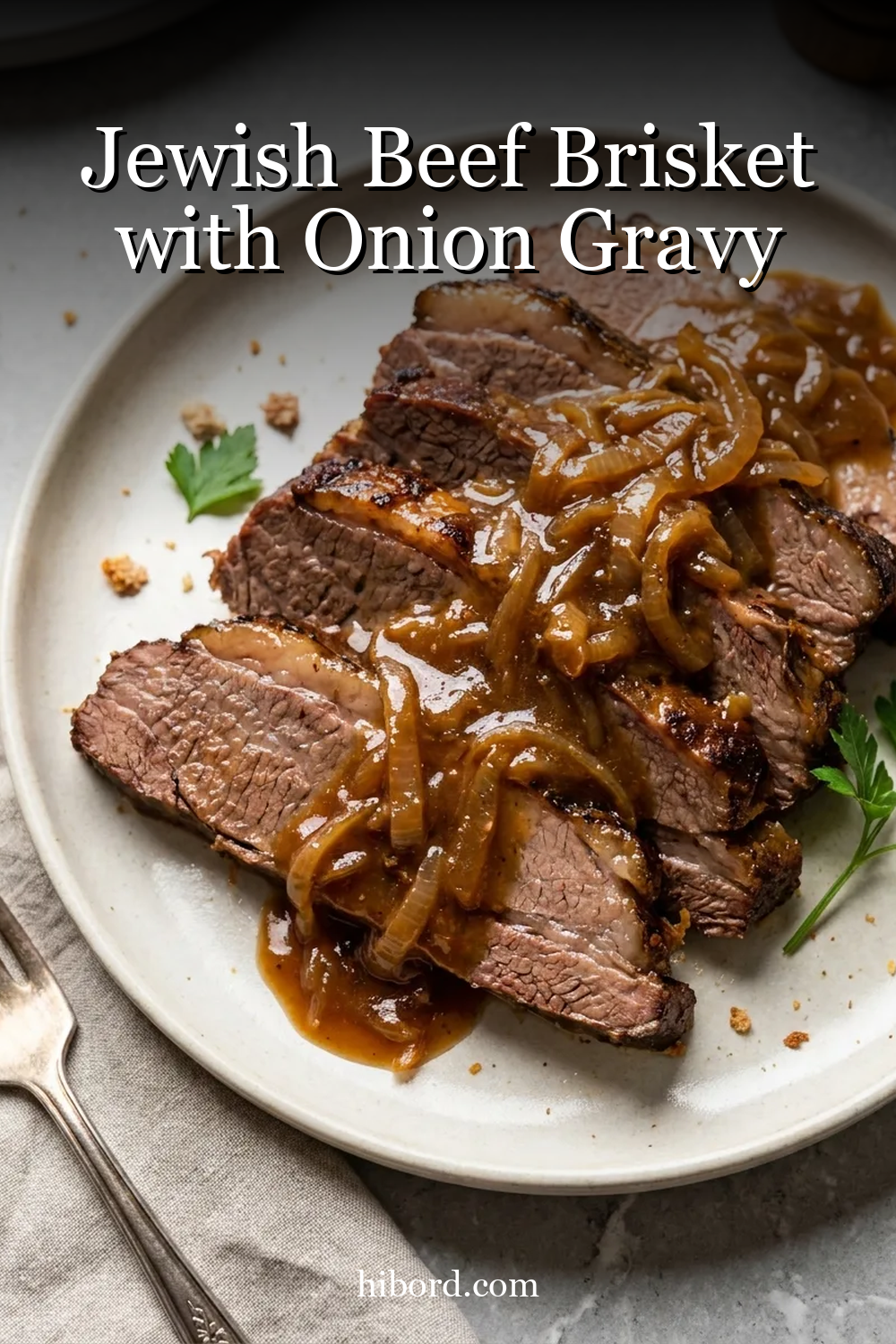
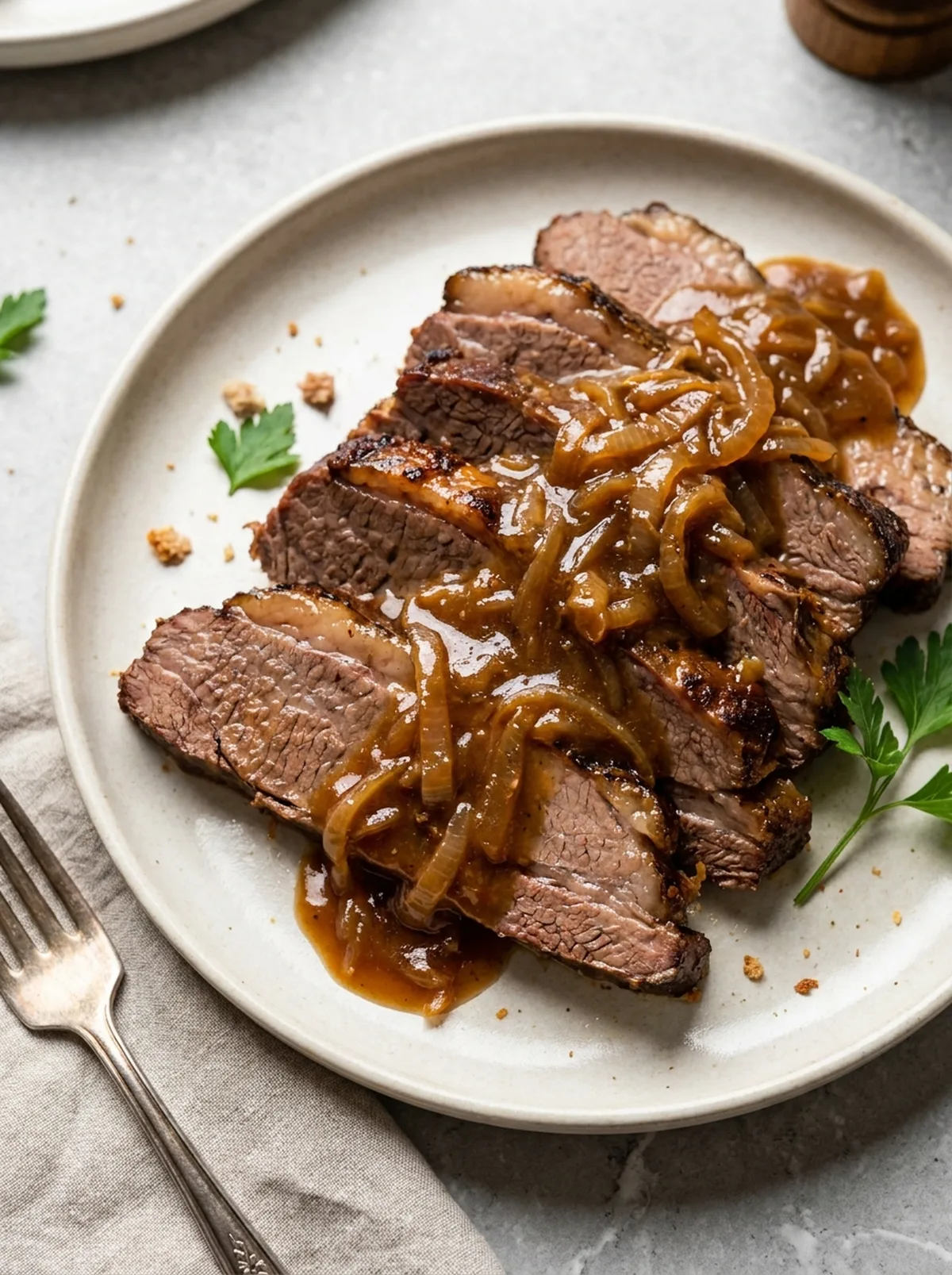
Jewish Beef Brisket is a slow-braised main dish with tender slices of beef, deeply softened onions, carrots, and a savory tomato-based gravy. Paprika, garlic, honey, and red wine give the sauce a balanced sweet-and-savory flavor without overpowering the meat.
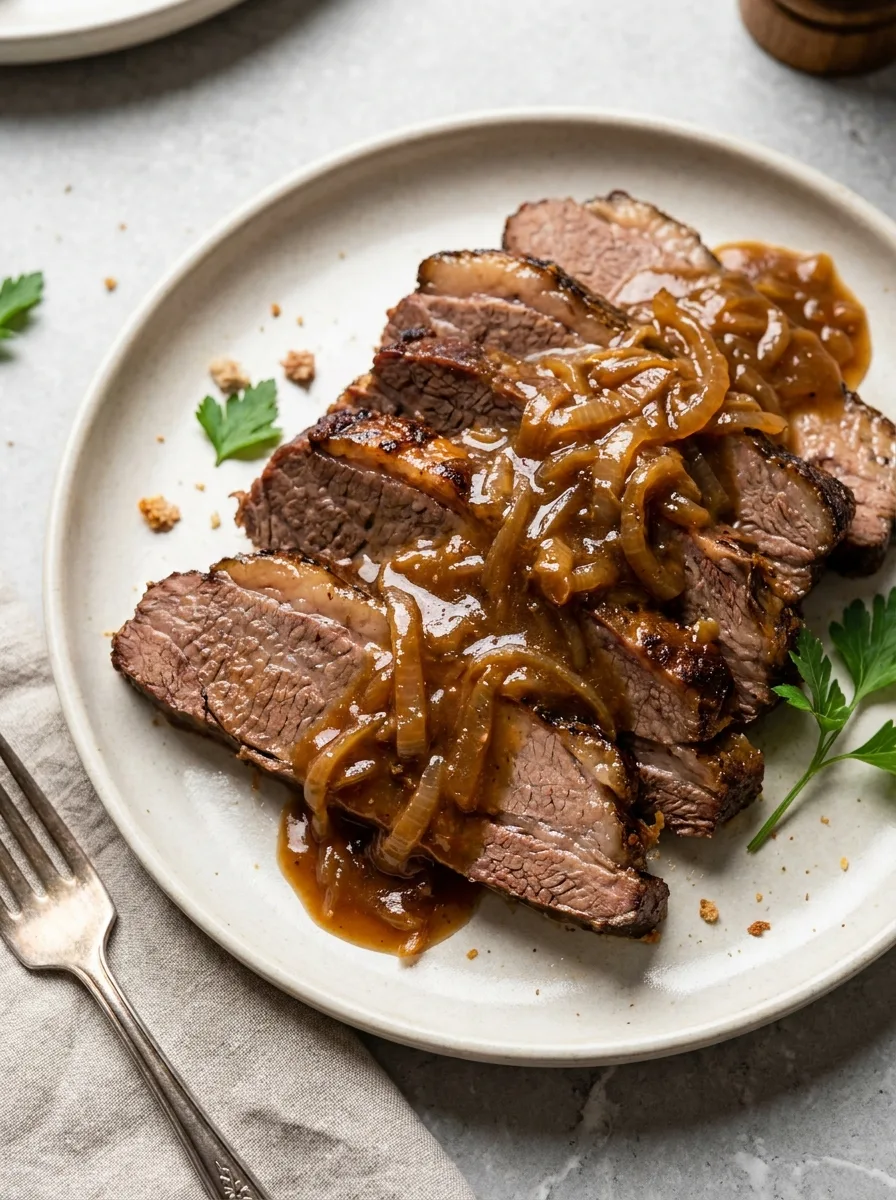
The brisket cooks covered at a low oven temperature until it is fork-tender. It can be served the same day, but it is also well suited to making ahead because chilled brisket is easier to slice neatly and reheats well in its gravy.
Recipe at a Glance
- Prep Time: 30 minutes
- Cook Time: 4 hours
- Additional Time: 30 minutes
- Total Time: 5 hours
- Yield: One 4-pound brisket
- Servings: 8
- Difficulty: Intermediate
Why You’ll Love This Recipe
- Browning the brisket before braising creates a flavorful crust and adds savory depth to the gravy.
- Slowly cooking sliced onions beneath the meat allows them to soften into the sauce and provide natural sweetness.
- A covered, low-temperature braise gradually softens the brisket’s connective tissue without drying out the lean flat.
- Adding the carrots during the second half of cooking keeps them tender without allowing them to collapse into the sauce.
- Resting the brisket before slicing helps retain moisture, while cutting across the grain makes each slice easier to chew.
Equipment Needed
- 7-quart Dutch oven with a tight-fitting lid
- Large cutting board
- Chef’s knife
- Tongs
- Wooden spoon
- Instant-read or probe thermometer
- Large serving platter
Ingredients You’ll Need
For the Brisket
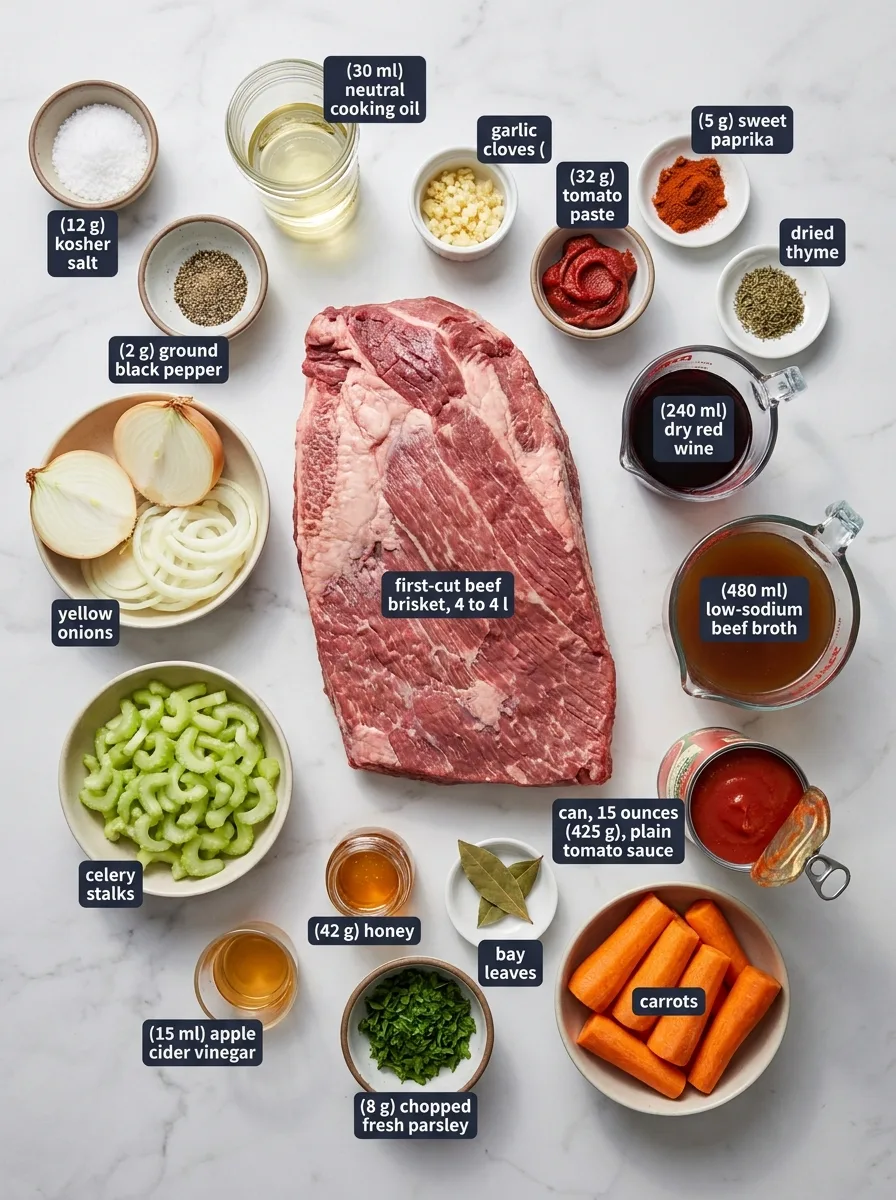
- 1 first-cut beef brisket, 4 to 4 1/2 pounds (1.8 to 2 kg), trimmed to leave about 1/4 inch of fat
- 2 teaspoons (12 g) kosher salt
- 1 teaspoon (2 g) ground black pepper
- 2 tablespoons (30 ml) neutral cooking oil
For the Onion Gravy
- 3 large yellow onions, about 1 1/2 pounds (680 g), halved and thinly sliced
- 3 celery stalks, about 6 ounces (170 g), thinly sliced
- 5 medium garlic cloves (about 15 g), finely minced
- 2 tablespoons (32 g) tomato paste
- 2 teaspoons (5 g) sweet paprika
- 1 teaspoon dried thyme
- 1 cup (240 ml) dry red wine
- 2 cups (480 ml) low-sodium beef broth
- 1 can, 15 ounces (425 g), plain tomato sauce
- 2 tablespoons (42 g) honey
- 1 tablespoon (15 ml) apple cider vinegar
- 2 bay leaves
For the Carrots and Garnish
- 4 large carrots, about 14 ounces (400 g), peeled and cut into 2-inch pieces
- 2 tablespoons (8 g) chopped fresh parsley, optional, for garnish
How to Make Jewish Beef Brisket with Onion Gravy
Preheat the Oven
Position a rack in the lower third of the oven and preheat it to 325°F (165°C). This temperature is ideal for slow braising, allowing the brisket to become tender without drying out.
Season the Brisket
Pat the brisket dry with paper towels. Season both sides evenly with the kosher salt and black pepper. Let it stand at room temperature for about 15 minutes while the Dutch oven heats. This helps the seasoning penetrate the meat better.
Brown the Beef
Heat the neutral oil in a 7-quart Dutch oven over medium-high heat. Add the brisket fat-side down and sear for 5 to 6 minutes, until deeply browned. Turn and brown the second side for another 5 minutes. Transfer the brisket to a large plate. Browning adds depth of flavor and creates a nice crust.
Cook the Onions and Celery
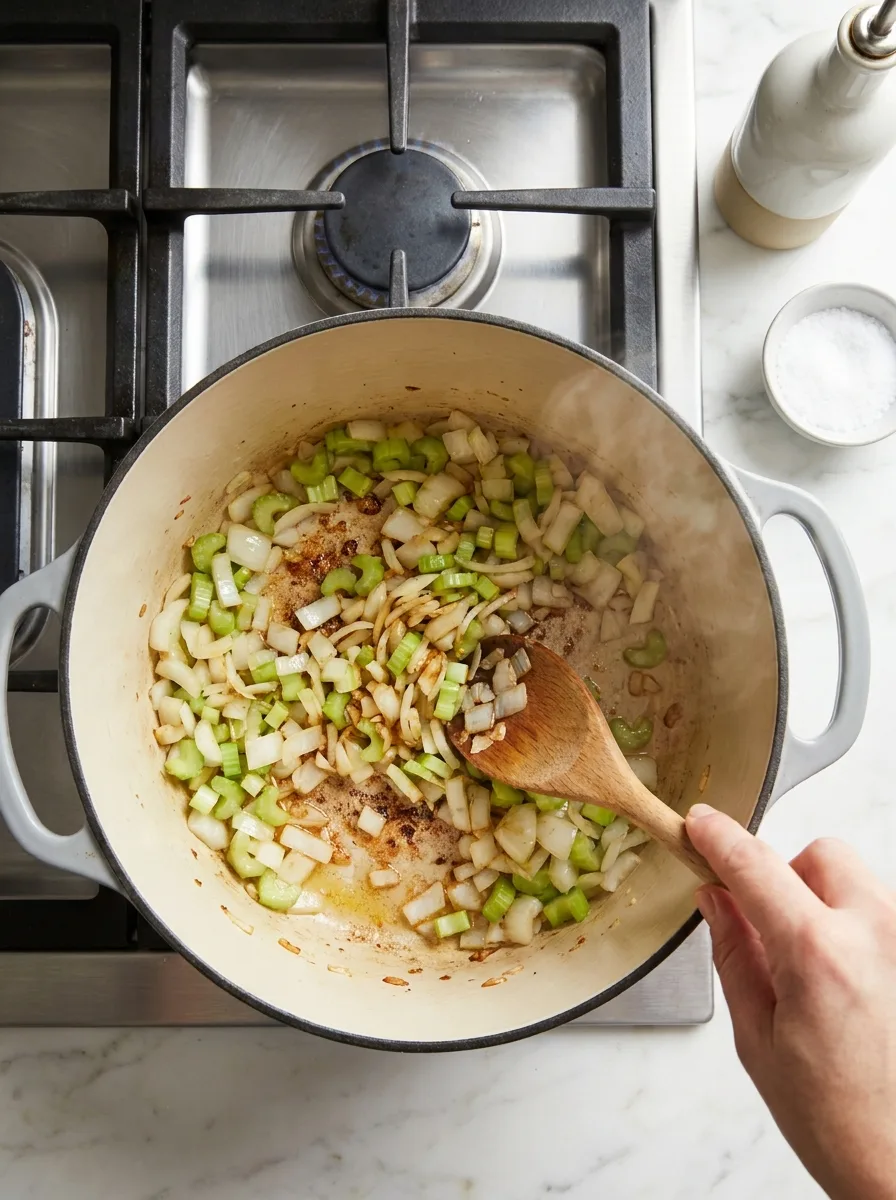
Reduce the heat to medium. Add the onions and celery to the Dutch oven. Cook for 10 to 12 minutes, stirring occasionally and scraping up the browned bits, until the onions are soft and beginning to turn golden. If the bottom begins to scorch, add 1 tablespoon of water. This step builds the base flavor for the gravy.
Add the Aromatics
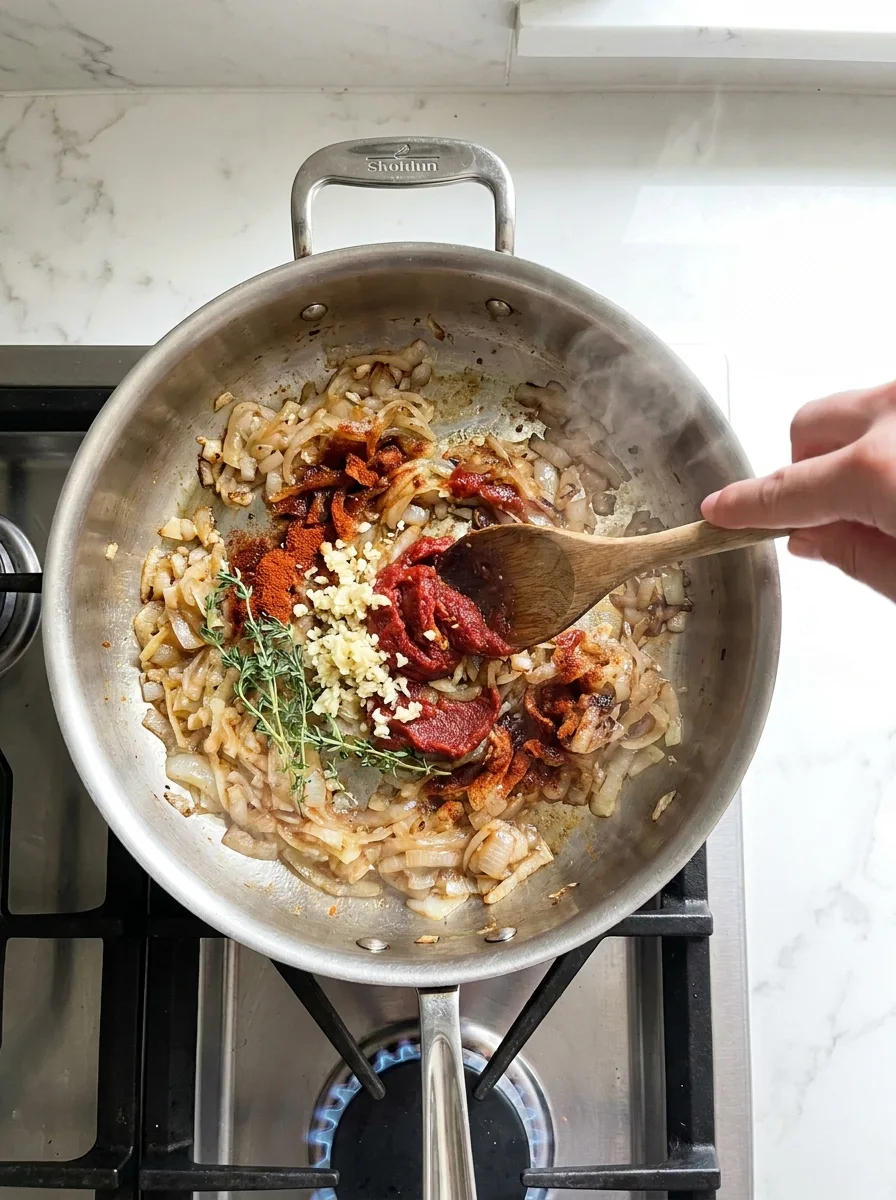
Stir in the garlic, tomato paste, paprika, and thyme. Cook for 1 minute, stirring constantly, until the tomato paste darkens slightly and the garlic becomes fragrant. This enhances the overall flavor profile of the dish.
Deglaze with Wine
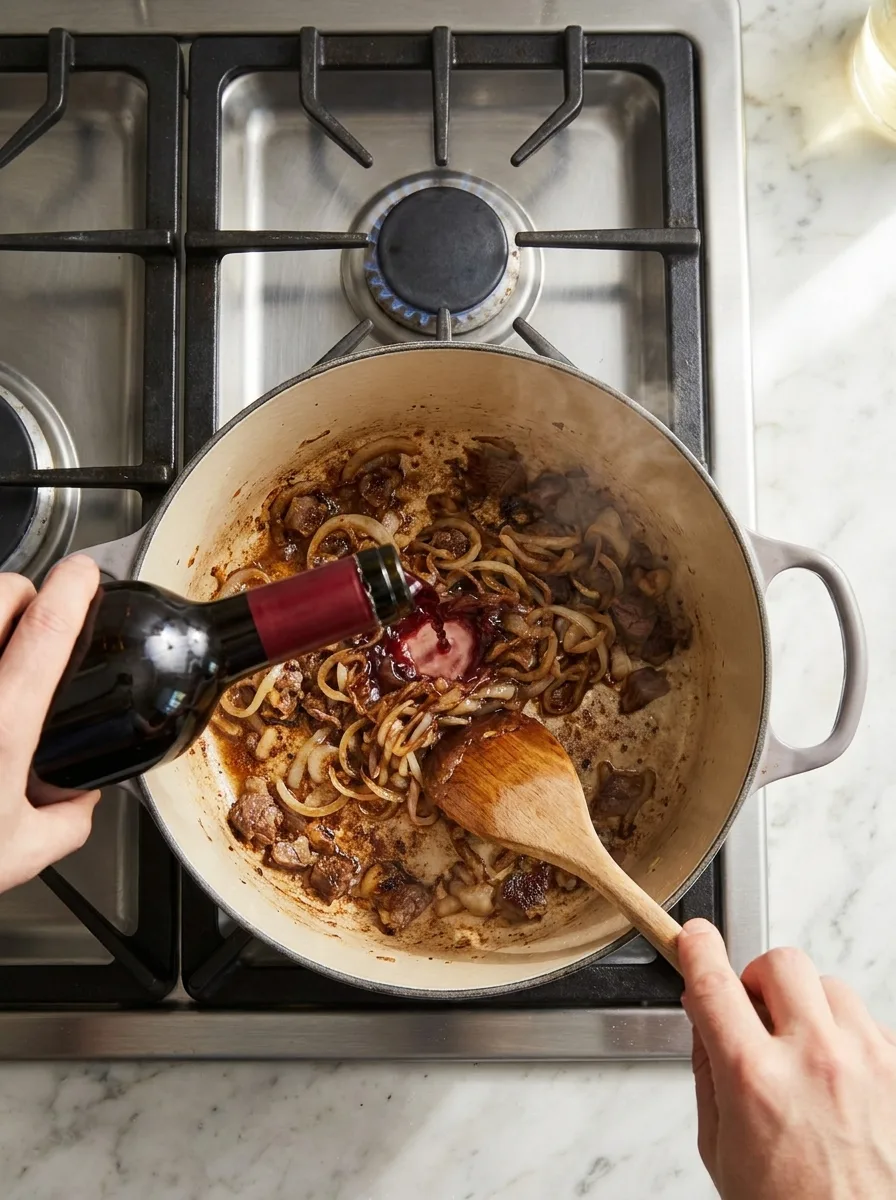
Pour in the red wine and scrape the bottom of the pot with a wooden spoon. Simmer for 3 to 4 minutes, until the wine has reduced by about one-third. This process lifts the flavorful bits stuck to the pot and incorporates them into the sauce.
Build the Braising Liquid
Stir in the beef broth, tomato sauce, honey, apple cider vinegar, and bay leaves. Bring the mixture to a gentle simmer. The sauce should taste savory and lightly tangy, with mild sweetness. This balance is crucial for a rich gravy.
Begin Braising the Brisket
Return the brisket to the Dutch oven fat-side up, nestling it into the onions. The liquid should reach roughly halfway up the meat rather than covering it completely. Cover the pot tightly and transfer it to the oven. This ensures even cooking and moisture retention.
Add the Carrots
Braise for 2 hours 30 minutes. Carefully remove the pot from the oven and arrange the carrot pieces around the brisket, pressing them partly into the sauce. Cover and return the pot to the oven. Adding the carrots later prevents them from becoming mushy.
Cook Until Tender
Continue braising for 1 to 1 1/2 hours. The brisket is ready when a fork or thermometer probe slides into the thickest section with little resistance. It will typically register between 195°F and 205°F (91°C and 96°C) when tender. This temperature range is essential for achieving the desired tenderness.
Rest the Brisket
Transfer the brisket to a cutting board and loosely cover it with foil. Let it rest for 30 minutes. Remove and discard the bay leaves. Skim excess fat from the surface of the gravy if needed. Resting allows the juices to redistribute, making the meat more moist.
Slice and Serve
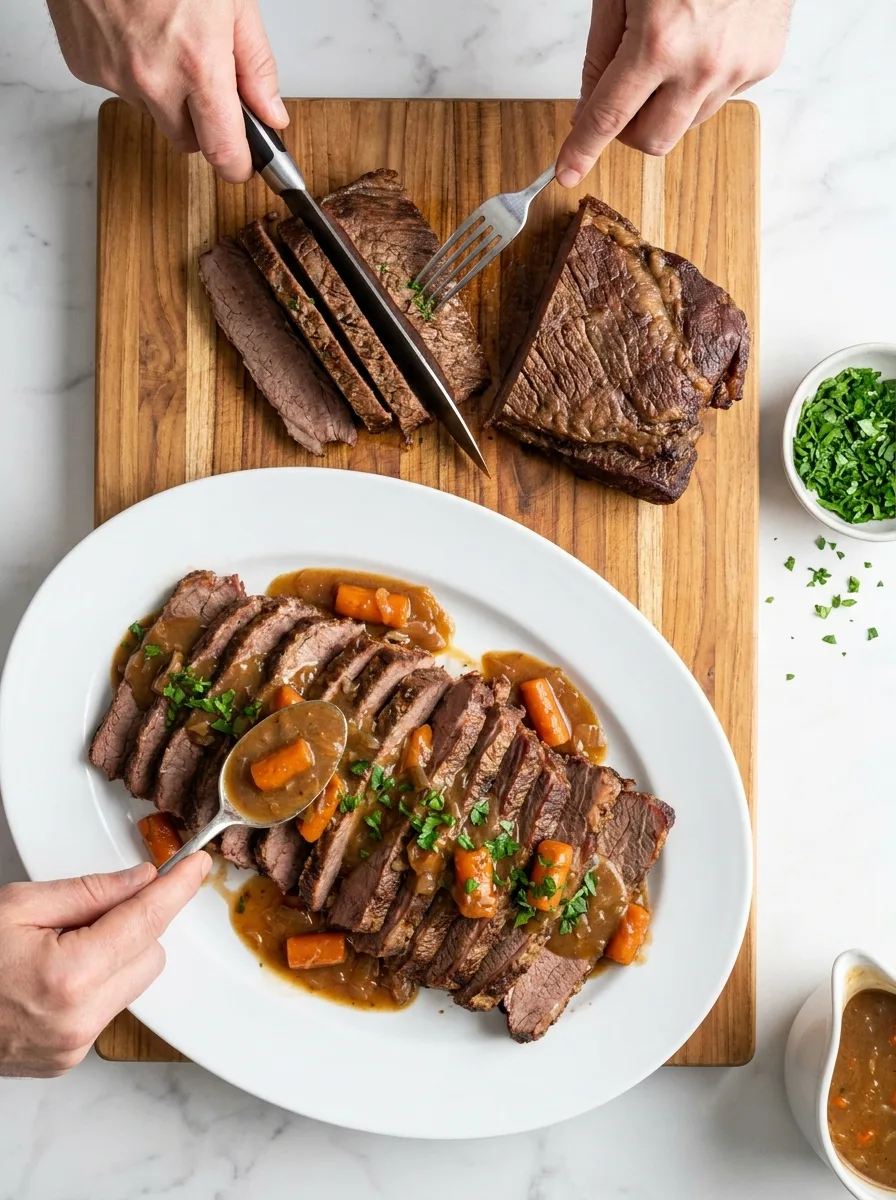
Identify the direction of the meat fibers and slice the brisket across the grain into pieces about 1/4 inch thick. Arrange the slices on a platter and spoon the onion gravy and carrots over the top. Garnish with parsley, if using. Proper slicing technique ensures tender bites.
Tips for Success
- Choose a brisket that fits inside the Dutch oven without folding. A tightly folded brisket may cook unevenly.
- Do not rush the onion-cooking stage. Properly softened onions give the gravy more body and flavor.
- Keep the Dutch oven tightly covered so the braising liquid does not evaporate too quickly.
- Judge doneness by tenderness rather than time alone. If the brisket feels tough, cover it and continue cooking for another 20 to 30 minutes.
- Always slice brisket across the grain. Cutting in the same direction as the fibers produces long, chewy strands.
- For especially neat slices, chill the brisket whole in its sauce overnight, remove the solidified fat, and slice the meat while cold.
Storage, Freezing, and Make-Ahead Instructions
Refrigerate the brisket within 2 hours of serving. Store the sliced meat, carrots, and onion gravy together in a covered container for up to 4 days. Keeping the meat submerged in gravy helps prevent dryness.
For make-ahead preparation, cool the whole brisket in its gravy, cover, and refrigerate for up to 2 days. Once cold, remove the firm fat from the surface and slice the brisket across the grain. Arrange the slices in a baking dish, cover them with the gravy, and reheat tightly covered at 325°F (165°C) for 30 to 40 minutes, until the center reaches 165°F (74°C).
To freeze, cool the sliced brisket and gravy completely. Transfer them to an airtight freezer container, keeping the meat covered with sauce, and freeze for up to 3 months. Thaw overnight in the refrigerator before reheating.
FAQ
Can I make Jewish Beef Brisket ahead of time?
Yes. Brisket is particularly convenient to make 1 or 2 days in advance. Chill it whole in the gravy, remove the hardened fat, slice the cold meat across the grain, and reheat the slices covered with sauce.
Why is my brisket still tough?
Tough brisket is usually undercooked rather than overcooked. Cover the pot and continue braising in 20- to 30-minute intervals until a fork or thermometer probe slides into the meat with little resistance.
Can I leave out the red wine?
Yes. Replace the wine with 1 additional cup of low-sodium beef broth. The sauce will have less acidity and complexity but will still braise the brisket successfully.
Should brisket be cooked fat-side up or down?
Braise it fat-side up. The fat helps protect the top surface during the long cooking period, although most of the moisture comes from the covered cooking environment and braising liquid.
What can I serve with Jewish Beef Brisket?
Mashed potatoes, roasted potatoes, potato kugel, egg noodles, matzo farfel, green beans, and roasted root vegetables all pair well with the onion gravy.
Ingredients
Method
- Position a rack in the lower third of the oven and preheat it to 325°F (165°C).
- Pat the brisket dry with paper towels: Season both sides evenly with the kosher salt and black pepper. Let it stand at room temperature for about 15 minutes while the Dutch oven heats.
- Heat the neutral oil in a 7-quart Dutch oven over medium-high heat. Add the brisket fat-side down and sear for 5 to 6 minutes, until deeply browned. Turn and brown the second side for another 5 minutes. Transfer the brisket to a large plate.
- Reduce the heat to medium: Add the onions and celery to the Dutch oven. Cook for 10 to 12 minutes, stirring occasionally and scraping up the browned bits, until the onions are soft and beginning to turn golden. If the bottom begins to scorch, add 1 tablespoon of water.
- Stir in the garlic, tomato paste, paprika, and thyme. Cook for 1 minute, stirring constantly, until the tomato paste darkens slightly and the garlic becomes fragrant.
- Pour in the red wine and scrape the bottom of the pot with a wooden spoon. Simmer for 3 to 4 minutes, until the wine has reduced by about one-third.
- Stir in the beef broth, tomato sauce, honey, apple cider vinegar, and bay leaves. Bring the mixture to a gentle simmer. The sauce should taste savory and lightly tangy, with mild sweetness.
- Return the brisket to the Dutch oven fat-side up, nestling it into the onions. The liquid should reach roughly halfway up the meat rather than covering it completely. Cover the pot tightly and transfer it to the oven.
- Braise for 2 hours 30 minutes. Carefully remove the pot from the oven and arrange the carrot pieces around the brisket, pressing them partly into the sauce. Cover and return the pot to the oven.
- Continue braising for 1 to 1 1/2 hours. The brisket is ready when a fork or thermometer probe slides into the thickest section with little resistance. It will typically register between 195°F and 205°F (91°C and 96°C) when tender. Whole beef cuts are food-safe at 145°F (63°C) followed by a 3-minute rest, but brisket requires a much higher temperature to soften properly.
- Transfer the brisket to a cutting board and loosely cover it with foil. Let it rest for 30 minutes. Remove and discard the bay leaves. Skim excess fat from the surface of the gravy if needed.
- Identify the direction of the meat fibers and slice the brisket across the grain into pieces about 1/4 inch thick. Arrange the slices on a platter and spoon the onion gravy and carrots over the top. Garnish with parsley, if using.