Smothered Chicken with Homemade Gravy is a comforting skillet dinner made with seasoned, pan-browned chicken covered in tender onions and a savory gravy built from the flavorful drippings left in the pan. The chicken stays juicy while the gravy turns smooth, rich, and thick enough to coat each piece.
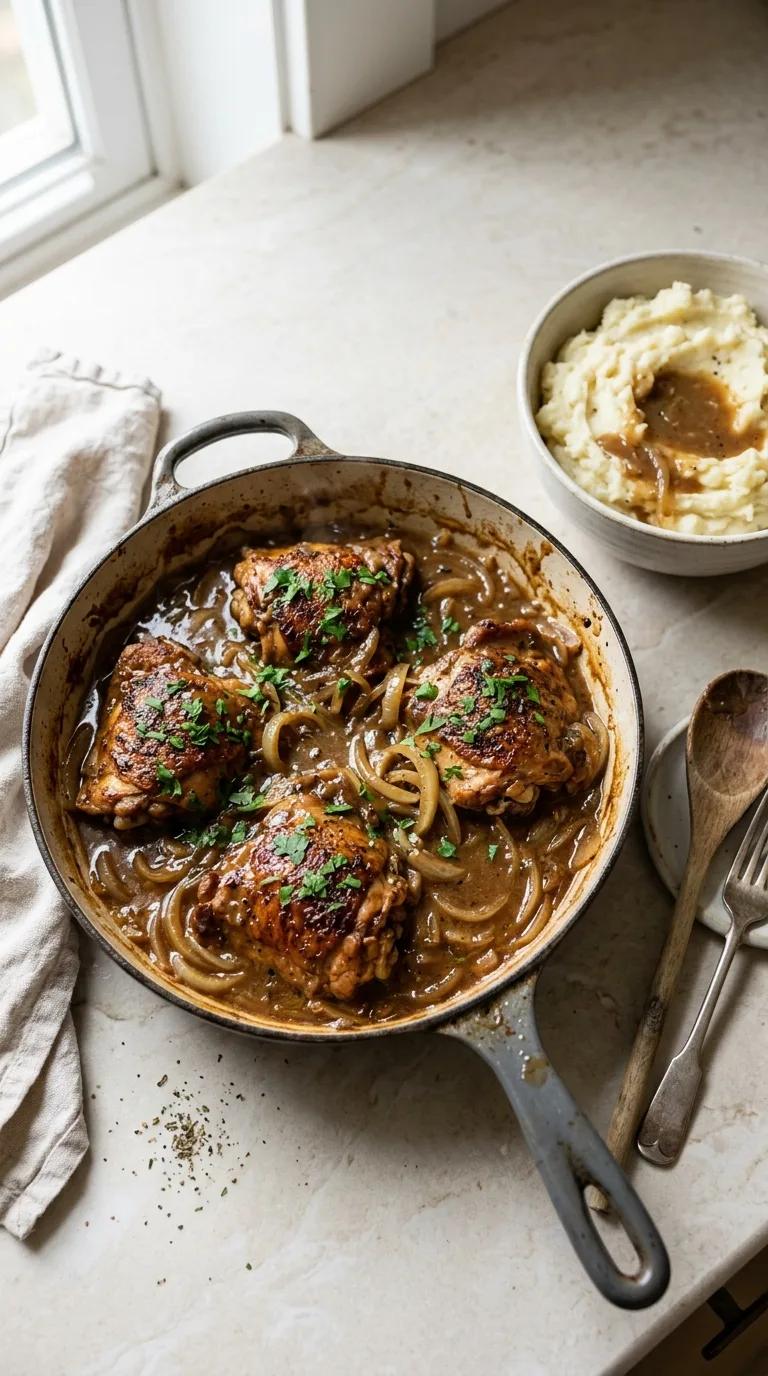
This version uses bone-in, skin-on chicken thighs for deeper flavor and reliable moisture. The gravy comes together in the same skillet with onions, flour, chicken broth, and a small amount of milk, keeping the method practical and the cleanup manageable.
Recipe Snapshot
- Prep Time: 20 minutes
- Cook Time: 50 minutes
- Additional Time: 5 minutes
- Total Time: 1 hour 15 minutes
- Yield: 6 chicken thighs with gravy
- Servings: 6
- Difficulty: Intermediate
Tools for This Recipe
- 12-inch (30 cm) heavy skillet with a lid, preferably cast iron or stainless steel
- Instant-read meat thermometer
- Whisk
- Tongs
- Shallow bowl or plate for dredging
Ingredient Notes
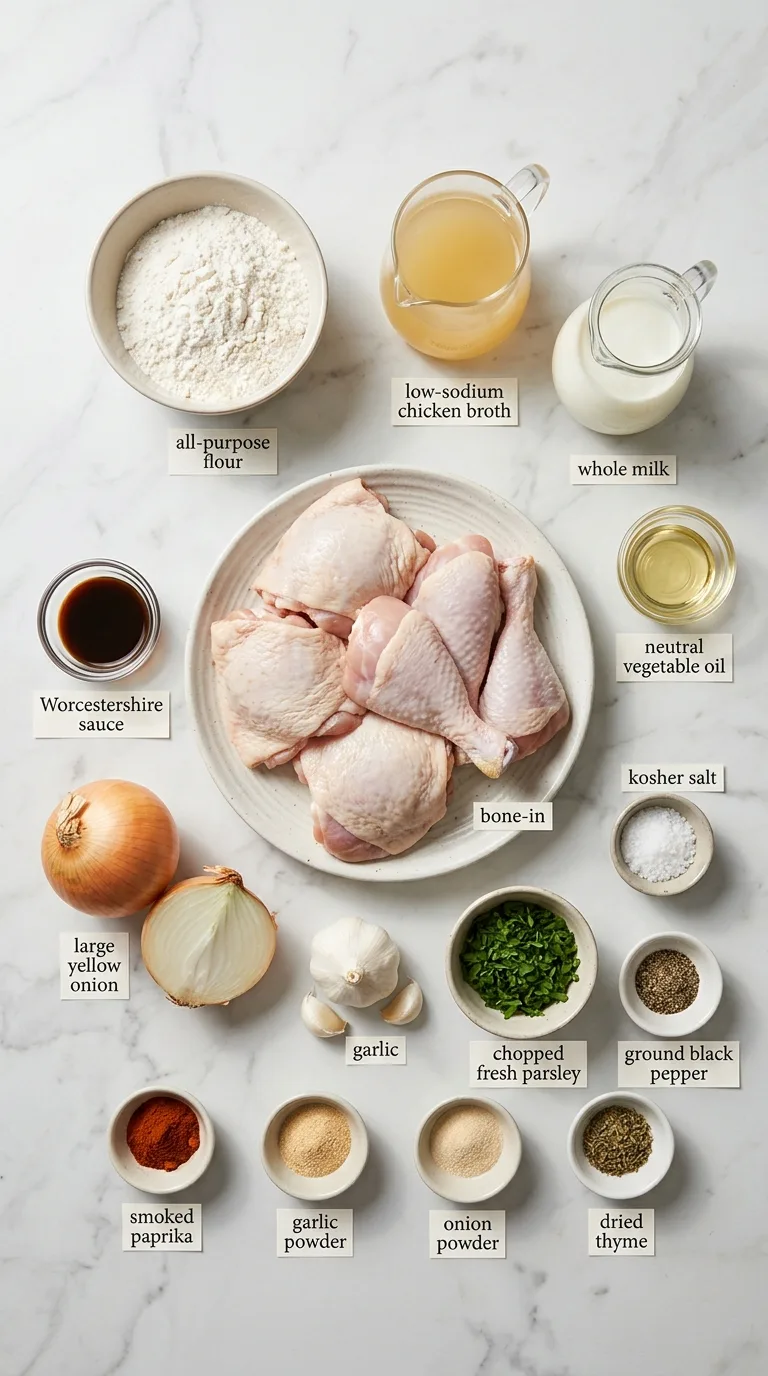
For the Chicken
- ■ 6 bone-in, skin-on chicken thighs, about 2½ pounds (1.1 kg) total, patted dry
- ■ 1½ teaspoons (9 g) kosher salt, divided
- ■ 1 teaspoon (2 g) ground black pepper, divided
- ■ 1 teaspoon (3 g) garlic powder
- ■ 1 teaspoon (2 g) onion powder
- ■ 1 teaspoon (2 g) smoked paprika
- ■ ½ cup (60 g) all-purpose flour, divided
- ■ 2 tablespoons (30 ml) neutral vegetable oil
For the Homemade Gravy
- ■ 1 large yellow onion, about 10 ounces (280 g), thinly sliced
- ■ 2 cloves garlic, about 2 teaspoons (6 g), minced
- ■ 2 cups (475 ml) low-sodium chicken broth
- ■ ½ cup (120 ml) whole milk
- ■ ½ teaspoon (0.5 g) dried thyme
- ■ 1 teaspoon (5 ml) Worcestershire sauce
- ■ 1 tablespoon (4 g) chopped fresh parsley, optional, for serving
- Chicken thighs: Bone-in, skin-on thighs bring both moisture and flavor to the gravy. Bone-in chicken breasts can be used, but their cooking time will vary and they are more prone to drying out. Cook according to internal temperature rather than relying only on time.
- All-purpose flour: Flour serves two purposes: it creates a light coating that encourages browning and thickens the gravy. A standard cup-for-cup gluten-free flour blend may work as a substitute, but the gravy's texture and thickening strength can vary by blend.
- Chicken broth: Low-sodium broth gives you better control over the final seasoning because the chicken and pan drippings already contain salt. Unsalted broth is also suitable; simply adjust the seasoning before serving.
- Whole milk: Milk softens the savory flavor of the broth and gives the gravy a creamier finish. Half-and-half can replace it for a richer gravy. Reduced-fat milk can also work, although the sauce will be slightly less creamy.
- Worcestershire sauce: A small amount adds savory depth without making the gravy taste strongly of Worcestershire. If unavailable, it can be omitted; the finished gravy will simply have a little less complexity.
Step-by-Step Method
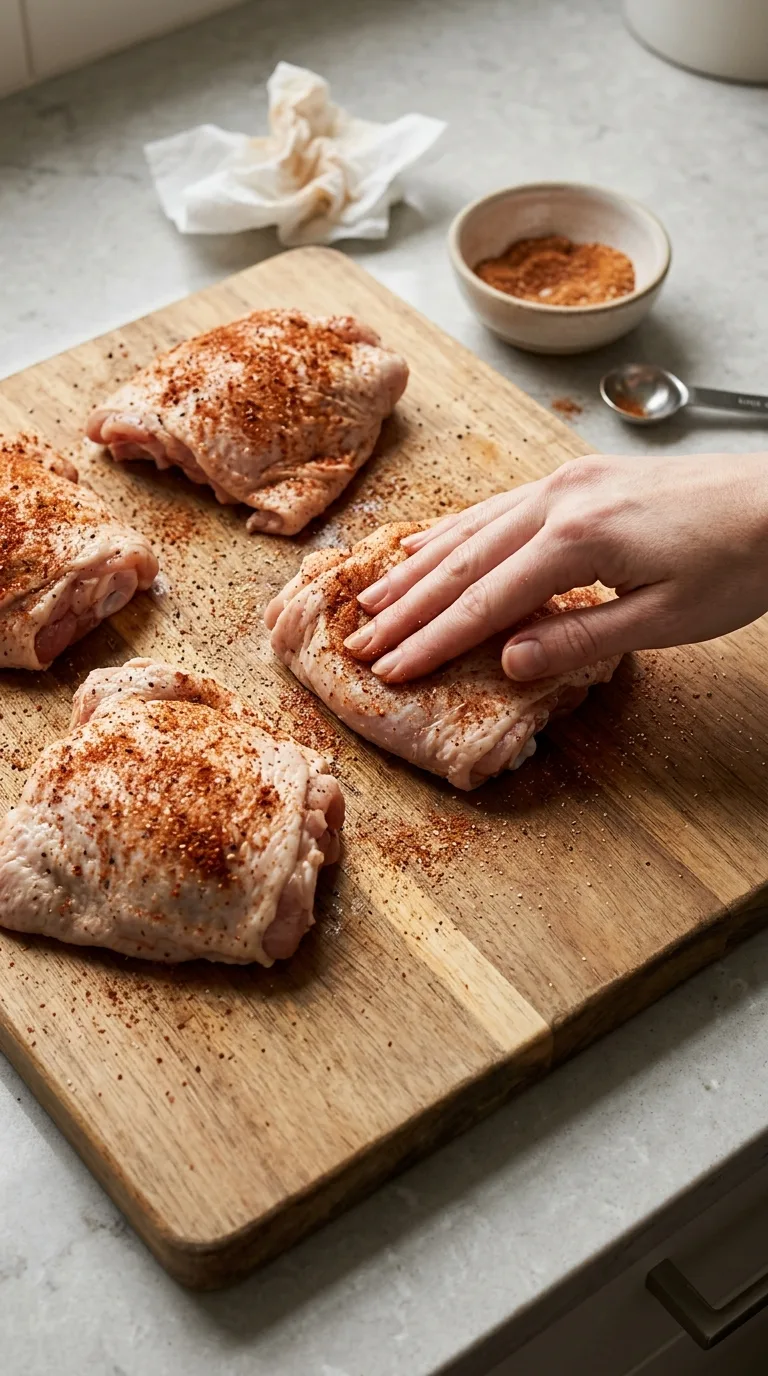
- Season the chicken. Pat the chicken thighs thoroughly dry. Season them with 1 teaspoon of the kosher salt, ½ teaspoon of the black pepper, garlic powder, onion powder, and smoked paprika. Rub the seasonings evenly over both sides.

- Lightly dredge the chicken. Place ¼ cup (30 g) of the flour in a shallow bowl. Coat each chicken thigh lightly with flour, then shake off the excess. Reserve the remaining ¼ cup (30 g) flour for the gravy.
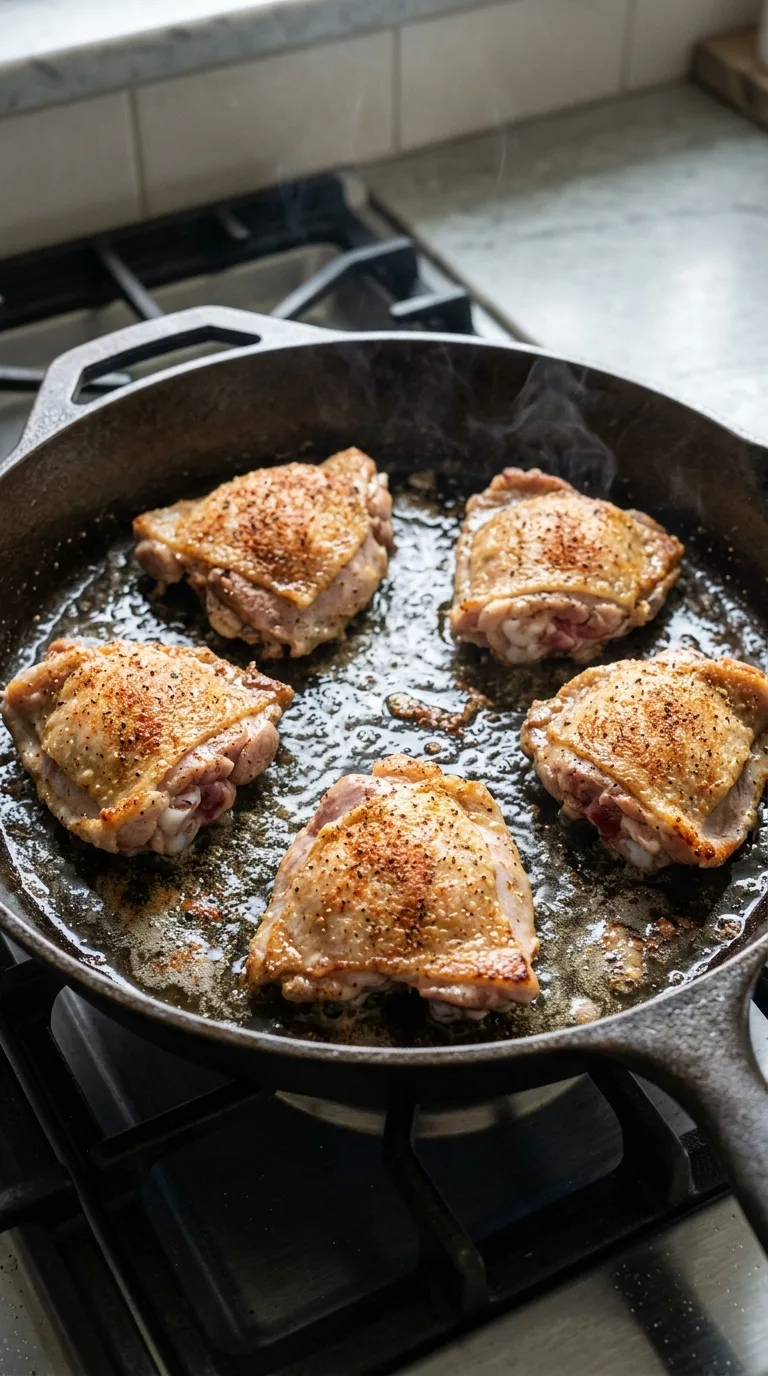
- Brown the chicken. Heat the vegetable oil in a 12-inch (30 cm) heavy skillet over medium heat. When the oil is shimmering, add the chicken skin-side down without crowding. Brown for about 6 to 8 minutes on the first side, then turn and cook for another 4 to 5 minutes. The chicken should be deeply golden but does not need to be cooked through. Transfer it to a plate.
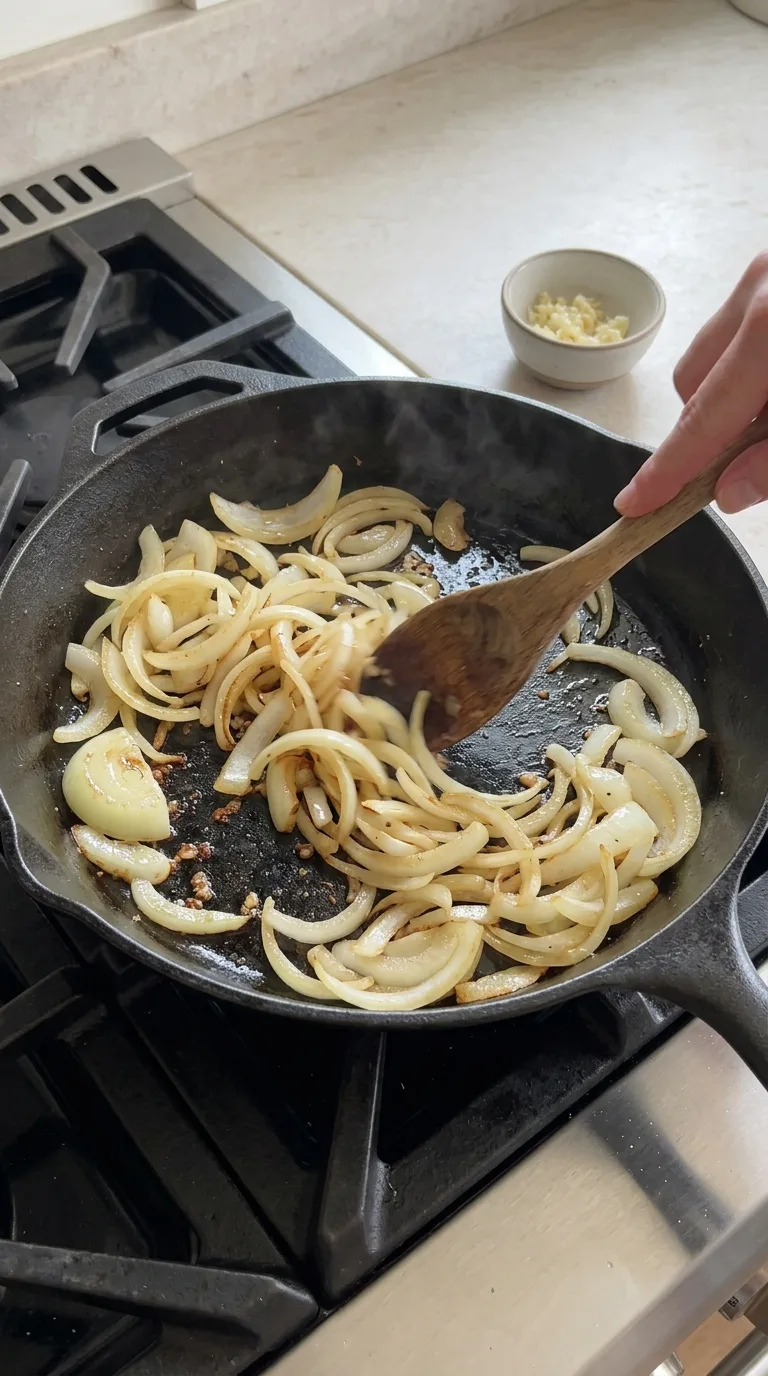
- Soften the onion. Carefully pour off excess fat, leaving about 2 tablespoons in the skillet along with the browned bits. Add the sliced onion and cook over medium-low heat for 7 to 9 minutes, stirring occasionally, until soft and lightly golden. Add the minced garlic and cook for about 30 seconds, just until fragrant.
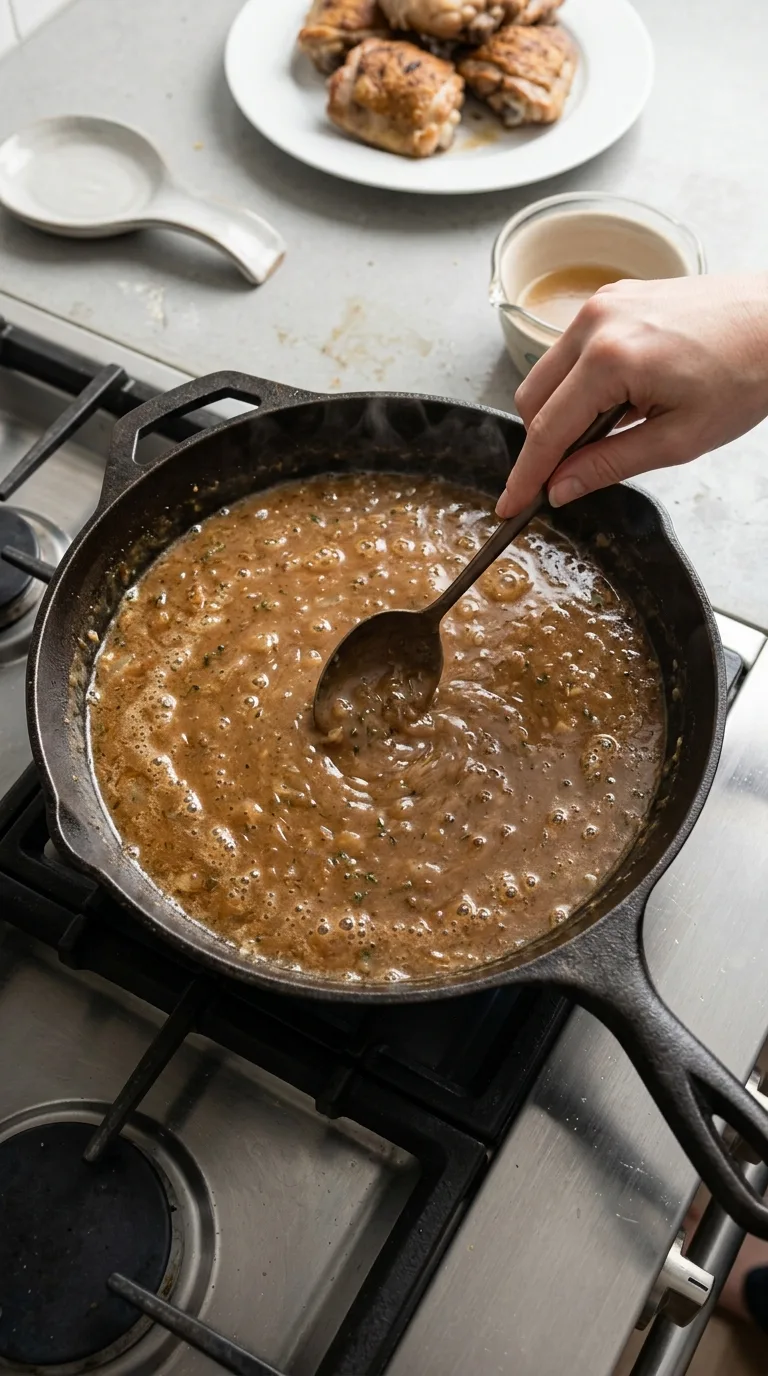
- Make the gravy base. Sprinkle the reserved ¼ cup (30 g) flour over the onions. Cook for 1 to 2 minutes, stirring constantly. The flour should completely coat the onions and lose its raw, powdery appearance without becoming dark brown.
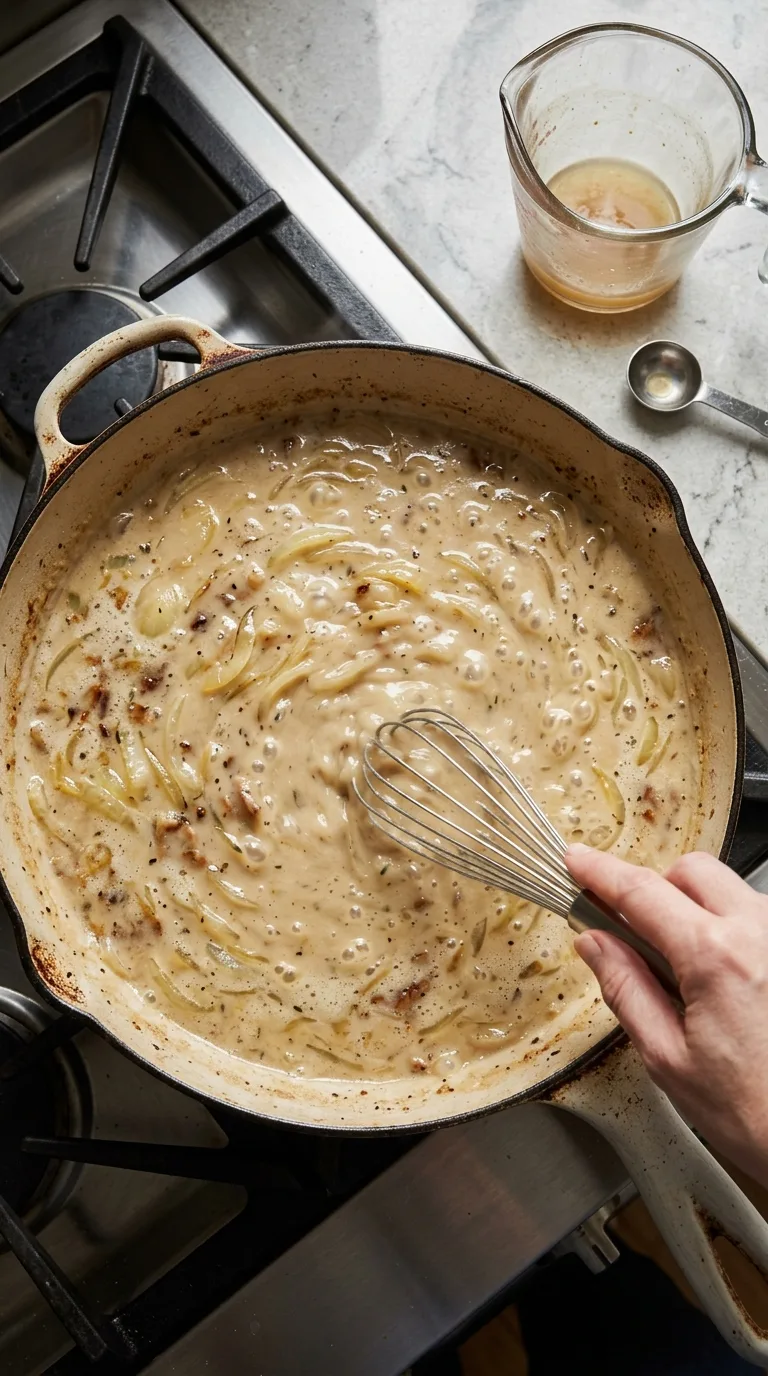
- Add the liquids gradually. Slowly whisk in the chicken broth, scraping the bottom of the skillet to loosen the browned bits. Whisk in the whole milk, dried thyme, Worcestershire sauce, remaining ½ teaspoon salt, and remaining ½ teaspoon black pepper. Bring the mixture to a gentle simmer. It should begin to thicken but remain loose enough to simmer around the chicken.
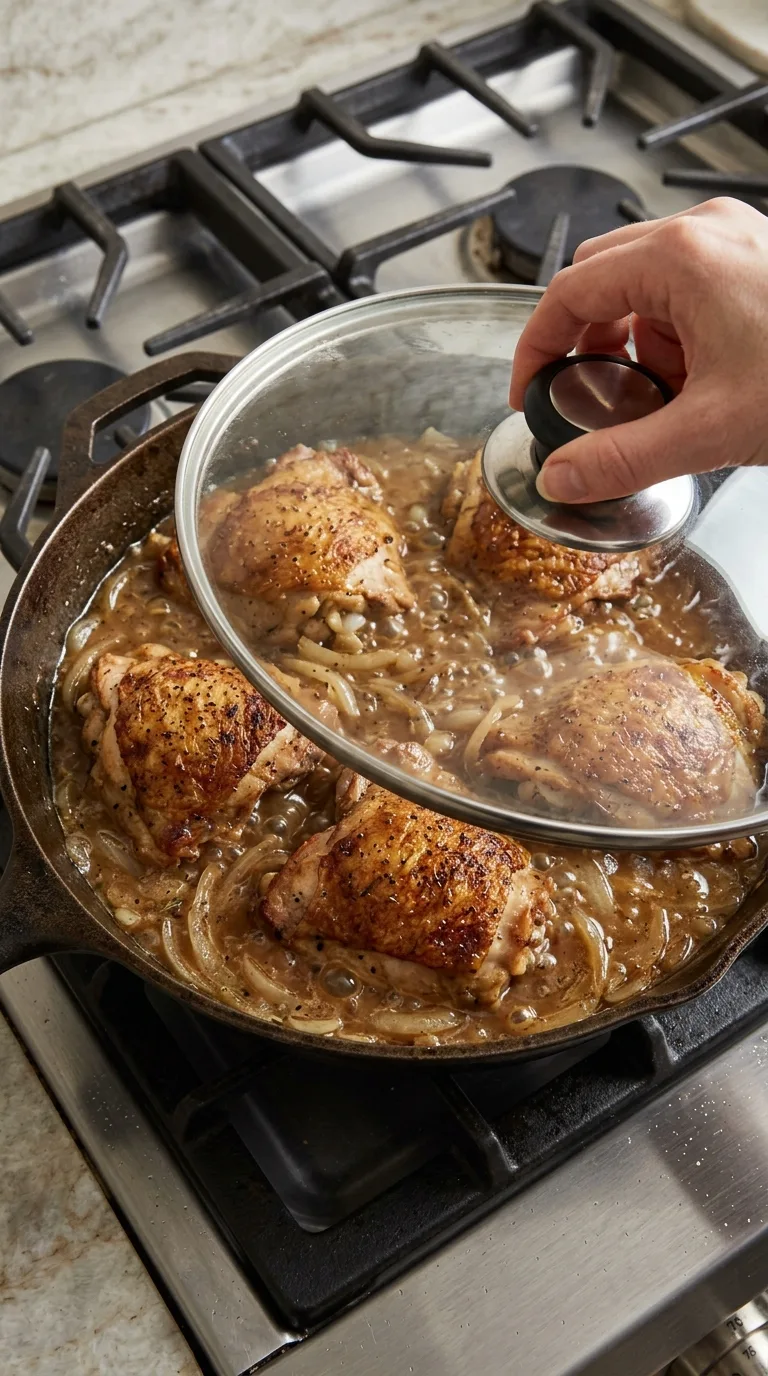
- Smother and simmer. Return the chicken thighs and any accumulated juices to the skillet, skin-side up. Spoon some gravy and onions around the chicken. Reduce the heat to low, cover, and simmer gently for 25 to 30 minutes. Avoid a hard boil, which can make the chicken tougher and cause the milk-based gravy to separate.
- Check for doneness. Insert an instant-read thermometer into the thickest part of a thigh without touching the bone. The chicken must reach at least 165°F (74°C) for food safety; thighs will often be especially tender when cooked somewhat beyond that minimum. If needed, cover and continue cooking, checking again after a few minutes.
- Adjust the gravy. If the gravy is thinner than desired, transfer the cooked chicken to a clean plate and simmer the gravy uncovered for 2 to 5 minutes. If it becomes too thick, whisk in a small splash of chicken broth or milk. Taste and adjust the seasoning as needed.
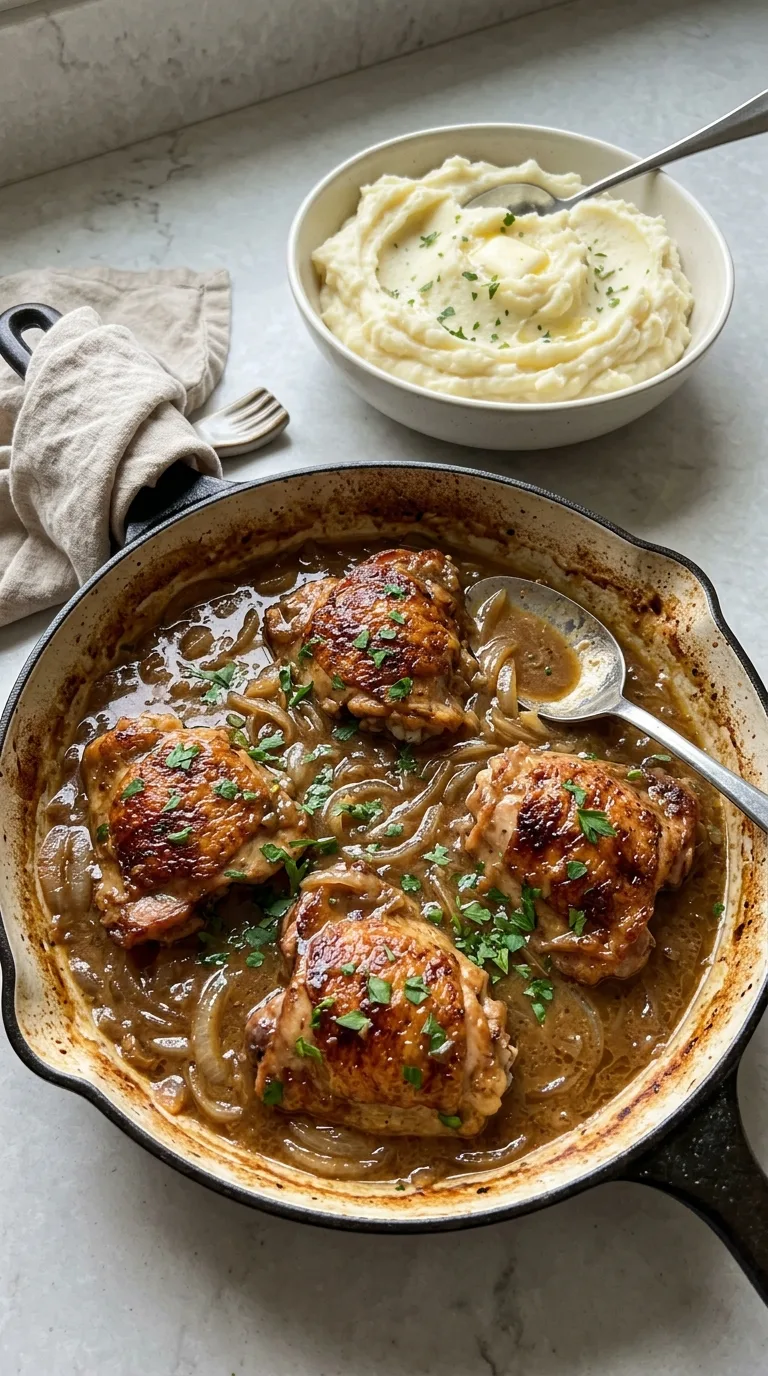
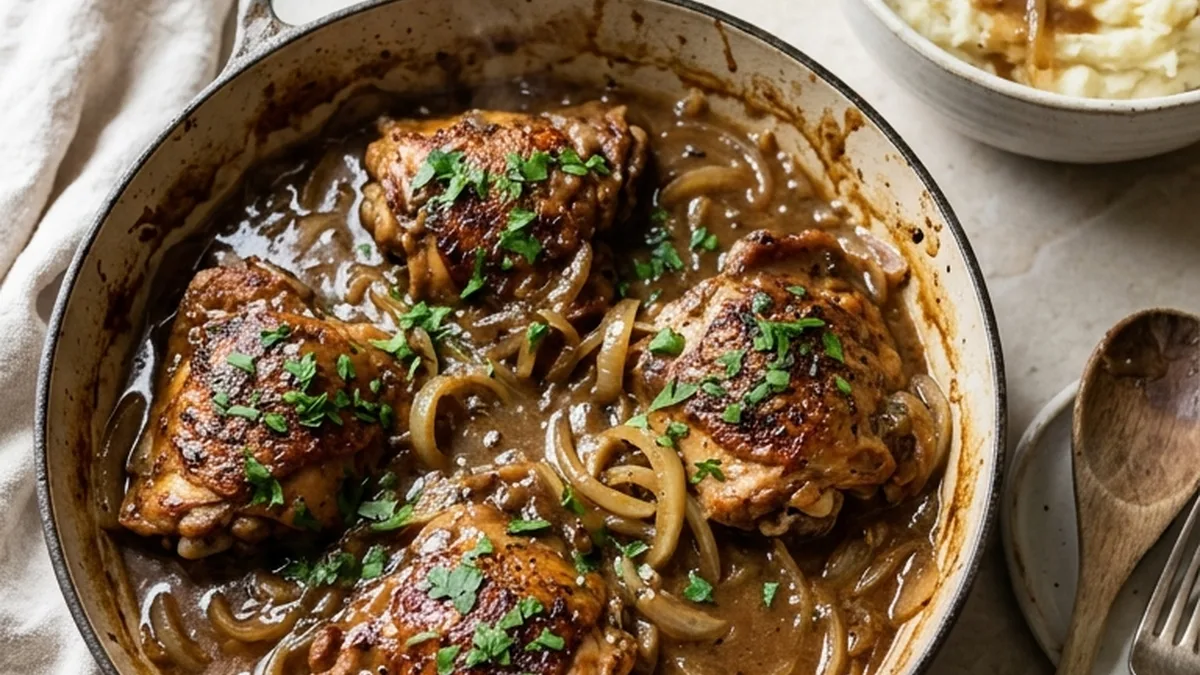
- Rest and serve. Return the chicken to the gravy if it was removed and let the skillet stand off the heat for 5 minutes. Spoon the onion gravy generously over each thigh and garnish with chopped parsley, if using.
What Makes This Recipe Work
- Bone-in chicken thighs tolerate the longer covered simmer well, staying moist while adding savory flavor to the gravy.
- Browning the chicken first creates a flavorful layer of browned bits in the skillet that becomes the foundation of the homemade gravy.
- Cooking the onions in the chicken drippings softens and lightly caramelizes them while carrying the chicken's seasoning into the sauce.
- Flour cooks directly in the skillet before the liquid is added, which removes its raw taste and gives the gravy a smooth, spoon-coating consistency.
- A combination of chicken broth and whole milk keeps the gravy savory and creamy without making it excessively heavy.
Make-Ahead and Storage Notes
- Refrigerate leftover chicken and gravy within 2 hours of cooking. Store them together in a covered airtight container in the refrigerator for up to 3 to 4 days. Keeping the chicken covered with gravy helps protect it from drying out.
- For freezing, cool the chicken and gravy completely, transfer to a freezer-safe container, and freeze for up to 2 months for best quality. Dairy-thickened gravy can separate slightly after freezing, so thaw it overnight in the refrigerator and whisk the gravy gently while reheating.
- Reheat the chicken and gravy together in a covered skillet over low heat, adding a splash of chicken broth if the sauce has become too thick. Heat leftovers thoroughly to 165°F (74°C).
- For make-ahead preparation, the complete dish can be cooked a day in advance, refrigerated promptly, and reheated gently before serving. The gravy may thicken substantially when chilled, so expect to loosen it with a little broth.
Recipe Questions
Can I make this recipe ahead of time?
Yes. Cook the chicken and gravy completely, cool promptly, and refrigerate them together in an airtight container. Reheat gently with a splash of chicken broth as needed to restore the gravy's consistency.
Can I use boneless chicken thighs?
Yes, but boneless thighs generally cook faster. Brown them as directed, then begin checking their internal temperature earlier during the covered simmer. Cook to at least 165°F (74°C).
Why is my gravy too thick?
The flour may have absorbed more liquid than expected, or the gravy may have reduced too long. Whisk in warm chicken broth a few tablespoons at a time until it reaches a smooth, spoon-coating consistency.
How can I fix gravy that is too thin?
Remove the fully cooked chicken and gently simmer the gravy uncovered for several minutes, stirring frequently. Reduction concentrates the gravy and thickens it without requiring additional flour.
What should I serve with smothered chicken?
Mashed potatoes, rice, buttered noodles, or biscuits work especially well because they can soak up the homemade gravy. Green beans, collard greens, or steamed vegetables provide a lighter contrast.
Smothered Chicken with Homemade Gravy
Ingredients
Method
- Season the chicken: Pat the chicken thighs thoroughly dry. Season them with 1 teaspoon of the kosher salt, ½ teaspoon of the black pepper, garlic powder, onion powder, and smoked paprika. Rub the seasonings evenly over both sides.
- Lightly dredge the chicken: Place ¼ cup (30 g) of the flour in a shallow bowl. Coat each chicken thigh lightly with flour, then shake off the excess. Reserve the remaining ¼ cup (30 g) flour for the gravy.
- Brown the chicken: Heat the vegetable oil in a 12-inch (30 cm) heavy skillet over medium heat. When the oil is shimmering, add the chicken skin-side down without crowding. Brown for about 6 to 8 minutes on the first side, then turn and cook for another 4 to 5 minutes. The chicken should be deeply golden but does not need to be cooked through. Transfer it to a plate.
- Soften the onion: Carefully pour off excess fat, leaving about 2 tablespoons in the skillet along with the browned bits. Add the sliced onion and cook over medium-low heat for 7 to 9 minutes, stirring occasionally, until soft and lightly golden. Add the minced garlic and cook for about 30 seconds, just until fragrant.
- Make the gravy base: Sprinkle the reserved ¼ cup (30 g) flour over the onions. Cook for 1 to 2 minutes, stirring constantly. The flour should completely coat the onions and lose its raw, powdery appearance without becoming dark brown.
- Add the liquids gradually: Slowly whisk in the chicken broth, scraping the bottom of the skillet to loosen the browned bits. Whisk in the whole milk, dried thyme, Worcestershire sauce, remaining ½ teaspoon salt, and remaining ½ teaspoon black pepper. Bring the mixture to a gentle simmer. It should begin to thicken but remain loose enough to simmer around the chicken.
- Smother and simmer: Return the chicken thighs and any accumulated juices to the skillet, skin-side up. Spoon some gravy and onions around the chicken. Reduce the heat to low, cover, and simmer gently for 25 to 30 minutes. Avoid a hard boil, which can make the chicken tougher and cause the milk-based gravy to separate.
- Check for doneness: Insert an instant-read thermometer into the thickest part of a thigh without touching the bone. The chicken must reach at least 165°F (74°C) for food safety; thighs will often be especially tender when cooked somewhat beyond that minimum. If needed, cover and continue cooking, checking again after a few minutes.
- Adjust the gravy: If the gravy is thinner than desired, transfer the cooked chicken to a clean plate and simmer the gravy uncovered for 2 to 5 minutes. If it becomes too thick, whisk in a small splash of chicken broth or milk. Taste and adjust the seasoning as needed.
- Rest and serve: Return the chicken to the gravy if it was removed and let the skillet stand off the heat for 5 minutes. Spoon the onion gravy generously over each thigh and garnish with chopped parsley, if using.