# Buttermilk Pancakes
## 2. Introduction
Buttermilk Pancakes are tender, lightly tangy pancakes with golden edges and a soft, fluffy center. Buttermilk works with baking soda and baking powder to give the batter lift while adding a subtle richness that makes these pancakes especially suited to a classic breakfast.
The batter comes together in one bowl with a separate quick whisk of the wet ingredients, followed by a short rest before cooking. Use medium-low heat and a lightly buttered skillet so the pancakes brown evenly while the centers cook through.
## 3. Recipe Card Details
Prep Time: 10 minutes
Cook Time: 15 minutes
Additional Time: 5 minutes
Total Time: 30 minutes
Yield: 12 pancakes
Servings: 4
Category: Breakfast & Brunch
Cuisine: American
Cooking Method: Stovetop
Difficulty: Easy
Calories Per Serving: Not calculated
## 4. Why This Recipe Works
* **Buttermilk adds tenderness and tang.** Its acidity helps create a soft texture and works with the baking soda for additional lift.
* **Using both baking powder and baking soda provides balanced rise.** The two leaveners help produce pancakes that are light without relying on whipped egg whites.
* **A short batter rest hydrates the flour.** This gives the batter a more cohesive consistency and helps prevent excessive mixing.
* **Medium-low heat allows even cooking.** The pancakes have time to rise and cook in the center before the exterior becomes overly brown.
* **Melted butter adds richness.** It contributes flavor and helps keep the finished pancakes tender.
## 5. Equipment Needed
* Large mixing bowl
* Medium mixing bowl
* Whisk
* Rubber spatula
* 10- to 12-inch nonstick skillet or griddle
* 1/4-cup measuring cup or scoop
* Wide spatula
## 6. Ingredients List
### Pancake Batter
* 2 cups (240 g) all-purpose flour
* 2 tablespoons (25 g) granulated sugar
* 2 teaspoons (8 g) baking powder
* 1/2 teaspoon (3 g) baking soda
* 1/2 teaspoon (3 g) fine salt
* 2 large eggs (about 100 g without shells), lightly beaten
* 1 3/4 cups (420 ml) buttermilk
* 4 tablespoons (57 g) unsalted butter, melted and slightly cooled, plus more for cooking
* 1 teaspoon (5 ml) vanilla extract
### For Serving
* Butter, optional
* Maple syrup, optional
* Fresh berries, optional
## 7. Ingredient Notes and Substitutions
* **Buttermilk:** The key liquid in the recipe, adding tang and helping the baking soda produce lift. For a substitute, combine 1 3/4 cups (420 ml) whole milk with 1 tablespoon (15 ml) lemon juice or white vinegar and let it stand for 5 minutes. The pancakes will have a milder flavor.
* **All-purpose flour:** Gives the pancakes enough structure while keeping them tender. Cake flour can be substituted, although the pancakes may be somewhat more delicate.
* **Baking powder and baking soda:** These provide the rise and help with browning. Keep the amounts as written for the intended texture and flavor.
* **Unsalted butter:** Adds richness and a soft texture. Melted refined coconut oil can replace it, although it will slightly change the flavor.
* **Eggs:** Provide structure and help the pancakes hold their shape. There is no simple substitute that produces exactly the same texture.
## 8. Step-by-Step Instructions
1. **Mix the dry ingredients.**
Whisk the flour, sugar, baking powder, baking soda, and salt together in a large bowl until evenly distributed.
2. **Whisk the wet ingredients.**
In a separate bowl, whisk the eggs, buttermilk, melted butter, and vanilla until combined. Let the melted butter cool slightly before adding it so it does not partially cook the eggs.
3. **Combine the batter.**
Pour the wet ingredients into the dry ingredients. Fold gently with a rubber spatula until no large streaks of dry flour remain. The batter should be thick and slightly lumpy. Do not mix until completely smooth.
4. **Rest the batter.**
Let the batter rest for 5 minutes. It should remain thick but easily scoopable. If it becomes unusually stiff, stir in 1 tablespoon (15 ml) additional buttermilk at a time until it becomes thick and pourable.
5. **Preheat the skillet.**
Heat a 10- to 12-inch nonstick skillet or griddle over medium-low heat. Lightly coat the surface with butter. The skillet is ready when a small drop of batter gently sizzles without immediately turning dark.
6. **Portion the pancakes.**
Scoop approximately 1/4 cup (60 ml) batter onto the skillet for each pancake. Leave enough room between pancakes to flip them comfortably.
7. **Cook the first side.**
Cook for 2 to 3 minutes, until bubbles appear across the surface and the edges look set. The underside should be golden brown. If it becomes dark before the top is ready, lower the heat.
8. **Flip and cook.**
Flip each pancake with a wide spatula and cook for another 1 to 2 minutes. The second side should be golden brown and the center should feel springy when gently pressed.
9. **Continue cooking.**
Transfer the finished pancakes to a plate and repeat with the remaining batter. Lightly butter the skillet between batches if needed.
10. **Serve.**
Serve the pancakes warm with optional butter, maple syrup, or fresh berries.
## 9. Tips for Success
* **Avoid overmixing.** A few small lumps are normal and preferable to a heavily worked batter.
* **Use fresh leaveners.** Baking powder or baking soda that has lost its strength can result in flatter pancakes.
* **Control the heat.** Medium-low is more reliable than high heat because thick pancakes need time to cook through.
* **Do not press down after flipping.** This can squeeze out some of the air that gives the pancakes their fluffy texture.
* **Cook similar-sized pancakes together.** Consistent portions make it easier to judge cooking time and avoid undercooked centers.
## 10. Storage, Freezing, and Make-Ahead Instructions
Cool leftover pancakes completely before storing them in an airtight container in the refrigerator for up to 3 days. Place parchment paper between layers if stacking them.
To freeze, arrange cooled pancakes in a single layer until firm, then transfer them to a freezer-safe bag or airtight container with parchment between layers. Freeze for up to 2 months.
Reheat refrigerated or frozen pancakes in a toaster, toaster oven, or microwave until heated through. For the best texture, avoid storing pancakes uncovered, as they can dry out quickly.
For make-ahead preparation, combine the dry ingredients the night before and store them covered at room temperature. Mix with the wet ingredients shortly before cooking rather than holding the finished batter overnight.
## 11. FAQ
### Can I make these Buttermilk Pancakes without buttermilk?
Yes. Combine 1 3/4 cups (420 ml) whole milk with 1 tablespoon (15 ml) lemon juice or white vinegar and let it stand for 5 minutes before using. The pancakes will have less tang and may be slightly different in texture.
### Why are my Buttermilk Pancakes flat?
Old baking powder or baking soda, overmixing, or a skillet that is not properly heated can contribute to flat pancakes. Mix the batter gently and cook it soon after the short rest.
### How do I know when to flip the pancakes?
Flip when bubbles have appeared across the surface, the edges look set, and the underside is golden brown. If the underside is browning too quickly, reduce the heat.
### Can I freeze Buttermilk Pancakes?
Yes. Cool them completely, separate them with parchment paper, and store them in an airtight freezer-safe bag or container for up to 2 months.
### Can I use a cast-iron skillet?
Yes, but cast iron holds heat strongly. Preheat it gradually and use medium-low heat, adjusting the burner if the pancakes brown before the centers are cooked.
## 12. SEO and Pinterest Metadata
SEO Title: Buttermilk Pancakes with a Fluffy, Tender Center
Meta Description: Make tender Buttermilk Pancakes with golden edges and a fluffy center using a simple batter with buttermilk, butter, and two leaveners.
Suggested URL Slug: buttermilk-pancakes
Primary Keyword: buttermilk pancakes
Secondary Keywords: fluffy buttermilk pancakes, homemade buttermilk pancakes, easy pancake recipe, fluffy pancakes, American breakfast pancakes, pancakes from scratch
Pinterest Title: Buttermilk Pancakes with a Fluffy, Tender Center
Pinterest Description: These Buttermilk Pancakes have golden edges, tender centers, and a lightly tangy flavor. The easy batter uses buttermilk, butter, baking powder, and baking soda for a classic stovetop breakfast that can also be frozen for later.
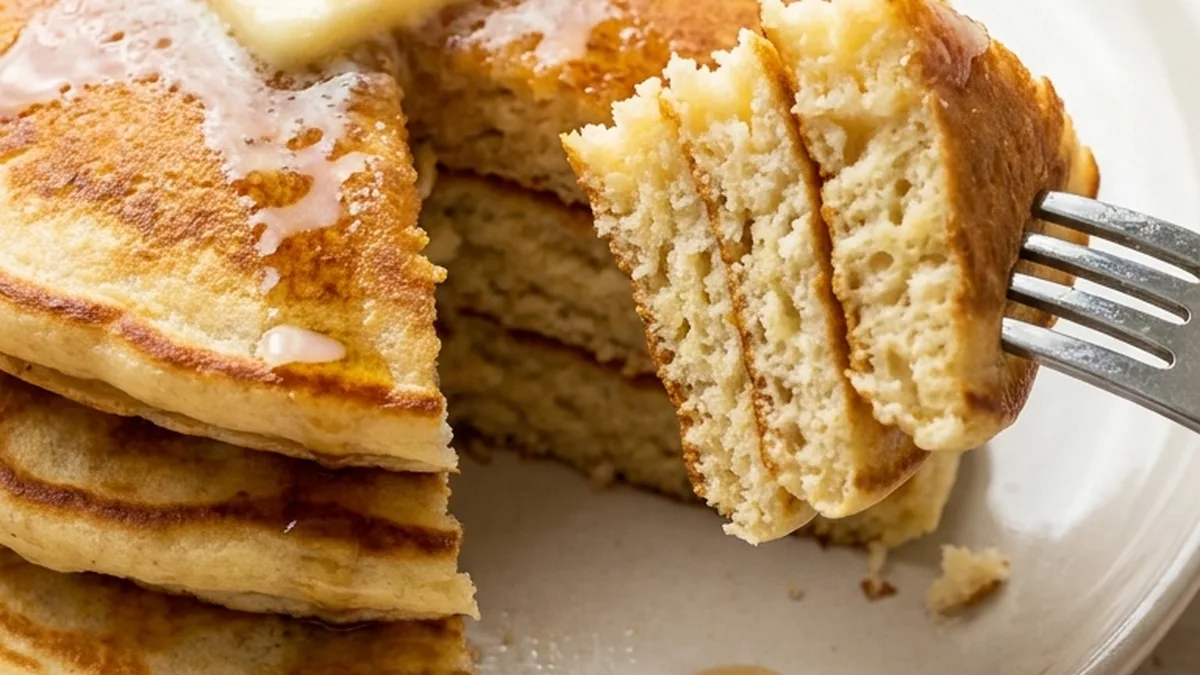
Image Alt Text: Stack of golden buttermilk pancakes topped with butter and maple syrup on a plate
Recipe Category: Breakfast & Brunch
Recipe Cuisine: American
Cooking Method: Stovetop
Ingredients
Method
- Whisk the flour, sugar, baking powder, baking soda, and salt together in a large bowl until evenly distributed.
- In a separate bowl, whisk the eggs, buttermilk, melted butter, and vanilla until combined. Let the melted butter cool slightly before adding it so it does not partially cook the eggs.
- Pour the wet ingredients into the dry ingredients: Fold gently with a rubber spatula until no large streaks of dry flour remain. The batter should be thick and slightly lumpy. Do not mix until completely smooth.
- Let the batter rest for 5 minutes. It should remain thick but easily scoopable. If it becomes unusually stiff, stir in 1 tablespoon (15 ml) additional buttermilk at a time until it becomes thick and pourable.
- Heat a 10- to 12-inch nonstick skillet or griddle over medium-low heat. Lightly coat the surface with butter. The skillet is ready when a small drop of batter gently sizzles without immediately turning dark.
- Scoop approximately 1/4 cup (60 ml) batter onto the skillet for each pancake. Leave enough room between pancakes to flip them comfortably.
- Cook for 2 to 3 minutes, until bubbles appear across the surface and the edges look set. The underside should be golden brown. If it becomes dark before the top is ready, lower the heat.
- Flip each pancake with a wide spatula and cook for another 1 to 2 minutes. The second side should be golden brown and the center should feel springy when gently pressed.
- Transfer the finished pancakes to a plate and repeat with the remaining batter. Lightly butter the skillet between batches if needed.
- Serve the pancakes warm with optional butter, maple syrup, or fresh berries.