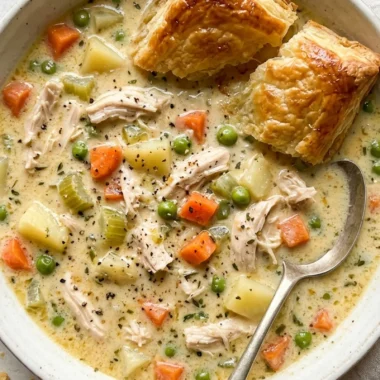
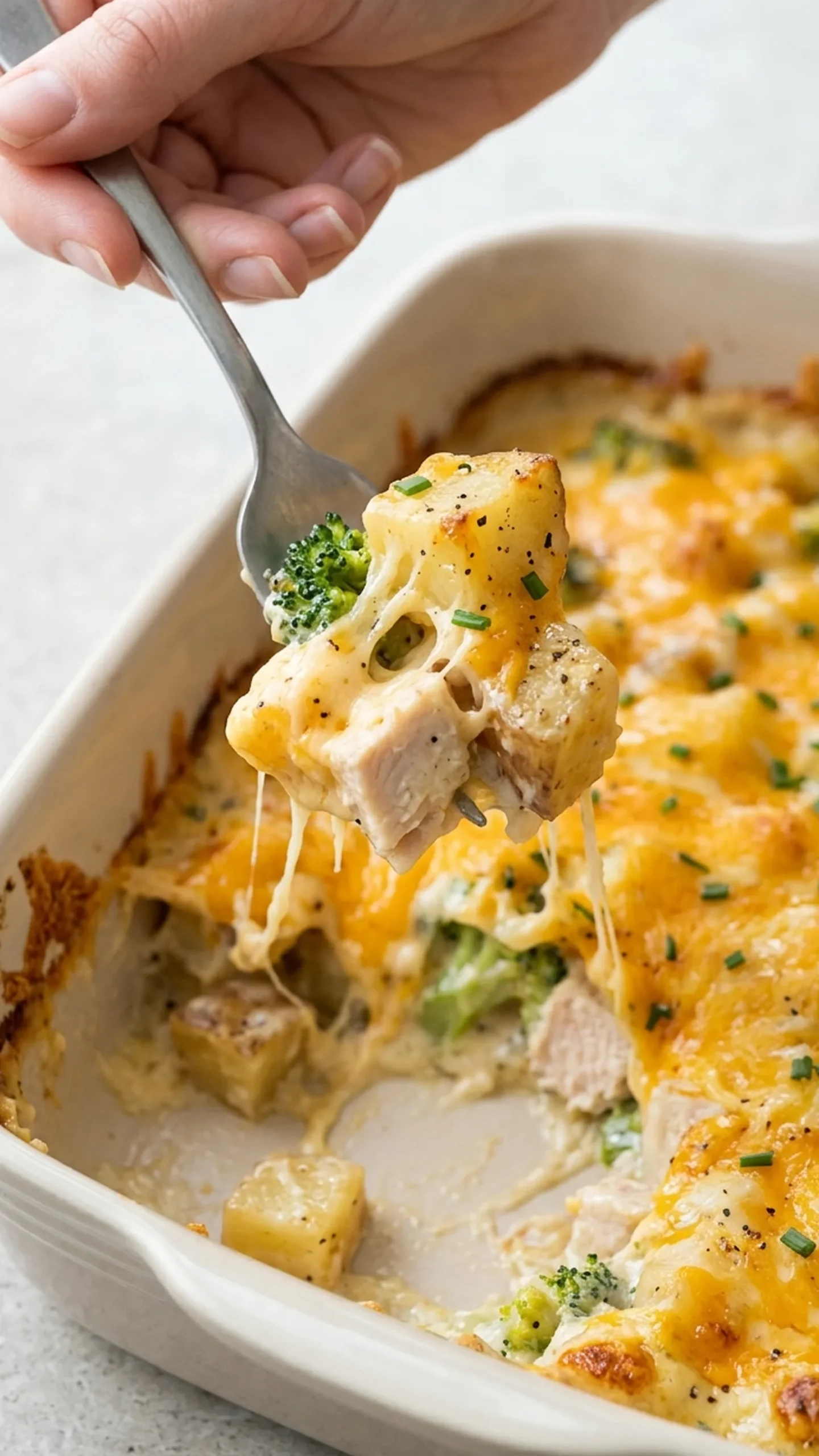
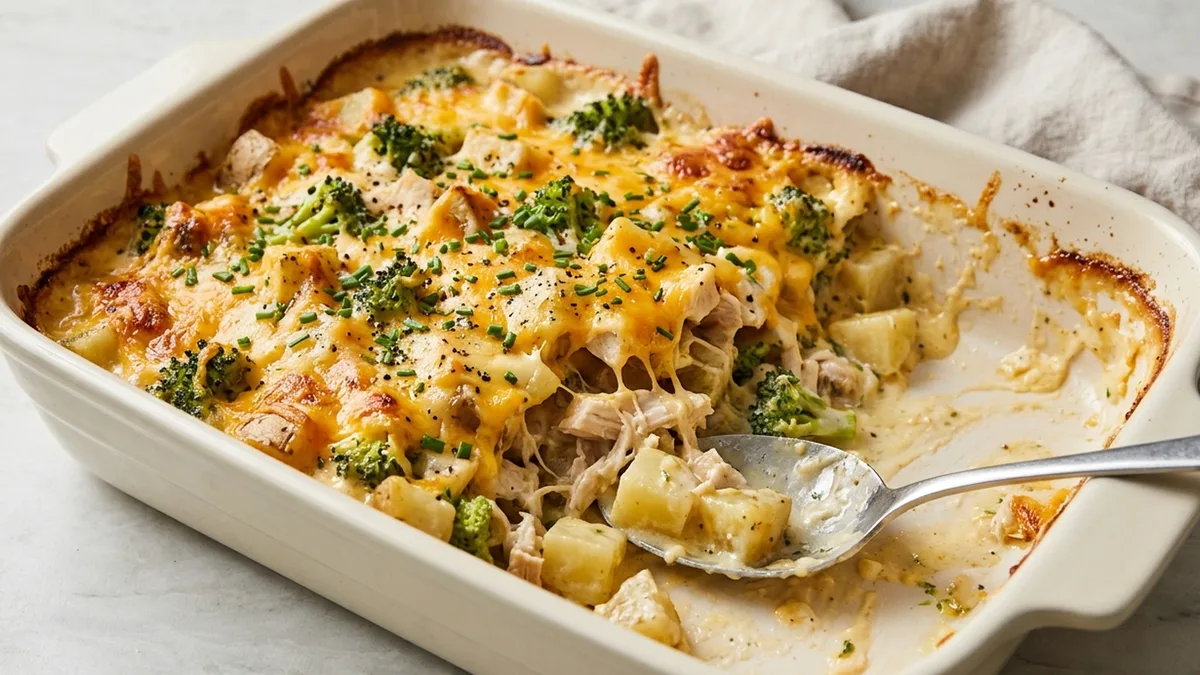
Cheesy Chicken & Broccoli Baked Potato Casserole brings together tender roasted potatoes, juicy chicken, broccoli florets, and a rich, creamy cheddar cheese sauce in one satisfying oven-baked dish. The potatoes develop lightly golden edges, while the broccoli adds freshness and the melted cheese creates a comforting, savory finish.
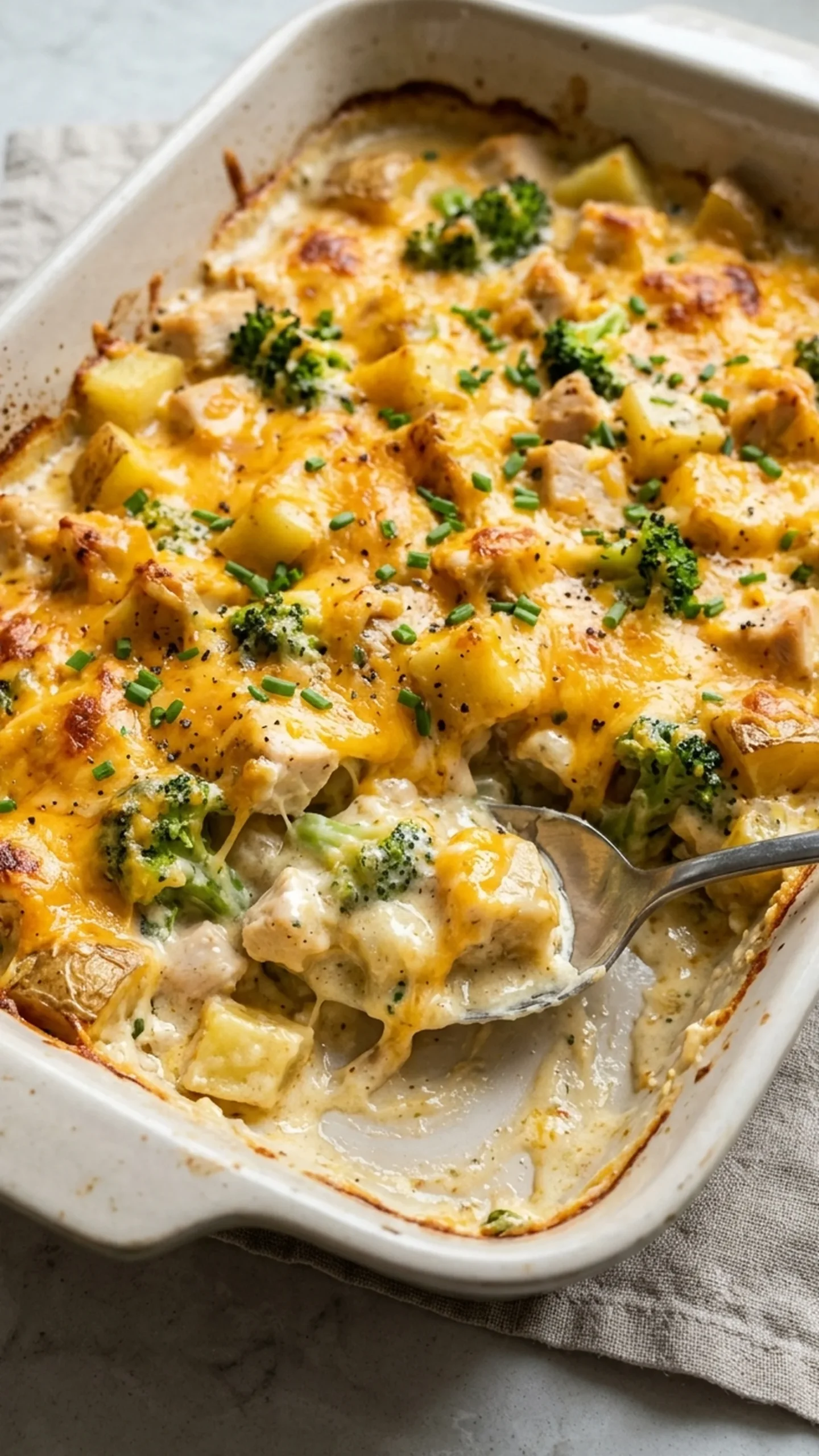
This hearty casserole is made with simple ingredients and prepared entirely in a standard home kitchen. Roasting the potatoes before assembling the casserole helps them develop flavor and prevents them from becoming overly soft in the sauce. It's a practical choice for family dinners, meal preparation, or a comforting weeknight meal, and leftovers reheat well.
Why This Recipe Works
- Roasting the potatoes first improves their texture. The potatoes develop lightly crisp edges and a tender interior before being coated in the creamy cheese sauce.
- Pre-cooked chicken keeps the final baking stage manageable. Using fully cooked chicken allows the casserole to heat through without relying on a long baking time that could overcook the broccoli.
- Broccoli balances the richness. Its mild, earthy flavor and slightly firm texture complement the cheddar sauce and tender potatoes.
- A simple homemade cheese sauce coats the ingredients evenly. Butter, flour, milk, and cheddar create a smooth sauce that binds the casserole without making it watery.
- A final layer of cheese creates an appealing finish. The cheddar melts over the surface and develops lightly golden spots as the casserole bakes.
Equipment Needed
- 9 x 13-inch (23 x 33 cm) baking dish, approximately 3-quart capacity
- Large rimmed baking sheet, approximately 13 x 18 inches (33 x 46 cm)
- Large mixing bowl
- Medium saucepan, approximately 2-quart capacity
- Whisk
- Heat-resistant spatula or large mixing spoon
- Sharp knife and cutting board
- Measuring cups and spoons
- Instant-read food thermometer
Ingredients List
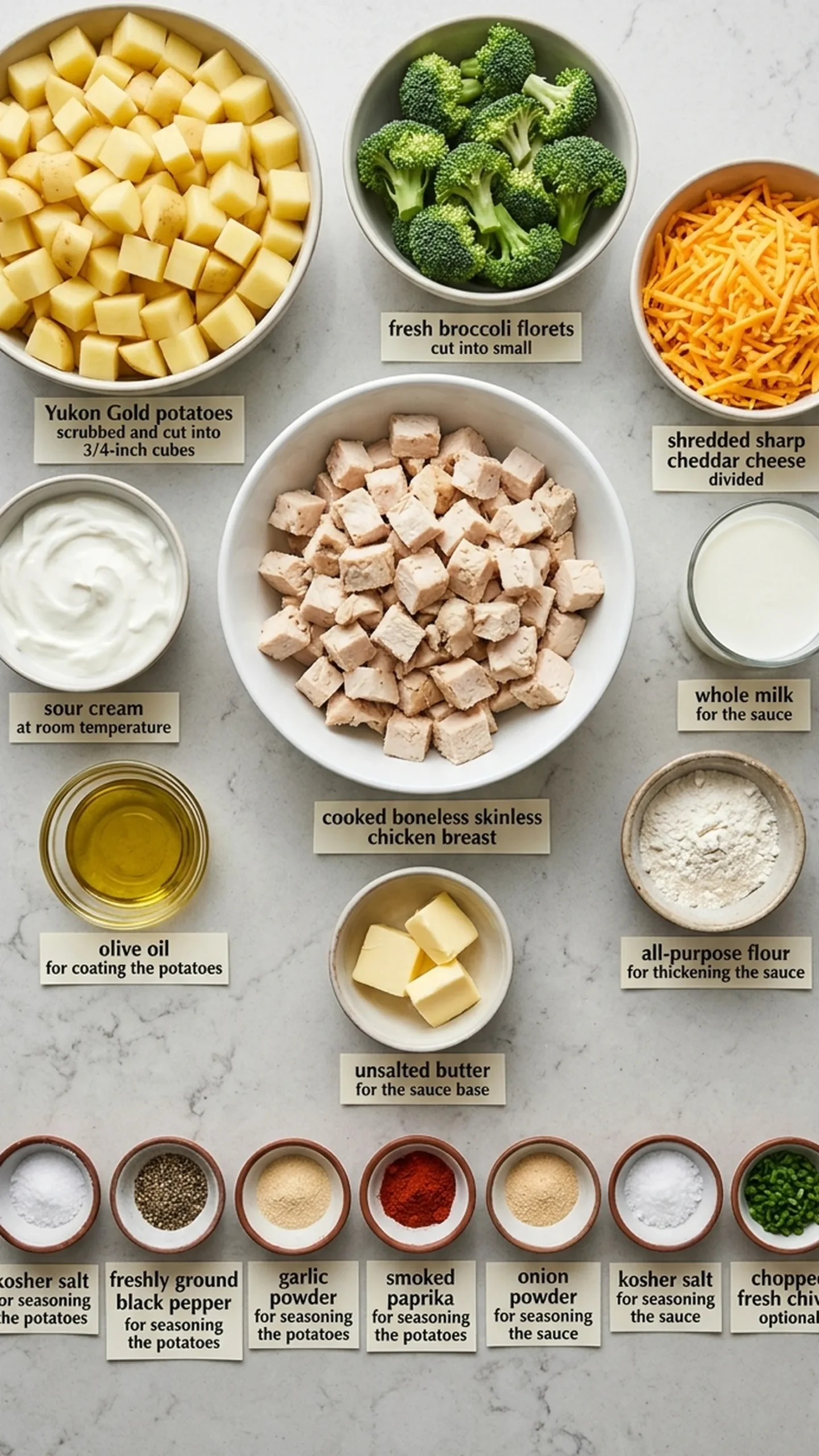
For the Roasted Potatoes
- 2 pounds (900 g) Yukon Gold potatoes, scrubbed and cut into 3/4-inch (2 cm) cubes
- 2 tablespoons (30 ml) olive oil, for coating the potatoes
- 1/2 teaspoon kosher salt, for seasoning the potatoes
- 1/2 teaspoon freshly ground black pepper, for seasoning the potatoes
- 1 teaspoon (3 g) garlic powder, for seasoning the potatoes
- 1 teaspoon (2 g) smoked paprika, for seasoning the potatoes
For the Chicken and Broccoli
- 3 cups (420 g) cooked boneless, skinless chicken breast, diced or shredded into bite-sized pieces
- 3 cups (270 g) fresh broccoli florets, cut into small, even pieces
For the Creamy Cheddar Cheese Sauce
- 3 tablespoons (42 g) unsalted butter, for the sauce base
- 3 tablespoons (24 g) all-purpose flour, for thickening the sauce
- 1 1/2 cups (360 ml) whole milk, for the sauce
- 1/2 cup (120 g) sour cream, at room temperature
- 1 1/2 cups (170 g) shredded sharp cheddar cheese, divided: 1 cup (113 g) for the sauce and 1/2 cup (57 g) for topping
- 1/2 teaspoon onion powder, for seasoning the sauce
- 1/4 teaspoon kosher salt, for seasoning the sauce
Optional Garnish
- 2 tablespoons (6 g) chopped fresh chives, optional, for serving
Ingredient Notes and Substitutions
- Yukon Gold Potatoes: Yukon Gold potatoes have a naturally buttery flavor and creamy interior, making them especially suitable for a baked potato casserole. They hold their shape reasonably well after roasting and mixing with sauce. Red potatoes are a good substitute and will retain a slightly firmer texture. Russet potatoes can also work, but their starchier flesh breaks apart more easily, particularly if they are overcooked before assembly.
- Cooked Chicken Breast: Cooked chicken breast provides lean protein and a mild flavor that blends naturally with cheddar and broccoli. Diced chicken gives the casserole distinct pieces, while shredded chicken distributes more evenly throughout the sauce. Cooked boneless chicken thighs can replace chicken breast in the same quantity. They offer a richer flavor and tend to remain moist during reheating. Plain rotisserie chicken is another convenient option, although its existing seasoning and salt content may affect the final flavor.
- Fresh Broccoli: Fresh broccoli adds color, texture, and a mild vegetable flavor that cuts through the richness of the cheese sauce. Frozen broccoli can be substituted, but it should be thawed, drained thoroughly, and patted dry before assembly. Frozen florets are generally softer and may release more moisture during baking.
- Sharp Cheddar Cheese: Sharp cheddar gives the sauce a pronounced savory flavor without requiring a large amount of additional seasoning. It also melts well when added gradually to a warm sauce. Medium cheddar produces a milder result. Monterey Jack is another option if a softer, creamier cheese flavor is preferred. Freshly shredded cheese generally melts more smoothly than packaged pre-shredded cheese, which may contain anti-caking ingredients.
- Sour Cream: Sour cream adds gentle tanginess and a creamy consistency to the sauce. It helps balance the richness of the cheddar and roasted potatoes. Plain full-fat Greek yogurt can replace sour cream in the same quantity. The sauce may taste slightly tangier and become a little less rich. Either ingredient should be stirred into the sauce over low heat to reduce the risk of separation.
Step-by-Step Instructions
Step 1: Prepare and Season the Potatoes
Preheat the oven to 425°F (220°C).
Scrub the Yukon Gold potatoes and cut them into evenly sized 3/4-inch (2 cm) cubes. Place them in a large mixing bowl.
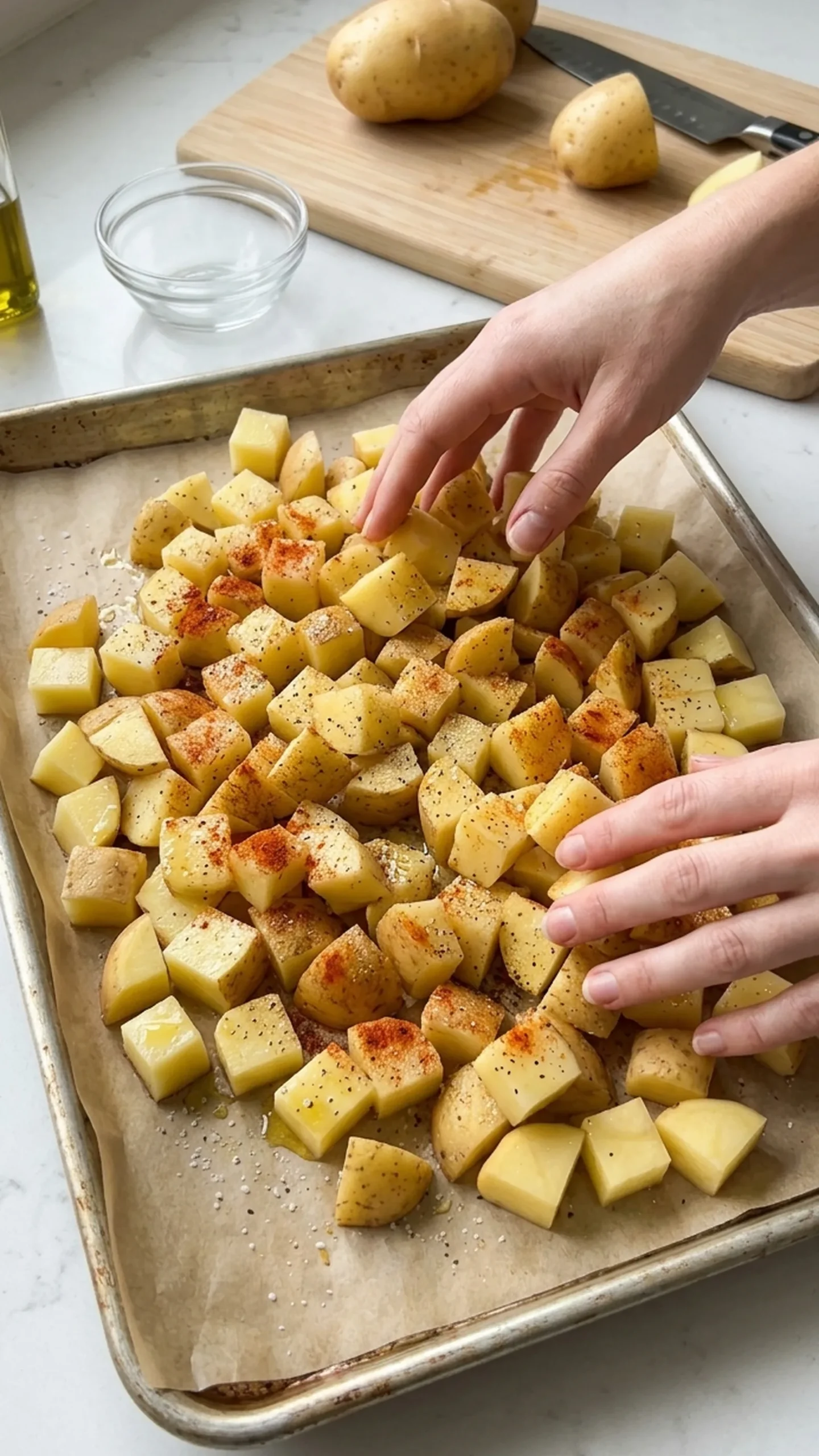
Add the olive oil, kosher salt, black pepper, garlic powder, and smoked paprika.
Toss thoroughly until the potato pieces are evenly coated with oil and seasoning. The surfaces should look lightly glossy, with no large patches of dry seasoning.
Step 2: Roast the Potatoes
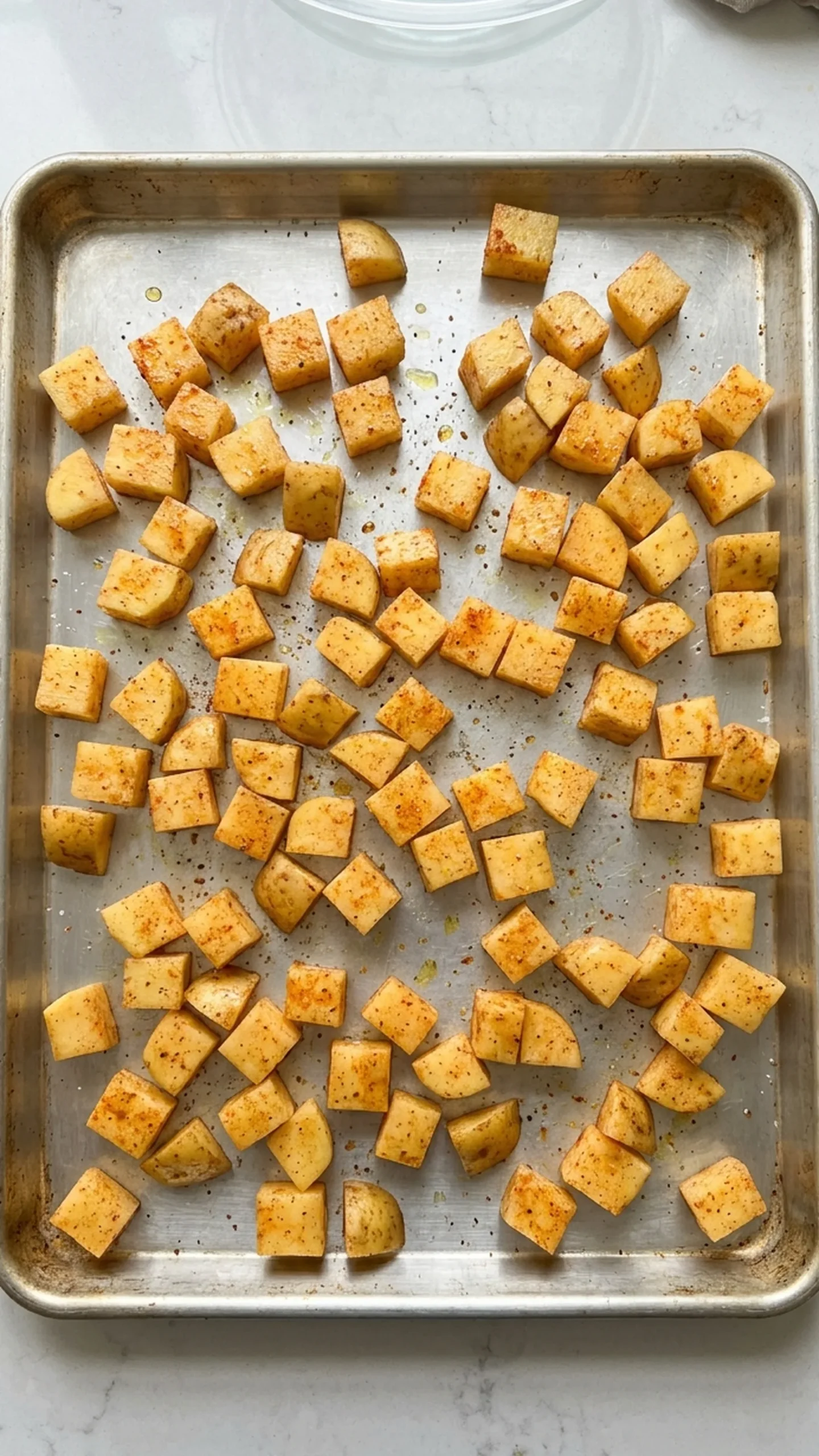
Spread the seasoned potatoes across a large rimmed baking sheet in a single layer.
Leave a little space between the pieces so hot air can circulate and moisture can escape.
Roast at 425°F (220°C) for 25 minutes, turning the potatoes about halfway through.
The potatoes should be lightly golden around the edges and nearly tender when pierced with a fork. They will finish cooking during the final casserole bake.
If the potatoes still feel very firm, continue roasting briefly until nearly tender.
Step 3: Prepare the Chicken and Broccoli
While the potatoes roast, cut the cooked chicken into bite-sized pieces if it has not already been diced or shredded.
Cut the fresh broccoli into small, relatively uniform florets, trimming away tough stem ends.
Place the broccoli in a microwave-safe bowl with a microwave-safe cover and microwave for 2 minutes, just until bright green and beginning to soften.
Drain any accumulated moisture thoroughly.
The broccoli should remain slightly firm because it will continue cooking in the casserole.
Keep the prepared chicken and broccoli ready for assembly.
Step 4: Make the Butter and Flour Base
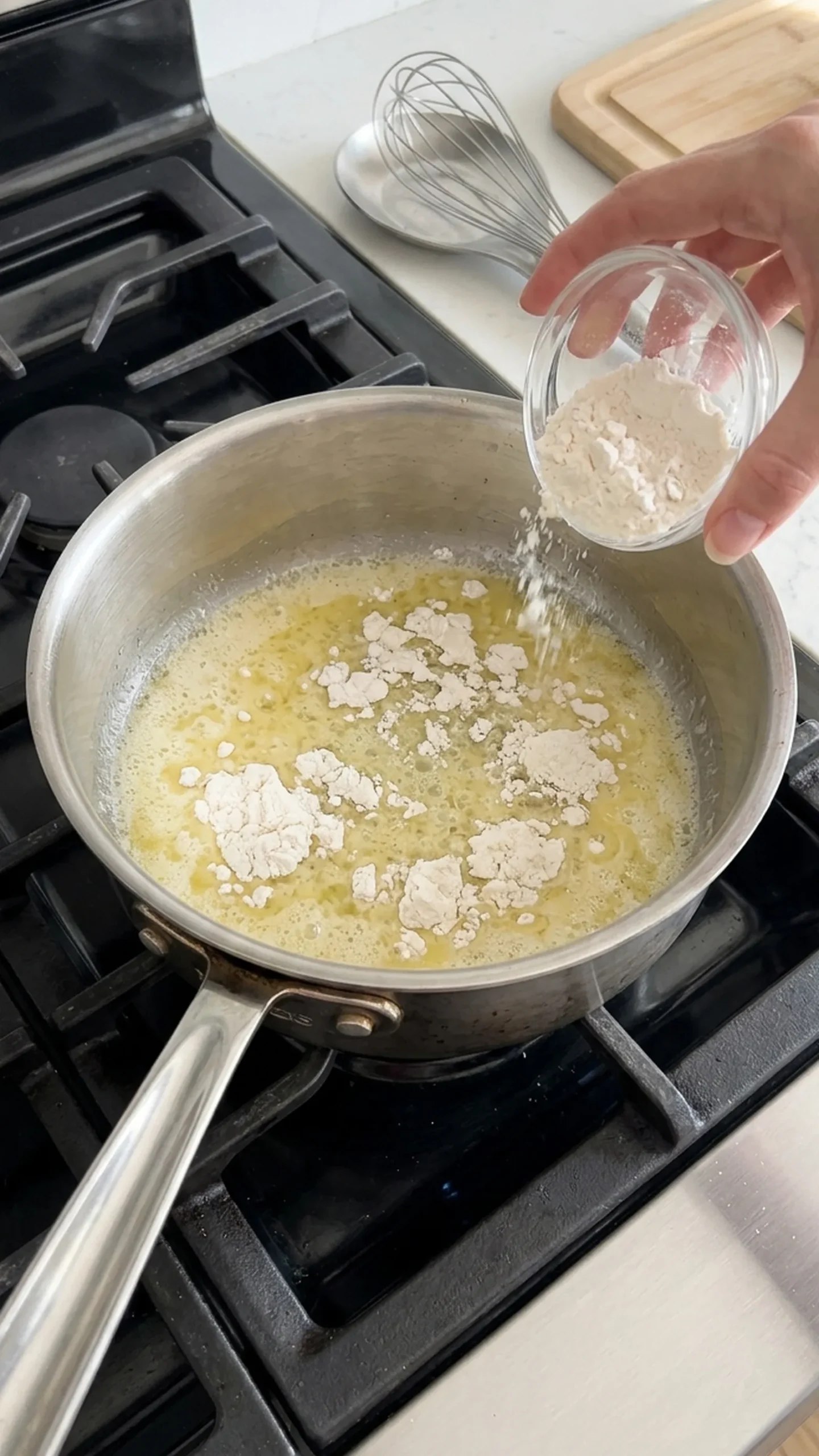
Place a medium saucepan over medium heat and add the unsalted butter.
Once the butter has melted, sprinkle in the all-purpose flour.
Whisk continuously for 1 minute, until the mixture forms a smooth, lightly bubbling paste.
The mixture should remain pale rather than turning dark brown. This flour-and-butter base will thicken the milk into a creamy sauce.
Step 5: Add the Milk and Thicken the Sauce
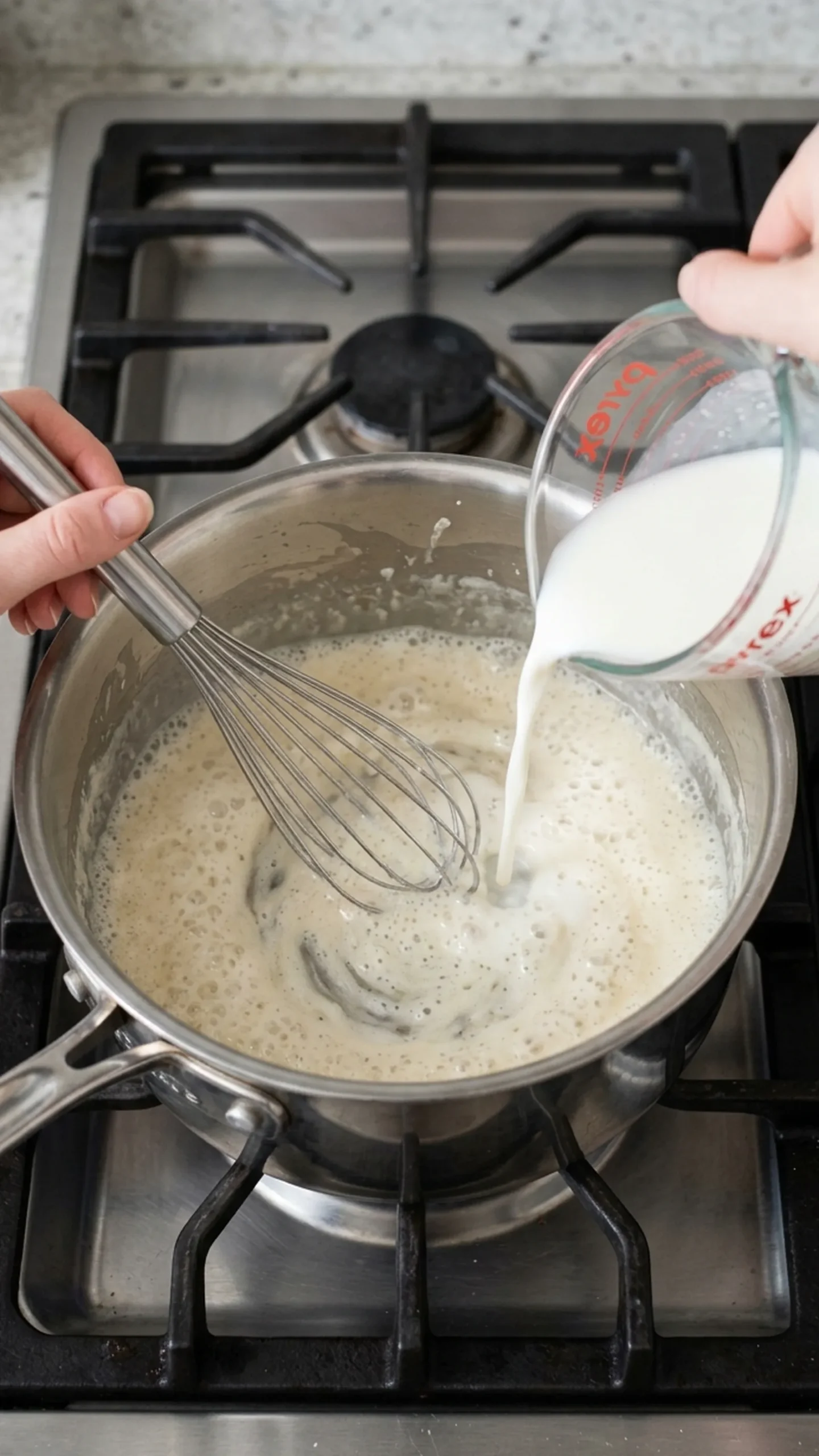
Gradually pour the whole milk into the saucepan, whisking constantly to prevent lumps.
Continue cooking over medium heat for 3 to 4 minutes, stirring frequently.
The sauce should become smooth and thick enough to lightly coat the back of a spoon.
If small lumps appear, whisk vigorously until the mixture becomes uniform.
Reduce the heat to low once the sauce has thickened.
Step 6: Finish the Cheddar Cheese Sauce
Add the sour cream, onion powder, and kosher salt to the warm sauce.
Stir until evenly combined.
Gradually add the 1 cup (113 g) of shredded sharp cheddar reserved for the sauce, stirring until melted before adding more.
The finished sauce should look creamy, smooth, and thick but still pourable.
Avoid allowing the sauce to boil after adding the cheese and sour cream, as excessive heat can cause the dairy to separate or become grainy.
Step 7: Combine the Casserole Ingredients
Reduce the oven temperature to 375°F (190°C).
Transfer the roasted potatoes to the large mixing bowl.
Add the cooked chicken and prepared broccoli.
Pour the cheddar cheese sauce over the ingredients and gently fold everything together using a large spoon or spatula.
Mix until the potatoes, chicken, and broccoli are evenly coated.
The mixture should look creamy, with distinct pieces of potato and broccoli still visible. Avoid vigorous stirring, which can break apart the potatoes.
Step 8: Assemble the Casserole
Transfer the mixture to a 9 x 13-inch (23 x 33 cm) baking dish.
Spread it into an even layer, making sure the chicken and broccoli are distributed throughout the casserole.
Sprinkle the remaining 1/2 cup (57 g) of shredded sharp cheddar cheese evenly over the surface.
The cheese should form a light, even topping rather than a thick, compact layer.
Step 9: Bake Until Hot and Bubbling
Place the baking dish on the center oven rack.
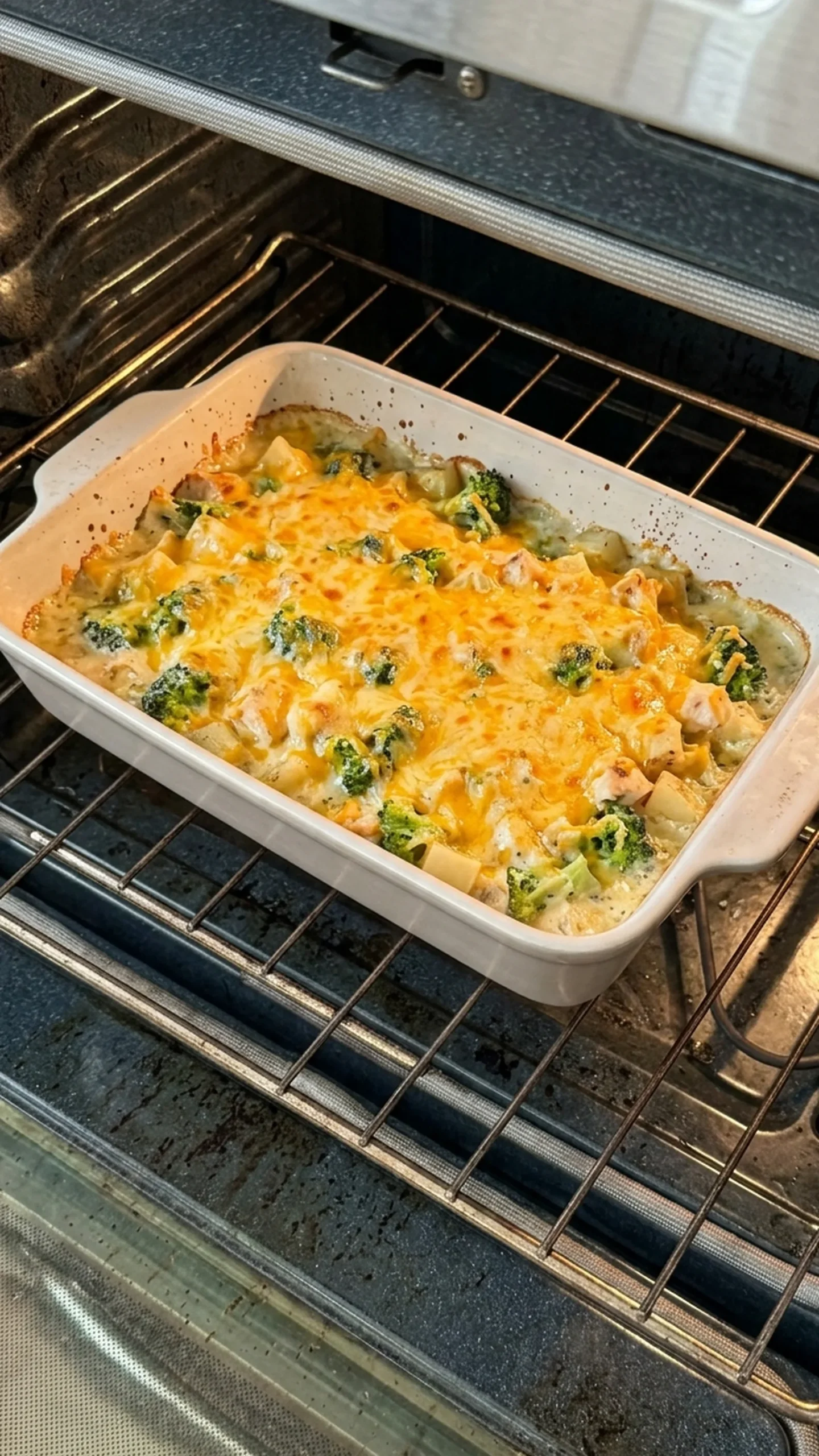
Bake uncovered at 375°F (190°C) for 20 minutes.
The cheese should be completely melted, with small bubbles appearing around the edges and a few lightly golden spots on top.
Check the center with an instant-read thermometer. Because the casserole contains previously cooked chicken, the center should reach 165°F (74°C) before serving.
If the topping begins browning too quickly before the center is hot, loosely cover the dish with foil and continue baking until the proper temperature is reached.
Step 10: Rest and Serve
Remove the casserole from the oven and let it rest for 5 minutes.
This short resting period allows the sauce to settle slightly, making the casserole easier to portion.
Sprinkle with the optional chopped fresh chives just before serving.
Spoon into individual portions while warm. The finished casserole should have tender potatoes, moist chicken, broccoli that still holds its shape, and a creamy cheese sauce throughout.
Storage, Freezing, and Make-Ahead Instructions
- Refrigerating Leftovers: Allow the casserole to cool slightly, then transfer leftovers to shallow airtight containers and refrigerate within 2 hours of cooking. Store in the refrigerator at 40°F (4°C) or below for up to 3 to 4 days. Keep the casserole covered to prevent the potatoes and chicken from drying out or absorbing other refrigerator odors. Because the dish contains chicken and dairy, it should not be stored at room temperature.
- Freezing the Casserole: Cheesy Chicken & Broccoli Baked Potato Casserole can be frozen after baking, although the texture may change slightly. Allow the casserole to cool promptly, then divide it into freezer-safe portions. Wrap or seal tightly to minimize exposure to air and prevent freezer burn. Freeze for up to 2 months for the best texture. The cheese sauce may separate slightly after thawing, and the potatoes may become softer. These changes are more noticeable after repeated freezing and reheating. For better presentation, add the optional fresh chives only after reheating.
- Thawing and Reheating: Thaw frozen casserole portions overnight in the refrigerator. To reheat in the oven, place the casserole in an oven-safe dish, cover loosely with foil, and warm at 350°F (175°C) until heated through. Remove the foil near the end if you want the cheese topping to regain a lightly golden appearance. Reheat leftovers to an internal temperature of 165°F (74°C). Individual portions can also be reheated in the microwave, covered loosely to retain moisture. Heat in intervals, stirring gently when practical, until the center reaches the safe reheating temperature. Avoid prolonged reheating, which can dry out the chicken and make the potatoes overly soft.
- Making the Casserole Ahead: For convenient meal preparation, roast the potatoes, prepare the broccoli, and cook the cheese sauce ahead of time. Cool the components promptly and refrigerate them separately in airtight containers. When ready to bake, gently warm the sauce until it is easy to stir, then combine the ingredients and assemble the casserole. Alternatively, assemble the casserole in advance, cover tightly, and refrigerate for up to 24 hours before baking. A chilled casserole will generally need additional oven time. Bake until the center reaches 165°F (74°C), rather than relying on the original baking time alone.
FAQ
Can I make Cheesy Chicken & Broccoli Baked Potato Casserole ahead of time?
Yes. Assemble the casserole up to 24 hours in advance, cover tightly, and refrigerate. When ready to cook, bake it in a preheated oven, allowing extra time because the ingredients will be cold. Check that the center reaches 165°F (74°C) before serving. Add the optional fresh chives after baking for the freshest appearance.
Can I use frozen broccoli instead of fresh broccoli?
Yes. Frozen broccoli works well, but thaw it completely and drain it thoroughly before adding it to the casserole. Excess water can dilute the cheese sauce and make the finished dish watery. Frozen broccoli is generally softer than fresh broccoli, so handle it gently during mixing.
Do I need to cook the chicken before adding it to the casserole?
Yes. This recipe is designed for fully cooked chicken. The final baking stage primarily heats the assembled casserole and melts the cheese topping. Raw chicken would require a different cooking process and could release additional moisture into the sauce. Cook chicken separately to a safe internal temperature of 165°F (74°C) before using it.
Why is my cheese sauce grainy or oily?
Cheese sauce can become grainy when it is heated too aggressively or when the cheese is added to a boiling mixture. High heat can cause the proteins to tighten and the fat to separate. Reduce the heat before adding cheddar, incorporate it gradually, and stir gently until melted. Freshly shredded cheddar can also help produce a smoother texture.
Can I freeze this casserole without ruining the texture?
Yes, although freezing can slightly change the texture of the potatoes and dairy-based sauce. For better results, freeze the casserole in tightly sealed individual portions and use within 2 months. Thaw in the refrigerator and reheat gently until the center reaches 165°F (74°C). The flavor should remain satisfying, but the sauce may be less smooth than when freshly baked.
Ingredients
Method
- Preheat the oven to 425°F (220°C). Scrub the Yukon Gold potatoes and cut them into evenly sized 3/4-inch (2 cm) cubes. Place them in a large mixing bowl. Add the olive oil, kosher salt, black pepper, garlic powder, and smoked paprika. Toss thoroughly until the potato pieces are evenly coated with oil and seasoning. The surfaces should look lightly glossy, with no large patches of dry seasoning.
- Spread the seasoned potatoes across a large rimmed baking sheet in a single layer. Leave a little space between the pieces so hot air can circulate and moisture can escape. Roast at 425°F (220°C) for 25 minutes, turning the potatoes about halfway through. The potatoes should be lightly golden around the edges and nearly tender when pierced with a fork. They will finish cooking during the final casserole bake. If the potatoes still feel very firm, continue roasting briefly until nearly tender.
- While the potatoes roast, cut the cooked chicken into bite-sized pieces if it has not already been diced or shredded. Cut the fresh broccoli into small, relatively uniform florets, trimming away tough stem ends. Place the broccoli in a microwave-safe bowl with a microwave-safe cover and microwave for 2 minutes, just until bright green and beginning to soften. Drain any accumulated moisture thoroughly. The broccoli should remain slightly firm because it will continue cooking in the casserole. Keep the prepared chicken and broccoli ready for assembly.
- Place a medium saucepan over medium heat and add the unsalted butter. Once the butter has melted, sprinkle in the all-purpose flour. Whisk continuously for 1 minute, until the mixture forms a smooth, lightly bubbling paste. The mixture should remain pale rather than turning dark brown. This flour-and-butter base will thicken the milk into a creamy sauce.
- Gradually pour the whole milk into the saucepan, whisking constantly to prevent lumps. Continue cooking over medium heat for 3 to 4 minutes, stirring frequently. The sauce should become smooth and thick enough to lightly coat the back of a spoon. If small lumps appear, whisk vigorously until the mixture becomes uniform. Reduce the heat to low once the sauce has thickened.
- Add the sour cream, onion powder, and kosher salt to the warm sauce. Stir until evenly combined. Gradually add the 1 cup (113 g) of shredded sharp cheddar reserved for the sauce, stirring until melted before adding more. The finished sauce should look creamy, smooth, and thick but still pourable. Avoid allowing the sauce to boil after adding the cheese and sour cream, as excessive heat can cause the dairy to separate or become grainy.
- Reduce the oven temperature to 375°F (190°C). Transfer the roasted potatoes to the large mixing bowl. Add the cooked chicken and prepared broccoli. Pour the cheddar cheese sauce over the ingredients and gently fold everything together using a large spoon or spatula. Mix until the potatoes, chicken, and broccoli are evenly coated. The mixture should look creamy, with distinct pieces of potato and broccoli still visible. Avoid vigorous stirring, which can break apart the potatoes.
- Transfer the mixture to a 9 x 13-inch (23 x 33 cm) baking dish. Spread it into an even layer, making sure the chicken and broccoli are distributed throughout the casserole. Sprinkle the remaining 1/2 cup (57 g) of shredded sharp cheddar cheese evenly over the surface. The cheese should form a light, even topping rather than a thick, compact layer.
- Place the baking dish on the center oven rack. Bake uncovered at 375°F (190°C) for 20 minutes. The cheese should be completely melted, with small bubbles appearing around the edges and a few lightly golden spots on top. Check the center with an instant-read thermometer. Because the casserole contains previously cooked chicken, the center should reach 165°F (74°C) before serving. If the topping begins browning too quickly before the center is hot, loosely cover the dish with foil and continue baking until the proper temperature is reached.
- Remove the casserole from the oven and let it rest for 5 minutes. This short resting period allows the sauce to settle slightly, making the casserole easier to portion. Sprinkle with the optional chopped fresh chives just before serving. Spoon into individual portions while warm. The finished casserole should have tender potatoes, moist chicken, broccoli that still holds its shape, and a creamy cheese sauce throughout.