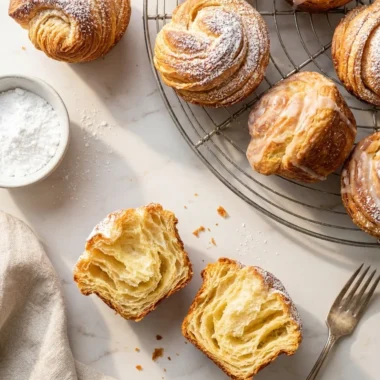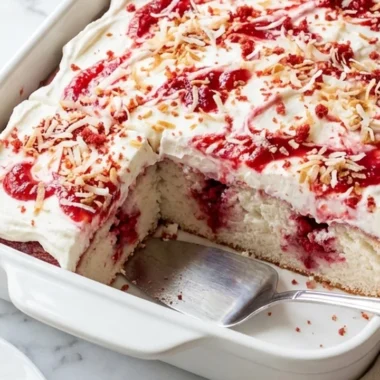
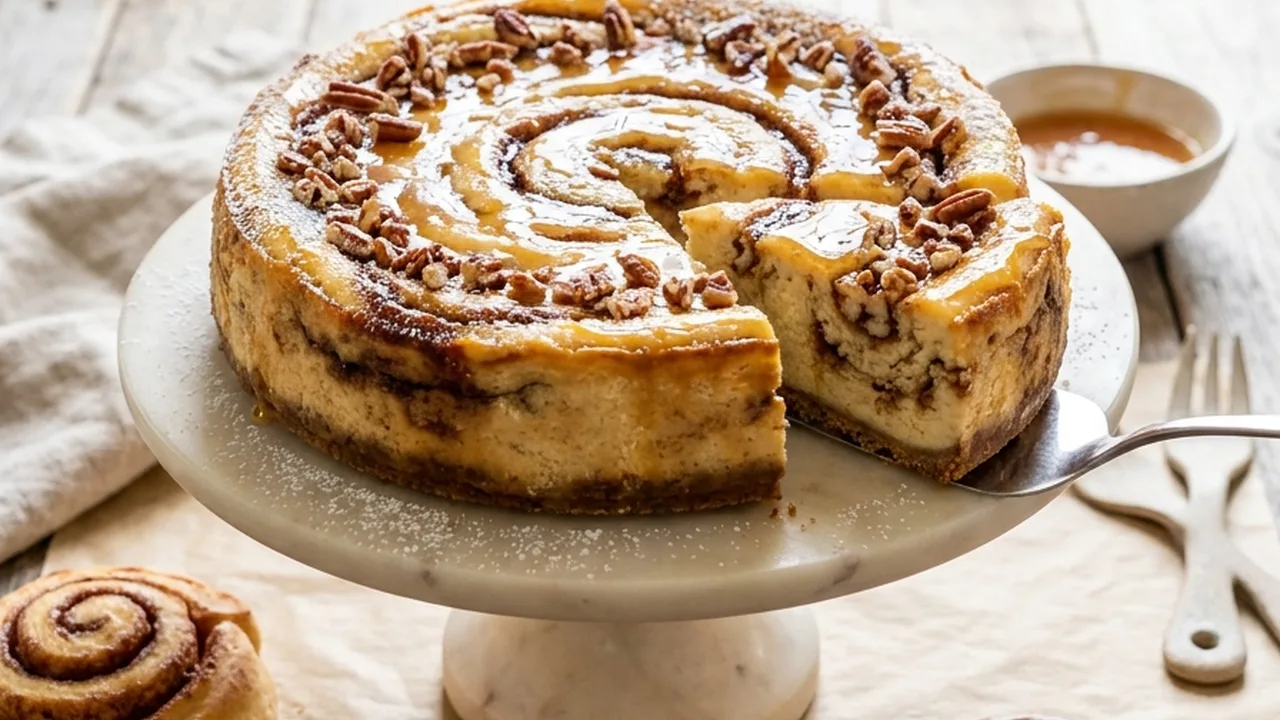
This Cinnamon Roll Honeybun Cheesecake is the kind of dessert that makes everyone stop and stare before the first slice is even served. It combines a buttery cinnamon-cookie crust, rich vanilla cheesecake, ribbons of brown sugar cinnamon filling, and a smooth cream cheese glaze that melts into every swirl.
The texture is thick, creamy, and velvety in the center, with a lightly caramelized cinnamon layer running through each bite. It tastes like a warm bakery-style honey bun, a gooey cinnamon roll, and a classic New York-style cheesecake all in one unforgettable dessert.
Why You’ll Love This Recipe
- The cinnamon-cookie crust adds a buttery, crisp base that complements the creamy filling.
- A brown sugar cinnamon swirl gives every slice the warm, gooey flavor of a honey bun.
- Sour cream keeps the cheesecake filling smooth, rich, and slightly tangy.
- Slow cooling prevents sudden temperature changes that can cause cracks.
- The cream cheese glaze adds the sweet, bakery-style finish of a classic cinnamon roll.
Equipment Needed
- 9-inch (23 cm) springform pan
- Large roasting pan
- Heavy-duty aluminum foil
- Food processor or zip-top bag and rolling pin
- Large mixing bowls
- Electric hand mixer or stand mixer
- Rubber spatula
- Whisk
- Measuring cups and spoons
- Small saucepan or microwave-safe bowl
- Offset spatula or spoon
- Thin knife or wooden skewer
- Wire cooling rack
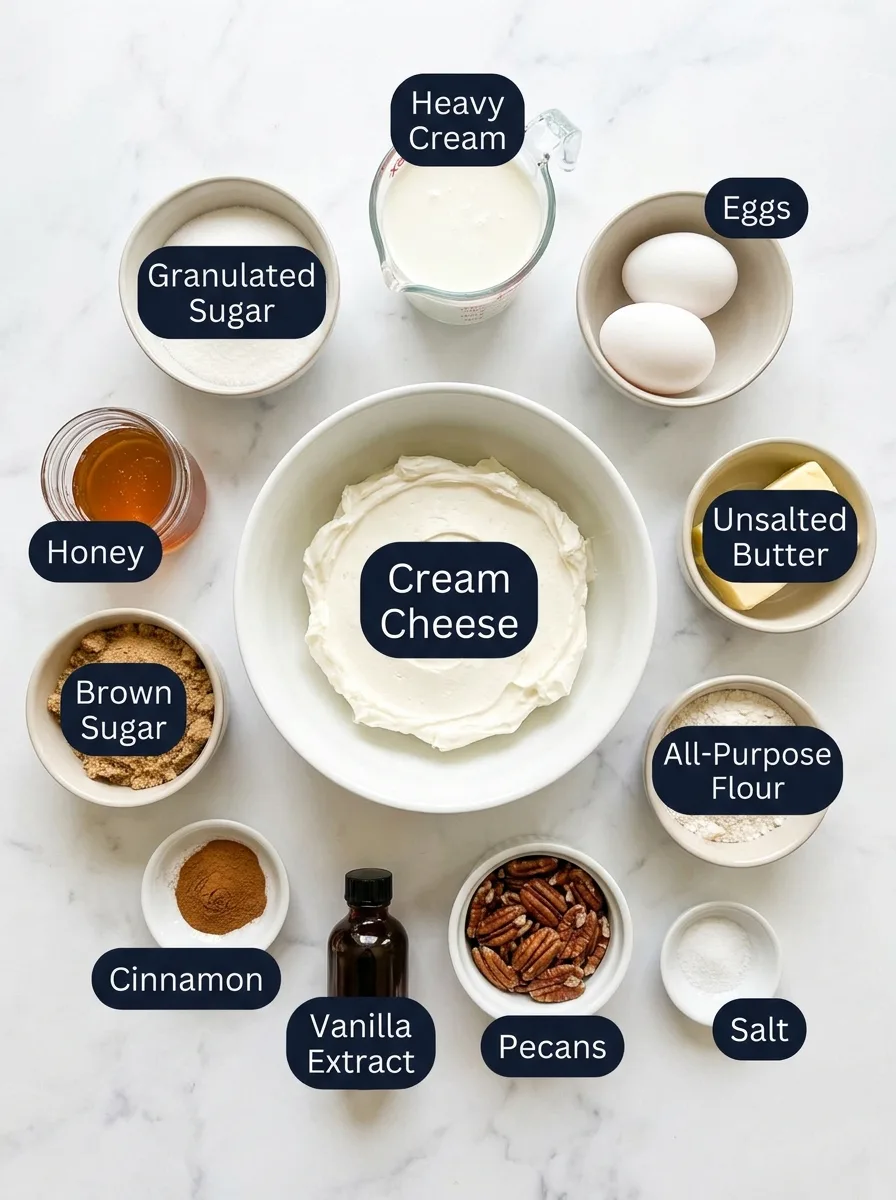
Ingredients You’ll Need
For the Cinnamon Cookie Crust:
- 2 cups cinnamon graham cracker crumbs or crushed cinnamon cookies (220 g)
- 3 tablespoons packed light brown sugar (38 g)
- 1 teaspoon ground cinnamon (2.5 g)
- 6 tablespoons unsalted butter, melted (85 g)
- 1/8 teaspoon fine salt (0.7 g)
For the Cinnamon Honeybun Swirl:
- 3/4 cup packed light brown sugar (150 g)
- 1 tablespoon ground cinnamon (8 g)
- 2 tablespoons all-purpose flour (16 g)
- 4 tablespoons unsalted butter, melted and slightly cooled (57 g)
- 2 tablespoons honey (42 g)
- 1 teaspoon pure vanilla extract (5 ml)
- 1/8 teaspoon fine salt (0.7 g)
For the Cheesecake Filling:
- 32 ounces full-fat cream cheese, softened to room temperature (907 g)
- 1 cup granulated sugar (200 g)
- 2 tablespoons all-purpose flour (16 g)
- 1 cup full-fat sour cream, at room temperature (240 g)
- 2 teaspoons pure vanilla extract (10 ml)
- 1 tablespoon fresh lemon juice (15 ml)
- 4 large eggs, at room temperature
- 1 large egg yolk, at room temperature
For the Cream Cheese Glaze:
- 4 ounces cream cheese, softened to room temperature (113 g)
- 2 tablespoons unsalted butter, softened (28 g)
- 1 cup powdered sugar, sifted (120 g)
- 1 teaspoon pure vanilla extract (5 ml)
- 2 to 3 tablespoons whole milk or heavy cream (30 to 45 ml)
- Pinch of fine salt
How to Make Cinnamon Roll Honeybun Cheesecake
1. Prepare the Springform Pan
Preheat the oven to 350°F (175°C).
Lightly grease the bottom and sides of a 9-inch (23 cm) springform pan. Place a round of parchment paper on the bottom for easier removal.
Wrap the outside of the pan with two or three layers of heavy-duty aluminum foil. Bring the foil at least halfway up the sides and press it firmly around the pan to help prevent water from leaking into the crust during the water bath.
2. Make the Cinnamon Cookie Crust
Add the cinnamon graham cracker crumbs, brown sugar, cinnamon, and salt to a medium mixing bowl. Stir until the ingredients are evenly combined.
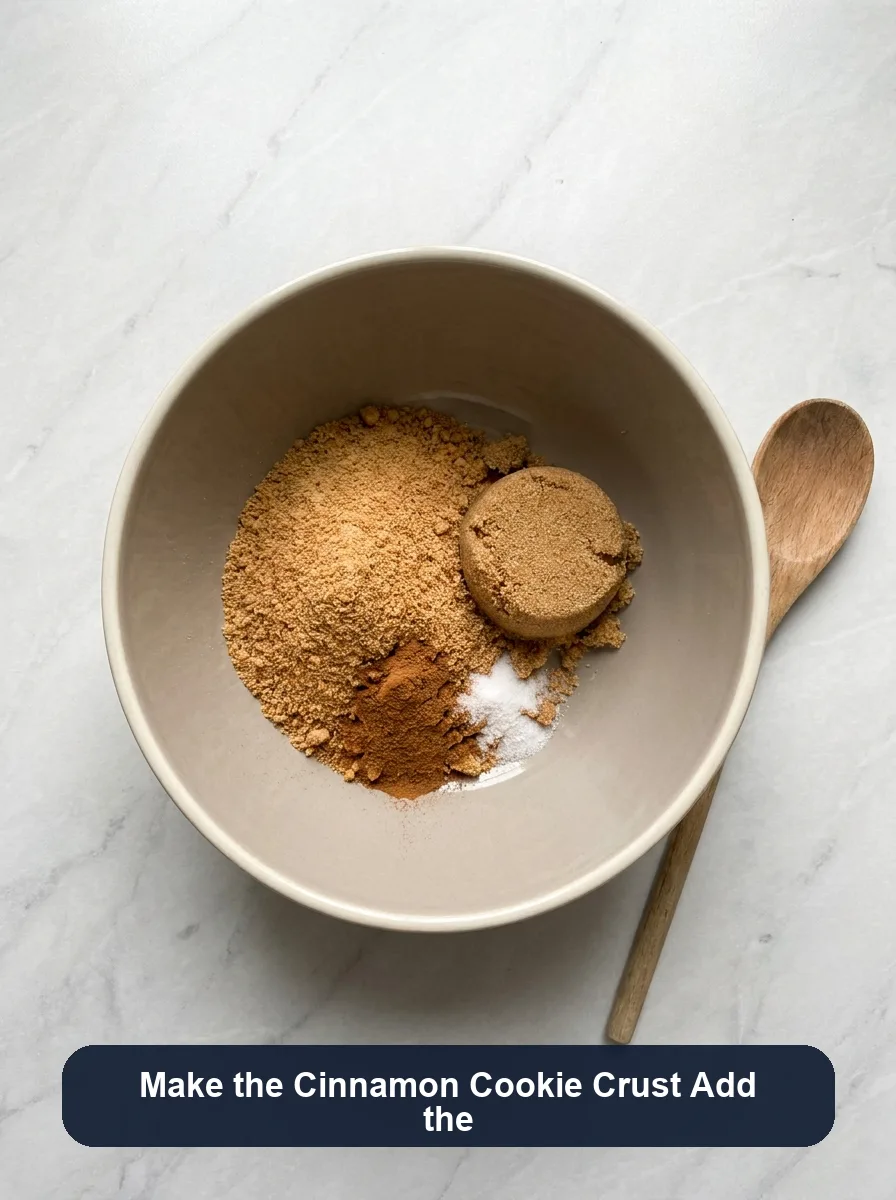
Pour in the melted butter and mix until every crumb is moistened. The mixture should resemble damp sand and hold together when pressed between your fingers.
Transfer the mixture to the prepared springform pan. Press it firmly and evenly across the bottom using the flat base of a measuring cup or drinking glass.
For a slightly taller crust, press a small amount of the crumbs about 1 inch up the sides of the pan.
3. Pre-Bake the Crust
Bake the crust for 9 to 10 minutes.
It should smell buttery and toasted, and the surface should look slightly darker around the edges. Remove it from the oven and place the pan on a wire rack.
Reduce the oven temperature to 325°F (165°C). Allow the crust to cool while preparing the swirl and cheesecake filling.
4. Prepare the Cinnamon Honeybun Swirl
In a medium bowl, combine the brown sugar, cinnamon, flour, and salt.
Add the melted butter, honey, and vanilla extract. Stir until the mixture becomes smooth, glossy, and thick enough to slowly fall from the spoon.
The consistency should resemble a loose cinnamon paste. If it becomes too firm while sitting, warm it for 5 to 10 seconds in the microwave and stir again.
Set the swirl mixture aside to cool to room temperature. Do not add it to the cheesecake batter while hot.
5. Beat the Cream Cheese
Place the softened cream cheese in a large mixing bowl.
Beat on low to medium-low speed for 1 to 2 minutes, stopping to scrape the bottom and sides of the bowl. Continue mixing until the cream cheese looks completely smooth, creamy, and free of lumps.
Do not whip it on high speed. Too much air can cause the cheesecake to puff dramatically in the oven and collapse as it cools.
6. Add the Sugar and Flour
In a small bowl, stir together the granulated sugar and flour. This helps distribute the flour evenly and prevents small clumps in the filling.
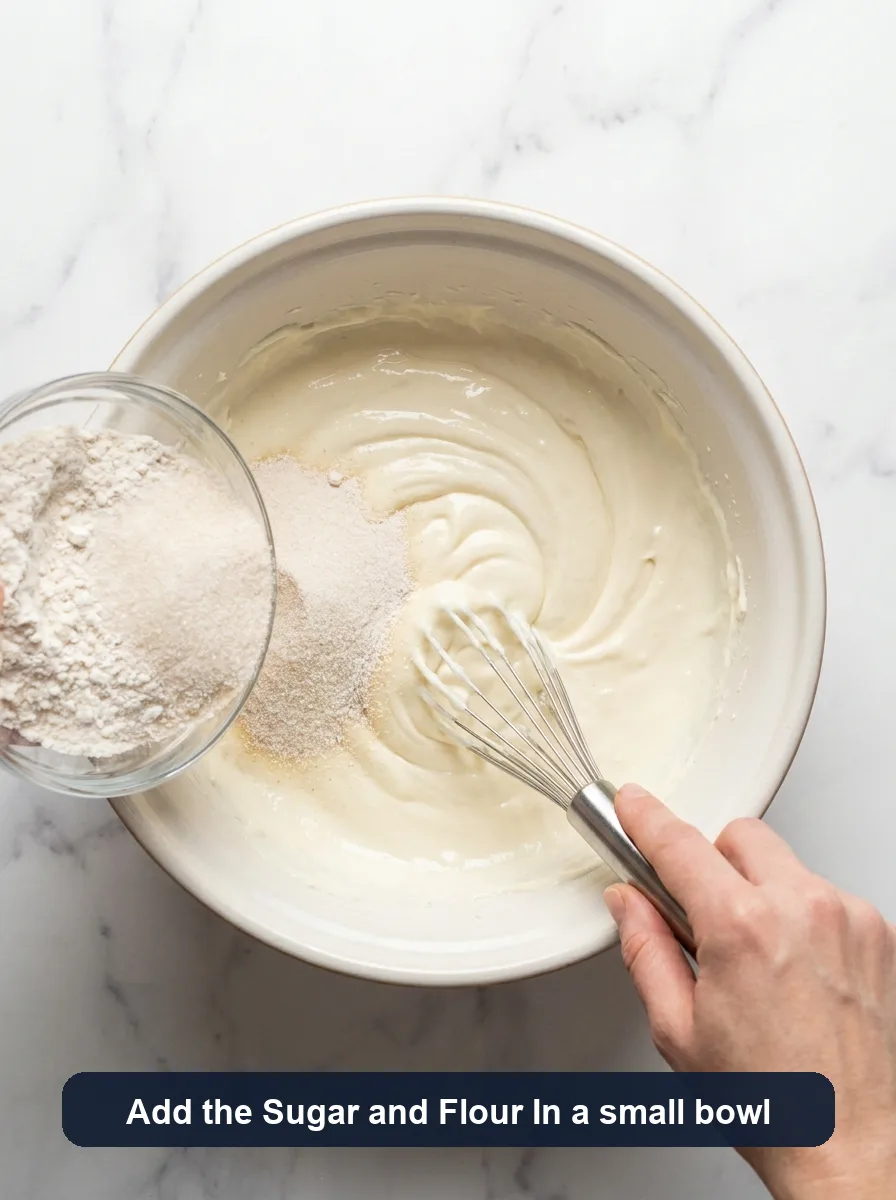
Gradually add the sugar mixture to the cream cheese. Beat on low speed until just combined, scraping the bowl as needed.
The mixture should look thick, smooth, and slightly glossy.
7. Add the Sour Cream and Flavorings
Add the sour cream, vanilla extract, and lemon juice.
Mix on low speed until evenly incorporated. Scrape the sides and bottom of the bowl with a rubber spatula to make sure no dense cream cheese remains underneath.
The batter should now feel silky and fall from the spatula in a thick ribbon.
8. Add the Eggs
Add the eggs one at a time, mixing on the lowest speed after each addition.
Stop mixing as soon as each egg disappears into the batter. Add the egg yolk last and mix only until combined.
Finish folding the batter gently by hand with a rubber spatula. This releases large air bubbles and ensures the filling is evenly mixed without overbeating.
9. Create the First Cheesecake Layer
Pour approximately one-third of the cheesecake batter over the cooled crust. Spread it into an even layer with a spoon or offset spatula.
Drizzle approximately one-third of the cinnamon honeybun mixture over the filling. Use a thin knife or wooden skewer to make a few gentle figure-eight motions.
Do not stir too deeply or excessively. You want visible cinnamon ribbons rather than fully blended brown batter.
10. Add the Second Layer
Pour another one-third of the cheesecake batter into the pan.
Drizzle another third of the cinnamon mixture over the surface. Swirl it gently, keeping the knife mostly within the upper layer of batter.
The filling should show distinct golden-brown streaks running through the pale vanilla cheesecake.
11. Finish the Cheesecake
Pour the remaining cheesecake batter into the pan and smooth the top.
Drizzle the remaining cinnamon honeybun mixture over the surface. Create wide, decorative swirls with the tip of a knife.
Avoid dragging the knife all the way down to the crust. A few loose spirals are enough to create a beautiful cinnamon-roll pattern.
12. Prepare the Water Bath
Place the foil-wrapped springform pan inside a large roasting pan.
Carefully pour hot water into the roasting pan until it reaches approximately 1 inch up the sides of the springform pan.
The water bath creates gentle, even heat and adds moisture to the oven, helping the cheesecake bake smoothly without becoming dry or cracked.
13. Bake the Cheesecake
Carefully transfer the roasting pan to the oven.
Bake at 325°F (165°C) for 70 to 80 minutes.
The cheesecake is ready when the outer 2 inches look set and slightly puffed, but the center still has a soft wobble when the pan is gently shaken. The center should move as one piece, similar to gelatin, rather than looking liquid or sloshy.
Avoid baking until the center becomes completely firm. The cheesecake will continue to set as it cools.
14. Cool the Cheesecake Slowly
Turn off the oven and crack the oven door open approximately 2 inches.
Leave the cheesecake inside the turned-off oven for 1 hour. This slow cooling process reduces the sudden temperature change that often causes cracks.
Remove the cheesecake from the water bath and carefully discard the foil. Place the cheesecake on a wire rack and allow it to cool at room temperature for another hour.
15. Chill the Cheesecake
Run a thin knife gently around the inside edge of the springform pan. This prevents the cheesecake from sticking to the sides as it contracts.
Cover the pan loosely and refrigerate the cheesecake for at least 6 hours, preferably overnight.
The cheesecake must be completely cold before the springform ring is removed. Chilling gives the filling its firm, creamy texture and allows the cinnamon flavor to deepen.
16. Make the Cream Cheese Glaze
Place the softened cream cheese and butter in a medium bowl.
Beat until smooth and creamy. Add the powdered sugar, vanilla extract, salt, and 2 tablespoons of milk or cream.
Mix on low speed until combined, then beat briefly until the glaze becomes smooth and glossy.
Add more milk, 1 teaspoon at a time, until the glaze is thick but pourable. It should fall slowly from a spoon and leave a visible ribbon before settling.
17. Decorate the Cheesecake
Remove the chilled cheesecake from the refrigerator and release the springform ring.
Transfer the cheesecake to a serving plate or cake stand. Spoon or pipe the cream cheese glaze over the top in a wide spiral, similar to the icing on a cinnamon roll.
Allow some of the glaze to drip naturally down the sides. Finish with a light dusting of cinnamon, a thin drizzle of honey, or chopped toasted pecans if desired.
18. Slice and Serve
For clean slices, dip a long, sharp knife into hot water and wipe it dry before each cut.
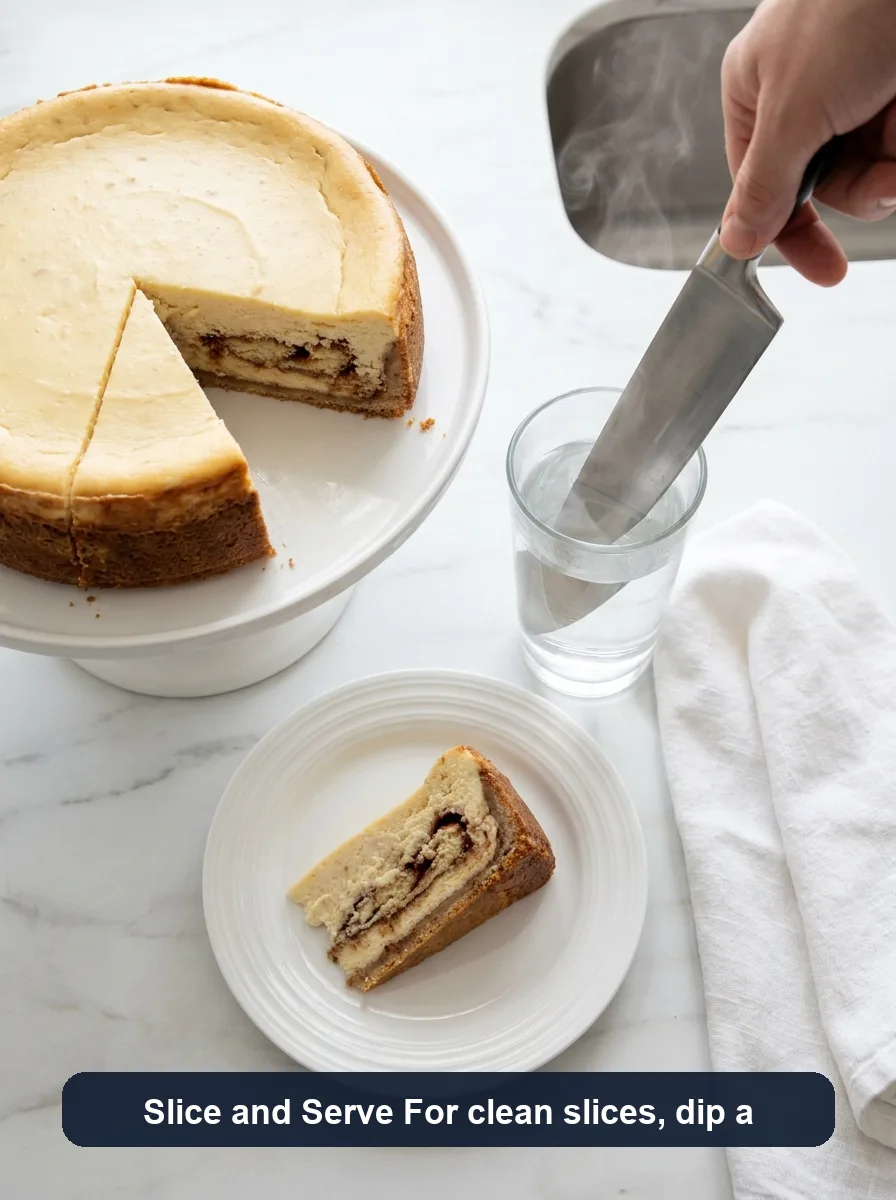
Slice straight down through the cheesecake rather than using a sawing motion. Clean and warm the knife again between slices.
Allow each slice to sit at room temperature for 15 to 20 minutes before serving. This slightly softens the filling and brings out the warm vanilla, cinnamon, caramel, and honey flavors.
Tips for Success
- Use room-temperature ingredients to ensure a smooth batter.
- Mix on low speed to avoid incorporating too much air, which can cause cracks.
- Let the cinnamon mixture cool before adding it to the filling.
- Do not over-swirl the cinnamon mixture into the cheesecake.
- Remove the cheesecake when the center still has a gentle wobble.
- Chill overnight for the best texture and cleanest slices.
Storage and Reheating
Store the Cinnamon Roll Honeybun Cheesecake in the refrigerator, tightly covered or placed inside an airtight cake container, for up to 5 days. Because the cheesecake contains cream cheese, sour cream, and eggs, it should not remain at room temperature for extended periods.
FAQ
Can I make this cheesecake ahead of time?
Yes, this cheesecake can be made a day in advance. It actually tastes better after chilling overnight.
What can I substitute for sour cream?
You can use full-fat Greek yogurt as a substitute for sour cream in the same amount.
How do I know when the cheesecake is done baking?
The cheesecake is done when the outer 2 inches are set and slightly puffed, while the center still has a soft wobble.
Can I freeze the cheesecake?
Yes, you can freeze the cheesecake. Wrap it tightly in plastic wrap and then in aluminum foil. It can be frozen for up to 2 months.
How do I slice the cheesecake cleanly?
Dip a long, sharp knife into hot water and wipe it dry before each cut for clean slices.
Cinnamon Roll Honeybun Cheesecake
Ingredients
Method
- Prepare the Springform Pan. Preheat the oven to 350°F (175°C).
- Lightly grease the bottom and sides of a 9-inch (23 cm) springform pan. Place a round of parchment paper on the bottom for easier removal.
- Wrap the outside of the pan with two or three layers of heavy-duty aluminum foil. Bring the foil at least halfway up the sides and press it firmly around the pan to help prevent water from leaking into the crust during the water bath.
- Make the Cinnamon Cookie Crust. Add the cinnamon graham cracker crumbs, brown sugar, cinnamon, and salt to a medium mixing bowl. Stir until the ingredients are evenly combined.
- Pour in the melted butter and mix until every crumb is moistened. The mixture should resemble damp sand and hold together when pressed between your fingers.
- Transfer the mixture to the prepared springform pan. Press it firmly and evenly across the bottom using the flat base of a measuring cup or drinking glass.
- For a slightly taller crust, press a small amount of the crumbs about 1 inch up the sides of the pan.
- Pre-Bake the Crust. Bake the crust for 9 to 10 minutes.
- It should smell buttery and toasted, and the surface should look slightly darker around the edges. Remove it from the oven and place the pan on a wire rack.
- Reduce the oven temperature to 325°F (165°C). Allow the crust to cool while preparing the swirl and cheesecake filling.
- Prepare the Cinnamon Honeybun Swirl. In a medium bowl, combine the brown sugar, cinnamon, flour, and salt.
- Add the melted butter, honey, and vanilla extract. Stir until the mixture becomes smooth, glossy, and thick enough to slowly fall from the spoon.
- The consistency should resemble a loose cinnamon paste. If it becomes too firm while sitting, warm it for 5 to 10 seconds in the microwave and stir again.
- Set the swirl mixture aside to cool to room temperature. Do not add it to the cheesecake batter while hot.
- Beat the Cream Cheese. Place the softened cream cheese in a large mixing bowl.
- Beat on low to medium-low speed for 1 to 2 minutes, stopping to scrape the bottom and sides of the bowl. Continue mixing until the cream cheese looks completely smooth, creamy, and free of lumps.
- Do not whip it on high speed. Too much air can cause the cheesecake to puff dramatically in the oven and collapse as it cools.
- Add the Sugar and Flour. In a small bowl, stir together the granulated sugar and flour. This helps distribute the flour evenly and prevents small clumps in the filling.
- Gradually add the sugar mixture to the cream cheese. Beat on low speed until just combined, scraping the bowl as needed.
- The mixture should look thick, smooth, and slightly glossy.
- Add the Sour Cream and Flavorings. Add the sour cream, vanilla extract, and lemon juice.
- Mix on low speed until evenly incorporated. Scrape the sides and bottom of the bowl with a rubber spatula to make sure no dense cream cheese remains underneath.
- The batter should now feel silky and fall from the spatula in a thick ribbon.
- Add the Eggs. Add the eggs one at a time, mixing on the lowest speed after each addition.
- Stop mixing as soon as each egg disappears into the batter. Add the egg yolk last and mix only until combined.
- Finish folding the batter gently by hand with a rubber spatula. This releases large air bubbles and ensures the filling is evenly mixed without overbeating.
- Create the First Cheesecake Layer. Pour approximately one-third of the cheesecake batter over the cooled crust. Spread it into an even layer with a spoon or offset spatula.
- Drizzle approximately one-third of the cinnamon honeybun mixture over the filling. Use a thin knife or wooden skewer to make a few gentle figure-eight motions.
- Do not stir too deeply or excessively. You want visible cinnamon ribbons rather than fully blended brown batter.
- Add the Second Layer. Pour another one-third of the cheesecake batter into the pan.
- Drizzle another third of the cinnamon mixture over the surface. Swirl it gently, keeping the knife mostly within the upper layer of batter.
- The filling should show distinct golden-brown streaks running through the pale vanilla cheesecake.
- Finish the Cheesecake. Pour the remaining cheesecake batter into the pan and smooth the top.
- Drizzle the remaining cinnamon honeybun mixture over the surface. Create wide, decorative swirls with the tip of a knife.
- Avoid dragging the knife all the way down to the crust. A few loose spirals are enough to create a beautiful cinnamon-roll pattern.
- Prepare the Water Bath. Place the foil-wrapped springform pan inside a large roasting pan.
- Carefully pour hot water into the roasting pan until it reaches approximately 1 inch up the sides of the springform pan.
- The water bath creates gentle, even heat and adds moisture to the oven, helping the cheesecake bake smoothly without becoming dry or cracked.
- Bake the Cheesecake. Carefully transfer the roasting pan to the oven.
- Bake at 325°F (165°C) for 70 to 80 minutes.
- The cheesecake is ready when the outer 2 inches look set and slightly puffed, but the center still has a soft wobble when the pan is gently shaken. The center should move as one piece, similar to gelatin, rather than looking liquid or sloshy.
- Avoid baking until the center becomes completely firm. The cheesecake will continue to set as it cools.
- Cool the Cheesecake Slowly. Turn off the oven and crack the oven door open approximately 2 inches.
- Leave the cheesecake inside the turned-off oven for 1 hour. This slow cooling process reduces the sudden temperature change that often causes cracks.
- Remove the cheesecake from the water bath and carefully discard the foil. Place the cheesecake on a wire rack and allow it to cool at room temperature for another hour.
- Chill the Cheesecake. Run a thin knife gently around the inside edge of the springform pan. This prevents the cheesecake from sticking to the sides as it contracts.
- Cover the pan loosely and refrigerate the cheesecake for at least 6 hours, preferably overnight.
- The cheesecake must be completely cold before the springform ring is removed. Chilling gives the filling its firm, creamy texture and allows the cinnamon flavor to deepen.
- Make the Cream Cheese Glaze. Place the softened cream cheese and butter in a medium bowl.
- Beat until smooth and creamy. Add the powdered sugar, vanilla extract, salt, and 2 tablespoons of milk or cream.
- Mix on low speed until combined, then beat briefly until the glaze becomes smooth and glossy.
- Add more milk, 1 teaspoon at a time, until the glaze is thick but pourable. It should fall slowly from a spoon and leave a visible ribbon before settling.
- Decorate the Cheesecake. Remove the chilled cheesecake from the refrigerator and release the springform ring.
- Transfer the cheesecake to a serving plate or cake stand. Spoon or pipe the cream cheese glaze over the top in a wide spiral, similar to the icing on a cinnamon roll.
- Allow some of the glaze to drip naturally down the sides. Finish with a light dusting of cinnamon, a thin drizzle of honey, or chopped toasted pecans if desired.
- Slice and Serve. For clean slices, dip a long, sharp knife into hot water and wipe it dry before each cut.
- Slice straight down through the cheesecake rather than using a sawing motion. Clean and warm the knife again between slices.
- Allow each slice to sit at room temperature for 15 to 20 minutes before serving. This slightly softens the filling and brings out the warm vanilla, cinnamon, caramel, and honey flavors.