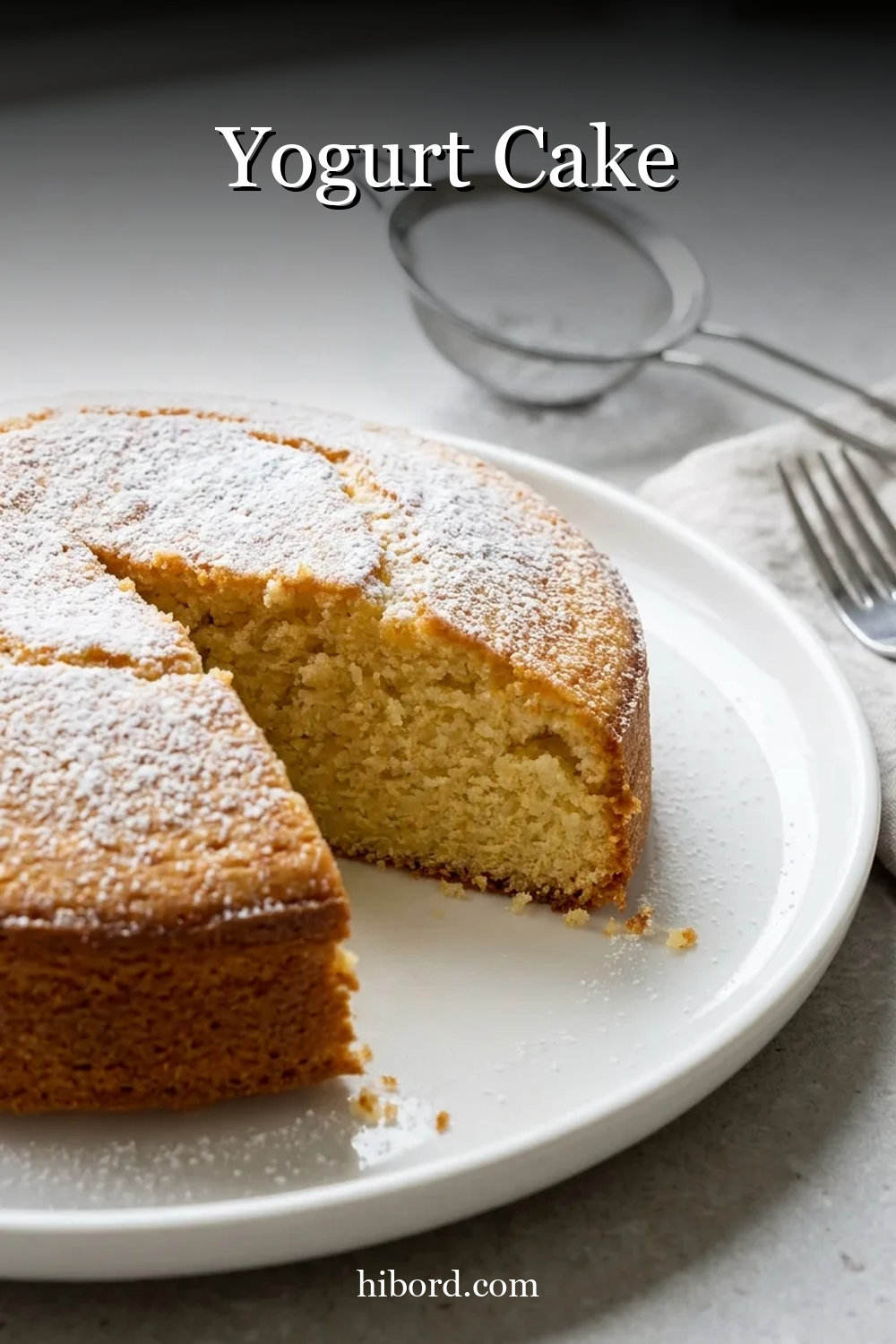
This Yogurt Cake is a simple vanilla cake with a moist, tender crumb and a lightly golden crust. Whole-milk yogurt adds gentle tang and keeps the cake soft, while neutral oil provides lasting moisture without making the batter heavy.
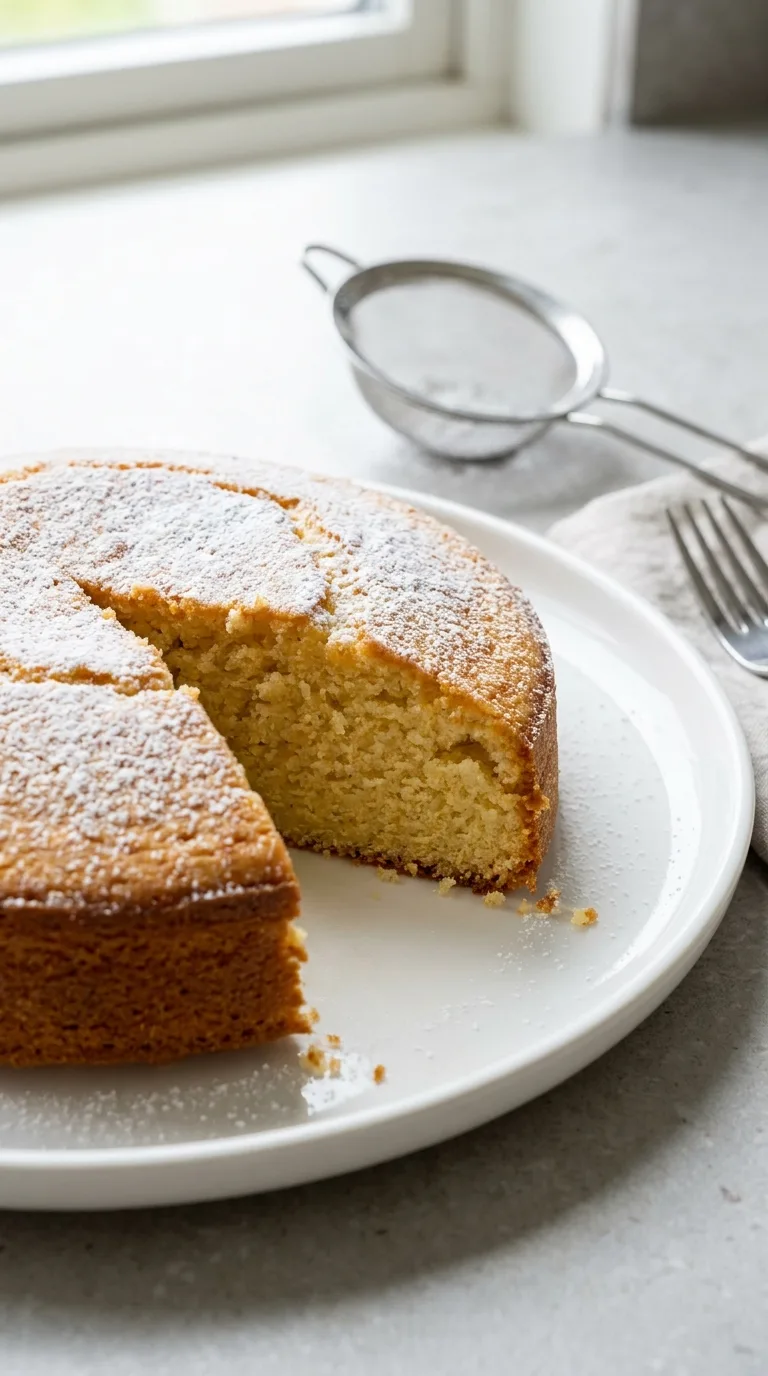
The batter comes together by hand, so no electric mixer is required. Bake it in a 9-inch round pan, allow it to cool, and serve it plain or with a light dusting of powdered sugar.
Recipe at a Glance
- Prep Time: 15 minutes
- Cook Time: 40 minutes
- Additional Time: 45 minutes
- Total Time: 1 hour 40 minutes
- Yield: One 9-inch cake, 10 slices
- Difficulty: Easy
Why You’ll Love This Recipe
- Whole-milk yogurt adds moisture and acidity, creating a soft crumb with a mild tang.
- Neutral oil stays fluid after cooling, so the cake remains tender longer than a cake made entirely with butter.
- Whisking the eggs and sugar before adding the other wet ingredients helps dissolve the sugar and gives the cake a lighter structure.
- Folding the flour into the wet mixture only until combined prevents excess gluten development and a rubbery texture.
- A 9-inch round pan gives the batter enough surface area to bake evenly without producing a dry edge or underdone center.
Equipment Needed
- One 9 x 2-inch (23 x 5 cm) round cake pan
- Parchment paper
- Two medium mixing bowls
- Whisk
- Flexible spatula
- Fine-mesh sieve, optional for the powdered sugar
- Wire cooling rack
Ingredients You’ll Need
For the Yogurt Cake
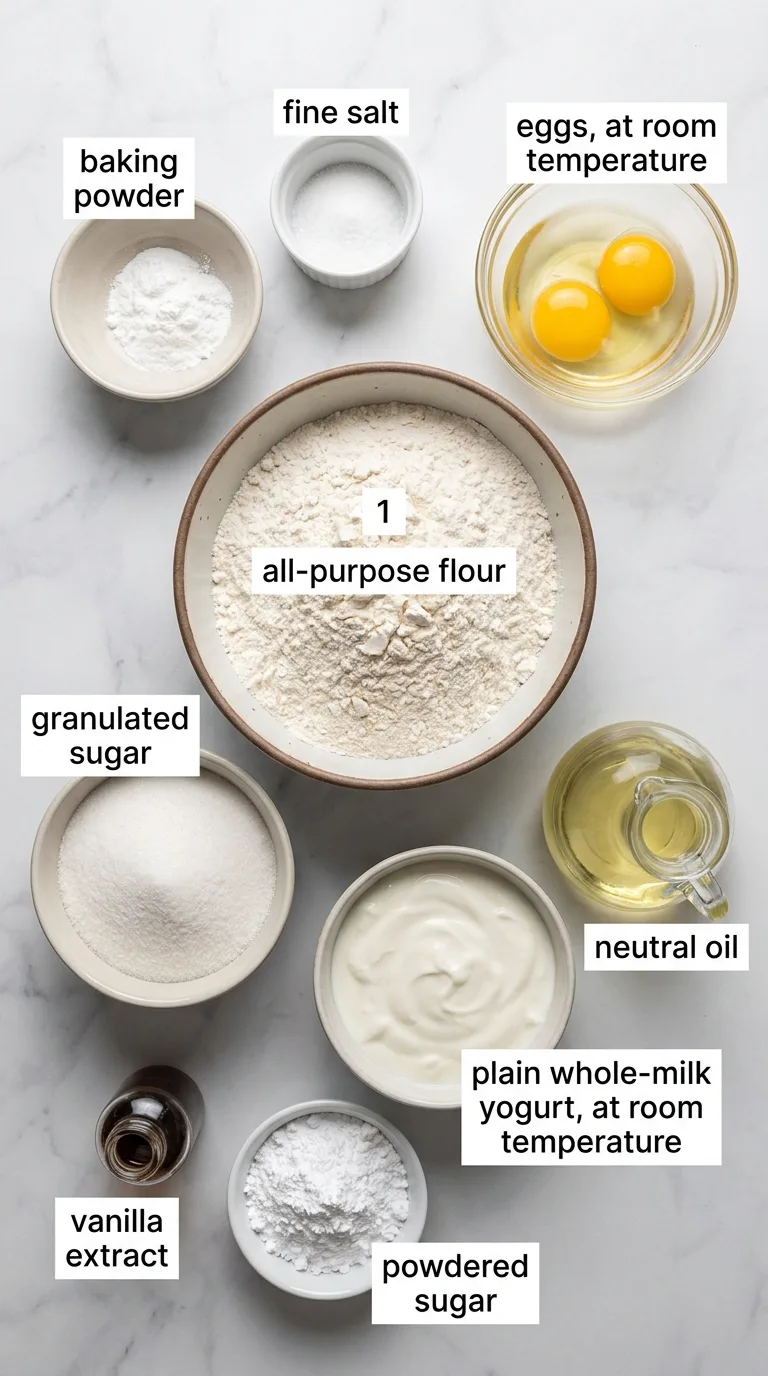
- 1 1/2 cups (180 g) all-purpose flour, spooned and leveled
- 2 teaspoons (8 g) baking powder
- 1/2 teaspoon (3 g) fine salt
- 2 large eggs (about 100 g without shells), at room temperature
- 3/4 cup (150 g) granulated sugar
- 1 cup (240 g) plain whole-milk yogurt, at room temperature
- 1/2 cup (120 ml) neutral oil, such as canola, vegetable, or grapeseed oil
- 2 teaspoons (10 ml) vanilla extract
For Finishing
- 1 tablespoon (8 g) powdered sugar, optional, for dusting
How to Make Yogurt Cake
Prepare the Oven and Pan
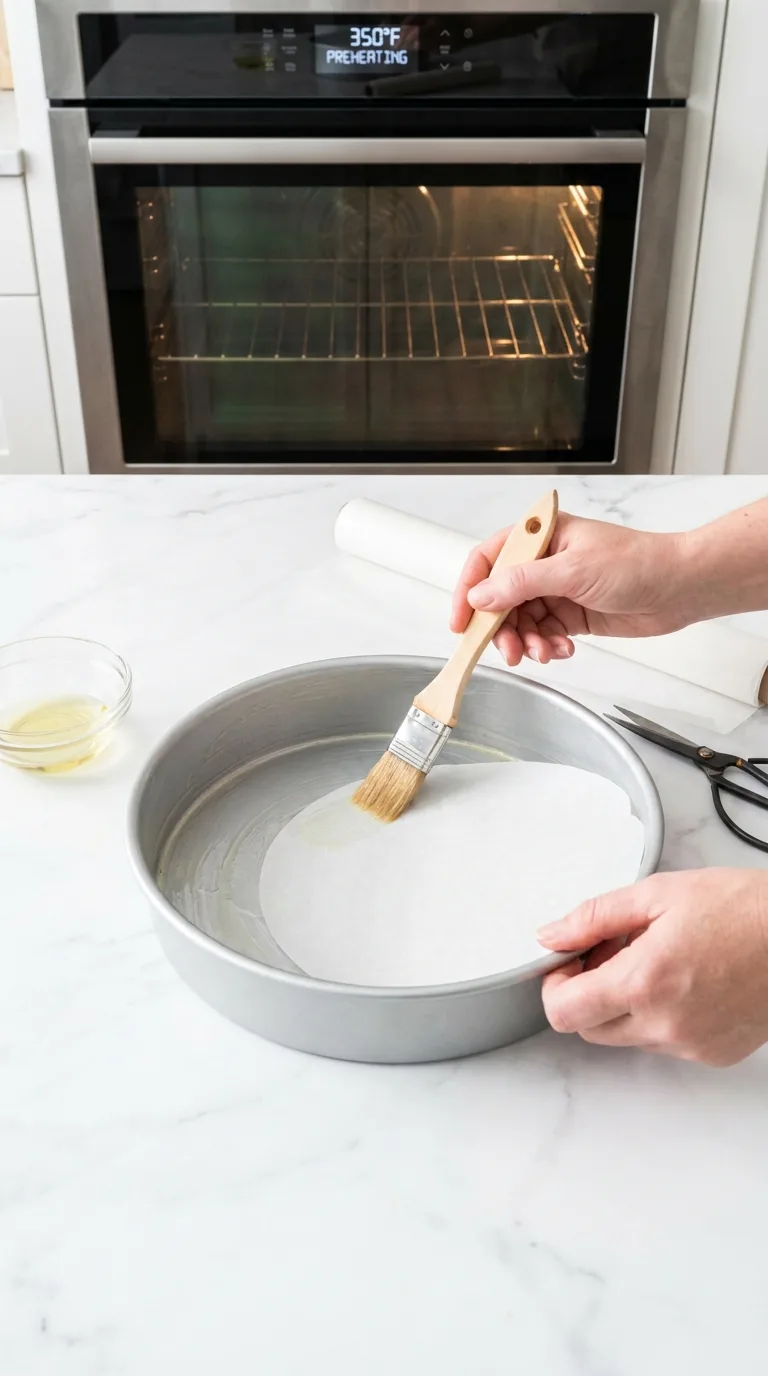
Position a rack in the center of the oven and preheat it to 350°F (175°C). Lightly grease a 9 x 2-inch (23 x 5 cm) round cake pan. Line the bottom with parchment paper and lightly grease the paper. This preparation ensures that the cake will release easily after baking.
Combine the Dry Ingredients
In a medium bowl, whisk together the all-purpose flour, baking powder, and salt. Continue whisking for about 20 seconds so the baking powder is evenly distributed and no small lumps remain. This step is crucial for ensuring an even rise in the cake.
Whisk the Eggs and Sugar
In a separate mixing bowl, whisk the eggs and granulated sugar for 1 to 2 minutes. The mixture should look smooth, slightly lighter in color, and a little foamy around the edges. This aeration helps create a lighter texture in the final cake.
Add the Yogurt, Oil, and Vanilla
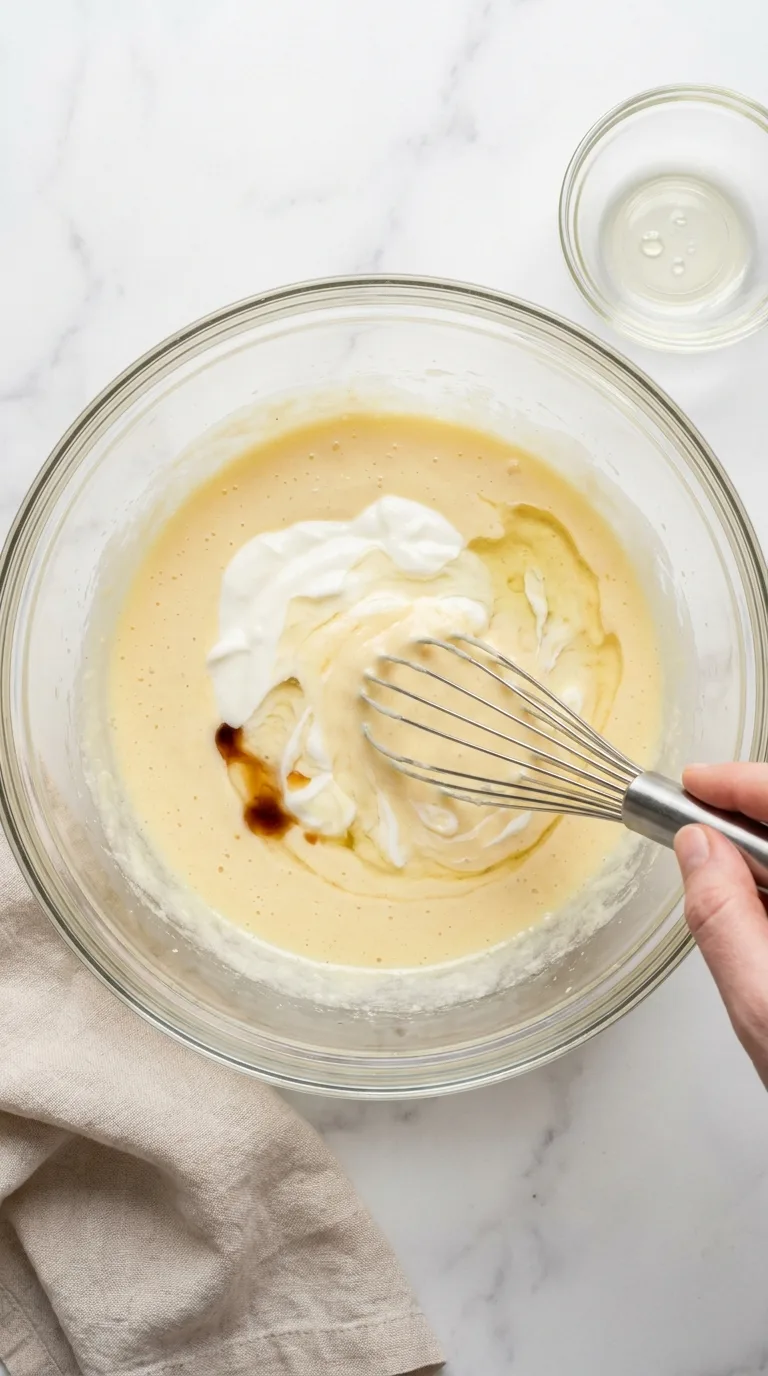
Whisk the yogurt, neutral oil, and vanilla extract into the egg mixture until smooth and evenly blended. The mixture should look creamy and fluid, without visible streaks of yogurt or oil. This ensures that the flavors are well combined and the batter is uniform.
Finish the Batter
Add the dry ingredients to the wet mixture. Fold gently with a flexible spatula just until no dry flour remains. The batter should be smooth, thick, and pourable. Stop mixing as soon as it is combined; a few small lumps are preferable to overmixing, which can lead to a tough cake.
Fill the Pan
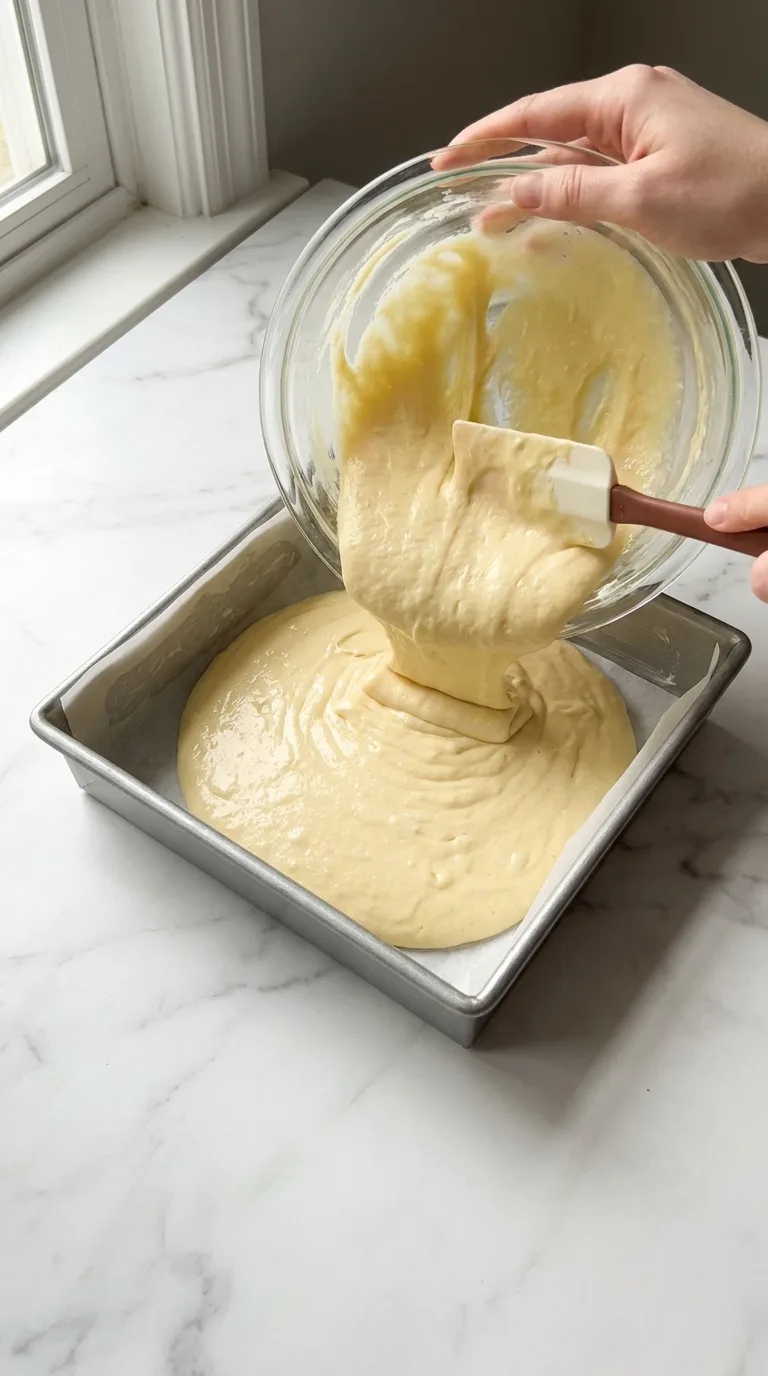
Pour the batter into the prepared pan and spread it evenly to the edges. Gently tap the pan once or twice on the counter to release any large air pockets. This helps to create a more even texture in the finished cake.
Bake the Cake
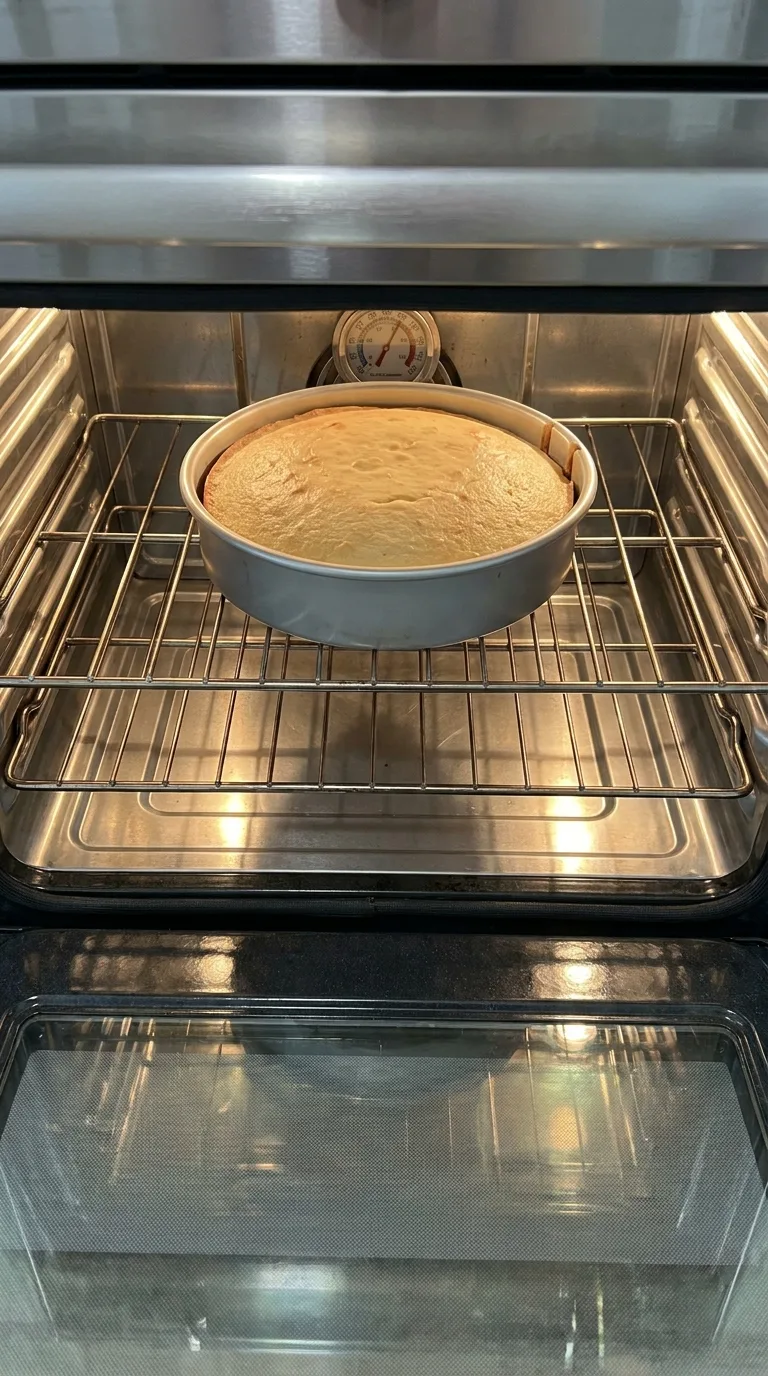
Bake at 350°F (175°C) for 35 to 40 minutes. The cake is done when the top is evenly golden, the center springs back lightly when touched, and a toothpick inserted into the middle comes out clean or with a few moist crumbs. If the top is browning too quickly before the center is done, loosely cover the pan with aluminum foil for the final 5 to 10 minutes to prevent burning.
Cool in the Pan
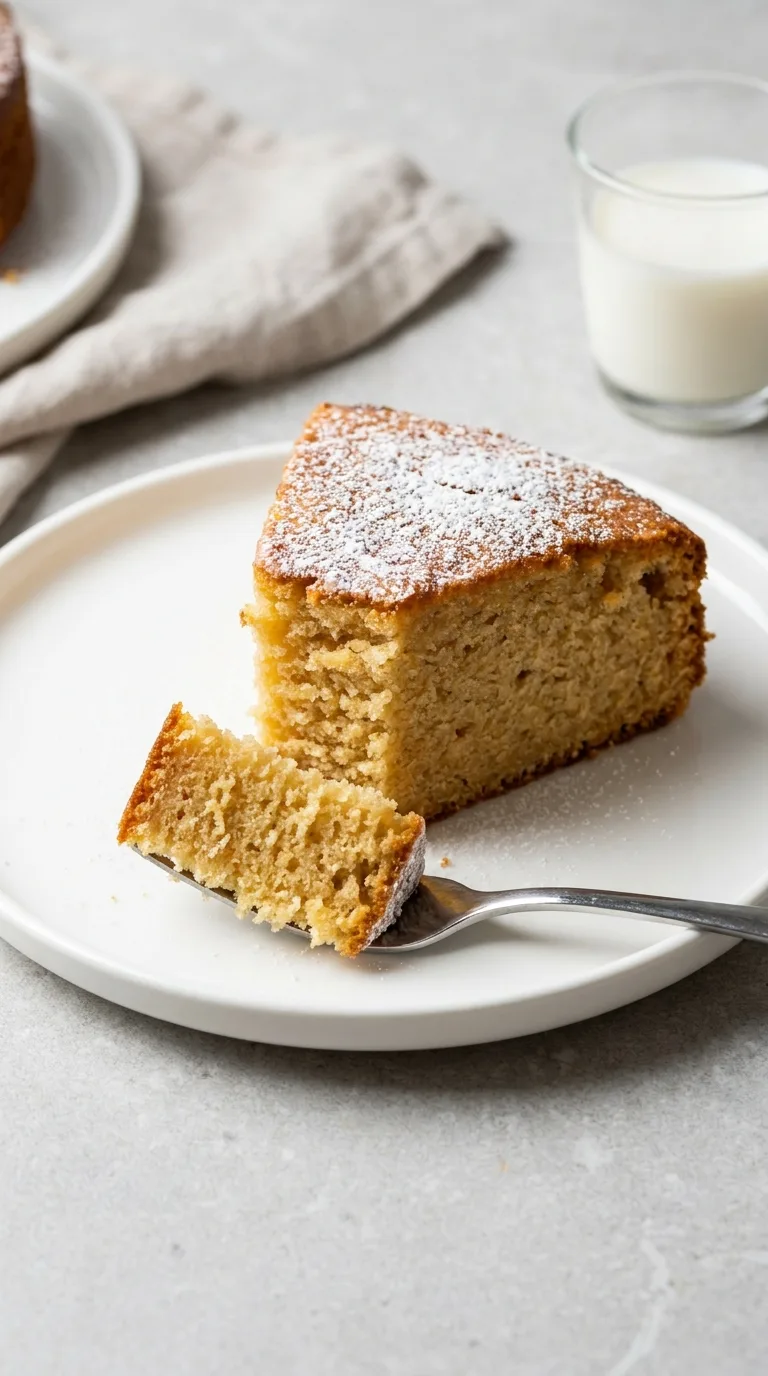
Place the pan on a wire rack and let the cake cool for 15 minutes. Run a thin knife around the edge, then carefully turn the cake out onto the rack. Remove the parchment and turn the cake right side up. This cooling step is important for setting the cake’s structure.
Cool and Finish
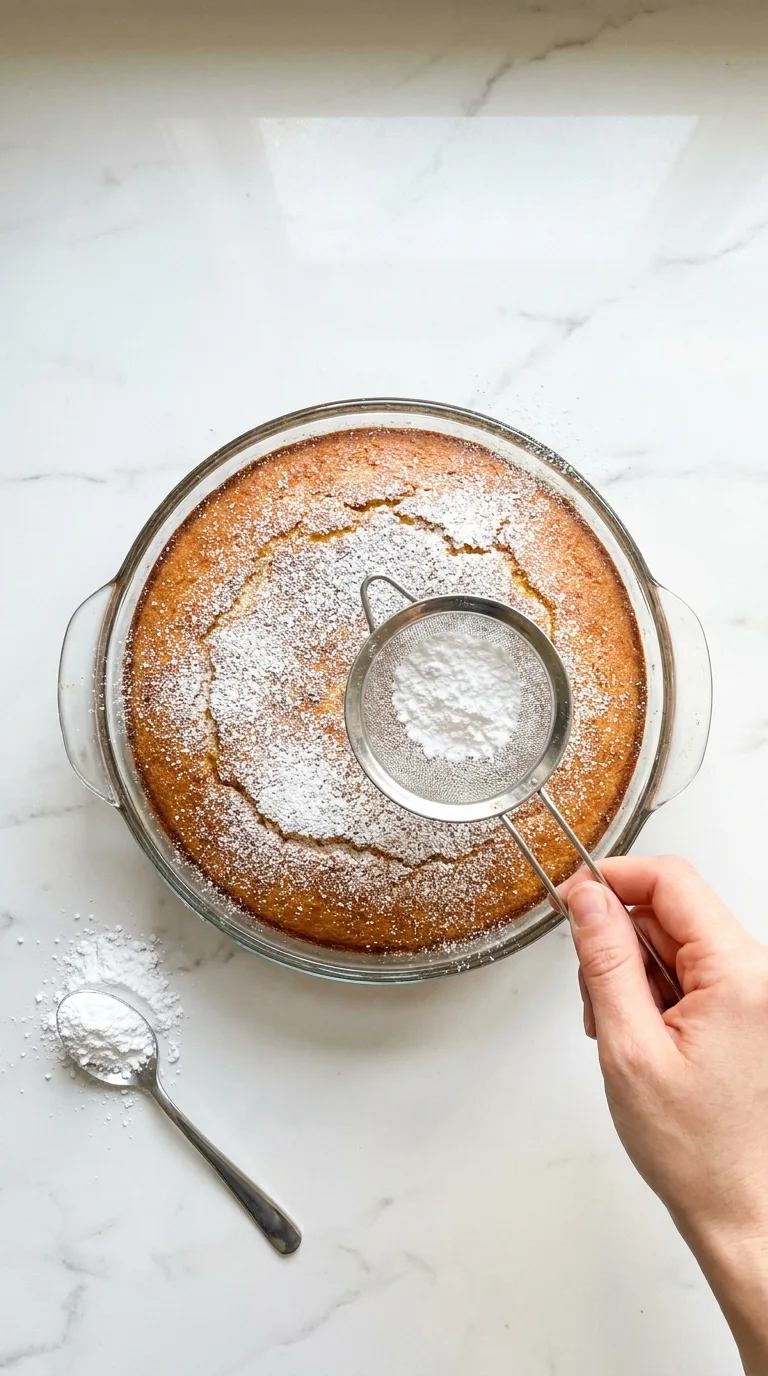
Allow the cake to cool for another 30 minutes before slicing. Dust the top with powdered sugar, if using. The crumb will be softer and easier to cut cleanly once the cake is no longer hot, which enhances the presentation.
Tips for Success
- Bring the eggs and yogurt to room temperature so the oil blends smoothly into the batter instead of forming small, greasy pockets.
- Measure the flour by spooning it into the measuring cup and leveling the top. Scooping directly from the container can compact the flour and produce a dry cake.
- Avoid using an oversized pan. A 10-inch pan will create a thinner cake that bakes faster and can dry out.
- Do not overmix after adding the flour. Excess mixing can make the crumb tight, chewy, or slightly gummy.
- Begin checking the cake at 35 minutes. Overbaking is the most common reason a yogurt cake loses its soft texture.
- Wait until the cake is cool before adding powdered sugar, or the sugar will dissolve into the warm surface.
Storage, Freezing, and Make-Ahead Instructions
Store the cooled Yogurt Cake in an airtight container at room temperature for up to 2 days. Place a sheet of parchment between the cake and the lid if the top feels slightly tacky. For longer storage, refrigerate the cake in an airtight container for up to 5 days. Refrigeration can firm the crumb, so allow individual slices to stand at room temperature for 20 to 30 minutes before serving.
To freeze, leave off the powdered sugar and wrap the completely cooled cake, or individual slices, tightly in plastic wrap. Place the wrapped cake in a freezer-safe container or bag and freeze for up to 2 months. Thaw it overnight in the refrigerator, then bring it to room temperature before serving. Add the powdered sugar only after thawing.
The cake can be baked one day ahead. Once completely cool, cover it tightly and store it at room temperature. Dust it with powdered sugar shortly before serving so the surface remains neat and dry.
FAQ
Can I use Greek yogurt in Yogurt Cake?
Yes. Mix 1 cup of plain full-fat Greek yogurt with 2 tablespoons of milk before adding it to the batter. This loosens the yogurt so the cake does not become overly dense.
Why did my Yogurt Cake turn out dense?
A dense texture can result from too much flour, expired baking powder, cold ingredients, or overmixing after the flour is added. Measure carefully and fold only until the batter is combined.
Can I bake this cake in a loaf pan?
Yes. Use a greased and parchment-lined 9 x 5-inch (23 x 13 cm) loaf pan. Bake at 350°F (175°C) for approximately 50 to 60 minutes, checking the center with a toothpick. The deeper batter requires a longer baking time.
Can I add lemon flavor?
Yes. Add 1 tablespoon of finely grated lemon zest to the sugar and rub them together before whisking in the eggs. The zest adds citrus aroma without significantly changing the batter’s moisture.
How do I know when the cake is fully baked?
The top should be golden, the center should spring back when gently pressed, and a toothpick inserted into the middle should come out clean or with a few moist crumbs. Wet batter on the toothpick means the cake needs more time.
Ingredients
Method
- Position a rack in the center of the oven and preheat it to 350°F (175°C). Lightly grease a 9 x 2-inch (23 x 5 cm) round cake pan. Line the bottom with parchment paper and lightly grease the paper.
- In a medium bowl, whisk together the all-purpose flour, baking powder, and salt. Continue whisking for about 20 seconds so the baking powder is evenly distributed and no small lumps remain.
- In a separate mixing bowl, whisk the eggs and granulated sugar for 1 to 2 minutes. The mixture should look smooth, slightly lighter in color, and a little foamy around the edges.
- Whisk the yogurt, neutral oil, and vanilla extract into the egg mixture until smooth and evenly blended. The mixture should look creamy and fluid, without visible streaks of yogurt or oil.
- Add the dry ingredients to the wet mixture: Fold gently with a flexible spatula just until no dry flour remains. The batter should be smooth, thick, and pourable. Stop mixing as soon as it is combined; a few small lumps are preferable to overmixing.
- Pour the batter into the prepared pan and spread it evenly to the edges. Gently tap the pan once or twice on the counter to release any large air pockets.
- Bake at 350°F (175°C) for 35 to 40 minutes. The cake is done when the top is evenly golden, the center springs back lightly when touched, and a toothpick inserted into the middle comes out clean or with a few moist crumbs. If the top is browning too quickly before the center is done, loosely cover the pan with aluminum foil for the final 5 to 10 minutes.
- Place the pan on a wire rack and let the cake cool for 15 minutes. Run a thin knife around the edge, then carefully turn the cake out onto the rack. Remove the parchment and turn the cake right side up.
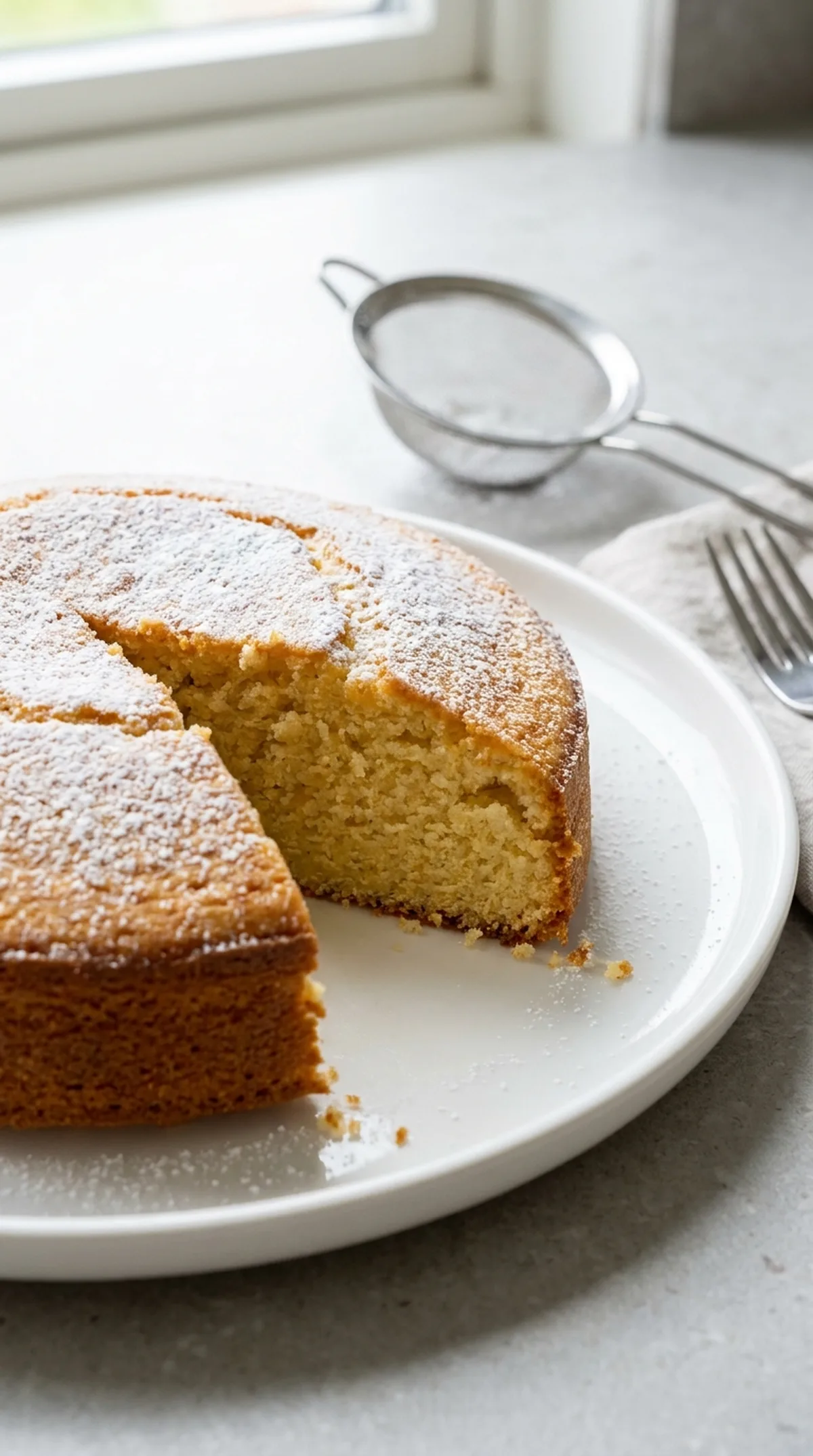
- Allow the cake to cool for another 30 minutes before slicing. Dust the top with powdered sugar, if using. The crumb will be softer and easier to cut cleanly once the cake is no longer hot.