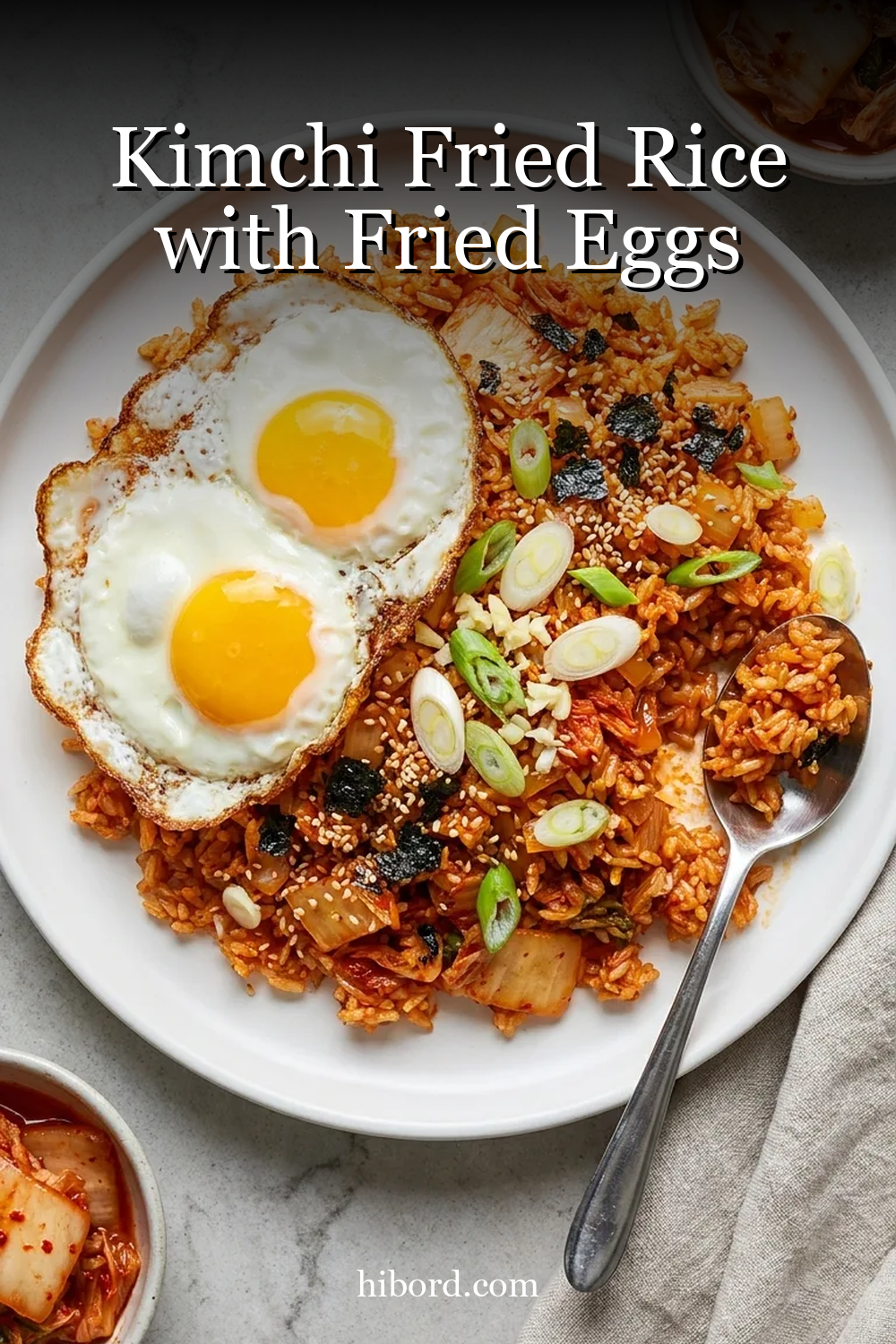
This kimchi fried rice combines cold cooked rice with tangy kimchi, savory gochujang, garlic, scallions, and toasted sesame oil. Cooking the kimchi before adding the rice concentrates its flavor and removes excess moisture, while brief contact with the hot skillet gives the rice lightly crisp, caramelized edges.
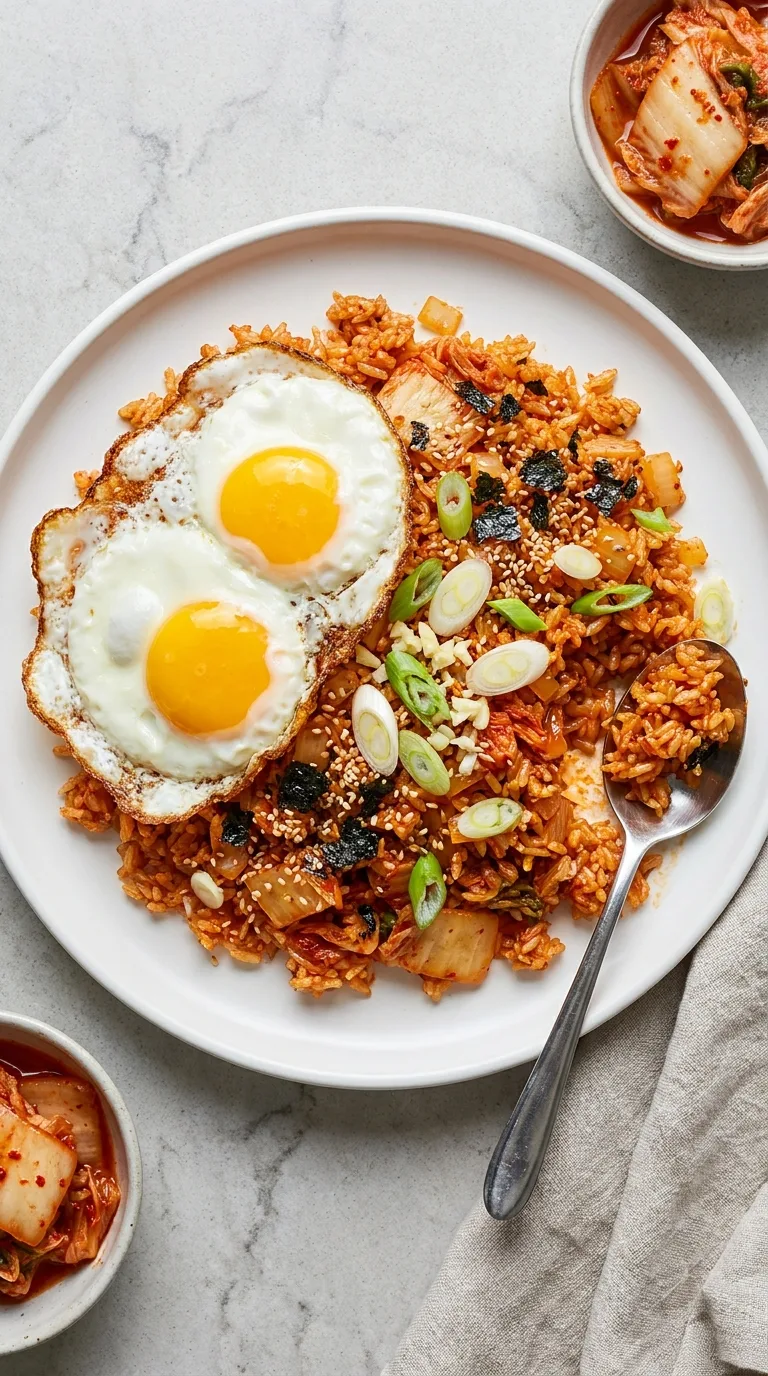
The entire dish cooks on the stovetop in about 20 minutes. A fried egg makes each bowl more substantial, while sesame seeds and crumbled roasted seaweed add a nutty, savory finish.
Recipe at a Glance
- Prep Time: 15 minutes
- Cook Time: 20 minutes
- Total Time: 35 minutes
- Yield: 4 bowls
- Difficulty: Easy
- Cooking Method: Stovetop
Why You’ll Love This Recipe
- Cold cooked rice contains less surface moisture than freshly steamed rice, so the grains separate more easily and are less likely to turn mushy.
- Sautéing the kimchi before adding the rice cooks away excess liquid and develops a deeper, lightly caramelized flavor.
- The combination of gochujang, kimchi juice, soy sauce, and a small amount of sugar creates a balanced sauce with heat, acidity, saltiness, and subtle sweetness.
- Letting the rice sit against the hot skillet between stirs creates browned spots without drying out the entire batch.
- Adding toasted sesame oil at the end preserves its roasted aroma instead of dulling it over prolonged heat.
Equipment Needed
- 12-inch (30 cm) heavy skillet or wok
- Heat-resistant spatula or wooden spoon
- Small mixing bowl
- Cutting board and chef’s knife
- Instant-read thermometer, optional for checking the eggs
Ingredients You’ll Need
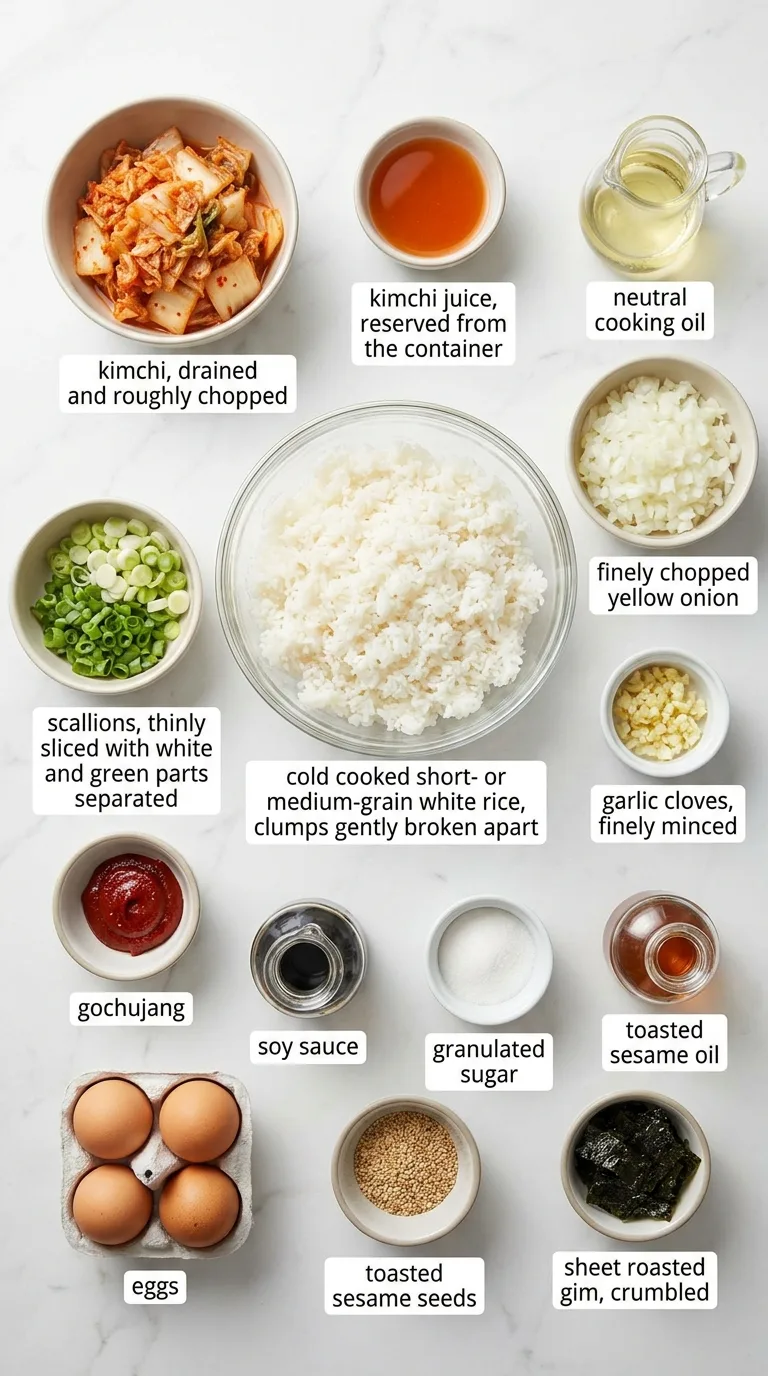
For the Kimchi Fried Rice
- 3 cups (555 g) cold cooked short- or medium-grain white rice, clumps gently broken apart
- 1 1/2 cups (250 g) well-fermented kimchi, drained and roughly chopped
- 1/4 cup (60 ml) kimchi juice, reserved from the container
- 2 tablespoons (30 ml) neutral cooking oil, divided
- 1/2 cup (75 g) finely chopped yellow onion
- 4 medium scallions (about 60 g), thinly sliced with white and green parts separated
- 2 garlic cloves (about 6 g), finely minced
- 1 tablespoon (18 g) gochujang
- 1 tablespoon (15 ml) soy sauce
- 1 teaspoon (4 g) granulated sugar
- 2 teaspoons (10 ml) toasted sesame oil
For Serving
- 4 large eggs (about 200 g without shells)
- 2 teaspoons (6 g) toasted sesame seeds, optional
- 1 sheet roasted gim (Korean seaweed; about 3 g), crumbled, optional
How to Make Kimchi Fried Rice with Fried Eggs
Prepare the Rice and Vegetables
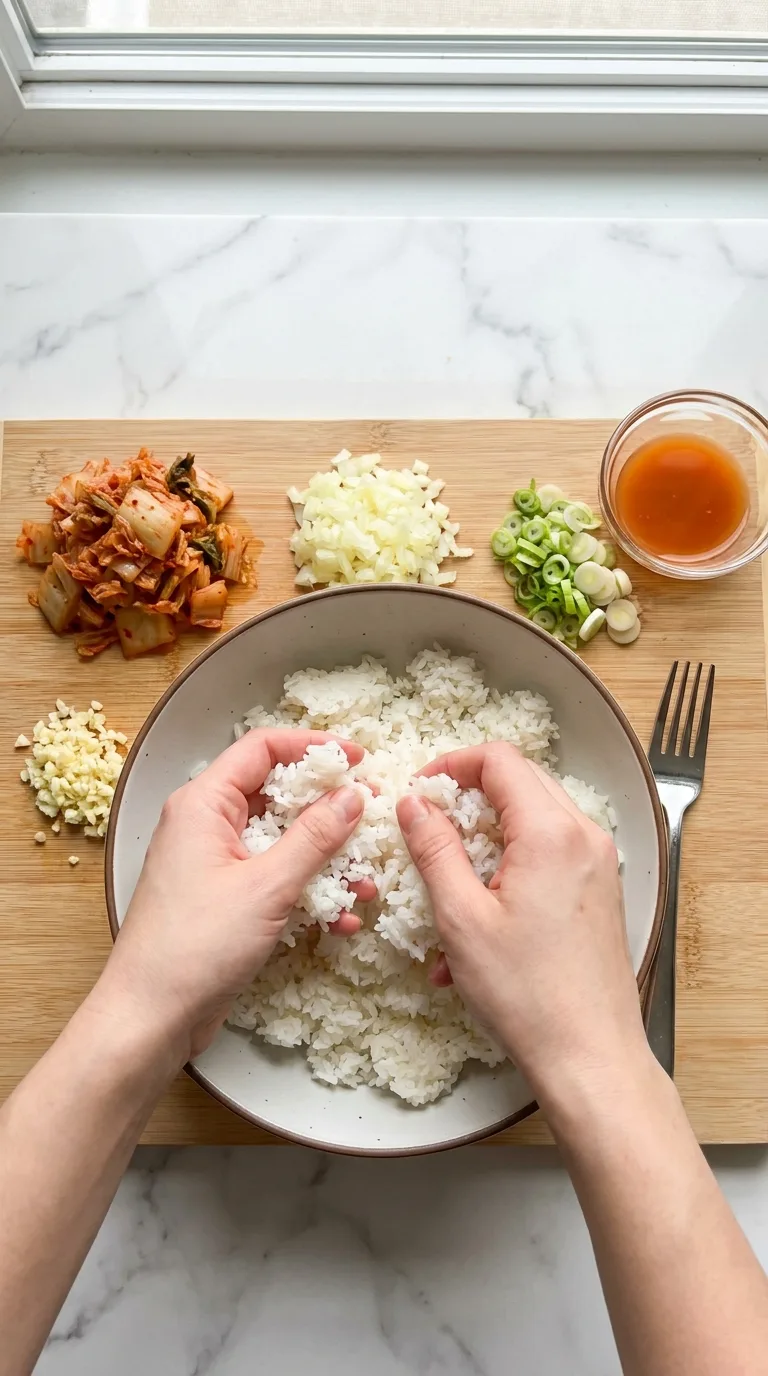
Break the cold rice apart with clean fingers or a fork so there are no large, compressed clumps. Chop the kimchi, onion, scallions, and garlic before heating the skillet because the cooking process moves quickly.
Mix the Seasoning Sauce
In a small bowl, stir together the kimchi juice, gochujang, soy sauce, and sugar. Continue stirring until the gochujang is mostly dissolved and the mixture is smooth enough to pour.
Fry the Eggs
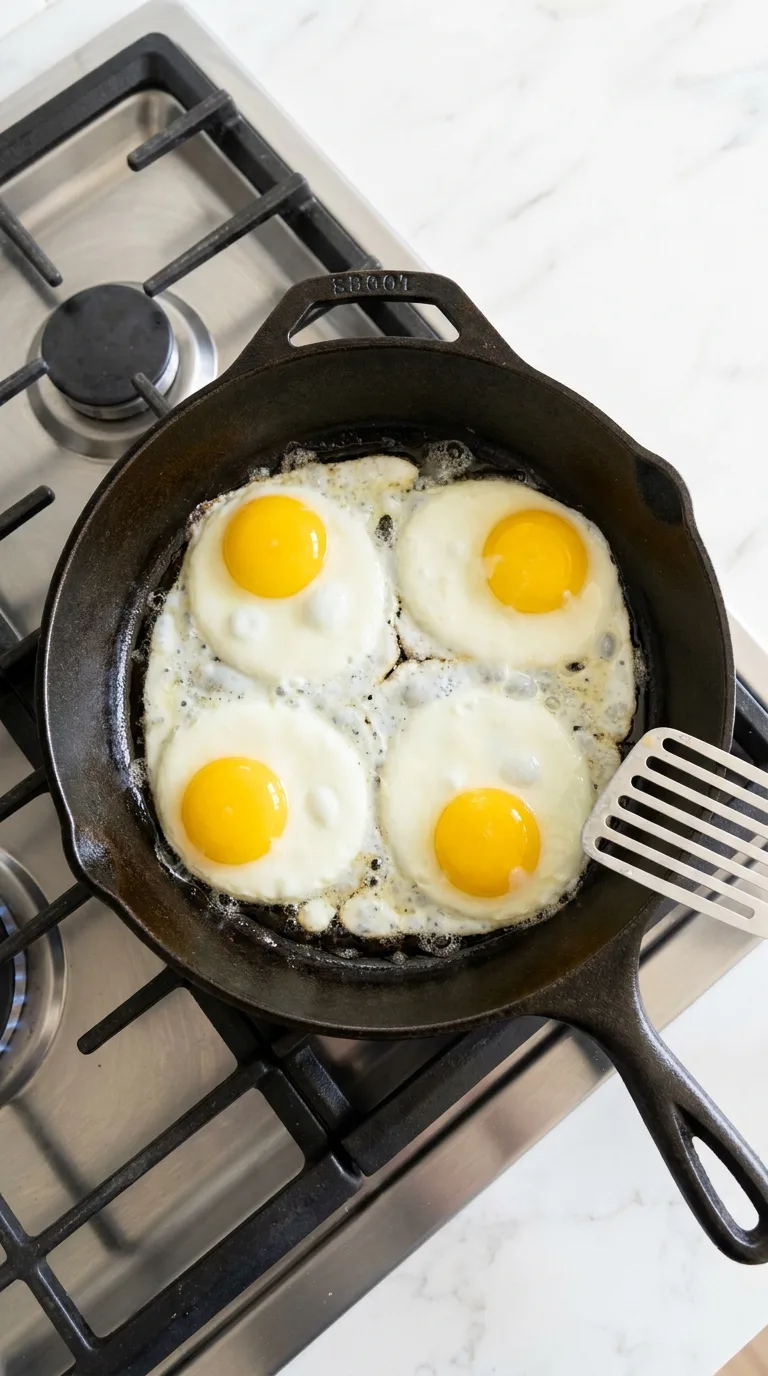
Heat 1 tablespoon (15 ml) of the neutral oil in a 12-inch (30 cm) skillet over medium heat. Fry the eggs in one or two batches until the whites are set and the yolks reach the desired doneness, about 3 to 5 minutes. Transfer them to a plate. For a fully cooked preparation, cook the eggs until the whites and yolks are firm and the centers reach 160°F (71°C). Use pasteurized eggs when serving soft or runny yolks.
Soften the Aromatics
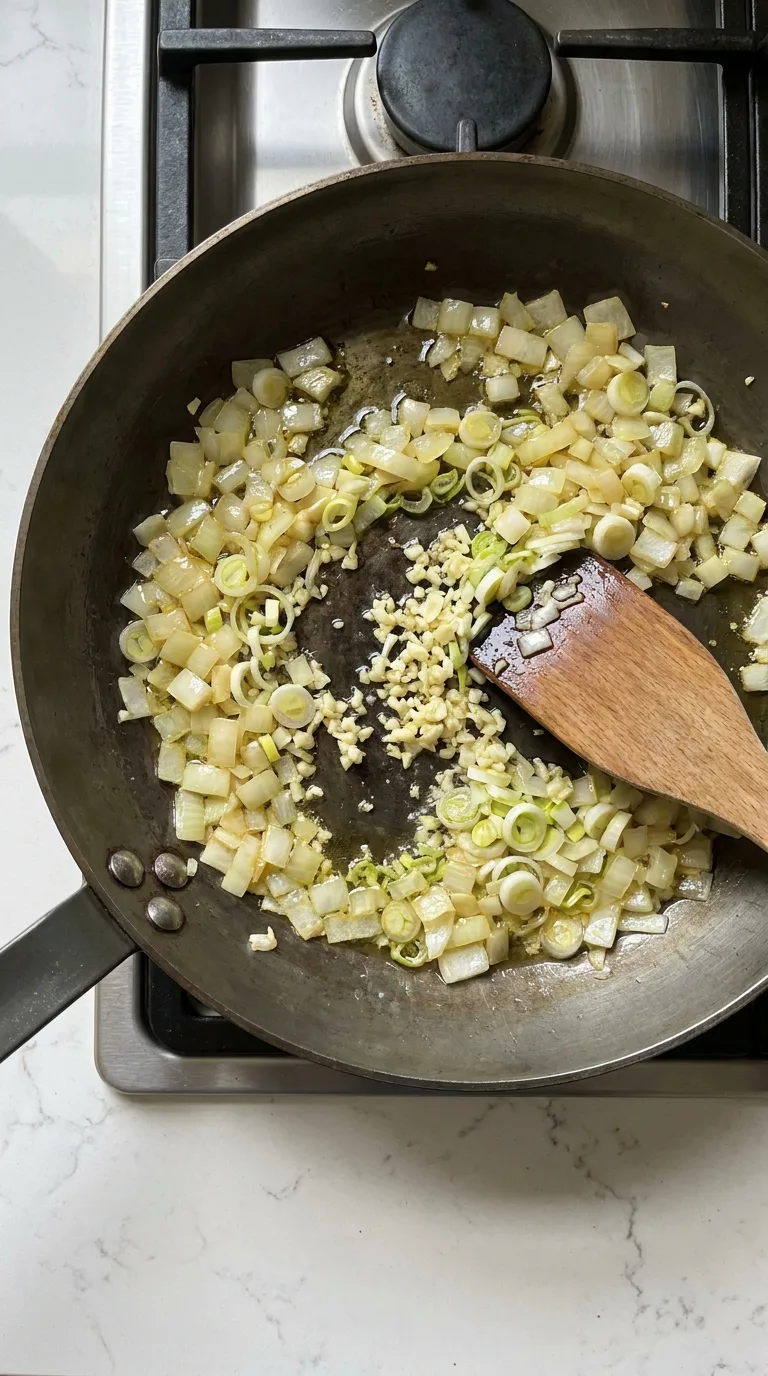
Return the skillet to medium-high heat and add the remaining 1 tablespoon (15 ml) neutral oil. Add the onion and scallion whites. Cook for 2 to 3 minutes, stirring frequently, until the onion is softened and beginning to turn translucent. Add the garlic and cook for about 30 seconds, just until fragrant; do not let it brown deeply.
Cook Down the Kimchi
Add the chopped kimchi. Cook for 3 to 4 minutes, stirring occasionally, until the visible liquid has evaporated and the kimchi looks slightly darker and glossy. A few lightly browned edges are desirable.
Fry the Rice
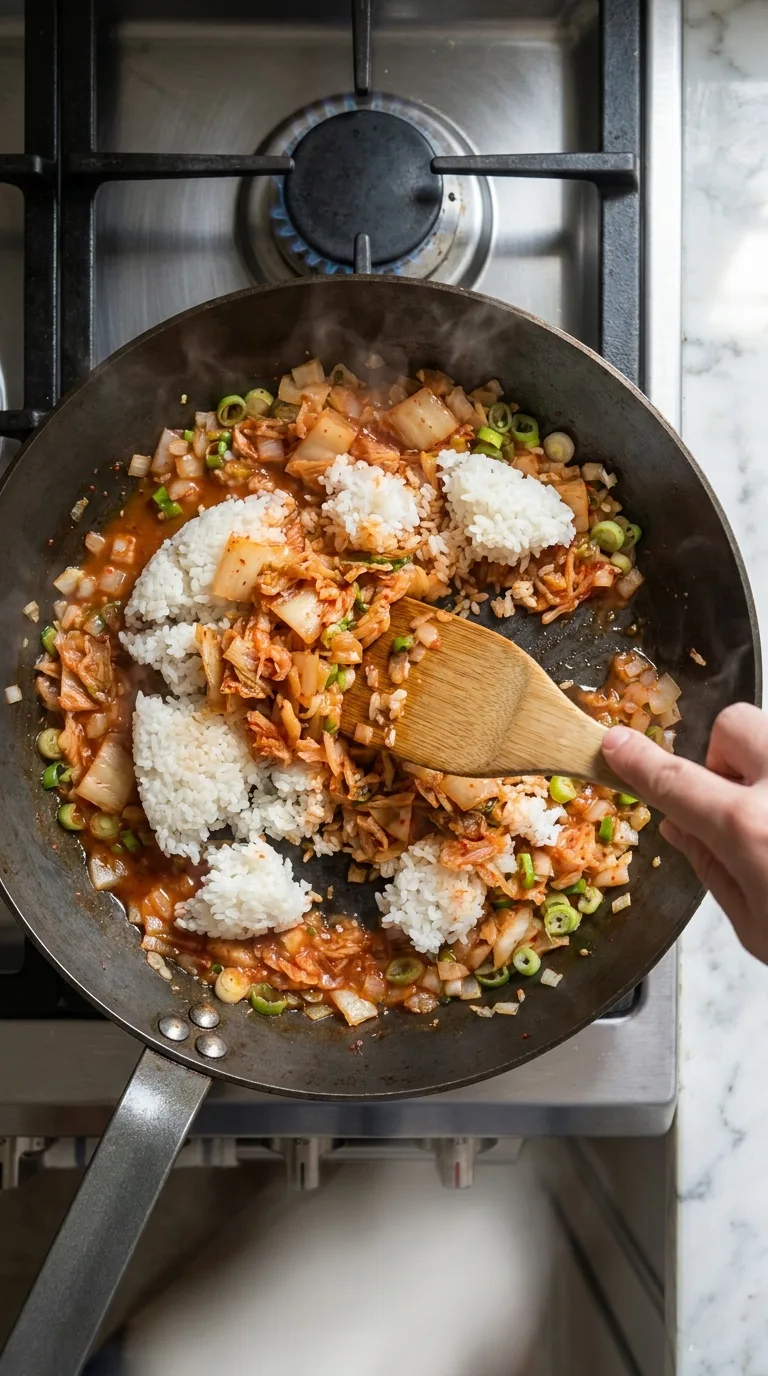
Increase the heat to high and add the cold rice. Press and fold it with the spatula to break apart any remaining clumps and distribute the kimchi. Spread the rice into an even layer and let it cook without stirring for 1 minute. Stir, spread it again, and cook for another minute. The grains should be hot, separate, and lightly toasted in spots rather than wet or soft.
Add the Sauce
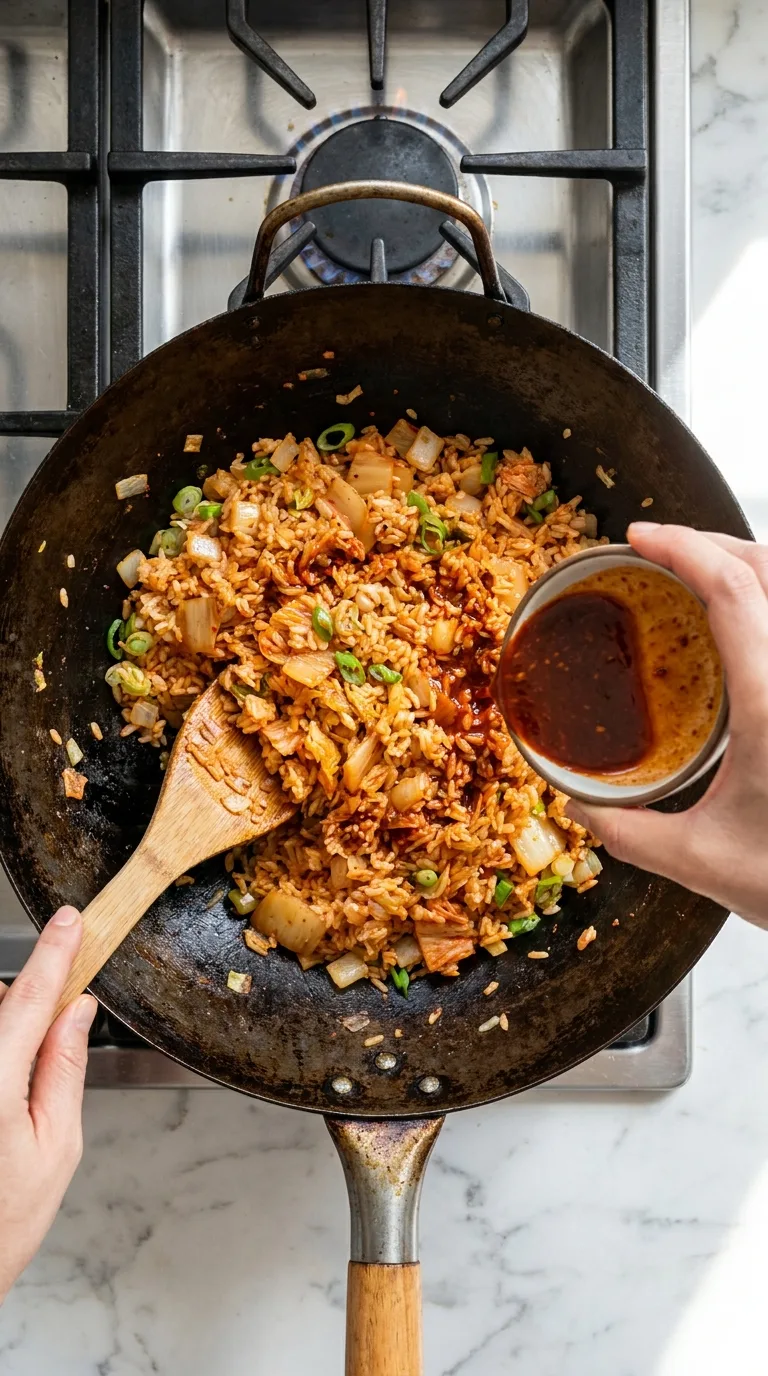
Pour the seasoning sauce evenly over the rice. Toss and stir for 3 to 4 minutes, scraping the bottom of the skillet as needed, until the rice is evenly red-orange and no wet sauce remains at the bottom. If the rice begins sticking aggressively or scorching, reduce the heat to medium-high.
Finish with Sesame Oil
Remove the skillet from the heat. Add the toasted sesame oil and most of the scallion greens, reserving a small amount for serving. Fold until evenly combined. Taste carefully; the kimchi and soy sauce may already provide enough salt.
Assemble the Bowls
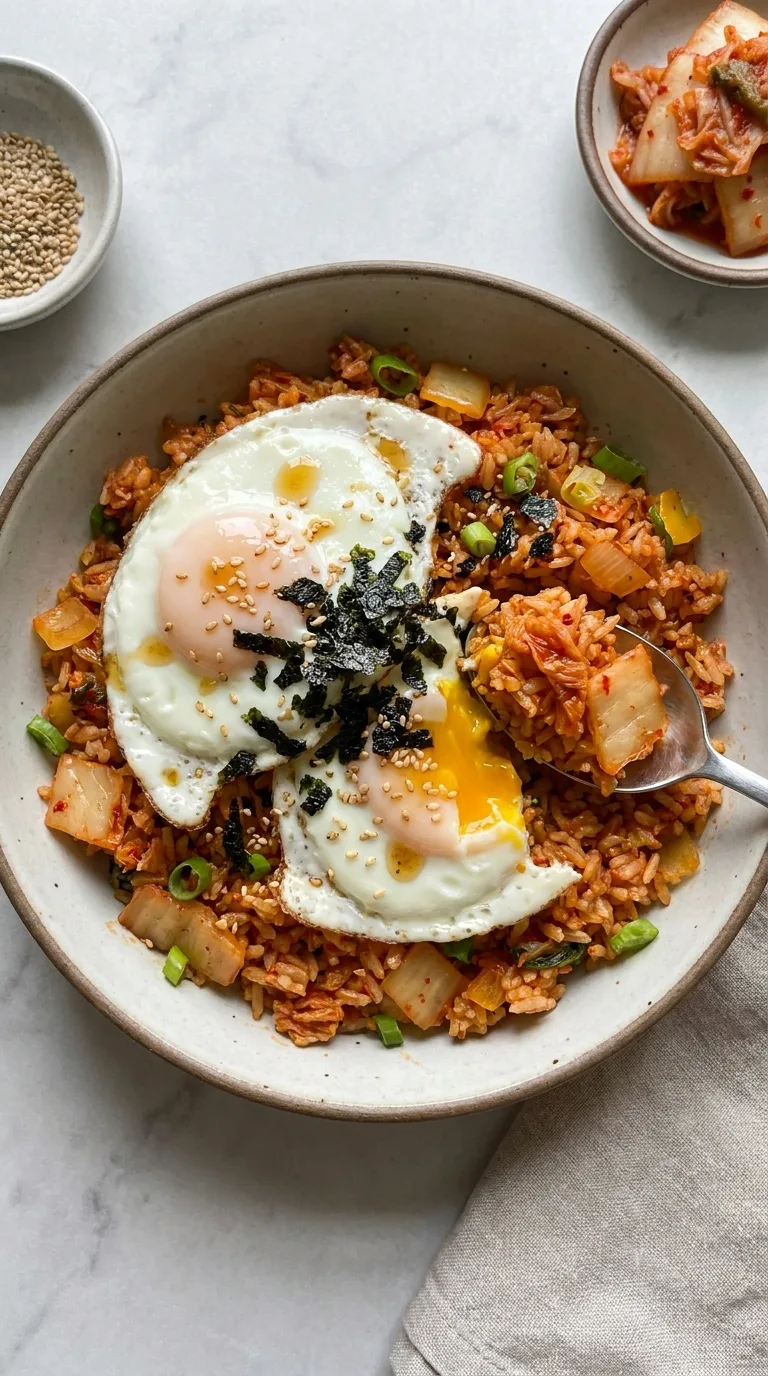
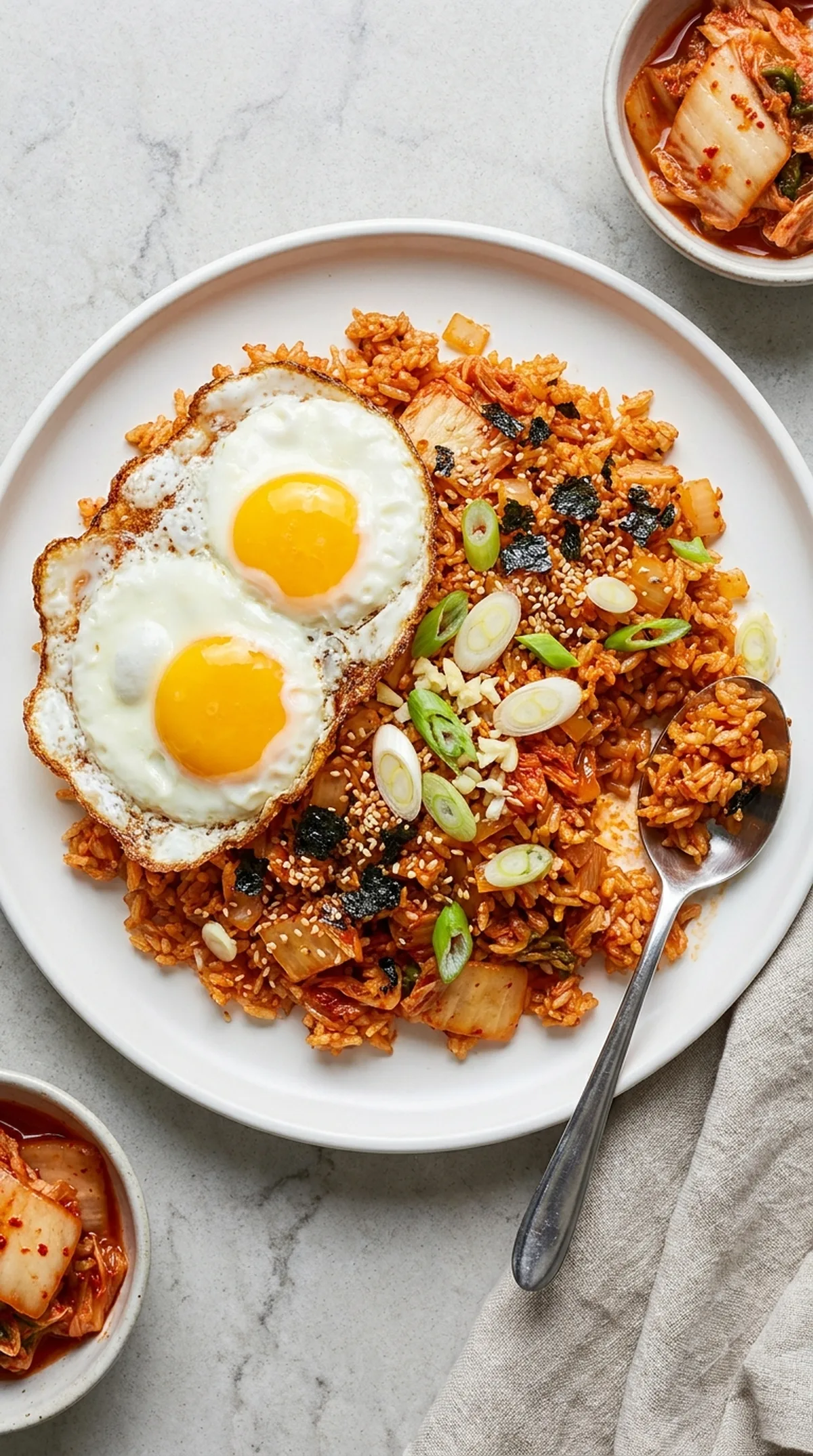
Divide the kimchi fried rice among four bowls. Top each portion with a fried egg. Sprinkle with the reserved scallion greens, toasted sesame seeds, and crumbled roasted gim, if using. Serve immediately.
Tips for Success
- Use rice that has been refrigerated in a shallow container. Dense, tightly packed rice should be loosened before it reaches the skillet so it does not break apart unevenly.
- Drain the chopped kimchi well and measure the juice separately. Adding uncontrolled amounts of liquid can make the rice soft and steamy.
- Use a wide skillet rather than a small saucepan. The larger cooking surface allows moisture to escape and gives more rice direct contact with the heat.
- Avoid constant stirring after adding the rice. Brief periods of undisturbed cooking create lightly crisp patches and deeper flavor.
- Adjust the burner as needed. The skillet should sound lively when the rice is added, but the gochujang sauce should not scorch.
- Different kimchi brands vary significantly in salt and heat, so taste the finished rice before adding any extra seasoning.
Storage, Freezing, and Make-Ahead Instructions
Transfer leftover kimchi fried rice to shallow, airtight containers and refrigerate it within 2 hours of cooking. Store for up to 4 days. Keep leftover fried eggs in a separate covered container when possible.
For freezing, cool the rice promptly and freeze it without the fried eggs in airtight containers or freezer bags for up to 1 month for the best texture. Press out excess air before sealing. Thaw overnight in the refrigerator, or reheat directly from frozen with a small splash of water.
Reheat the rice in a lightly oiled skillet over medium heat, stirring occasionally, until steaming hot. It can also be microwaved in a covered, microwave-safe container; stir midway through heating to eliminate cold spots. Reheated leftovers should reach 165°F (74°C).
For advance preparation, cook and refrigerate the rice up to 1 day ahead. The onion, scallions, garlic, and kimchi can also be chopped and refrigerated separately for up to 1 day. Mix the seasoning sauce shortly before cooking so it remains easy to stir and pour.
FAQ
Can I use freshly cooked rice?
Yes, but it must lose some of its heat and surface moisture first. Spread the cooked rice in a thin layer on a rimmed baking sheet and let it cool for 20 to 30 minutes, then refrigerate it briefly when time allows. Do not leave cooked rice at room temperature for longer than 2 hours.
Why did my kimchi fried rice turn mushy?
The most common causes are hot, freshly steamed rice, very wet kimchi, too much kimchi juice, or an overcrowded skillet. Cook the kimchi until its excess moisture evaporates and use high enough heat that the rice fries rather than steams.
Can I make this kimchi fried rice vegan?
Yes. Omit the fried eggs and use kimchi made without fish sauce, shrimp paste, or other seafood ingredients. Pan-seared tofu or shelled edamame can be added for extra substance, although they will change the traditional flavor and texture.
Can I use brown rice?
Brown rice works, but its firmer bran layer produces a chewier, less cohesive result. Make sure the rice is fully cooked and thoroughly chilled before frying.
How can I make the dish less spicy?
Reduce the gochujang to 2 teaspoons and use a mild kimchi. Do not eliminate the kimchi juice completely, since it supplies acidity and helps distribute the seasoning throughout the rice.
Ingredients
Method
- Break the cold rice apart with clean fingers or a fork so there are no large, compressed clumps. Chop the kimchi, onion, scallions, and garlic before heating the skillet because the cooking process moves quickly.
- In a small bowl, stir together the kimchi juice, gochujang, soy sauce, and sugar. Continue stirring until the gochujang is mostly dissolved and the mixture is smooth enough to pour.
- Heat 1 tablespoon (15 ml) of the neutral oil in a 12-inch (30 cm) skillet over medium heat. Fry the eggs in one or two batches until the whites are set and the yolks reach the desired doneness, about 3 to 5 minutes. Transfer them to a plate. For a fully cooked preparation, cook the eggs until the whites and yolks are firm and the centers reach 160°F (71°C). Use pasteurized eggs when serving soft or runny yolks.
- Return the skillet to medium-high heat and add the remaining 1 tablespoon (15 ml) neutral oil. Add the onion and scallion whites. Cook for 2 to 3 minutes, stirring frequently, until the onion is softened and beginning to turn translucent. Add the garlic and cook for about 30 seconds, just until fragrant; do not let it brown deeply.
- Add the chopped kimchi: Cook for 3 to 4 minutes, stirring occasionally, until the visible liquid has evaporated and the kimchi looks slightly darker and glossy. A few lightly browned edges are desirable.
- Increase the heat to high and add the cold rice. Press and fold it with the spatula to break apart any remaining clumps and distribute the kimchi. Spread the rice into an even layer and let it cook without stirring for 1 minute. Stir, spread it again, and cook for another minute. The grains should be hot, separate, and lightly toasted in spots rather than wet or soft.
- Pour the seasoning sauce evenly over the rice: Toss and stir for 3 to 4 minutes, scraping the bottom of the skillet as needed, until the rice is evenly red-orange and no wet sauce remains at the bottom. If the rice begins sticking aggressively or scorching, reduce the heat to medium-high.
- Remove the skillet from the heat: Add the toasted sesame oil and most of the scallion greens, reserving a small amount for serving. Fold until evenly combined. Taste carefully; the kimchi and soy sauce may already provide enough salt.
- Divide the kimchi fried rice among four bowls: Top each portion with a fried egg. Sprinkle with the reserved scallion greens, toasted sesame seeds, and crumbled roasted gim, if using. Serve immediately.