# French Butter Cake
## 2. Introduction
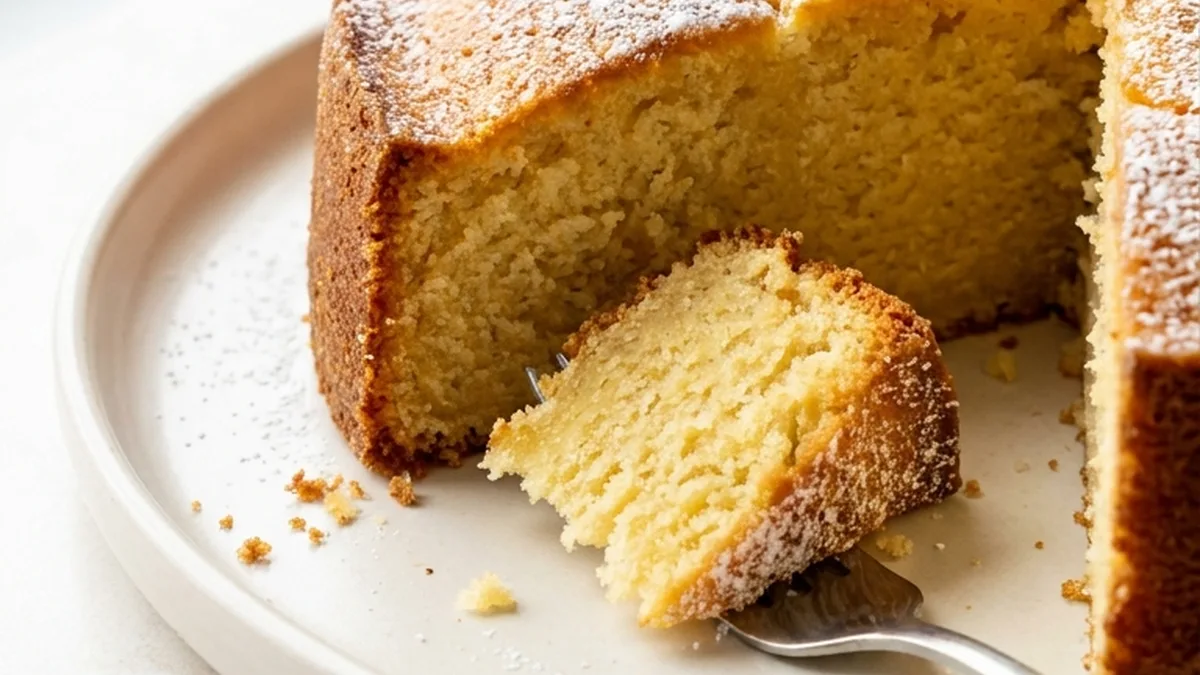
French Butter Cake is a rich, tender cake with a buttery crumb, delicate golden crust, and a simple vanilla flavor that lets the quality of the ingredients shine. It is made with creamed butter and sugar, eggs, flour, and a small amount of dairy for a moist texture without requiring frosting or elaborate decoration.
This cake is straightforward to prepare in a 9-inch round cake pan and is especially good served slightly warm or at room temperature. A careful creaming step and gentle mixing help create an even crumb, while baking at moderate heat allows the center to cook without over-browning the edges.
## 3. Recipe Card Details
Prep Time: 15 minutes
Cook Time: 40 minutes
Additional Time: 30 minutes
Total Time: 1 hour 25 minutes
Yield: 1 9-inch cake
Servings: 10 slices
Category: Dessert
Cuisine: French
Cooking Method: Baking
Difficulty: Easy
Calories Per Serving: Not calculated
## 4. Why This Recipe Works
* **Butter provides richness and a tender crumb.** Creaming the butter with sugar also incorporates air that helps give the cake a lighter texture.
* **Room-temperature eggs blend more smoothly.** They emulsify more easily with the butter mixture, reducing the chance of a curdled batter.
* **A modest amount of leavening keeps the cake tender.** The cake rises without becoming overly airy or sponge-like.
* **Vanilla complements the buttery flavor.** It adds depth without competing with the main flavor of the cake.
* **Cooling before slicing helps the crumb set.** The cake becomes easier to cut cleanly while retaining its moisture.
## 5. Equipment Needed
* 9-inch (23-cm) round cake pan
* Parchment paper
* Large mixing bowl
* Medium mixing bowl
* Electric hand mixer or stand mixer
* Rubber spatula
* Whisk
* Wire cooling rack
## 6. Ingredients List
### French Butter Cake
* 1 cup (227 g) unsalted butter, softened to room temperature
* 1 cup (200 g) granulated sugar
* 3 large eggs (about 150 g without shells), at room temperature
* 2 teaspoons (10 ml) vanilla extract
* 1 1/2 cups (180 g) all-purpose flour
* 1 1/2 teaspoons (6 g) baking powder
* 1/4 teaspoon (1 g) fine salt
* 1/2 cup (120 ml) whole milk, at room temperature
### For the Pan
* 1 tablespoon (14 g) unsalted butter, softened
* 1 tablespoon (8 g) all-purpose flour
### For Serving
* Powdered sugar, optional
* Fresh berries, optional
## 7. Ingredient Notes and Substitutions
* **Unsalted butter:** This is the main source of richness and buttery flavor. Salted butter can be used, but omit the added salt to avoid an overly salty cake.
* **All-purpose flour:** Provides enough structure while keeping the cake tender. Cake flour can replace it by weight, producing a softer, more delicate crumb.
* **Whole milk:** Adds moisture and helps create a tender batter. Half-and-half can replace it for a slightly richer cake, while 2% milk will produce a somewhat lighter crumb.
* **Granulated sugar:** Sweetens the cake and helps aerate the butter during creaming. Do not make a large reduction, as sugar also affects moisture and texture.
* **Eggs:** Provide structure, richness, and emulsification. There is no simple one-for-one substitute that reliably preserves the same texture in this butter cake.
## 8. Step-by-Step Instructions
1. **Prepare the pan.**
Heat the oven to 350°F (175°C). Grease a 9-inch (23-cm) round cake pan with 1 tablespoon (14 g) softened butter, dust with 1 tablespoon (8 g) flour, and tap out the excess. Line the bottom with parchment paper for easier release.
2. **Combine the dry ingredients.**
Whisk the flour, baking powder, and salt together in a medium bowl. Set aside.
3. **Cream the butter and sugar.**
In a large bowl, beat the 1 cup (227 g) softened butter and granulated sugar with an electric mixer on medium speed for about 3 to 4 minutes. The mixture should look pale, creamy, and noticeably lighter in texture.
4. **Add the eggs and vanilla.**
Add the eggs one at a time, mixing on medium-low speed after each addition until incorporated. Scrape down the bowl as needed. Mix in the vanilla. If the mixture looks slightly curdled, continue with the recipe rather than adding extra flour.
5. **Add the flour and milk.**
Add about one-third of the flour mixture to the butter mixture and mix on low speed just until nearly incorporated. Add half of the milk, followed by another third of the flour mixture. Add the remaining milk and finish with the remaining flour. Mix only until no dry flour remains.
6. **Fill the pan.**
Transfer the batter to the prepared cake pan and smooth the top with a rubber spatula. The batter should be thick but spreadable and should sit evenly in the pan.
7. **Bake.**
Bake at 350°F (175°C) for 38 to 42 minutes, or until the top is golden brown and a toothpick inserted into the center comes out clean or with a few moist crumbs attached. The center should spring back lightly when gently pressed.
8. **Cool the cake.**
Let the cake cool in the pan on a wire rack for 10 minutes. Run a thin knife around the edge if needed, then carefully remove the cake from the pan and place it on the rack. Cool for another 20 minutes before slicing.
9. **Serve.**
Serve the cake slightly warm or at room temperature. Dust with optional powdered sugar and serve with fresh berries if desired.
## 9. Tips for Success
* **Use properly softened butter.** It should yield easily when pressed but should not look oily or melted.
* **Measure flour accurately.** Too much flour can make a butter cake noticeably dense and dry.
* **Do not overmix after adding flour.** Mix only until the batter is uniform to protect the tender crumb.
* **Avoid opening the oven early.** The cake needs time to establish its structure before the oven door is opened.
* **Use the toothpick test together with visual cues.** A golden top and lightly springy center are useful signs, but the center should also be free of wet batter.
## 10. Storage, Freezing, and Make-Ahead Instructions
Store the cooled cake in an airtight container at room temperature for up to 3 days. Keep it away from direct heat and sunlight to help preserve the crumb.
For longer storage, wrap the completely cooled cake tightly in plastic wrap and place it in a freezer-safe container or bag. Freeze for up to 2 months. Thaw overnight in the refrigerator or for several hours at room temperature while still wrapped to reduce moisture loss.
The cake can be baked 1 day ahead and kept covered at room temperature. Add powdered sugar and fresh berries just before serving rather than storing them on the cake.
## 11. FAQ
### Can I use salted butter?
Yes. Replace the unsalted butter with the same amount of salted butter, but omit the 1/4 teaspoon (1 g) added salt.
### Why is my French Butter Cake dense?
Overmixing after adding the flour, using too much flour, or failing to cream the butter and sugar sufficiently can make the cake dense. Cream the butter and sugar until pale and fluffy, then mix the flour in gently.
### Can I make this cake ahead of time?
Yes. Bake it up to 1 day ahead and keep it covered at room temperature. The cake can also be frozen for up to 2 months.
### Can I use a different pan?
A 9-inch (23-cm) round pan gives the intended thickness. A different-size pan will change the baking time and cake height, so monitor the cake closely and rely on doneness cues rather than the original timing alone.
### How do I know when the cake is done?
The top should be golden brown, the center should spring back lightly when touched, and a toothpick inserted into the center should come out clean or with a few moist crumbs rather than wet batter.
## 12. SEO and Pinterest Metadata
SEO Title: French Butter Cake with a Tender, Buttery Crumb
Meta Description: Make French Butter Cake with a rich buttery crumb, golden crust, and simple vanilla flavor. This easy 9-inch cake needs no frosting and is perfect for dessert or afternoon tea.
Suggested URL Slug: french-butter-cake
Primary Keyword: French Butter Cake
Secondary Keywords: French butter cake recipe, buttery French cake, vanilla butter cake, easy butter cake, French dessert cake, homemade butter cake
Pinterest Title: French Butter Cake with a Tender, Buttery Crumb
Pinterest Description: French Butter Cake is a simple, rich cake with a golden crust and tender buttery crumb. Made with everyday baking ingredients, this unfrosted cake is easy to serve with powdered sugar, fresh berries, or a cup of coffee.
Image Alt Text: Round golden French butter cake dusted with powdered sugar and served with fresh berries
Recipe Category: Dessert
Recipe Cuisine: French
Cooking Method: Baking
Ingredients
Method
- Heat the oven to 350°F (175°C). Grease a 9-inch (23-cm) round cake pan with 1 tablespoon (14 g) softened butter, dust with 1 tablespoon (8 g) flour, and tap out the excess. Line the bottom with parchment paper for easier release.
- Whisk the flour, baking powder, and salt together in a medium bowl. Set aside.
- In a large bowl, beat the 1 cup (227 g) softened butter and granulated sugar with an electric mixer on medium speed for about 3 to 4 minutes. The mixture should look pale, creamy, and noticeably lighter in texture.
- Add the eggs one at a time, mixing on medium-low speed after each addition until incorporated. Scrape down the bowl as needed. Mix in the vanilla. If the mixture looks slightly curdled, continue with the recipe rather than adding extra flour.
- Add about one-third of the flour mixture to the butter mixture and mix on low speed just until nearly incorporated. Add half of the milk, followed by another third of the flour mixture. Add the remaining milk and finish with the remaining flour. Mix only until no dry flour remains.
- Transfer the batter to the prepared cake pan and smooth the top with a rubber spatula. The batter should be thick but spreadable and should sit evenly in the pan.
- Bake at 350°F (175°C) for 38 to 42 minutes, or until the top is golden brown and a toothpick inserted into the center comes out clean or with a few moist crumbs attached. The center should spring back lightly when gently pressed.
- Let the cake cool in the pan on a wire rack for 10 minutes. Run a thin knife around the edge if needed, then carefully remove the cake from the pan and place it on the rack. Cool for another 20 minutes before slicing.
- Serve the cake slightly warm or at room temperature. Dust with optional powdered sugar and serve with fresh berries if desired.