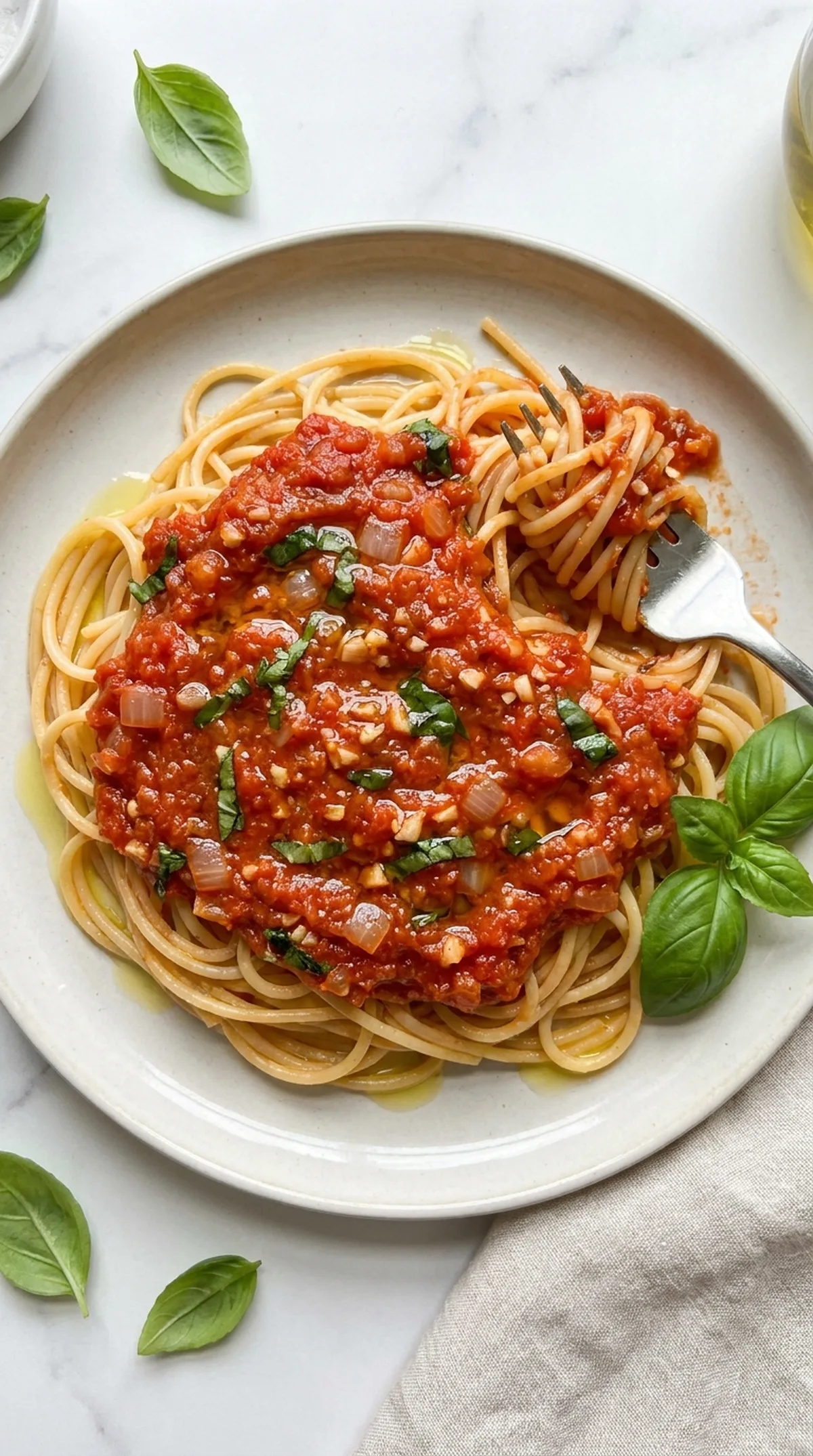
Homemade Spaghetti Sauce with Fresh Tomatoes is a rich, flavorful sauce that lets ripe tomatoes shine. Slowly simmered with onions, garlic, olive oil, herbs, and a touch of tomato paste, this classic sauce develops a deep, balanced flavor while keeping the bright taste of fresh tomatoes. It’s thick enough to coat pasta beautifully without feeling overly heavy.
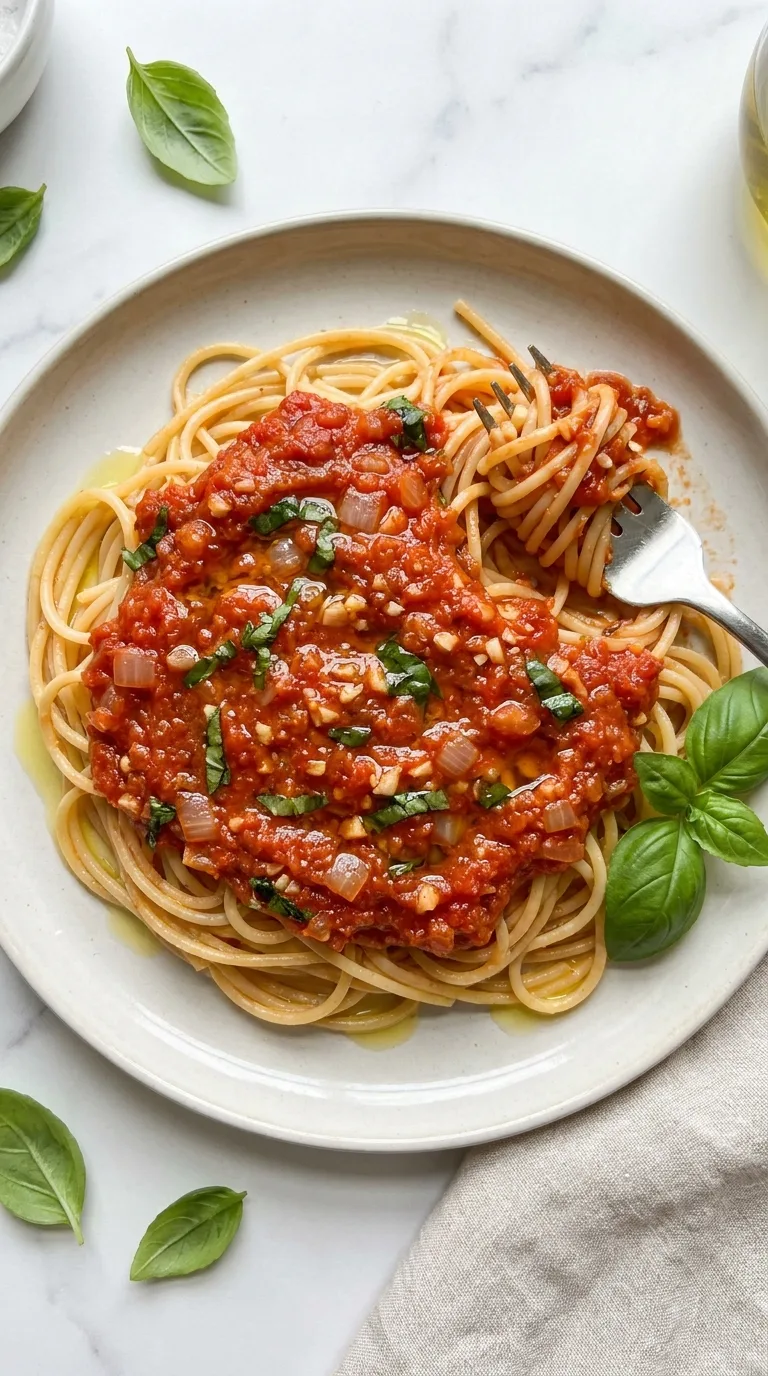
Perfect for weeknight dinners or weekend batch cooking, this homemade spaghetti sauce freezes well and can be used in everything from pasta dishes to lasagna and baked ziti. Making it from fresh tomatoes is a delicious way to enjoy garden tomatoes during peak season.
Recipe at a Glance
- Prep Time: 25 minutes
- Cook Time: 1 hour 20 minutes
- Additional Time: 10 minutes
- Total Time: 1 hour 55 minutes
- Yield: About 8 cups
- Servings: 8
- Cooking Method: Stovetop
- Difficulty: Easy
Why You’ll Love This Recipe
- Fresh tomatoes provide a naturally bright, sweet flavor that canned tomatoes can’t fully replicate.
- Simmering the sauce slowly concentrates the flavors without scorching.
- Tomato paste adds richness and helps naturally thicken the sauce.
- Fresh basil and dried Italian herbs create a balanced, classic Italian flavor.
- The sauce freezes beautifully for quick homemade meals later.
Equipment Needed
- Large stockpot or Dutch oven (6 quarts)
- Large saucepan for blanching
- Large bowl filled with ice water
- Slotted spoon
- Chef’s knife
- Cutting board
- Wooden spoon
- Blender or immersion blender (optional)
Ingredients You’ll Need
Main Ingredients
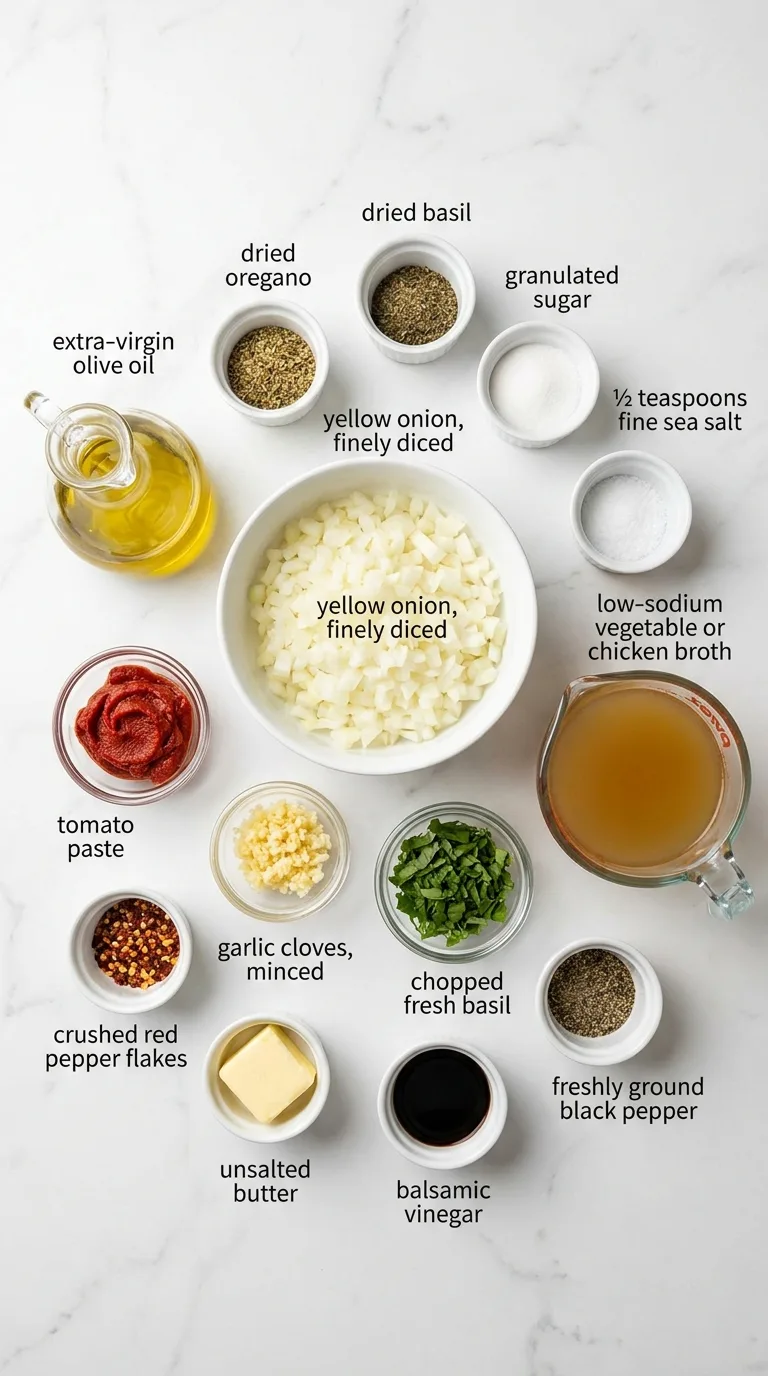
- 5 pounds (2.3 kg) ripe Roma or plum tomatoes
- 3 tablespoons (45 ml) extra-virgin olive oil
- 1 large yellow onion (200 g), finely diced
- 6 garlic cloves (18 g), minced
- 2 tablespoons (32 g) tomato paste
- 1 cup (240 ml) low-sodium vegetable or chicken broth
Seasonings
- 2 teaspoons dried Italian seasoning
- 1 teaspoon dried oregano
- ½ teaspoon dried basil
- 1 teaspoon granulated sugar, optional
- 1½ teaspoons fine sea salt
- ½ teaspoon freshly ground black pepper
- ¼ teaspoon crushed red pepper flakes, optional
Finish
- ¼ cup (10 g) chopped fresh basil
- 2 tablespoons (30 g) unsalted butter, optional
- 1 tablespoon (15 ml) balsamic vinegar, optional
How to Make Homemade Spaghetti Sauce with Fresh Tomatoes
Prepare the Tomatoes
Bring a large pot of water to a boil. Score a shallow “X” in the bottom of each tomato. Boil the tomatoes for 30 to 45 seconds, then immediately transfer them to ice water. Once cool enough to handle, peel away the skins, remove the cores, and roughly chop the tomatoes. This process helps to easily remove the skins, resulting in a smoother sauce.
Cook the Aromatics
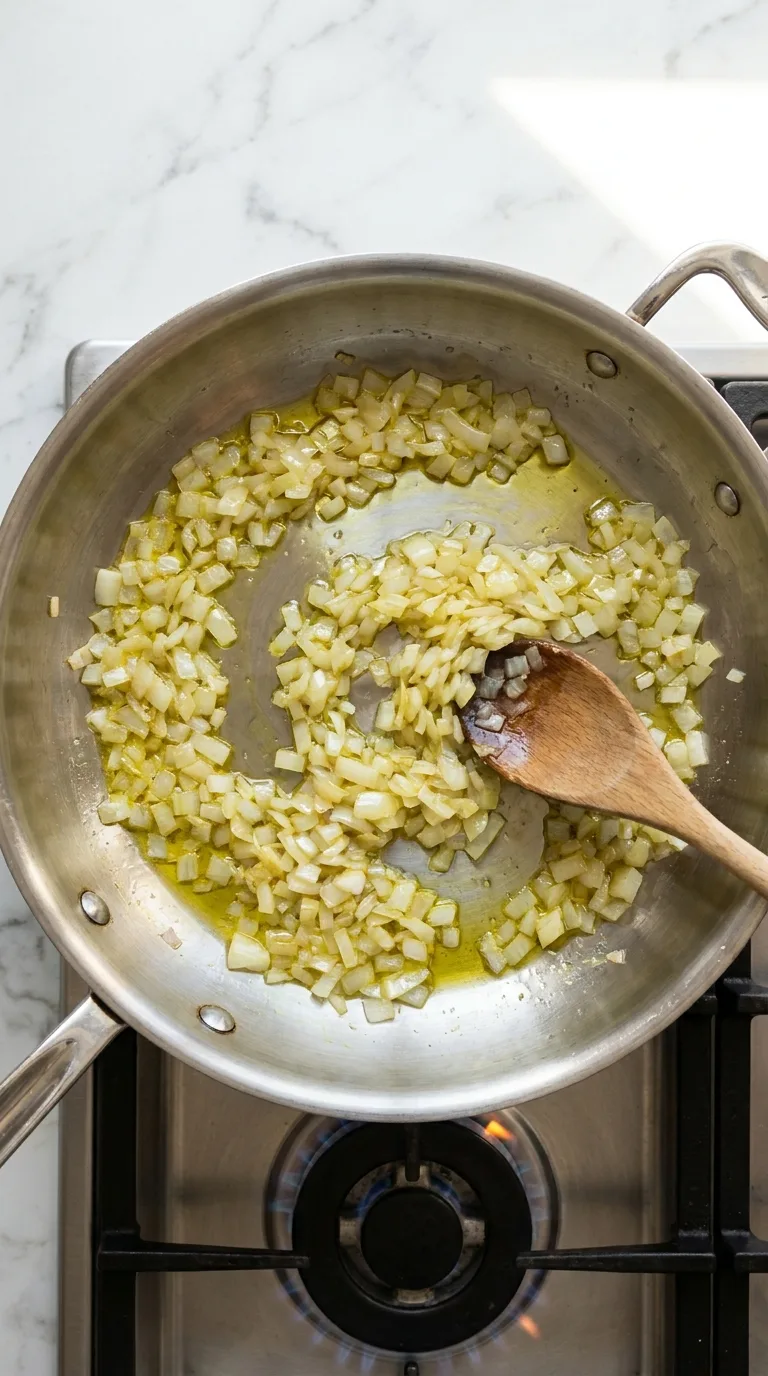
Heat the olive oil in a large Dutch oven over medium heat. Add the onion and cook for 6 to 8 minutes, stirring occasionally until softened and translucent. Add the garlic and cook for another 30 seconds, just until fragrant. Cooking the aromatics properly builds a flavorful base for the sauce.
Add Tomato Paste
Stir in the tomato paste and cook for 2 minutes, stirring constantly until it darkens slightly and becomes fragrant. This step enhances the sauce’s depth and richness, contributing to its overall flavor.
Build the Sauce
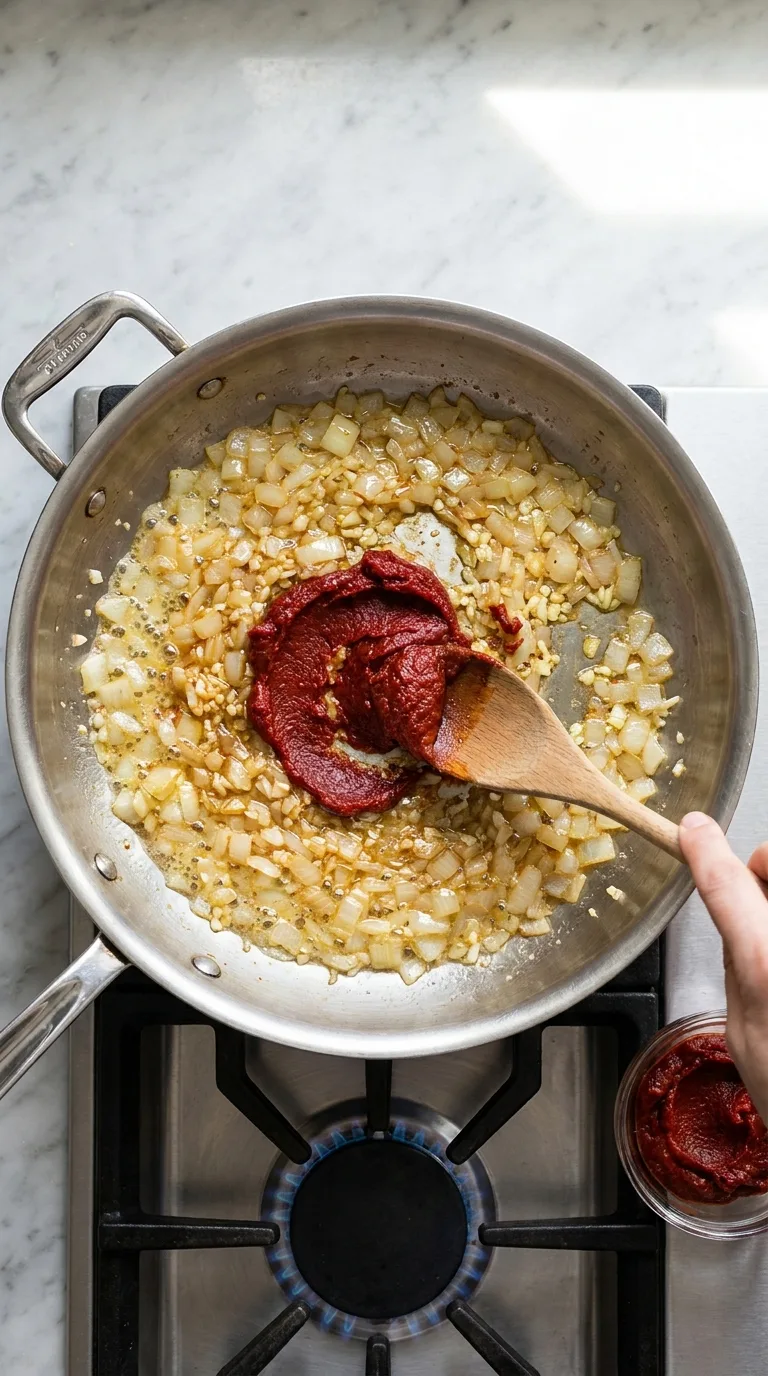
Add the chopped tomatoes, broth, Italian seasoning, oregano, dried basil, salt, black pepper, and crushed red pepper flakes if using. Stir well to combine. This mixture is where all the flavors come together, creating the heart of the sauce.
Simmer
Bring the sauce to a gentle simmer. Reduce the heat to low and cook uncovered for 60 to 75 minutes, stirring every 10 to 15 minutes. The sauce should reduce noticeably and become thick enough to coat the back of a spoon. This slow cooking allows the flavors to concentrate and develop.
Blend (Optional)
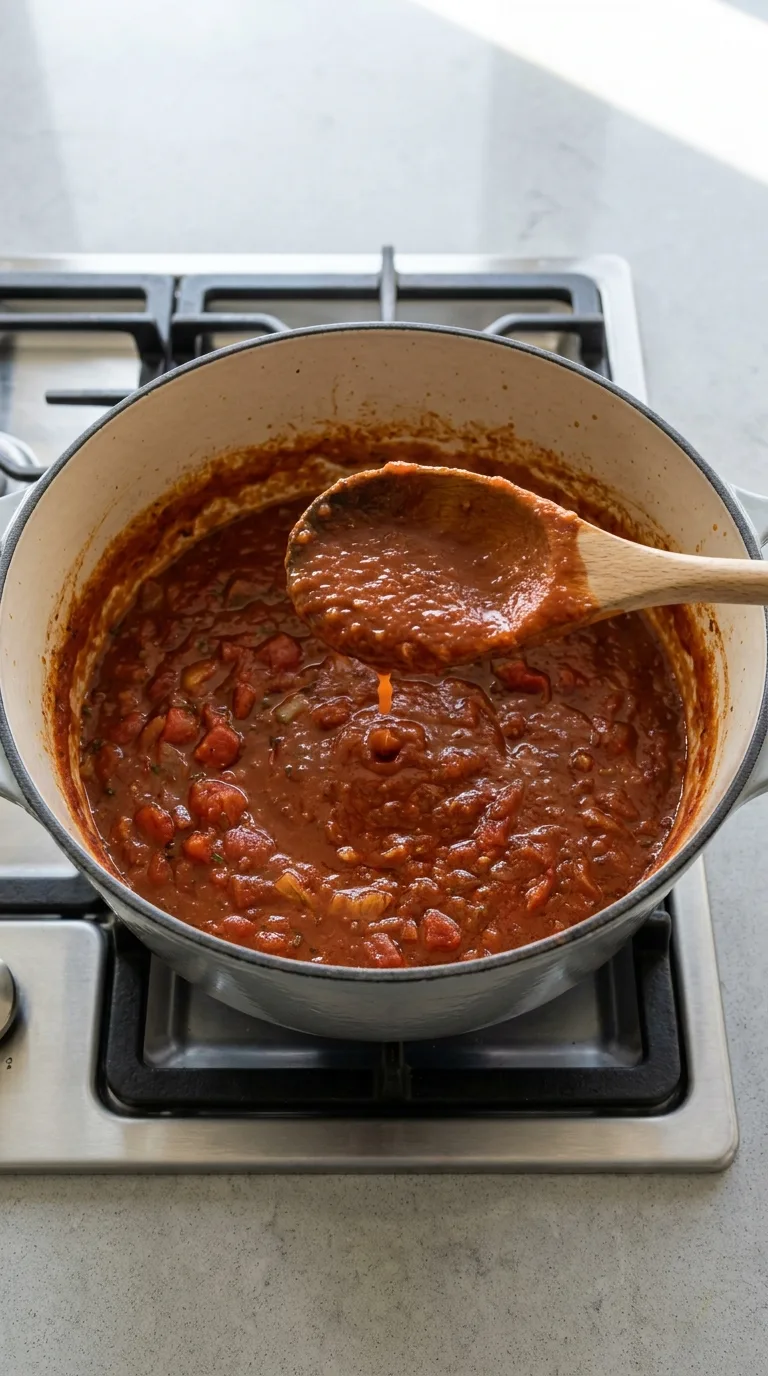
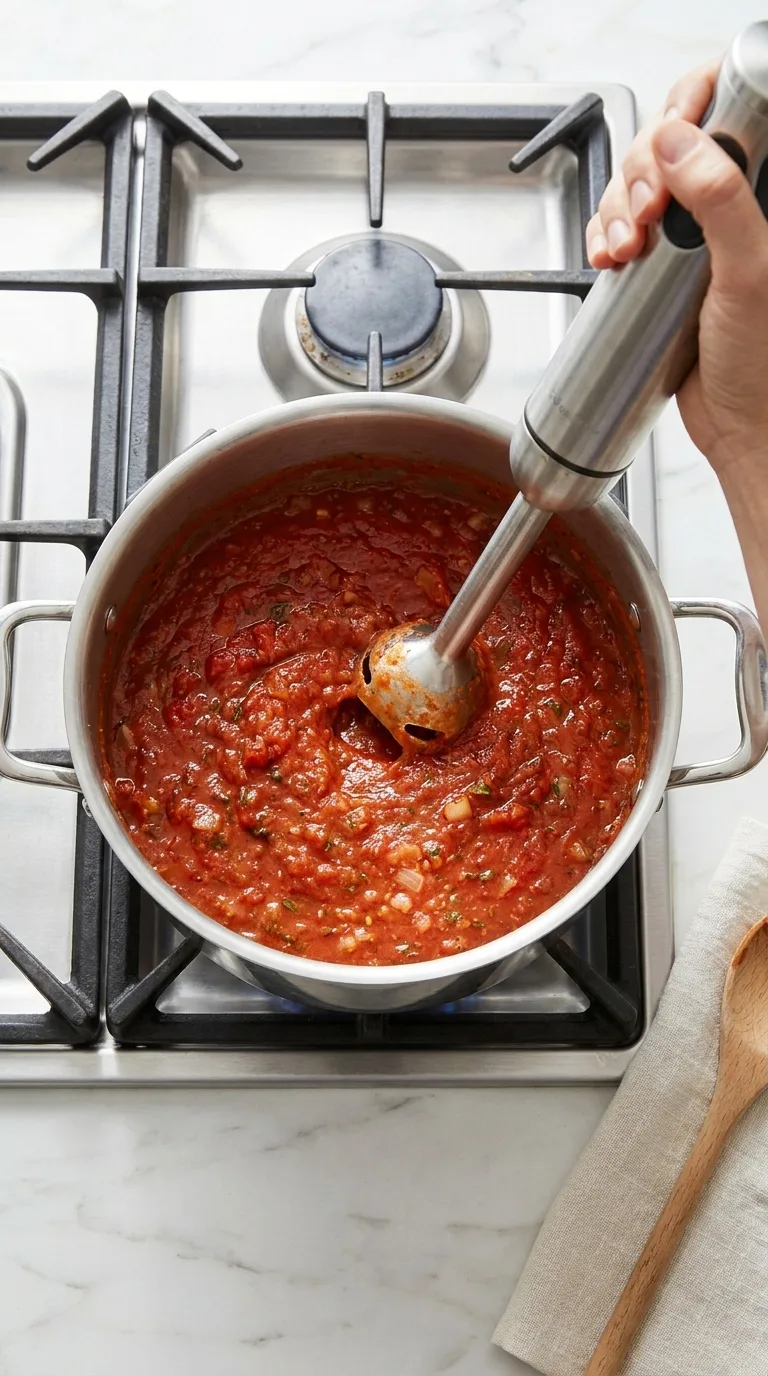
For a smooth spaghetti sauce, use an immersion blender directly in the pot or carefully transfer the sauce to a blender in batches. For a rustic sauce, leave it chunky. Blending is optional based on your texture preference.
Finish the Sauce
Stir in the fresh basil. If desired, add the butter for extra richness and the balsamic vinegar for added depth. Taste the sauce and add the sugar only if the tomatoes are noticeably acidic. This final step enhances the flavor and balances the acidity.
Serve
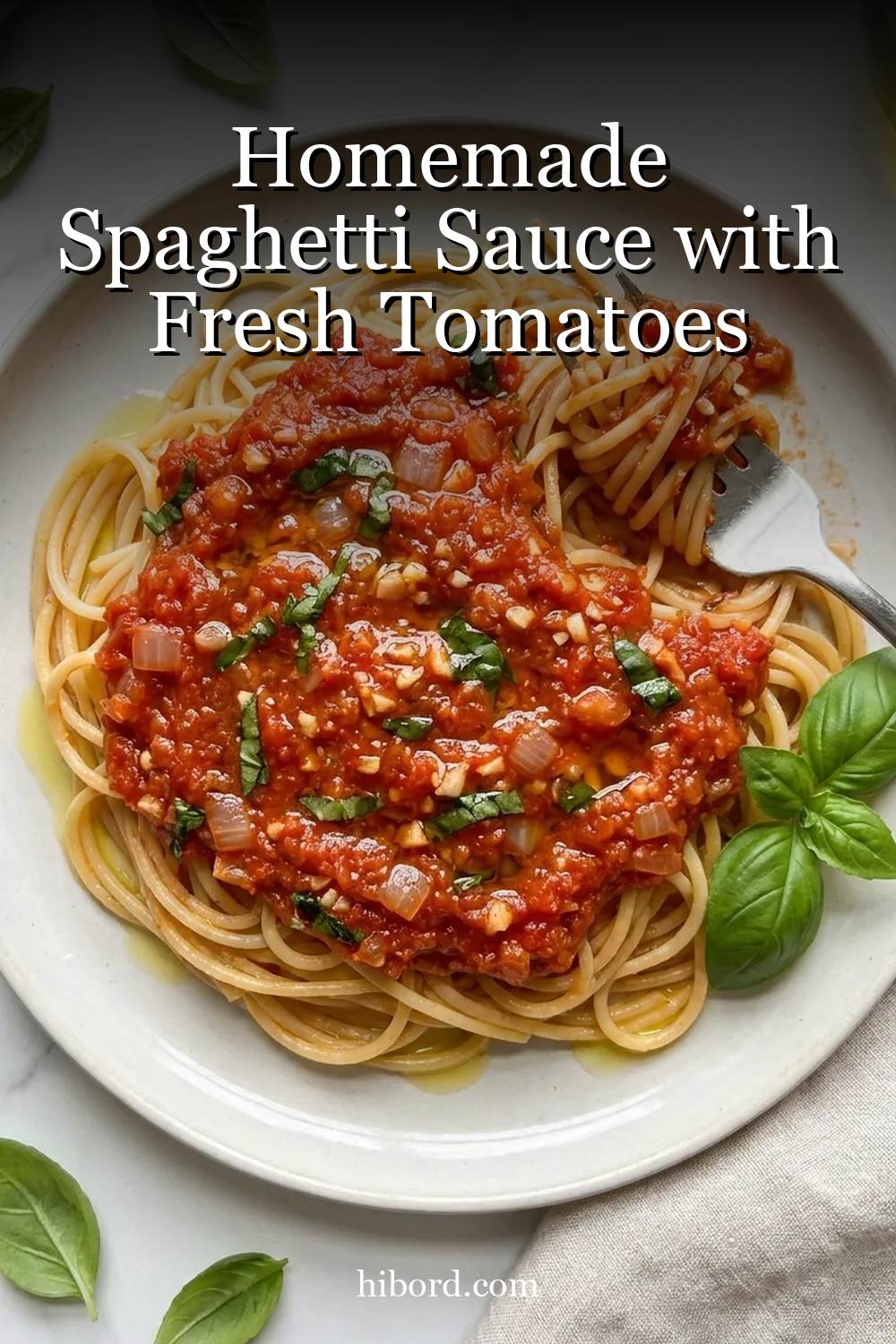
Serve immediately over hot cooked spaghetti with freshly grated Parmesan cheese and additional basil if desired. Serving it hot ensures the best flavor and texture.
Tips for Success
- Use the ripest tomatoes available for the sweetest flavor.
- Simmer uncovered so excess moisture evaporates naturally.
- Stir occasionally to prevent the sauce from sticking to the bottom of the pot.
- Blend only if you prefer a smoother sauce.
- Fresh basil should be added near the end to preserve its bright flavor.
Storage, Freezing, and Make-Ahead Instructions
Allow the sauce to cool completely before storing. Refrigerate in airtight containers for up to 5 days. Freeze in freezer-safe containers or freezer bags for up to 3 months, leaving about 1 inch (2.5 cm) of headspace for expansion. Thaw overnight in the refrigerator before reheating. Reheat gently over medium-low heat, stirring occasionally until heated through. Add a splash of broth or water if the sauce has thickened during storage. The sauce can be prepared one or two days ahead, and many people find the flavor improves after resting overnight in the refrigerator.
FAQ
Can I leave the tomato skins on?
You can, but removing the skins creates a smoother sauce with a more traditional texture.
Which tomatoes are best for homemade spaghetti sauce?
Roma and plum tomatoes are preferred because they contain less water and produce a naturally thicker sauce.
Can I freeze homemade spaghetti sauce?
Yes. Freeze cooled sauce in airtight containers for up to 3 months.
Why is my sauce watery?
Fresh tomatoes vary in moisture content. Continue simmering uncovered until the sauce reaches your preferred consistency.
Can I add meat?
Absolutely. Brown 1 pound (450 g) of ground beef or Italian sausage before cooking the onions, then continue with the recipe as directed.
Ingredients
Method
- Prepare the Tomatoes: Bring a large pot of water to a boil.
- Score a shallow "X" in the bottom of each tomato.
- Boil the tomatoes for 30 to 45 seconds, then immediately transfer them to ice water.
- Once cool enough to handle, peel away the skins, remove the cores, and roughly chop the tomatoes.
- Cook the Aromatics: Heat the olive oil in a large Dutch oven over medium heat.
- Add the onion and cook for 6 to 8 minutes, stirring occasionally until softened and translucent.
- Add the garlic and cook for another 30 seconds, just until fragrant.
- Add Tomato Paste: Stir in the tomato paste and cook for 2 minutes, stirring constantly until it darkens slightly and becomes fragrant.
- Build the Sauce: Add the chopped tomatoes, broth, Italian seasoning, oregano, dried basil, salt, black pepper, and crushed red pepper flakes if using.
- Stir well to combine.
- Simmer: Bring the sauce to a gentle simmer: Reduce the heat to low and cook uncovered for 60 to 75 minutes, stirring every 10 to 15 minutes.
- The sauce should reduce noticeably and become thick enough to coat the back of a spoon.
- Blend (Optional): For a smooth spaghetti sauce, use an immersion blender directly in the pot or carefully transfer the sauce to a blender in batches.
- For a rustic sauce, leave it chunky.
- Finish the Sauce: Stir in the fresh basil: If desired, add the butter for extra richness and the balsamic vinegar for added depth.
- Taste the sauce and add the sugar only if the tomatoes are noticeably acidic.
- Serve immediately over hot cooked spaghetti with freshly grated Parmesan cheese and additional basil if desired.