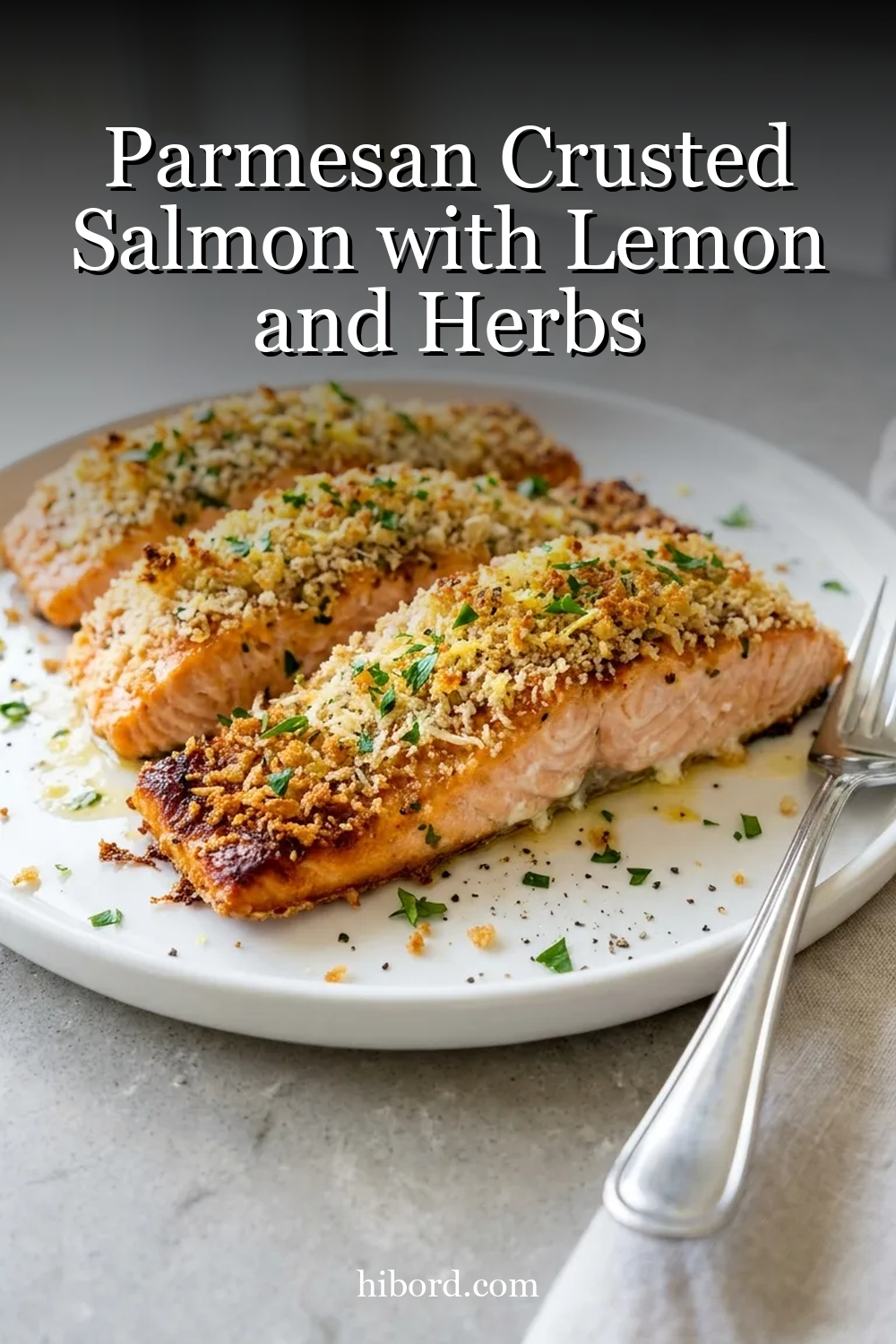
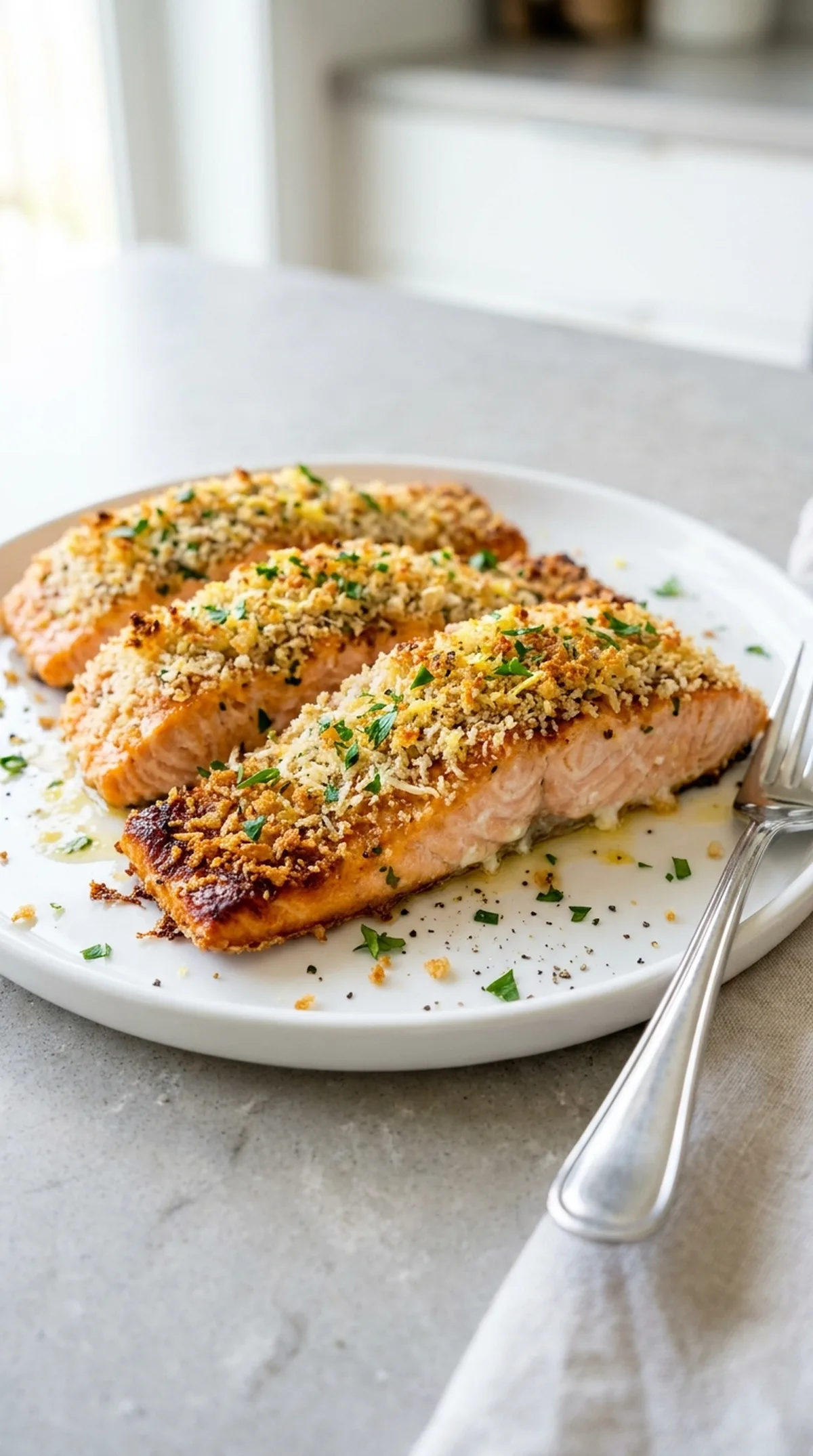
Parmesan Crusted Salmon features tender, flaky salmon beneath a golden topping of Parmesan cheese, crisp panko breadcrumbs, lemon zest, and herbs. A thin layer of Dijon mustard helps the crust adhere while adding gentle acidity that balances the richness of the fish.
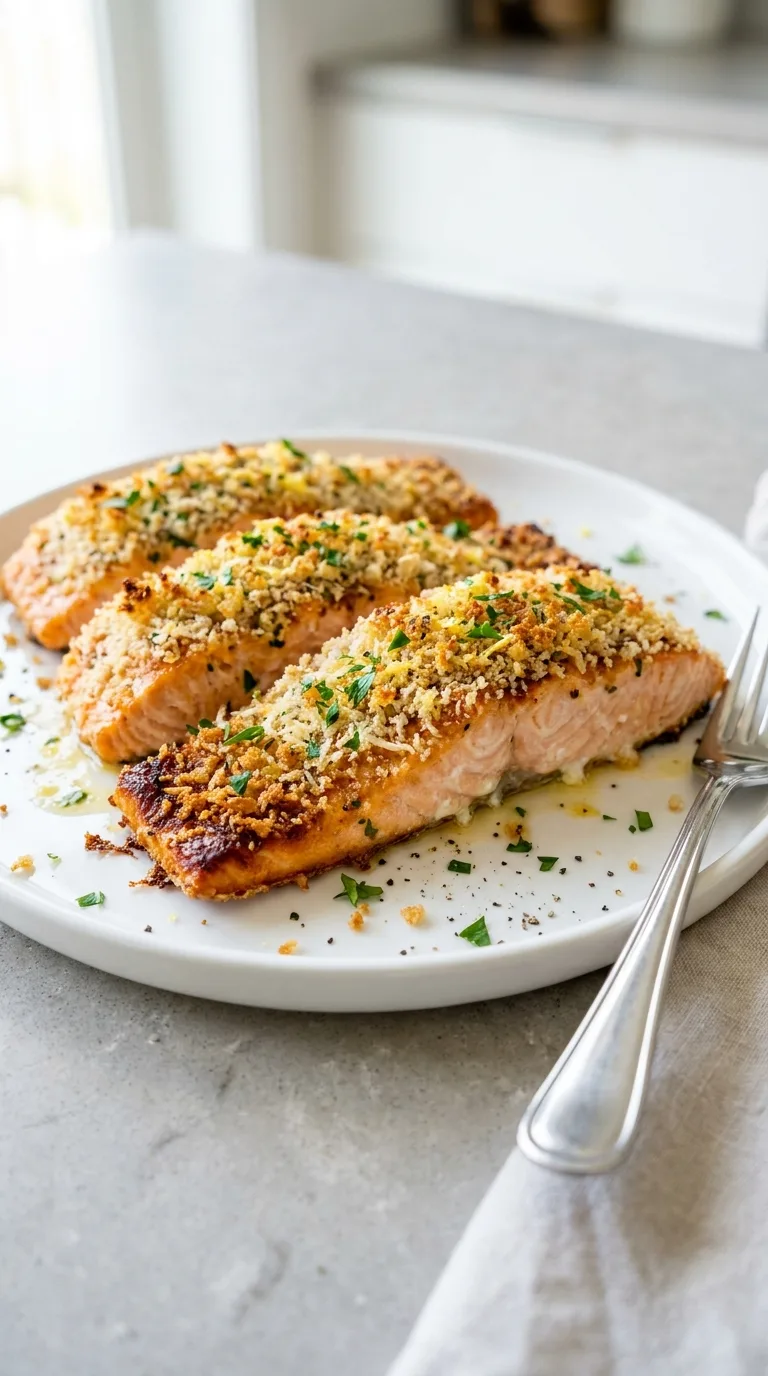
The salmon bakes on a sheet pan at high heat and is ready in about 35 minutes, including a brief rest. Using evenly sized fillets helps the fish finish cooking at the same time without drying around the edges.
Recipe at a Glance
- Prep Time: 15 minutes
- Cook Time: 15 minutes
- Additional Time: 5 minutes
- Total Time: 35 minutes
- Yield: 4 salmon fillets
- Difficulty: Easy
Why You'll Love This Recipe
- Dijon mustard gives the breadcrumb mixture a lightly tangy base and helps it cling to the salmon.
- Panko breadcrumbs create a lighter, crunchier coating than fine dry breadcrumbs.
- Finely grated Parmesan adds savory flavor and browns as the salmon bakes.
- Lemon zest brightens the rich fish without adding enough liquid to soften the crust.
- Baking at 425°F (220°C) cooks the salmon quickly, helping it stay moist while the topping becomes golden.
Equipment Needed
- Large rimmed baking sheet
- Parchment paper or aluminum foil
- Small mixing bowl
- Pastry brush or spoon
- Microplane or fine grater
- Instant-read thermometer
- Thin metal spatula
Ingredients You'll Need
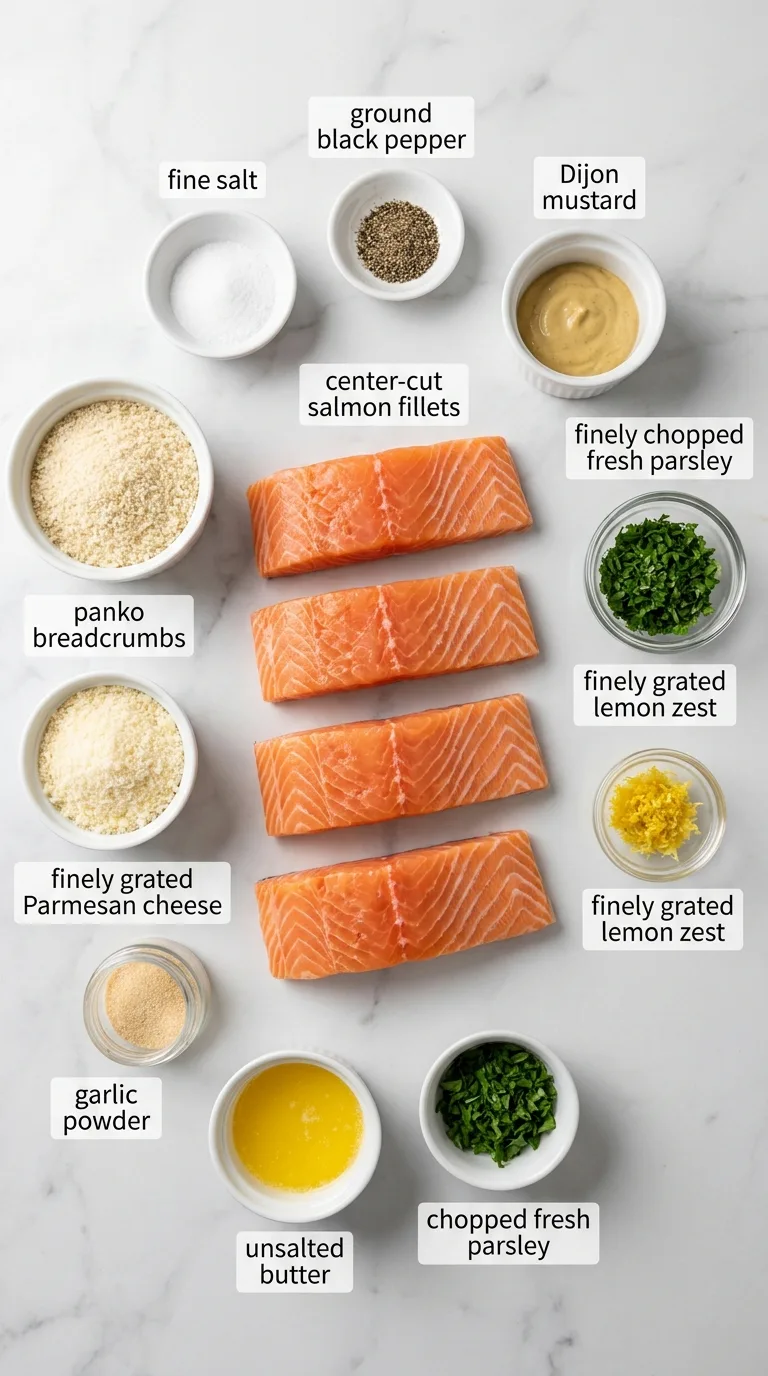
For the Salmon
- ■ 4 center-cut salmon fillets, 6 ounces (170 g) each, about 1 1/2 pounds (680 g) total, patted dry
- ■ 1/2 teaspoon fine salt
- ■ 1/4 teaspoon ground black pepper
- ■ 2 tablespoons (30 g) Dijon mustard
For the Parmesan Crust
- ■ 1/2 cup (30 g) panko breadcrumbs
- ■ 1/2 cup (45 g) finely grated Parmesan cheese
- ■ 2 tablespoons (8 g) finely chopped fresh parsley
- ■ 1 teaspoon finely grated lemon zest
- ■ 1/2 teaspoon garlic powder
- ■ 2 tablespoons (28 g) unsalted butter, melted
Optional Garnish
- ■ 1 medium lemon, cut into wedges, optional, for serving
- ■ 1 tablespoon (4 g) chopped fresh parsley, optional, for garnish
How to Make Parmesan Crusted Salmon with Lemon and Herbs
Prepare the Oven and Pan
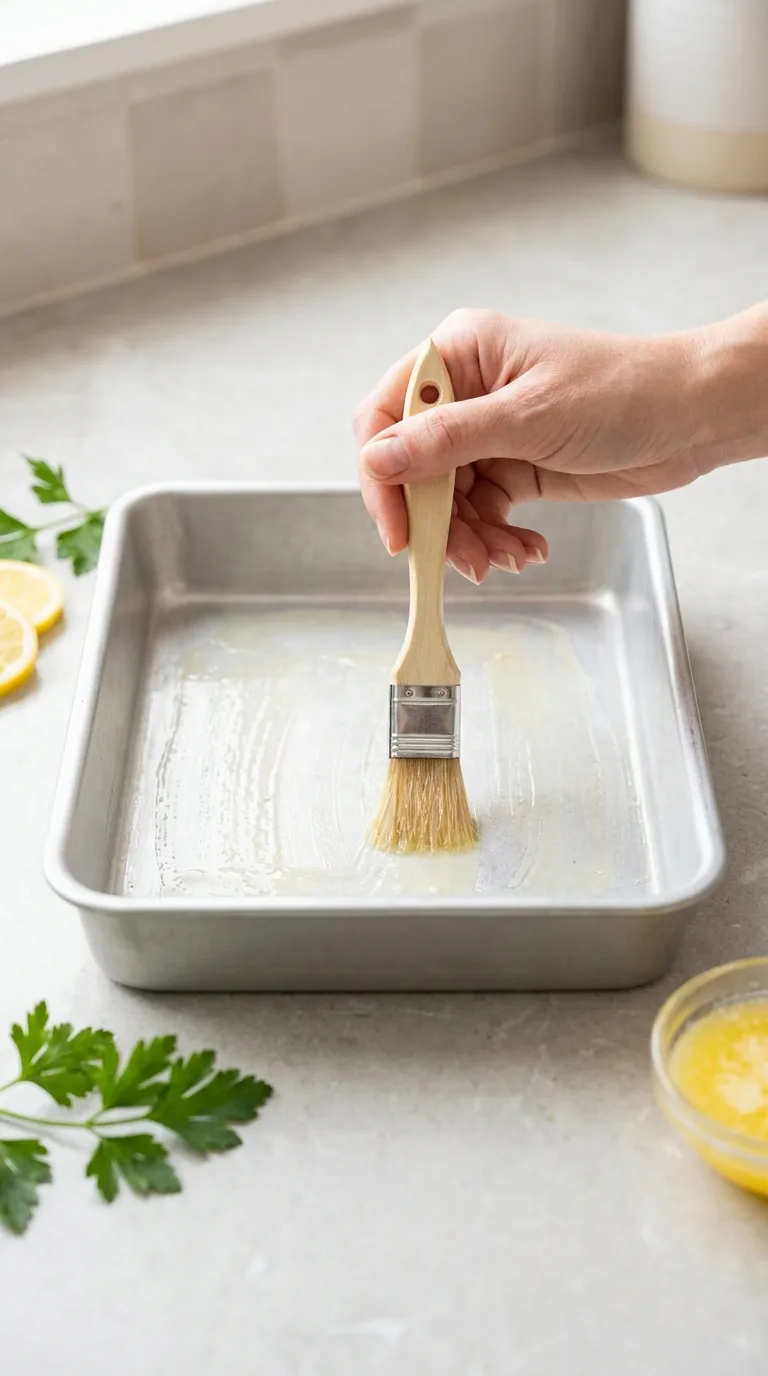
Preheat the oven to 425°F (220°C). Line a large rimmed baking sheet with parchment paper or aluminum foil. This step ensures that the salmon does not stick to the pan and makes for easier cleanup after baking.
Dry and Season the Salmon
Pat the salmon fillets thoroughly dry with paper towels. Place them on the prepared baking sheet, leaving space between each piece. Season the tops and sides evenly with the salt and black pepper. Drying the salmon helps the crust adhere better and prevents it from sliding off during baking.
Make the Parmesan Topping
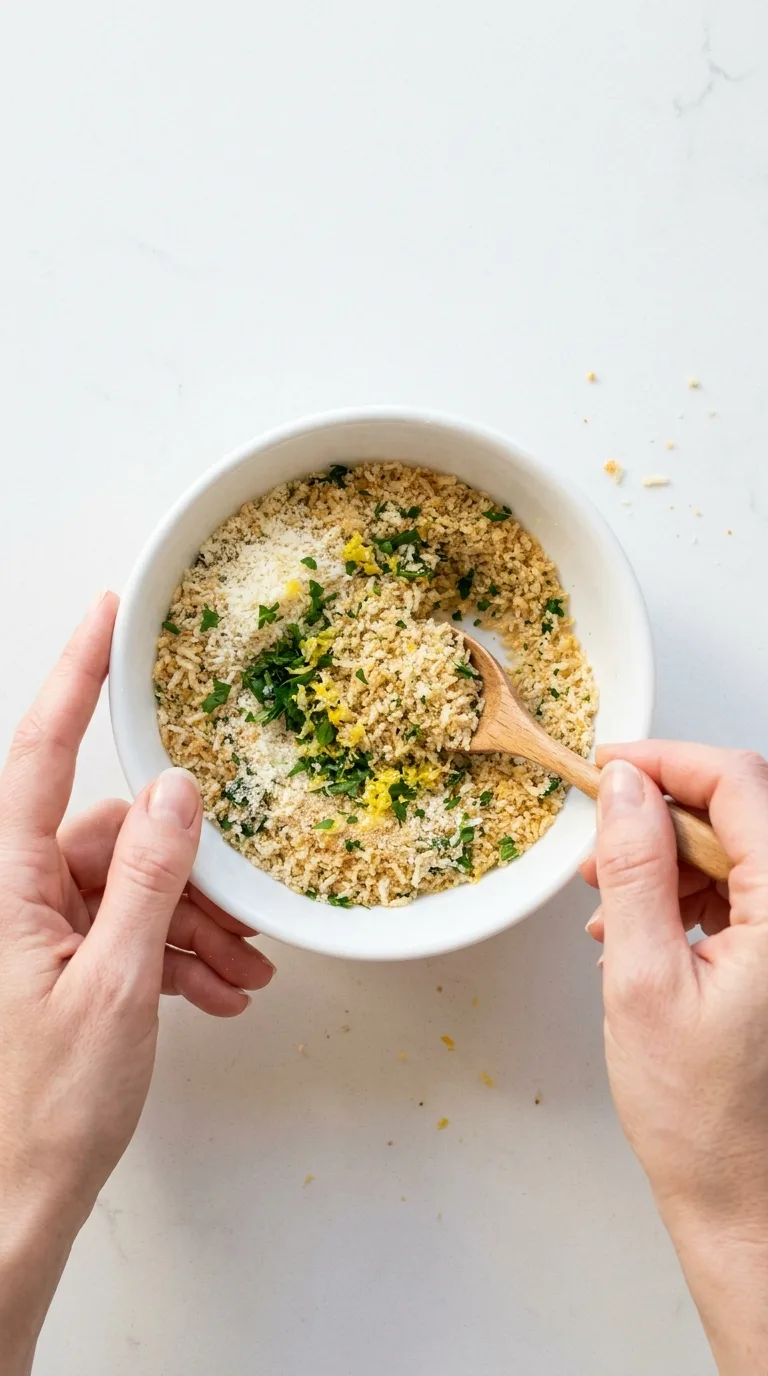
In a small bowl, combine the panko breadcrumbs, Parmesan cheese, 2 tablespoons parsley, lemon zest, and garlic powder. Pour in the melted butter and stir until the crumbs are evenly moistened. The mixture should resemble loose, damp sand rather than a wet paste. This texture is crucial for achieving a crispy topping.
Add the Mustard Layer
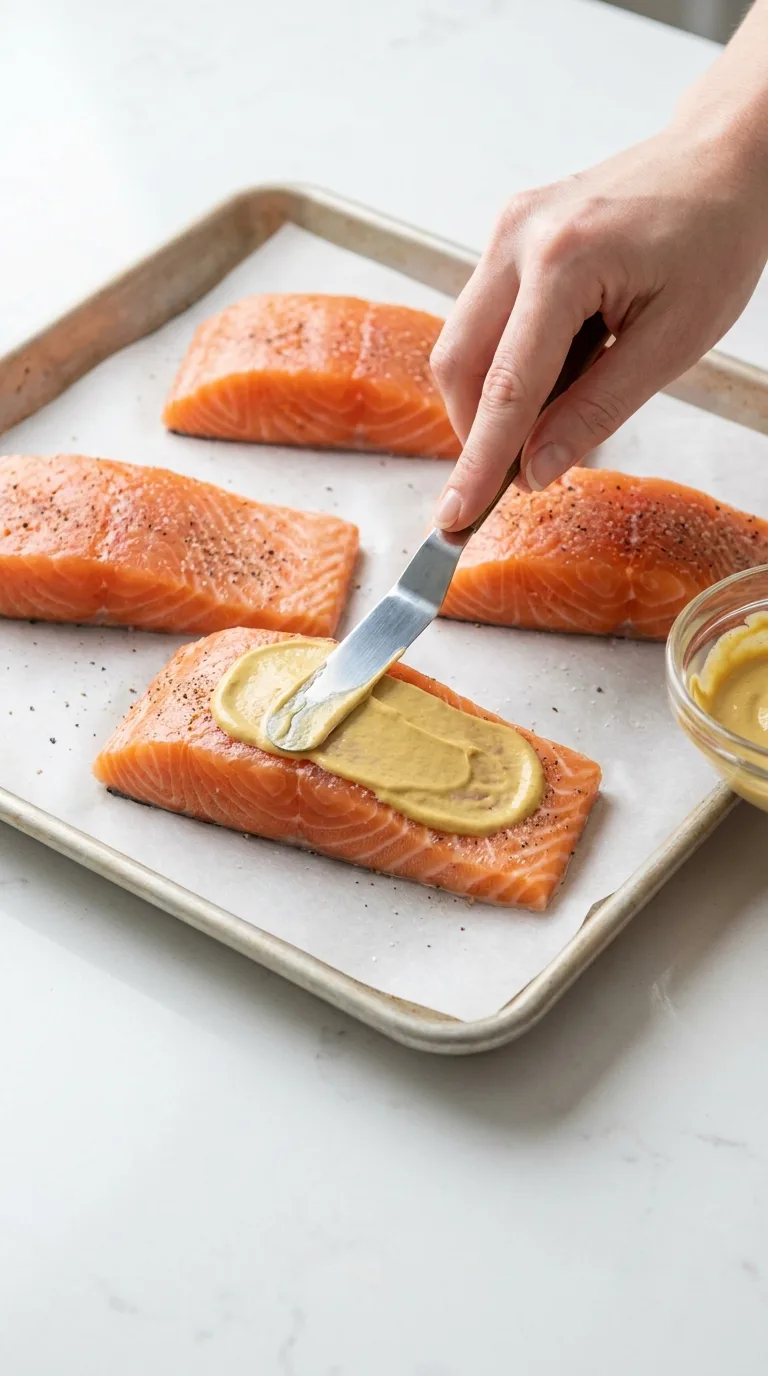
Spread approximately 1 1/2 teaspoons of Dijon mustard over the top of each salmon fillet. Keep most of the mustard on the upper surface so the crust does not slide down the sides. The mustard acts as a flavorful adhesive for the topping.
Apply the Crust
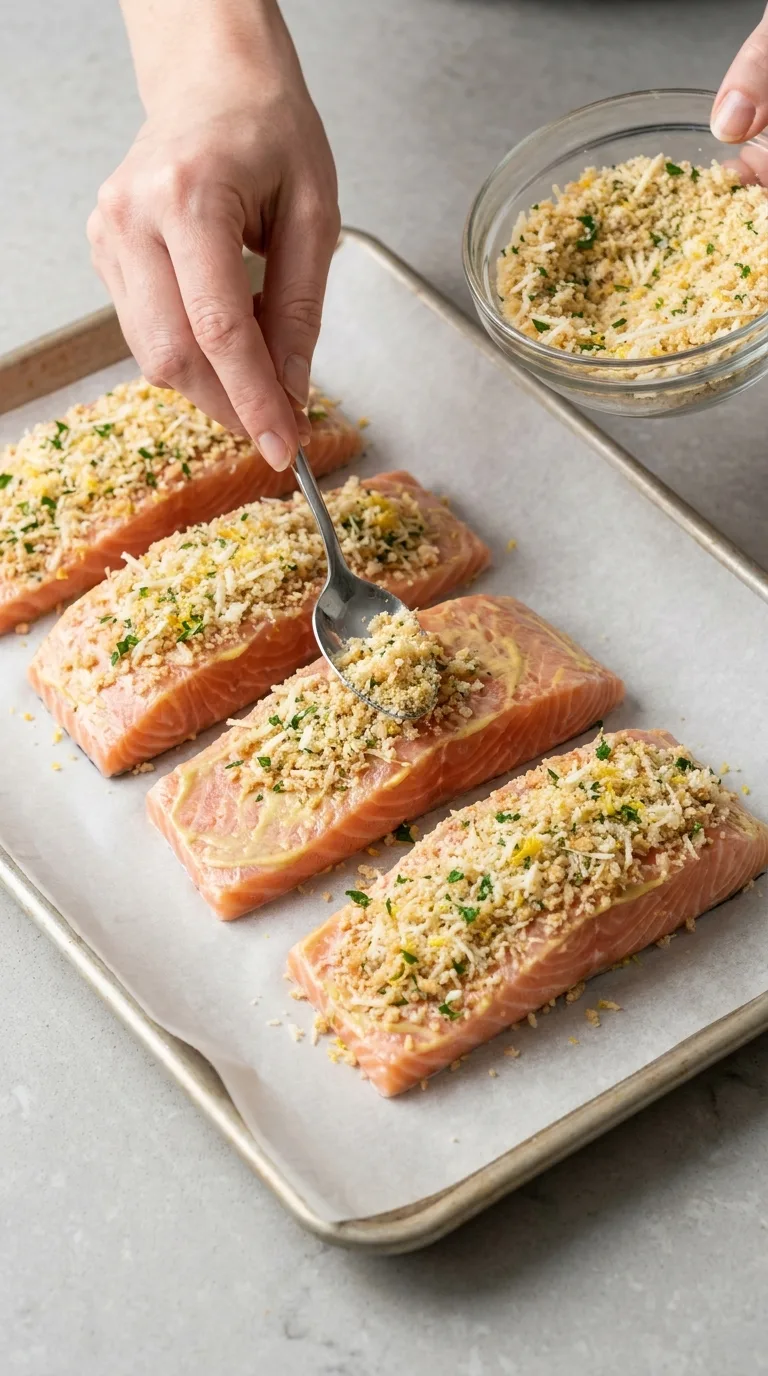
Divide the Parmesan mixture among the four fillets. Press it gently into the mustard layer without compacting it heavily. The topping should form an even layer that remains loose enough to crisp. A well-applied crust will enhance both flavor and texture.
Bake the Salmon
Bake on the center rack for 10 to 15 minutes, depending on the thickness of the fillets. The topping should be golden, and the salmon should begin to flake when gently pressed with a fork. This step is key to ensuring the salmon is cooked through while keeping it moist.
Check the Internal Temperature
Insert an instant-read thermometer into the thickest part of a fillet, avoiding the baking sheet. The salmon should reach 145°F (63°C). Remove thinner pieces as soon as they are done so they do not dry out. Monitoring the temperature is the best way to ensure perfect doneness.
Brown the Topping if Needed
If the salmon is cooked but the crust remains pale, switch the oven to broil and cook for 30 to 60 seconds. Watch continuously because the Parmesan and breadcrumbs can darken quickly. This step adds an appealing golden color and enhances the crust’s texture.
Rest the Salmon
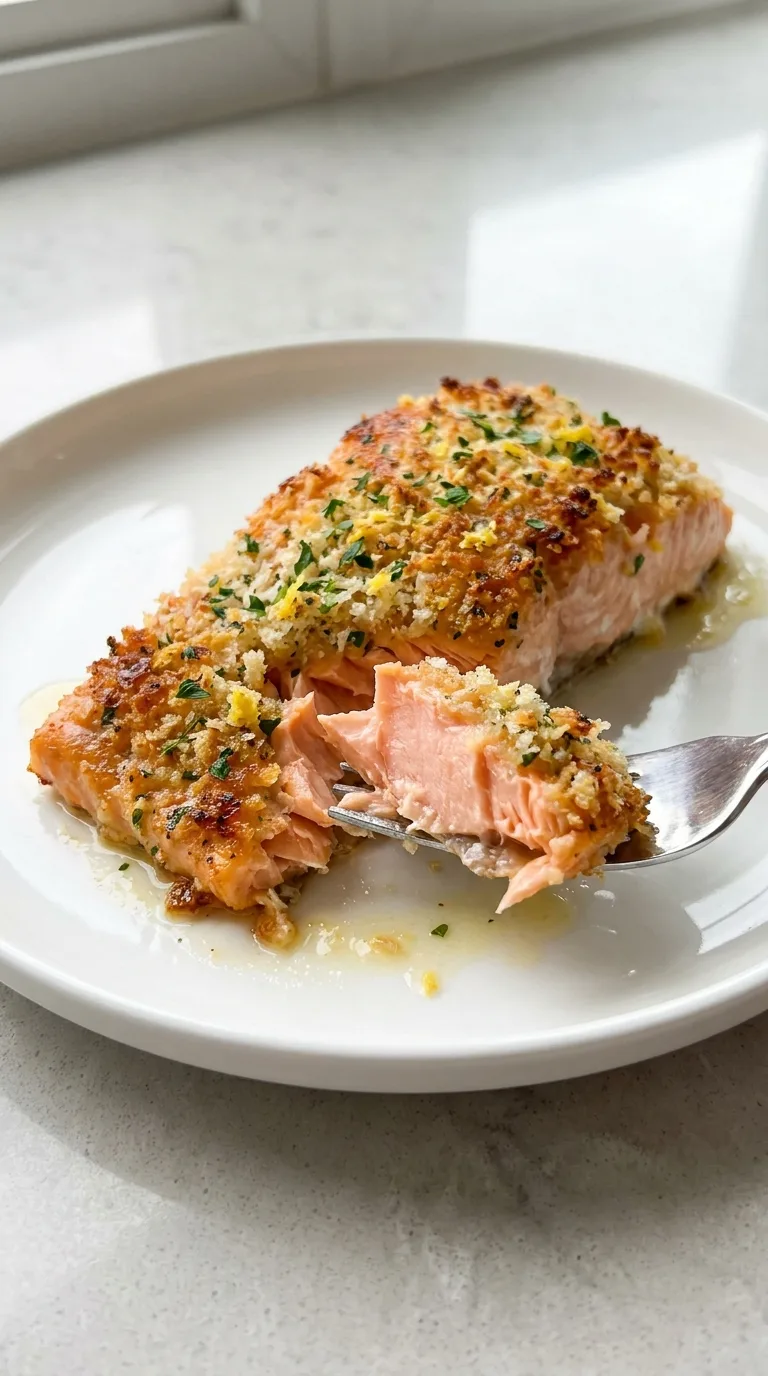
Remove the baking sheet from the oven and let the salmon rest for 5 minutes. The fish should remain moist and separate into broad flakes when pressed. Resting allows the juices to redistribute, ensuring a tender bite.
Garnish and Serve
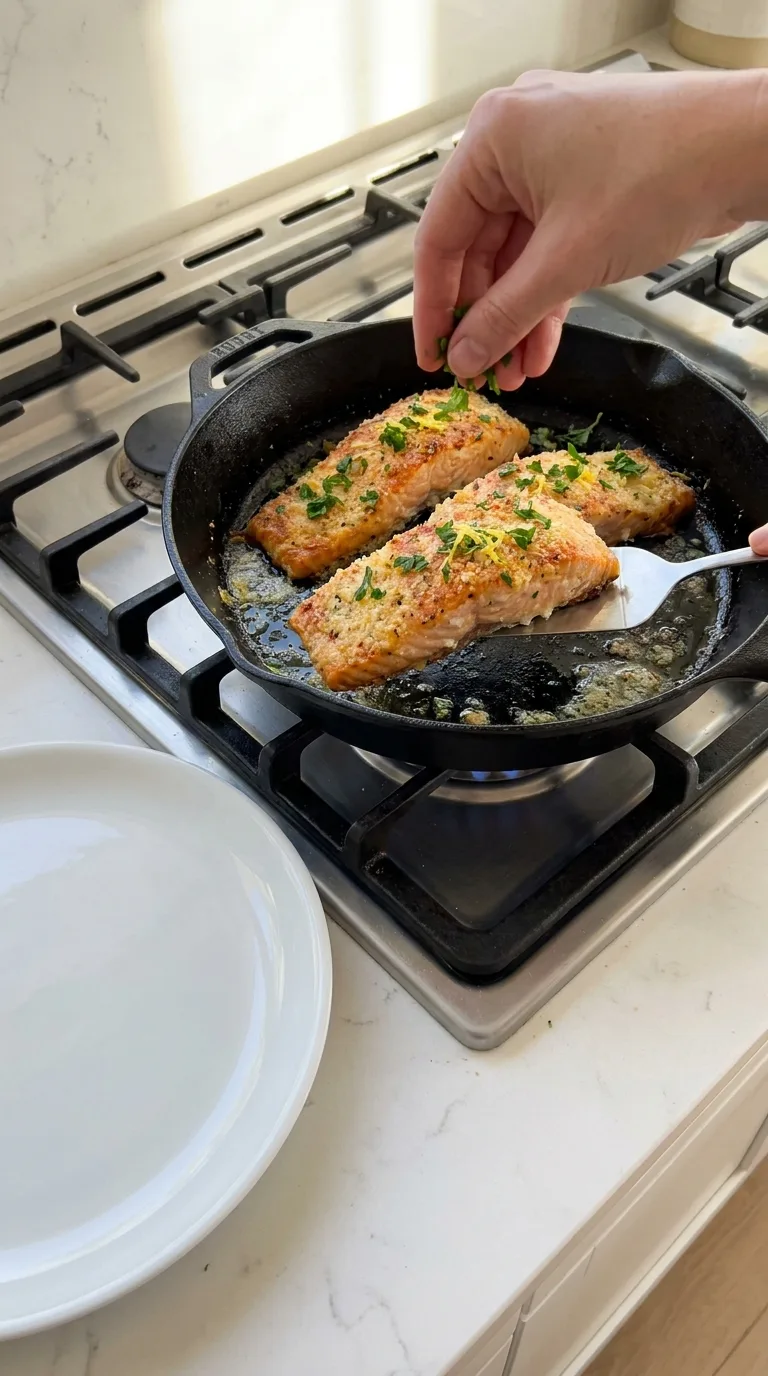
Transfer the fillets carefully with a thin spatula. Garnish with the remaining parsley and serve with lemon wedges, if using. This final touch adds freshness and a pop of color to the dish.
Tips for Success
- Choose fillets with similar thickness rather than relying only on equal weight.
- Dry the salmon well so the Dijon and Parmesan topping adhere instead of sliding off.
- Grate the Parmesan finely so it blends evenly with the panko and melts into a cohesive crust.
- Do not pack the breadcrumb mixture firmly. A loose topping allows hot air to circulate and produces better browning.
- Check the fish early if the fillets are thinner than 1 inch (2.5 cm).
- Use a thermometer for doneness rather than relying only on color, since salmon varies naturally from pale pink to deep orange.
Storage, Freezing, and Make-Ahead Instructions
Refrigerate leftover Parmesan Crusted Salmon in a shallow airtight container within 2 hours of cooking. Store it for up to 3 days. Keep the fillets in a single layer when possible so the crust is not crushed.
Reheat the salmon on a parchment-lined baking sheet at 350°F (175°C) for 8 to 10 minutes, or until the center reaches 165°F (74°C). Avoid covering it tightly during reheating because trapped steam will soften the crust. The microwave can be used, but it may make the fish firmer and the topping soft.
Cooked salmon can be frozen for up to 2 months in a freezer-safe container, although the Parmesan crust will lose some crispness. Thaw it overnight in the refrigerator before reheating.
For make-ahead preparation, mix the dry crust ingredients up to 1 day ahead and refrigerate them in an airtight container. Add the melted butter and assemble the salmon immediately before baking. Do not leave raw salmon at room temperature while preparing other parts of the meal.
FAQ
Can I make Parmesan Crusted Salmon ahead of time?
The breadcrumb and Parmesan mixture can be prepared 1 day ahead, but add the melted butter and coat the salmon just before baking. Fully assembling it too early can make the crust damp.
Can I use frozen salmon?
Yes. Thaw the salmon completely in the refrigerator, then pat it very dry before seasoning. Excess moisture from thawed fish can prevent the topping from becoming crisp.
How do I know when the salmon is done?
The thickest part should reach 145°F (63°C), look opaque, and separate into broad flakes when gently pressed. Begin checking early because thin fillets cook quickly.
Can I make this recipe without breadcrumbs?
Yes. Omit the panko and increase the Parmesan to 3/4 cup (70 g). The topping will be thinner, richer, and less crunchy, with a more pronounced cheese flavor.
Why did the crust fall off?
The salmon may have been damp, the mustard layer may have been too thick, or the crumbs may not have been pressed onto the surface. Pat the fish dry, spread on a thin layer of mustard, and press the topping gently into place.
Ingredients
Method
- Preheat the oven to 425°F (220°C). Line a large rimmed baking sheet with parchment paper or aluminum foil.
- Pat the salmon fillets thoroughly dry with paper towels. Place them on the prepared baking sheet, leaving space between each piece. Season the tops and sides evenly with the salt and black pepper.
- In a small bowl, combine the panko breadcrumbs, Parmesan cheese, 2 tablespoons parsley, lemon zest, and garlic powder. Pour in the melted butter and stir until the crumbs are evenly moistened. The mixture should resemble loose, damp sand rather than a wet paste.
- Spread approximately 1 1/2 teaspoons of Dijon mustard over the top of each salmon fillet. Keep most of the mustard on the upper surface so the crust does not slide down the sides.
- Divide the Parmesan mixture among the four fillets: Press it gently into the mustard layer without compacting it heavily. The topping should form an even layer that remains loose enough to crisp.
- Bake on the center rack for 10 to 15 minutes, depending on the thickness of the fillets. The topping should be golden, and the salmon should begin to flake when gently pressed with a fork.
- Insert an instant-read thermometer into the thickest part of a fillet, avoiding the baking sheet. The salmon should reach 145°F (63°C). Remove thinner pieces as soon as they are done so they do not dry out.
- If the salmon is cooked but the crust remains pale, switch the oven to broil and cook for 30 to 60 seconds. Watch continuously because the Parmesan and breadcrumbs can darken quickly.
- Remove the baking sheet from the oven and let the salmon rest for 5 minutes. The fish should remain moist and separate into broad flakes when pressed.
- Transfer the fillets carefully with a thin spatula: Garnish with the remaining parsley and serve with lemon wedges, if using.