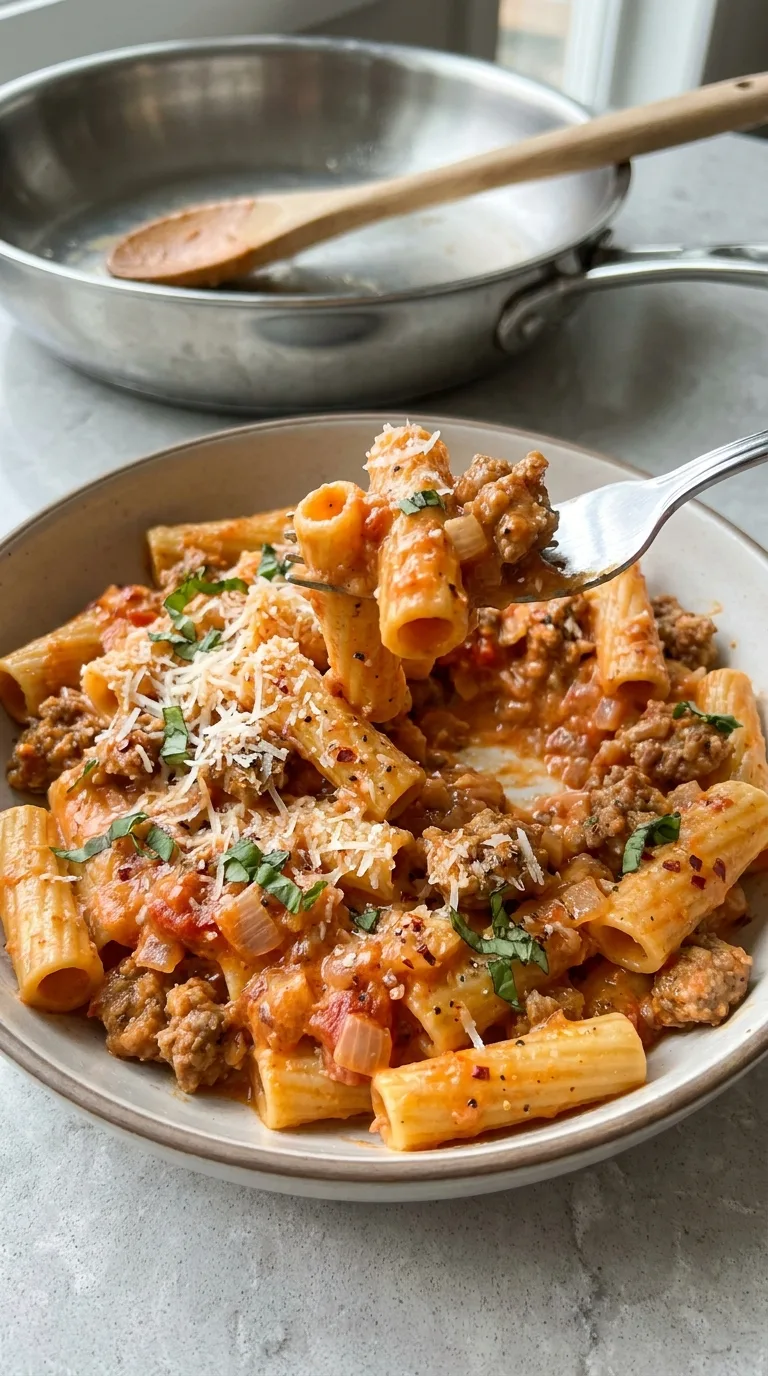
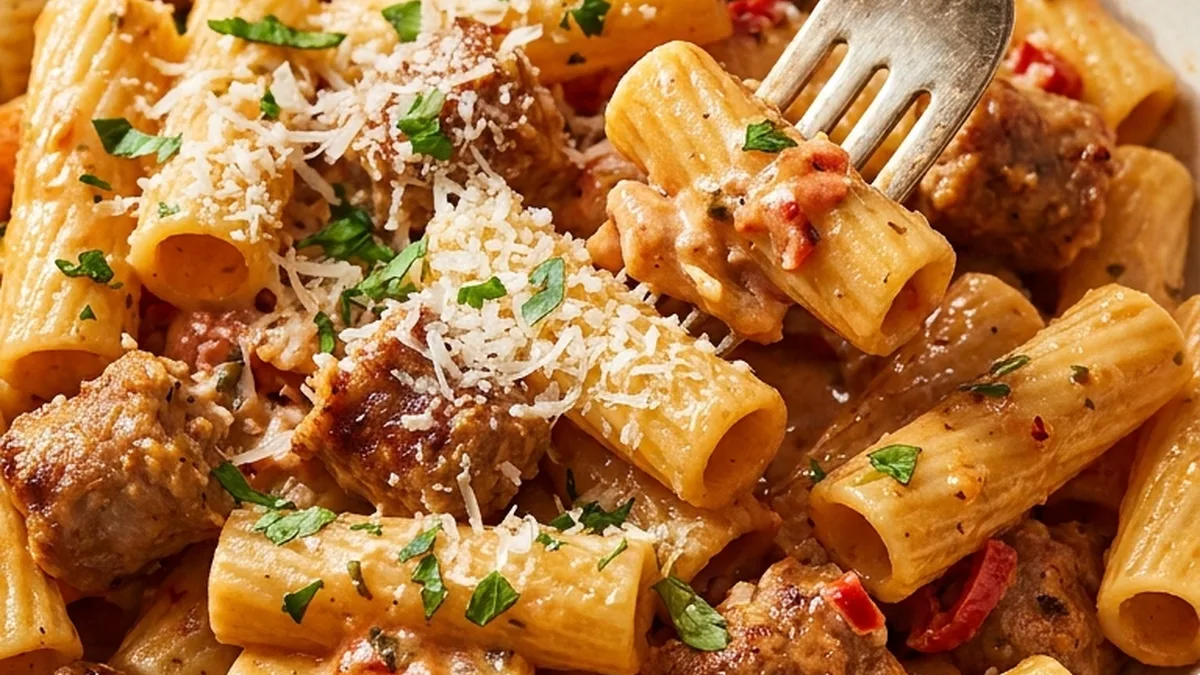
Rigatoni with Sausage is a hearty pasta dinner made with browned Italian sausage, tender rigatoni, garlic, tomatoes, Parmesan, and a touch of cream. The ridged pasta holds onto the savory tomato sauce, while the sausage adds richness, fennel-spice flavor, and satisfying texture.
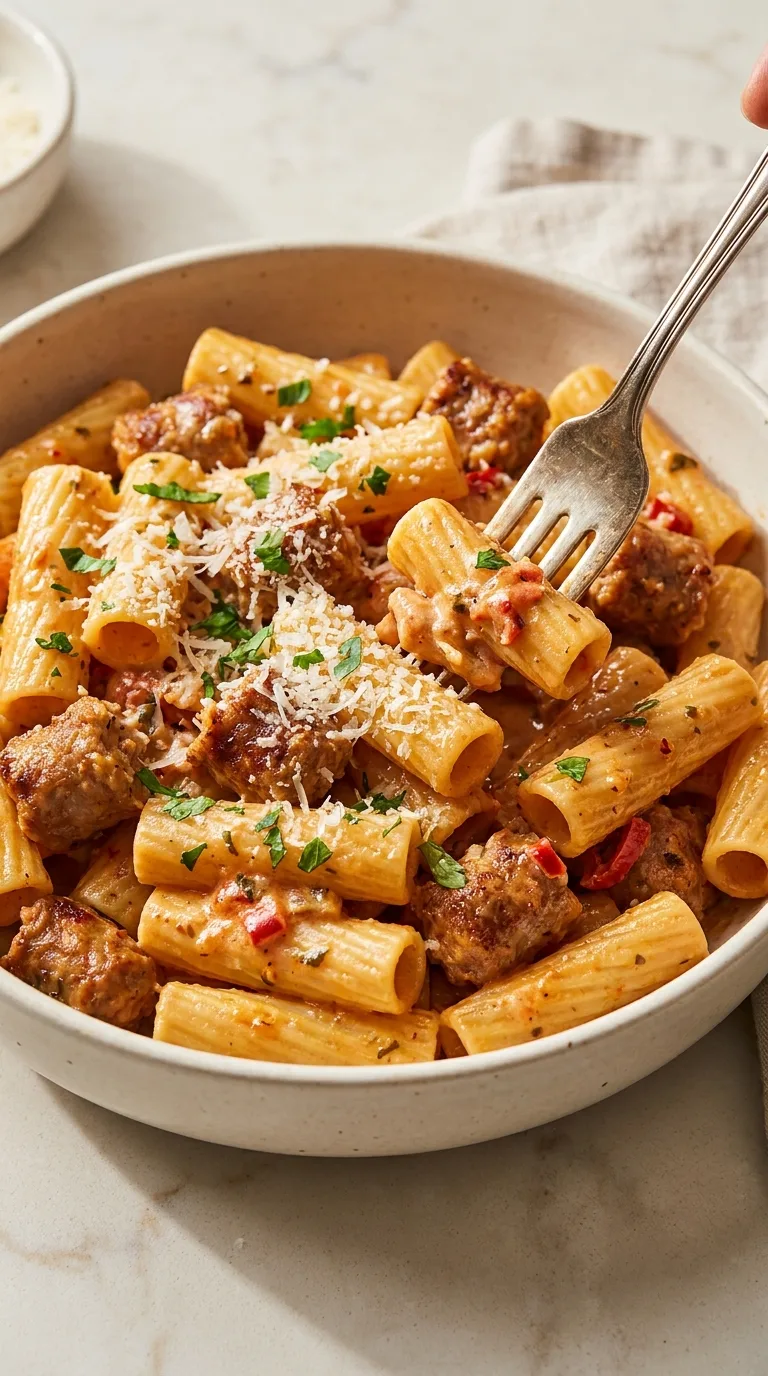
The sausage and sauce cook in one skillet while the pasta boils separately, and reserved pasta water helps bring everything together. A small amount of cream softens the acidity of the tomatoes without turning the sauce excessively heavy.
Why This Recipe Works
- Browning the Italian sausage first develops savory flavor and leaves seasoned drippings for the sauce.
- Rigatoni's ridges and hollow centers capture both the tomato sauce and small pieces of sausage.
- Simmering crushed tomatoes briefly concentrates their flavor before cream is added.
- Reserved pasta water adds starch that helps the sauce cling smoothly to the rigatoni.
- Parmesan is stirred in over gentle heat so it melts into the sauce without becoming grainy.
Equipment Needed
- 5- to 6-quart pot
- 12-inch deep skillet
- Colander
- Wooden spoon or heat-resistant spatula
- Tongs or large serving spoon
- Fine grater
Ingredients List
For the Rigatoni with Sausage
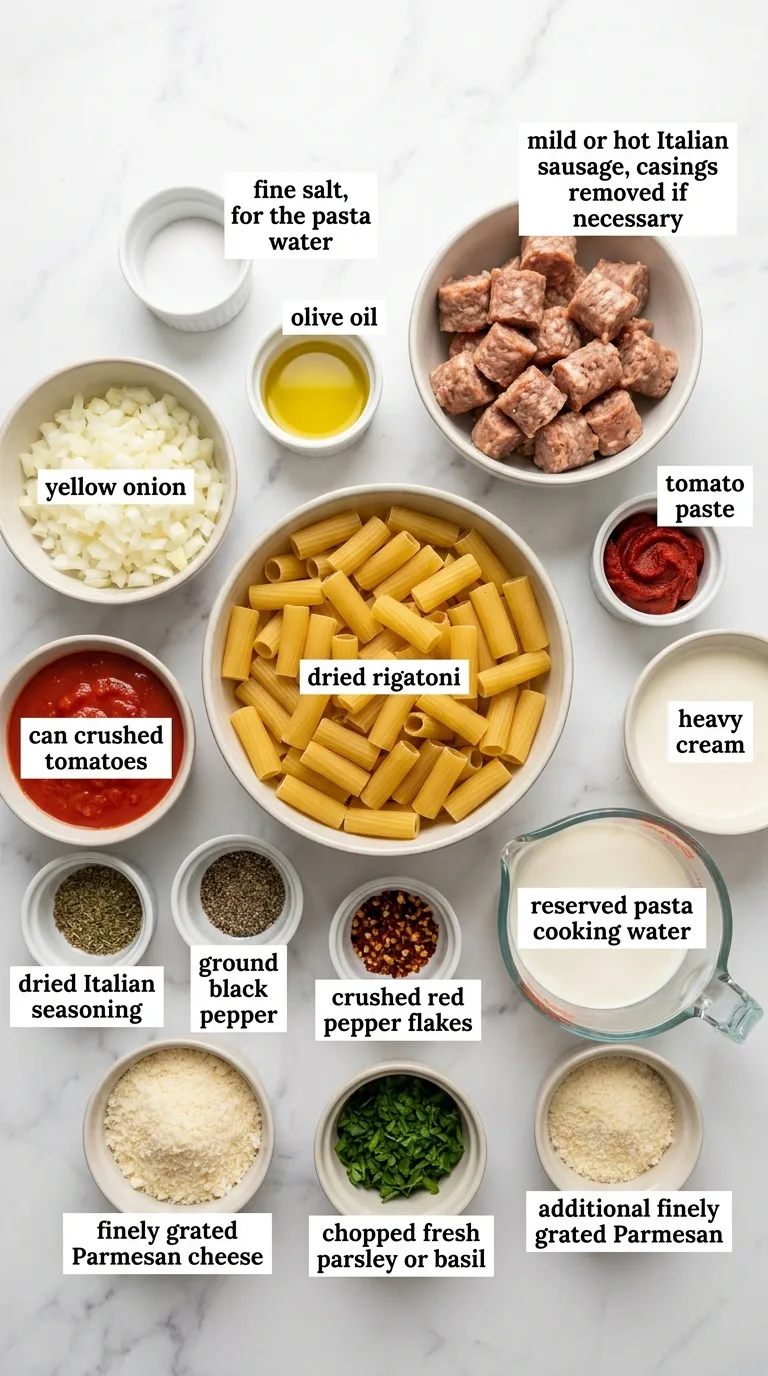
- 12 ounces (340 g) dried rigatoni
- 1 tablespoon fine salt, for the pasta water
- 1 tablespoon (15 ml) olive oil
- 1 pound (450 g) mild or hot Italian sausage, casings removed if necessary
- 1 medium yellow onion, about 6 ounces (170 g), finely diced
- 4 garlic cloves, finely minced
- 1 tablespoon (16 g) tomato paste
- 1 can (28 ounces/794 g) crushed tomatoes
- 1 teaspoon dried Italian seasoning
- 1/2 teaspoon ground black pepper
- 1/4 teaspoon crushed red pepper flakes
- 1/2 cup (120 ml) heavy cream
- 1 cup (240 ml) reserved pasta cooking water, divided
- 3/4 cup (68 g) finely grated Parmesan cheese
Optional Garnishes
- 2 tablespoons (8 g) chopped fresh parsley or basil, optional
- 1/4 cup (20 g) additional finely grated Parmesan, optional
- Additional crushed red pepper flakes, optional
Ingredient Notes and Substitutions
- Italian sausage: Italian sausage provides most of the dish's savory seasoning. Mild sausage gives a gentler flavor, while hot Italian sausage adds noticeable chile heat. Ground turkey or chicken sausage can be substituted, but leaner sausage may need an additional teaspoon of olive oil while browning.
- Rigatoni: Rigatoni works especially well because its ridges and large openings hold chunky sausage sauce. Penne or ziti can replace it in the same weight, though cooking times will vary.
- Crushed tomatoes: Crushed tomatoes create a smooth sauce with enough texture to coat the pasta. Whole peeled tomatoes can be substituted if crushed by hand before adding. Diced tomatoes will produce a chunkier, less cohesive sauce.
- Heavy cream: Heavy cream softens the acidity of the tomatoes and gives the sauce a silky finish. Half-and-half can be substituted, but the sauce will be slightly thinner and should not be boiled aggressively after it is added.
- Parmesan: Finely grated Parmesan adds savory depth and helps thicken the finished sauce slightly. Pecorino Romano can be substituted, but it is saltier and sharper, so taste before adding extra seasoning.
Step-by-Step Instructions
Step 1: Boil the pasta water
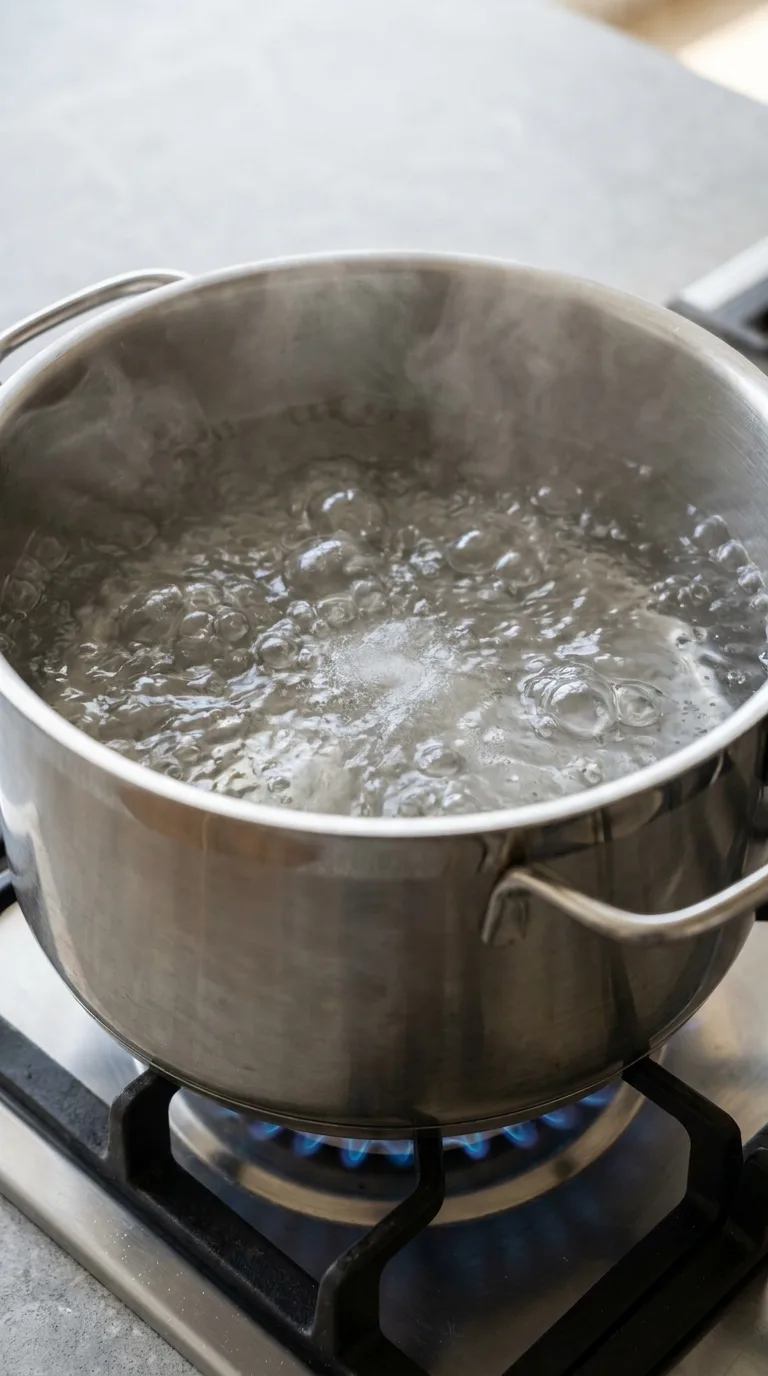
Bring a 5- to 6-quart pot of water to a rolling boil. Add 1 tablespoon fine salt.
Step 2: Cook the rigatoni
Add the rigatoni and cook according to package directions until al dente, usually 10 to 12 minutes. Stir occasionally so the pasta does not stick.
Step 3: Reserve pasta water
Before draining, scoop out 1 cup (240 ml) of the starchy cooking water. Drain the rigatoni without rinsing.
Step 4: Brown the sausage
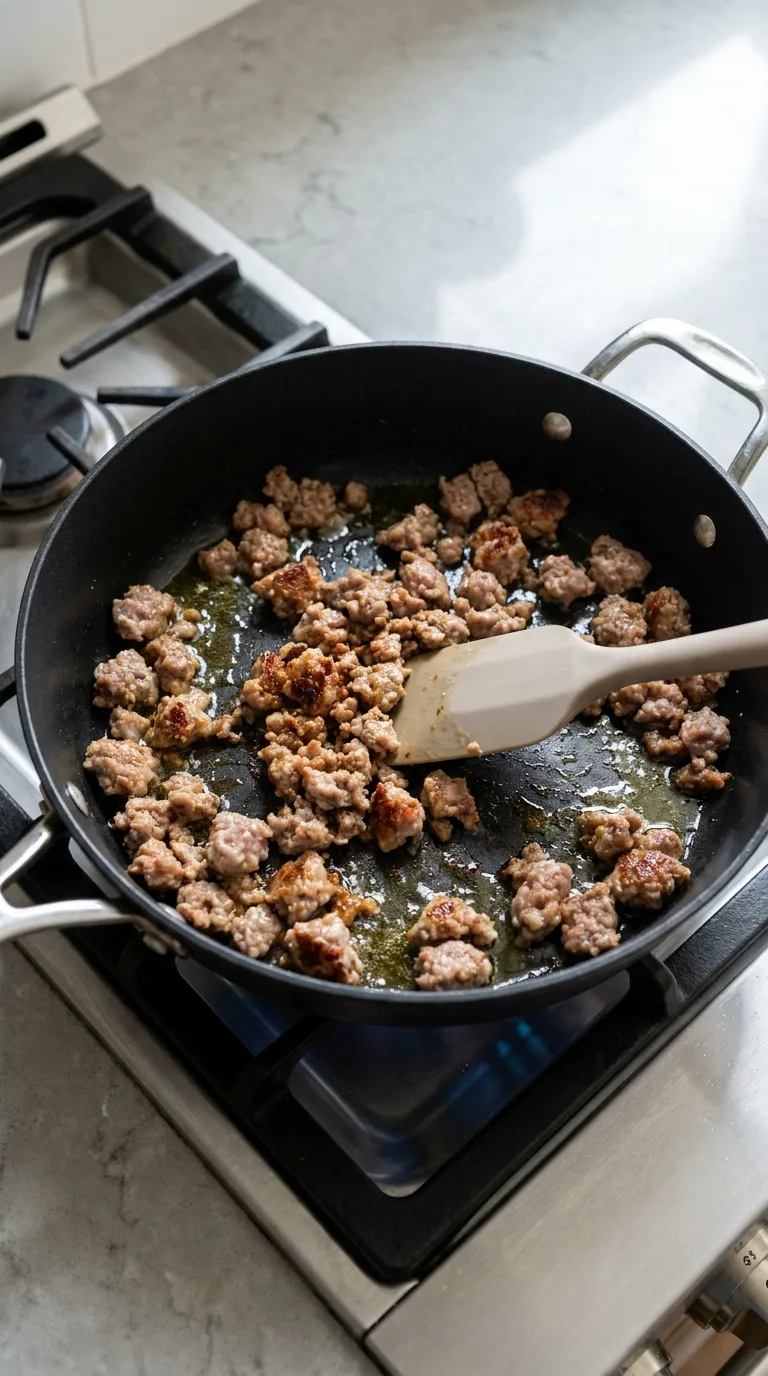
While the pasta cooks, heat the olive oil in a 12-inch deep skillet over medium-high heat. Add the Italian sausage and cook for 5 to 7 minutes, breaking it into small pieces with a wooden spoon, until browned and cooked through. Ground pork sausage should reach 160°F (71°C).
Step 5: Cook the onion
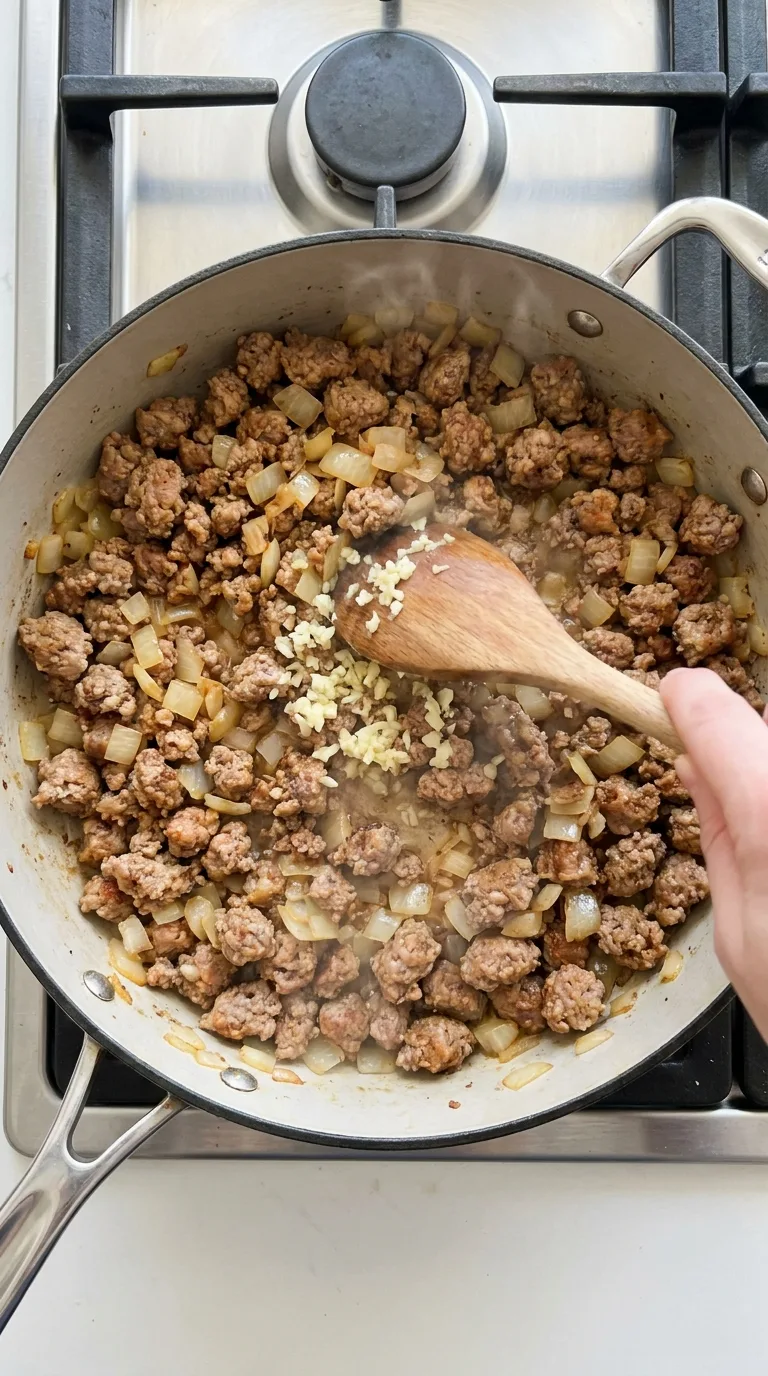
Reduce the heat to medium. Add the diced onion to the sausage and cook for 4 to 5 minutes, stirring occasionally, until softened and translucent.
Step 6: Add the garlic
Stir in the minced garlic and cook for about 30 seconds, until fragrant but not browned.
Step 7: Cook the tomato paste
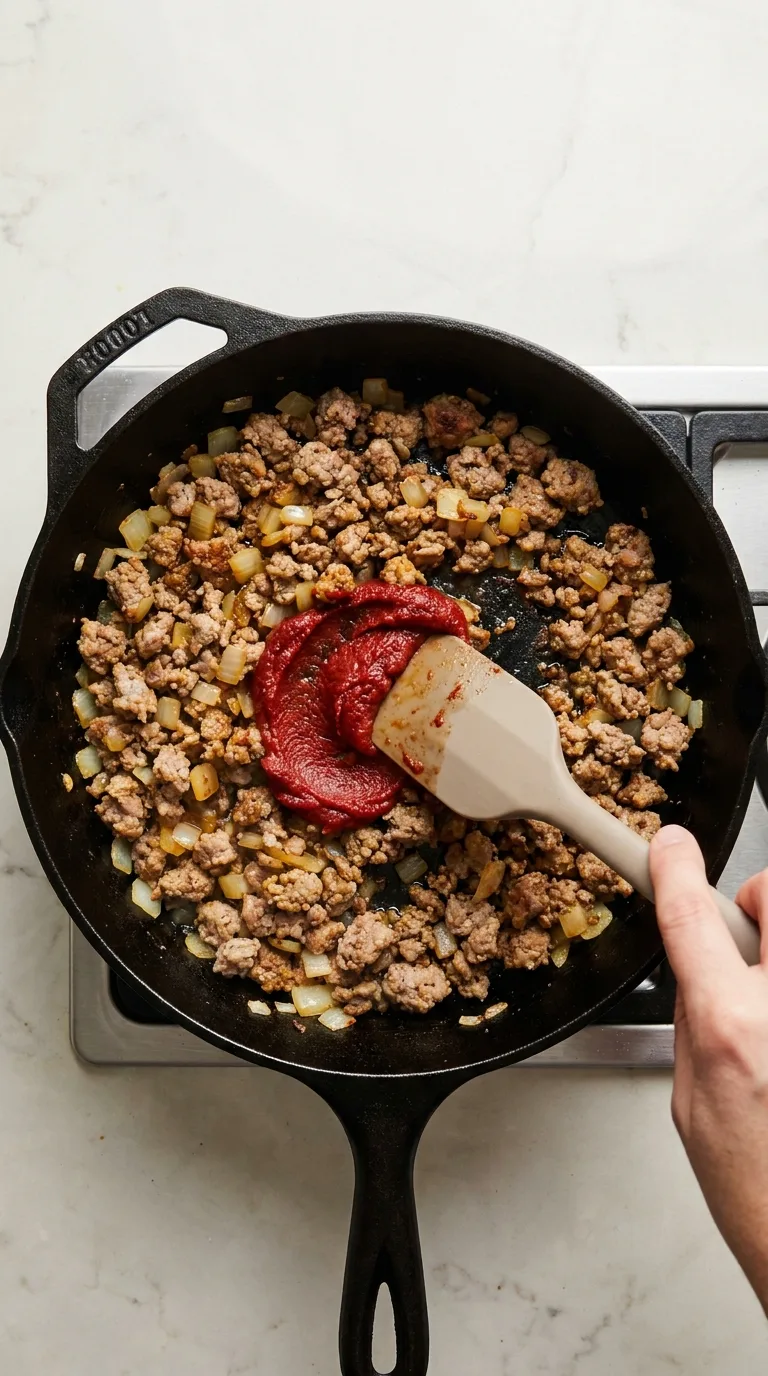
Add the tomato paste and stir it through the sausage mixture for about 1 minute. It should darken slightly and coat the bottom of the skillet.
Step 8: Build the tomato sauce
Add the crushed tomatoes, Italian seasoning, black pepper, and crushed red pepper flakes. Stir thoroughly and scrape up any browned bits from the bottom of the skillet.
Step 9: Simmer the sauce
Reduce the heat to medium-low and simmer uncovered for 8 to 10 minutes, stirring occasionally. The sauce should thicken slightly but remain loose enough to coat pasta.
Step 10: Add the cream
Stir in the heavy cream and reduce the heat to low. The sauce should turn a warm reddish-orange color and look smooth.
Step 11: Add Parmesan
Stir in the 3/4 cup (68 g) Parmesan gradually until melted. Avoid boiling the sauce after the cheese is added.
Step 12: Add the rigatoni
Transfer the drained rigatoni to the skillet and toss until every piece is coated with sausage and sauce.
Step 13: Adjust the consistency
Add 1/2 cup (120 ml) of reserved pasta water and toss for 1 to 2 minutes over low heat. Add more pasta water a few tablespoons at a time if the sauce becomes too thick. It should cling to the rigatoni without looking dry or watery.
Step 14: Rest briefly
Remove the skillet from the heat and let the pasta stand for 5 minutes. The sauce will settle and thicken slightly around the rigatoni.
Step 15: Garnish and serve
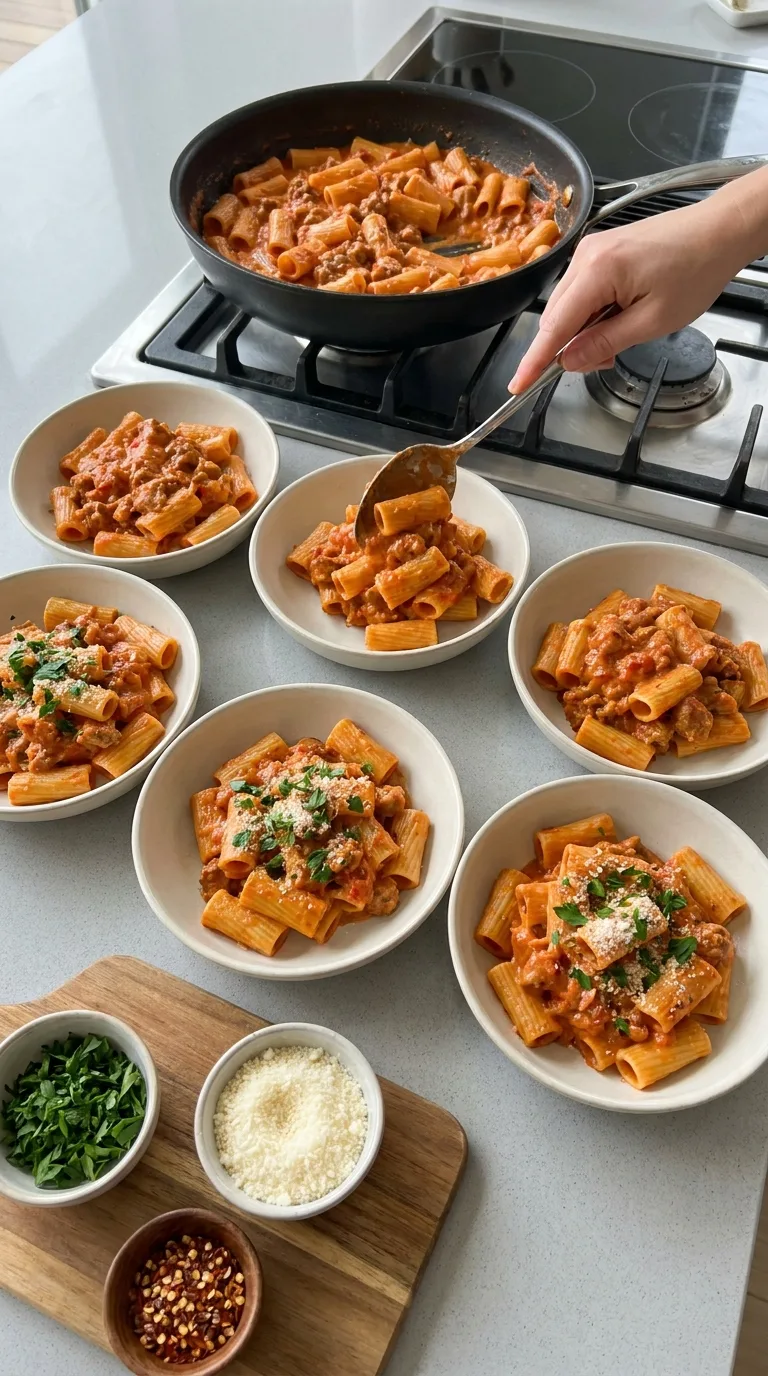
Divide among six bowls and garnish with parsley or basil, additional Parmesan, or crushed red pepper flakes if desired.
Tips for Success
- Brown the sausage thoroughly before adding the other ingredients for deeper savory flavor.
- Break the sausage into small pieces so it fits easily inside and around the rigatoni.
- Cook the pasta only until al dente because it continues softening when tossed with the hot sauce.
- Reserve pasta water before draining; its starch helps the sauce coat the rigatoni evenly.
- Keep the heat low after adding cream and Parmesan to reduce the chance of separation.
- Taste before adding additional salt because Italian sausage and Parmesan can both be quite salty.
Storage, Freezing, and Make-Ahead Instructions
- Cool leftover Rigatoni with Sausage promptly and transfer it to an airtight container within 2 hours. Refrigerate for up to 4 days.
- Reheat gently in a covered skillet over low heat with 1 to 2 tablespoons (15 to 30 ml) water, broth, milk, or cream. Stir occasionally until the pasta is hot throughout and any sausage reaches 165°F (74°C) when reheated.
- Freezing is possible for up to 2 months, although the pasta will become somewhat softer and the cream sauce may change slightly in texture. Thaw overnight in the refrigerator before reheating gently.
- For make-ahead preparation, prepare the sausage tomato sauce without the cream and Parmesan up to 3 days ahead. Refrigerate in an airtight container, then reheat gently, add the cream and Parmesan, and toss with freshly cooked rigatoni before serving.
FAQ
Can I make Rigatoni with Sausage ahead of time?
Yes. Prepare the sausage and tomato portion of the sauce up to 3 days ahead. Reheat it gently, then add the cream, Parmesan, and freshly cooked rigatoni shortly before serving for the best pasta texture.
Can I use hot Italian sausage?
Yes. Hot Italian sausage can replace mild sausage in the same quantity. It will give the finished sauce noticeably more chile heat.
Can I make this without heavy cream?
Yes. Omit the cream for a more traditional tomato-based sausage sauce. Add a little extra pasta water as needed so the sauce remains loose enough to coat the rigatoni.
Why is my pasta sauce too thick?
The sauce may have reduced too long, or the pasta may have absorbed additional liquid. Stir in reserved pasta water a few tablespoons at a time until the sauce becomes glossy and coats the pasta easily.
Can I add vegetables?
Yes. Sliced mushrooms can be cooked with the onion, or baby spinach can be stirred into the sauce just before the cream. Cook vegetables until excess moisture has evaporated so the sauce does not become watery.
Ingredients
Method
- Bring a 5- to 6-quart pot of water to a rolling boil. Add 1 tablespoon fine salt.
- Add the rigatoni and cook according to package directions until al dente, usually 10 to 12 minutes. Stir occasionally so the pasta does not stick.
- Before draining, scoop out 1 cup (240 ml) of the starchy cooking water. Drain the rigatoni without rinsing.
- While the pasta cooks, heat the olive oil in a 12-inch deep skillet over medium-high heat. Add the Italian sausage and cook for 5 to 7 minutes, breaking it into small pieces with a wooden spoon, until browned and cooked through. Ground pork sausage should reach 160°F (71°C).
- Reduce the heat to medium: Add the diced onion to the sausage and cook for 4 to 5 minutes, stirring occasionally, until softened and translucent.
- Stir in the minced garlic and cook for about 30 seconds, until fragrant but not browned.
- Add the tomato paste and stir it through the sausage mixture for about 1 minute. It should darken slightly and coat the bottom of the skillet.
- Add the crushed tomatoes, Italian seasoning, black pepper, and crushed red pepper flakes. Stir thoroughly and scrape up any browned bits from the bottom of the skillet.
- Reduce the heat to medium-low and simmer uncovered for 8 to 10 minutes, stirring occasionally. The sauce should thicken slightly but remain loose enough to coat pasta.
- Stir in the heavy cream and reduce the heat to low. The sauce should turn a warm reddish-orange color and look smooth.
- Stir in the 3/4 cup (68 g) Parmesan gradually until melted. Avoid boiling the sauce after the cheese is added.
- Transfer the drained rigatoni to the skillet and toss until every piece is coated with sausage and sauce.
- Add 1/2 cup (120 ml) of reserved pasta water and toss for 1 to 2 minutes over low heat. Add more pasta water a few tablespoons at a time if the sauce becomes too thick. It should cling to the rigatoni without looking dry or watery.
- Remove the skillet from the heat and let the pasta stand for 5 minutes. The sauce will settle and thicken slightly around the rigatoni.
- Divide among six bowls and garnish with parsley or basil, additional Parmesan, or crushed red pepper flakes if desired.